Pied-billed Grebe

Pied-billed Grebe_9665

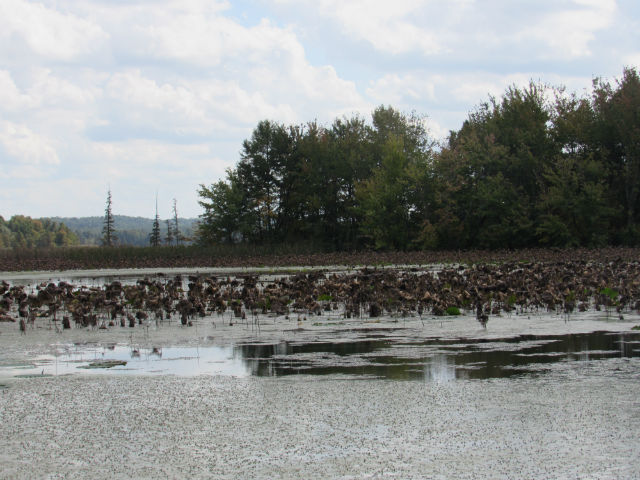
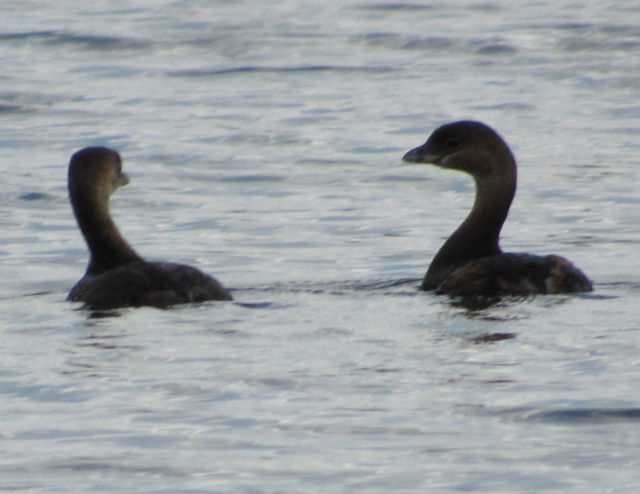
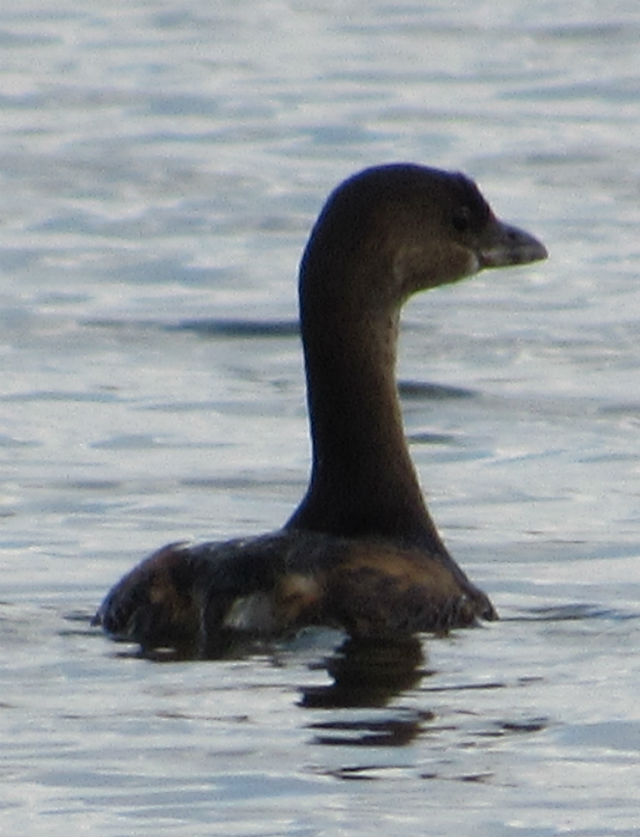
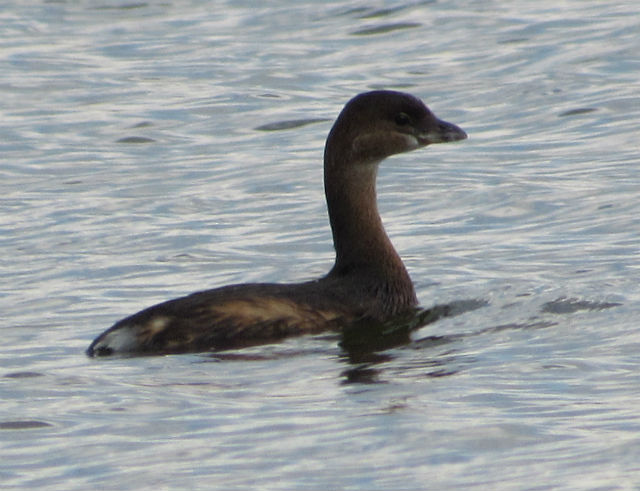
While visiting a lake in southern Illinois, I noticed a pair of these water birds that I have occasionally seen in my home state of Ohio.
Pied-billed Grebe_9653

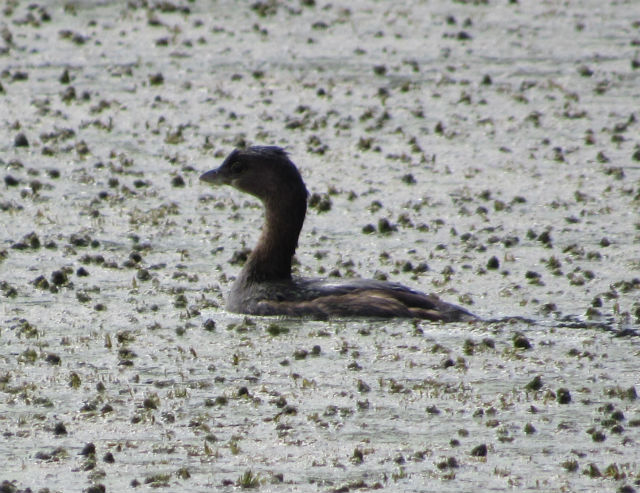
This is the most widespread grebe in the New World, and the most familiar in temperate parts of North America. Pied-billed grebes are small, stocky, and short-necked.
Pied-billed Grebe_9660

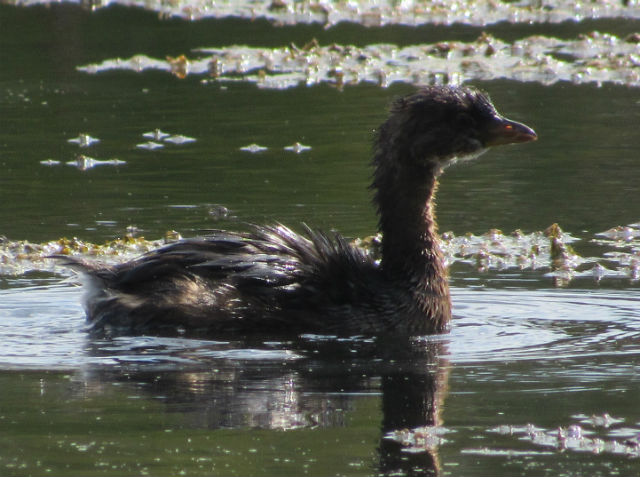
Although it swims like a duck, the Pied-billed Grebe does not have webbed feet. Instead, each toe has lobes extending out on the sides that provide extra surface area for paddling.
Pied-billed Grebe_9735

When disturbed or suspicious, it may sink slowly until only head is above water. This bird is rarely seen in flight. It prefers to escape predators by diving and it migrates at night.
Pied-billed Grebe_9733

The Pied-billed Grebe emits a series of hollow cuckoo-like notes “cow-cow-cow-cow, cow, cow, cowp, cowp, cowp,” that slows down at the end. They are often heard before they are seen.
Pied-billed Grebe_9748

This bird is also known as the American Dabchick, Carolina Grebe, Devil-diver, Dive-dapper, Dipper, Hell-diver and Water Witch.
Third Eye Herp
E-mail

Eastern River Cooter

Eastern River Cooter_7895

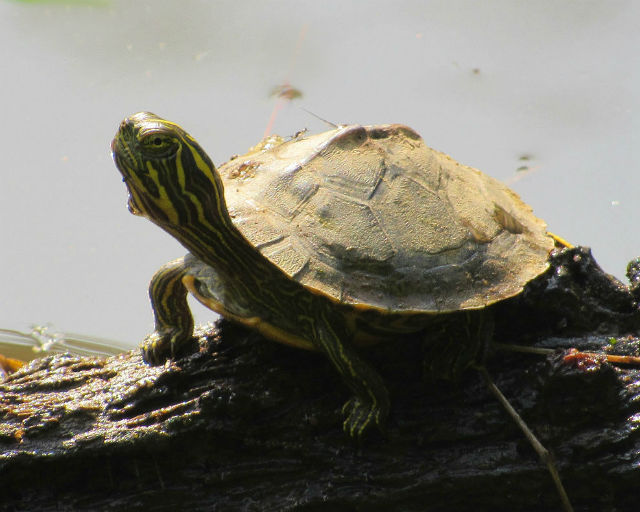
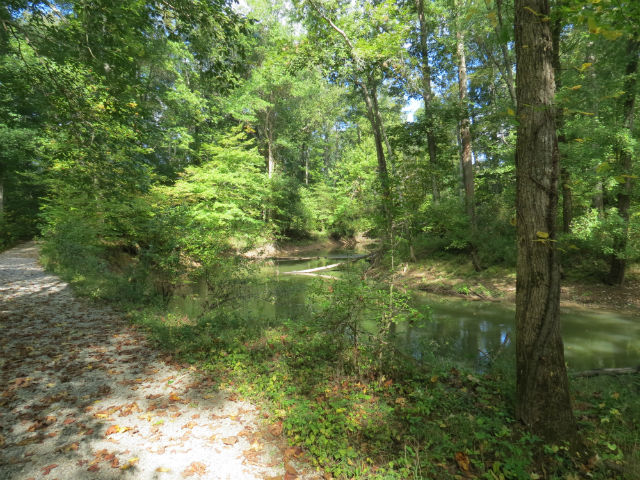
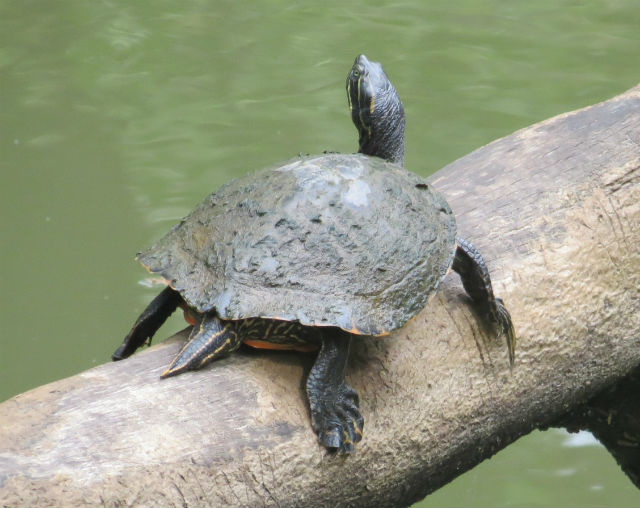
Walking along the Cache River in southern Illinois, I spotted this “lifer” reptile basking on a log. It was a lucky find, as it is endangered in Illinois. This one was a male, as evidenced by its long claws on its front feet. The Eastern River Cooter resides in sloughs and rivers, especially where aquatic plants are abundant. Though aquatic, like other water turtles, it will leave the water to bask on logs.

Eastern River Cooter_7770

They can grow to a shell length of around 12 inches. As part of their mating ritual, the male uses his long claws to flutter at the face of the much larger female. Like many other basking turtle species, they are very wary and quickly slide off their basking spot and into the water if approached. The term “cooter” may have come from the African word “kuta,” which means turtle.

02 river cooter_5461

Not long afterwards, while visiting Virginia, I saw this young example of an Eastern River Cooter. Aquatic plants seem to make up almost 95% of their diets. Like many other freshwater turtles, they have a sleek but protective shell. This allows them to withdraw when threatened, but still efficiently reduce water drag while swimming. It was neat to see this creature for the first time in the wild, both as an adult and a juvenile.

Third Eye Herp
E-mail

Orange Mycena

Orange Mycena_10_08sr 092

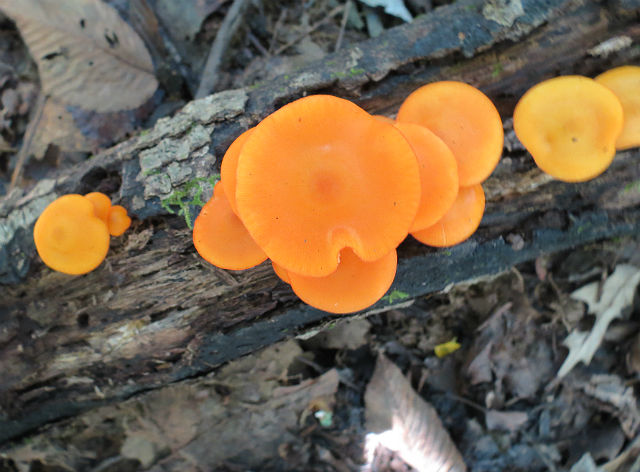
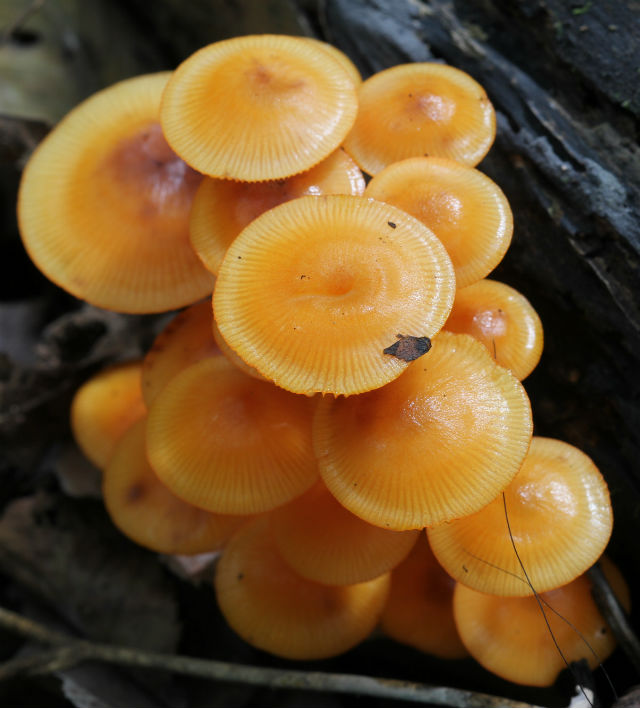
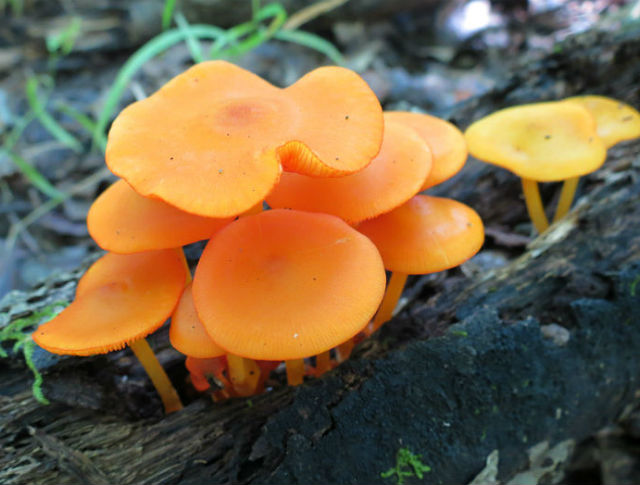
In the dark, damp swamps of southern Illinois, this fun fungus really stands out. Its bright orange coloration can be noticed from a distance.

Orange Mycena_7530

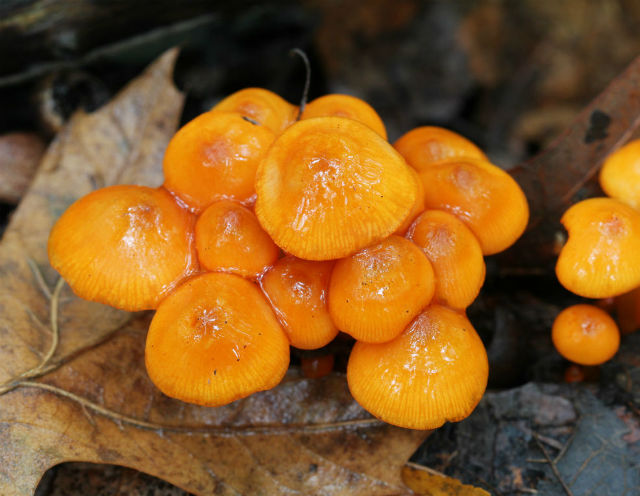
Though their caps are rather small (usually less than an inch), because they are typically found in clusters, Orange Mycena make for an eye-catching addition to the environment.

Orange Mycena 2013_10_08sr 058

This mushroom tends to grow on deciduous logs, which contain the moisture it needs to thrive. When handled, its orange pigment may stain your skin.

Orange Mycena_8041

Their brilliant hue fades as the mushrooms mature and the surface of the caps are sticky, especially in damp situations.

Orange Mycena_3773

Orange Mycena is a North American species and has been reported throughout the eastern and central United States and Canada.

orange mycena_7531

This striking and colorful mushroom provides the same service as many others – breaking down and digesting organic matter and in doing so, returning nutrients to the soil.

Third Eye Herp
E-mail

Crab Spider

snake road_7566

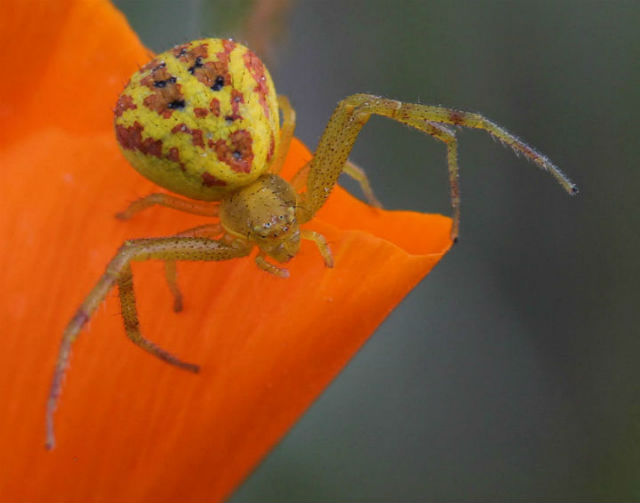
This is a fun little invertebrate that I found on my latest trip to southern Illinois. I have also seen examples in California, as well as in my home state of Ohio.

25 Crab Spider_3804

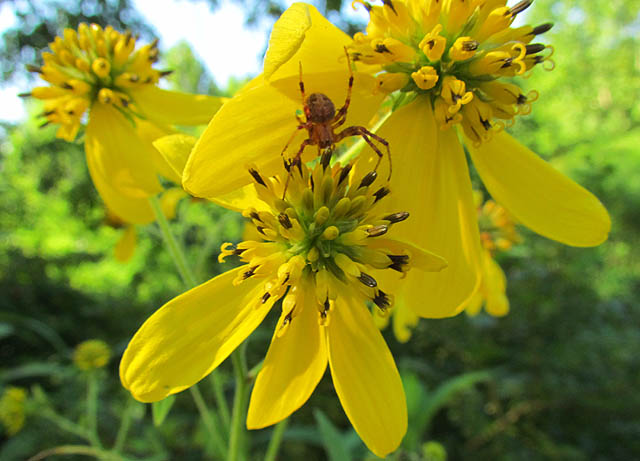
Many species on this family of arachnids are referred to as “Flower Crab Spiders,” though not all members are limited to ambush hunting in flowers.

crab spider_5288

Crab Spiders get their common name for the way they hold their two front pairs of legs, their flat shape and their ability to scuttle sideways or backwards.

crab spider_3756

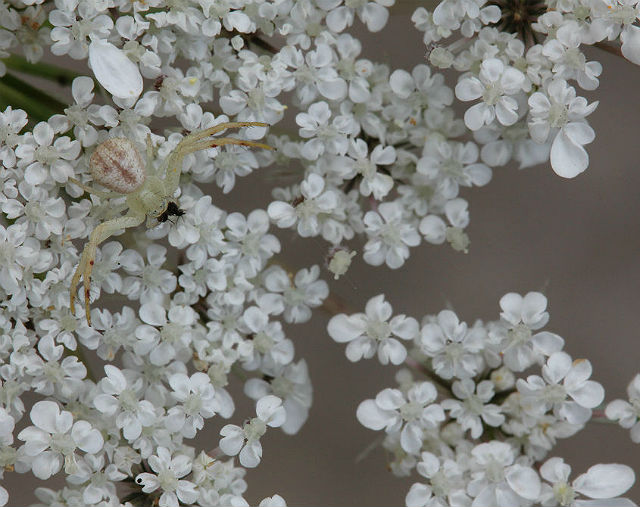
Some types frequent promising positions among leaves or bark, where they await prey, while others sit in the open, well camouflaged and using stealth by matching their surroundings.

44 crab spider_9235

Instead of spinning webs, they are hunt-by-surprise predators that wait motionless for flies, bees and similar prey. These spiders tend to be quite small, only about a half of an inch in body length, and go largely unnoticed.

crab spider 040

Although not especially dangerous to humans, scientists think that the venom of certain Crab Spiders is more potent than that of most other spiders and this allows them to quickly paralyze the large and tough bees that often visit flowers (or in this case, a cicada).

crab spider_6358

Their cool shape and wide variety of colors make Crab Spiders fun photography subjects that also present a challenge to find.

Third Eye Herp
E-mail

Central Newt

Central Newt_9175

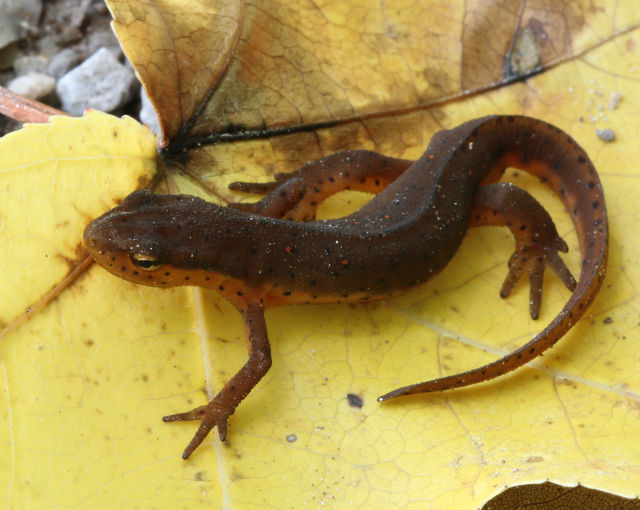
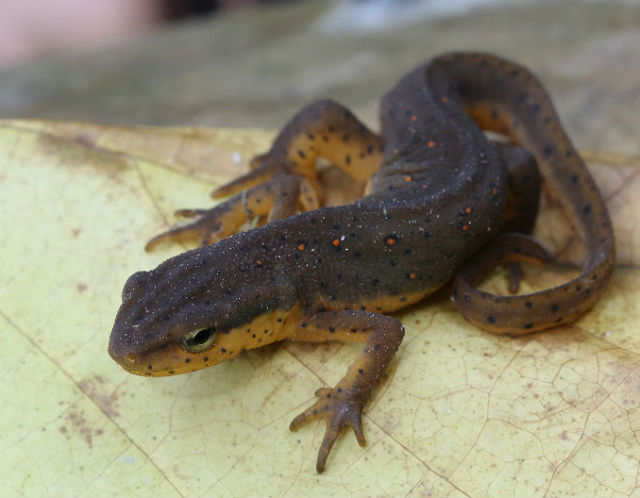
I often see this amphibian on my visits to southern Illinois. Sometimes it is out and about (especially during rainy weather), sometimes it is found hiding under logs and sometimes I see it in the water (especially at night when walking around the edges of ponds).

Central Newt_08sr 189

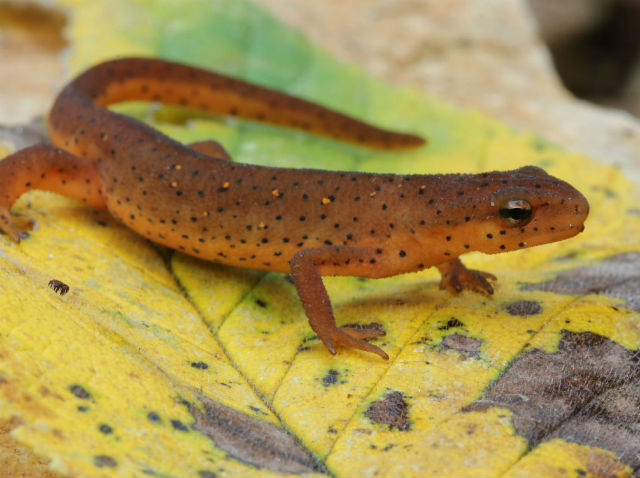
They look similar to the Eastern Newts that I find in my home state of Ohio, with olive backs covered in black spots and sporting a bright yellow belly. Two rows of small red spots may be present along the back, though in some cases this little salamander lacks the red spots entirely.

Central Newt_640

The Central Newt’s habitat is woodland ponds, swamps and occasionally water-filled ditches. Its diet consists of small aquatic invertebrates such as worms, mollusks, insects and crayfish. They may also eat tadpoles and the larvae of other salamanders.
Central Newt_2971

In the Spring, adults mate and females lay their eggs in water. The eggs hatch out into one-half inch tadpole-like larva. Like the Eastern Newt, the Central Newt has a land dwelling “eft” stage that spends 2 to 3 years wandering the forest floor before returning to water and leading a primarily aquatic life.

Central Newt_3695

After completing their aquatic larval stage, efts emerge onto land in Autumn. Their skin as an eft is rough, rather than smooth, like most salamanders. Their skin becomes smooth again when they become adults and return to the water. It is thought that the eft stage allows them to investigate new territories to spread to.

Central Newt_8084

Efts are bright orange to advertise that they are toxic to most predators. The Central Newt produces toxins in all its life stages, but the toxin is strongest during its eft stage. Their poison is tetrodotoxin, a deadly neurotoxin, which makes this species unpalatable to predatory fish and crayfish.

Central Newt_2963

Although usually only about four inches in total length, these creatures have a surprisingly long lifespan of well over 10 years in the wild.

Third Eye Herp
E-mail

Pawpaw

Cypress Swamp_9854

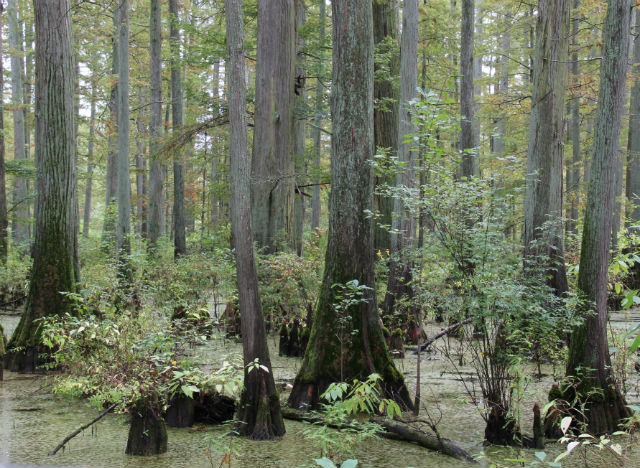
While walking along the edge of a cypress swamp in southern Illinois, I encountered this iconic tree. It’s the only member of a large, mainly-tropical plant family naturally residing in the United States, and it produces the largest edible fruit native to North America.

Pawpaw_9382

Pawpaw is a small tree, typically growing to a height of 35 feet. It tends to grow in the understory or at woodland edges, and is often found in moist places such as the bottoms of ravines, steep hillsides and on the banks of creeks.

Pawpaw_0348

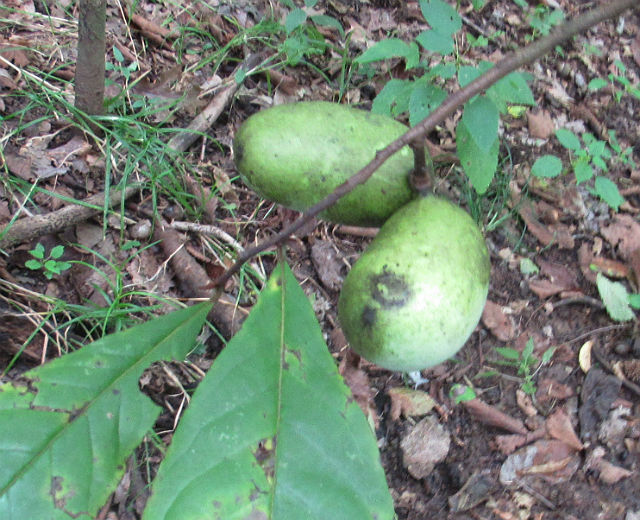
The fruit is fragrant and has a distinctly bright, tropical flavor, often compared to bananas, but with hints of mango, vanilla and citrus. It has the inelegant appearance of a small green potato and may occur in clusters on the tree.

IMG_9383

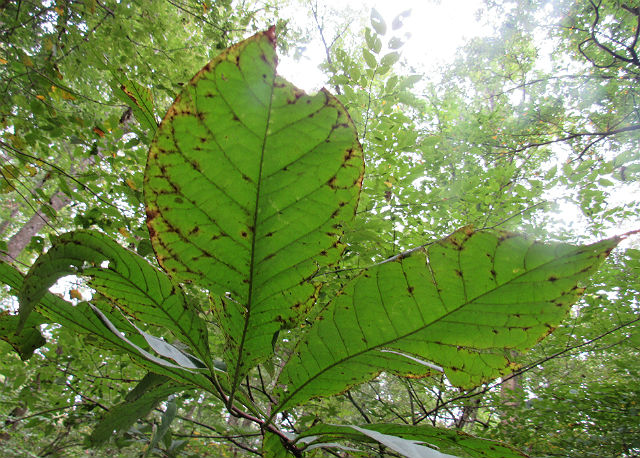
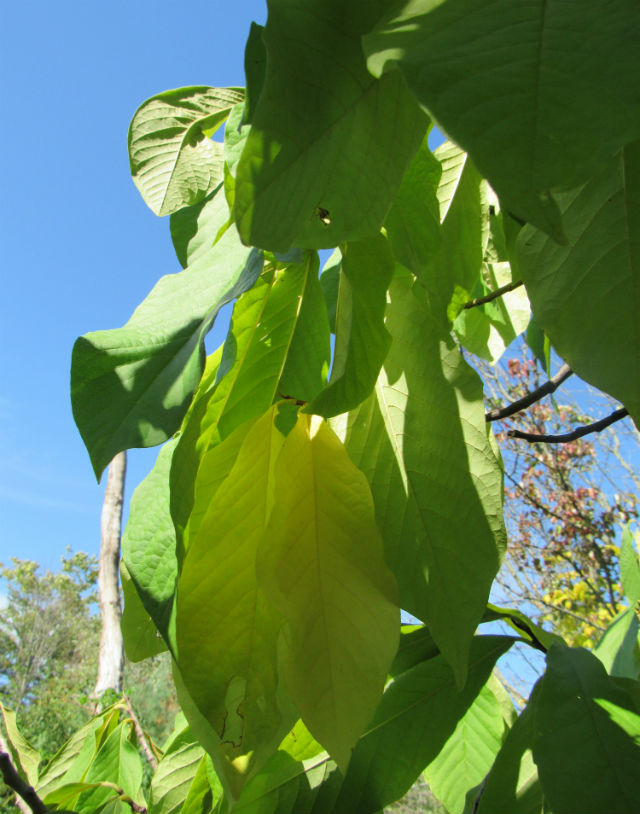
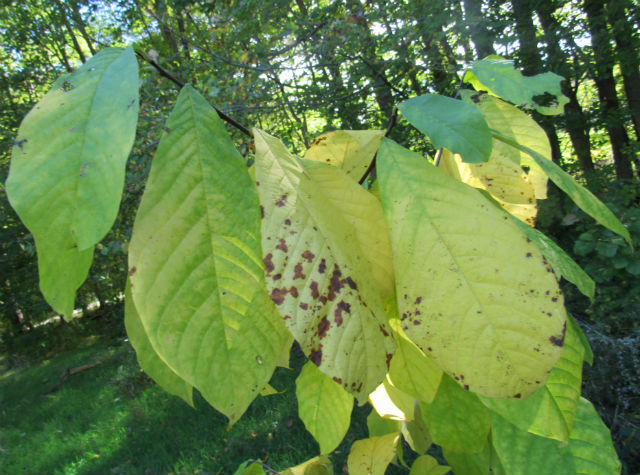
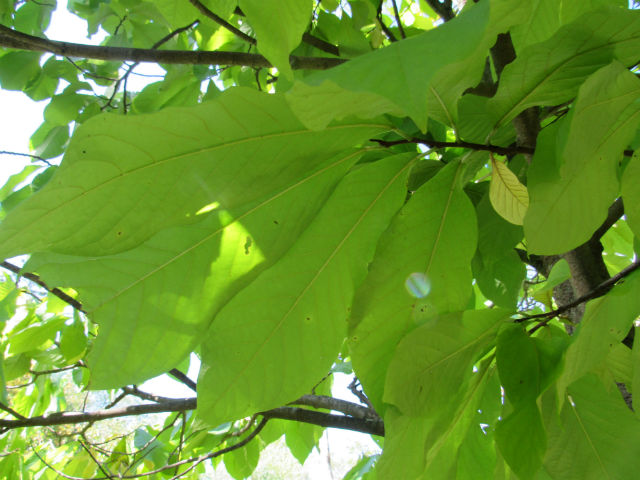
The dark green leaves (which turn yellow in Autumn) of the Pawpaw have a tropical look, with their large, shiny blades that are widest just behind the leaf tip. The leaves often hang down like “dog ears” from the twigs.

Pawpaw_0361

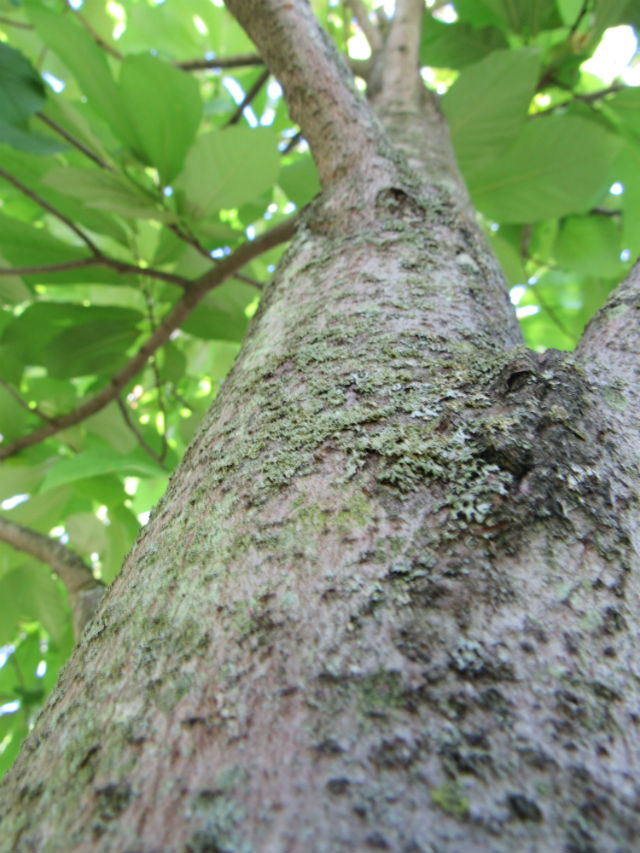
The smooth, thin, gray bark of Pawpaw becomes more warty and rough with increasing trunk girth.

Pawpaw_0346

Larvae of the Zebra Swallowtail Butterfly feed exclusively on young leaves of Pawpaw, but never occur in great numbers on the plants.

Pawpaw_0342

This tree is also known as Quaker Delight or Hillbilly Mango.

Third Eye Herp
E-mail

Southern Leopard Frog

swamp_9249

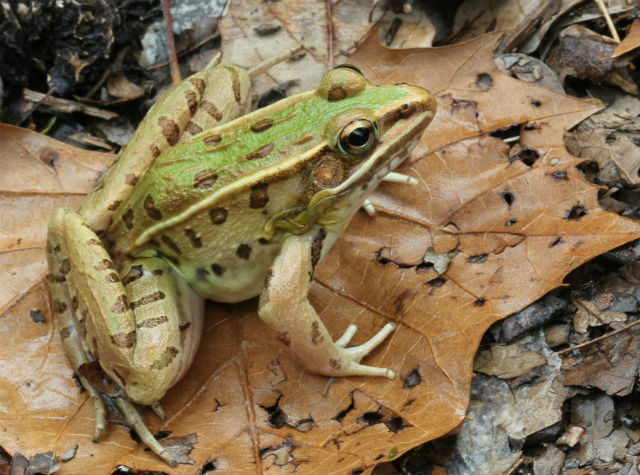
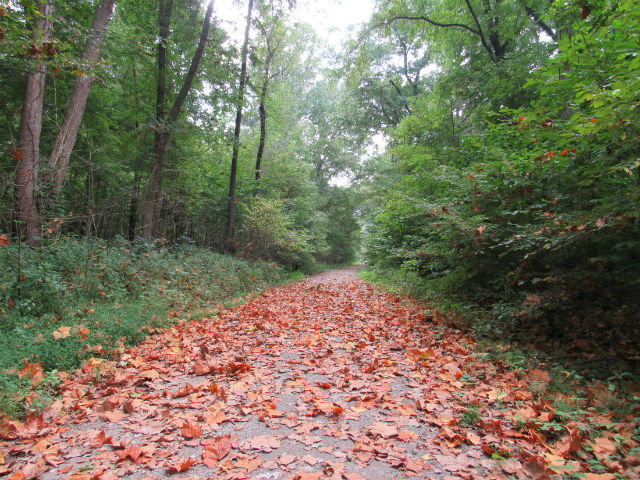
This is one of the most conspicuous herps that I see on my visits to southern Illinois. At night they are often out and about and seen crossing roads. In the daytime I’ve encountered them in a range of habitats, including deep in the woods and high up in limestone bluffs.

IMG_6616

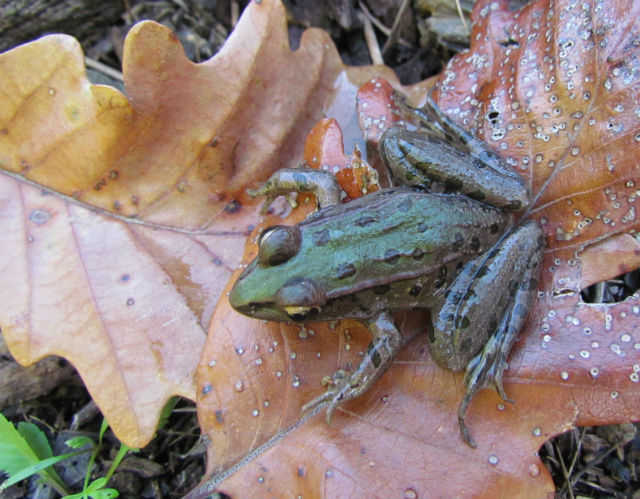
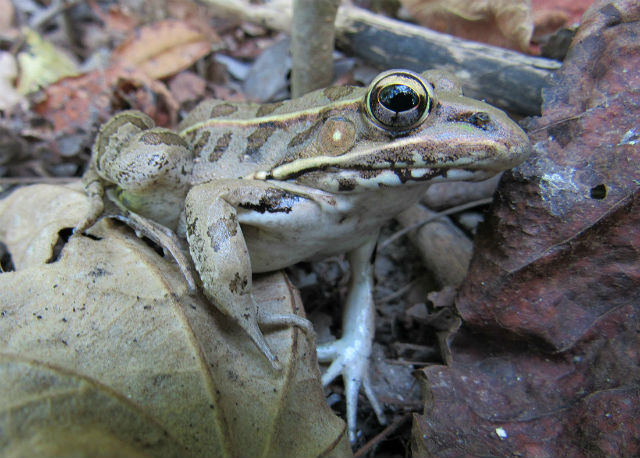
It is also one of the most variable amphibians in the area in regards to appearance. It can be green or brown in color with varying amounts of spots – and sometimes no spots at all.

Leopard Frog_3733

Although Southern Leopard Frogs are often found close to water, they are more terrestrial than other frogs in their genus and can stray far from water. They are active both by day and night and can be seen in large numbers on rainy nights.

leopard frog_3177

They are powerful, agile jumpers and may flee away from water rather than toward it. When being pursued, they leap in haphazard, zigzag patterns that make they very difficult to successfully pursue and capture.

southern leopard frog_9007

Southern Leopard Frogs search for food mainly on land. Insects make up the majority of their diet, but they also feed on spiders, pillbugs and worms.

Leopard Frog_3717

Despite is being quite common, I always enjoy coming across this beautiful amphibian – no two are alike!

Third Eye Herp
E-mail

European Hornet

Snake Road_9975

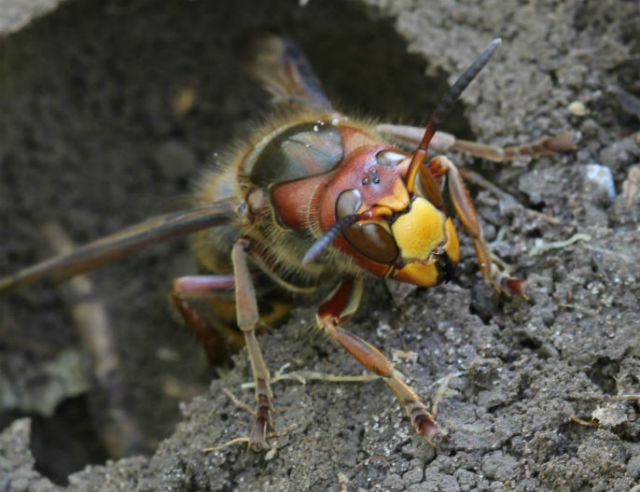
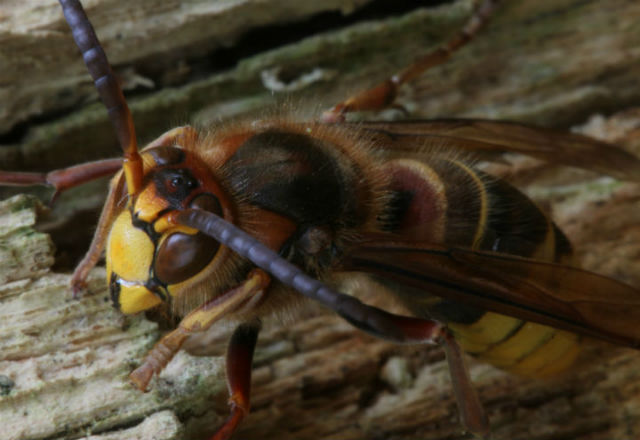
While searching for snakes in southern Illinois this month, I flipped a rock and under it was this large (over an inch long) insect. This the only true hornet found in North America, having been introduced by European settlers in the 1800′s.

European Hornet_3938

Most examples I’ve seen have been in the Autumn and are probably females (mated queens) looking for a place to overwinter before starting a new colony the following Spring. Only overwintering queens survive in protected sites such as under loose bark, in tree cavities, under rocks and in buildings. All other colony members produced in the current year perish.

European Hornet 026

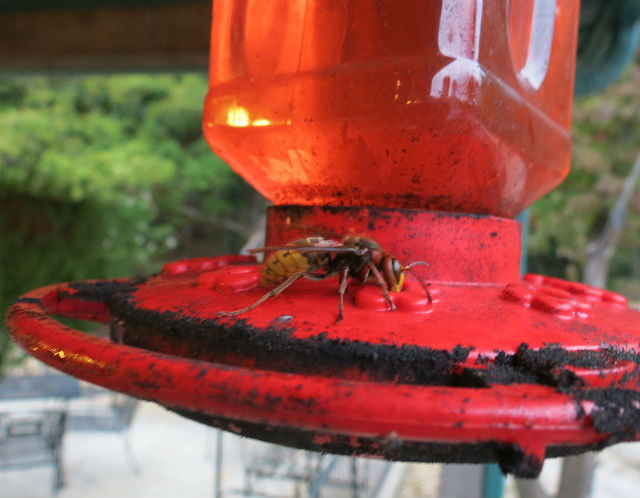
I have seen European Hornets in my home state of Ohio as well. They are mainly carnivorous and hunt insects such as beetles, caterpillars, moths, dragonflies and crickets. They also feed on fallen fruit and other sources of sugary food. I saw this one at a hummingbird feeder. These insects have been observed stealing prey from spiders, which can be classified as an example of kleptoparasitism.

European Hornet_5489

Though they probably have a painful sting, they usually aren’t particularly defensive when not protecting their nest. This woodland species constructs its large paper hive in natural cavities, especially in hollow trees. The nests typically have 200-400 workers.

European hornet_8460

It’s always a neat experience to observe one of these impressive invertebrates while out on a hike.

Third Eye Herp
E-mail

Red Milk Snake

Red Milk Snake_5475

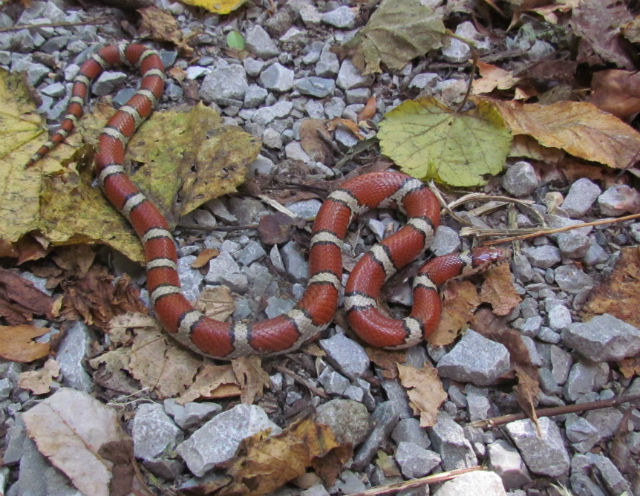
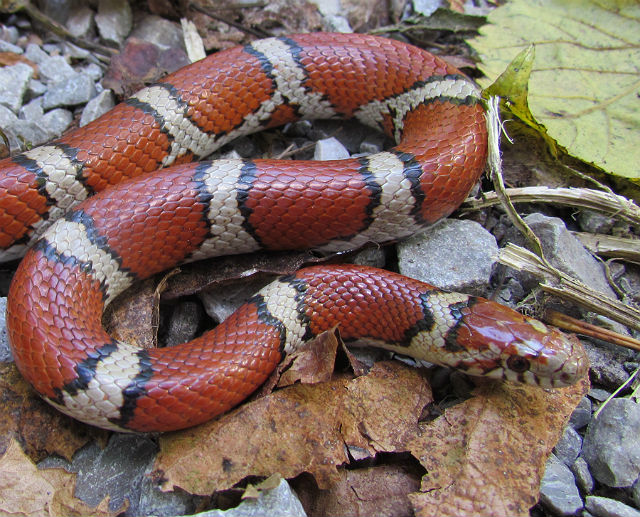
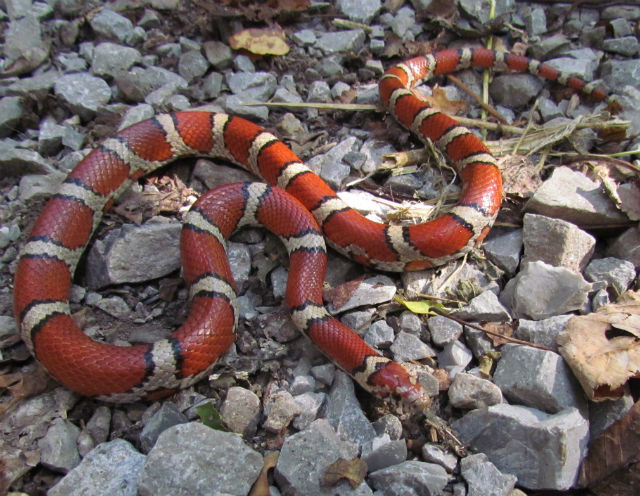
I saw this beautifully colored serpent crossing Snake Road while visiting southern Illinois. It’s overall pattern is similar to the Eastern Milk Snake which I often find in my home state of Ohio.

Red Milk Snake_3626

Its body color can be white, gray, yellow or light tan, with red or orange black bordered blotches. Like the Eastern Milk Snake, its belly is strongly checkered in a pattern of black and white squares.

Red Milk Snake_3622

Red Milk Snakes are secretive and seldom seen out and about. They spend much of their time hiding under rocks and logs or in rodent burrows. They are not particularly large snakes, often only about two feet in length. They subdue their prey by constriction and feed on lizards, snakes and small mammals.

Red Milk Snake_3614

It’s always thrilling to come across this boldly marked, colorful snake in its natural environment.

Third Eye Herp
E-mail

Ant Mimic Jumping Spider

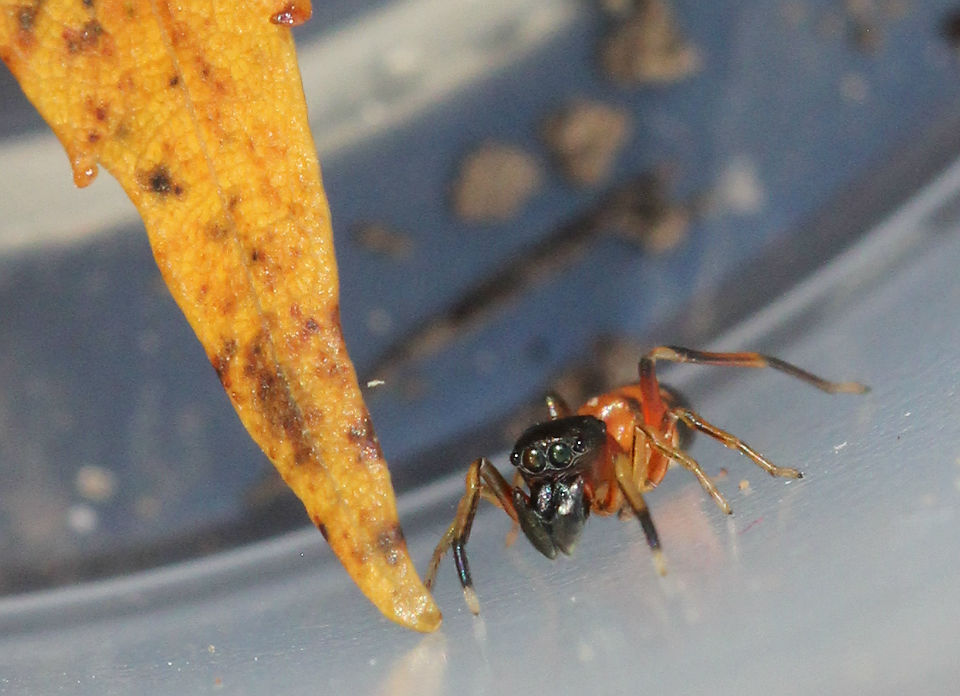
Ant Mimic Jumping Spider_3695

Working in my yard this weekend, a came across this tiny, yet fascinating invertebrate. It’s very small size and body shaped more like ant than a spider, at first glance, it may be difficult to tell that this creature is a spider.

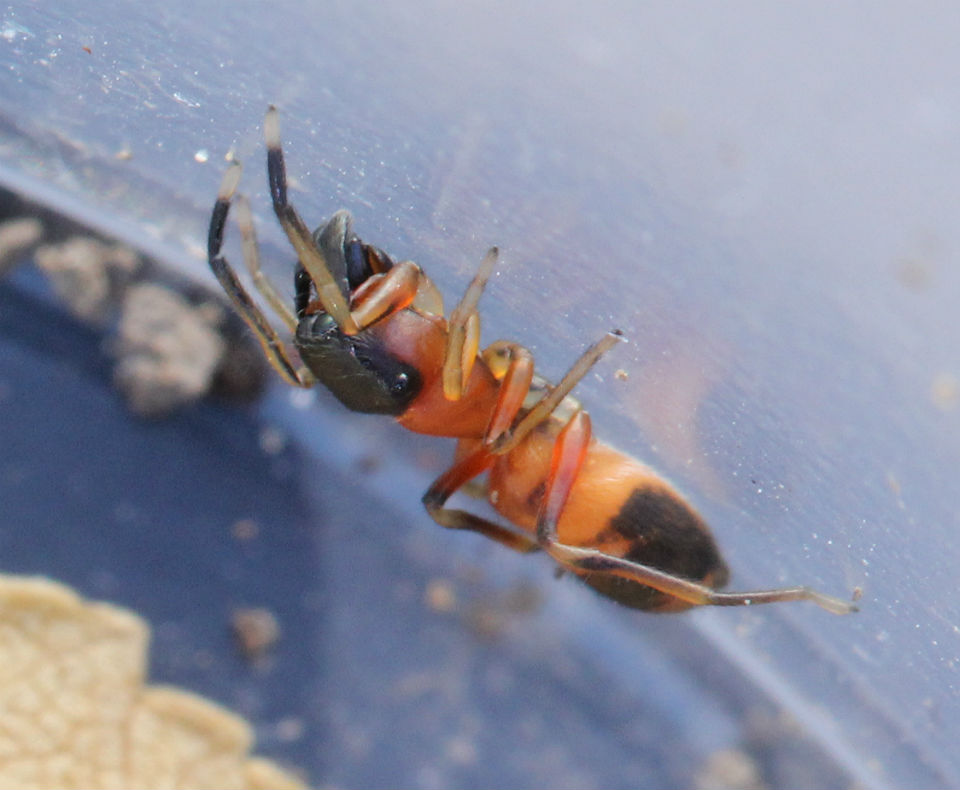
Ant Mimic Jumping Spider_3706

It walks with its front pair of legs raised in the air as if they were antennae, making it tricky to identify it as a spider when first counting legs. The resemblance to ants is a defense against predators. Many types of ants are pungent to taste and are unlikely to become food for larger predators.

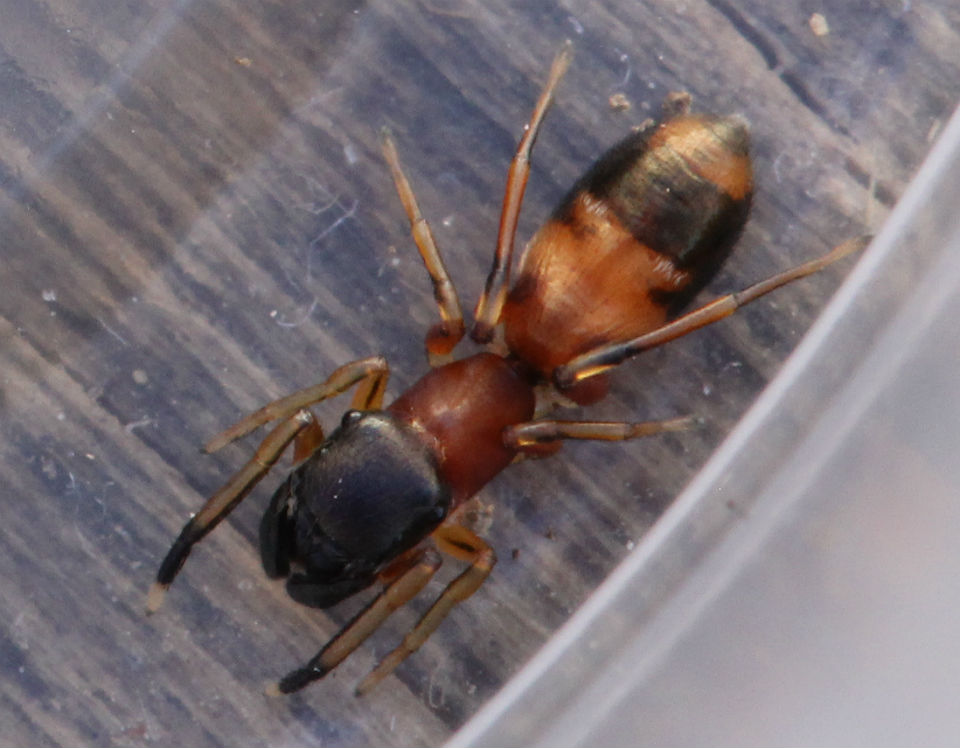
Ant Mimic Jumping Spider_3702

Ant Mimic Spiders often live near ant hills or nests to benefit from the ant’s unsavory reputation for tasting bad. They can be found anywhere ants are found: fields, lawns, gardens, woods, on trees and under stones.

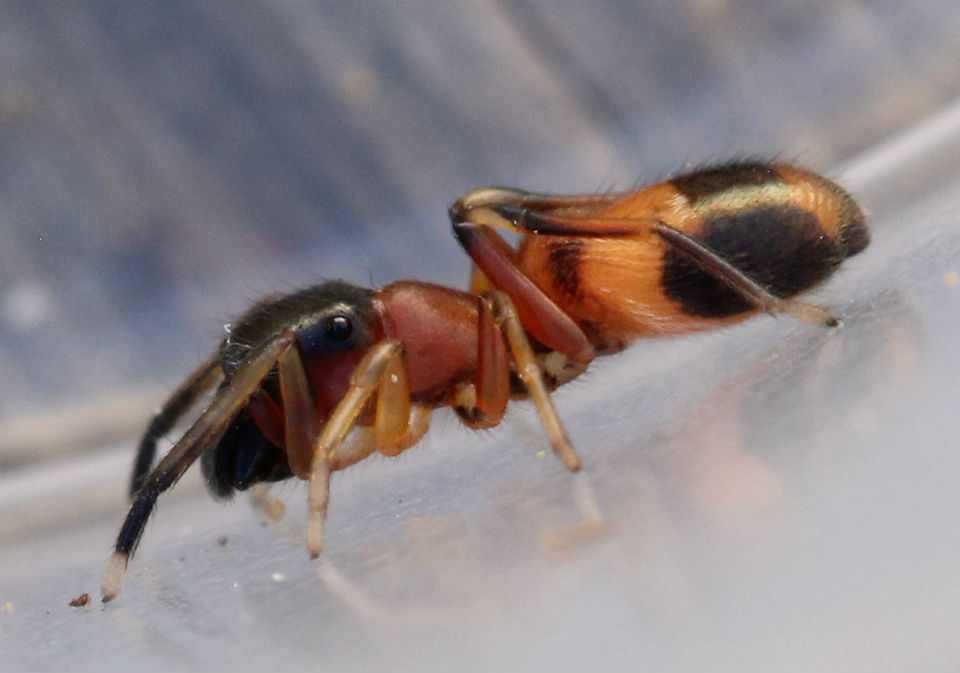
Ant Mimic Jumping Spider_1715

The Ant Mimic Jumping Spider is one of the few species in genus Myrmarachne that is found outside the tropics. Its species name, formicaria means “ant-like” in Latin.

Third Eye Herp
E-mail