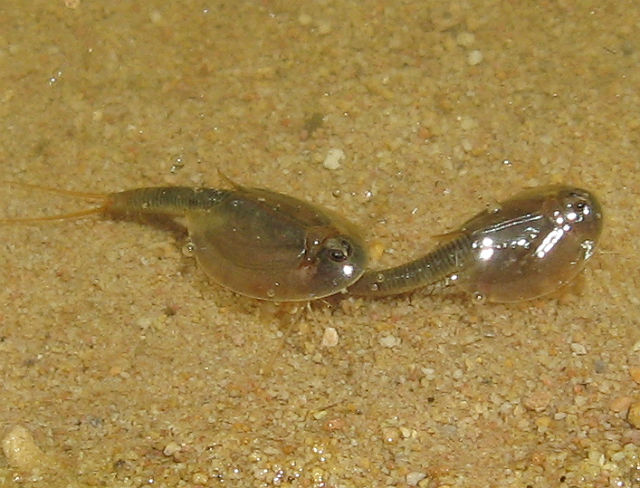
Foothill Yellow-legged Frog

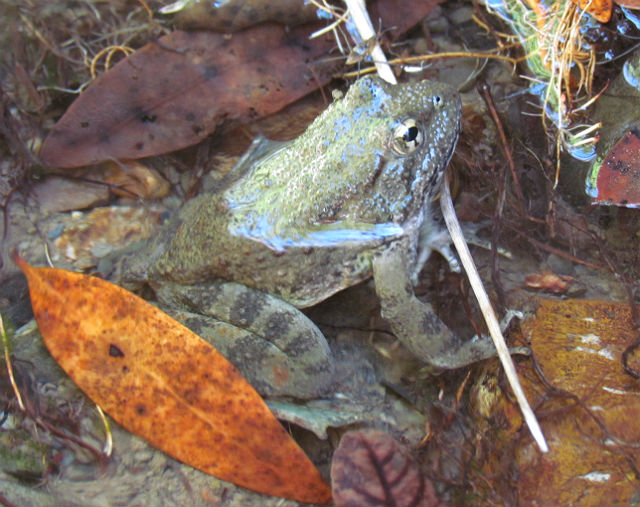
Foothill Yellow-Legged Frog_2493

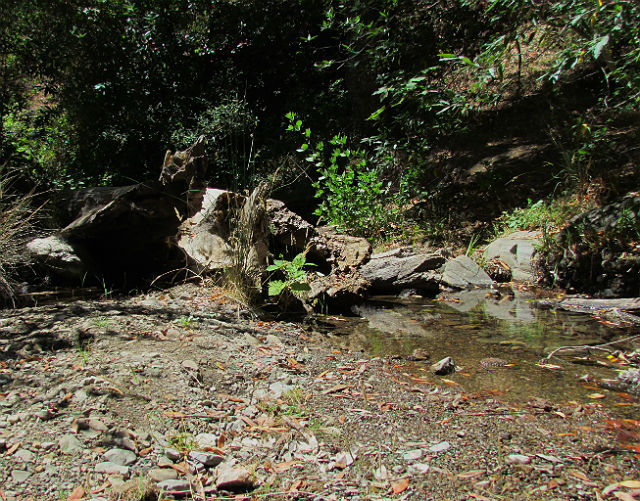
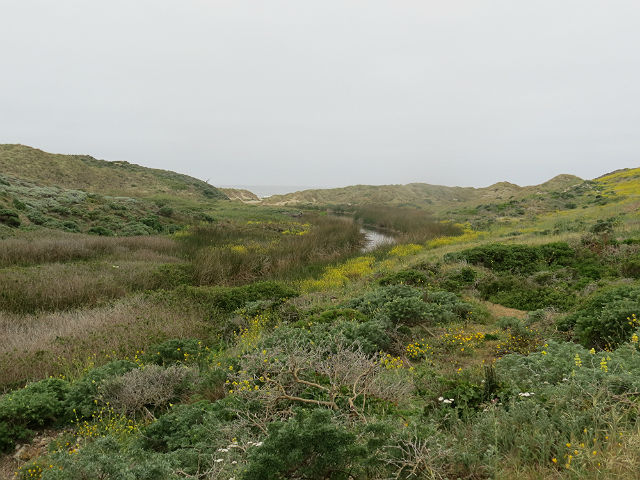
While visiting California, I decided to seek out this creek-dwelling creature. It was a bit of a challenge, since it is a Federal Species of Concern and California Species of Special Concern.

Foothill Yellow-Legged Frog_2512

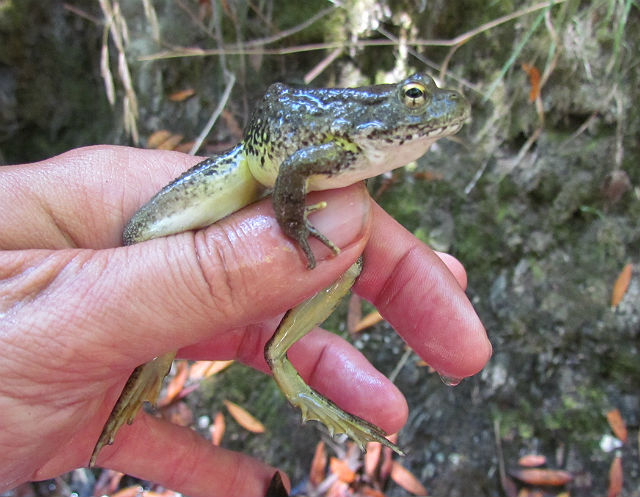
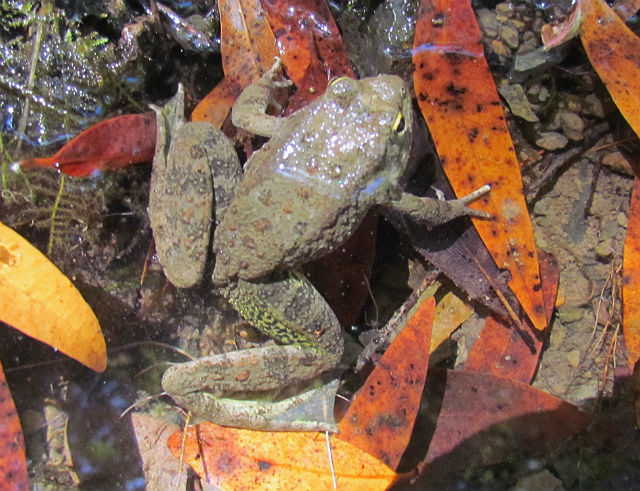
After quite a bit of hiking I came upon a creek. It wasn’t long after arriving that I spotted an amphibian just shy of three inches with bumpy skin in muddy shades of red, green or brown. It was unremarkable at first glance, but flipping it over revealed a distinctive lemon-yellow color under its legs.
Foothill Yellow-Legged Frog_2507

The Foothill Yellow-legged Frog can be found in Pacific from the upper reaches of the Willamette River system, Oregon, all the way south to the Upper San Gabriel River in Los Angeles County, California.
Foothill Yellow-Legged Frog_2504

Once thriving across their range, these frogs have disappeared from more than half their historical localities due to a variety of threats, including dams, timber harvesting, mining, livestock grazing, roads and urbanization, climate change, pollution, invasive species and disease.

Foothill Yellow-Legged Frog_2509

This amphibian uses slow-flowing streams and rivers to lay its eggs during the Spring months after the flow from the Winter storms has settled. After hatching, the tadpoles typically stay around the location of the egg cluster. After metamorphosis, which typically takes 3-4 months, the juvenile frogs make their way upstream from the hatching site.
Foothill Yellow-Legged Frog_2484

The Foothill Yellow-legged Frog is one of the most poorly-known frog species, as no detailed study of its life history has ever been undertaken. I felt very lucky to have found a few individuals of this very cool amphibian on my outing.
Third Eye Herp
E-mail

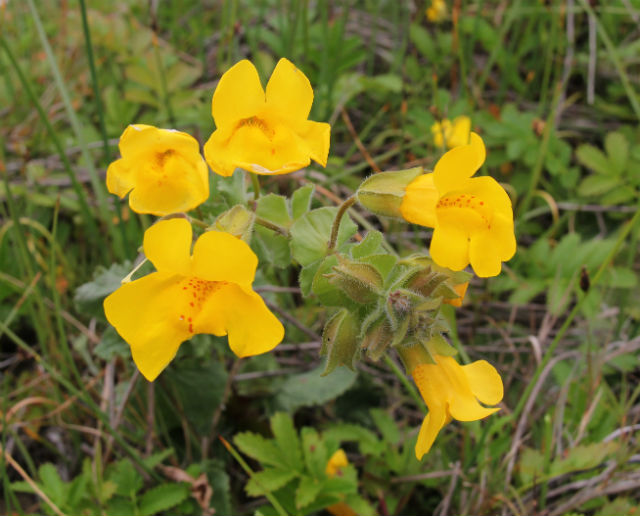
Yellow Monkeyflower

Yellow Monkey Flower_0878

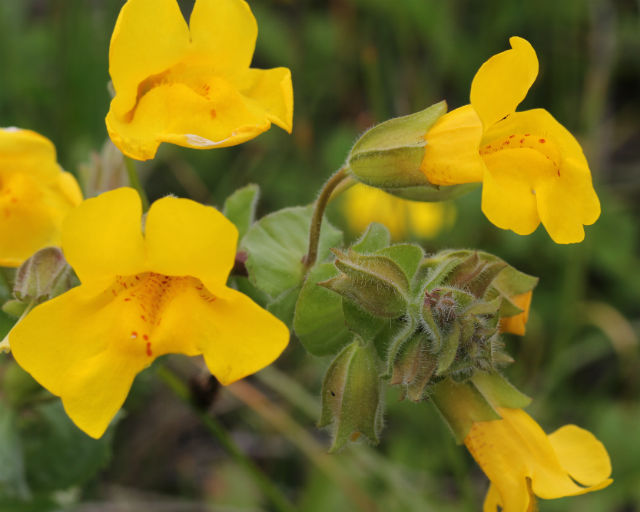
I sometimes come across this wildflower while visiting California. It is a member of the figwort family, the same family as Snapdragons, which I grow in my garden. The resemblance is clear.

Yellow Monkey Flower_9275

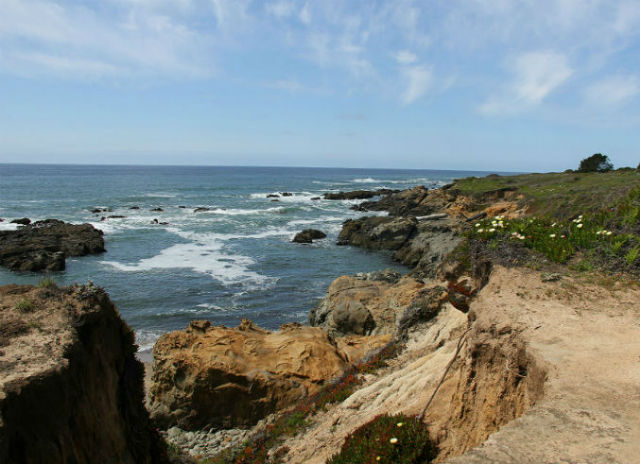
Yellow Monkeyflower is found in a wide range of habitats, but prefers wet places, including the splash zone of the Pacific Ocean, the chaparral of California, the geysers of Yellowstone National Park and alpine meadows. I see them the most in the Santa Cruz Mountains, where it can be quite misty.

Yellow Monkey Flower_4984

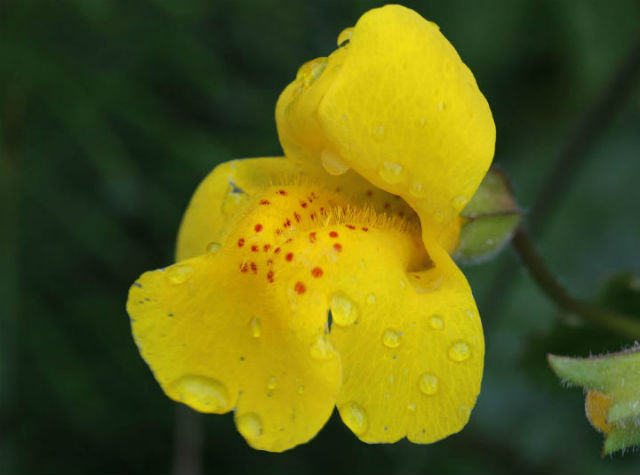
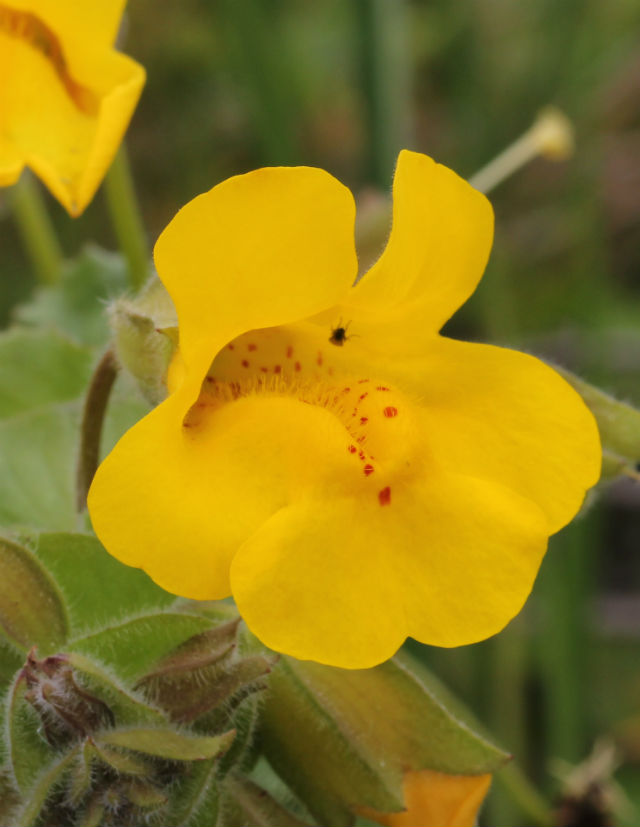
This plant can grow as high as three feet. The flowers have red or maroon spots on the wide, hairy throat of the lower lip petal. Its coarsely toothed leaves are edible and can be eaten raw or cooked; they are sometimes added to salads as a lettuce substitute, though they have a slight bitter taste.

Yellow Monkey Flower_9279

Over the years, Yellow Monkeyflower has been a model organism for studies of evolution and ecology. There may be as many as 1,000 scientific papers focused on this species.

Yellow Monkey Flower_9283

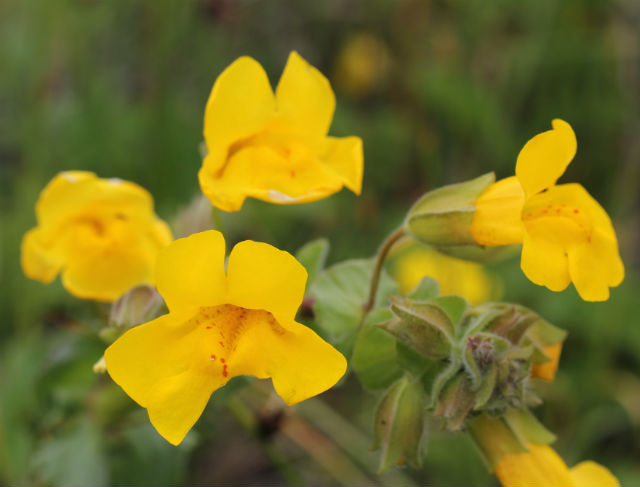
It’s genus, Mimulus, comes from the Latin word that refers to “mime,” a reference to the funny clown-like face the flower resembles. “Monkeyflower” is another reference to the shape of the flower.

Yellow Monkey Flower_9276

Funny or not, this eye-catching bright yellow-flowered plant is a welcome sight while on my travels.

Third Eye Herp
E-mail

Coast Garter Snake

Coast Garter Snake 20078

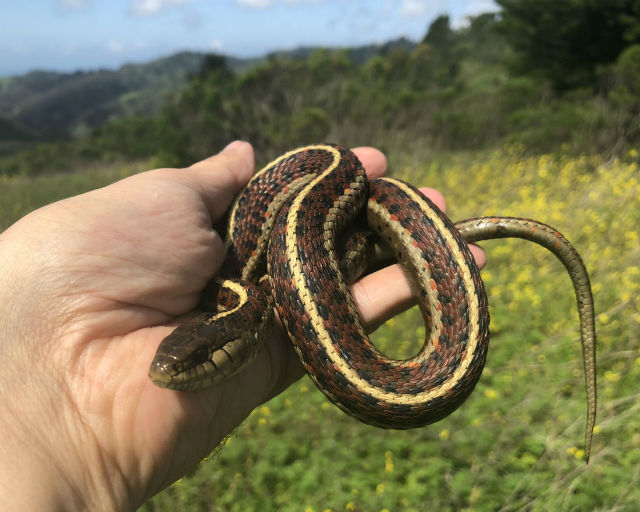
Without a doubt this is the most commonly encountered serpent when I’m on my outings in California. Here’s one of several that I found this week while visiting The Golden State.

coast garter snake_0337

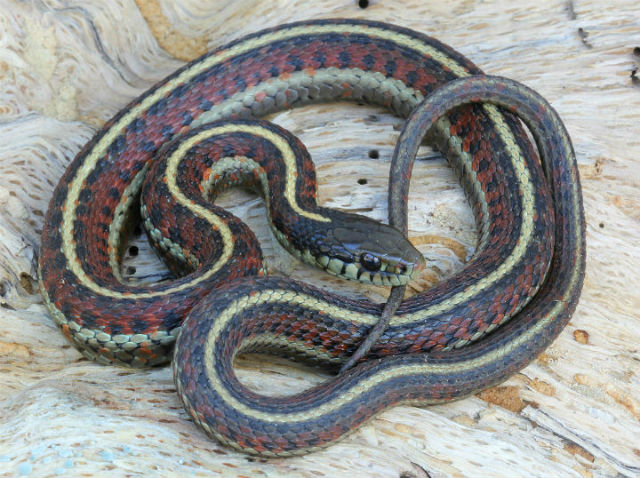
This reptile is highly variable in appearance, with the colors between its yellow stripes brown or olive, with a pattern of dark spots, intermixed with a suffusion of red, orange or rust coloring.

Coast Garter Snake 20102

It inhabits a range of ecosystems and elevations – I have found it at sea level as well as at the top of the Santa Cruz Mountains.

Coast Garter Snake 20bf28

Despite its subspecies name terrestris, it is often found near water. Open sections of conifer forests, fields, foothills and along creeks and at the edges of ponds are some of the spots where I’ve found them.

coast garter snake 20002

Reflecting the diversity of habitats frequented by these snakes, a wide variety of foods are eaten, including fish, amphibians, leeches, slugs, earthworms, lizards, snakes, small mammals and birds.

Coast Garter Snake_1075

This snake occurs in a narrow coastal strip from the southern part of California up until southern Oregon; hence the common name “Coast Garter Snake.”

coast garter snake 20037

Like other Garter Snakes in the United States, this species gives birth to live young in mid to late Summer.

coast garter snake_5217

Though commonplace, I enjoy seeing this classic feeding generalist that is adaptable to take advantage of they variety of prey that exists in California’s highly variable climatic conditions.

Third Eye Herp
E-mail

Devil Stripe-tailed Scorpion

Stripe-tailed Scorpion

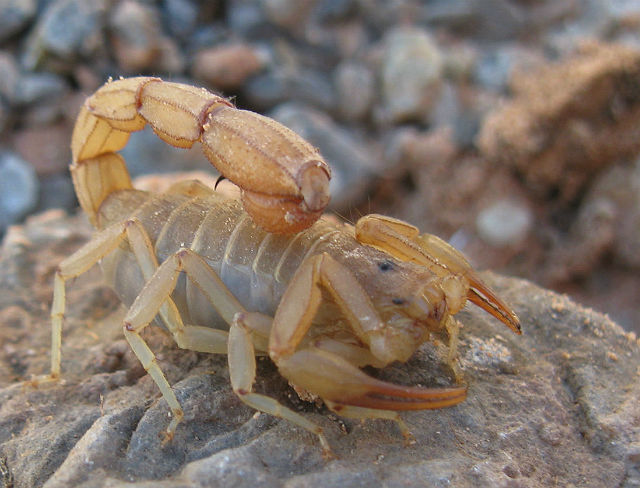
While exploring the desert, I often come across this creature, which lives primarly in Arizona and occupies a wide variety of habitats, from sandy deserts to grasslands to mountains.

Stripe-tailed Scorpion 266

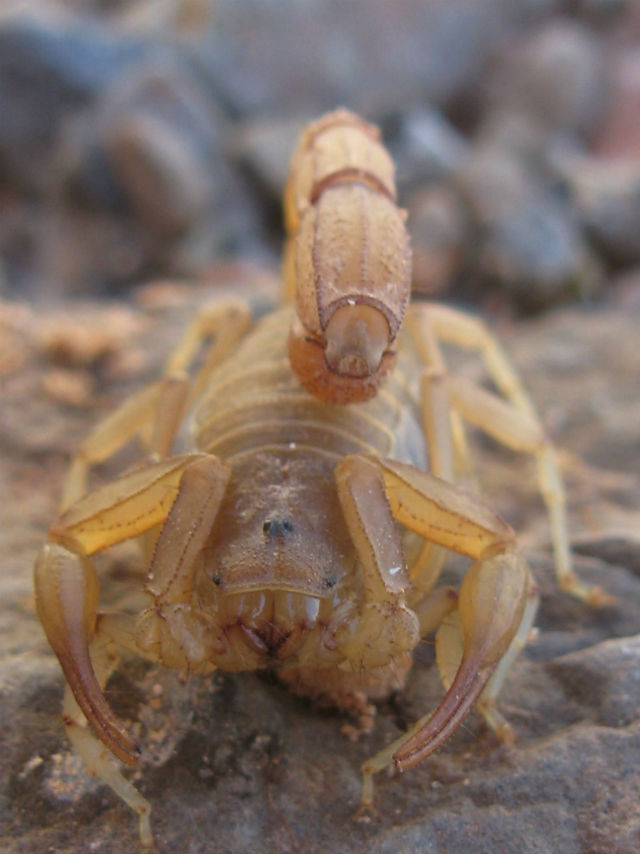
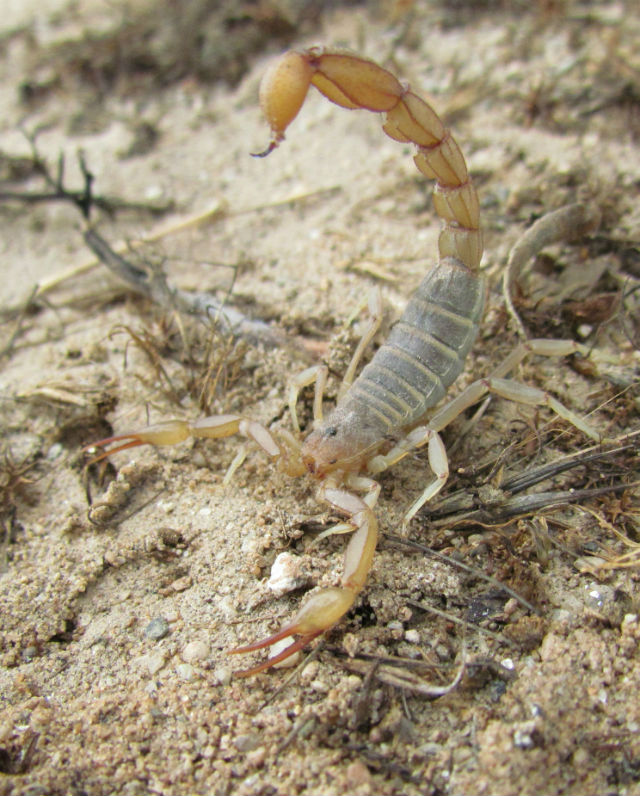
Like other scorpions, it has a long tail equipped with a venomous stinger used for defense and to subdue struggling prey (usually insects). It also is equipped with pincers to catch prey and tear it to pieces.

Stripe-tail Scorpion 264

Although the sting of this very common scorpion is reportedly quite painful, it is not dangerous to people with normal reactions and the pain soon vanishes.

Stripe-tailed Scorpion_1236

Scorpions have been found in fossil records, including coal deposits from the Carboniferous Period. They are thought to have existed in 425-450 million years ago. These arachnids have changed little in the hundreds of millions of years since they first climbed from the primal seas and took their place among earth’s first terrestrial arthropods.

Stripe-tailed Scorpion 0057

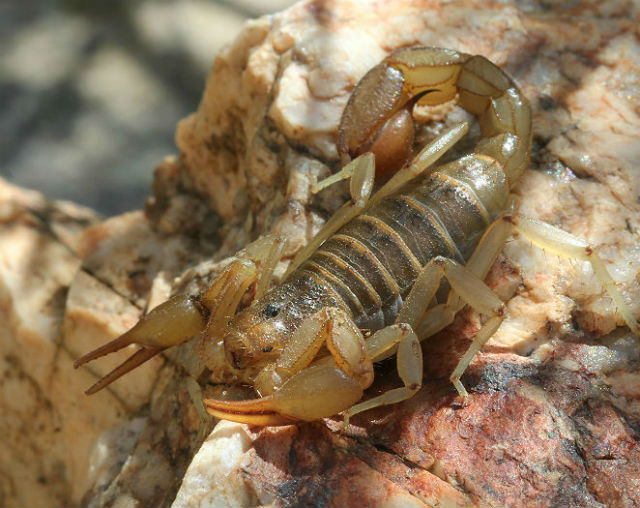
Devil Stripe-tailed Scorpions are sturdy and medium-sized. They usually are under rocks during the day. Like all scorpions, they are nocturnal and venture from their shelters at night to forage for prey.

Stripe-tailed Scorpion_1228

A stout tail with darkly-marked ridges running lengthwise and a total body length of about two inches are identifying characteristics of this desert ground dweller.

Third Eye Herp
E-mail

Mojave Fringe-toed Lizard

Mojave Fringe-toed Lizard_2920

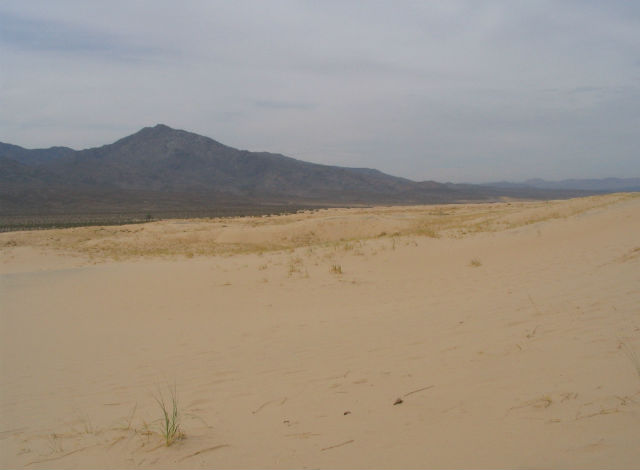
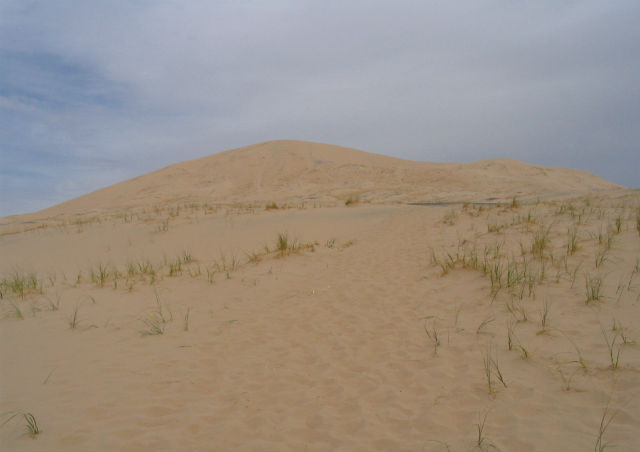
Hiking Kelso “Singing” Sand Dunes in California is an odd sensation. It feels like you are walking up an escalator that is going down as the sand shifts under your feet.

Mojave Fringe-toed Lizard_2919

The largest dune field in the Mojave Desert also offers a chance of hearing a low, rumbling “song” that can not only be heard, but can also be felt vibrating through the ever shifting ground.

Mojave Fringe-toed Lizard_2954

Although the environment at first seemed barren and lifeless, a bit of movement caught my eye. Then it was gone. A little while later I saw a similar movement and this time carefully watched where the creature buried itself.

Mojave Fringe-toed Lizard_2946

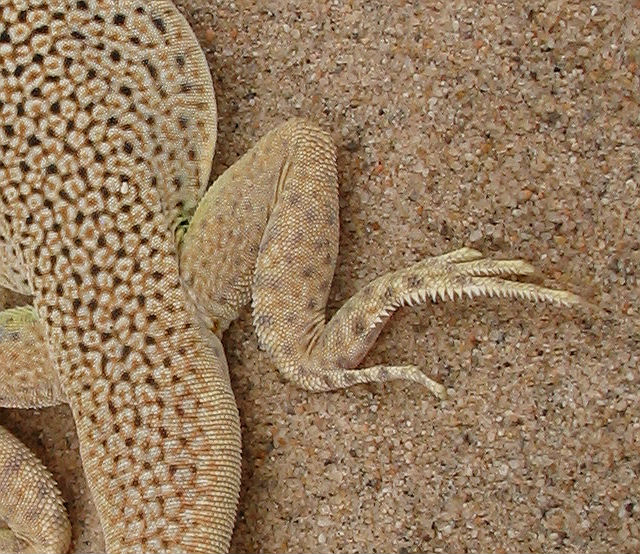
The Mojave Fringe-toed Lizard is a flat-bodied lizard with smooth, sand-colored skin featuring a pattern of small black spots. Their habitat is restricted to areas containing fine wind-blown sand dunes, the margins of dry lake beds, desert washes, and hillsides. Large, triangular-shaped fringes on their rear toes are used for speed and mobility in the sand.

Mojave Fringe-toed Lizard_2955

This reptile feeds on small invertebrates that dwell close to the sand’s surface, such as ants, beetles, grasshoppers, and scorpions. They also eat seeds, leaves, grasses, and flowers.

Mojave Fringe-toed Lizard

This is a speedy, ground-dwelling lizard that runs on its hind limbs when at top speeds. When threatened it often runs a short distance and then wriggles under the sand, chisel-shaped snout first. This was a really neat place to encounter a really neat lizard!

Third Eye Herp
E-mail

Speckled Rattlesnake

Speckled Rattlesnake 411

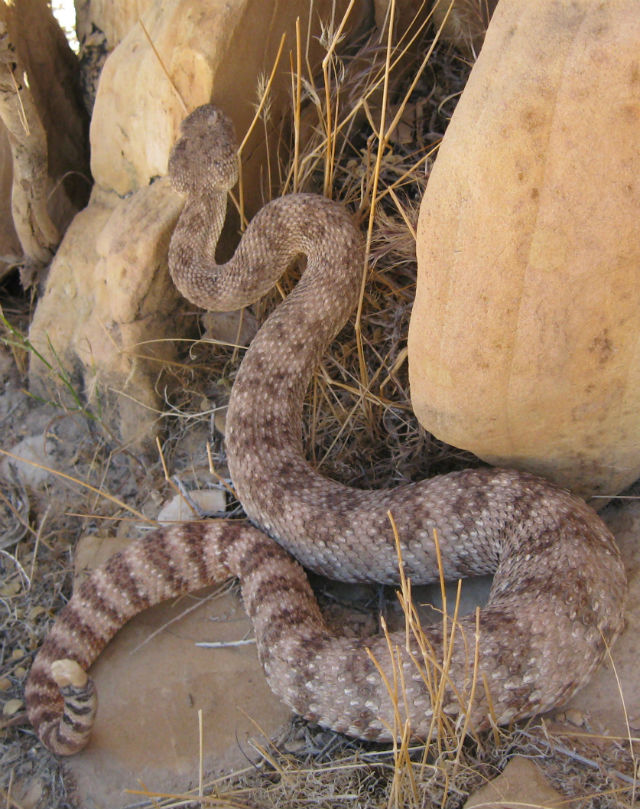
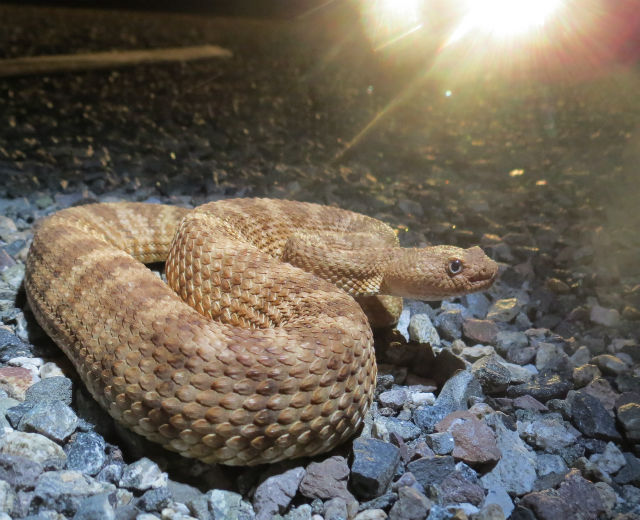
My first example of this snake I found in the daytime in Valley of Fire State Park (NV), most of the others I have encountered while roadhunting at night in Nevada and Arizona. This is a venomous species found in the Southwestern United States and northern Mexico.

Speckled Rattlesnake 408

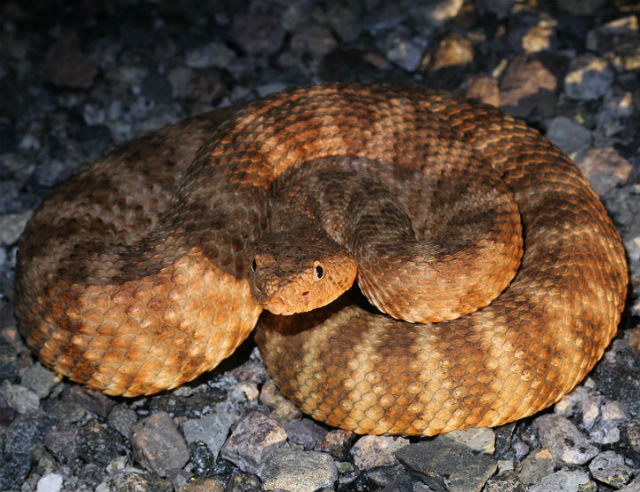
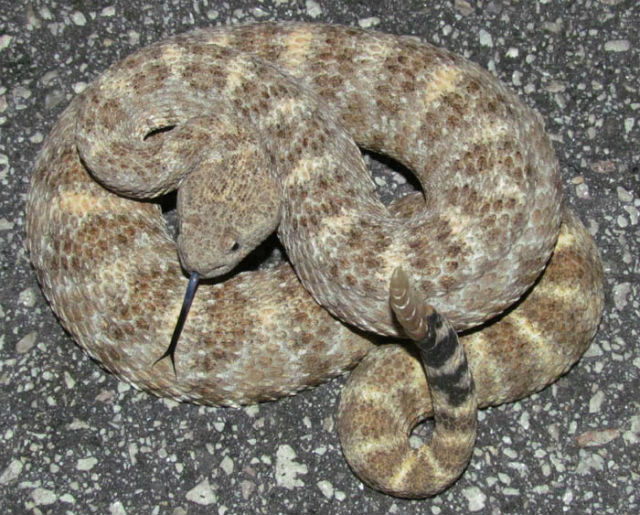
The Speckled Rattlesnake is not a particularly large snake; most measure 2 to 3 feet in length. This species varies in color, often matching the earth tones of the rocks and soil in its habitat. Some occur in beautiful shades of orange or pink.

speckled rattlesnake_6002

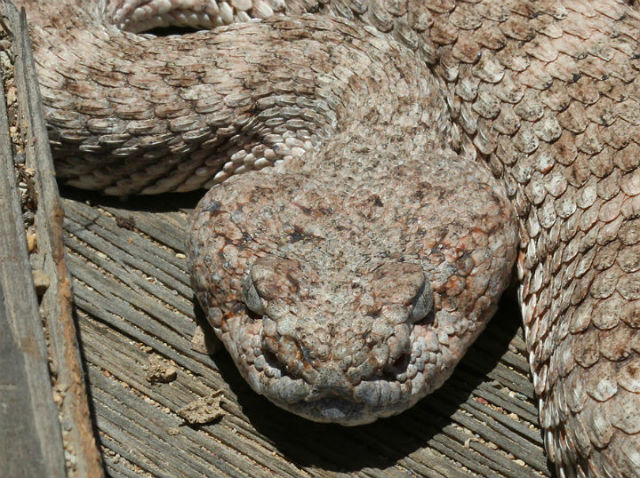
Like all rattlesnakes, this reptile has heat-sensing pits on either side of its head with which it detects warm-blooded prey. The pits are located in between the nostril and the eye.

Speckled Rattlesnake 20062

With a scientific name of Crotalus mitchellii, it is named in honor of Silas Weir Mitchell (1829–1914), a medical doctor who also studied rattlesnake venom.

Speckled Rattlesnake_3511

The Speckled Rattlesnake eats mice, rats, lizards and birds. It uses venom injected through its long, hollow, retractable fangs to kill and begin digesting its prey.

Speckled Rattlesnake

This is an alert, nervous species most often associated with rocky hillsides and outcrops. In older literature, this snake is known as the Faded, Bleached and Granite Rattlesnake.

Third Eye Herp
E-mail

Great Plains Toad

Great Plains Toad 069

While visiting Pahranagat National Wildlife Refuge in the Mojave Desert, I heard explosive jackhammer-like metallic trills that lasted almost a minute. I decided to investigate.

Great Plains Toad 109

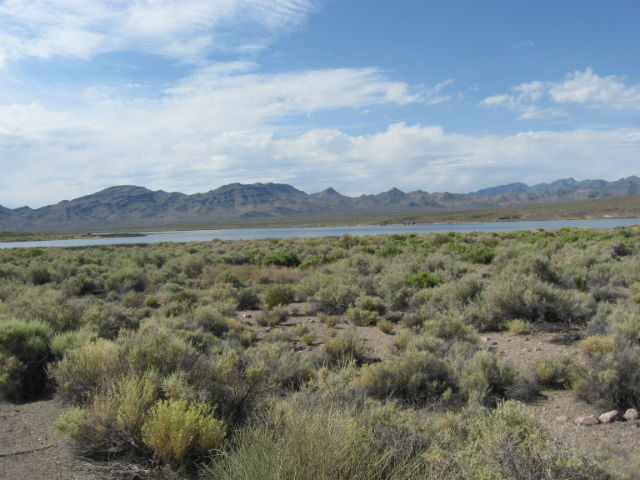
Located in a region of Southern Nevada which receives only about 6-1/2 inches of rain per year, the refuge’s lakes, marshes, meadows and tall Cottonwood Trees are quite a contrast to the surrounding desert; it’s like an oasis.

Great Plains Toad 107

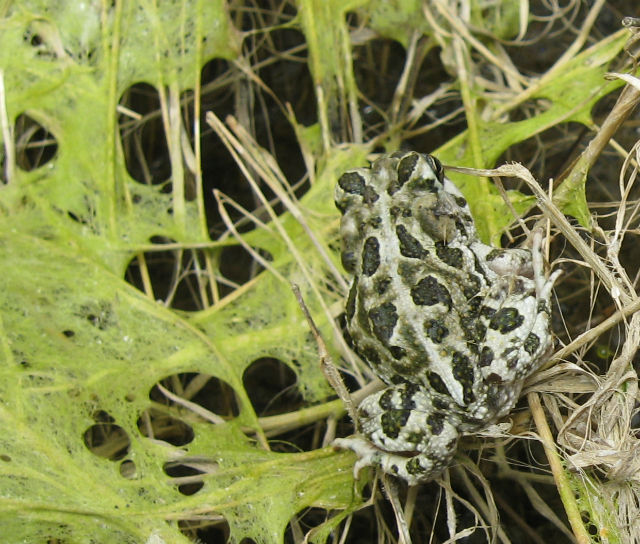
I eventually pinpointed where the noise was coming from and located my first ever Great Plains Toad. It was easily identified by its large, symmetrical olive blotches with light borders on a background color of gray-brown to green. It was a robust toad with dry, warty skin.

Great Plains Toad 110

Additional looking turned up a few more. This creature occurs in deserts, grasslands, semi-desert scrublands, open floodplains, and agricultural areas. The Great Plains Toad is beneficial to farmers, as its primary diet is various species of cutworms as well as other insects.

Great Plains Toad 101

This amphibian is widespread in the Great Plains States and the Southwestern United States. In dry areas it may only emerge from its burrow for a few weeks when conditions are right, and usually at night; but in areas with permanent water and abundant rain, it may be active all day.

Great Plains Toad 112

The Great Plains Toad is an accomplished burrower and often remains underground in the daytime if conditions aren’t ideal for it to be out and about. It has spades on its hind feet which makes them well equipped for digging.

Great Plains Toad 102

This amphibian is slow moving, often using a walking or crawling motion along with short hops. Like most toads in the United States, it relies on the secretion of poison from its wart-like glands to deter predators.

Great Plains Toad 115

It was very cool to come across this unexpected amphibian while on my visit to the Silver State.

Third Eye Herp
E-mail

Chuckwalla

31 chuckwalla 3125

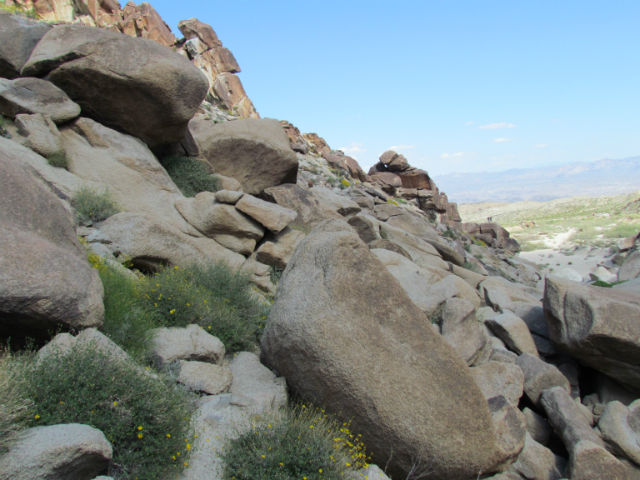
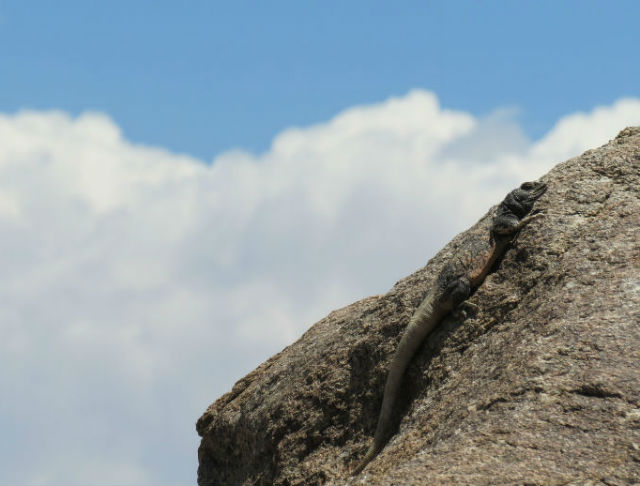
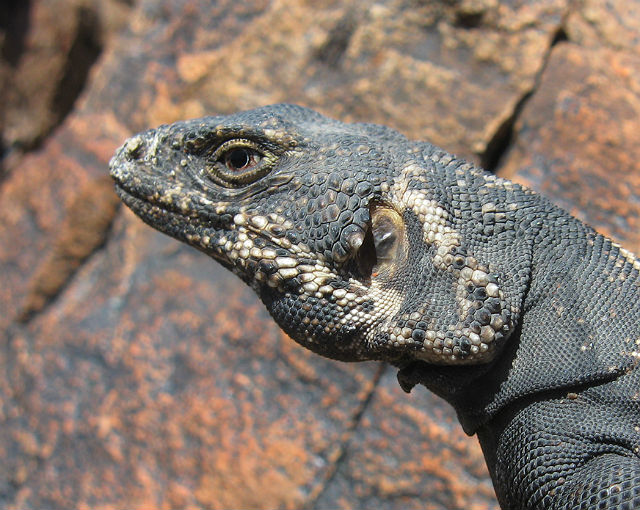
While hiking the Las Vegas Area, it’s easy to give your attention to the lizards scurrying across the desert floor, but by looking up, you may find another intriguing desert dweller quietly perched high in the rocks.

28 chuckwalla_2838

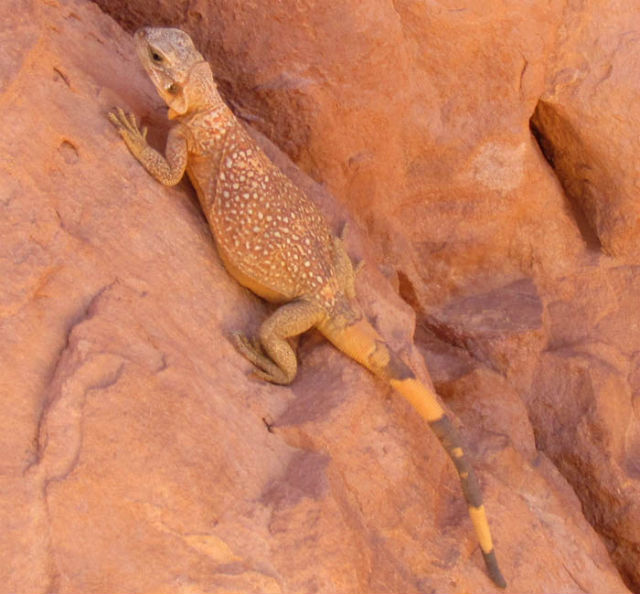
Unlike most other lizards here in the southwest, the Chuckwalla is strictly a rock dweller and is found in rocky outcrops, lava flows, and rocky hillsides of the Great Basin, Mohave and Sonoran deserts.

chuckwalla 2008 310

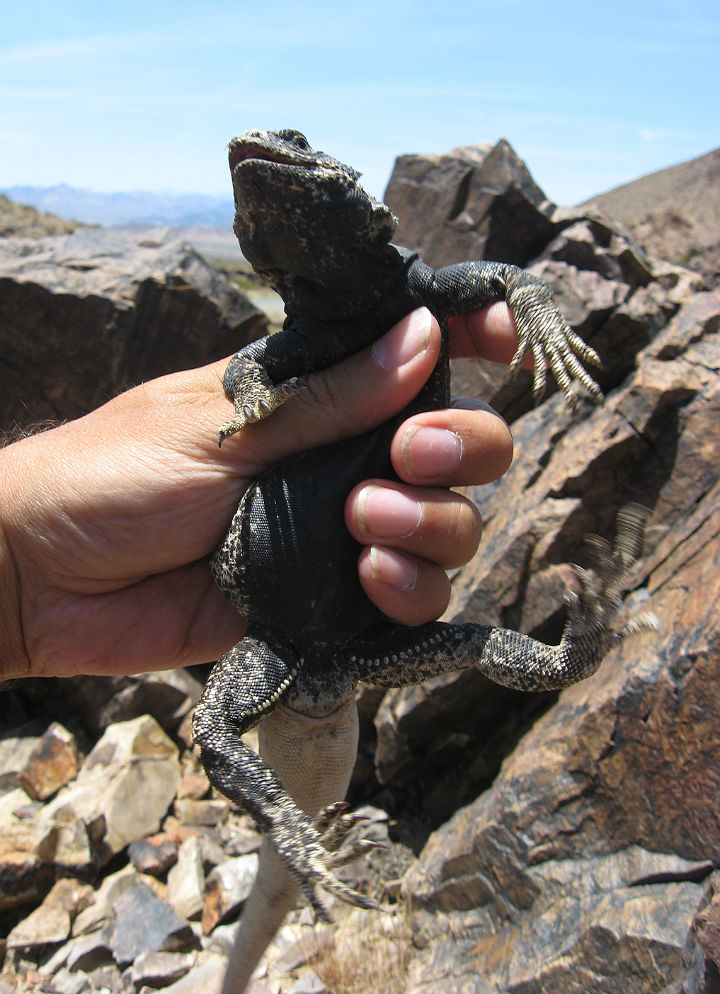
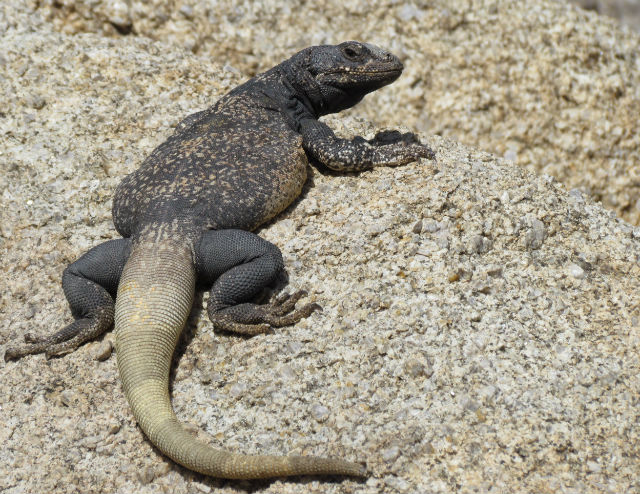
This is a large, bulky lizard reaching nearly 16 inches long, with folds of loose skin on the sides of its body. Its original species name, obesus, refers to how fat the reptile looks.

29 chuckwalla_2974

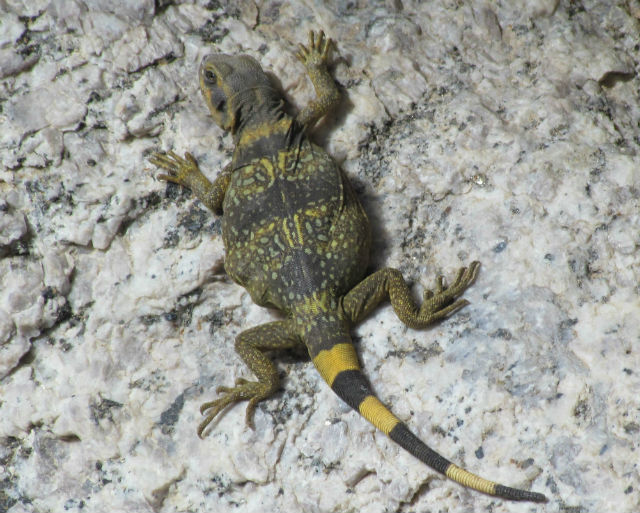
Males tend to be slightly larger than females and are often darker in color. Their color varies considerably by region, but generally includes grey, reddish brown and/or yellow. The banded patterns found on juveniles are often retained into adulthood by females.

chuckwalla_3710

These day-active lizards emerge in the morning and before seeking food, bask in the sun until reaching an optimum body temperature of 100-105 degrees F. I often see them out and about when it is too hot for other lizards.

chuckwalla 2008 313

The Chuckwalla is primarily a vegetarian and eats fruit, leaves, buds and flowers from a variety of annual as well as perennial plants. It also occasionally supplements its diet with insects. Its favorite foods are yellow flowers and the fruit of the prickly pear cactus.

chuckwalla1

When the Chuckwalla senses danger, it scurries between rocks and lodges itself tightly into a crevice. Then it inflates itself with air until it becomes securely wedged. This makes it nearly impossible to extract from its retreat.

chuckwalla IMG_4729

This is one of the largest lizards native to the United States. It’s a “classic” desert reptile that I always enjoy seeing in the wild.

Third Eye Herp
E-mail

Western Blind Snake

Western Blind Snake_2775

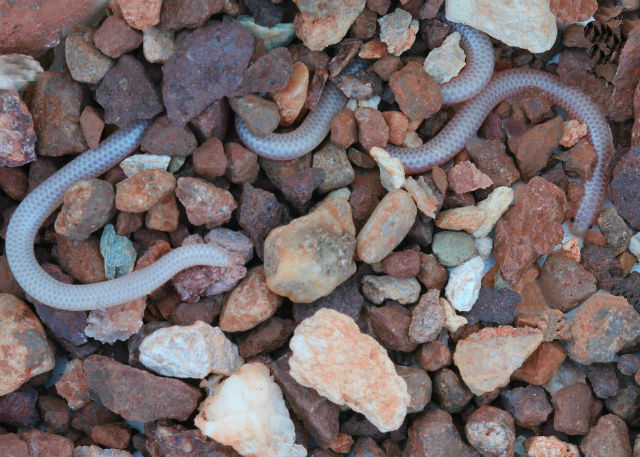
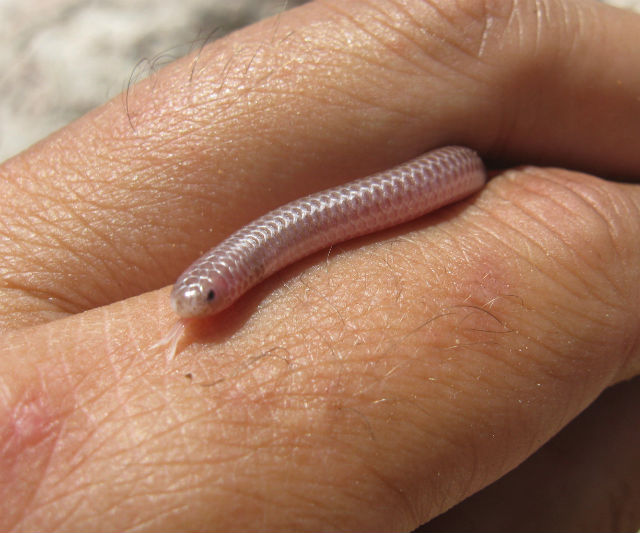
While driving in southern California one night in late Spring, I saw this tiny creature making its way across the road. At first glance, the Western Blind Snake resembles a worm more than a snake.

Western Blind Snake 022

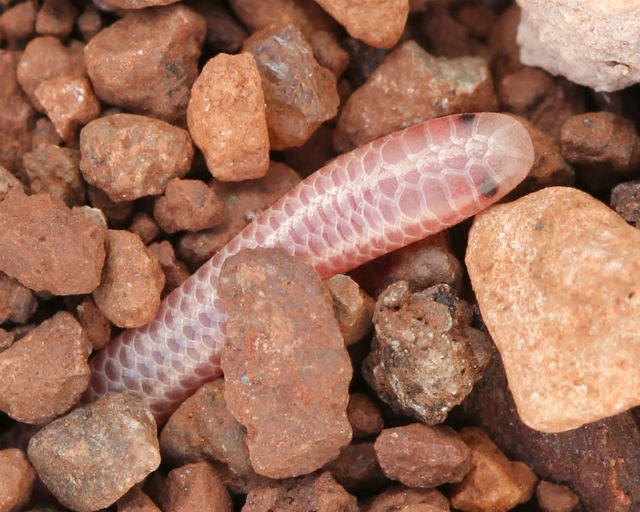
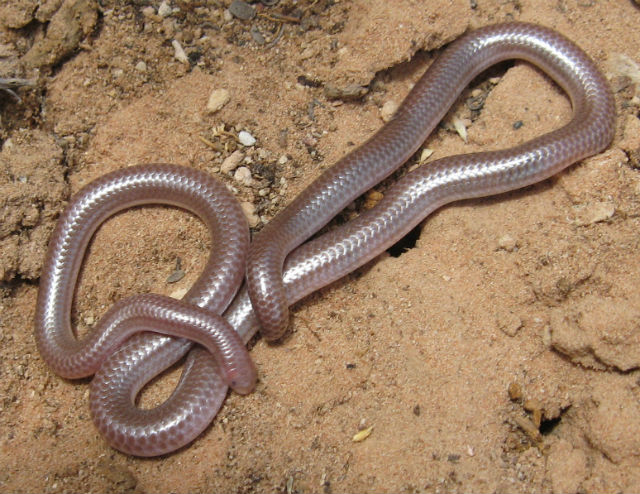
They rarely measure more than 10 inches in length and no wider than a shoelace. This snake is pink, purple, or silvery-brown in color, shiny, wormlike, cylindrical, and blunt at both ends. It has light-detecting black eyespots.

Western Blind Snake 037

Considered among the most primitive of snakes, slender blind snakes retain tiny remnants of pelvic bones embedded in their muscles as well as rudimentary leg bones. Another curious feature of their anatomy is that they only have teeth in their lower jaw.

Western Blind Snake 259

They frequent rocky hillsides with patches of loose, moist soil suitable for burrowing and canyon washes near streams. I have mainly found them under rocks near creeks in Nevada. Though it is probably quite common, the Western Blind Snake is rarely seen.

Western Blind Snake 263

Western Blind Snakes feed upon soft-bodied insects, especially ants and termites and their eggs and larvae. Its cylindrical shape and solid head allow it to easily enter the nests of its preferred prey. This unusual serpent is also know as the Slender Blind Snake and Western Threadsnake.

Third Eye Herp
E-mail

Tadpole Shrimp


Tadpole Shrimp118

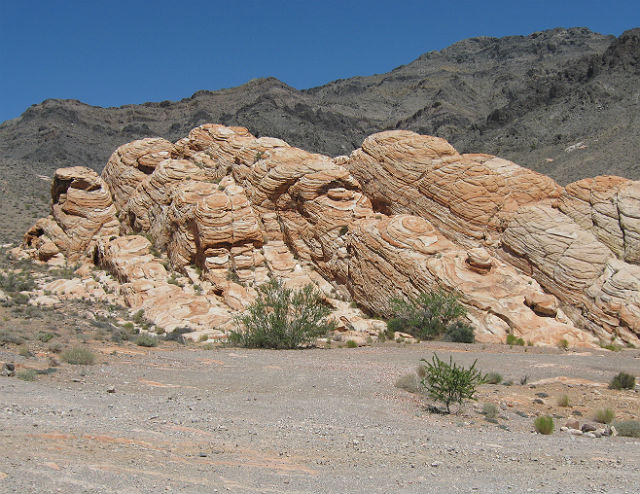
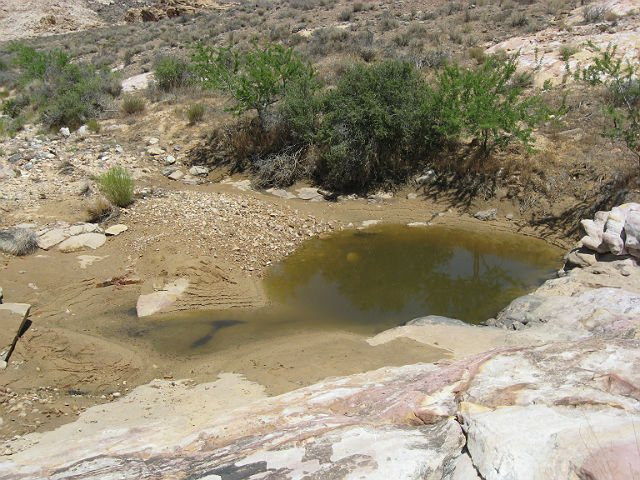
While hiking in Valley of Fire State Park one morning, I decided to investigate several pools on the desert floor, some no bigger than large puddles.

Tadpole Shrimp108

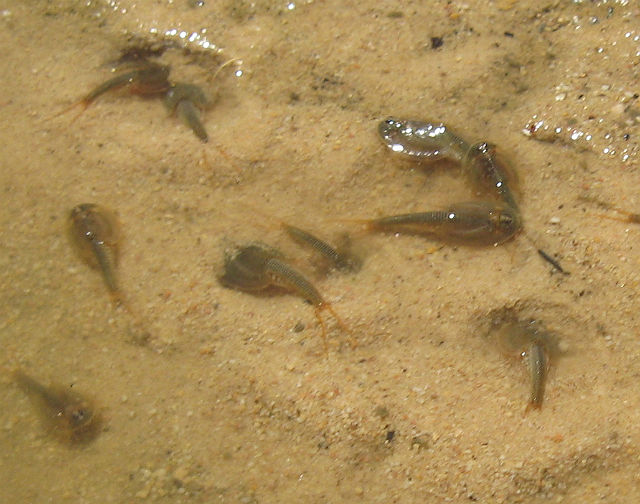
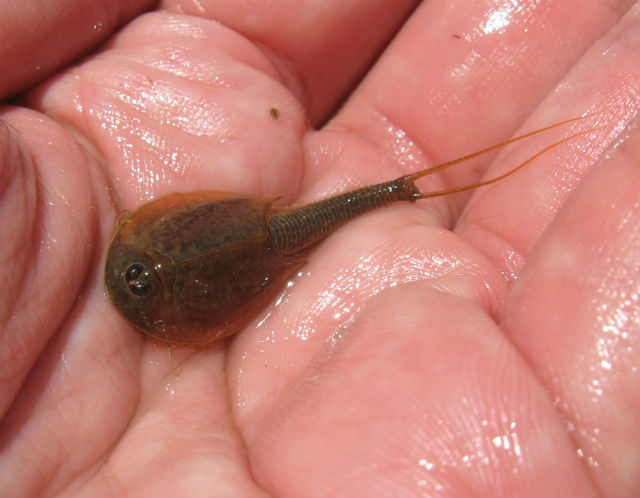
In the water there were tiny, interesting crustaceans. Tadpole Shrimp are considered “living fossils,” since they have not changed significantly in outward form since the Triassic.

Tadpole Shrimp

Their broad protective shell at the front end, and a long, slender abdomen gives them a similar overall shape to a tadpole, from which their common name derives.

Tadpole Shrimp 107

To complete their lives, these creatures depend on the changing nature of the temporary pools of water that they inhabit. During the dry season (Summer and Fall), their offspring stay inside the eggs and the pools are devoid of water.

Tadpole Shrimp111

As pools fills with rainwater during the Winter and Spring, the eggs hatch and feed on tiny invertebrates as well as algae and other organic debris.

Tadpole Shrimp 106

Not only was it cool to encounter this “mini horseshoe crab,” but Tadpole Shrimp is also considered a human ally against the West Nile virus, since they eat mosquito larvae.


Third Eye Herp

E-mail