Desert Horned Lizard

Desert Horned Lizard_7861

Perhaps the most bizarre reptile living in the Mojave Desert is the Horned Lizard. We tend to think of lizards here in the United States as sleek and fast-moving, but this creature is an exception.

Desert Horned Lizard_7843

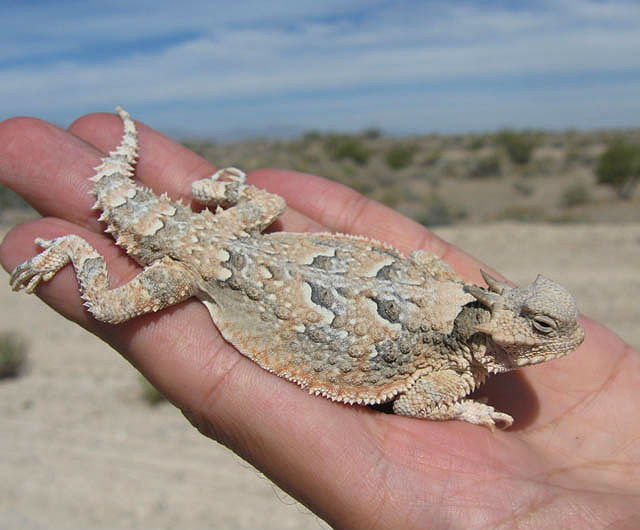
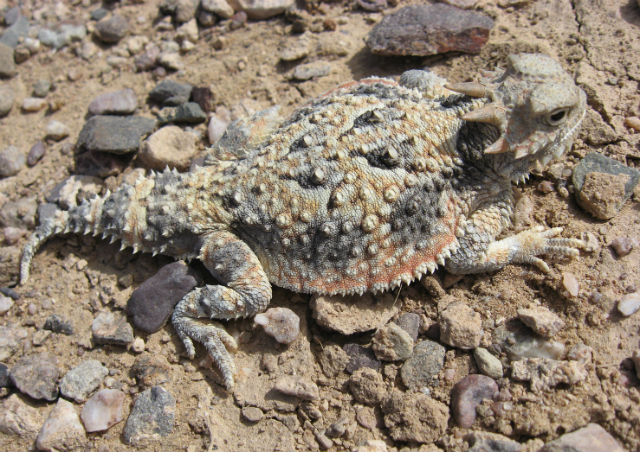
This species has a distinctive flat body with a row of fringed scales down its sides. Although it can run, it’s not particularly speedy.
Desert Horned Lizard

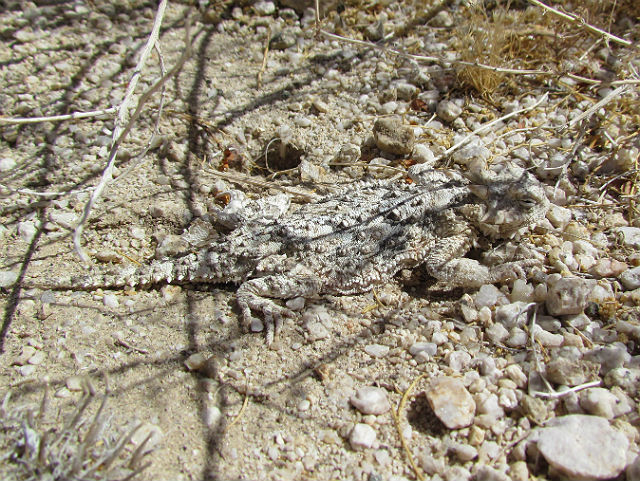
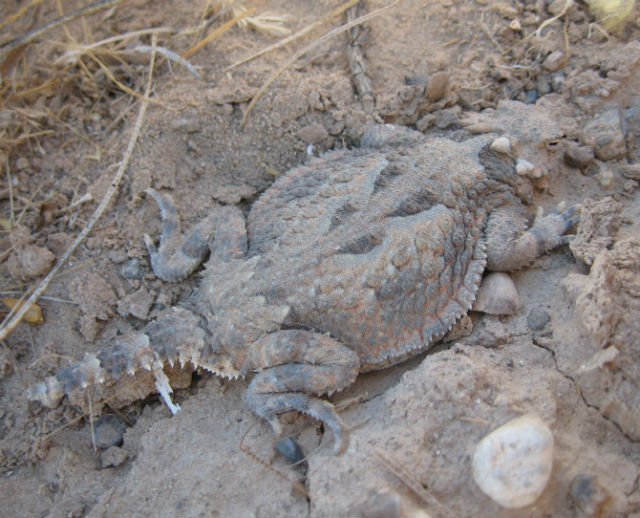
Their coloration varies, but generally blends in with the the surrounding soil; there usually is a beige, tan, or reddish background with contrasting, wavy bands of darker color.

Desert Horned Lizard 358

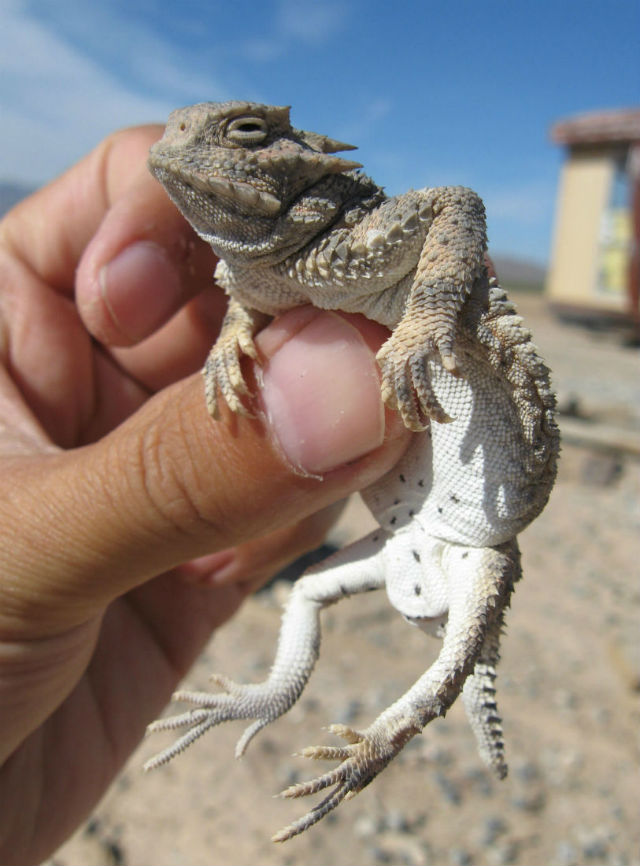
Horned Lizards are distinctive in appearance by virtue of the pointed, thick, spike-like scales that project from the backs of their heads.
Desert Horned Lizard_7856

When excited, they puff themselves up with air to make them look larger. Their large, flat body surface also works well as a solar collecting panel to maximize their amount of exposure to the sun. They even tilt their bodies to catch more rays when thermoregulating.
Desert Horned Lizard 349

Being slower than other desert lizards, in response to a threat a Horned Lizard may play dead, run away, or in some case it may rupture small capillaries around its eyes and squirt a bloody solution at the would-be attacker.
Desert Horned Lizard 363

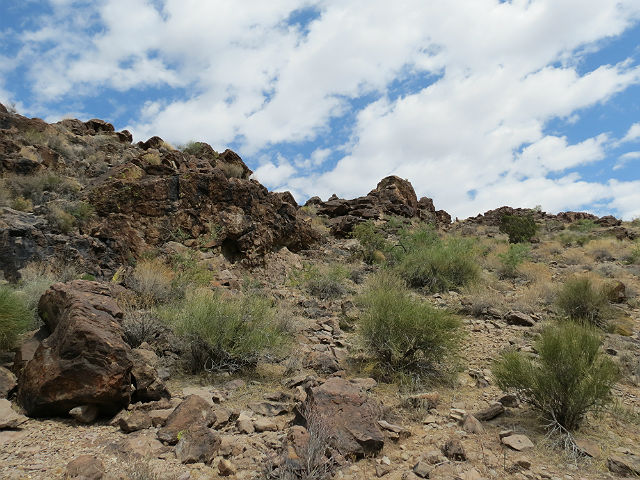
This lizard is usually encountered in relatively flat, open, areas with sandy or loamy soil and is less frequently encountered on rocky areas and foothills. It is not a lizard that I consistently find on my trips, even if I go back to spots where they were previously found.

Desert Horned Lizard 361

It feeds on ants and a variety of other insects, including beetles and the larvae of moths and butterflies. It also eats a variety of spiders and some plant material. It laps up small invertebrates with its tongue, much like a toad does.
2009-05-27 346

Some species of Horned Lizards produce live offspring, but the Desert Horned Lizard produces one or two clutches of eggs which are laid in Spring and Summer. Their clutch size ranges from 2 to 16 eggs. Although they are reptiles, Horned Lizards are also known as Horny Toads or Horntoads. No matter what you call them, these reptiles are fascinating creatures and a lot of fun to encounter in the wild.
Third Eye Herp
E-mail

Mojave Rattlesnake

Mojave Rattlesnake_5396

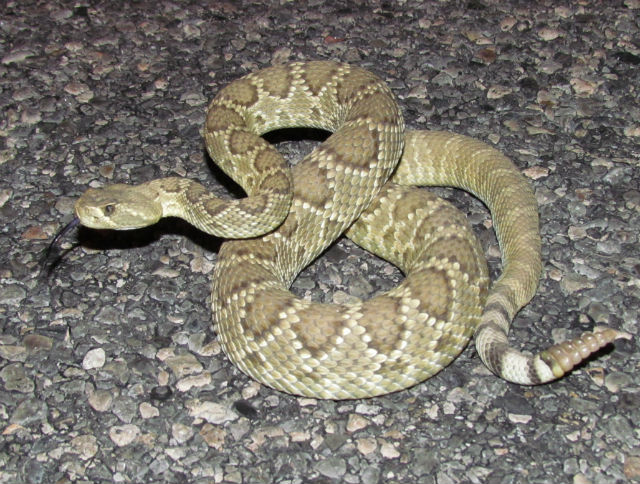
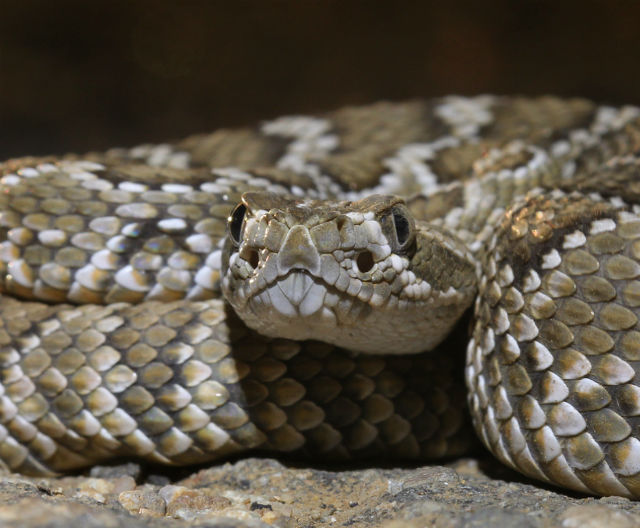
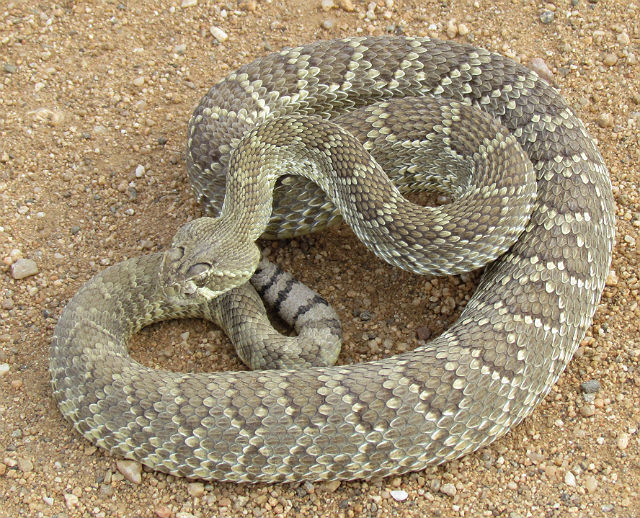
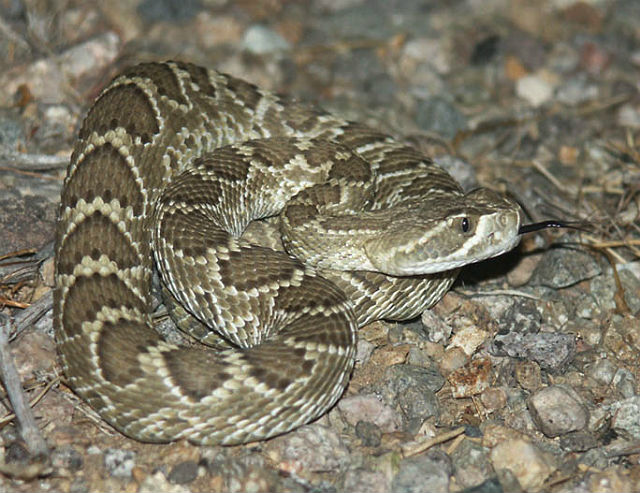
By far the most commonly encountered venomous snake that I’ve come across on my many visits to the Mojave Desert is this one.

IMG_0426

This highly venomous pit viper native to deserts in the southwestern United States is perhaps best known for its potent neurotoxic/hemotoxic toxin, which is considered the world’s most potent rattlesnake venom.

Mojave Rattlesnake_0372

The Mojave Rattlesnake’s color varies from shades of brown to pale green. The green version has led to them being known as “Mojave greens” in some areas. Like the Western Diamondback Rattlesnake, which it closely resembles, it features a dark diamond pattern along its back.

Mojave Rattlesnake 126

This is not a particularly large snake – adults average about three feet in length. It lives mainly in the high desert and lower mountain slopes. Its habitat may vary from the dry desert to grasslands and scrub.

Mojave Rattlesnake_6009

The Mojave Rattlesnake eats Kangaroo rats and other rodents. It is primarily nocturnal, hiding under crevices or in burrows during the hot day. I’ve only encountered one in the daytime, but have seen dozens over the years crossing roads at night.

Mojave Rattlesnake_0433

Like other rattlesnakes, it gives live birth, averaging eight offspring. Baby rattlesnakes are born fully formed, ready to hunt, completely independent from their parents and able to defend themselves.

mojave2006

The Mojave Rattlesnake is one of the world’s most venomous snakes; it’s therefore always a thrill to encounter one while exploring the southwest.

Third Eye Herp
E-mail

Red Pine

Red Pine_0303

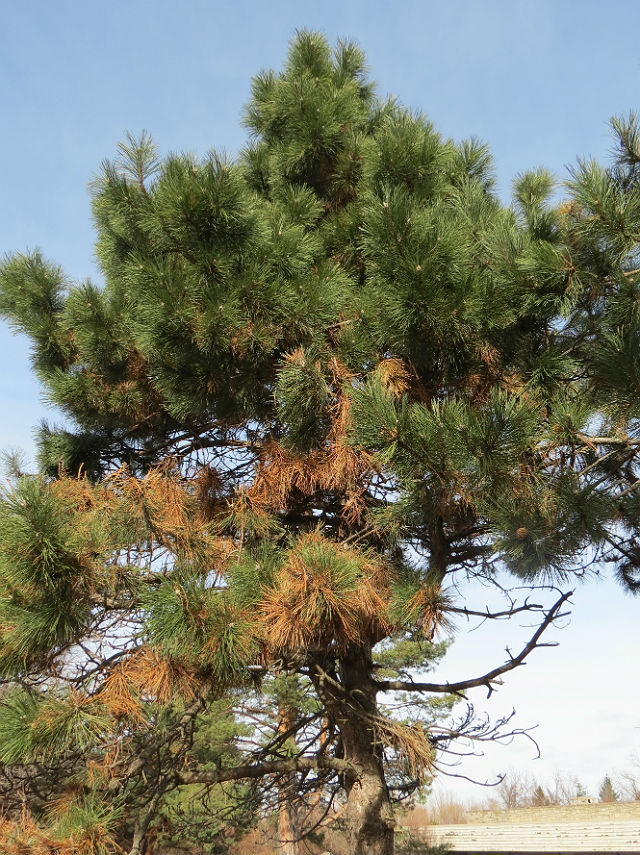
This tree (also called Norway Pine) is one of the most extensively planted species in the northern United States and Canada. It is frequently used in Ohio as a reforestation pine tree and is valued for its lumber and pulpwood.
Red Pine_0299

Although a tree of the Northern Forest Region and not native to Ohio, isolated pockets can be found in northern Illinois, eastern West Virginia and Newfoundland. When growing under natural conditions, Red Pine reaches a height of 90-100 feet and a trunk diameter of 30-40 inches, with a tall, straight, clean trunk and an open, rounded picturesque crown.
Red Pine_0244

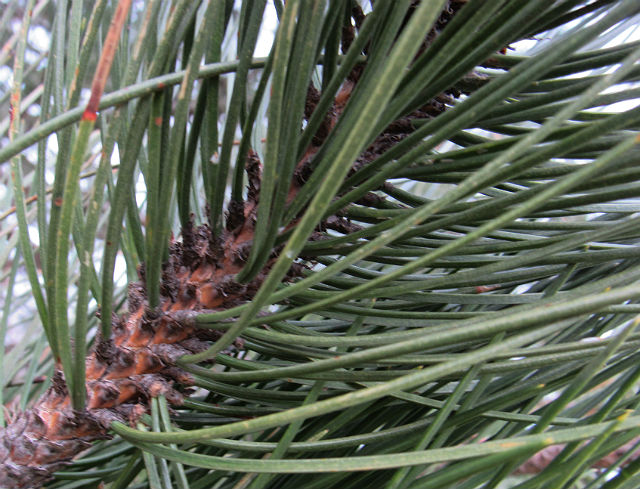
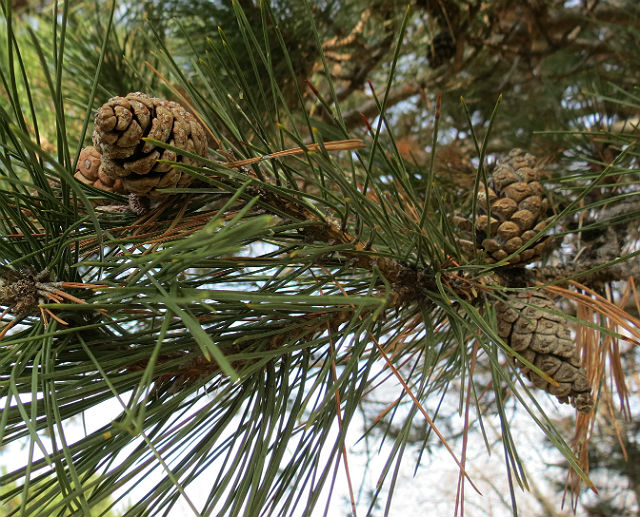
Red Pine has two medium five-inch long needles per bundle. They persist for up to four years on the twigs and branchlets, giving this pine tree a very dense appearance. The characteristic that sets the needles of this pine apart from other pines in eastern North America is their tendency to snap or break when bent.

Red Pine_0302

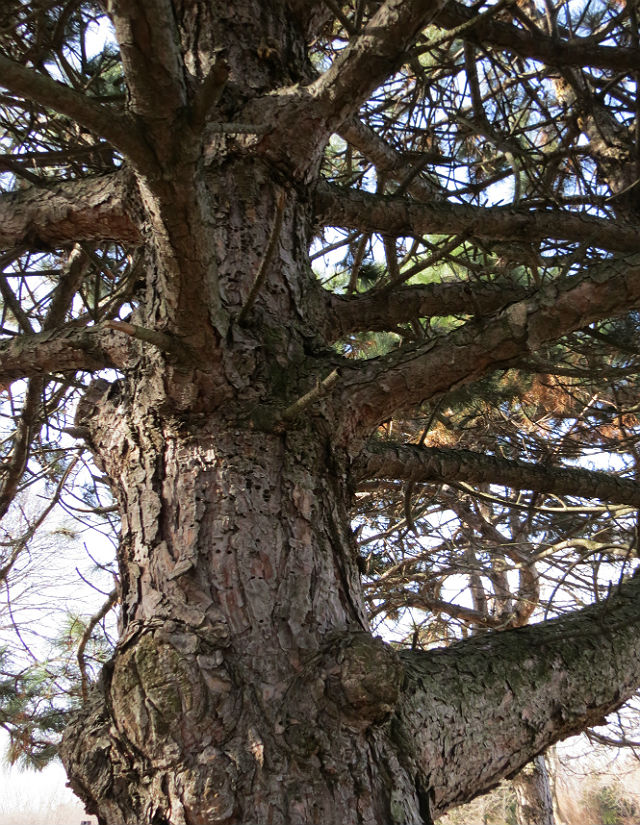
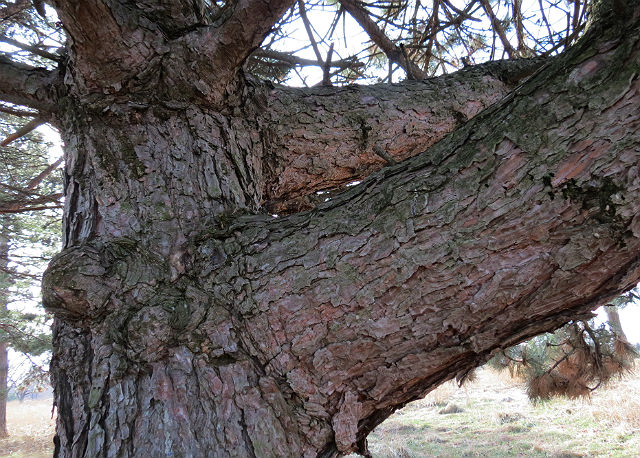
The bark of this tree is reddish-brown in color. On older trunks the bark becomes broken into wide flat-topped ridges separated by shallow grooves. This tree looks similar to the introduced Austrian Pine. However its reddish-brown bark helps to distinguish it.

Red Pine_0306

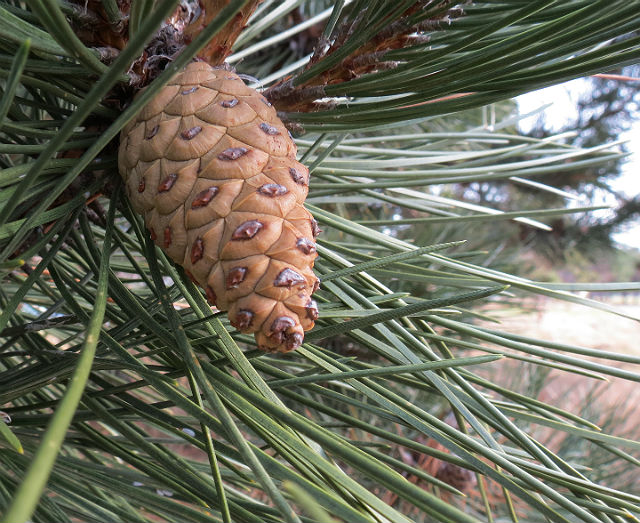
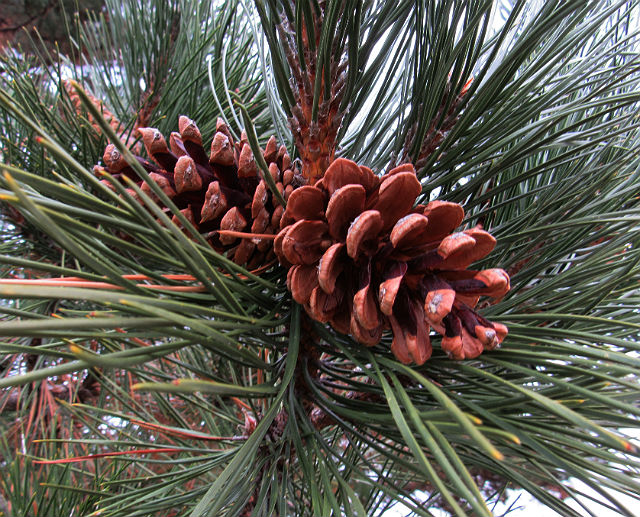
By the end of the first growing season, the green cones turn to tan in color. At maturity during the second season, the brown cones are about two inches long. The cone scales are smooth and without spines. The seeds are eaten by songbirds and small animals.

Red Pine_0247

During the Great Depression in the 1930s, millions Red Pines were planted by the Civilian Conservation Corps. Most of the wooden telephone poles in Michigan and surrounding states are made of Red Pine.

Red Pine_0290

Red Pine is noteworthy for its very constant morphology and low genetic variation throughout its range, indicating it has been through a near extinction in its recent evolutionary history.

Third Eye Herp
E-mail

Groundhog


towpath_2253

Also known as a Woodchuck, this is a rodent belonging to the group of large ground squirrels. They are the largest members of the squirrel family. At about 20 inches long, Groundhogs weigh around 13 pounds. These mammals are found only in North America, from Canada down to the southern United States.

groundhog_3146

Groundhogs have sharp claws that they use to dig impressive burrows in the ground. Their burrows can be anywhere from 8 to 66 feet long, with multiple exits and a number of chambers.

Groundhog_0642

Their favored habitat is woodland areas on the edge of open fields. Groundhogs are solitary creatures that can eat about a pound of food per sitting. A Groundhog’s diet can include fruit, plants, tree bark and grasses. One reason why they eat so much is because in the Winter they hibernate and live off their fat.

woodchuck_9165

While hibernating, the Groundhog’s heartbeat slows from 80 beats per minute to 5 beat per minute; their respiration reduces from 16 breaths per minute to as few as 2 breaths per minute; and their body temperature drops from about 99 degrees Fahrenheit to as low as 37 degrees.

Groundhog_9654

In February, males will come out of hibernation and search for females’ burrows. When he finds one, he heads on in. It is believed that males do this to introduce themselves to possible mates.

Groundhog_3820

Groundhog Day is a popular tradition celebrated in the United States and Canada on February 2. It derives from the Pennsylvania Dutch superstition that if a groundhog emerging from its burrow on this day sees a shadow due to clear weather, it will retreat to its den and Winter will persist for six more weeks, and if he does not, due to cloudiness, Spring season will arrive early.

2 groundhogs_3152

The Groundhog is also referred to as a Chuck, Wood-shock, Groundpig, Whistlepig, Whistler, Thickwood Badger, Canada Marmot, Monax, Moonack, Weenusk and Red Monk.

Third Eye Herp
E-mail

Moth Fly

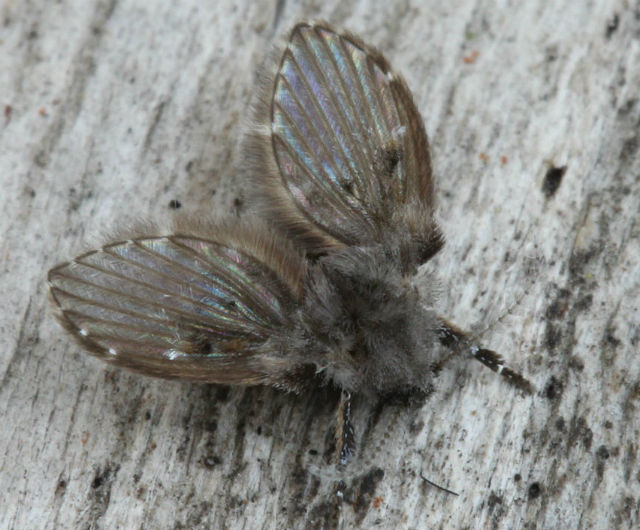
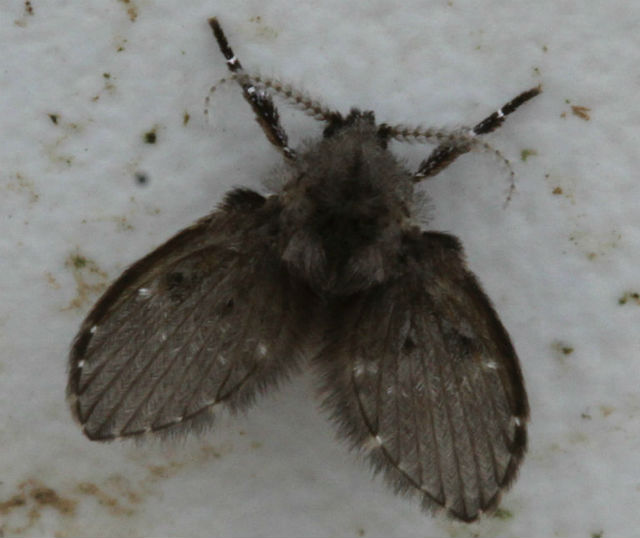
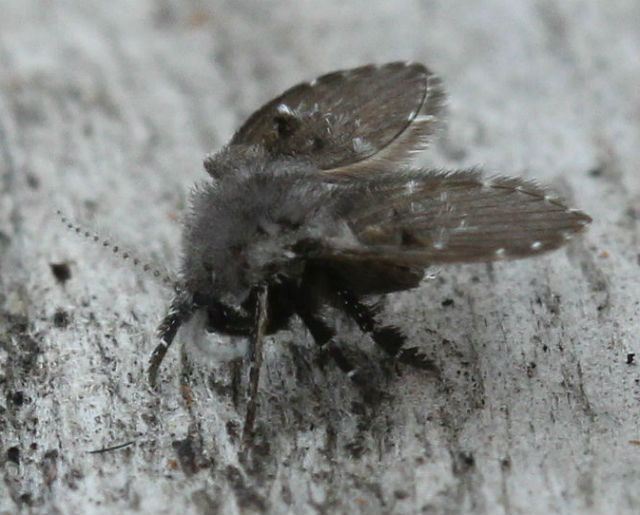
Recently I found this strange creature in my basement. It is also commonly known as the Drain Fly, Filter Fly or Sewage Fly. Moth flies are frequently found indoors on windows, sinks and walls. The source of the fly infestation is generally from sinks and floor drains.

mothfly_9051

The adult insect is about one-fifth of an inch long. It has a dark gray body and lighter colored wings. It is densely covered with long hair, which gives the body a fuzzy appearance, hence the name “Moth Fly.”

mothfly_9041

Their eggs are deposited in moist, decomposing organic materials. These materials, which accumulate in drains, provide an ideal site for metamorphosis. Adults live about two weeks and feed on flower nectar and polluted water.

mothfly_9047

During the day adults rest in shaded areas or on walls near plumbing fixtures and on the sides of showers and tubs. Most of their activity occurs during the evening. It was neat to make an acquaintance with this unusual insect.

Third Eye Herp
E-mail

House Sparrow

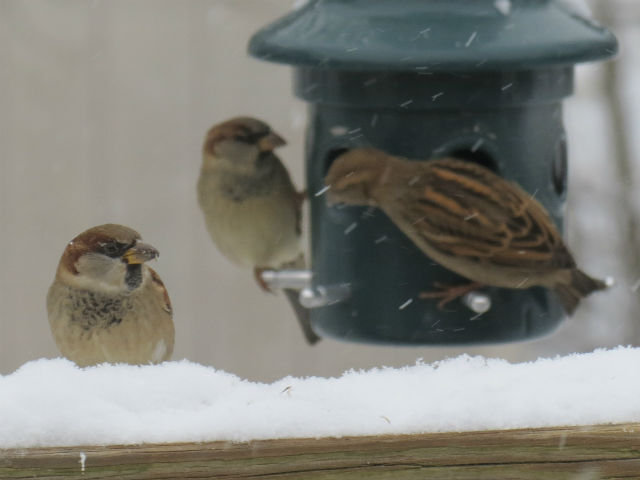
I have seen these birds throughout my life, whether at my home growing up in Cleveland, downtown, or in my current residence in the suburbs.

house sparrow_9964

The House Sparrow is native to most of Europe, the Mediterranean Basin and much of Asia. Its intentional or accidental introductions to many regions, including parts of Australia, Africa, and the Americas, make it the most widely distributed wild bird.

house sparrow

This bird is strongly associated with human habitations and can live in urban or rural settings. Though found in widely varied habitats and climates, it is rarely found away from human development. It is often seen in city centers, suburbs, farms and around isolated houses or businesses surrounded by terrain unsuited to House Sparrows, such as desert or forest.

house sparrow_0064

Their diet consist mainly of small seeds. They are attracted to corn, oats, wheat and other types of grain or weed seeds. These birds primarily forage on the ground.

house sparrow_1469

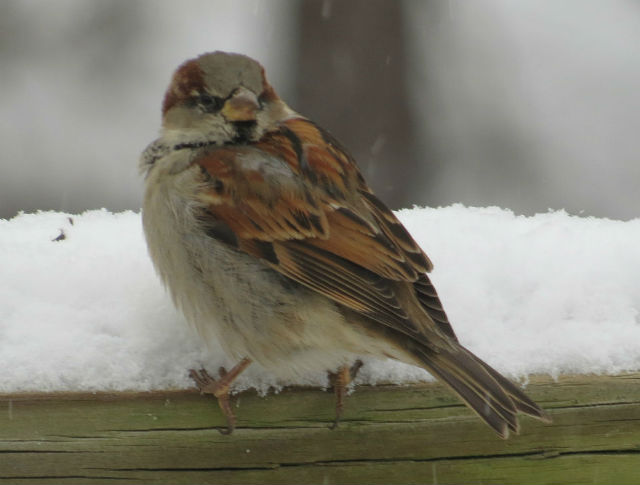
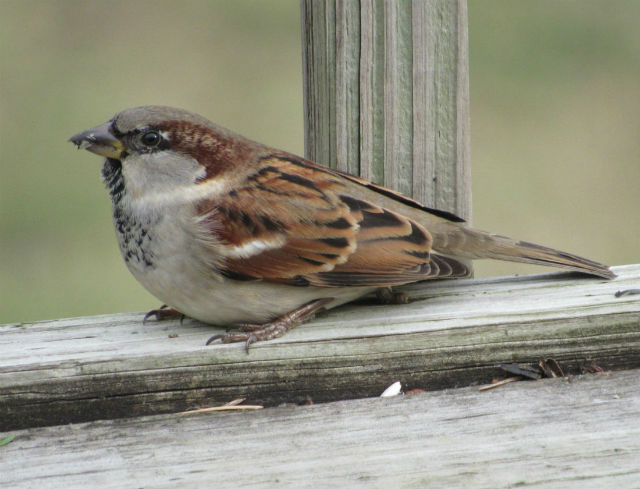
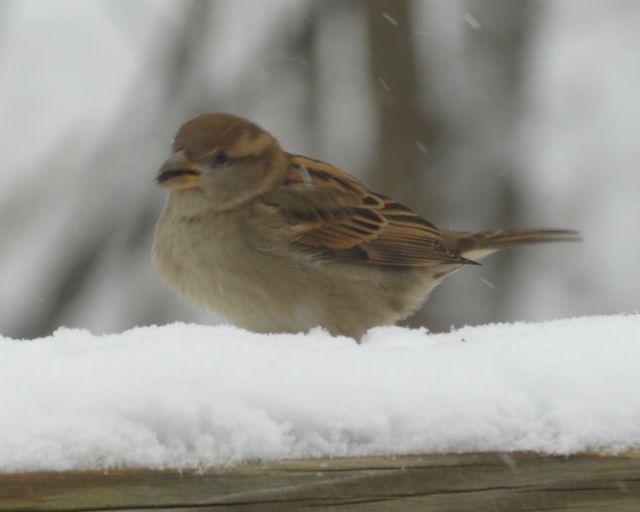
Males have black chin and bib with white cheeks and rust colored cap and nape of neck, while females are plainer, with a broad buff eyebrow, brown and buff-streaked wings and back.

house sparrow_9959

Because of its simple success formula of associating with humans, the House Sparrow is one of the most ubiquitous and abundant songbirds in the world today.

Third Eye Herp
E-mail

Pumpkinseed

Pumpkinseed_0657

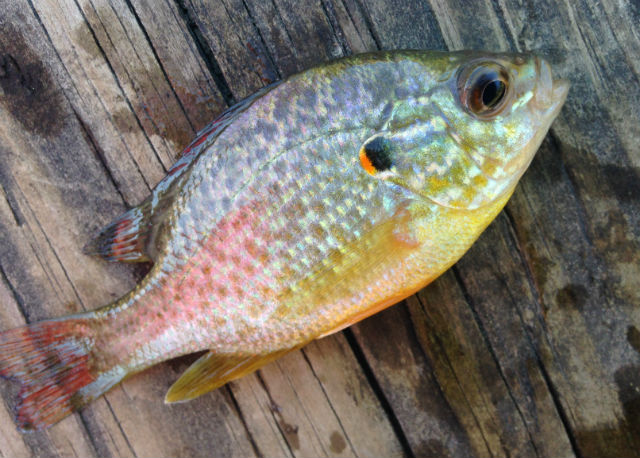
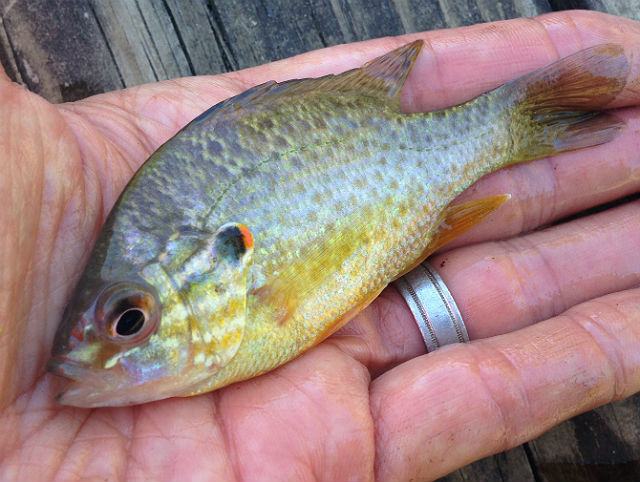
I caught one of Ohio’s most colorful sunfish while on a recent fishing outing. Though native to most of the northeastern United States, Pumpkinseed have been introduced into other areas of North America as well as Europe. Their native range extends further north than any other sunfish species in their genus.

Pumpkinseed__3448

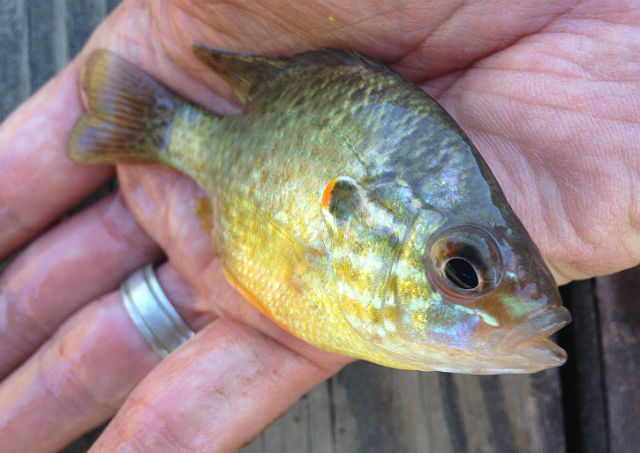
They have an orange-to-yellow belly and many small, brown-to-orange spots scattered over their sides. The coloration of the scales of the Pumpkinseed is one of the most vibrant of any freshwater fish. The ear flap features a distinctive red-orange spot at the rear edge.

Pumpkinseed_3443

Pumpkinseed prefer clear, non-flowing water with dense submerged aquatic vegetation. This species resides in places where it can find underwater shelter to hide. Adults are usually 5-8 inches and less than half a pound, but they can reach 10 inches and 1 pound.

Pumpkinseed__3451

They are much more common in lakes and reservoirs of Northern Ohio than in Southern Ohio. Pumpkinseed eat larval insects, some adult insects, snails, and occasionally small fish.

Pumpkinseed__3446

This fish is also referred to as Pond Perch, Common Sunfish, Punkys, Sunfish, Sunny, and Kivver.

Third Eye Herp
E-mail

Red Maple

maple064

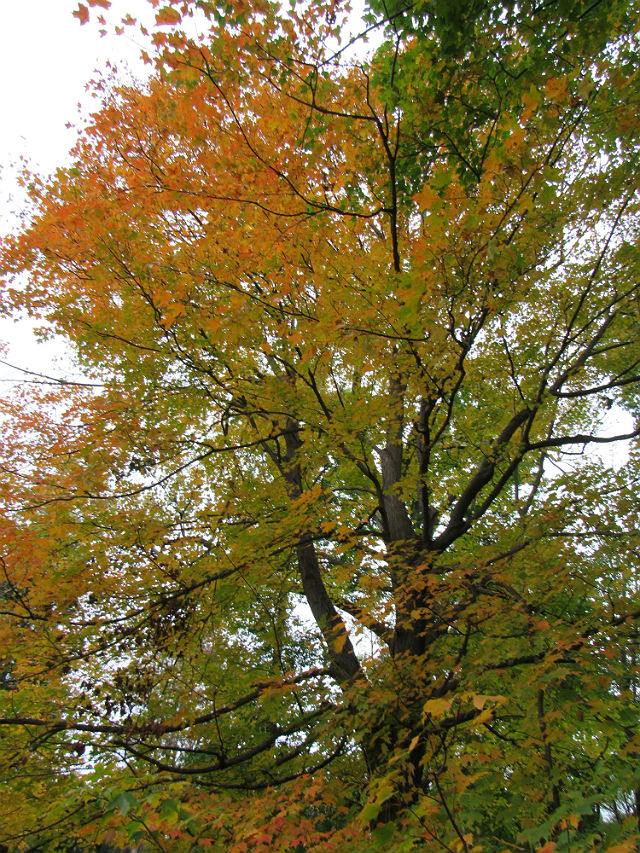
This tree located throughout all of Ohio (including in my backyard) and is found naturally in moist areas of open woodlands, especially along creeks and bottomlands where the soil is usually moist to wet. It is also a major component of the native habitat throughout its region. In urban areas it is a popular shade tree, noted for its brilliant red fall color.

Red Maple_0101

This species and the Silver Maple often are referred to as the “soft maples.” The wood is soft, not very strong and not durable. It is used for veneer and a variety of small products such as boxes and clothespins. It typically grows 40-60’ tall with a rounded to oval crown.

red maple_9020

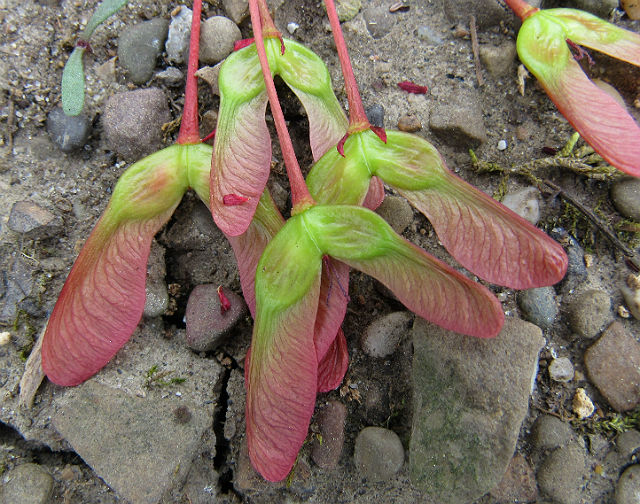
Clusters of small red flowers bloom in March and April. Reddish, winged fruit called samaras or “keys” become brown and mature in May and June.

red maple_3536

Red maple is one of the most abundant species in temperate forests of eastern North America and has a wide north to south distribution. Because of this wide natural range, it is extremely variable in form. The leaves of southern forms tend to have only three lobes compared to five lobes on northern forms.

maple 020

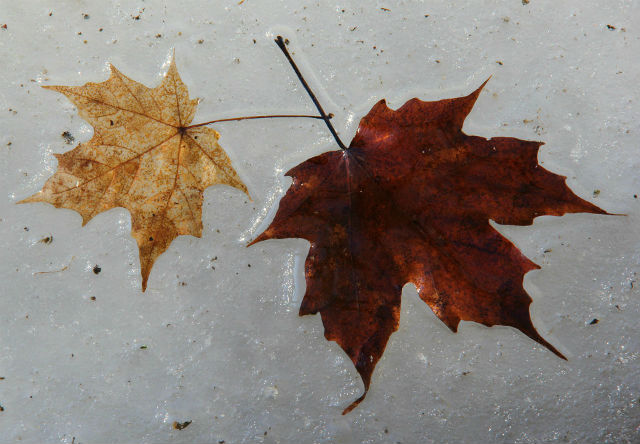
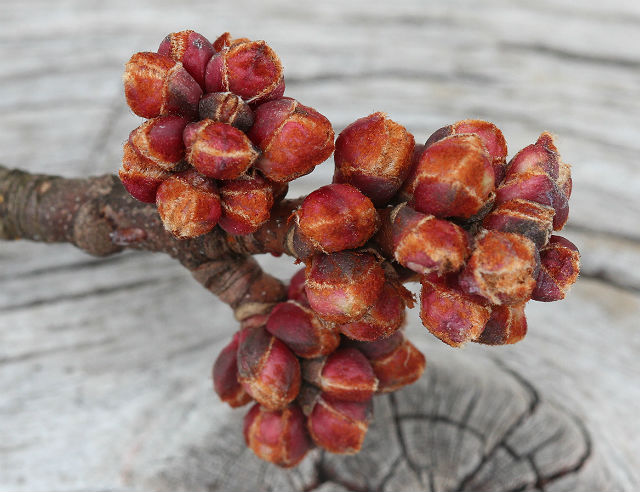
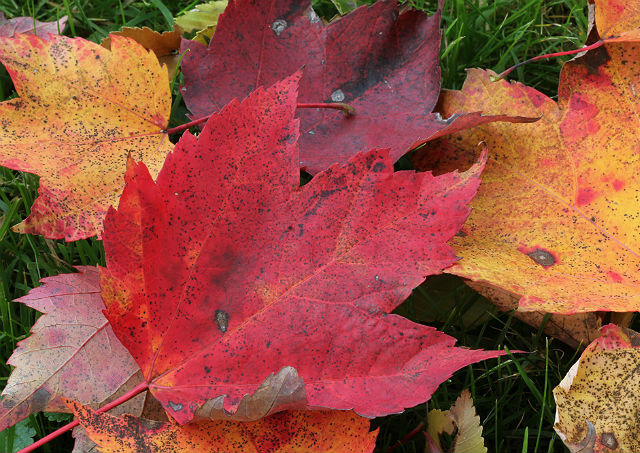
This tree takes its common name from its reddish buds that swell in Spring, its red leaf petioles in Summer, and its brilliant red foliage in Fall. Red maple is one of the most recognized trees with some part of the plant red all season long.

Third Eye Herp
E-mail

Eastern Parson Spider

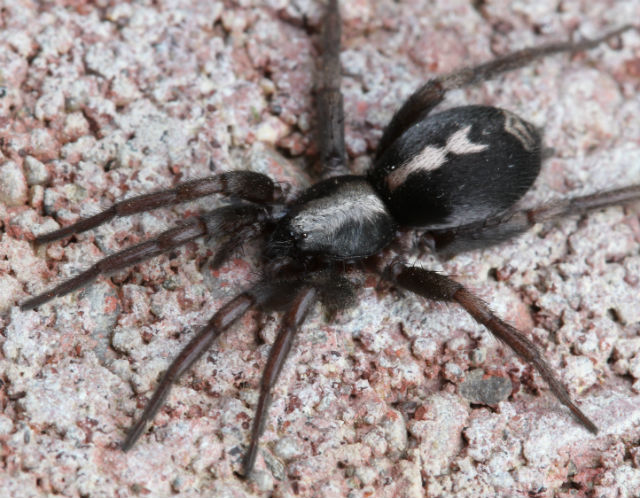
Eastern Parson Spider_8933

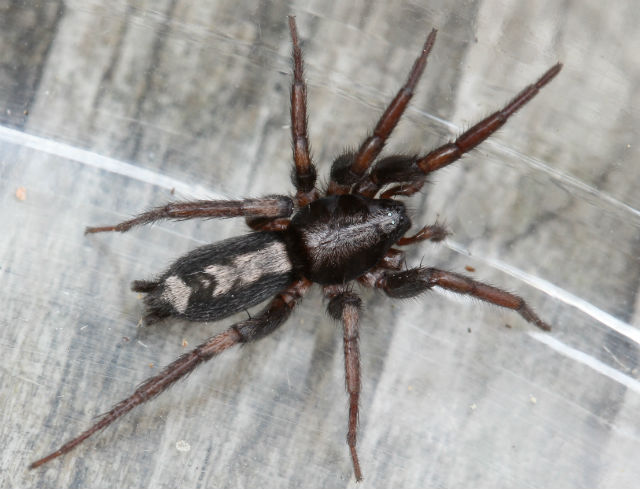
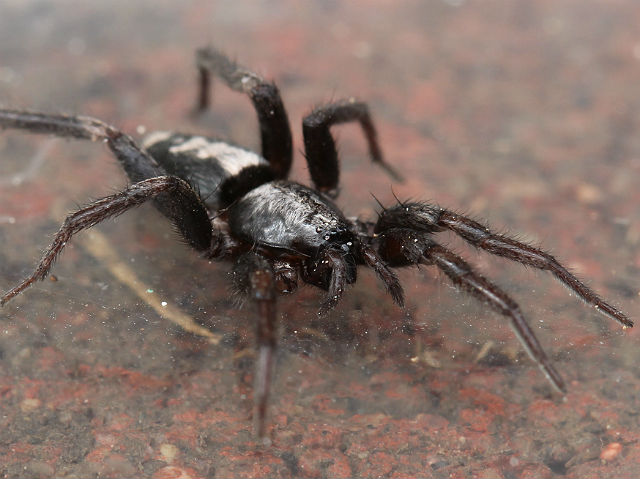
It seems like the past few Winters I’ve found one of these in my house. This arachnid is named after the abdominal markings resembling an old-style cravat worn by clergy in the 18th century.

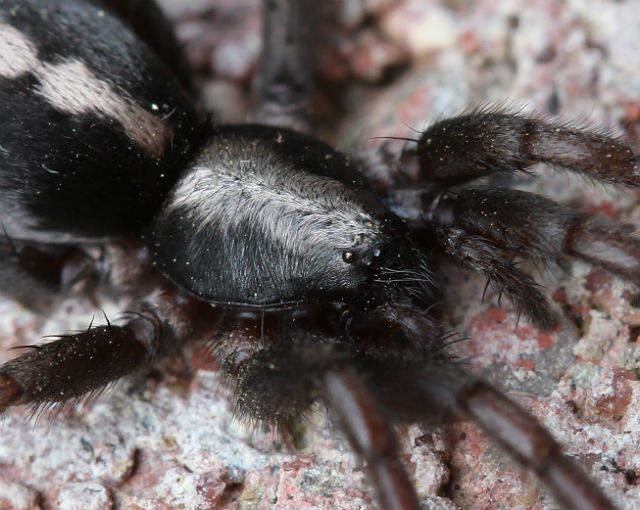
Eastern Parson Spider_8948

The Eastern Parson Spider is part of a stealthy group of ground spiders. This family of hunting spiders spins silken retreats in leaves and under boards and stones to hide in during the day; they hunt at night.

Eastern Parson Spider_9808

This spider is widespread everywhere east of the Rocky Mountains, from southern Alberta across to Nova Scotia and south to Texas and Florida. West of the Rockies it is replaced by the Western Parson Spider.

Eastern Parson Spider_9812

The Eastern Parson Spider is fairly commonly around buildings, often preying on small insects that are attracted to outdoor lights These creatures will run in a zigzag fashion to evade predators; for this reason, they are hard to capture when seen in homes.

Eastern Parson Spider_8954

It is furry, and about nickel sized. Although this spider presents a startling appearance, living indoors as it frequently does, it is not considered harmful.

Third Eye Herp
E-mail

Ring-necked Duck

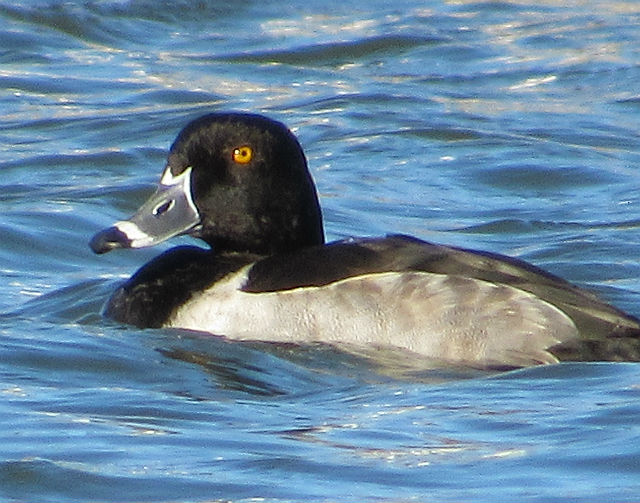
Ring-necked Duck_0799

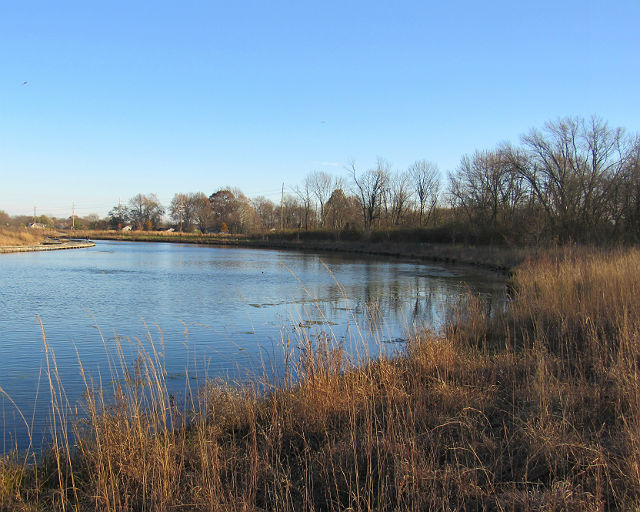
While visiting central Indiana last month, I saw this sharply marked bird of gleaming black, gray and white. The species is native to North America, but sightings outside of the continent are becoming increasingly common.

Ring-necked Duck_1051

The “ringneck” name is derived from a faint brownish ring around the base of the neck, which is visible only upon close inspection. A more fitting name would be “Ring-billed Duck,” due to the prominent white ring around the bill.

Ring-necked Duck_1063

In migration and during winter, they inhabit ponds, lakes, slow-moving rivers, and occasionally coastal estuaries, but generally do not inhabit saltwater bays.

Ring-necked Duck_0828

The Ring-necked Duck dives for its food in shallow water and has a more generalized diet (consisting mostly of plants) than do other North American diving ducks in its genus.

Ring-necked Duck_0819

This species is a primary means for dispersal of several types of pond plants and help the plants get to newly established ponds. Seeds the birds eat from the plants are undigestable and get deposited (via duck droppings) at new sites.

Ring-necked Duck_0821

This species is strong and fast and, unlike many diving ducks, can take flight directly from the water without a running start.

Third Eye Herp
E-mail