Green Heron

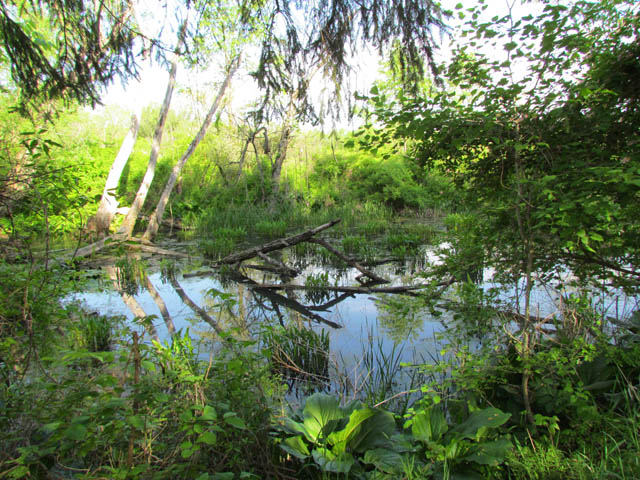
swamp 003

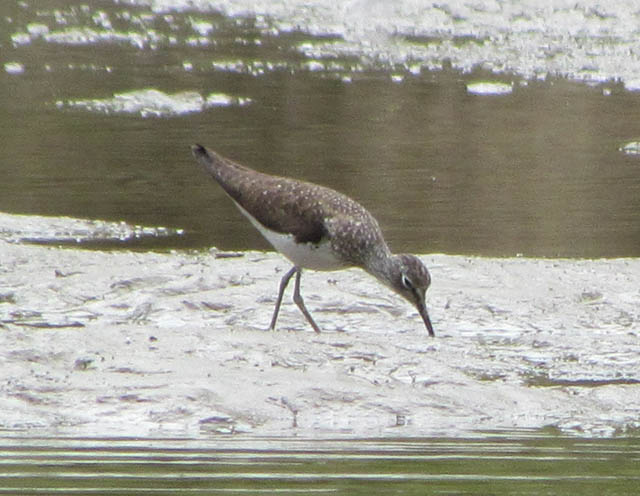
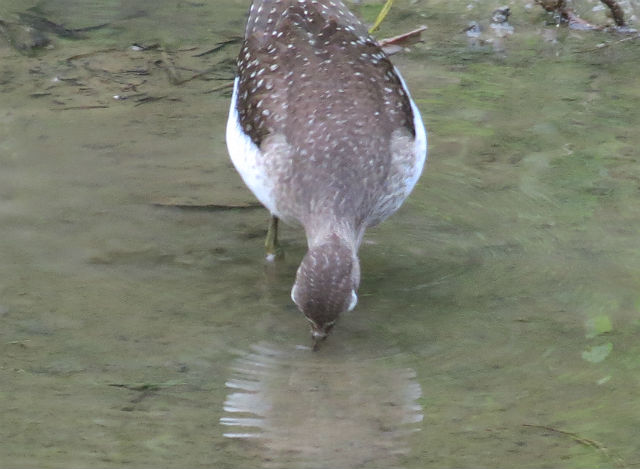
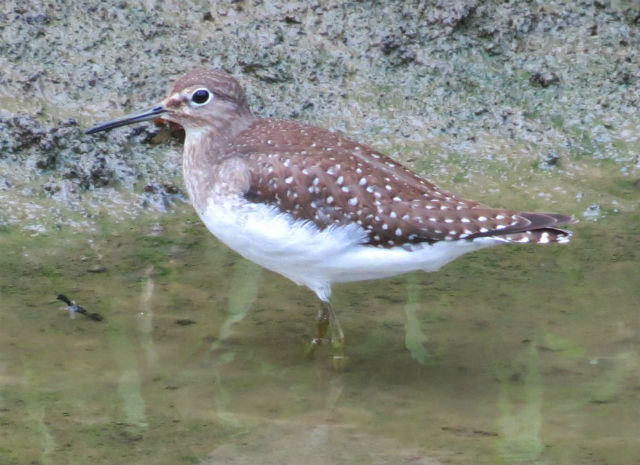
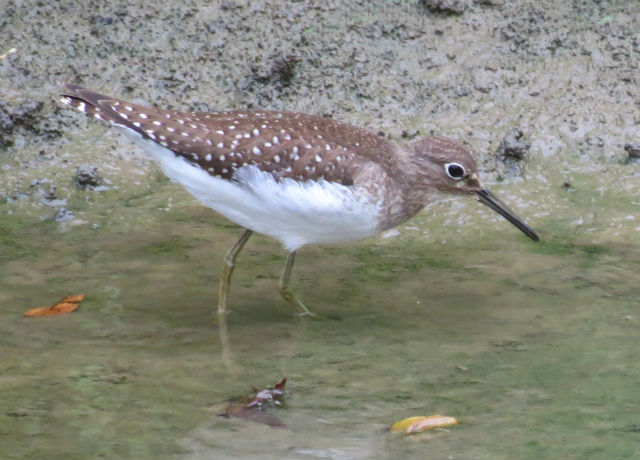
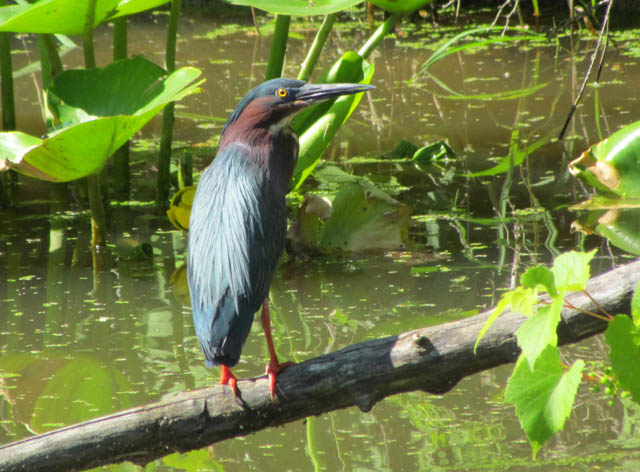
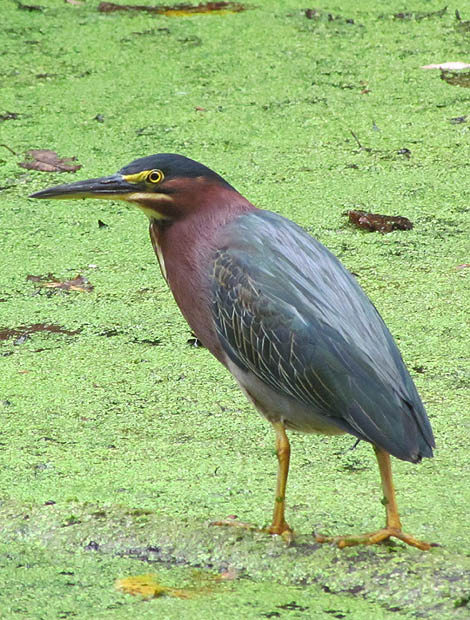
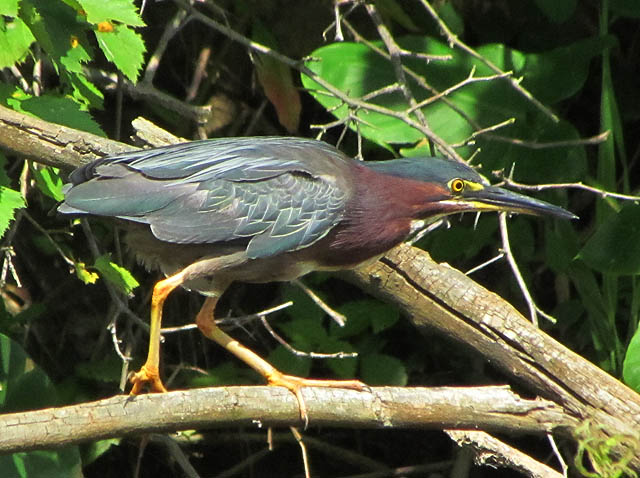
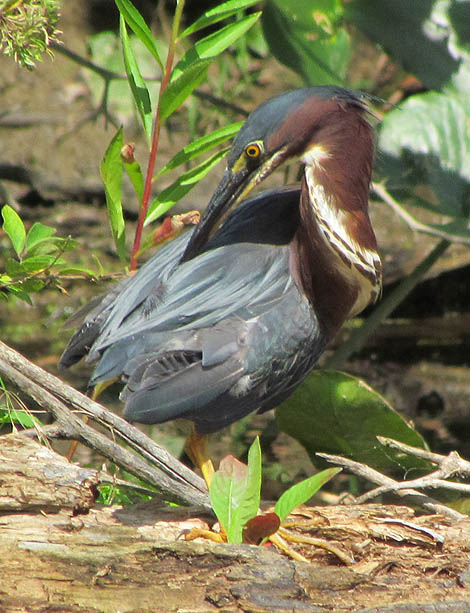
The Green Heron is stocky, dark colored and small for a heron. This crow-sized bird is solitary and secretive.

greenheron_8920

It inhabits small, freshwater wetlands, ponds, and stream-sides with thick vegetation along the edges. I have seen a far number of them on the Ohio & Erie Canal Towpath.

green heron_6585

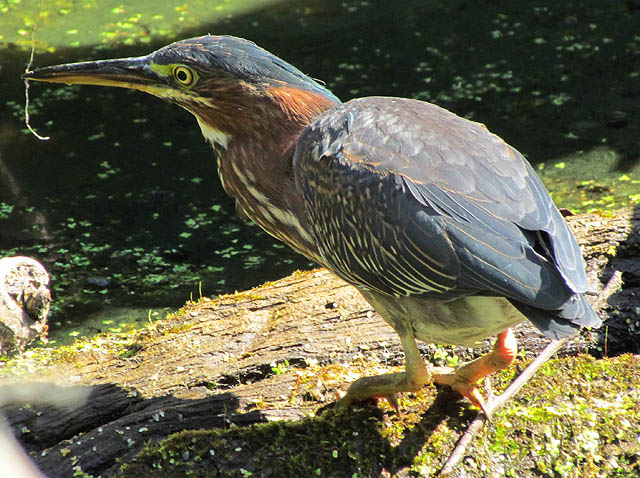
The Green Heron is one of the few birds known to use tools. It will attract prey with “bait” (feathers, small sticks, live insects or berries) that it drops into the water. This hunting technique has earned them the distinction of being placed among the world’s smartest birds. This one is using a blade of grass.

green heron_5307

I once saw one of these birds seemly cooperating with a Common Snapping Turtle, herding fish into an area where they could be easily caught.

greenheron_2962

This bird tends to forage from a perch, where it stands with its body lowered and stretched out horizontally, ready to thrust its bill at unsuspecting prey. Fish are its main source of food, though it is opportunistic feeder, also eating frogs, crayfish and large insects.

green heron_0372

The Green Heron lays three to six eggs in a nest made of sticks. Both the female and male make the nest. The male gathers the materials and the female constructs the nest.

greenheron_2959

A group of herons has many collective nouns, including a “battery,” “hedge,” “pose,” “rookery” and “scattering” of herons.

Third Eye Herp
E-mail

Cinnamon Teal

Cinnamon Teal 005

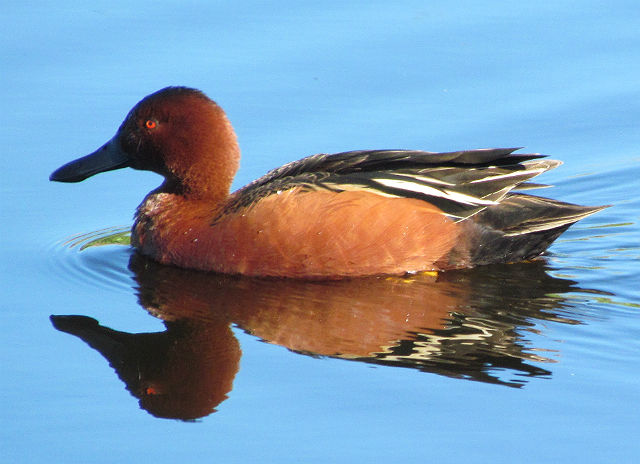
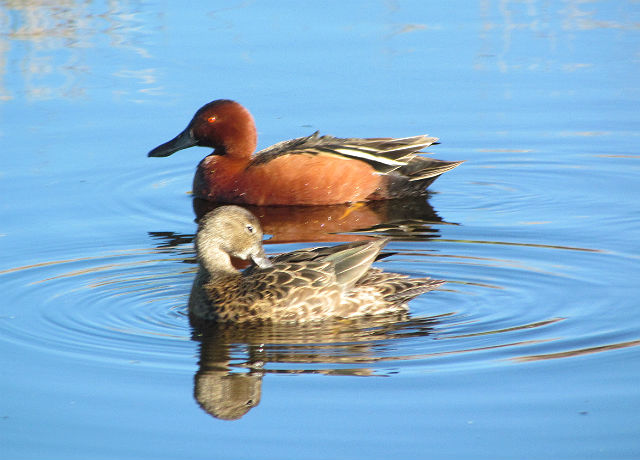
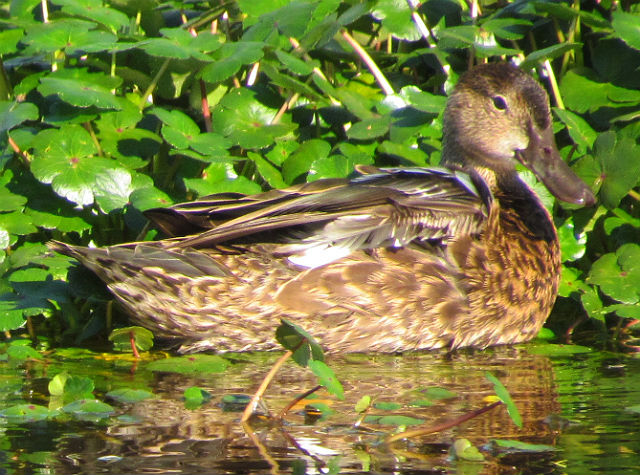
This small brightly colored duck caught my eye when I was visiting the bay area of California. The Cinnamon Teal is small, with bright rust colors on the male and duller brown plumage on the female. It lives in marshes and ponds, and feeds mostly on plants.

Cinnamon Teal_2857

Mating pair bonds are renewed each season, during the winter. Females attract the males by swimming in front of the desired mate. Cinnamon Teal are usually found in small flocks, comprising pairs of birds.

Cinnamon Teal_2854

They are very agile in flight. The birds make sudden and sharp turns while flying low and they take off to flight directly from water. Cinnamon Teal usually feed in shallow water where they scoop up floating plants, seeds and insects. They will also dive for food.

Cinnamon Teal_2862

It was neat to encounter this western species of duck that I have never seen before.

Third Eye Herp
E-mail

Red-breasted Merganser

Red-breasted Merganser_1725

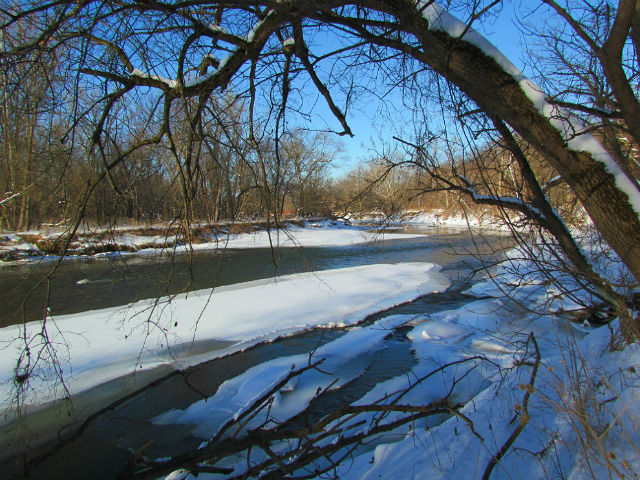
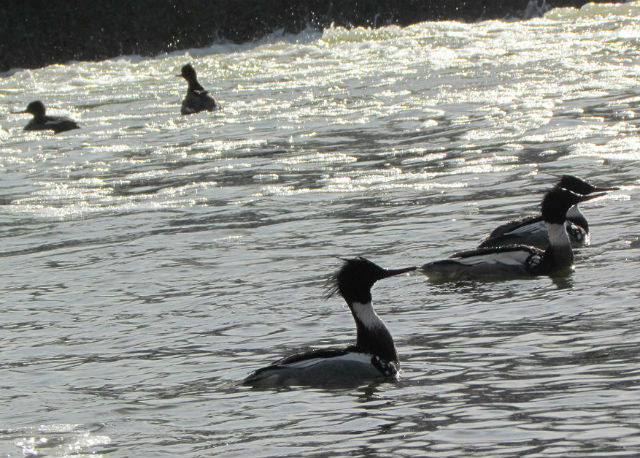
Near Station Road Bridge on the Ohio & Erie Canal Towpath, I encountered a group of very cool, colorful birds. Red-breasted Mergansers are sometimes referred to as “sawbills” due to the toothy edges of their bills, which allow them to more easily grasp fish.

Red-breasted Merganser_1884

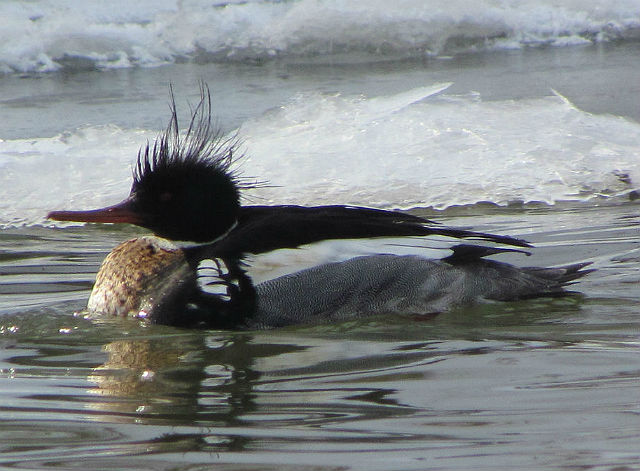
The male shows a striking, wide band of white that extends almost the full length of the body and a dark band across his chest. The dark, tufted green head appears black at a distance. This bird’s slender neck and tapered body give it a streamlined appearance when in flight.

Red-breasted Merganser_1853

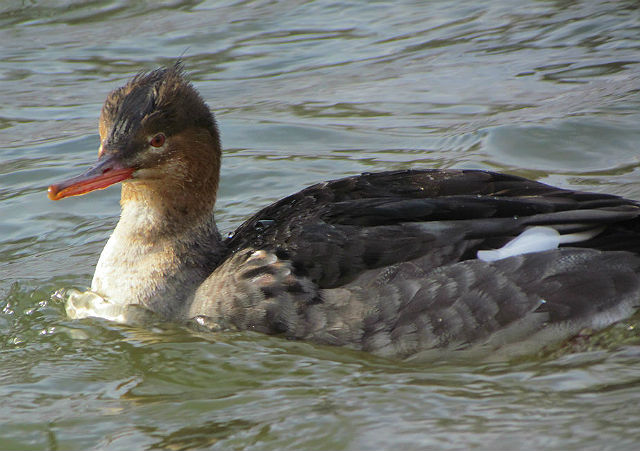
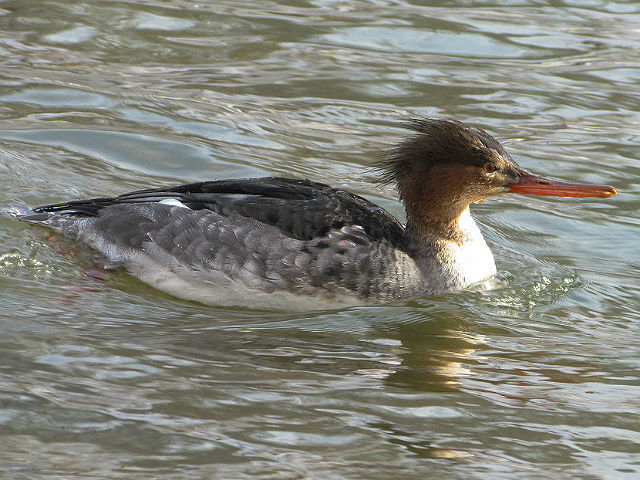
The female Red-breasted Merganser has a has a cinnamon-brown head and dusky gray back, occasionally enlivened by a small white blotch in front of the tail. The female also has lighter red eyes and feet than the male, which tend to be a deep red. Both females and males have a double crest of plumes at the back of their heads.

Red-breasted Merganser_1865

Red-breasted Mergansers search for fish mainly in shallow waters. They are a “diving duck” rather than a “dabbler” like a Mallard. They have rapid, efficient flight and can swim and dive well by propelling themselves with their feet. However, they cannot walk well, because their feet are so far back on their bodies.

Red-breasted Merganser_1852

These birds are highly social and are usually seen in groups, except during breeding season, when pairs separate to mate and nest. During their fall migration they may gather in large groups of up to 15,000. Red-breasted Mergansers are commonly seen foraging for food and nesting near other bird species.

Red-breasted Merganser_1890

They locate food in several different ways: They float at the surface, looking underwater as they go; they dive in deep or shallow water to search for prey; or they dive in formation with other Red-breasted Mergansers to herd schooling fish.

Red-breasted Merganser_1796

The unique bill, vibrant colors, and shaggy crest on the back of the head give these birds a distinct visual appeal. Watching their diving and social behavior made for an enjoyable outing that took place only a few minutes from my home.

Third Eye Herp
E-mail

American Coot

american coot_0330

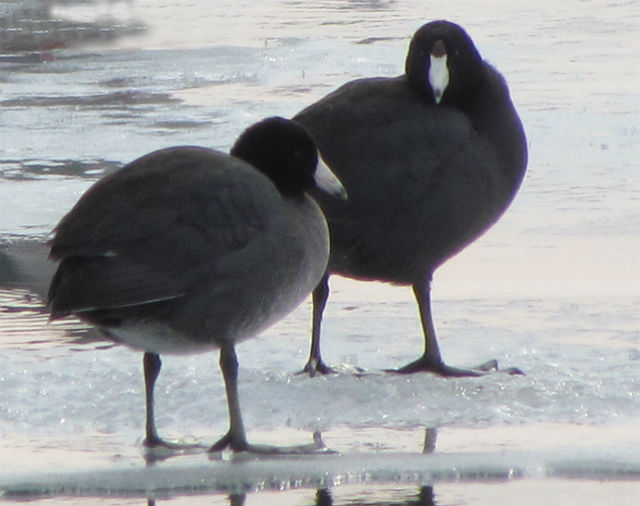
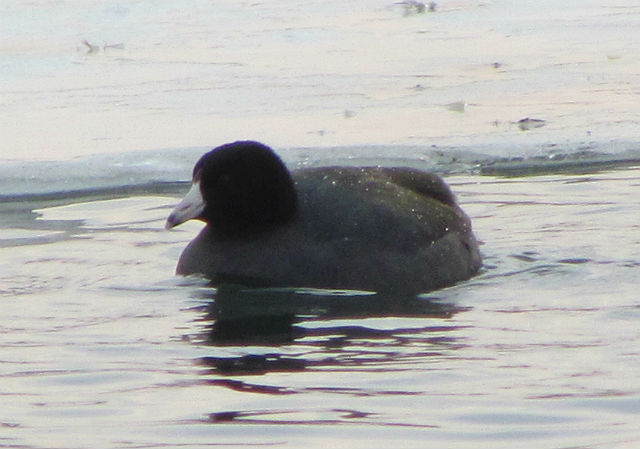
The American Coot is also known as a Mud Hen. The Toledo Mud Hens are a minor league baseball team located in Toledo, Ohio that are named after this bird. Coots live near water, typically inhabiting wetlands and open water bodies in North America.  These were seen on the Lake Erie shore.

american coot_0322

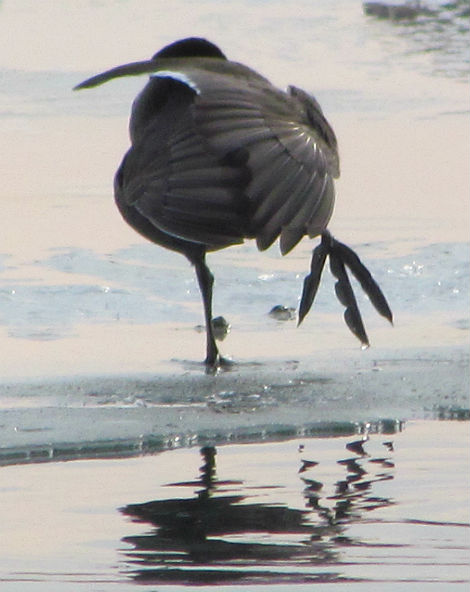
Though commonly mistaken to be ducks, American Coots belong to a distinct order, a group of shoreline birds called Rails. Instead of having the webbed feet of ducks, coots have broad, lobed scales on their lower legs and toes that fold back with each step in order to facilitate walking on land.

american coot_0337

This is a social bird species that lives in flocks. Coots are the only members of the Rail Family to live in groups. They can make a wide variety of noises, from grunting to clucking, as a means of communication, between each other and to threatening predators.

american coot_0311

They are nicknamed “marsh hen” or “mud hen” because of they way their heads bob when they walk or swim.  They eat small aquatic animals, insects and vegetation. American Coots have the ability to dive for their food, much like ducks. When diving, they gather plants that grow on the bottom of waterways. After bringing plants up to the surface, they go through them looking for edible parts.

american coot_0326

A group of these birds has many collective nouns, including a “codgery,” “commotion,” “fleet,” “shoal” and a “swarm” of coots.

Third Eye Herp
E-mail

American Black Duck

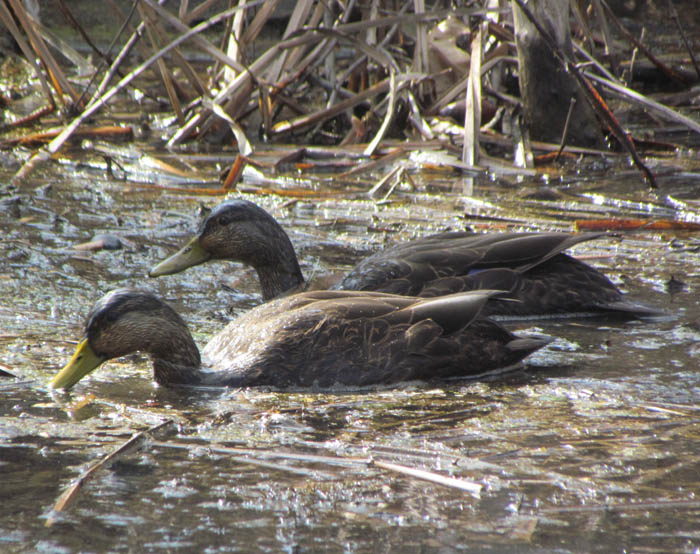
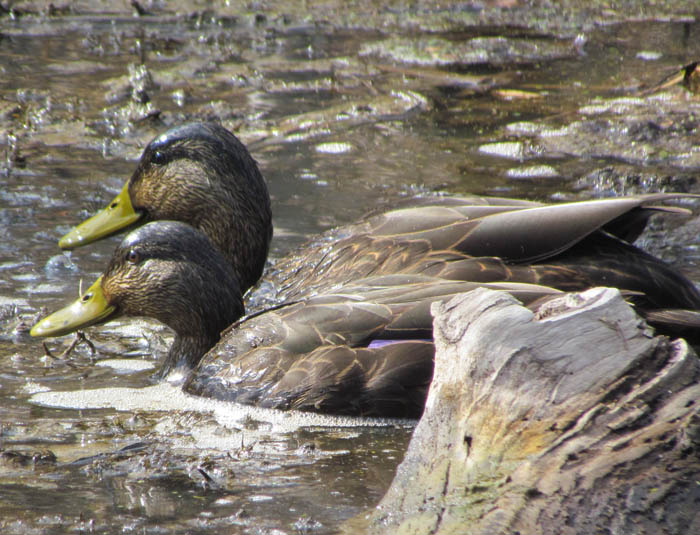
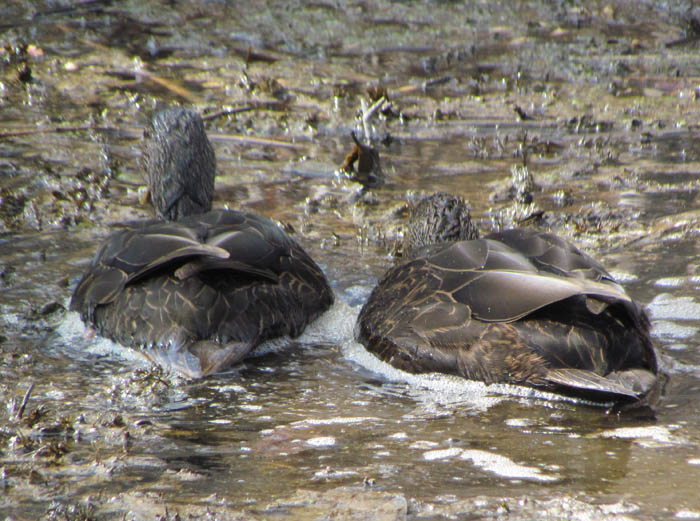
The American black duck is not really black – it is more of a dusky brown. It blends in well and hides in plain sight in the shallow wetlands of the Cuyahoga River floodplain.

Male and female American Black Ducks are remarkably similar in appearance, which is unusual for waterfowl. These days they can be seen staking out nest sites in preparation for egg laying. The female usually selects an area in a clump of grass, under a shrub or tree.

Numbers of this duck declined sharply in the mid-twentieth century. Hunting regulations seem to have helped to stabilize their numbers, though the continental population of these birds is less than half of its historical size.

These ducks forage for food by dabbling; they tip their heads down and lift their tails up so they can probe the mud and water for submerged plants, seeds and invertebrates.

An average-sized clutch of 9 eggs hatch after just under a month of incubation. Ducklings appear in May and early June and are mobile within a few hours of hatching.

The American Black Duck is shy and is widely regarded as the wariest of all ducks. It is often seen in company of Mallards. If a mother is killed or separated from her brood, another American Black Duck with ducklings of her own, regardless of their age, will quickly adopt the orphans.

Third Eye Herp
E-mail

Belted Kingfisher

The kingfisher actively hunts for small fish by perching on limbs over the water. When it spots a fish, it leaves its post and hovers over the water until it plunges in after its prey.

After snapping up a fish with its bill, the bird takes it back to its perch, where it stuns the fish by beating it against a branch or tree trunk before gulping it down.

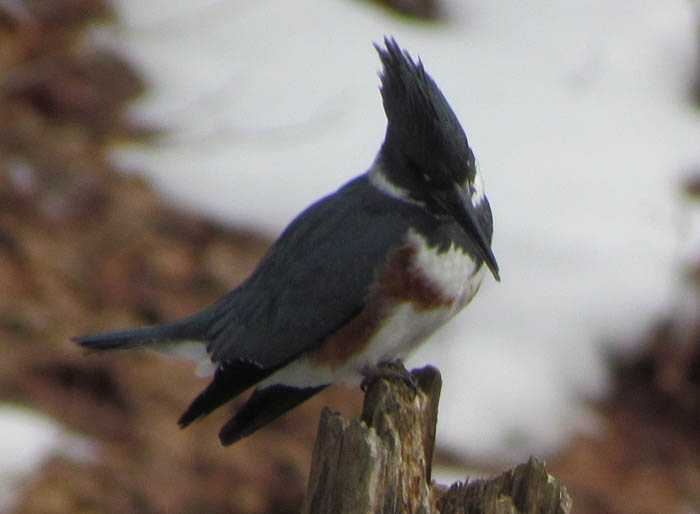
Somewhat larger than a pigeon, they can grow up to 13 inches long. Belted Kingfishers have a large, shaggy crest and a long, heavy beak – causing them to look rather top-heavy.

This bird is a female. Belted Kingfishers are unusual in that females are more colorful than males, which lack the rust colored markings.

They are often first detected by their distinctive dry, rattling call. They do not hesitate to scold any invader who enters their hunting territory – including humans. I discovered this particular bird’s territory on the Erie Canal Towpath last Summer; I can usually find her there whenever I visit the area.

Water is not only their resource for obtaining food, but it can provide an escape route as well. A trick Belted Kingfishers use to avoid being caught by hawks is to dive into the water at the last minute.

These birds are solitary except during breeding season, when the male and female will dig a tunnel into a mud bank. The tunnel, which can be up to eight feet long, has a small chamber at the end. Belted Kingfishers sometimes share their tunnel with swallows, which make small “rooms” off of the tunnel’s “main hallway.”

With its brushy crown, energetic flight, and piercing call, the Belted Kingfisher seems to have an air of royalty as it patrols the shoreline of its domain.

Third Eye Herp
E-mail

Double-crested Cormorant

While on a visit to CanalWay Center I saw this cool bird. The gangly Double-crested Cormorant is a prehistoric-looking, matte-black diving bird with yellow-orange facial skin. It is a large waterbird with a small head on long, kinked neck. This bird has a thin, strongly hooked bill. During breeding season, adults develop a small double crest of stringy black or white feathers.

Double-crested Cormorants float low on the surface of water and dive to catch small fish. After feeding, cormorants need to dry their wings. They do not have oil in their skin to protect their feathers from getting wet, like ducks and other water birds do. Cormorants find a perch and stretch their wings out until they are dry.

There is no other bird in Ohio that has undergone the tremendous population explosion of this bird. The use of unregulated pesticides like DDT caused a severe decline in their numbers from the 1950s through the 1970s. The comorant’s comeback is a result of the disappearance of these toxins from the environment.

Double-crested Cormorants often associate with other birds. Nests are built in trees alongside Great Blue Herons and other heron species. Cormorants will feed with other water birds, such as gulls, ducks and herons. These birds help each other with finding food and watching for predators. When threatened, a Double-crested Cormorant may vomit fish at a predator.

Third Eye Herp
E-mail

Great Blue Heron

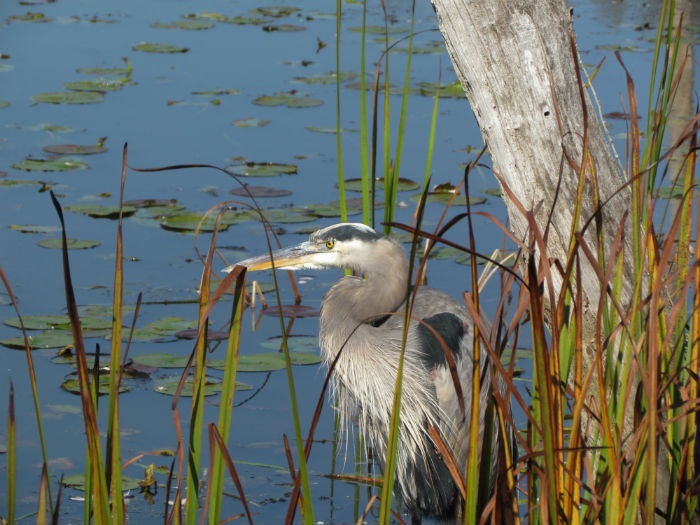
Of the many bird species that inhabit wetlands, perhaps none is more iconic than the Great Blue Heron. Great Blue Herons get their name from their blue-gray plumage and their large size. A fully grown adult bird is an impressive sight. It can stand about 4 feet tall, with a wing span of 6 feet.

Great Blue Herons are one of the most widespread species of wading birds in the Western Hemisphere.

Males perform elaborate courtship displays during the mating season. They also construct nests of sticks and twigs as high as 50 or 60 feet in trees to discourage predation by animals like raccoons. Great Blue Herons use the same nests year after year, adding on to them during each breeding season. As a result, these nests can get quite large over time.

heron_8296

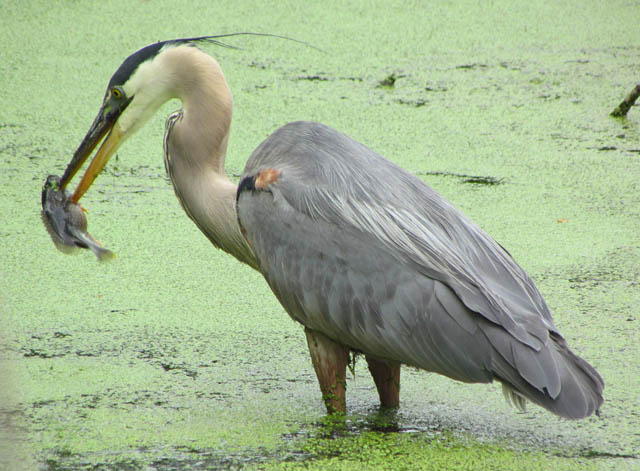
Great Blue Herons are not picky eaters. They feed on a wide range of aquatic animals, such as fish, frogs, snakes, small turtles and aquatic insects. In upland areas, they will also feed on small mammals, such as mice. These birds are solitary hunters and are rarely found in close proximity to one another.

Their feeding technique is to stand very still, watching for movement in the water by a potential food source. When the time is right, they swiftly dart their head into the water, spearing their hapless victim with their beak.

fish_5958

Third Eye Herp
E-mail

Wood Duck

While exploring a nearby National Park, many birds were observed calling, making nests, bonding and getting ready to produce offspring – or already raising them. One of these is the Wood Duck – perhaps the most colorful of North American waterfowl.

Reverence for their appearance goes all the way back to prehistoric Indians who regularly featured them on bowls and pipes. The adult male has distinctive multicoloured iridescent plumage and red eyes, with a white flare down the neck. The female is less colourful and has a white eye-ring. Both males and females have crested heads.

These birds live in wooded swamps, where they nest in holes in trees. They are one of the few duck species equipped with strong claws that can grip bark, allowing them to perch on branches.

After hatching, the ducklings jump down from the nest tree and make their way to water. The mother calls them to her, but does not help them. The ducklings may jump from heights of up to 300 feet without injury.

We often think of colorful birds with exotic lifestyles as living in far away places, but we have some very interesting species here in northeast Ohio.

Third Eye Herp
E-mail


White-faced Ibis

Wading birds in the Mojave? It may not seem that it could be possible, but the desert is full of surprises.

These were seen at a Wildlife Management Area I was visiting in Nevada.

The White-faced Ibis is a long-legged wading bird with reddish eyes and a long, slender, downward-curved bill. Its plumage is chestnut colored with green and purple iridescence. These are the first wild ibis I’ve ever seen.

They are found in wetland habitats such as marshes, swamps, ponds, rivers, irrigated agricultural lands, along shores, and in shallow water. These birds are wary and shy, making getting close to them difficult.

Third Eye Herp
E-mail