Melanistic Eastern Gray Squirrel

Melanistic Eastern Gray Squirrel_1243

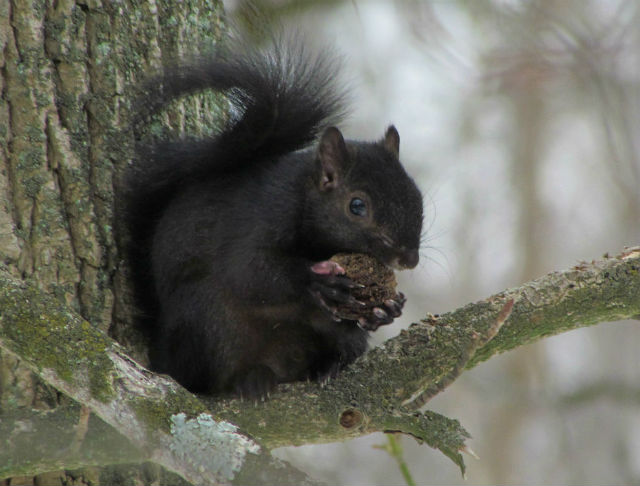
The black form of Eastern Gray Squirrel occurs as a “melanistic” subgroup. It is particularly abundant in the northern part of the mammal’s range.

Melanistic Eastern Gray Squirrel_9641

This is due to black squirrels having a considerably higher cold tolerance than that of gray colored squirrels.

Melanistic Eastern Gray Squirrel_0205

In addition, because the northern forests are more dense and therefore darker, dark colored squirrels have the benefit of better concealment in their dimly lit habitat.

Melanistic Eastern Gray Squirrel_2261

The black color is most likely the result of a mutation, which probably occurred by chance. As it turns out, the color mutation was favorable to the survival of the squirrels, became passed down through generations and spread.

Melanistic Eastern Gray Squirrel_8915

Although somewhat common in northeast Ohio, the rarity of the black squirrel has caused many people to admire them, and they enjoy great affection in some places as mascots.

Third Eye Herp
E-mail

Hairy-tailed Mole

hairy-tailed mole_1994

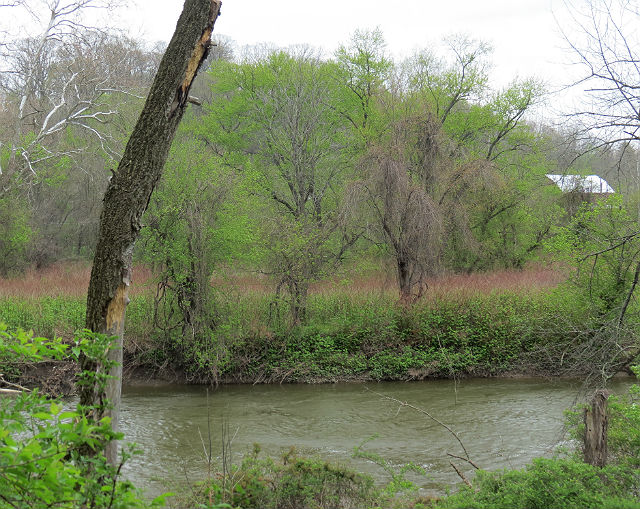
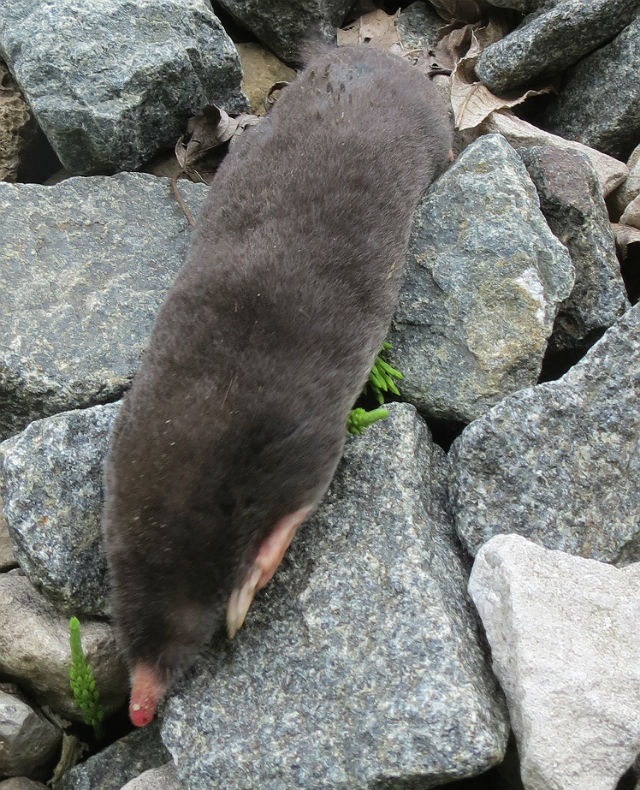
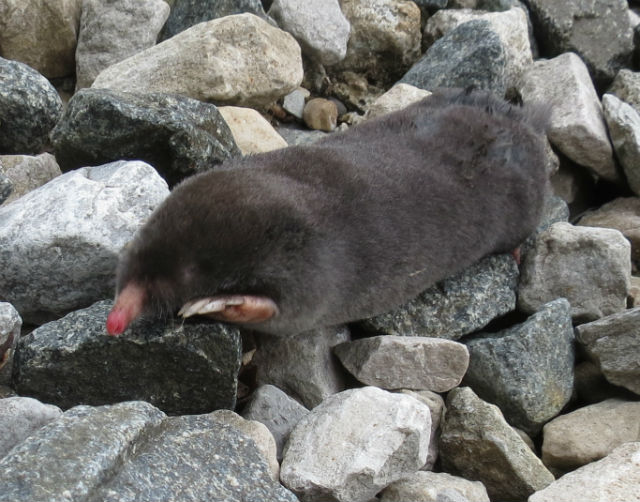
I was walking along the Cuyahoga River on a cloudy day when I stopped to listen to and photograph a Baltimore Oriole that I heard calling. While enjoying the sight and sounds of the orange and black bird, I heard something shuffling at my feet. I looked down and saw this Hairy-tailed Mole crossing the railroad tracks.

hairy-tailed mole_1970a

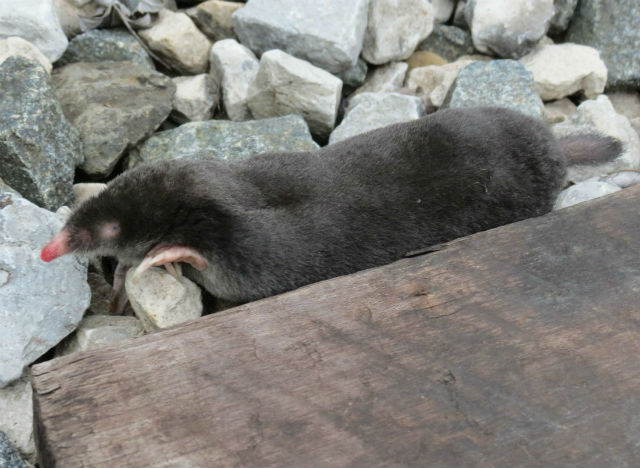
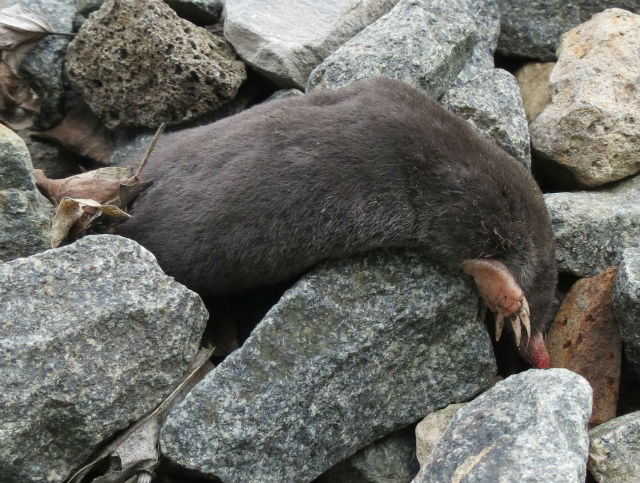
As the name implies, this mammal is very similar to an Eastern Mole, except that it has a distinctly hairy tail. Its broad front feet with outward-facing palms help it to dig through soil. Since it spends most of its time underground, its eyes are tiny and it has no external ear openings.

hairy-tailed mole_1991

The Hairy-tailed Mole is about six inches in length and has a long, red-tipped snout. As in other moles, its fur is short, very dense, soft, and silky – and therefore a good coat for traveling through underground tunnels.

hairy-tailed mole_1992

The Hairy-tailed Mole digs deep tunnels, and then loosens soil particles with one front foot at a time. It then pushes loose soil under its body with the front feet and kicks the soil backwards with the hind feet. By shoveling the residual piles to the surface this animal cleans the tunnel and creates a characteristic molehill, about 3 inches deep.

hairy-tailed mole_1988

This animal spends most the day underground searching for food. They have a voracious appetite for insects, including destructive types, such as cutworms and Japanese beetles; the mole’s daily food consumption can equal 50-100% of its weight. The underground tunnels that they create may be used eight years or more by many generations of moles.

Third Eye Herp
E-mail

Tule Elk

tule elk_1312

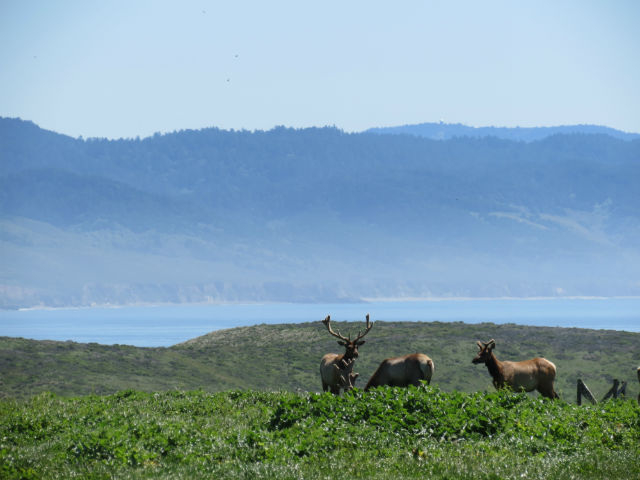
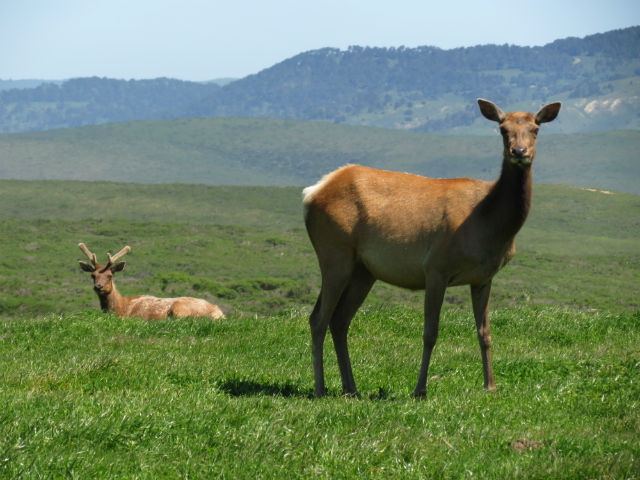
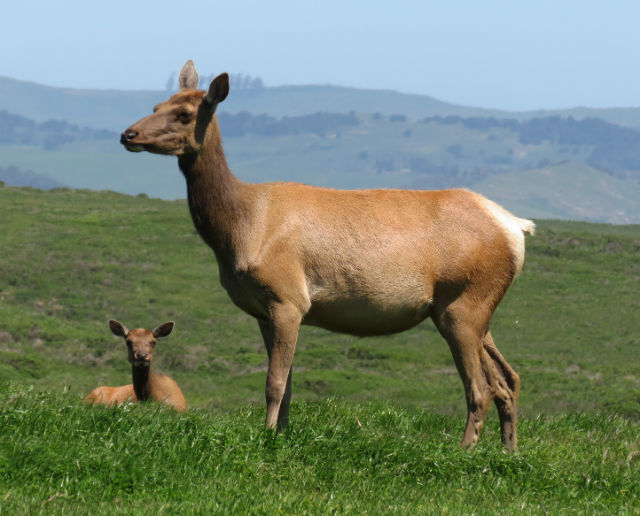
I saw these majestic animals on my visit to California. This is a subspecies of elk native is to California and found nowhere else, ranging from the grasslands and marshlands of the Central Valley to the grassy hills on the coast.

Tule Elk_0944

When the Europeans first arrived, an estimated 500,000 tule elk roamed the state, but by 1870 they were thought to be extinct, primarily due to uncontrolled hunting and displacement by cattle. By some accounts, fewer than 30 remained in a single herd near Bakersfield in the mid-1870s. Through conservation efforts, their numbers are now around 4,000.

tule elk_1308

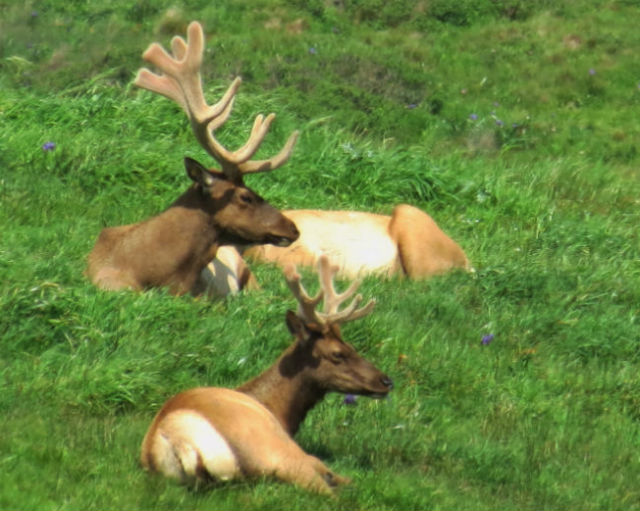
Elk are highly social animals, but the extent of herding can vary by their gender and the time of year. A fully matured bull (or stag) can weigh 700 pounds with the females about three-fourths as large. Only males have antlers, which are rounded and widely spread and average four to six points on each antler.

tule elk_1315

These mammals play a critical role in preventing succession of open grasslands to less diverse, shrub-dominated ecosystems. Their grazing seems to have a positive impact on native grassland species abundance and diversity.

tule elk_1313

The Tule Elk will probably never return to their historic numbers or range because of human’s use of the land and lack of suitable elk habitat, but it was cool to see these animals for the first time.

Third Eye Herp
E-mail

Coyote

coyote_0348

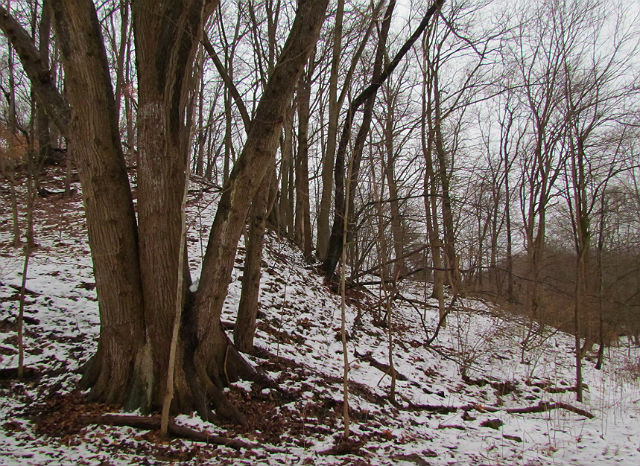
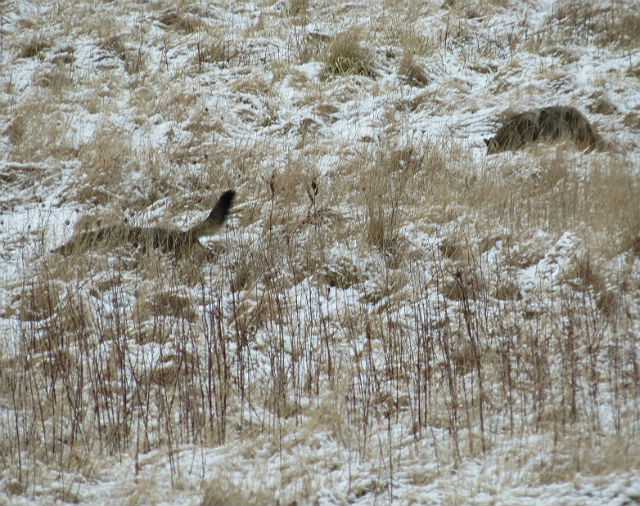
While hiking in Brecksville Reservation this week I noticed two dogs romping in an open field. It was not the first time I’ve come across Coyotes in the wild, but it was a nice encounter, because I was able to observe some of their natural behavior.

coyote_8819

This mammal is not native to Ohio; we tend to associate Coyotes with the open, deserted lands of the west. But this mammal has the ability to make the best of a bad situation and survive…or even prosper. As its presence in the Buckeye State shows, this versatile animal can make a home most anywhere.

coyote_8823

They often will hunt in unrelated (non-family) pairs or large groups. Coyotes typically eat small mammals, but they also consume vegetation and fruit, such as summertime berries. These were very busy listening to mice, voles or shrews tunneling under the snow. It was amusing to watch them as they playfully pounced on prey that they could hear, but not see.

coyote_8822

Coyotes have a bushy tail which is usually tipped in black and is carried down at a 45 degree angle as the animal moves. They stand about 1-1/2 to 2 feet tall and are between 41 to 53 inches in length. Males are larger than the females and weigh anywhere from 20 to 50 pounds.

coyote_8828

The Coyote’s strength is that it can adapt and exploit almost any habitat to its advantage. It first arrived in Ohio in 1919 and can now be found in all of Ohio’s 88 counties – and they continue to expand their range.

coyote_8830

While most wildlife species have avoided developed areas and often declined as a result of man’s expansion, the Coyote seems to be thriving.

Third Eye Herp
E-mail

Red Squirrel

red squirrel 7313
The Red Squirrel is a small squirrel (compared to the Gray Squirrel and Fox Squirrel) with reddish to reddish-gray fur on top and a white underside. It has white around its eyes. Its tail is not as long or bushy as the tail of other tree squirrels. In the Summer, the red squirrel may have a black stripe on its sides.

red squirrel 0988

Its curved front claws and powerful hind legs make it a very good climber and jumper. The Red Squirrel can reside in pine, deciduous (trees with leaves) and mixed pine-deciduous forests.

red squirrel 9574

This mammal eats a wide variety of foods including insects, seeds, bark, nuts, fruits, mushrooms and pine cones. In the Autumn it will remove green pine cones from trees and store them in the ground. It also stores nuts and seeds in piles or under logs, at the base of trees and underground.

red squirrel 7276

It doesn’t always find or eat all of the seeds and nuts it has stored. Because of this, the Red Squirrel plays an important role in spreading seeds throughout the forest. This animal also drinks tree sap from maple trees. It bites a tree until the sap flows out and returns to drink it after the water in the sap has evaporated.

red squirrel 1421

The Red Squirrel is very vocal and chatters, growls and screeches. You can usually hear more of these forest creatures than you can see. Its bright eyes, perky disposition and chattering, rattling call add to the “personality” of the forest.

Third Eye Herp
E-mail

Golden Mouse

golden mouse_5475

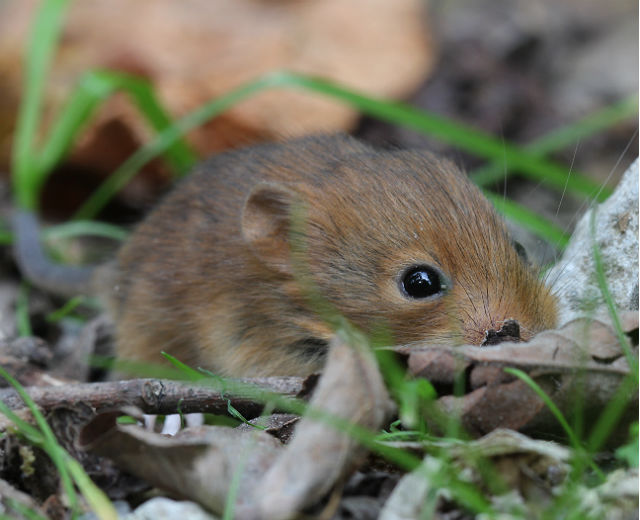
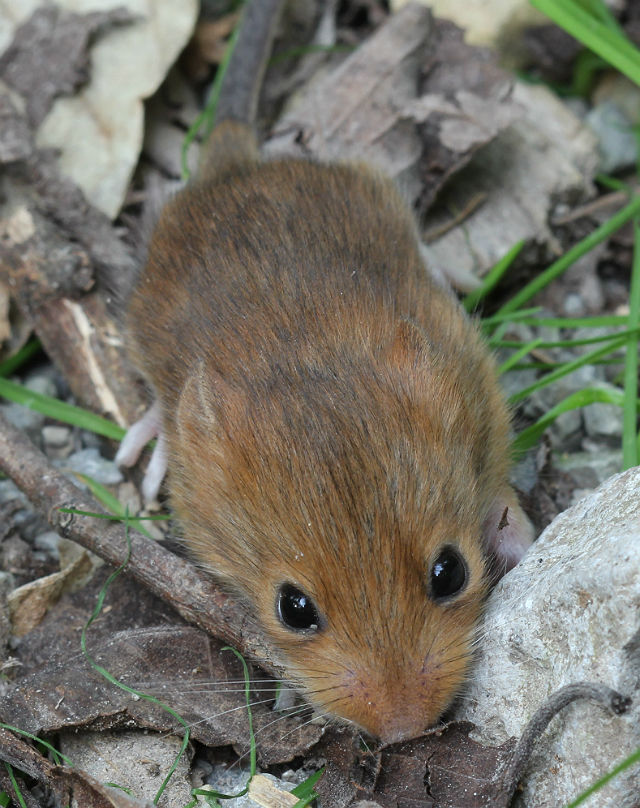
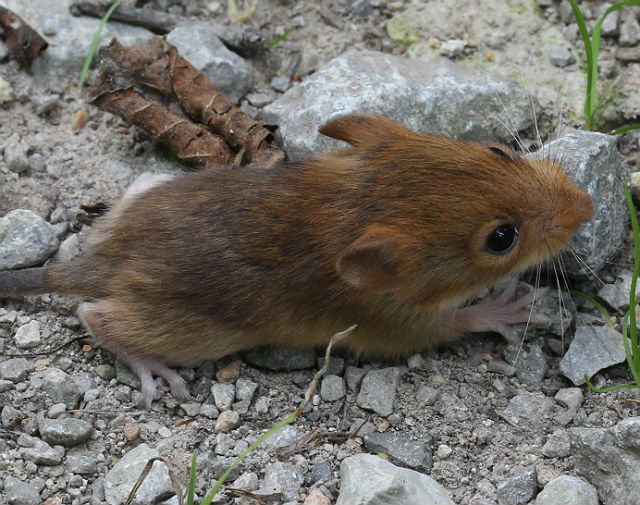
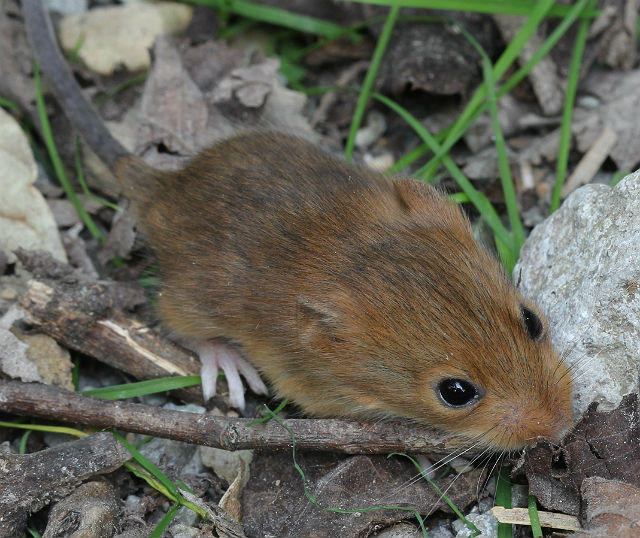
While hiking on Snake Road in southern Illinois a few weeks ago, I came across a couple of examples of this very interesting mammal. These small, golden rodents are adapted to, and occur chiefly in, forested areas. Tangles of trees, vines, and brush seem to be a preferred habitat. They are rarely encountered in or near human habitations.

golden mouse_3311

Unlike most mice, the Golden Mouse is semi-arboreal. Its semi-prehensile tail helps balance and stabilize it. As the mouse travels along vines and branches, the tail is used for balance. When the mouse pauses, the tail encircles the branch or vine.

golden mouse_3309

They build nests and feeding platforms above ground in understory trees and shrubs. Young are born in nests that usually are a few inches to 15 ft above ground in bushes and vines.

golden mouse_3302

Insects and spiders make of about half their diet. They also eat a variety of seeds including Sumac, Wild Cherry, Dogwood, Greenbriar, Poison Ivy and Blackberry.

golden mouse_3307

This species occurs in the southeastern United States and I have never encountered one before. Coming across these cool creatures was an unexpected surprise.

Third Eye Herp
E-mail

Meadow Vole

pm_5968

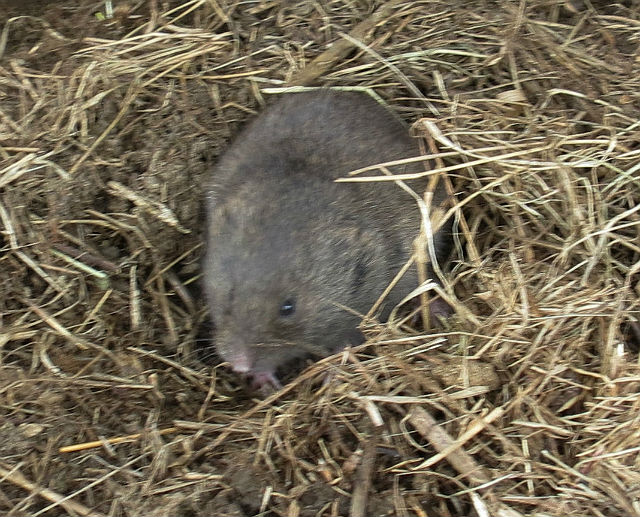
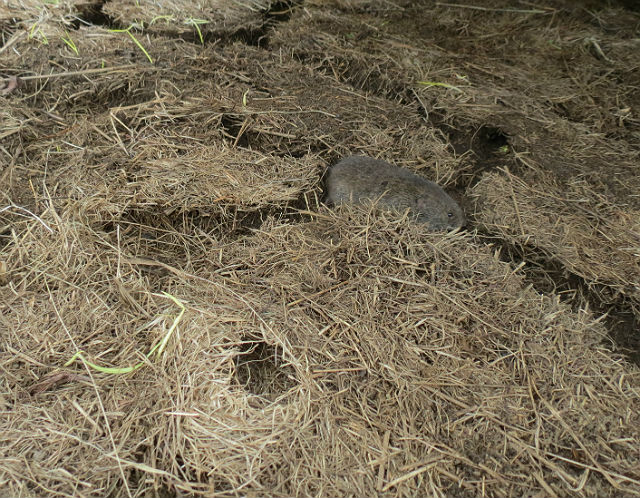
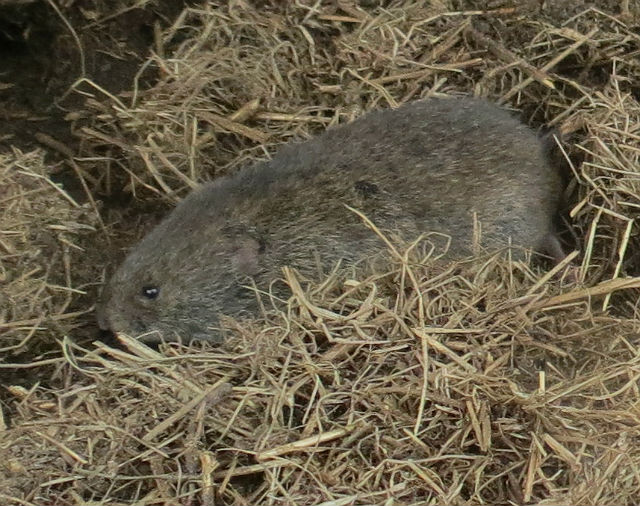
While looking for snakes this week I came across a small mammal. The Meadow Vole is a small, common rodent that lives in grassy fields, woodland, marshes, often along lakes and rivers.

meadow vole_9619

This creature is active year-round, usually at night. Meadow Voles make nests in clumps of grass. From their nests, they build tunnels beneath the grass and plants.

vole_9625

The Meadow Vole’s diet includes many things, including grasses, sedges, seeds, flowers, leaves and roots. These animals can eat their weight daily. These mammals occur throughout most of the northern and eastern United States and Canada.

meadow vole_9625

Meadow Voles have a remarkable reproductive output. Females can breed when they are a month old and produce litters of 3-10 pups every three weeks for the duration of their lives. Their typical lifespan is 12-18 months.

Third Eye Herp
E-mail

Piebald White-tailed Deer

pied_9148

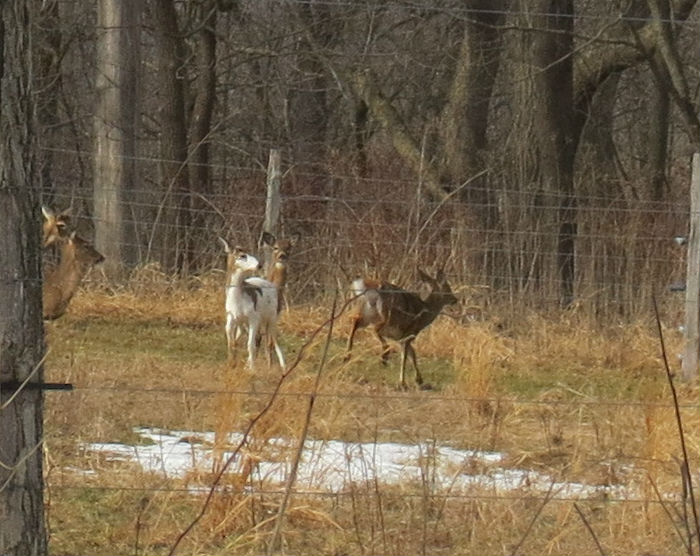
Walking the Buckeye Trail I saw a group of White-tailed Deer in a farmer’s field. One of them, however looked very different from the others.

pied_9257

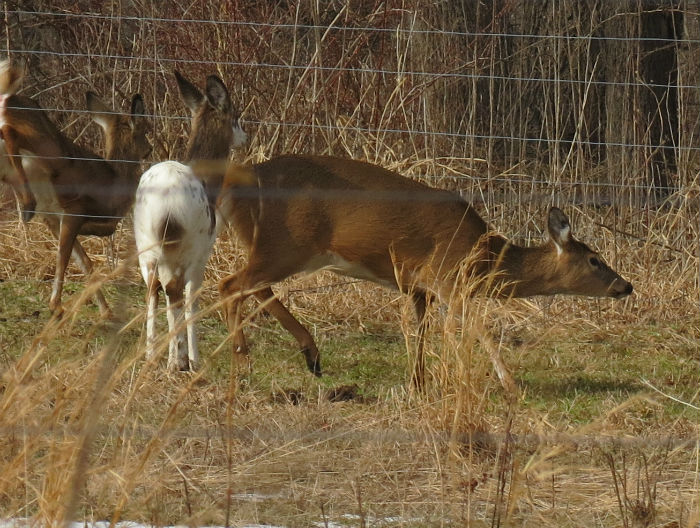
A piebald is an animal that has white blotches in additional to its usual coloration. The patterning of the blotches are usually asymmetrical, resulting in a random arrangement of white and brown.

pied_9258

A genetic variation produces the piebald condition in White-tailed Deer, not parasites or diseases. Sometimes the condition is such that they appear almost entirely white.

pied_9268

Piebald and white deer have long been the subjects of hunting myth and legend. Some believe killing them brings a curse of bad luck during future hunts. For me it was a cool genetic variant of an otherwise common mammal to see on my hike.

Third Eye Herp
E-mail

White-tailed Deer

IMG_0874

Although these are the largest wild animals where I live, they are smallest members of the North American deer family, and are found from southern Canada to South America.
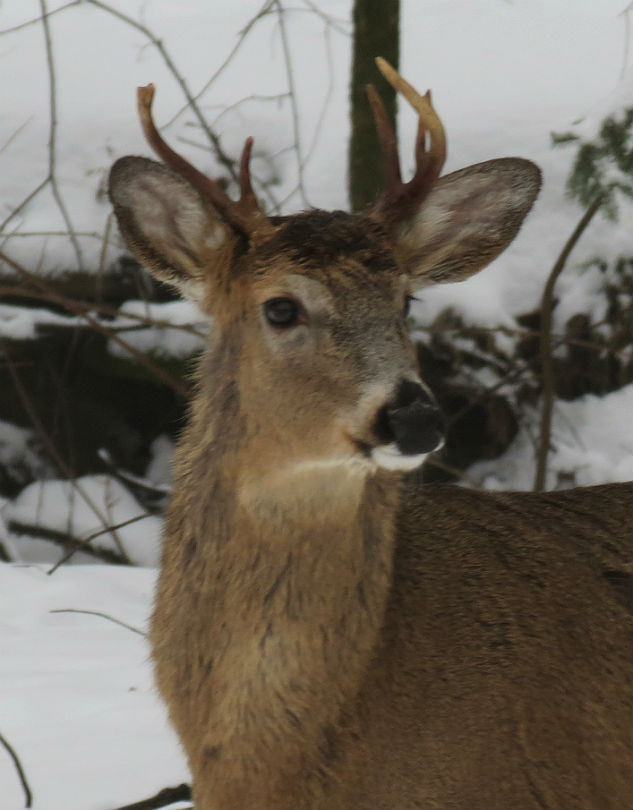
buck_8285

In the Summer they are often found fields and meadows, using small trees for shade and hiding places. During the Winter they generally reside in forests, preferring coniferous stands that provide shelter from the harsh elements.

deer_8224

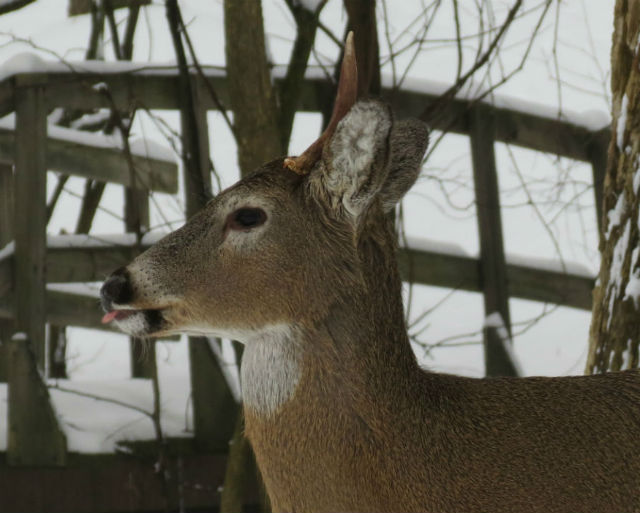
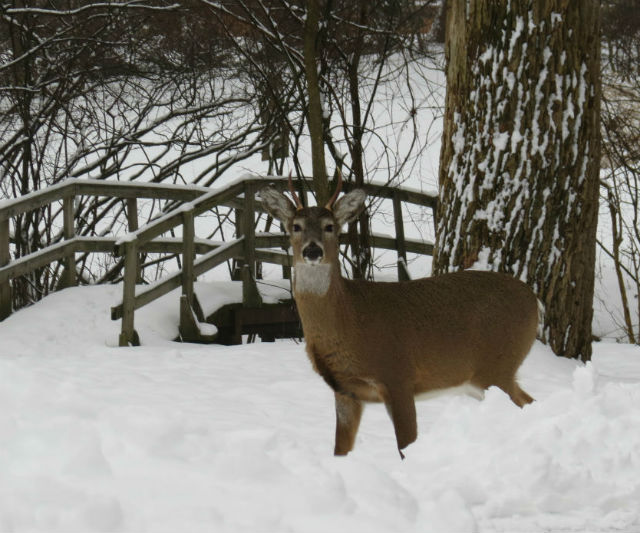
Only the males (bucks) grow antlers, which bear a number of tines, or sharp points. During the mating season, bucks fight over territory by using their antlers in sparring matches.
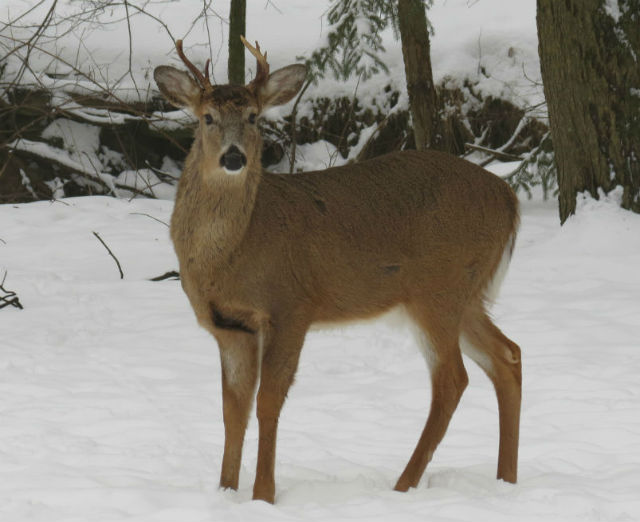
buck_8284

White-tailed Deer are reddish-brown with a white belly and tail in Summer. In Winter, the reddish-brown changes to grayish-brown. White-tailed Deer are mostly nocturnal, but can be seen any time of day. They do most of their feeding early in the morning or when the sun is going down.
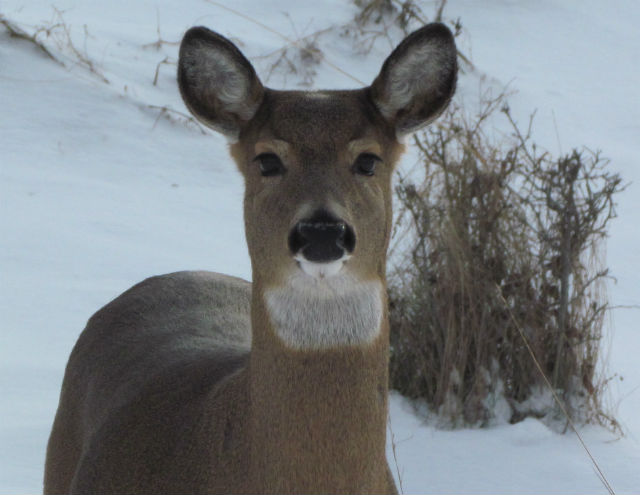
IMG_0876

A female (doe) has from one to three fawns in a litter. Fawns stay with their mother for almost a year. A doe leaves her fawns hidden while she feeds. Sometimes she leaves them for up to four hours. They do not move while she is gone. They have extra white spots on their coats which help camouflage them. These photos were taken in my backyard this month, here’s a summertime fawn seen in my yard a couple of years ago.
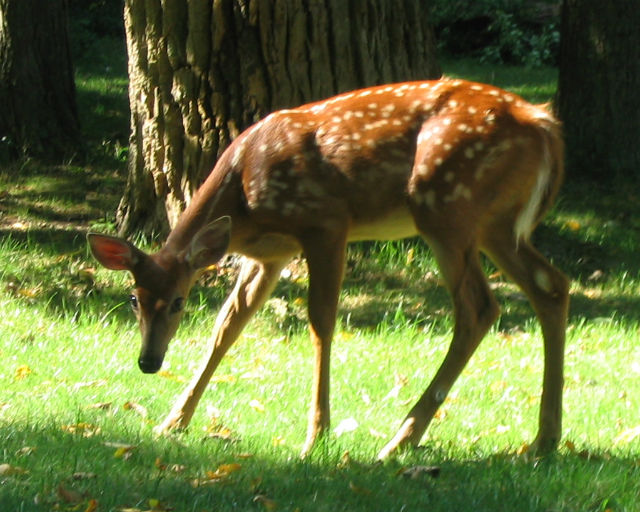
214_1409

White-tailed Deer run very fast, up to 36 miles per hour. They are great swimmers and can leap far as well. Deer can leap over eight feet high and thirty feet long.
buck_8280

These animals are herbivores, but they eat a wide variety of foods, including green plants in the Summer; acorns, fruits and nuts in the Fall; and twigs in the Winter. White-tailed Deer also eat a lot of garden plants, flowers, vegetables and ornamental trees in people’s yards.
buck_8278

When a deer is nervous it will snort and stamp its feet. When it is alarmed it automatically raises its tail. Sometimes when you startle a deer, all you see is a flash of white disappearing into the woods.

Third Eye Herp
E-mail

Eastern Chipmunk

chip_7793

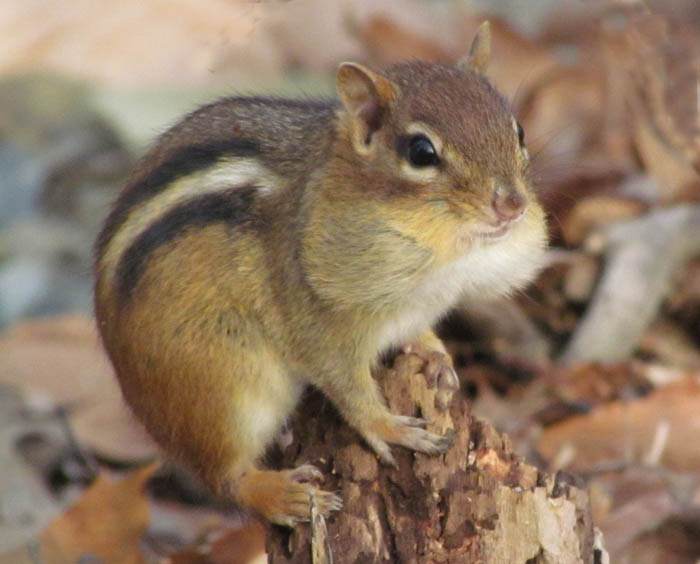
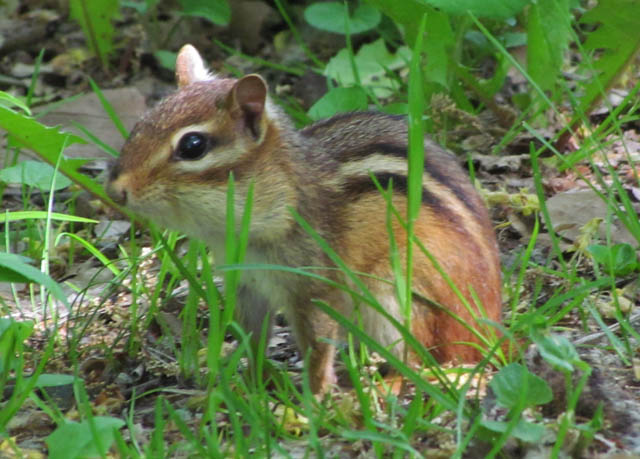
The Eastern Chipmunk is a brightly colored, conspicuously patterned rodent averaging 9-10 inches in total length. It is easy to identify, due to its two white stripes bordered by black on its sides.

chip_5283

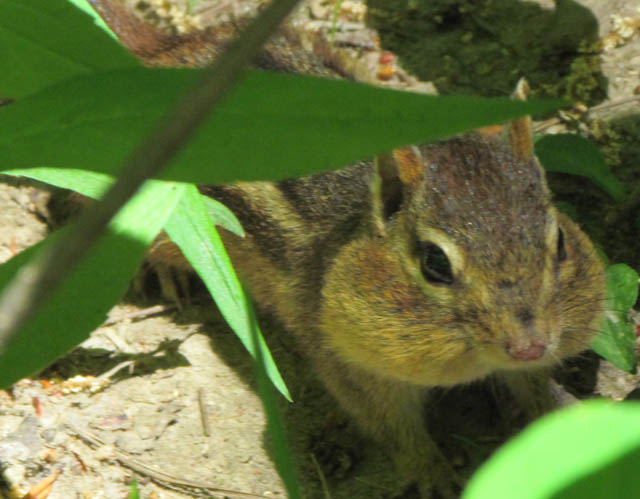
This mammal lives in open woods, rocky habitats and brushy areas, including suburban backyards. It is most abundant in mature hardwood forests containing Sugar Maple and Beech Trees, with a relatively open understory.

chip 103

It digs a burrow for shelter with cavities for storing food. The burrow is often an elaborate maze of inter-connecting tunnels, some tunnels serve as drains to minimize flooding. It also stores large amounts of food in chambers constructed in the burrow and spends much of its time running back and forth from trees to its subterranean home.

chip_7788

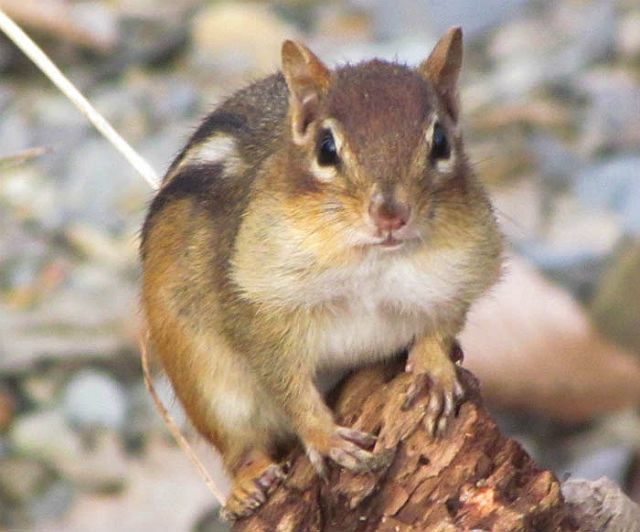
Eastern Chipmunks eat a wide variety of foods, especially acorns and nuts. Their feeding habits reflect the seasonal supply of seeds, fruits, nuts, fungi and roots that are available. They can be observed stuffing their two internal cheek pouches as they gather food.

chip 095

This animal doesn’t truly hibernate, but it does spend a lot of time sleeping in the Winter. It may wake up every few weeks to eat the food it has stored. It communicates with other chipmunks by chattering. Eastern Chipmunks help many plants and fungi by spreading seeds and spores as they travel the forest floor.

Third Eye Herp
E-mail