Cinereus Shrew

One way to increase the amount of snakes you can find is to set out pieces of plywood or sheets of tin in suitable snake habitat. We call these setups “boardlines” and in the Spring snakes often congregate under this artificial cover to get the warmth of the sun while remaining hidden from predators.


Boardline sites don’t have snakes to be found at them in the Winter, but sometimes other cool things can be turned up by checking under the metal or wood during the cold months. I decided to investigate one of the areas where I set out sheets of metal. What I found was a Cinereus Shrew – one of the smallest mammals in the world.

Its weight is about equal to that of a dime. This animal is found in northern pine forests and open wet areas. Though they look like mice, shrews are classified as insectivores, not rodents. They eat spiders, insect larvae, and beetles, as well as caterpillars and many other invertebrates. Here’s a photo with the shrew next to my office keys, to give an idea of its size.

Shrews have an extremely high metabolic rate (their heart beats more than 1,200 times per minute). To stay alive, the Cinereus Shrew has to eat three times its body weight daily, which means capturing prey often, day and night; a few hours without food means certain death. They lead rather frenetic lives of near-constant searching, foraging and movement.

Its head is tapered and ends in a flexible, tubular snout for sniffing out food. Its small ears are barely visible because they are covered by short, soft fur. Its fur is cinnamon colored in the Summer, but it darkens quite a bit in the Winter. Cinereus means “ash colored” in Latin.

Cinereus Shrews spend much of their life in an underground world where they are active all year long – they even tunnel through snow. Throughout the day they take short naps to recharge from their activities.

Due to their fast-paced lifestyle, shrews only live for a short time, usually a little over a year. It was definitely worth the boardline trip to encounter this elusive mammal today.

Third Eye Herp
E-mail

Eastern Gray Squirrel

Walking through the woods today it was hard to ignore the activities of Eastern Gray Squirrels as they busily went about their work of collecting and stashing away food for the winter.

Squirrels are beneficial to the maintenance of Ohio’s forests through their habit of burying excess food supplies, such as nuts, seeds, and acorns. Although squirrels dig some of these up to eat during winter, many are left alone. In the spring, those will sprout, giving new growth to the forest. 

At the time of settlement, Ohio was 95% forested, making an ideal habitat for squirrels. A common saying is that a squirrel could travel from the Ohio River to Lake Erie without ever having to touch the ground. Agriculture and hunting have reduced their numbers significantly, but they can still be quite common in the right habitat.

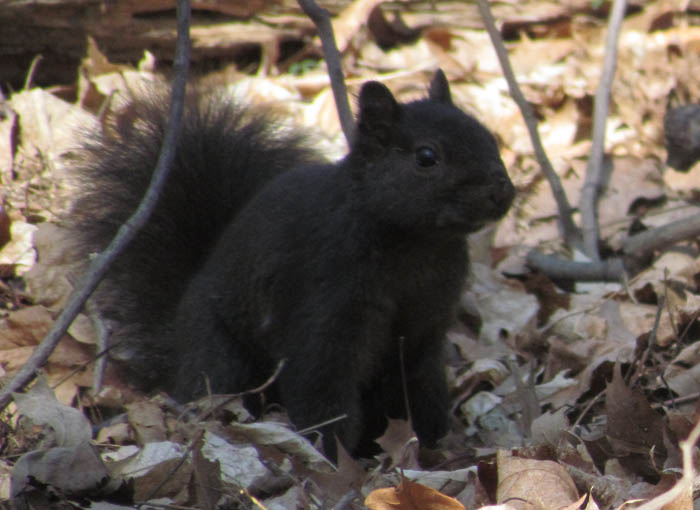
Gray Squirrels prefer large expanses of wooded areas of hardwood trees. Although they are usually gray, on occasion they can be black. The mix of squirrels is often blamed on Kent State University, a rumored epicenter for the melanistic (black) squirrels in Northeastern Ohio.

Squirrels have been known to pretend to bury an object if they feel that they are being watched. They do this by preparing the spot as usual and miming the placement of the food while actually concealing it in their mouth, and then covering up the hole as if they had deposited the object.

Third Eye Herp
E-mail

Bat in a Sign

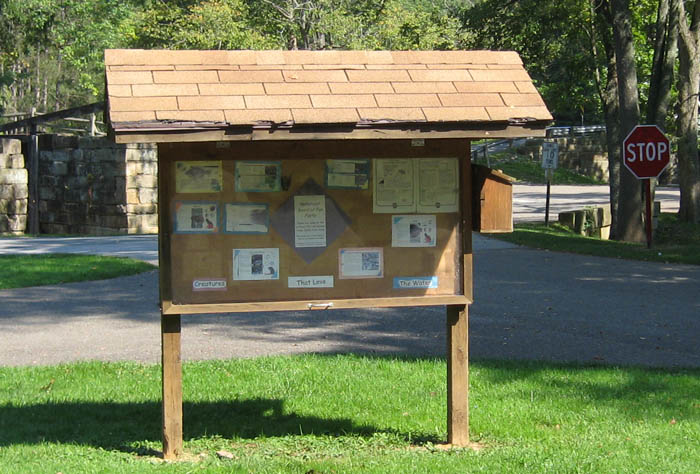
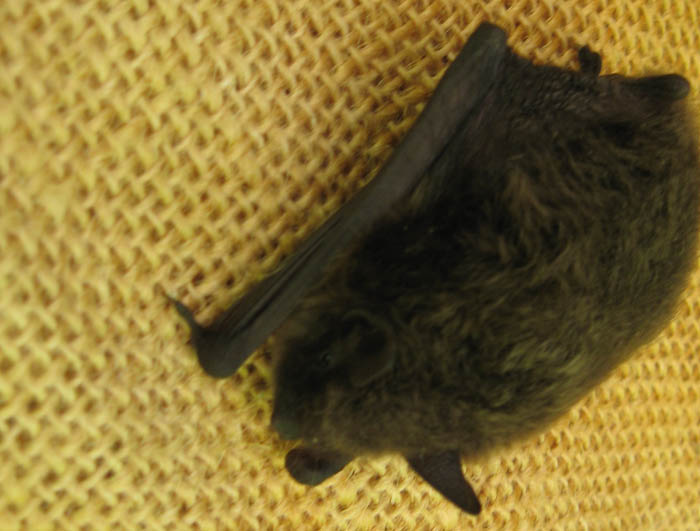
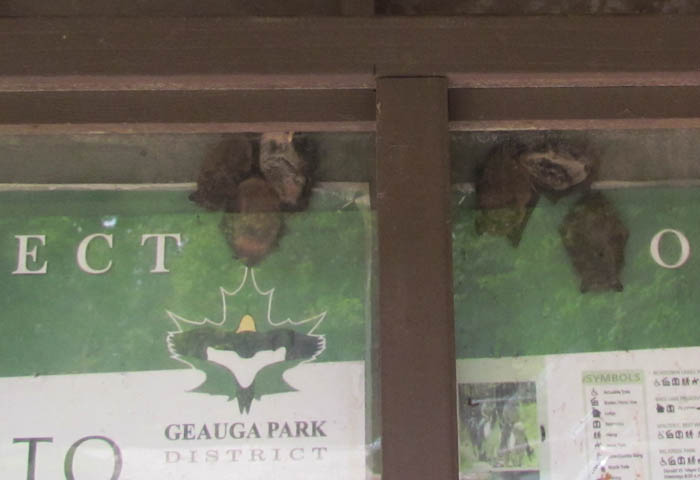
While visiting a State Park, I noticed something was a bit odd about the information sign.

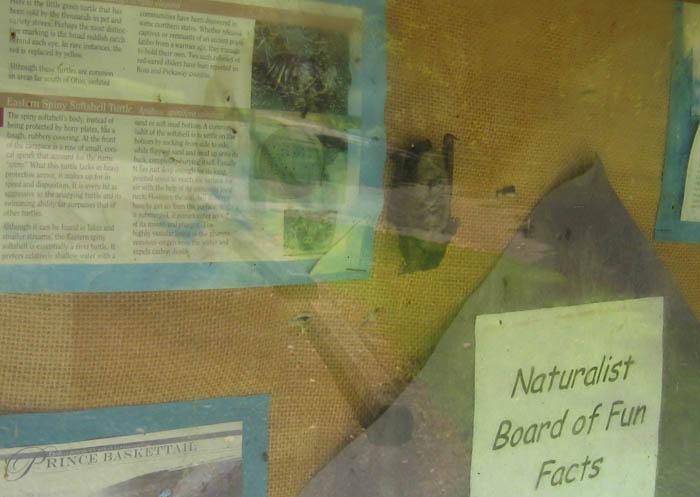
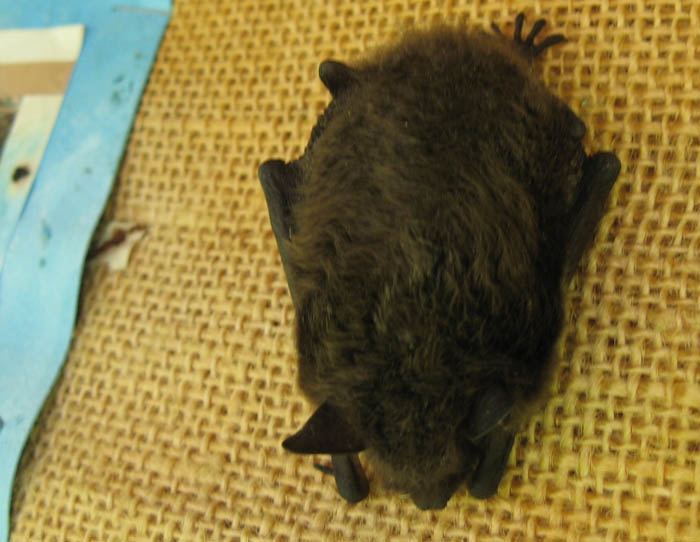
Closer observation revealed that there was a bat in the sign! I opened the sign up in an effort to release it, but the animal just “settled in” and made itself more comfortable.

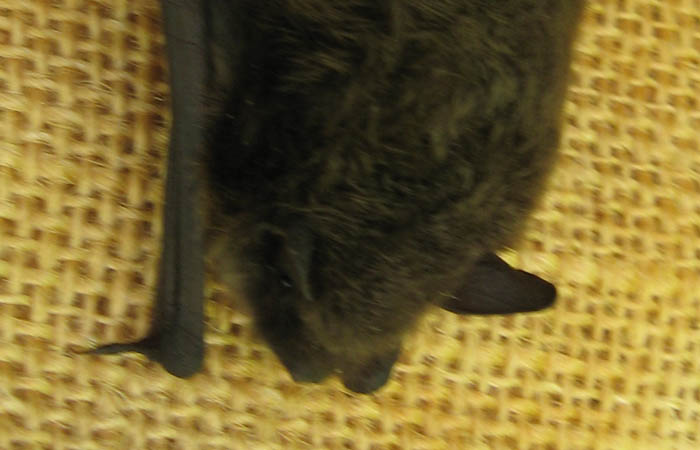
The Little Brown Bat lives along streams and lakes (there was a creek nearby).  It eats insects like gnats, flies, moths, wasps and beetles. It hunts at dusk and at night. Bats are the only mammals capable of flight.

It uses echolocation to locate prey by sending out a high-frequency sound. When the sound hits an object, it bounces back to the bat. The bat then can identify what the sound hit and where it is. Echolocation is thought to be one of the most sophisticated systems ever developed. It is a rare occasion when a bat ever strikes any object, including a person.

They capture prey with their teeth, and by netting them with the tail membrane, or by deflecting an insect with a wing tip into the tail membrane. Bats may eat hundreds of insects each night.

The little brown bat migrates to caves or mines in the winter to hibernate. It wakes up every couple of weeks during hibernation. It doesn’t feed when it wakes up, but it may fly around outside the cave on warm nights. This species is about 3-1/2 inches long with a 10 inch wingspan.

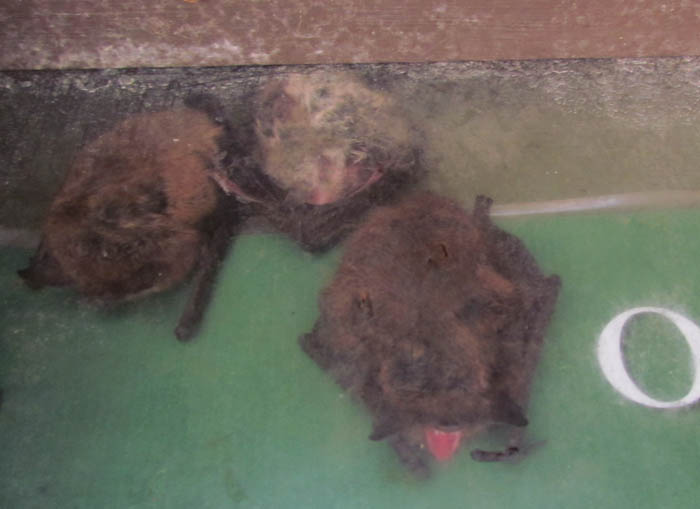
You may think that seeing a bat in a sign is a once-in-a-lifetime experience, but a few days later I visited a park along the upper Cuyahoga River. Guess what?

This one was so amused by my reaction that it stick its tongue out at me.

Third Eye Herp
E-mail

White-footed Mouse

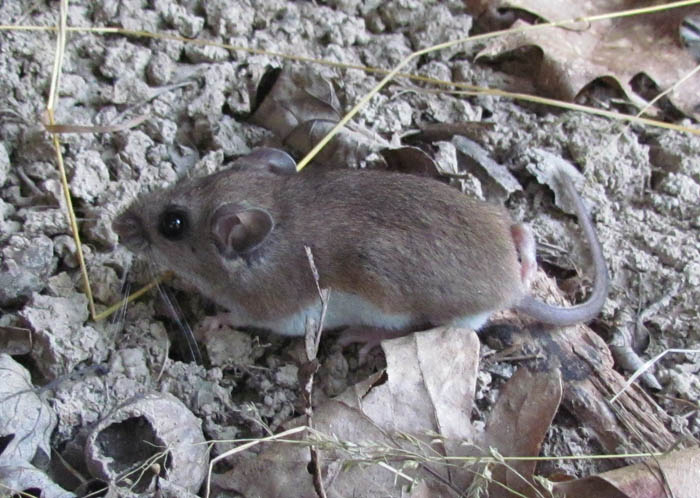
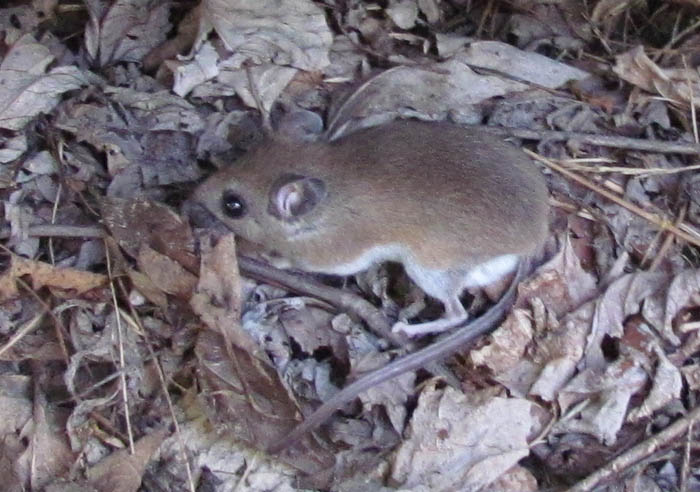
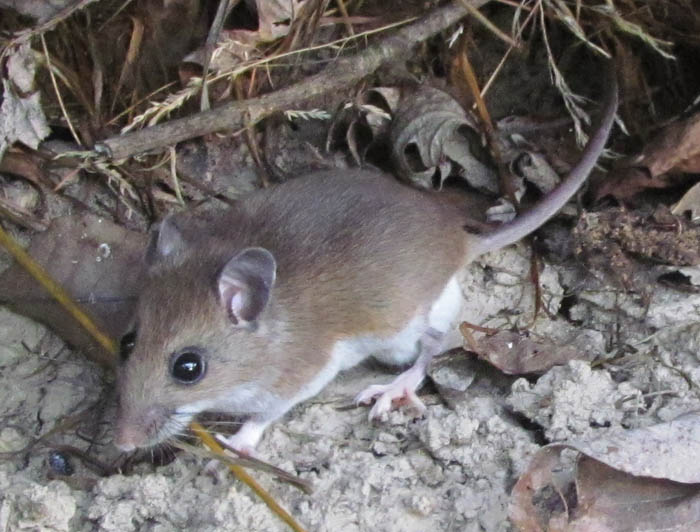
While looking for snakes today, I came across this rodent. White-footed Mice live in a variety of habitats, but are most often found in woody or brushy areas. They are a common rodent in mixed forests and edges of agricultural fields in the United States.

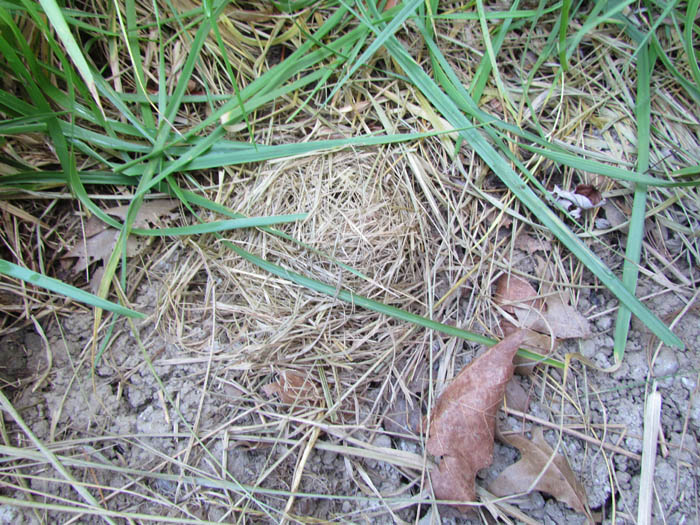
They build nests anywhere it is warm and dry, such as in hollow trees, old bird nests or on the ground underneath some sort of cover.  White-footed Mice feed mostly on seeds, nuts, fungi, and insects.

When alarmed, these mice drum their feet rapidly. They will also sometimes drum their front feet on a hollow reed to make a musical buzzing noise, though we don’t know why.

In comparison to House Mice, White-footed Mice have larger eyes and ears. They are considered by most people to be more “attractive” than House Mice.

White-footed Mice are good swimmers and excellent climbers. They often climb shrubs and trees looking for food. Their tails give them good balance.

Third Eye Herp
E-mail

Desert Bighorn Sheep

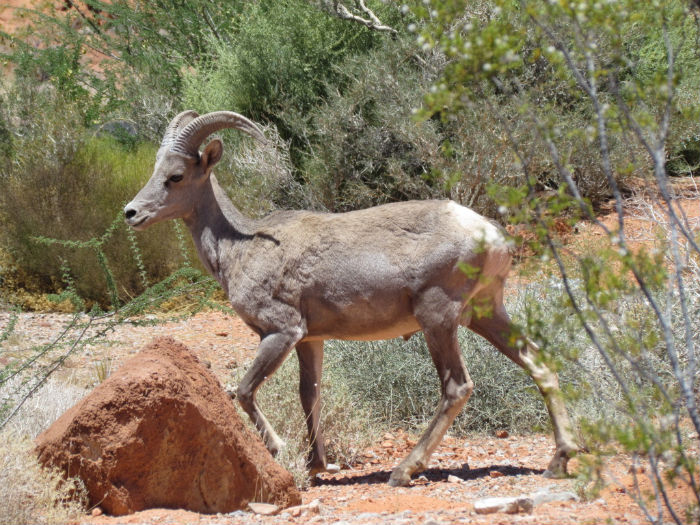
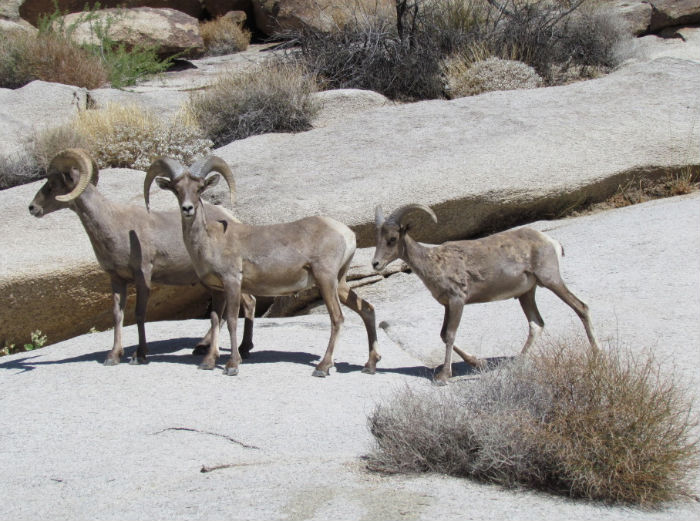
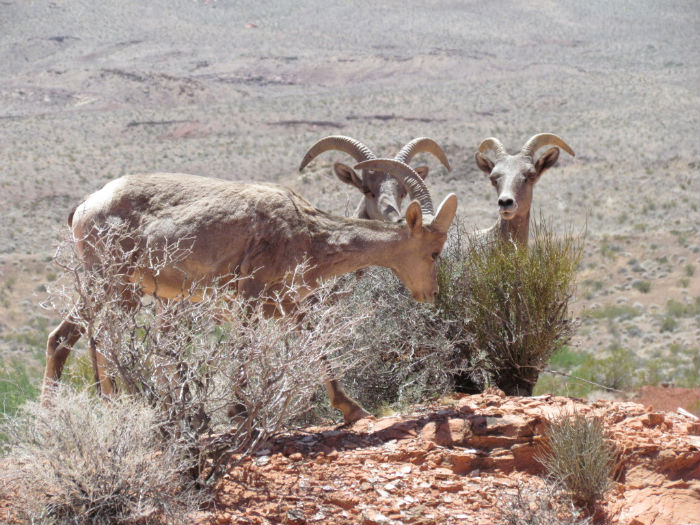
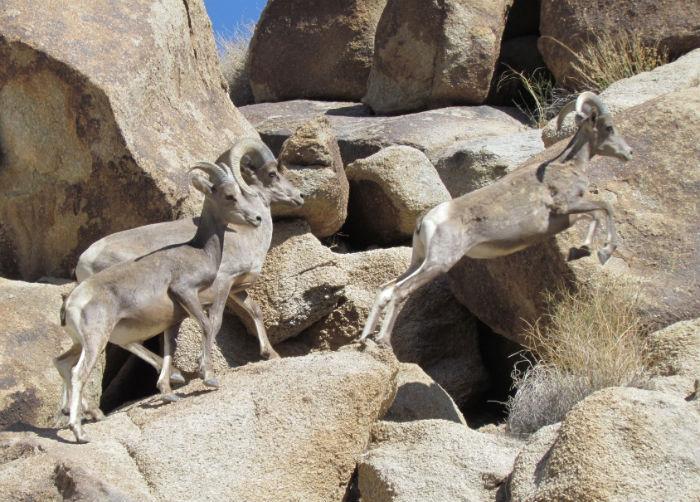
The Desert Bighorn Sheep is found in Nevada’s mountainous desert and is designated the official state animal of Nevada. They are stocky, heavy-bodied sheep; large rams grow to 4-1/2 feet tall and can weigh as much as 200 pounds. I saw two herds of them today.

With their unique padded hooves, bighorns are able to climb the steep, rocky terrain of desert mountains with speed and agility. 


Both the male and female develop horns soon after birth and their horns continue to grow throughout life. Older rams have impressive sets of curling horns that can measure over three feet long and one foot of circumference at the base.

The horns of females are much smaller and lighter and do not tend to curl. Desert Bighorn Sheep use their horns for fighting, and as tools to break open cactus, which they consume.

Bighorn sheep are gregarious, sometimes forming herds of over 100 individuals, but small groups of 8-10 are more common. Mature males usually stay apart from females and young for most of the year in separate bachelor herds.

Third Eye Herp
E-mail

Muskrat

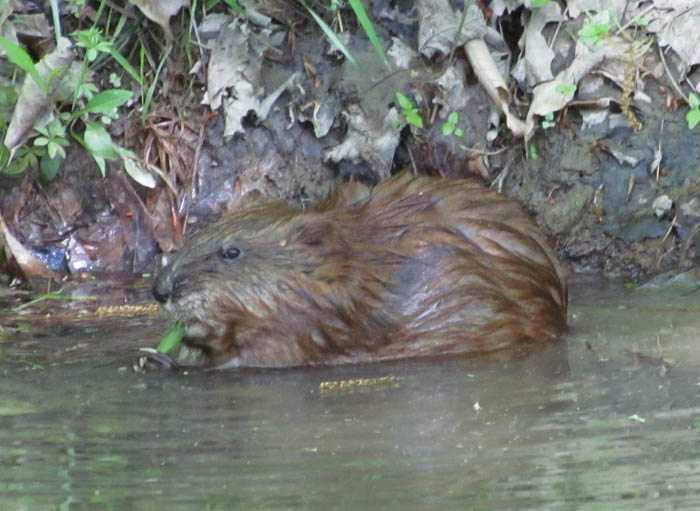
Walking the Canal Towpath as well as a few large ponds, it’s easy to observe the activities of a medium-sized mammal – the Muskrat. The Muskrat is not really a rat, but it is a rodent. It has thick brown fur and a long, scaly tail. They can grow up to two feet long (with tail). Their back feet are webbed for swimming, and their eyes and ears are very small.

Muskrats build a house, called a lodge, out of aquatic plants, especially cattails. It can be up to eight feet across and five feet high. A Muskrat lodge looks a lot like a Beaver lodge. Muskrats also burrow holes in stream or pond banks. When a Muskrat builds a lodge, it helps a lot of animals besides itself. Lodges can also be the home of snakes, turtles, frogs, toads, and waterfowl.

When Muskrats eat large numbers of cattails, they open up areas of shallow water. This provides nest sites for water birds, and allows other water plants to grow.

Muskrats are excellent swimmers and can stay under water for 15 minutes. Their tails are used to steer, and they can swim forwards and backwards. They can even chew food underwater.

Third Eye Herp
E-mail

Los Gatos (Bobcat)

I’m staying in the city of Los Gatos (The Cats) California. Today, while walking along the edge of a lake, a large creature jumped out from the tall vegetation and ran about 30 yards, concealing itself. Can you see it in the tall grass?

It was the first ever Bobcat I’ve ever seen in the wild. Fortunately it was just as curious about me as I was about the wildcat, so I also managed to get the photo below.

It was an unexpected and welcome nature sighting.

Third Eye Herp
E-mail

Mink

It was in the upper 40s and sunny yesterday. It’s been a very mild winter in the Greater Cleveland Area. Though there have been warmer days in the past 5 weeks, I never really apply myself to searching for herps at this time of the year. So I was unprepared as I was walking along an area near the Cuyahoga River when I saw a Midland Painted Turtle. I thought maybe it was a “rebel reptile” in denial of winter. But about a half mile further down I saw two more Painteds.

I debated if I should walk a mile and a half back to the car, drive home (about 15 minutes), get the camera and walk a mile and a half back to get some photos. It was already late afternoon and the sun wouldn’t be out for that much longer. I decided to get the camera – even if the turtles were gone when I returned, it still was a nice (relatively speaking) day to be outside.

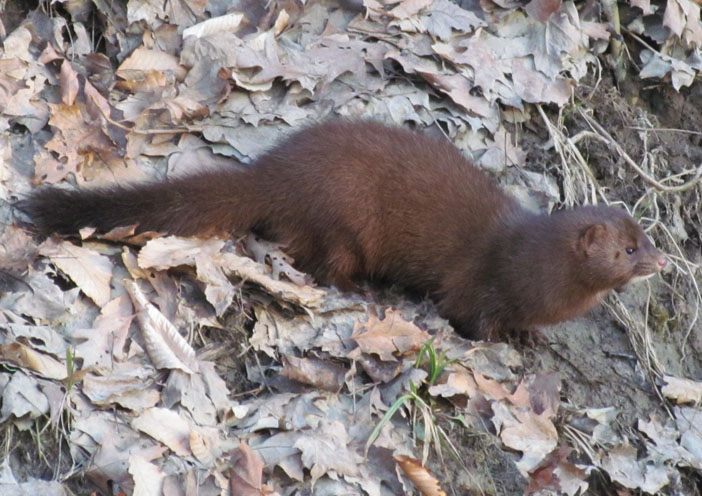
Well, the reptiles were long gone, but I did mange to get a few decent photos of this mammal that I’ve only seen once before in the wild – a Mink:

Mink are dark-colored, semi-aquatic, carnivorous mammals related to weasels, skunks and ferrets. The mink has a long, sleek body about two feet long. Lithe and agile, it pursues its prey on land and in water. It can swim and dive with ease and remain underwater for many minutes.

The mink is prized by the trapper both for its fur and for the great skill required to capture it. They have a distinct path of white on the chin.

To the wildlife enthusiast, the sight of this elusive furbearer is a thrilling surprise that must be experienced quickly, before the dynamic creature can scurry away to a place of concealment.


Third Eye Herp
E-mail