Joshua Tree

The Joshua Tree, the largest of the yuccas, grows only in the Mojave Desert. Natural stands of this picturesque, spike-leafed evergreen occur nowhere else in the world. Its height varies from 15-40 feet with a diameter of 1-3 feet.

The name Joshua Tree was given by a group of Mormon settlers who crossed the Mojave Desert in the mid-19th century. The tree’s unique shape reminded them of a Biblical story in which Joshua reaches his hands up to the sky in prayer.

Joshua Trees (and most other yuccas) rely on the female Yucca Moth for pollination. No other animal visiting the blooms transfers the pollen from one flower to another.
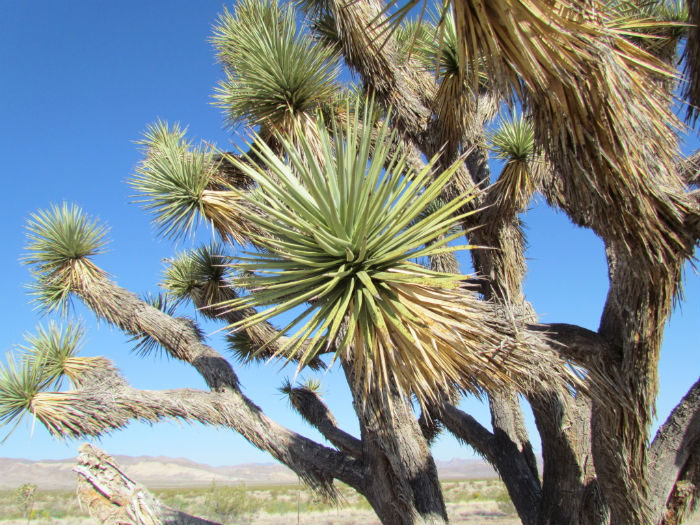
The spiny leaf iis turned upwards in hopes it will catch any moisture in the air. Then it stores the water in the limbs and trunk. The Joshua Tree often grows in groups called groves and has a lifespan of about 200 years.

Third Eye Herp
E-mail

Flowering Dogwood

Although the woods are mostly brown today with only a few trees sprouting leaves, there’s still plenty of beauty to be found, especially in the showy blooms of Flowering Dogwood.

Flowering Dogwood is fairly small, usually 20-30 feet tall. It is a useful tree not only for its eye-catching appeal in the springtime, but its berry-like fruit is eaten by many bird species as well as other animals in the autumn.

The dogwood sprouts tiny greenish-yellow flowers in clusters, with each flower surrounded by four large white bracts (often incorrectly labeled as petals). It is considered by many the most spectacular of the native, flowering trees.

There is much Christian religious folklore surrounding this tree. The blooms often appear in the shape of a cross, with holes in the tips of the pedals signifying the nails that were driven into the cross. If you look closely at these holes you can notice a faint red stain representing the blood. In the center you will find a green bloom symbolizing the crown of thorns placed on the head of Jesus.

Third Eye Herp
E-mail

American Beech

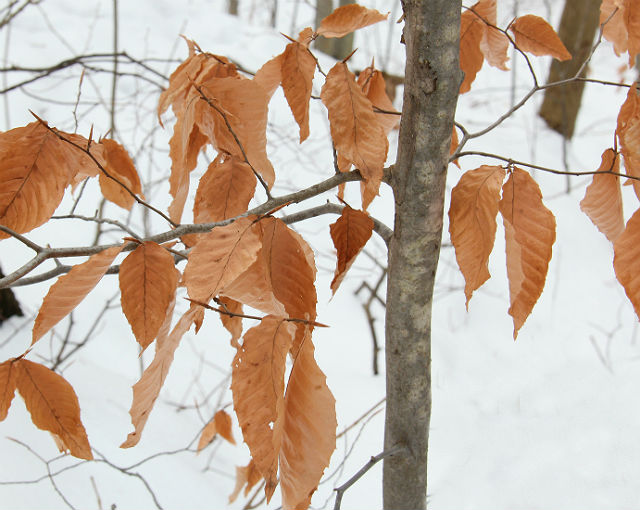
Some trees just don’t want to “throw in the towel” and admit that it’s winter. The American Beech is one of those trees and I admire it for that. Their leaves often remain attached to the tree throughout the winter.

The American Beech is a shade-tolerant species, favoring shade more than other trees. It is commonly found in mature forests. The leaves have distinct, strong veins and toothed edges. Beechnuts are among the most important of wildlife food; squirrels, grouse, bear, raccoons, deer and many other animals eat them.

american beech 016

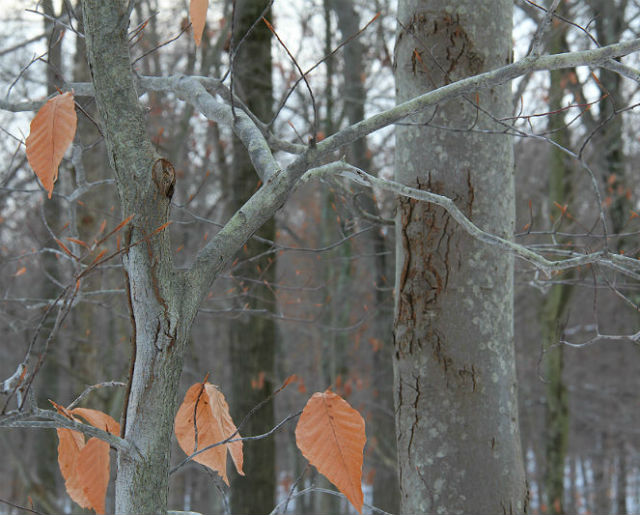
Even when its leaves are green, this tree is easy to identify because beech has silver-gray, paper-smooth bark and unfortunately many people are compelled to carve into it.

beech 034

This sturdy, imposing tree creates beautiful scenery – even on overcast mid-February days like today.

Third Eye Herp
E-mail