Great Basin Bristlecone Pine

bristlecone_7546

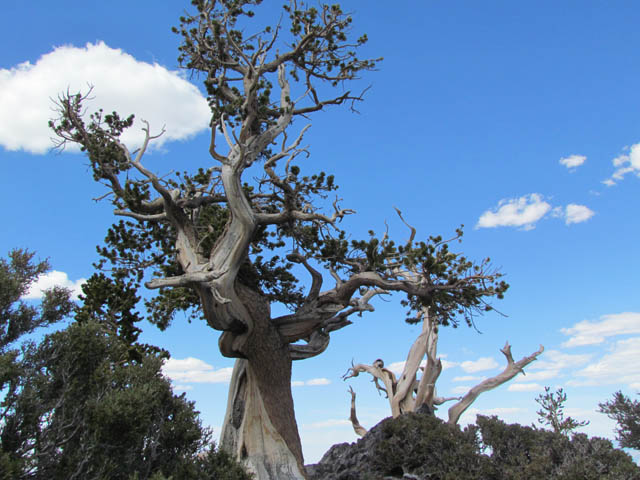
Great Basin Bristlecone pines are remarkable for their great age and their ability to survive adverse growing conditions. In fact, it seems one secret to their longevity is the environment in which most bristlecone pines grow.
bristlecone_7633

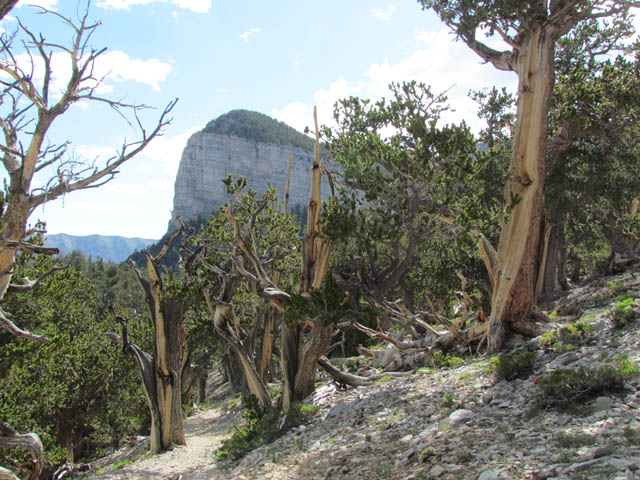
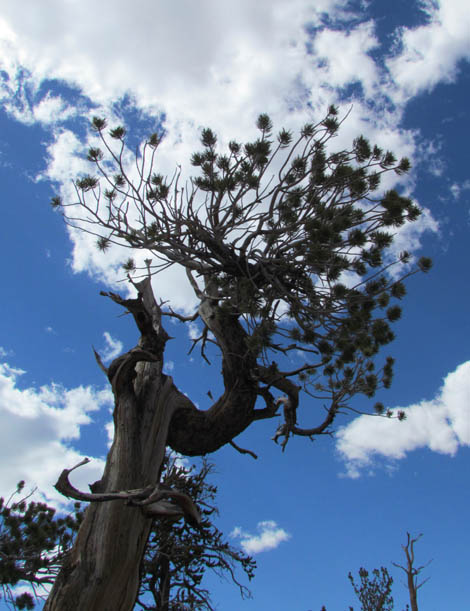
This tree most often grows where conditions are harsh, with cold temperatures, a short growing season and high winds. The examples I saw today were high atop Mount Charleston. Trees in these high-elevation environments grow very slowly and in some years don’t even add a ring of growth.
bristlecone_7531

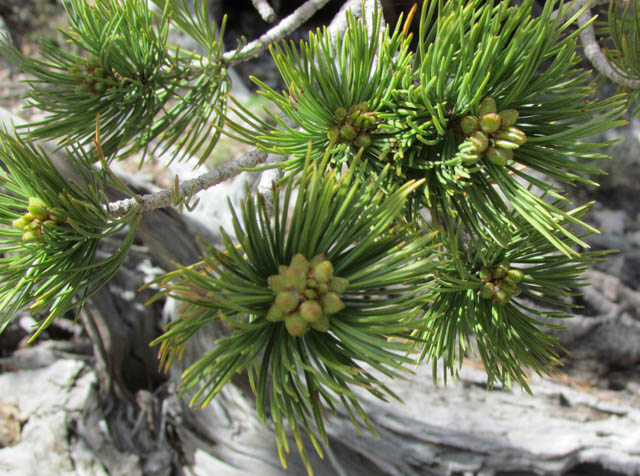
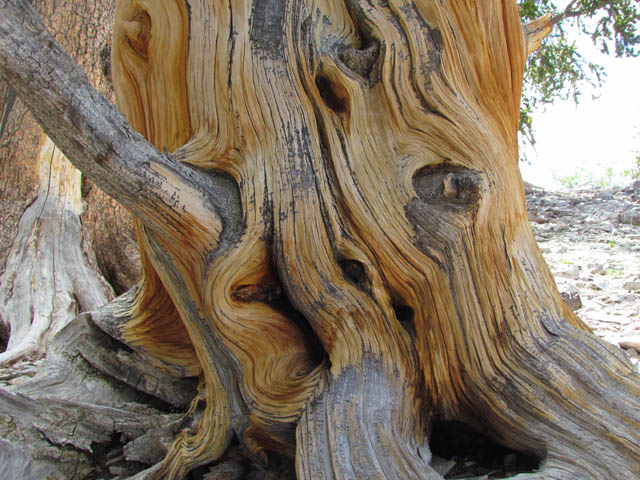
This slow growth makes their wood very dense and resistant to insects, fungi, rot and erosion. Vegetation is very sparse, limiting the role of fire. Bristlecone pine seeds are occasionally cached by birds at lower elevations.
bristlecone_7561

While they grow more rapidly in more “favorable” environments at lower elevations, they do not achieve their legendary age or fascinating twisted shapes.
bristlecone_7623

Not only are they cool to look at, bristlecone pine is the longest lived tree species in the world — a few are known to have lived for over 5,000 years.

bristlecone_7656

I set my sights on finding a particular Bristlecone Pine in Nevada that is over 3,000 years old. The six mile round-trip hike was at times at elevations of over 11,000 feet. I finally did get to meet up with that tree.
Third Eye Herp
E-mail

Eastern Redbud

redbud_3796

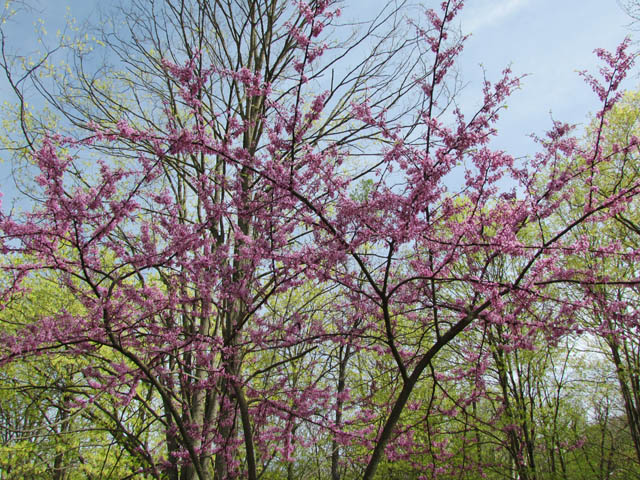
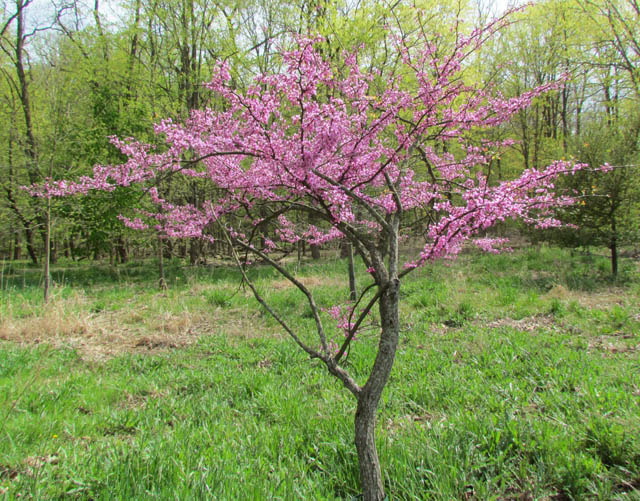
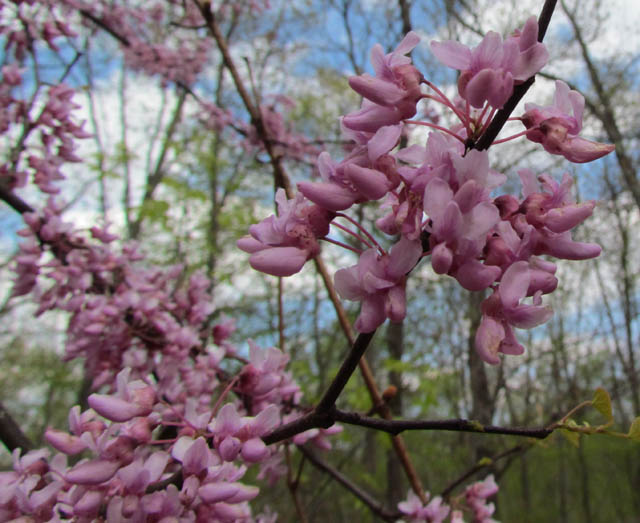
Eastern Redbud is abundant in the southern two-thirds of Ohio, with scattered distribution in the northern one-third of the state. It heralds the arrival of Spring with its showy, lavender-pink flowers that typically open in April, long before its foliage emerges.

redbud_2938

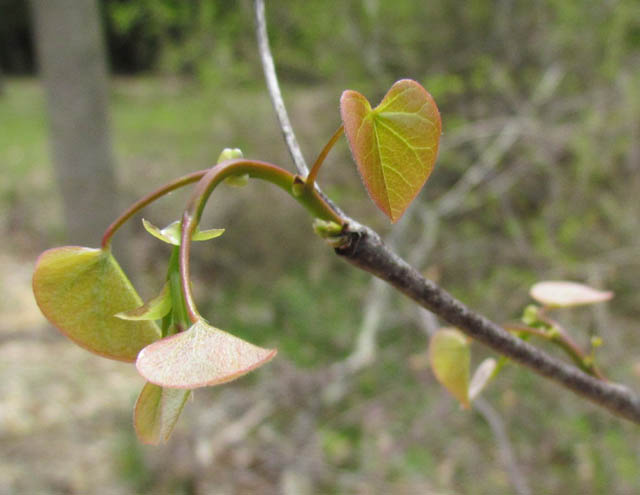
Like Locust Trees and Wisteria, this tree is a member of the Bean Family. By late spring, the green fruits of Eastern Redbud take on the pod shape that is characteristic of beans. The alternate, smooth-edged, heart-shaped leaves make Eastern Redbud easy to identify, even when it is not flowering.

redbud_3310

Eastern Redbud only reaches about 20 feet tall and 20 feet wide at maturity and is relatively short-lived. It many places it would not seem like Spring without this tree’s spectacular floral display.

redbud_3798

I am fortunate enough to have one of these trees blooming in my backyard right now.

Third Eye Herp
E-mail

Coast Redwood

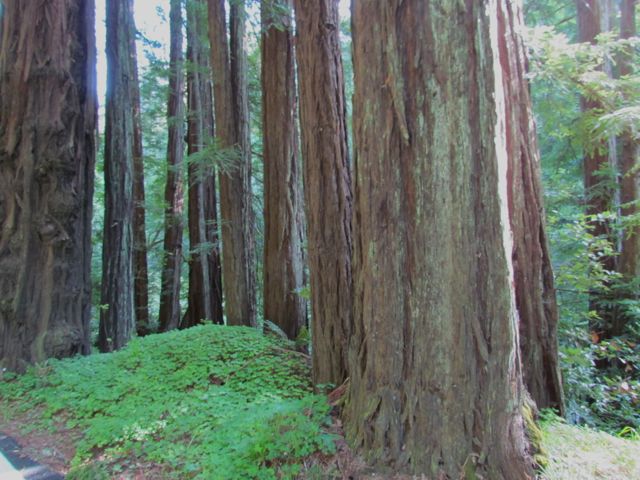
The Coast Redwood is the world’s tallest tree. It’s hard not to think about prehistoric times when seeing their gigantic trunks. Found mostly in California, it grows in natural stands in a long, thin, coastal area along the Pacific Ocean.

Throughout the year it rains quite a lot in this thin coastal strip and it is quite foggy most of the time. Because of this, the tree can absorb enough water to survive.

Although we often think of life on the forest floor, different species of plants, lichens, salamanders and invertebrates live high up in the the complex branch systems of redwoods.

This tree provides cover for life on the forest floor as well. It sheds large slabs of thick back. Many different types of cool creatures can by found by looking under the shed bark at the foot of the tree; I found my first California snake this way.

These immense trees have delicate foliage. Narrow, three-quarter inch needles needles grow flat along their stems, creating feathery formations.

Because of the dramatic atmosphere, these redwood forests have been used as scenery in movies like Star Wars and Jurassic Park.

The world’s tallest living tree is named “Hyperion” (fans of the largest trees give them names) and is no less than 379 feet. In the most favorable parts of their range, Coast Redwoods can live more than two thousand years.

Third Eye Herp
E-mail

Sycamore Tree

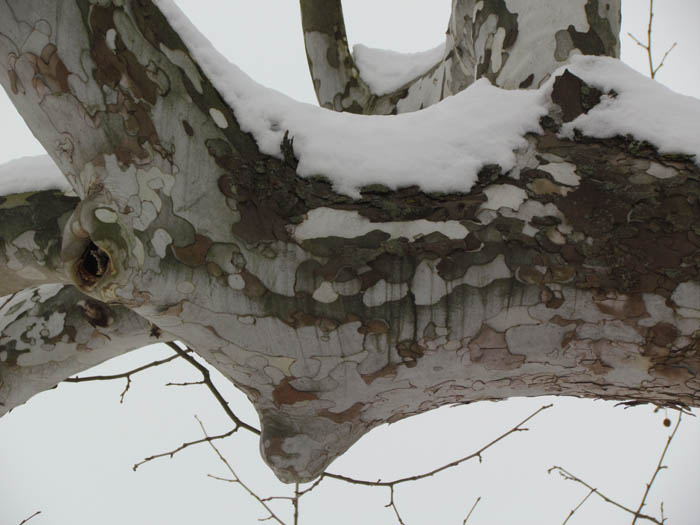
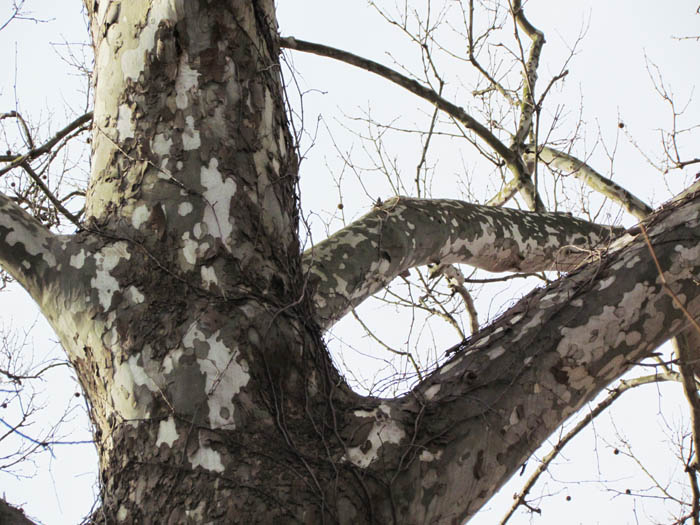
In the Winter, the exfoliating bark of Sycamore Trees can look quite appealing under the January sky. The bark flakes off in great irregular masses, leaving the trunk surface mottled, and greenish-white, gray and reddish-brown.

The rigid, brittle nature of the bark tissue lacks the elasticity of the bark of some other trees, so it is incapable of stretching to accommodate the growth of the wood underneath and the tree sheds it off.

This makes for an easy tree to identify – you don’t even need to see the leaves. The camouflage-patterned bark is a feature allowing Sycamore Trees to be recognized in any season.

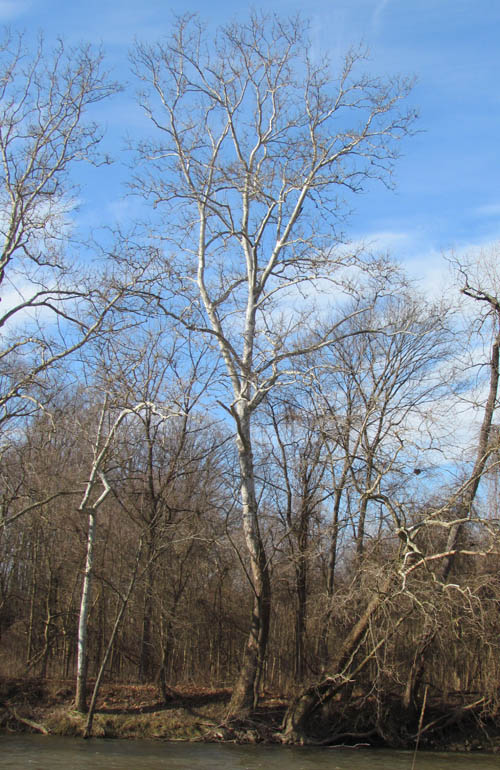
Growing up in Cleveland, these trees were planted by the city as “shade trees”; they lined the street that I lived on. In a natural setting they are “flood plain” inhabitants and often grow along the edges of rivers and large creeks.

This tree easily reaches heights of 80 feet tall and 60 feet wide, but can grow much larger. While not the tallest tree, is considered the most massive tree (as defined by its circumference) in the eastern United States.

The Sycamore Tree’s leaves are very large and can reach 7 to 8 inches long and wide. Here’s a leaf from last Summer.

The fruit clusters appear as hanging balls, one per stalk. The fruit hangs on all Winter, then falls apart in early Spring to disperse their many small seeds.

During this time of year, Sycamore Trees stand ghostly along river edges, with their smooth white limbs in stark contrast to the brown, textured bark of the trees that surround them.

Third Eye Herp
E-mail


Christmas Holly

We had the first significant snowfall of the season a few days ago, so I decided to go outside and take a look around.

When the Pilgrims landed the week before Christmas in 1620 on the coast of what is now Massachusetts, the thorny leaves and red fruit of American Holly reminded them of English Holly, a symbol of Christmas for centuries in Europe.

Since then, American Holly, also called White Holly or Christmas Holly, has been one of the most popular trees in the Eastern United States for its foliage and berries. It is widely used for Christmas decorations and for ornamental plantings.

Christmas Holly is primarily a plant of the humid Southeastern United States. There are separate male and female plants. Only females produce berries. Birds are the main consumers of the fruit, although deer, squirrels and other small mammals also eat them.

The height of Christmas Holly ranges from 25 feet to as tall as 60 feet in the warmer parts of its range. The stout, stiff branches of this broad-leafed evergreen bear dark green, non-glossy, spine-tipped leaves.

In Ohio, this tree is only grows in the extreme southeastern part of the state. So it’s a bit surprising to see one in the woods in the Greater Cleveland Area. Is it a Christmas miracle? You be the judge of that.

Third Eye Herp
E-mail

Eastern White Pine

Eastern White Pine is the tallest native conifer in eastern North America and is the state tree of Maine and Michigan. It grows to over 100 feet tall and has a straight trunk up to four feet wide.

Like all pine trees, this tree is evergreen, so it keeps its leaves (needles) year-round. Each needle can grow up to five inches long. The needle bundles cluster into brush-like formations.

Pine trees aren’t the easiest trees to identify, let’s face it – they all look the same. But there’s an easy trick for Eastern White Pines, their needles are grouped in bundles of five. It is the only eastern pine with this characteristic.

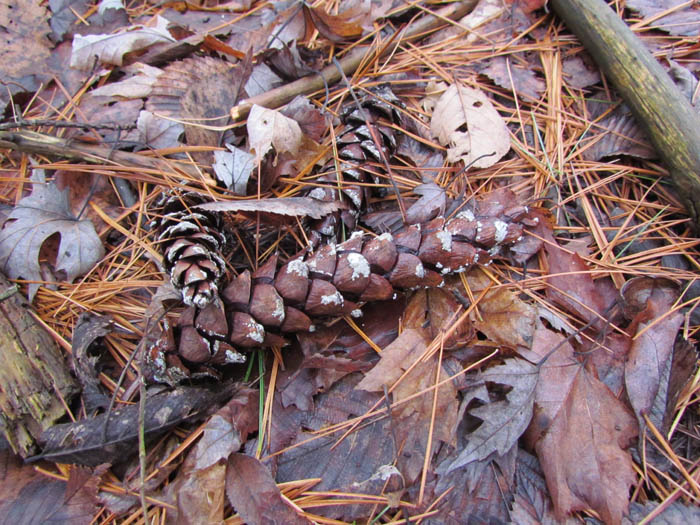
The fruits of this tree are large brown pine cones, four to eight inches long. Each cone has seeds in it. Birds eat Eastern White Pine seeds, including two types commonly seen here: Black-capped Chickadees and White-breasted Nuthatches. Many species of birds also nest in Eastern White Pines; they are a favorite nest site of American Bald Eagles.

Squirrels, chipmunks, voles and mice eat pine needles as well as seeds. Cottontail rabbits eat the bark from larger trees, as do beaver.

Eastern White Pine needles contain five times the amount of Vitamin C (by weight) of lemons and make an excellent herbal tea. In the past, this tree was used for ships’ masts, because of its large, straight trunk. These days it is used extensively for furniture because it is very easy to carve and has less resin than other pines. There is widespread cultivation of Eastern White Pines for Christmas trees, because they grow well, especially in the tree’s native habitat.

Mature trees can easily be 200 to 250 years old and some have lived over 400 years.

Third Eye Herp
E-mail

Witch-hazel

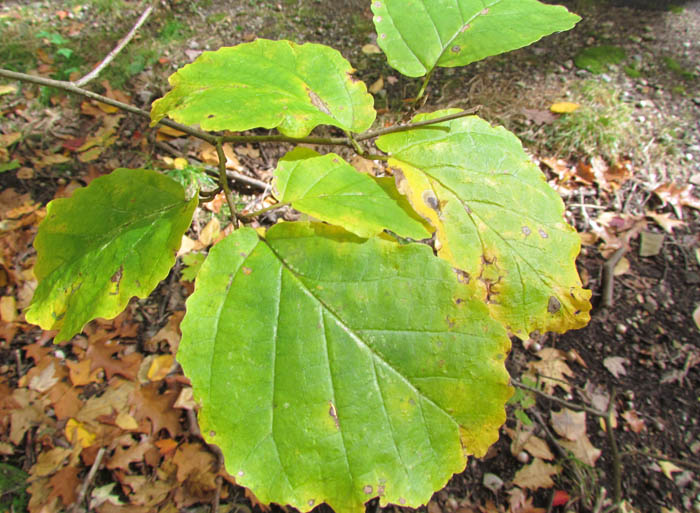
Back in Ohio, the Witch-hazel is starting to bloom in South Chagrin Reservation. Its twisted yellow flowers appear in clusters of three. It has an unusual flowering time (in the autumn).

This small tree (typically less than 20 feet tall) usually has multiple crooked trunks. It tends to grow naturally along rivers and anywhere else where the soil is very rich.

Witch-hazel’s name strikes mysterious connotations. In colonial America, the shrub’s flexible forked branches were a favorite “witching stick” of dowsers used for searching out hidden underground water. This has nothing to do with witchcraft, rather it originates from the old English word for pliable – “wych.”

Although it’s not a hazel, the leaves have a striking resemblance to those of the common American Hazelnut.

Its leaves, twigs and bark are aromatic and have long been used for medicinal purposes. Witch-hazel produces an oil that is widely used as an ingredient in skin care products and pain relief medication.

Third Eye Herp
E-mail

Shagbark Hickory

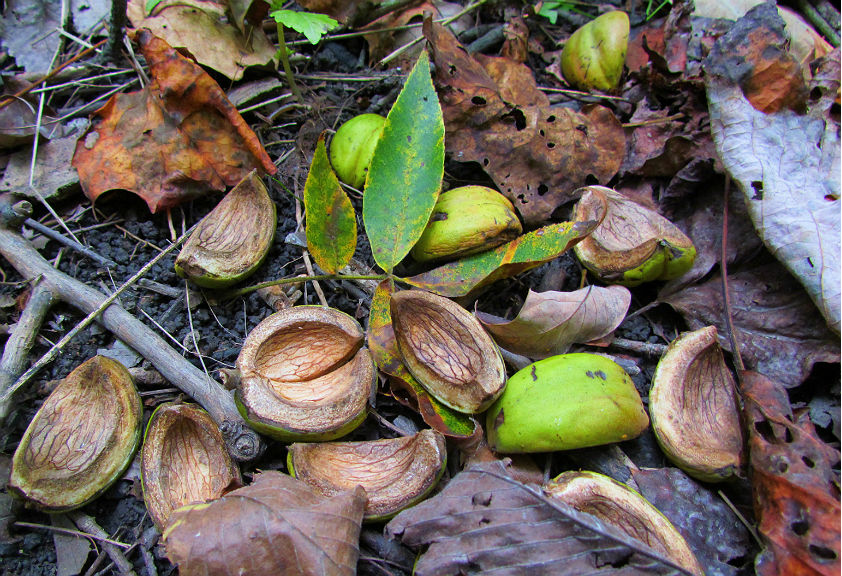
Shagbark Hickory is probably the most distinctive of all the hickories because of its loose-plated “shaggy” bark. Each long, thick bark plate is attached at the middle, with both ends curving away from the trunk, giving the tree a truly ragged appearance.

The nuts are edible with an excellent flavor, and are a popular food among people and squirrels alike.

2013_09_29a 082

It is a slow-growing but potentially massive tree located throughout Ohio and is frequently found in association with other hickories and oaks.

Shagbark Hickory’s timber is prized for making tool handles, athletic equipment and furniture. Its “green” wood (or sometimes seasoned, but freshly-wetted wood chips) is also sought after for the smoking of meats.

Third Eye Herp
E-mail

Sweetgum: My Favorite Tree

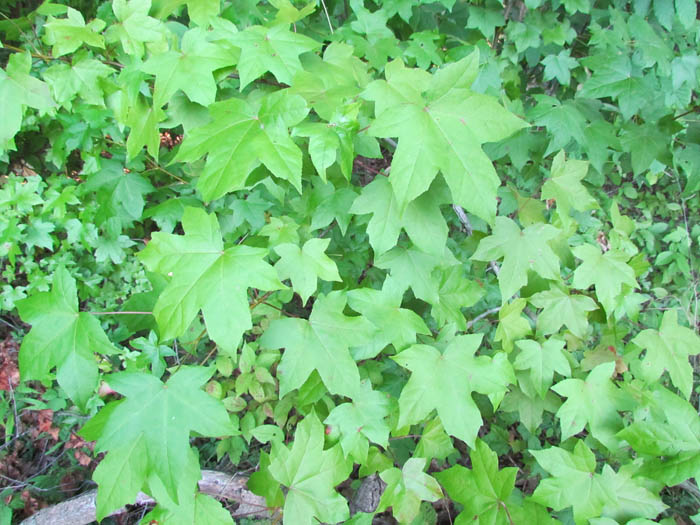
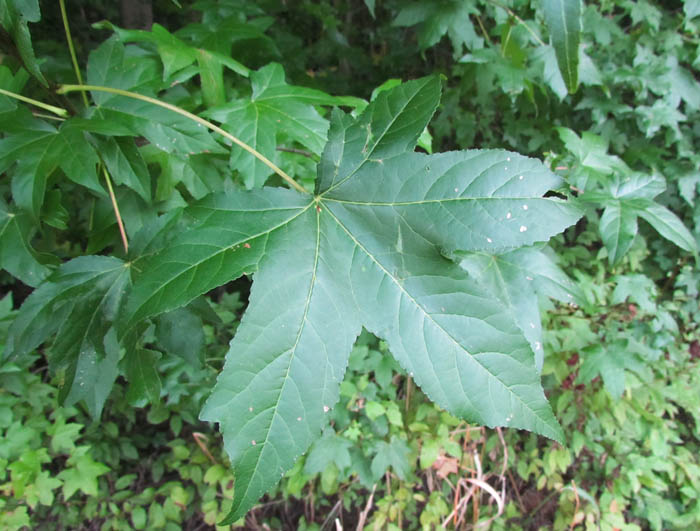
The star-shaped leaves make for easy identification of this tree. It is often planted as a shade tree and for its bright red fall colors. Sweetgums are aromatic, meaning they have a pleasant smell. You can crush a leaf to get a good sense of this.
Oak trees are the only other tree that surpass the Sweetgum in commercial value – its dark reddish-brown hard, heavy wood is used for barrels, flooring, plywood and furniture veneer. Sweetgums often grow with other trees, like maples, oaks, pines and elms.

Sweetgum has woody, spiny, ball-like fruit that is still immature when green, though later in the year, when it turns brown, it opens and releases seeds, which are eaten by birds and animals. I have several of these trees planted at my place of work and some of them are carrying fruit.

But perhaps the most famous use of this tree is that pioneers once peeled the bark and scraped the resin-like solid to produce chewing gum. The resin has also been used medicinally as well as for soaps and adhesives.

It’s genus name is Liquidambar. While in high school and learning tree identification, my teacher told me that its a easy genus to remember, because “You get liquid at the damn bar.” What more can you ask for in a tree?

Third Eye Herp
E-mail

Sassafras: The root beer tree

Sassafras is an easy tree to identify by its leaves. The leaves can have a mitten shape, with either a left thumb or a right thumb, or the leaf can be three-lobed. It can also have an oval, unlobed leaf. Usually, you’ll see all three shapes on the same tree.

The Sassafras Tree is a member of the laurel family and it has aromatic foliage. Rub a leaf between your fingers, and its spicy scent becomes noticeable. Crushing a twig from this tree produces that same result.
In earlier times, homemade root beer was made by fermenting molasses and Sassafras root. Commercial root beer used oil of Sassafras for flavoring. Oil of Sassafras was also used “back in the day” for perfuming soap.

This tree often has a crooked trunk, it produces dense cover and provides fruit for wildlife. Sassafras doesn’t attain its full growth potential in northern states. Around here a typical tree is about 30 feet tall.

Third Eye Herp
E-mail