Bloodroot

This delicate wildflower is one of the plants that ushers in spring in late winter and then fades quietly away as the heat of summer arrives. Bloodroot is aptly named. When the root is cut, the stem exudes a red sap that looks just like blood. In addition to having a single, white flower – each plant has only one leaf.

Research has reported that Bloodroot contains some very interesting and important chemical substances, like sanguinarine, which has anesthetic properties.

Research has also confirmed that the Bloodroot plant contains chemical substances that help Bloodroot to work effectively as an antibacterial, anti-inflammatory, anti-oxidant, and antiseptic agent.

Many cultures have used this plant’s red juice as a dye and as insect repellent.

Third Eye Herp
E-mail

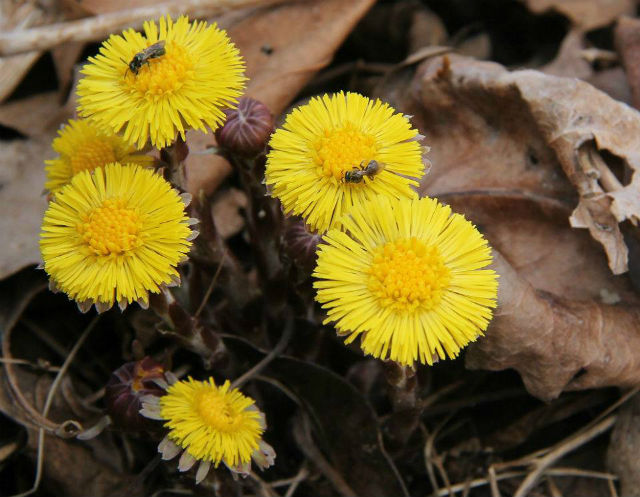
Coltsfoot

Walking through the brown, still getting ready for spring woods, it’s hard not to notice a vibrant, yellow wildflower that looks very much like a dandelion. Though it has many common names, I was taught this plant as being Coltsfoot.

It is often found in colonies of dozens of plants. The flowers appear in early spring before dandelions appear. The leaves, which resemble a colt’s foot in cross section, do not appear usually until after the seeds are set. So the flowers often appear on stems with no apparent leaves, and the later-appearing leaves then wither and die during the season without flowers.

Coltsfoot is not native to the United States, but it has been here a long time. It was most likely brought here by settlers as a medicinal item. Coltsfoot has been used in herbal medicine for its purported cough-suppressing effects. The plant has been used historically to treat lung ailments such as asthma as well as various coughs.

coltsfoot

Its Latin name is Tussilago farfara; “tussilago” itself means “cough suppressant.” It was so popular in Europe at one time that French pharmacists painted its flowers on their doorposts.

Third Eye Herp
E-mail