Miner’s Lettuce

miners lettuce 028

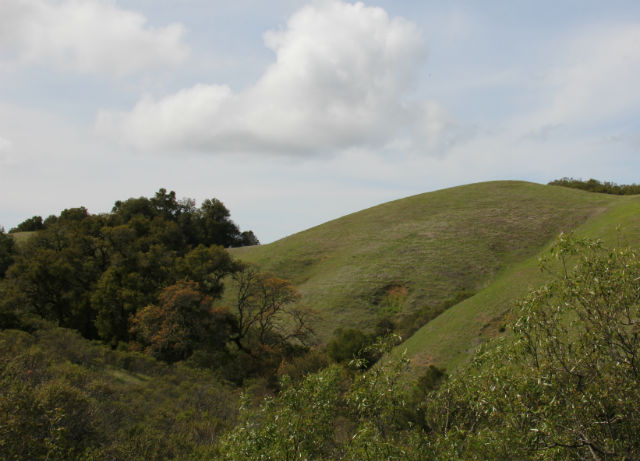
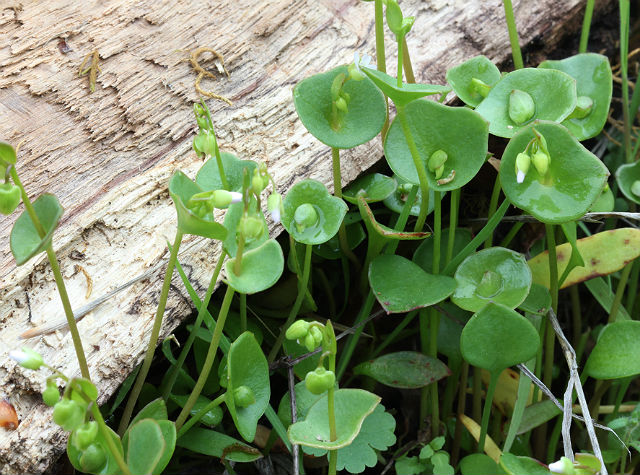
Miner’s Lettuce is a broadleaf plant found throughout California (except for the lower desert areas). It inhabits natural plant communities, agricultural land, and urban areas, with a preference for cool, damp conditions. It dries up with the onset of hot weather.
miners lettuce 087

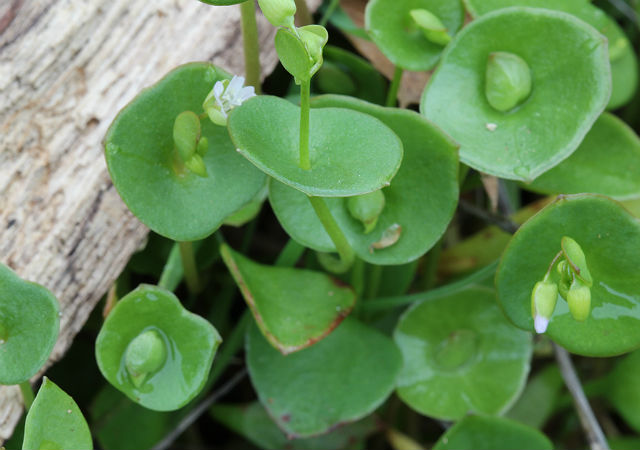
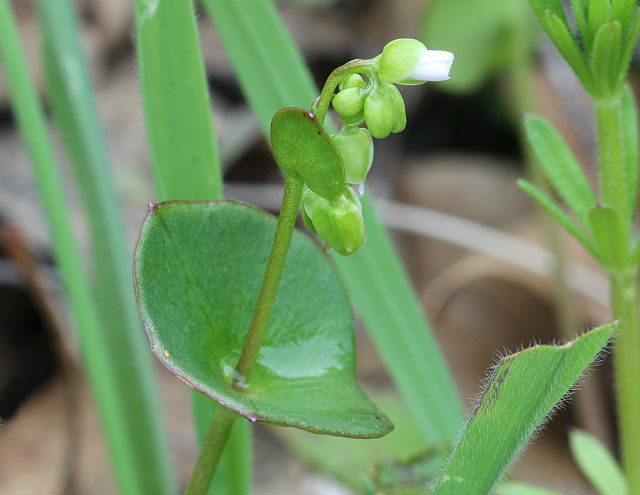
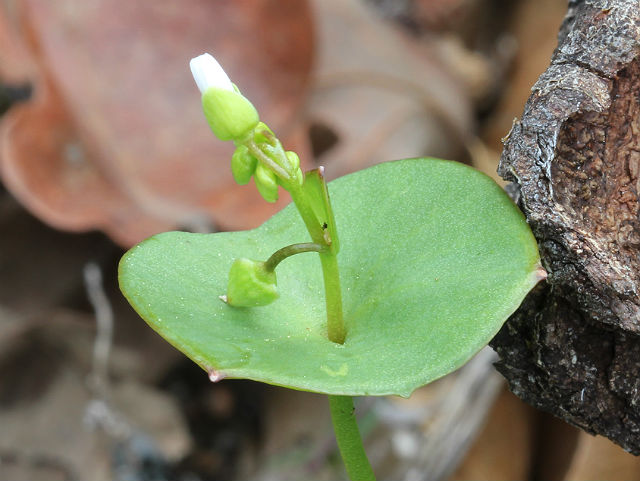
The flowers of Miner’s Lettuce bloom from February through May. Five to forty white to pale pink flowers on slender down-curved stalks cluster above a circular to weakly squared, often cuplike, green structure that looks like a leaf and completely surrounds the stem.
minors lettuce 082

This is an edible plant with pleasingly crunchy, mild-tasting, large leaves. The plant got its name because the Gold Rush miners ate it to stave off the scurvy, which is caused by a Vitamin C deficiency. It is one of the few North American wild plants exported to Europe as a salad green.
miners lettuce 088

Miner’s Lettuce is an important source of food for wildlife, providing a grazing source for gophers, quail, doves and rodents, while seed-eating birds eat the plant’s fruit. On a cool, rainy day like today, these plants seem to be thriving.
miners lettuce 085

Third Eye Herp
E-mail

Screwbean Mesquite

Screwbean Mesquite_7053

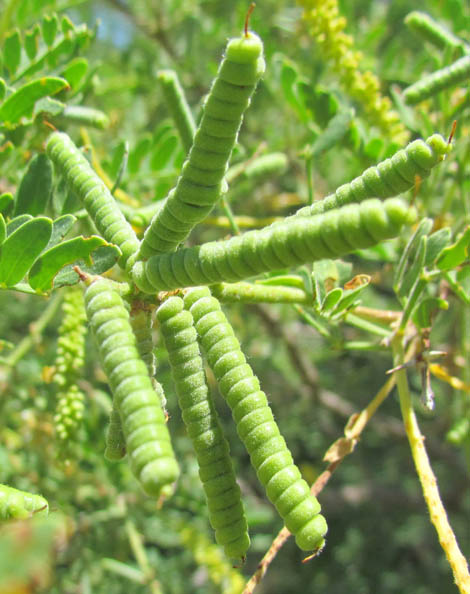
Perhaps the first thing you’ll notice about Screwbean Mesquite is the unusual spiral of the seed pods from which it takes its name.

Screwbean Mesquite_7027

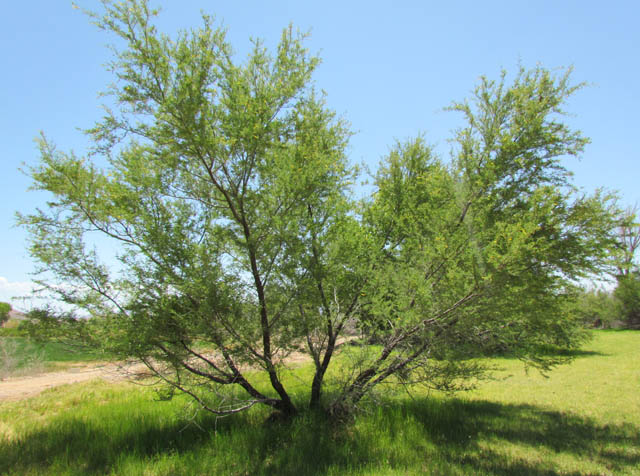
This is a medium-sized, spindly, many branched, thorny shrub with many straight, stout spines along the stems.

Screwbean Mesquite_7057

Native Americans relied on the mesquite pod as a dietary staple from which they made tea, syrup and a ground meal called pinole.

Screwbean Mesquite_7050

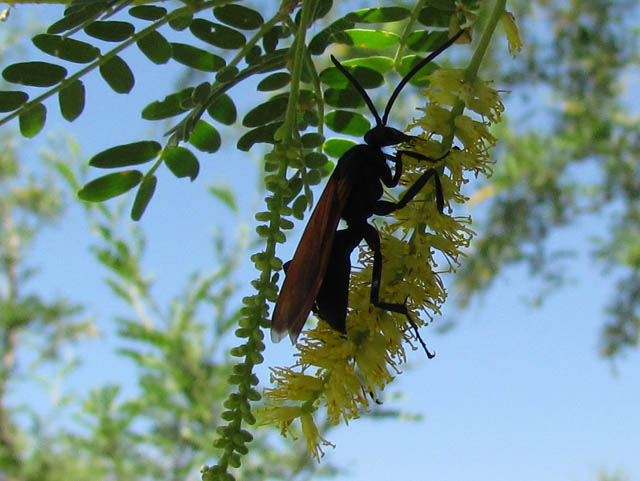
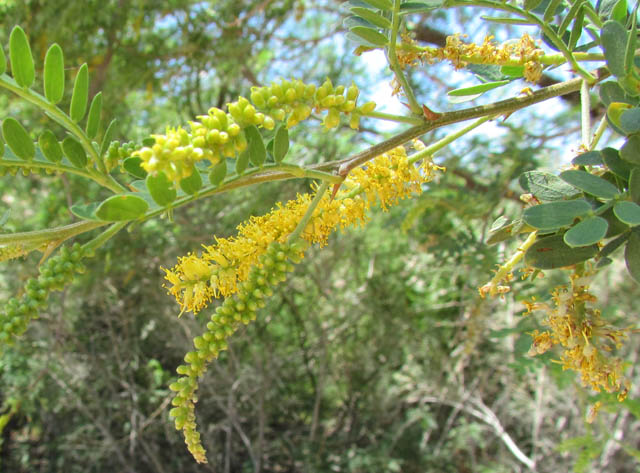
A favorite of bees and other insects (like this Tarantula Hawk), mesquite flowers produce a fragrant honey. Its pale to very bright yellow 2-to-3 inch spike blooms are produced from May to June.

Screwbean Mesquite_7079

This is a cool plant to see, smell, taste and touch in person.

Third Eye Herp
E-mail

Wild Geranium

geranium 042

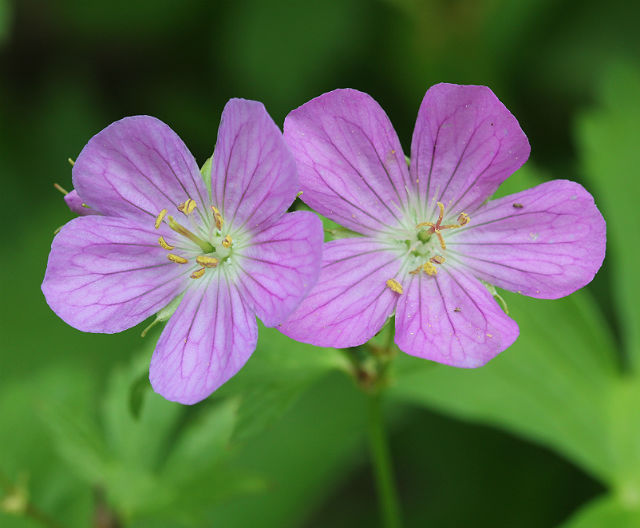
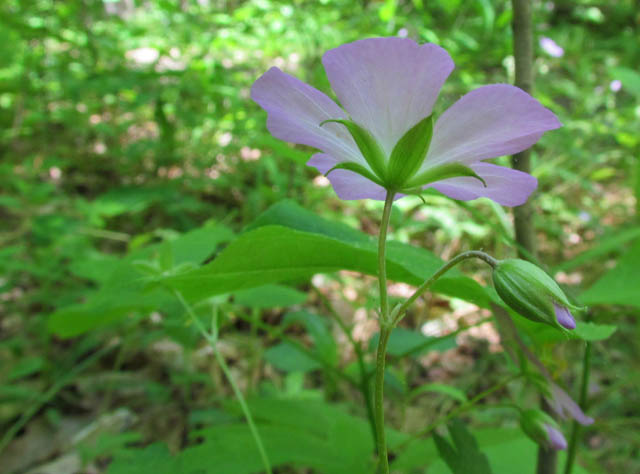
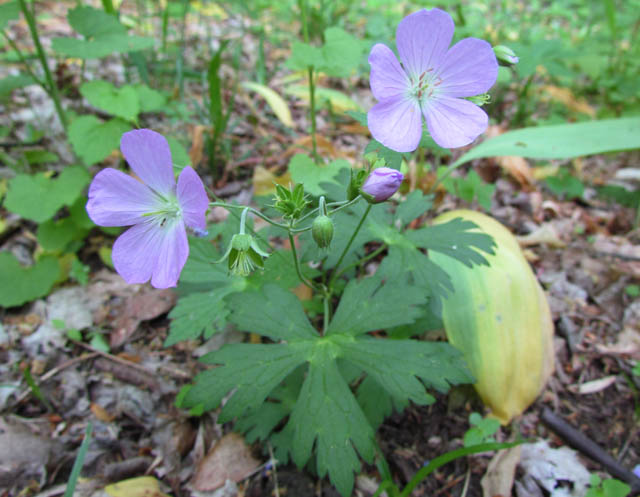
“Geranium” is derived from the Greek word “geranos,” meaning crane. Though this name seems curious, it actually refers to the shape of the seed pod, not the flower. The papery seed capsules, which split lengthwise into five long peels, resemble a crane or stork.

geranium_4324

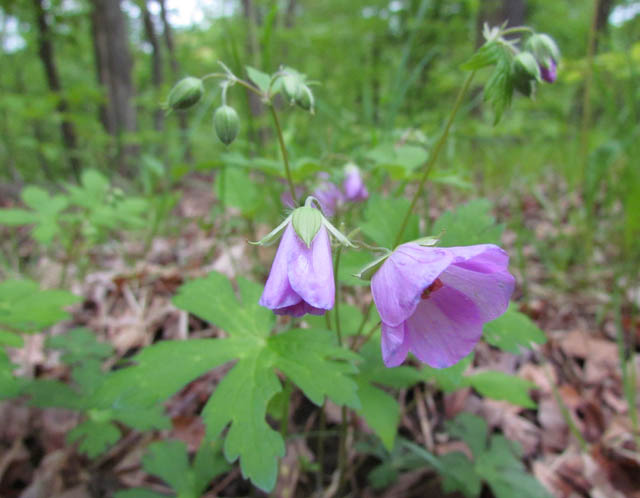
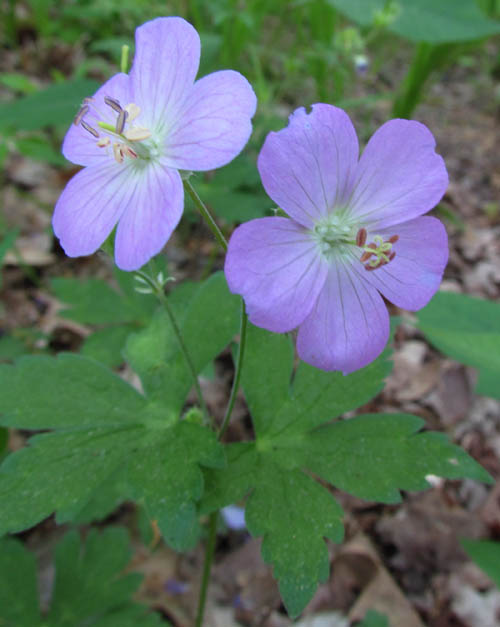
Typical habitat for this plant is in rich forests, fields, meadows and thickets. It is usually abundant in these locations. I’ve seen a fair number of them at several places I have visited.

geranium_5062

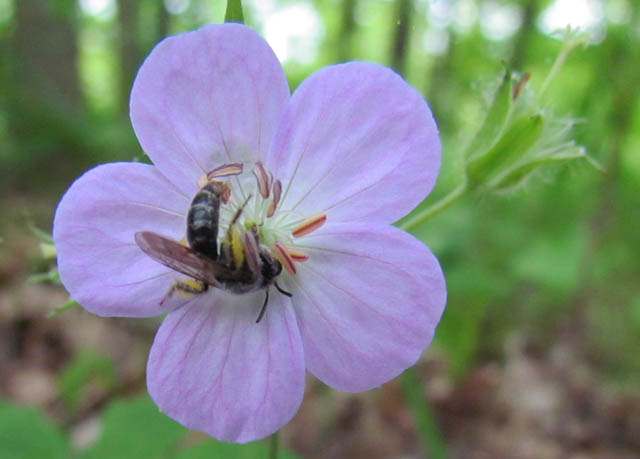
One of the most surprising and beautiful aspects of Wild Geranium is the color of its pollen. Unlike most wildflowers with traditionally yellow, orange, or white pollen, when viewed under a microscope Wild Geranium’s pollen is bright blue. This attracts a variety of insects which come to pollinate the flower.

geranium_5065

Upon pollination, the plant has adapted interesting and unique techniques for spreading its seeds. After the seed capsule has formed, it dries and begins to split. As it breaks open, the seeds are propelled into the air and can land as far as thirty-feet away from the seed pod.

geranium_5317

The seed’s journey, however, does not stop there. Each seed has “tail” which curls when dried and straightens when wet. The “tail” allows the seed to slowly creep a short distance before becoming stuck in a hole or crack.

geranium_05_19 028

Early Native Americans recognized the value of Wild Geranium and used it as an ingredient in many medicinal treatments.

geranium_05_19 008

Today, Wild Geranium extract is marketed as an anti-inflammatory and anti-hemorrhaging substance. It can be found in products sold in herbal stores and online.

Third Eye Herp
E-mail

Marsh Marigold

I got back in Ohio in time to see one of the showiest of all of our early blooming wildflowers. Marsh Marigold is found in marshy areas and wet woods.

The flowers are about 1-1/2 inches across. This plant forms loose clumps of large kidney or heart shaped waxy leaves, with branching stems 12 to 18 inches tall.

Its genus, Caltha, is Latin for “cup” and describes the upturned petal-like sepals which form a shallow cup. Though “marigold” may be a good description of its color, this is not a true Marigold, but rather, a type of buttercup.

“Back in the day” this plant had the common name of “Cowslip.” Since it often grows in low lying hilly areas, cows often slipped on it when they went to a creek to take a drink.

This plant grows along quiet waterways, such as streams and ponds. I haven’t seen it in a few years, so it was nice running into several examples of Marsh Marigold in Brecksville Reservation today.

Third Eye Herp
E-mail

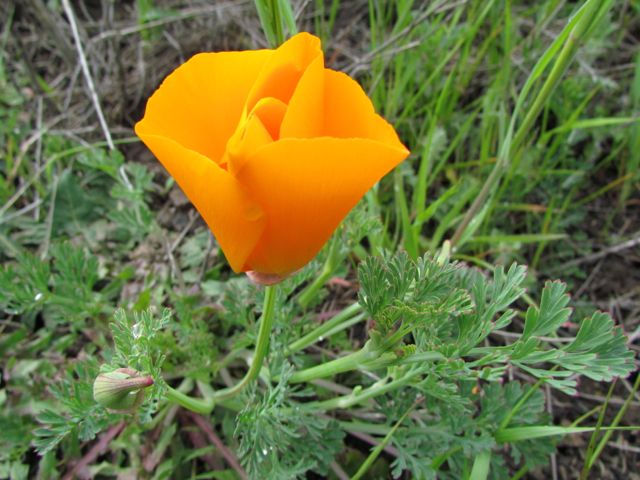
California Poppy

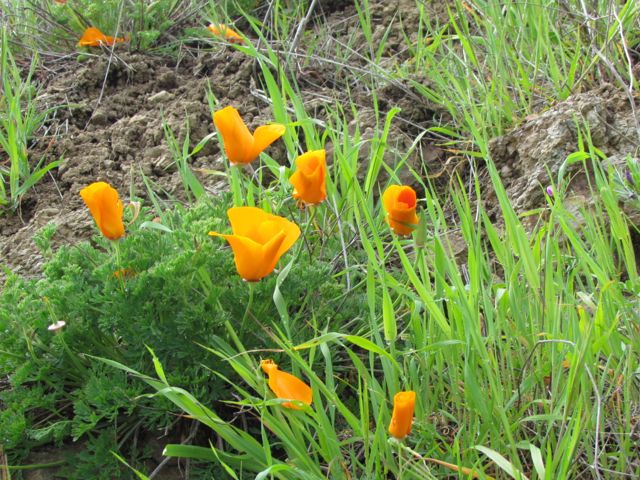
As I travel through the northern part of the state, the hills are alive with the vibrant colors of wildflowers. The California Poppy was designated the state flower in 1903.

Early Spanish explorers called this flower copa de oro – meaning “cup of gold.” California Indians valued the poppy as a food source and for the oil extracted from the plant. The Golden State celebrates it by having California Poppy Day every April 6.

This is a small plant, with one flower per slender stem. A mature plant may be as short as two inches, yet the hardy seeds can spread far and wide and take root in sandy, difficult soil where other plants’ seeds may fail.

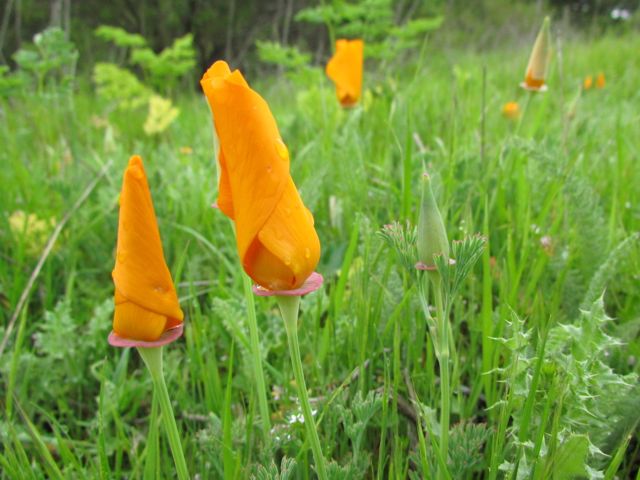
The California Poppy is the most well known flower in the state and even schoolchildren are taught to recognize it. The satiny 1-3 inch wide petals form a shallow cup-shaped flower that is vivid golden orange in color.

The flowers bloom on plants with have bluish-green parsley-shaped leaves, usually wider than they are tall. The flowers can be seen from February to September.

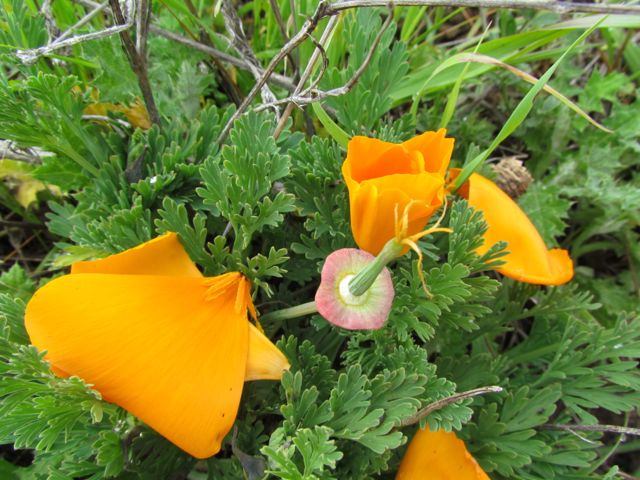
At the base of the flower is a distinctive expanded rim which looks like a circle. This allows for easy identification if this plant at times when it is not in bloom.

Third Eye Herp
E-mail

Skunk Cabbage Melting Ice

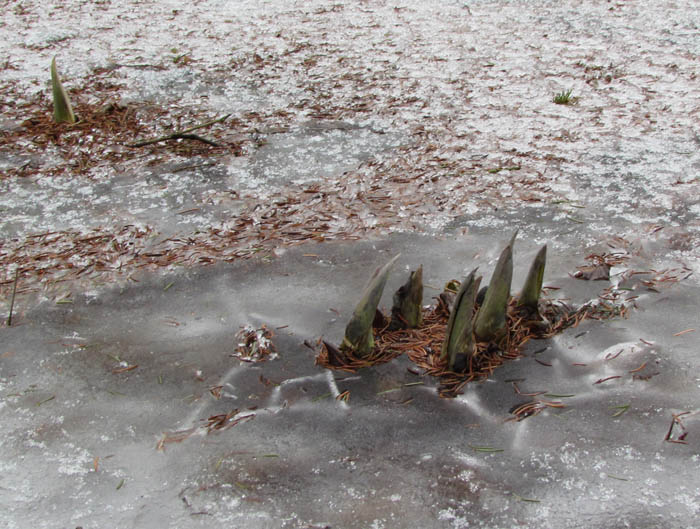
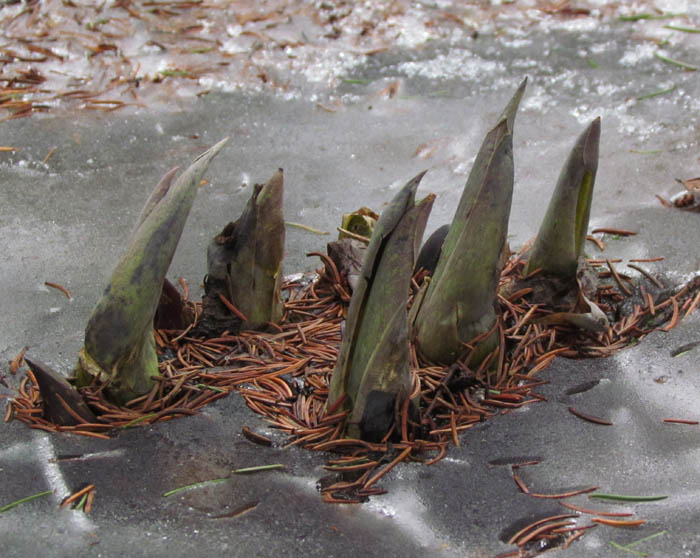
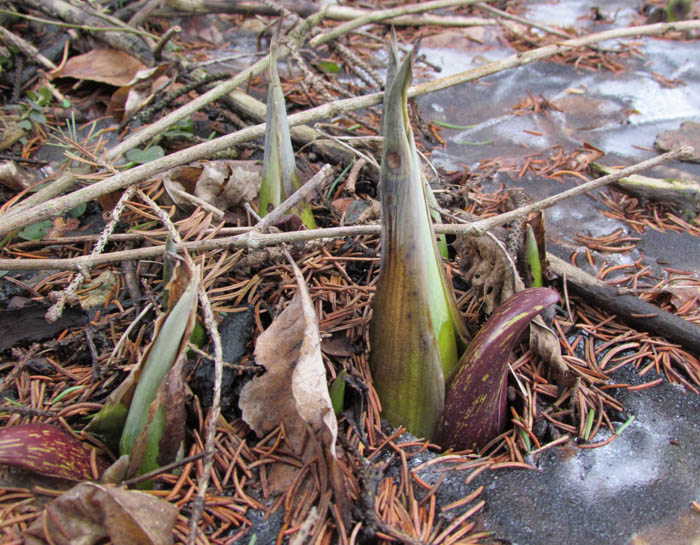
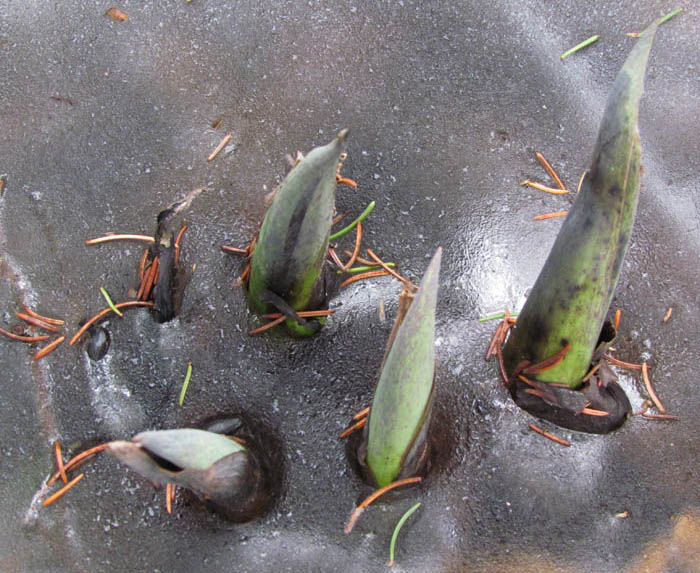
Skunk Cabbage brings a whole new meaning to the words “power plant.” This ice was thick enough for me to walk on today, yet these spikes had pushed right through it. This plant’s ability to generate heat enables it to grow and flower while snow is still on the ground – even though the plant is not frost-resistant – because frost never touches it.

There are only a few thermogenic (heat generating) plants in the world and in late Winter Skunk Cabbage can produce enough heat to stay between 60 and 95 degrees above the air temperature.

Instead of producing a colorful flower to attract insects, cold-tolerant bees and flies are drawn to the plant’s carcass-like smell. Heat causes the smell to travel farther than normal and once they arrive, pollinating insects have a place to warm up.

That purplish spike serves as a bud that holds and protects the flower when it emerges out of the ground.

To me, Skunk Cabbage is the first sign of Spring around here, so seeing this unique, yet smelly plant is a welcome sight.

Third Eye Herp
E-mail

Mayapple

Hiking through North Chagrin Reservation in March, I noticed this twisting up through the forest floor. It’s a Mayapple -  Mayapple is a perennial native herb found growing in moist soils in rich woods, thickets and pastures in eastern North America.

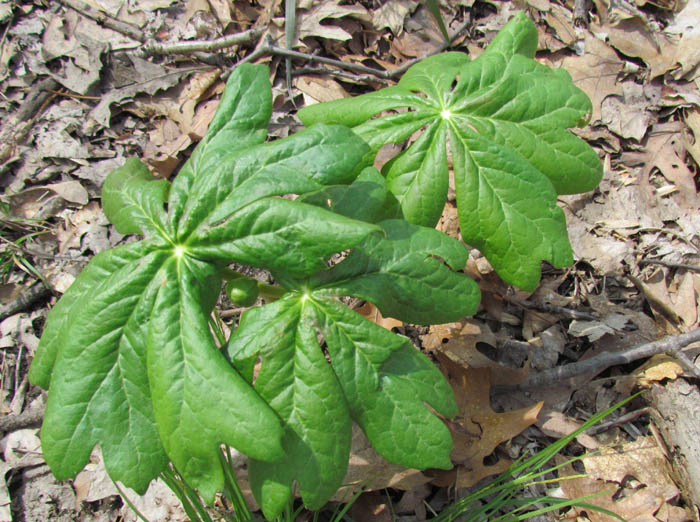
By April the umbrella-like plants were really starting to grow. They can get to 18 inches tall. Two large, dark green, palmate leaves grow to protect the large white flower. The leaves can get to be 12 inches across.

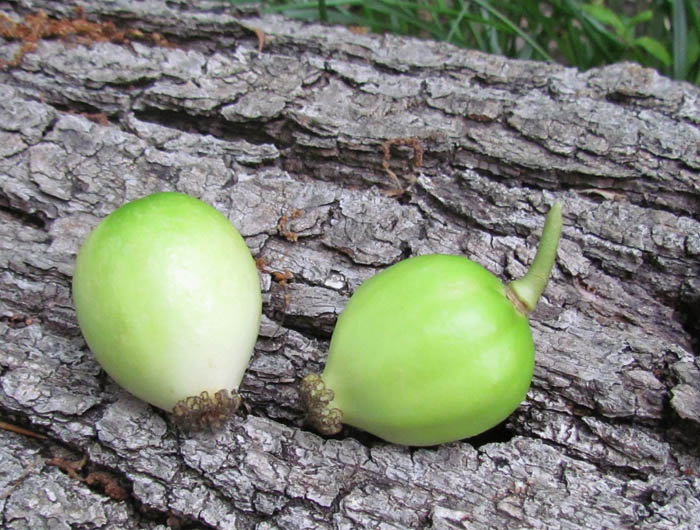
In May I saw a few Mayapples beginning to bloom in central Ohio. Mayapple flowers turn into crab apple-sized edible fruit.  The fully ripe fruit is eaten raw, cooked or made into jams, jellies, marmalade and pies.

By June I plucked a couple of Mayapples to try out. It is best to wait until the fruit turns yellow before eating. It has a sweet, peculiar, but agreeable flavor. May apples are just one of the many delicious (and often overlooked) ways of celebrating Summer.

Third Eye Herp
E-mail


White Prickly Poppy

I saw a few of these in Arizona today. A member of the poppy family, it has flowers that grow to 3 inches across with numerous yellow stamens.

One researcher noted that the leaves of the white prickly poppy are so prickly that cattle will not even eat it during severe drought periods.

The seeds of the white prickly poppy are said to be an excellent source of food for quail and other birds because of their high oil content. Additionally, the oil from this plant was used as an alternative fine lubricant during World War II.

Records of its use date as far back as the Aztecs, when their priests would use the plant in their sacrifice rituals. The Comanche’s so revered the plant for its many uses that they made offerings to it during harvesting.
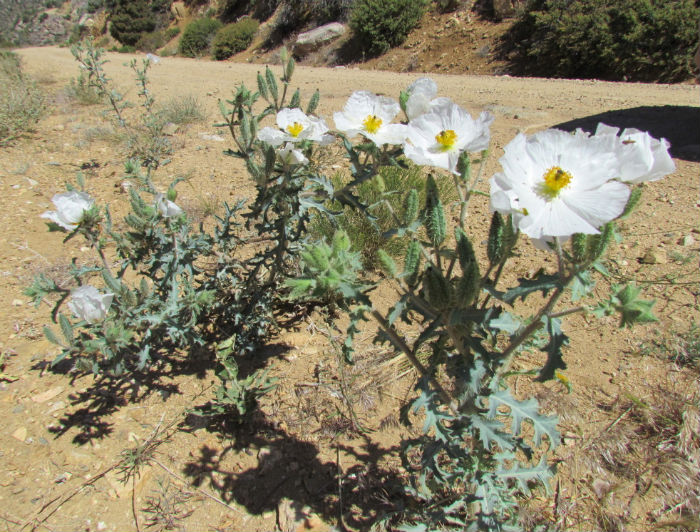
This particular plant was being visited by young katydids.
Third Eye Herp
E-mail

Northern Blue Flag Iris

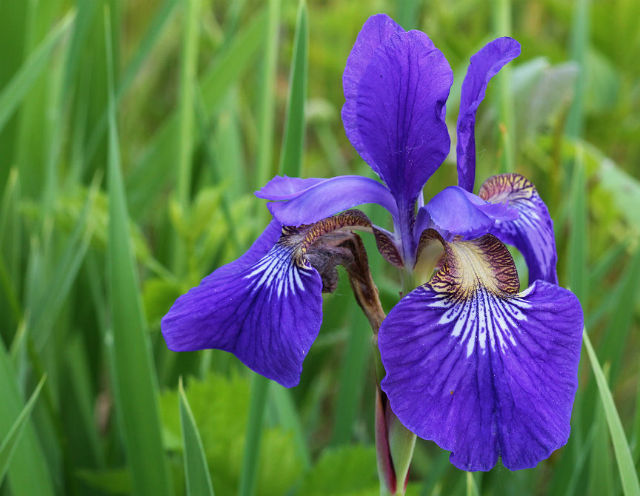
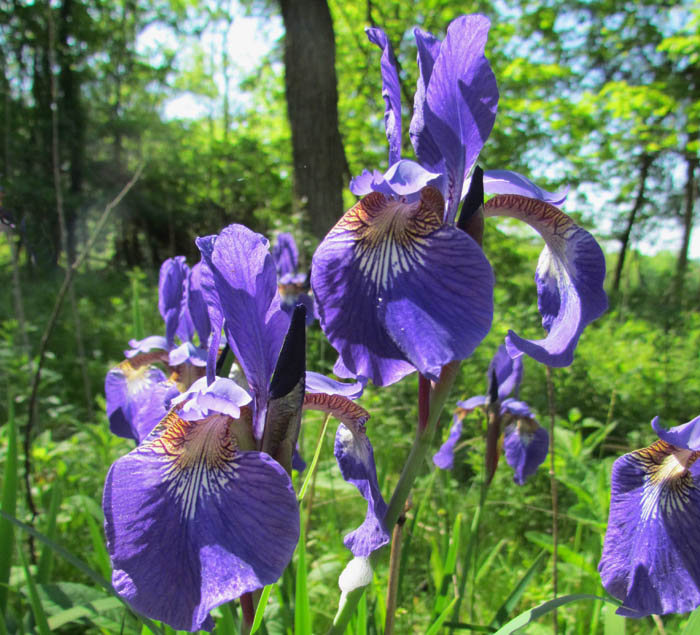
I’ve been seeing a fair amount of this graceful, sword-leaved plant with three showy, downward-curved, violet, boldly veined petal-like sepals.

This is a native iris of northeastern wetlands. Insects attracted to its sepals facilitate the plant’s pollination.

iris 049

Northern Blue Flag Iris can be seen in marshes, swamps, wet meadows, along shorelines, and in forested wetlands. It grows to be about three feet tall.

iris 058

Its rootstalks have long been used in herbal medicine to treat a variety of ailments.

Third Eye Herp
E-mail

Skunk Cabbage

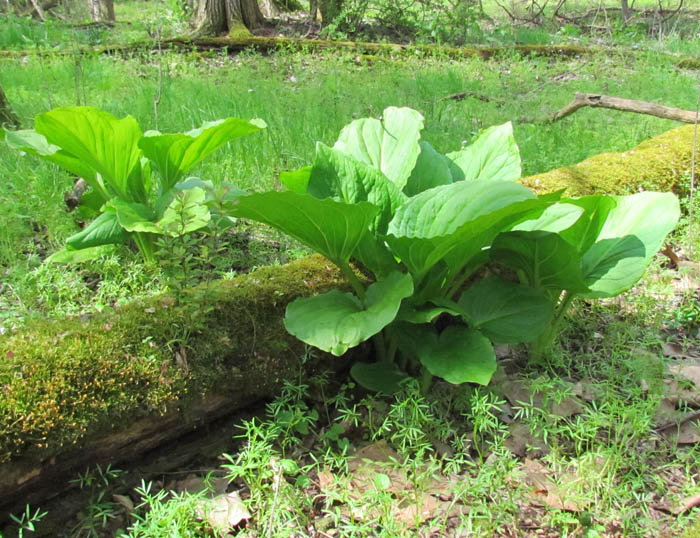
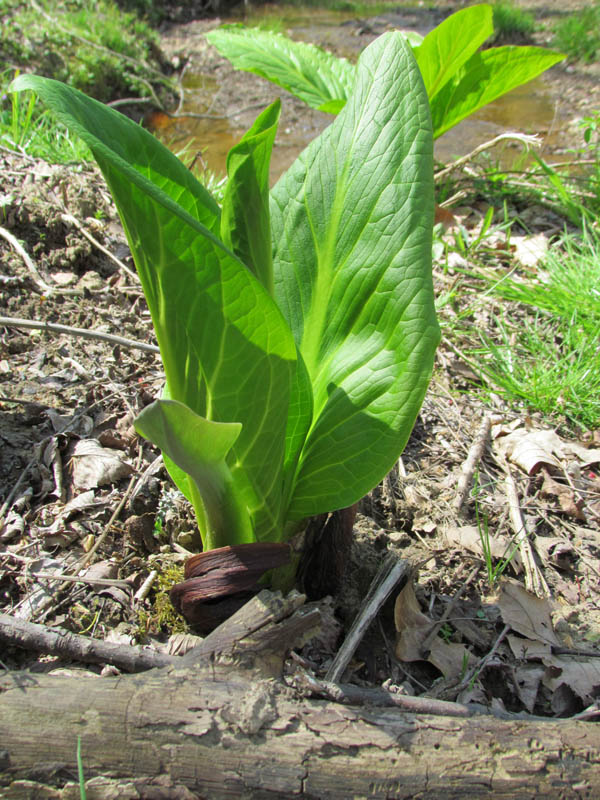
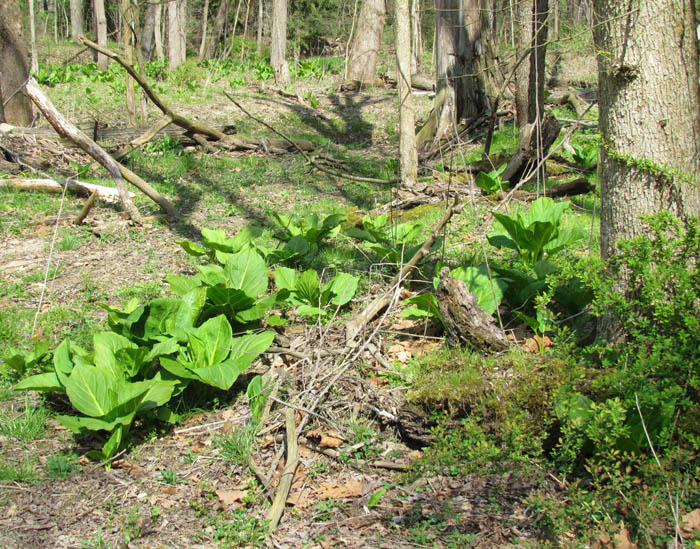
The first thing you notice about Skunk Cabbage is how surprisingly big it is. Walking through the forest and coming across this large, leafy plant makes quite an impression. It is easy to recognize, with its huge leaves rising directly from the ground.

Skunk Cabbage is a low growing, foul smelling plant that prefers wetlands. It flowers early in the spring when only the flowers are visible above the mud. The stems remain buried below the surface of the soil with the leaves emerging later.

Breaking or tearing a nearly two foot long leaf produces a pungent odor, which is the source of the plant’s common name. The foul odor attracts pollinators and may also discourage large animals from disturbing or damaging the plant.

Many fly species, as well as some butterflies, bees and beetles pollinate Skunk Cabbage. In the fall, Skunk Cabbage leaves fall over and begin to rot. Small animals, including slugs, millipedes, and pillbugs eat the old leaves, but Skunk Cabbage leaves are poisonous to mammals (including us). The large fallen leaves also provide shelter for small animals.

In late winter and early spring, Skunk Cabbage has a remarkable ability to produce heat that allows it to emerge and bloom even when the ground is still frozen. When temperatures are freezing, the flower buds can warm up to 70 degrees, which melts the snow around the plant. The flowers are characterized by a mottled maroon hood-like structure.

Third Eye Herp
E-mail