Bobolink

01 Bobolink_3717

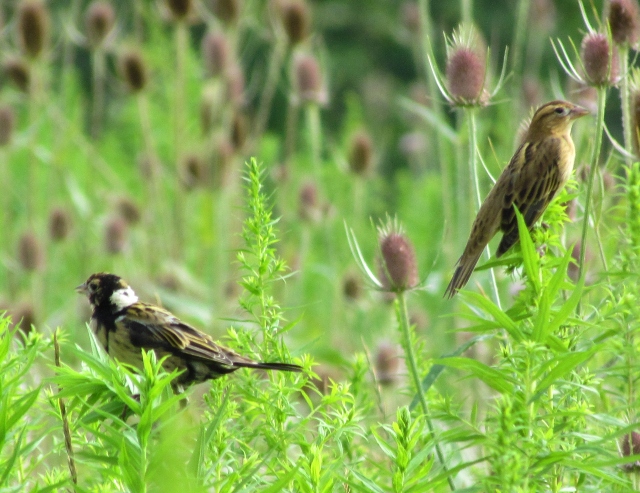
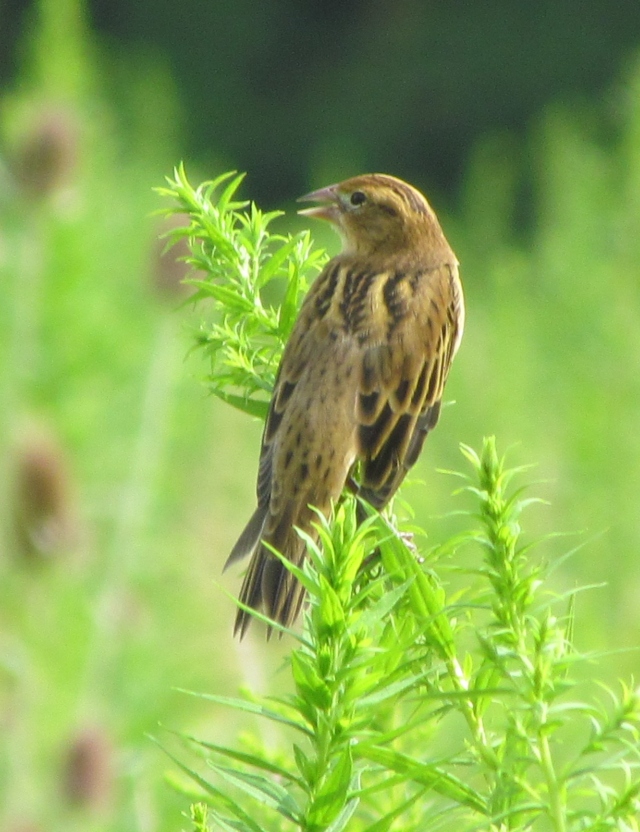
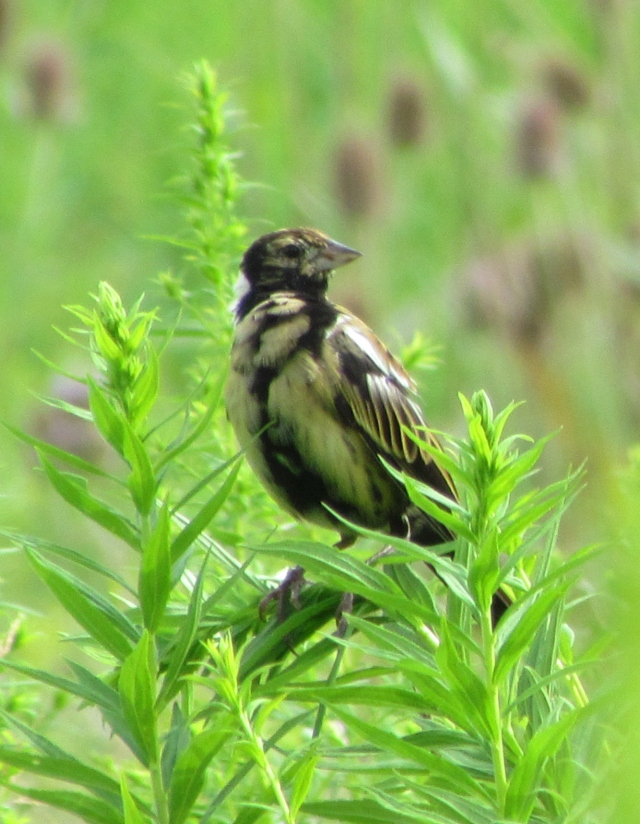
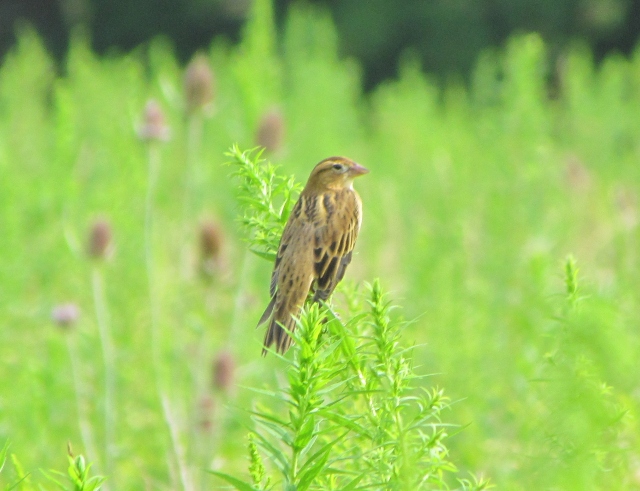
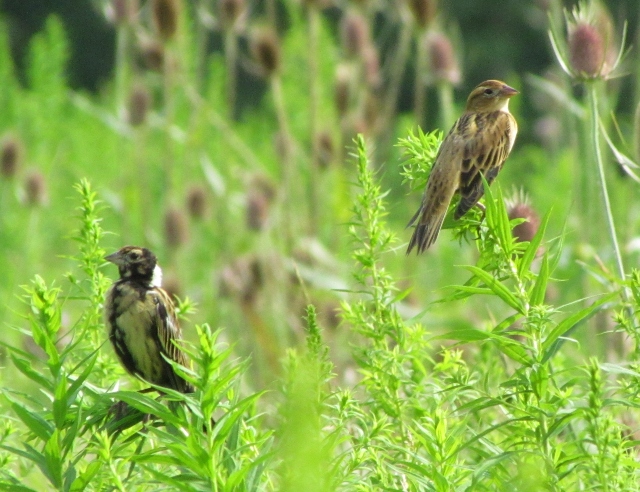
Perched on a grass stem or displaying in flight over a field, breeding male Bobolinks are striking. No other North American bird has a white back and black underparts (some have described this look as wearing a tuxedo backwards). Added to this are the male’s rich, straw-colored patch on the head and his bubbling, virtuosic song. Females are less fancy and mainly a lightly patterned warm brown.
04 Bobolink_3708

The Bobolink is one of the world’s most impressive songbird migrants, traveling some 12,500 miles to and from southern South America every year. Throughout its lifetime, it may travel the equivalent of 4 or 5 times around the circumference of the earth.
02 Bobolink_3722

A migrating Bobolink can orient itself with the earth’s magnetic field, thanks to iron oxide in bristles of its nasal cavity and in tissues around the olfactory bulb and nerve. Bobolinks also use the starry night sky to guide their travels.
04 Bobolink_3704

With a Latin Name of Dolichonyx oryzivorus, the species name of the Bobolink, oryzivorus means “rice eating” and refers to this bird’s appetite for rice and other grains, especially during migration and in Winter.
05 Bobolink_3727

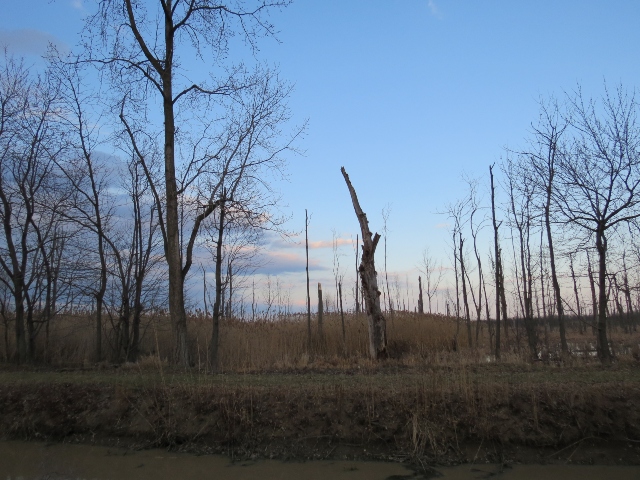
The song of the male Bobolink is distinctive and virtuosic — a disorienting stream of whistles, gurgles, squeaks, and other sounds delivered so rapidly and covering so much sonic ground it can sound like two birds singing at once. Their bubbling song has inspired poets from Emily Dickinson to William Cullen Bryant and ushers in Spring across the grasslands of the northern United States and southern Canada.
Third Eye Herp
E-mail

Blue-spotted Salamander

01 Blue-spotted Salamander_0093

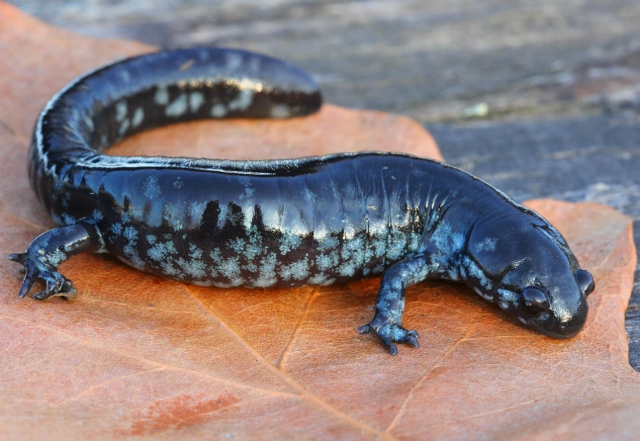
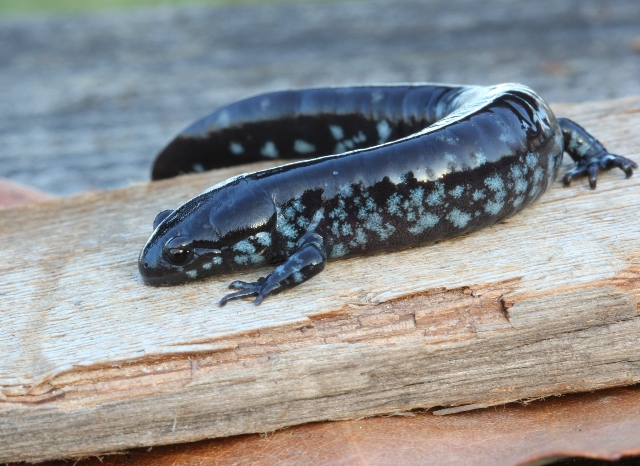
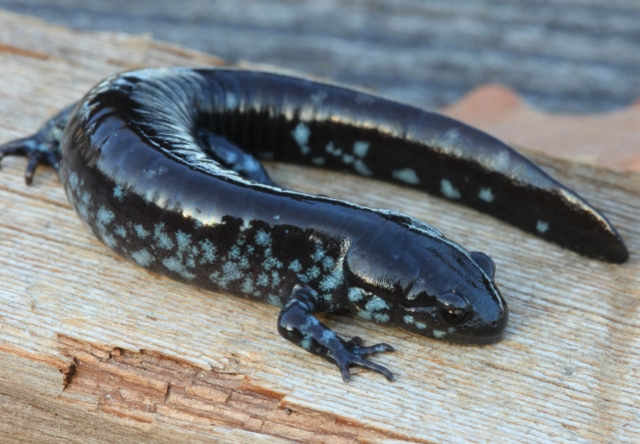
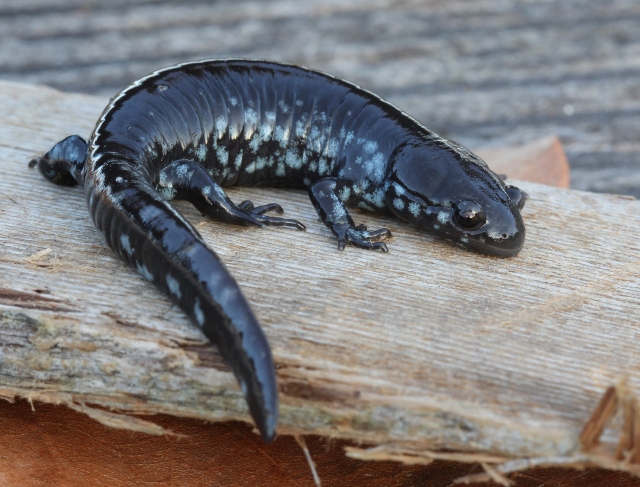
While doing a bit of exploring at Maumee Bay State Park, I came across a few examples of this very cool amphibian. The Blue-spotted Salamander is a Mole Salamander native to the Great Lakes states and northeastern United States, and parts of Ontario and Quebec in Canada.
02 Blue-spotted Salamander_8702

This is a medium-sized amphibian with conspicuous markings of randomly distributed, sky-blue spots, blotches, and flecks on a base color of dark gray to black. Adults measure 3 to 5 inches in total length, with males being smaller than females. They have specialized glands on their tails that secrete a milky substance which is harmful to predators. In some cases, they will raise and wave their tail as a way to repel a potential predator.

03 Blue-spotted Salamander_8720

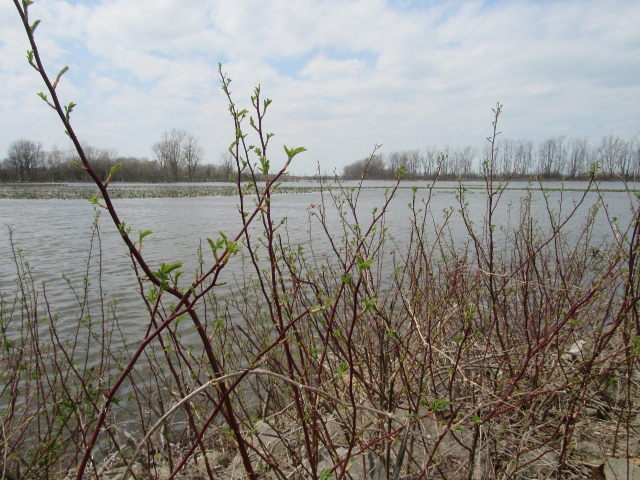
These creatures are primarily found in moist, deciduous hardwood forests and swampy woodlands with sandy soil, though they can be found in coniferous forests and fields too. They prefer vernal pools that retain water into mid-Summer, to ensure access to a suitable breeding habitat.

04 Blue-spotted Salamander_8708

Blue-spotted Salamanders are carnivorous, eating invertebrates such as worms, snails, slugs, centipedes, and spiders, as well as insects. Like most salamanders, they stay underground during the day. However, at night they will emerge from the soil to feed.

05 Blue-spotted Salamander_8714

This is truly a beautiful herp to come across and seeing on in the field makes for a memorable experience.

Third Eye Herp
E-mail

Swamp Rose

01 Swamp Rose_4778

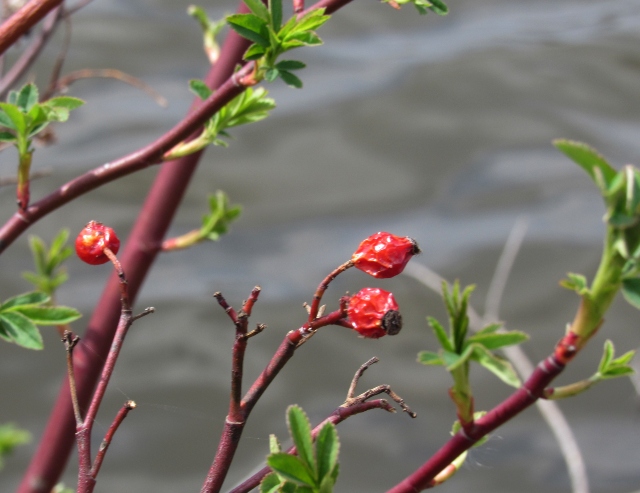
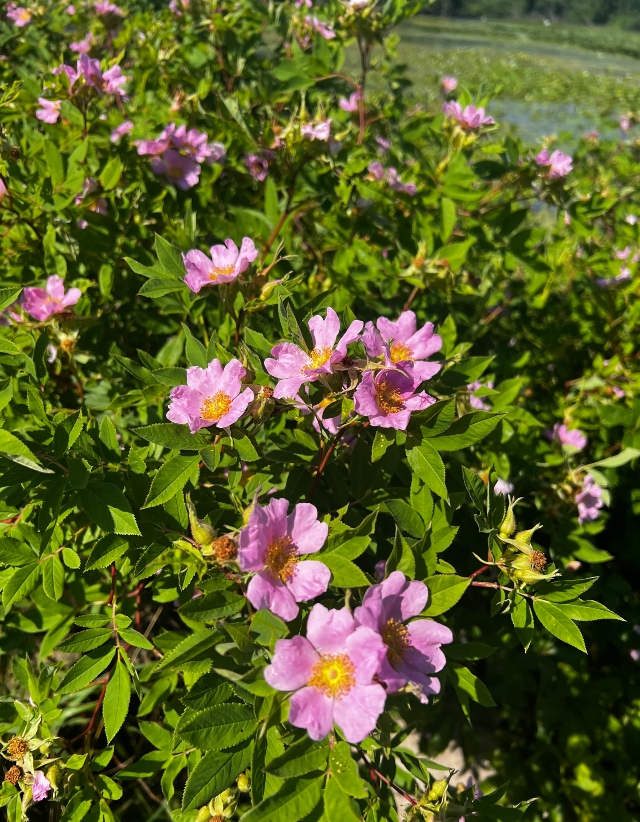
While hiking in a marshy area of north-central Ohio in the Springtime, I noticed this a perennial shrub that was just starting to get leaves. I went back to see it again in the Summer. Swamp Rose grows up to seven feet tall and is native to the eastern United States.

02 Swamp Rose_4781

This plant occurs along stream banks, in swamps and along marshes. In swamps it is generally found growing on bald cypress knees or exposed downed logs. It grows best in slightly acidic, wet-to-moist soils in partial shade or full sunlight.

03 Swamp Rose_5222

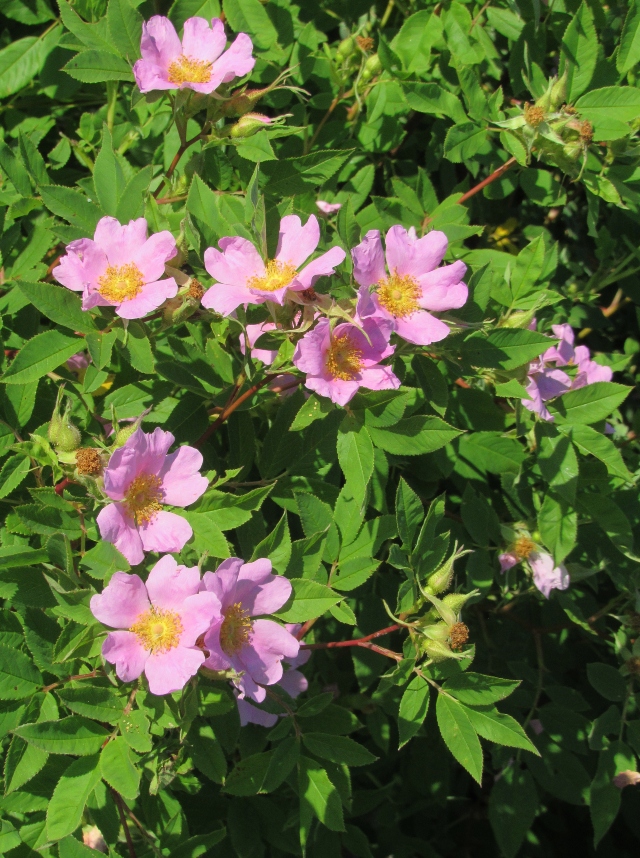
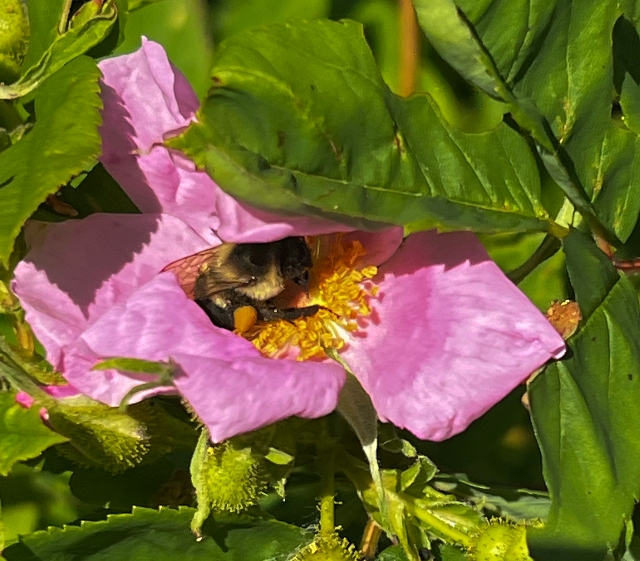
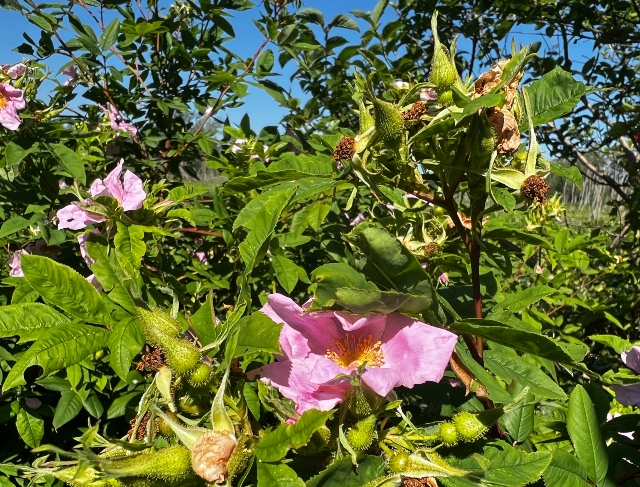
Its bright pink flowers are about two inches in diameter and bloom in late Spring through early Summer and attract a variety of pollinators — especially native bees. This shrub also provides thick cover for birds.

04 Swamp Rose_5213

Swamp Rose is extremely fragrant and the pink blooms last for six to eight weeks in midseason – generally June through July. Indeed, I have found no other native flower that smells so strong and so pleasant.

05 Swamp Rose_6975

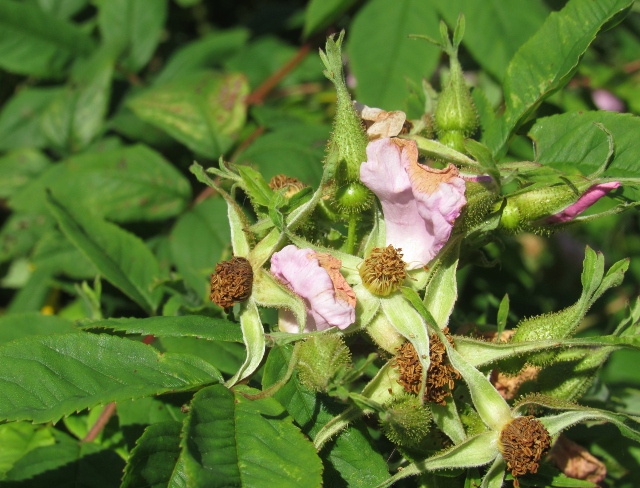
The flowers give way to smooth red hips (fruit) that is red and fleshy on the outside with a mass of seeds inside the fruit. The rose hips are eaten by and spread by birds and mammals.

06 Swamp Rose_6977

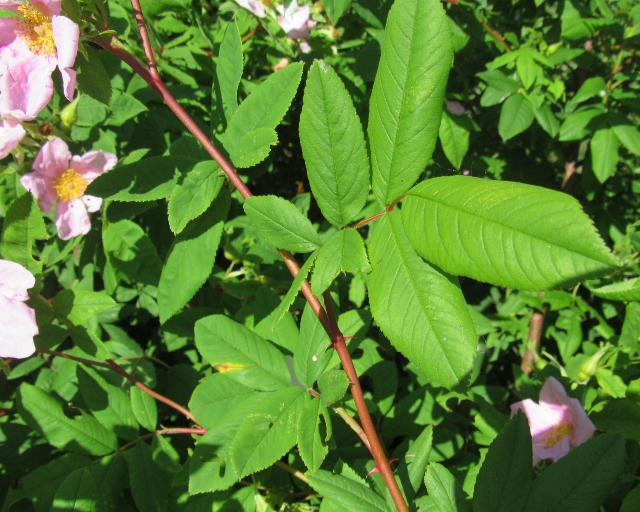
Its leaves are compound and the leaflets (usually 7) are oval-lance-shaped, with finely toothed edges. They are smooth on the surface and slightly hairy along the midrib underneath. They turn bright red in Autumn.

07 Swamp Rose_5209

Like most roses, Swamp Rose’s petals and hips can be used to infuse liquids such as syrups or vinegars, and to make wine, tea, jelly or syrup.

08 Swamp Rose_6972

This was a cool plant to experience while looking for reptiles and amphibians in a marsh habitat.

Third Eye Herp
E-mail

Mayfly

01 Mayflies_0627

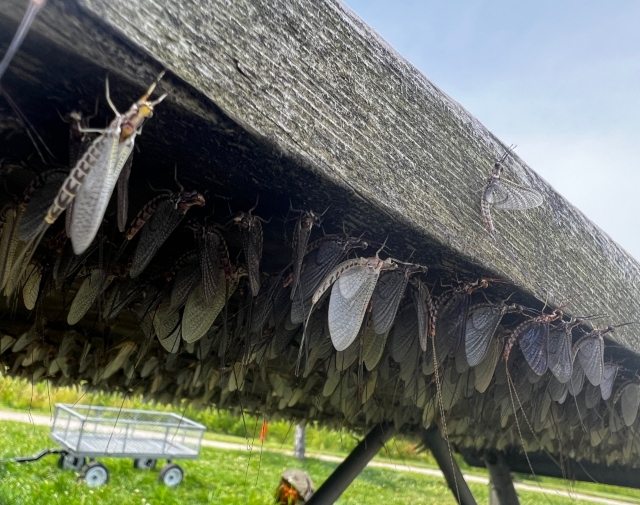
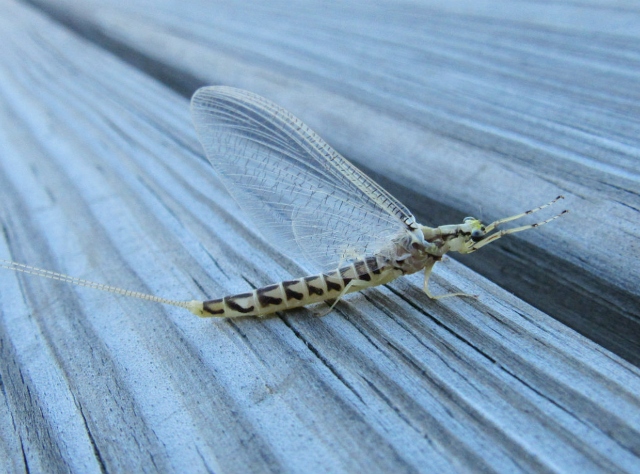
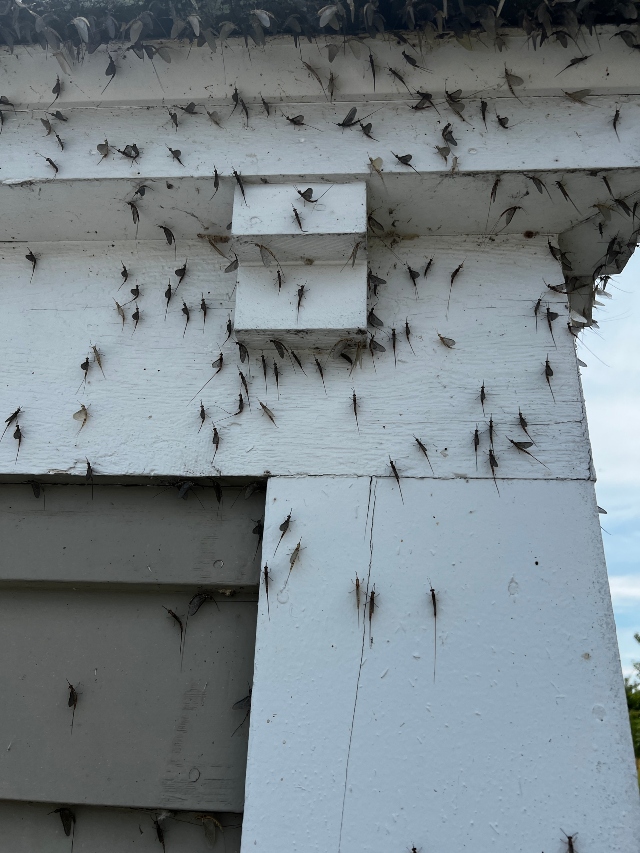
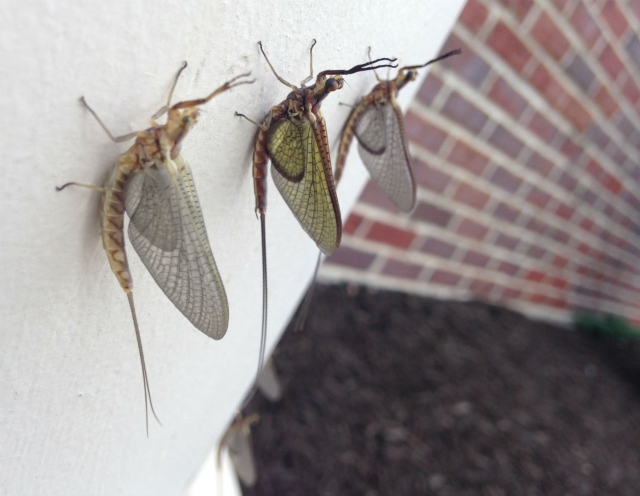
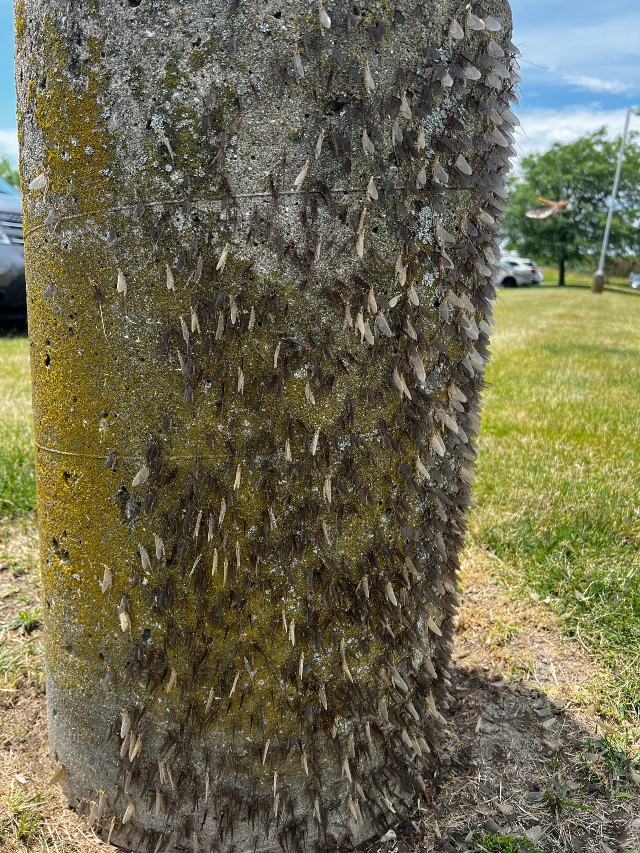
When visiting northwest Ohio, I sometimes see very large numbers of these creatures. This insect belongs to an order that is part of an ancient family of insects termed the Palaeoptera, which also contains dragonflies and damselflies. This designation has been traditionally applied to those groups of winged insects (most of them extinct) that lacked the ability to fold their wings flat over the abdomen.

02 Mayfly_8153

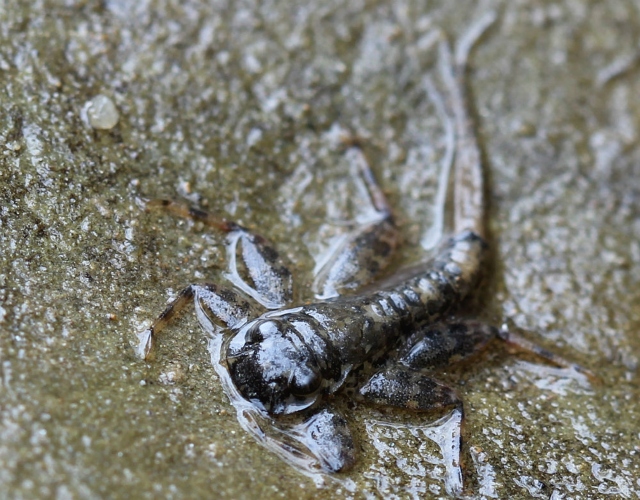
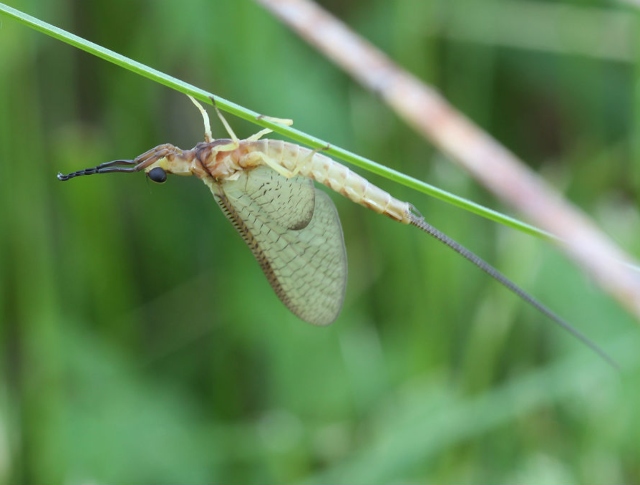
Mayflies have other ancestral traits that were probably present in the first flying insects, such as long tails and they lack any smell centers in their brains. Their immature stages are aquatic and their presence indicates a clean, unpolluted and highly oxygenated aquatic environment.

04 Mayfly_5447

These invertebrates are found throughout North America and worldwide. Mayflies emerge as adults from Spring to Autumn (not necessarily in May), in enormous numbers, sometimes attracting tourists. Fly fishermen make use of adult Mayflies by choosing artificial fishing flies that resemble them.

03 Mayfly_0623

Their aquatic larvae feed on detritus and other plant materials; but the adults, which only live for a few days, do not feed as they lack functional mouthparts. Instead, their sole purpose during this stage is reproduction. They rely on the energy reserves accumulated during their immature aquatic stage to sustain them through their short adult life.

05 Mayflies_2495

Another intriguing feature of Mayflies is their translucent wings. These delicate structures allow them to blend seamlessly with their surroundings, making them less visible to predators. The transparency of their wings also adds to their ethereal beauty, as they flutter gracefully in the sunlight.

06 Mayfly_0629

Mayfly swarms are a gift for many insect-eating birds, including eastern kingbirds and tree swallows. They also provide sustenance for fish, spiders, beetles, dragonflies, reptiles, amphibians, and mammals.

08 Mayfly 032

The world of insects is vast and diverse, with each species playing a unique role in the ecosystem. Among these fascinating creatures, Mayflies stand out for their intriguing characteristics and ecological significance. This small and delicate insect, has a life cycle that is as fascinating as it is brief.

Third Eye Herp
E-mail

American White Pelican

01 American White Pelican_4995

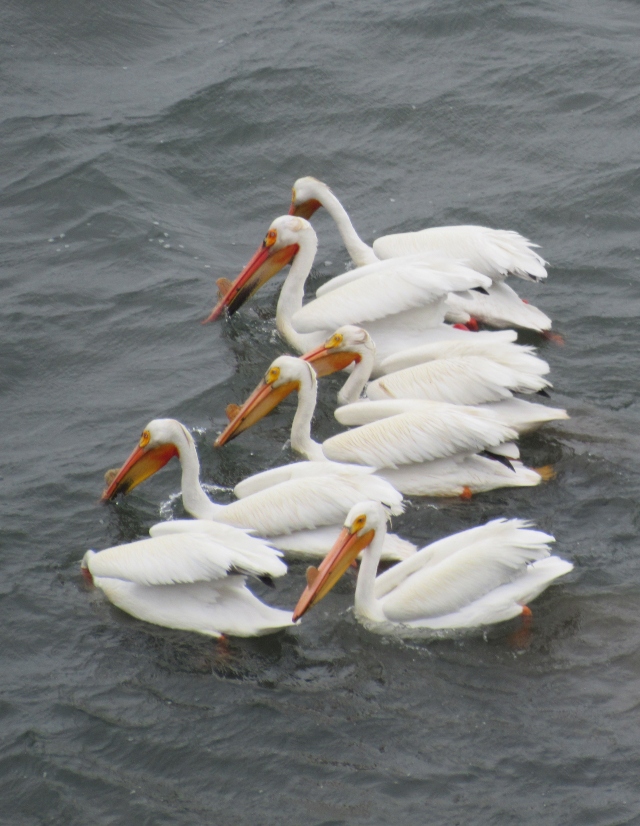
While visiting Point Reyes National Seashore in California, I saw these fine birds in the wild for the first time. The American White Pelican rivals the Trumpeter Swan, as one of the longest birds native to North America.
02 American White Pelican_4997

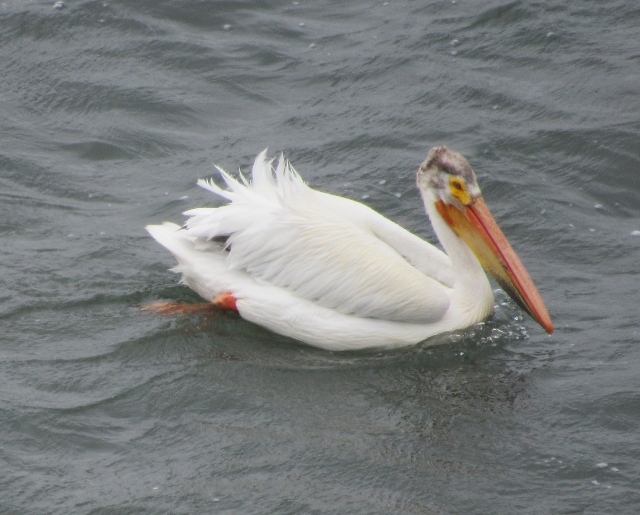
This bird is very large and plump, with an overall length of about 50–70 inches, courtesy of the huge beak which measures over one foot long. It has a wingspan of over 100 inches. One of our largest flying birds, it is considerably larger than a Bald Eagle. This species also has the second-largest average wingspan of any North American bird, after the California Condor.
03 American White Pelican_4999

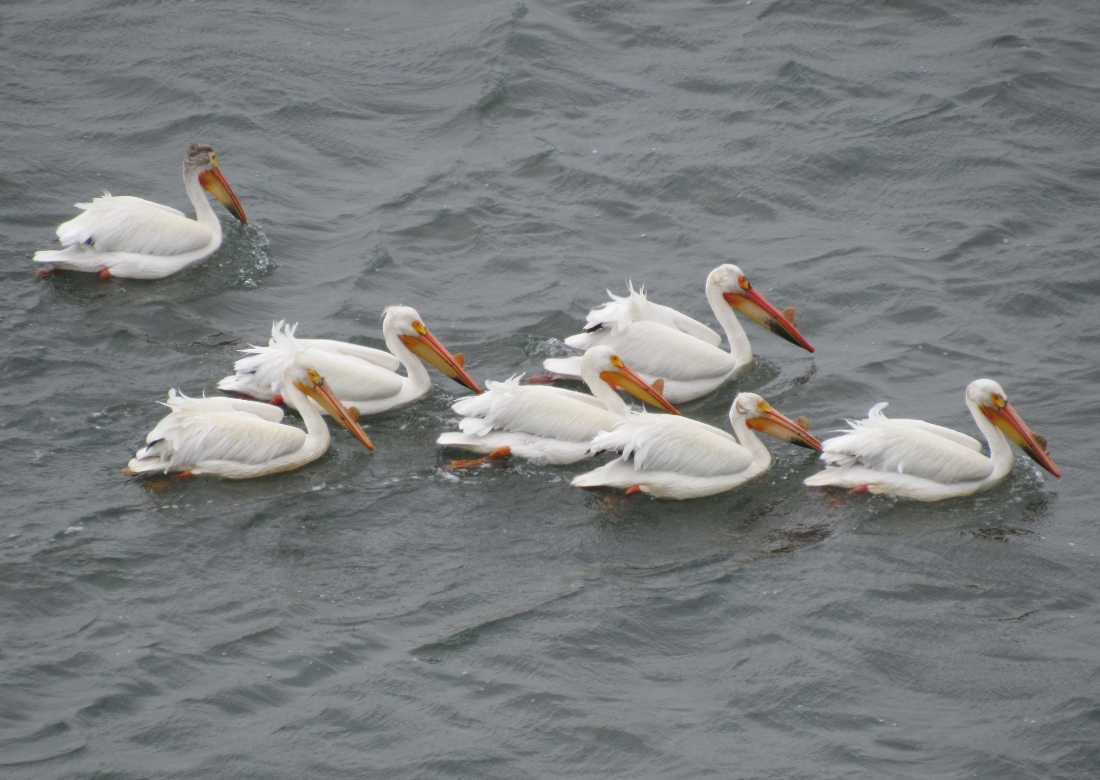
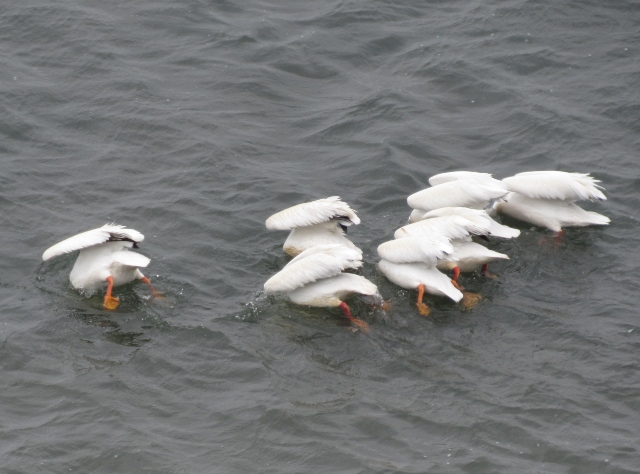
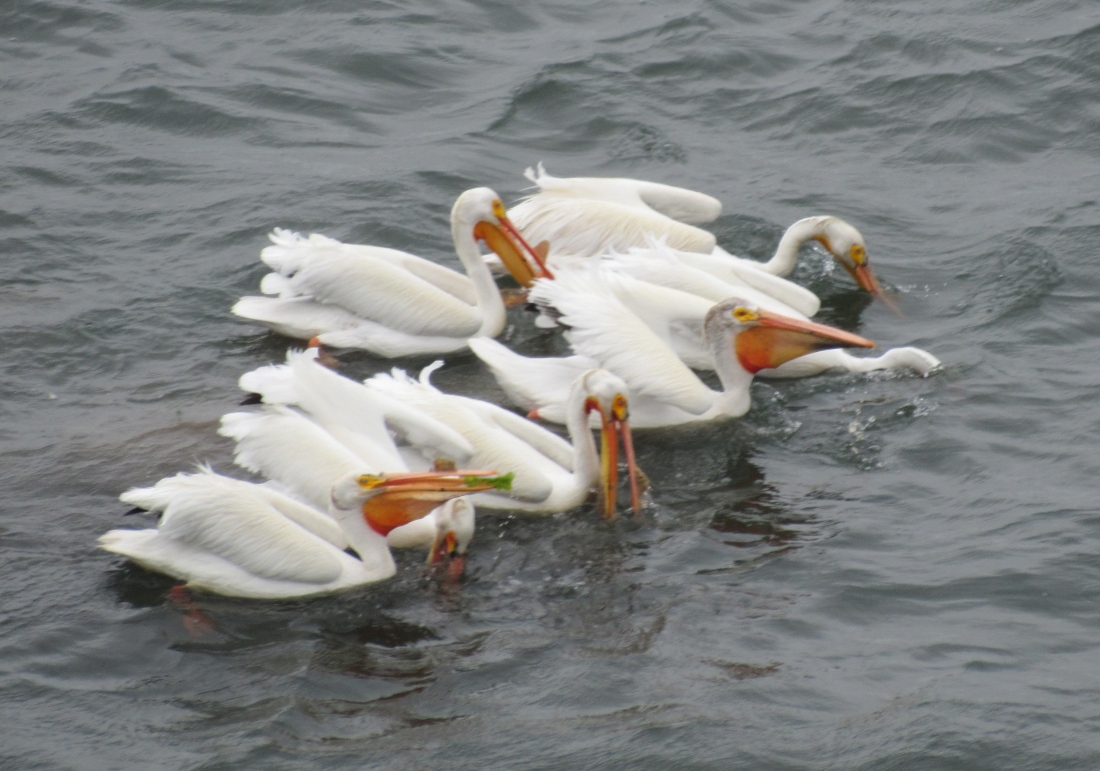
Unlike the Brown Pelican, the American White Pelican does not dive for its food. Instead, it catches its prey while swimming. Each bird eats more than four pounds of food a day. The fish taken can range from the size of minnows to 3-1/2 pound Pickerel. They like to gather in groups of a dozen or more to feed, as they can thus cooperate and corral fish for one another.

04 American White Pelican_5006

These birds are colonial breeders, with up to 10,000 pairs per site. They arrive on the breeding grounds in March or April; nesting starts between early April and early June. During the breeding season, both males and females develop a pronounced bump on the top of their large beaks. This conspicuous growth is shed by the end of the breeding season.

05 American White Pelican_5004

The nest is a shallow depression scraped in the ground, into which some twigs, sticks, reeds, or similar debris have been gathered. After about one week of courtship and nest-building, the female lays a clutch of usually two or three eggs – sometimes just one, sometimes up to six.

06 American White Pelican_4992

American White Pelicans nest on inland islands in freshwater and brackish lakes across the northern interior of North America. The core breeding areas include central Alberta and Saskatchewan in Canada, south through Montana, North Dakota, South Dakota, Minnesota, and west-central Wisconsin. In my home state of Ohio, observers discovered and documented them nesting on a small island in Sandusky Bay last year.

Third Eye Herp
E-mail

White Globe Lily

01 White Globe Lily_2599

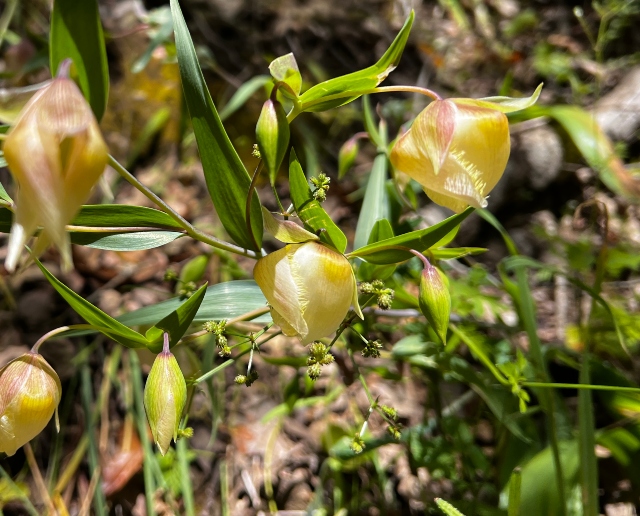
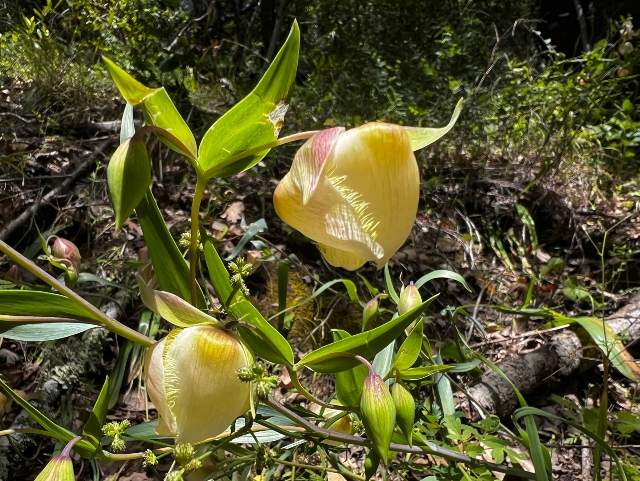
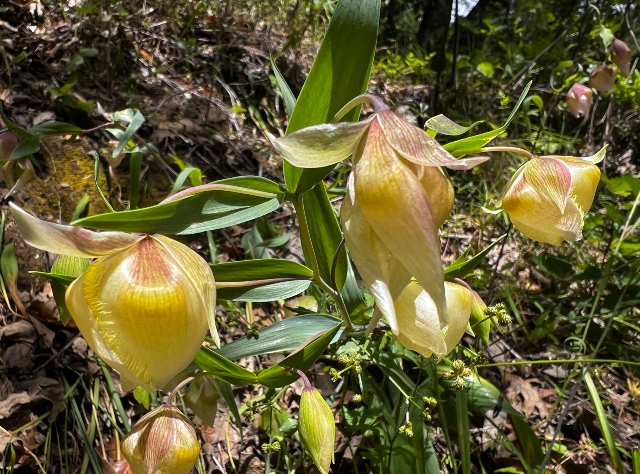
While hiking in Henry W. Coe State Park, I saw this plant that is also known as Fairy Lantern, White Globe-tulip, Alabaster Tulip, Indian Bells, Satin Bells, Snowy Lily-bell, and Snow Drops.

02 White Globe Lily_2621

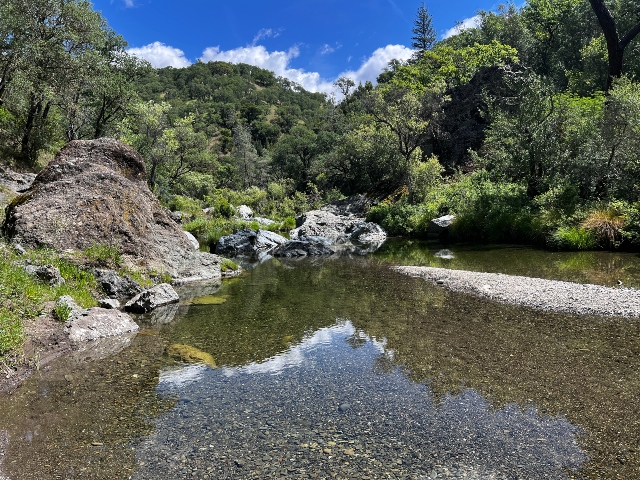
This is a native wildflower endemic (limited) to California. It is found primarily in the central coastal hills and Sierra Nevada foothills up to 5,000 feet. It favors environments that receive full sun, but tolerates partial shade. It can be found on hillsides and rocky slopes, such as road cuts and river canyons.

03 White Globe Lily_2622

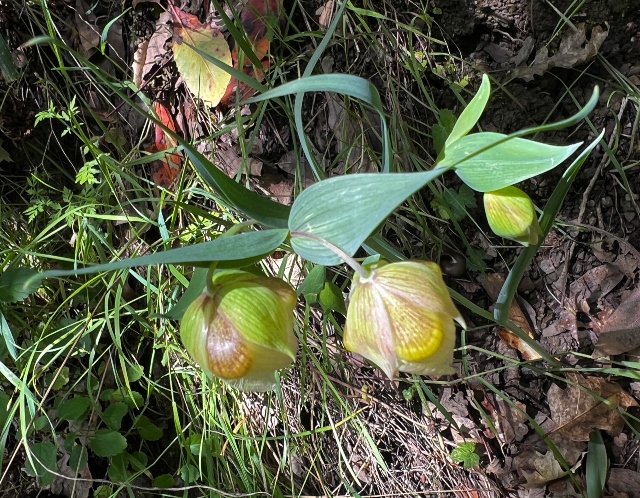
It blooms from early to late Spring, depending on the habitat and elevation. It is unique within its genus in that its flowers remain in a bud-like state, hanging downward, never fully opening its petals. It seemingly protects its inner sensitive space by closing it off to the outside world.

04 White Globe Lily_2625

White Globe Lily shares the distinguishing characteristics of the Lily Plant Family – simple linear leaves, perennial bulbs, and flowers with three petals and three sepals. It isn’t just a pretty flower; it plays an essential role in its ecosystem. By attracting a variety of pollinators, such as bees, butterflies, and hummingbirds, it helps maintain biodiversity in its habitat.

05 White Globe Lily_2624

Besides its ecological role, the White Globe Lily has cultural significance as well. Native American tribes have historically used the plant for various medicinal purposes, including as a poultice for wounds.

Third Eye Herp
E-mail

Thalassica Grasshopper

01 Trimerotropis thalassica_2613

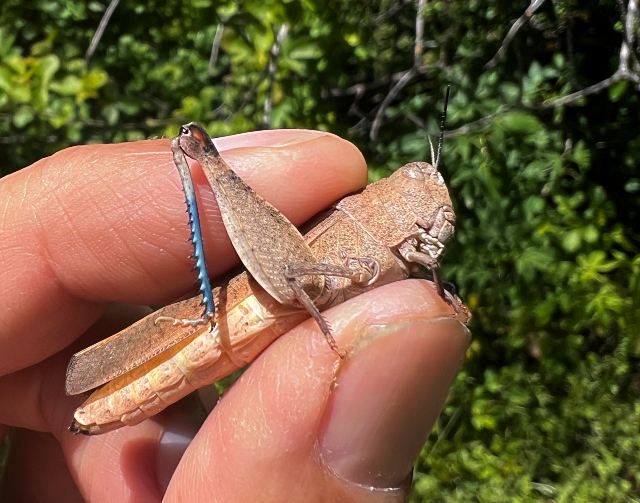
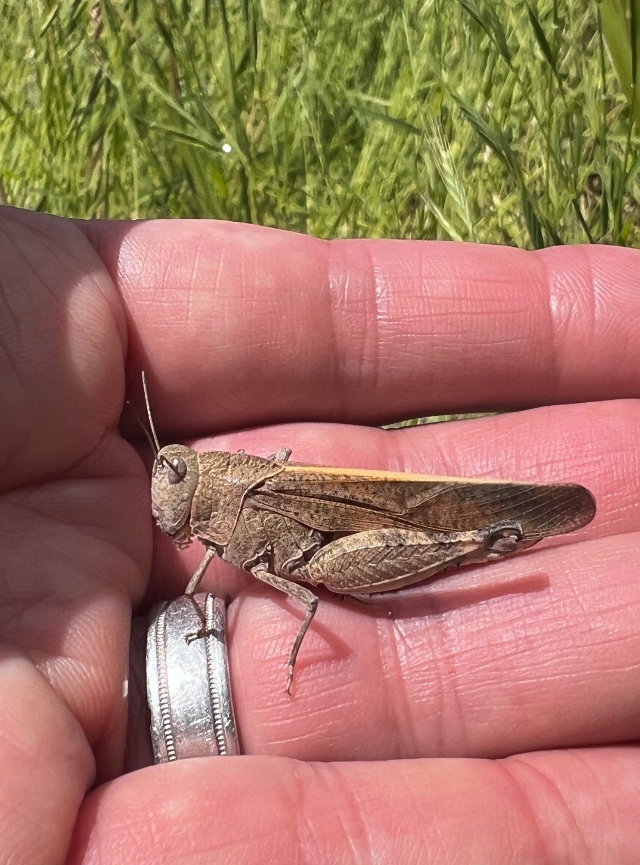
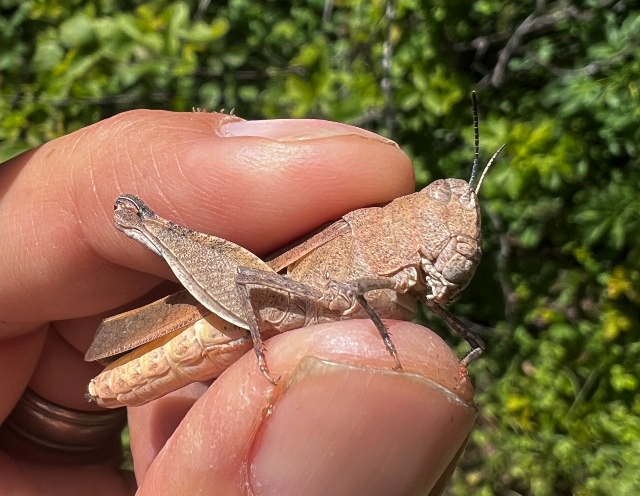
While visiting Henry W. Coe State Park in California, I saw a few of these insects on my hike. They inhabit coastal mountains, dry open grasslands, and areas associated with low vegetation, often on rocky substrates or near manzanita (also seen on this hike).

02 Trimerotropis thalassica_2618

The Thalassica Grasshopper belongs to a group known as Band-winged Grasshoppers. An ancient group dating back to the Early Triassic Period (around 250 million years ago), this family of grasshoppers are found almost everywhere in the world except Antarctica.

03 Trimerotropis thalassica_2640

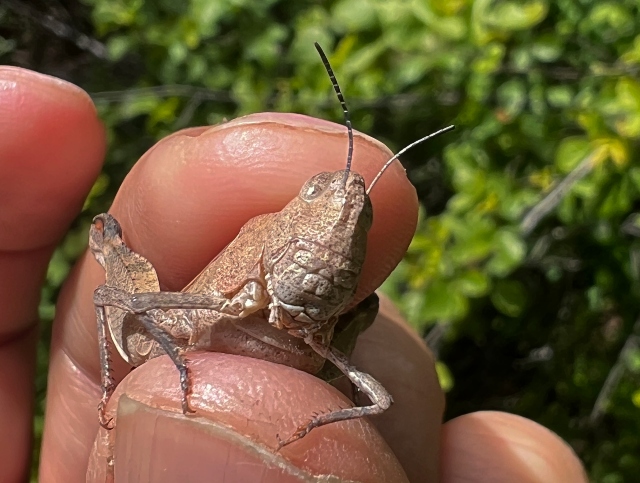
The body colors of many grasshoppers tend to simulate the color of their habitat background. This is particularly true of species inhabiting rocky or sandy environments. This insect is diurnal and relatively tame, flying short distances when disturbed, and is commonly observed on rocks, grasses, or in flight over open areas, like meadows- but when resting it can be hard to see.

04 Trimerotropis thalassica_2638

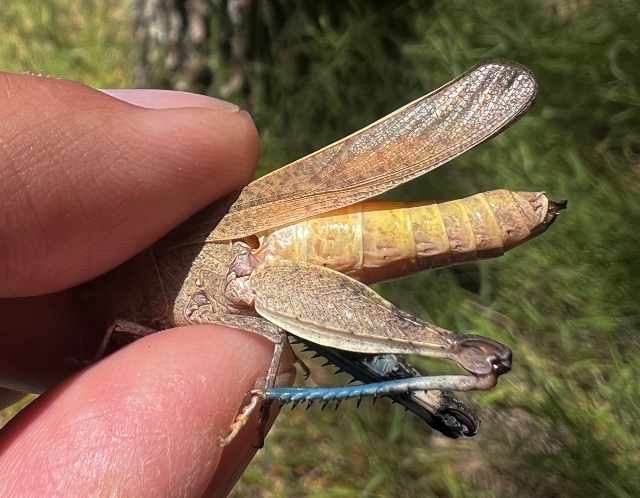
The Thalassica Grasshopper is endemic to California in the United States. Its head is notably broad above and below, featuring large and prominent eyes. Its hind legs are strongly developed for jumping, with the inside coloration being black and the hind tibiae being blue.

05 Trimerotropis thalassica_2619

This herbivorous creature feeds on a variety plants available in its habitat. Foraging occurs mainly during the day, with adults and nymphs grazing on vegetation in grasslands and shrublands, particularly on warm, sunny days. The Thalassica Grasshopper can survive in highly saline environments, a rare trait that sets it apart from many terrestrial insects.

06 Trimerotropis thalassica_2620

It was neat to come across this unexpected find while on my California trip.

Third Eye Herp
E-mail

Crowded Parchment

01 Parchment Fungi_2330

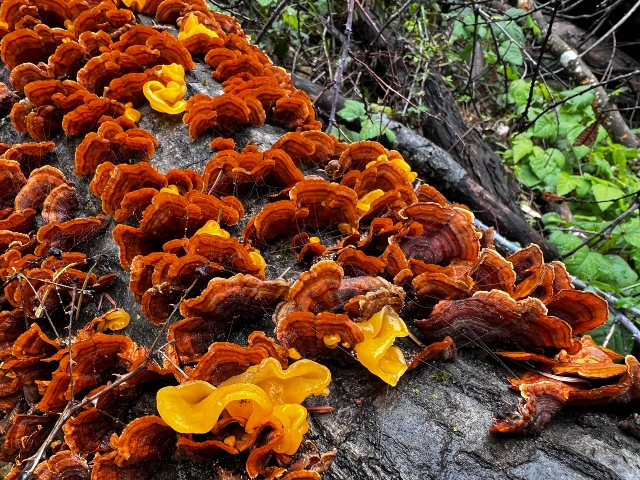
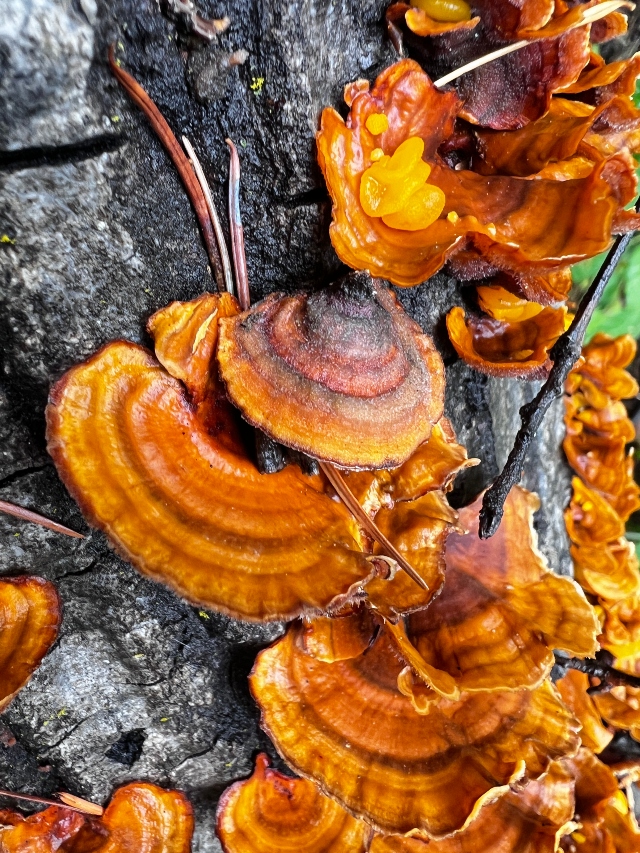
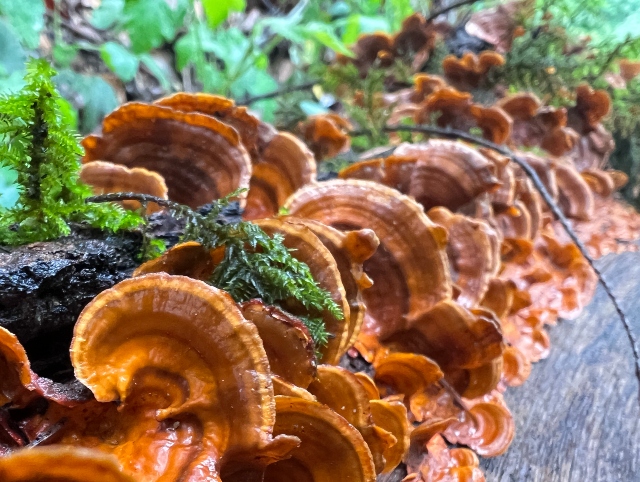
While hiking in a California forest in search of salamanders, this brightly colored mushroom caught my eye. The caps have concentric color zones ranging from bright orange to reddish-brown, fading to cream with age.

02 Parchment Fungi_2334

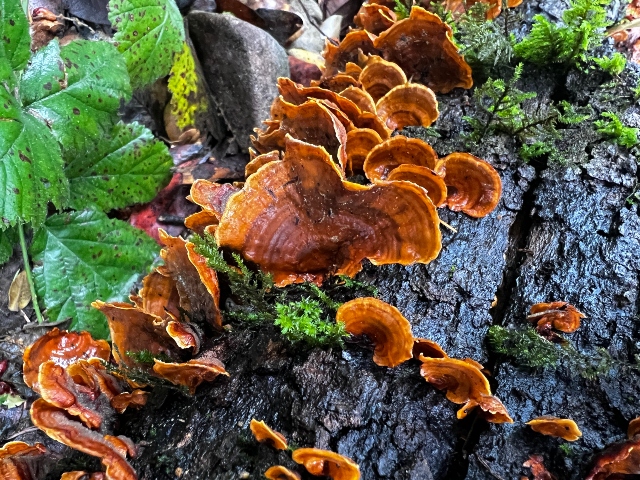
This saprophytic (feeding on dead and decaying organic matter) species has thin, leathery, shelf-like fruiting bodies that grow on dead or decaying wood. It grows densely, often from gaps in bark, and can fuse laterally, sometimes hosting algae or being parasitized by jelly fungi (as was the case here, with Witches’ Butter).

03 Parchment Fungi_2346

Crowded Parchment are characterized by thin, tough, leathery caps that often overlap and fuse into tangled masses, resembling dried parchment or ruffled petticoats on wood.

04 Parchment Fungi_2340

This fungus helps to decompose dead hardwoods such as oak, beech, and maple, and plays a key role in breaking down lignin and recycling nutrients in forest ecosystems. Unlike many shelf fungi, the underside is smooth, lacking gills or pores, which is a key identification feature.

05 Parchment Fungi_2337

This was a welcome and colorful find on an otherwise rainy day in California.

Third Eye Herp
E-mail

Red-bellied Newt

01 Red-bellied Newt_2371

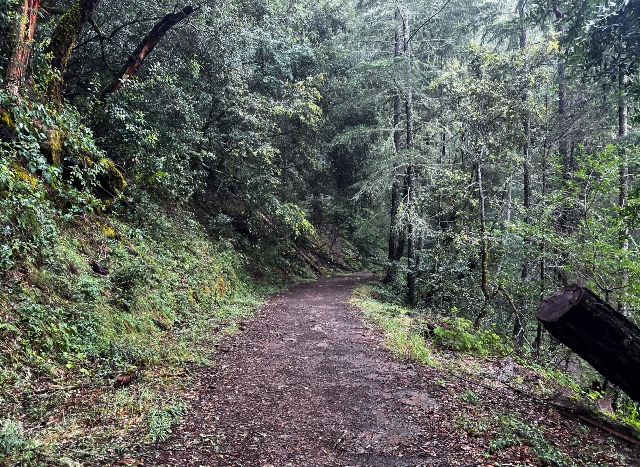
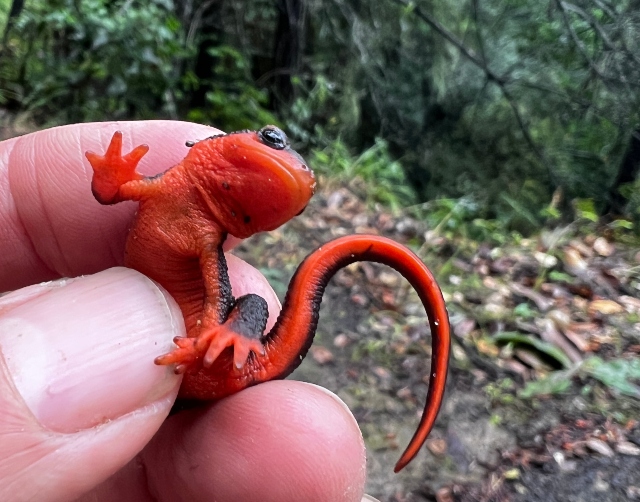
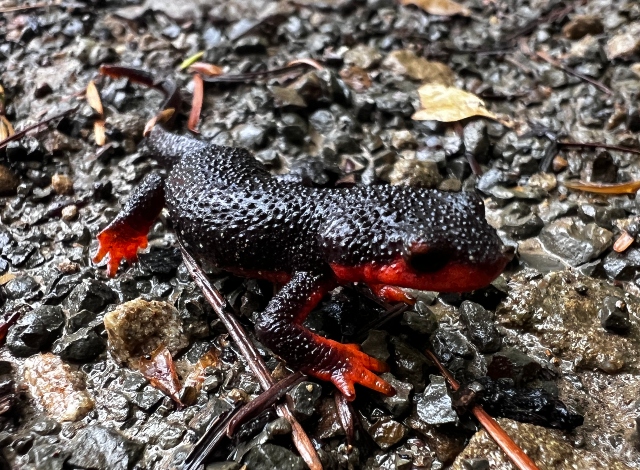
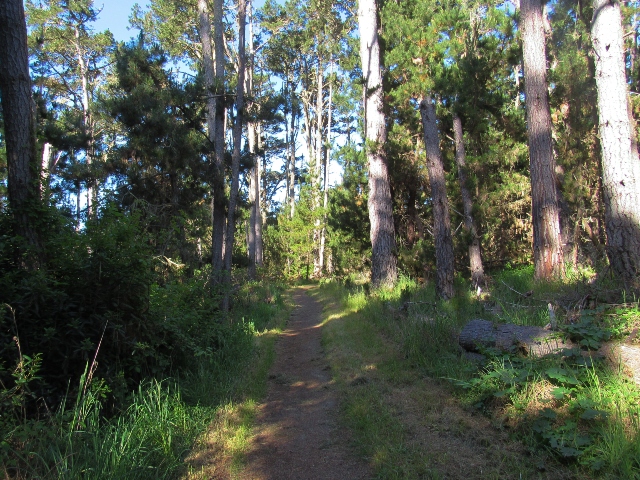
After many years of searching, I finally found this “lifer” amphibian on my visit to California this Spring. On a rainy day I hiked a trail in the Santa Cruz Mountains and after seeing 30-something California Newts, this fine creature was in the middle of the path.

02 Red-bellied Newt_2400

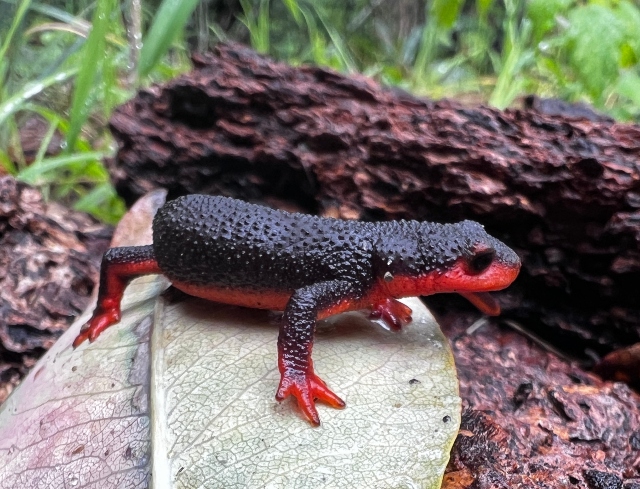
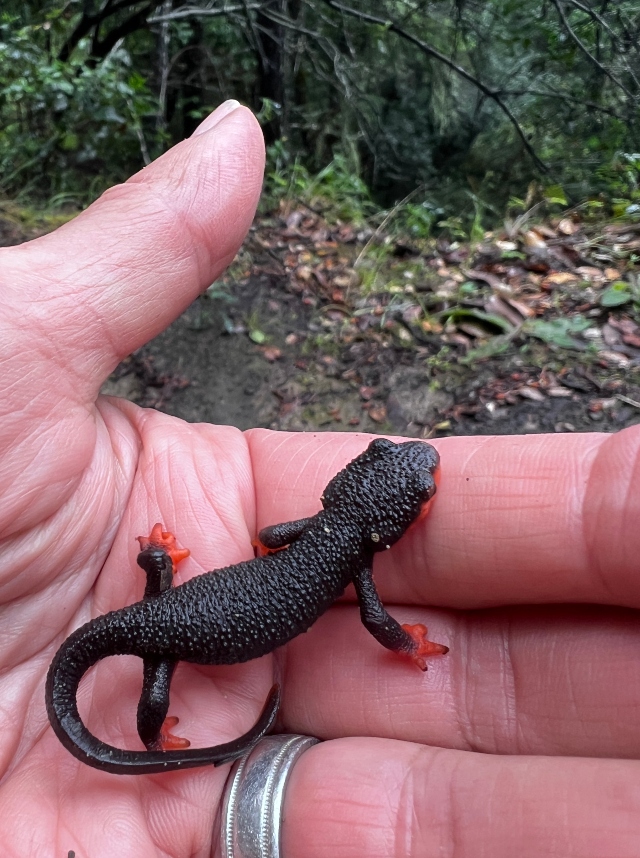
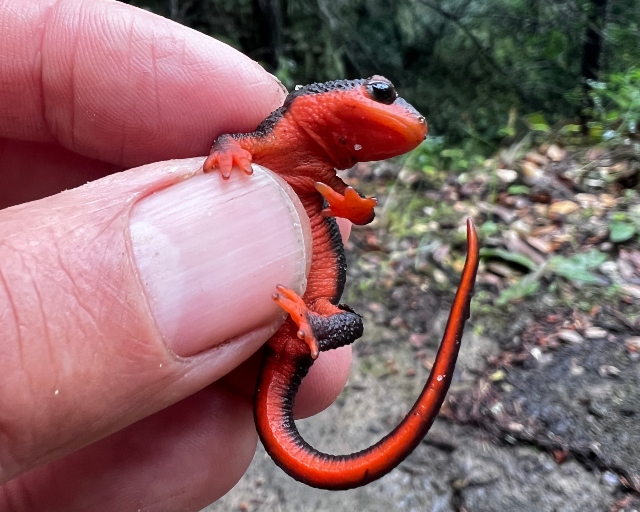
The Red-bellied Newt is a salamander that is native to coastal woodlands in northern California and is terrestrial for most of its life. When full grown, it measures between 5-1/2 to 7-1/2 inches from nose to tail tip. It has grainy skin, and is brownish-black on top with a tomato-red underbelly.

03 Red-bellied Newt_2395

It inhabits primarily redwood forests, but is also found within mixed conifer, valley-foothill woodland, montane hardwood and hardwood-conifer habitats. This amphibian feeds on arthropods, worms and snails in water and on forest floor in ground litter. The Red-bellied Newt requires rapid streams with rocky substrate for breeding and egg-laying.

04 Red-bellied Newt_2386

After hatching from eggs, the newts begin their lives as aquatic larvae similar to tadpoles, though elongated and with external gills. Once newt larvae mature into their adult form, which takes about four to six months, they leave the water and reside mainly underground. Red-bellied Newts can live for 20-30 years.

05 Red-bellied Newt_2391

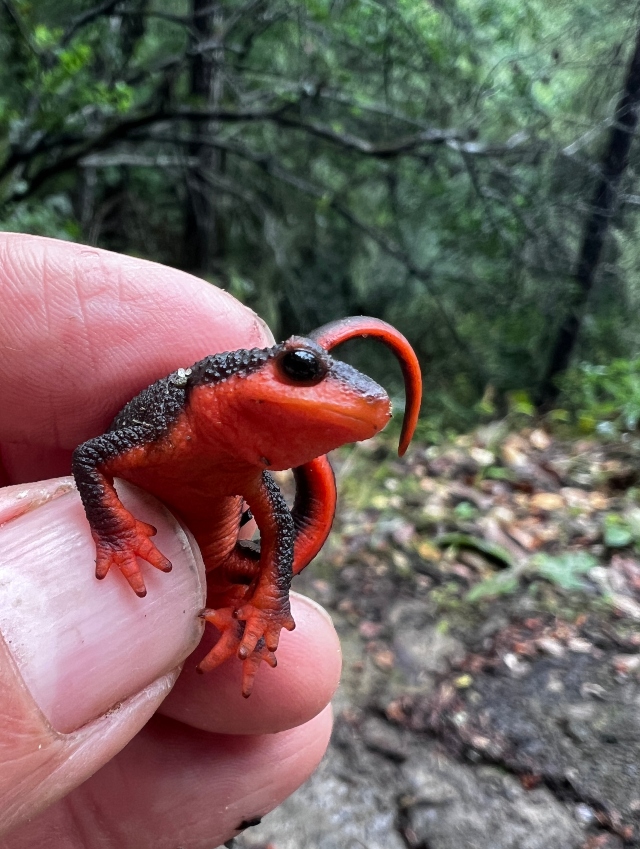
When disturbed, this species pulls its head and tail back to reveal its bright-red underside. This serves as a warning to potential predators, as Red-bellied Newts have enough of a neurotoxin in their skin, eggs, and embryos to potentially kill an adult human, or 1,200 to 2,500 mice. Because they are so poisonous, they are nearly inedible and have no reported predators other than a few species of snakes which are resistant to their toxin.

06 Red-bellied Newt_2377

Like other newts, Red-bellied Newts have the ability to regenerate several body parts, including their limbs, eyes, hearts, intestines, upper and lower jaws, and damaged spinal cords.

07 Red-bellied Newt_2388

This was an exciting find and the highlight of my trip to the Golden State this year.

Third Eye Herp
E-mail

Knobcone Pine

01 Knobcone Pine_6150

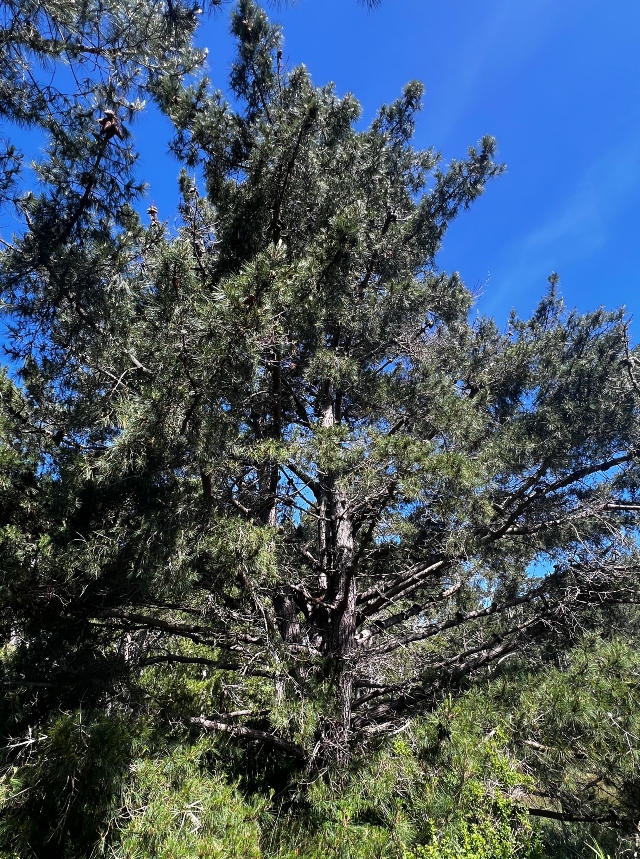
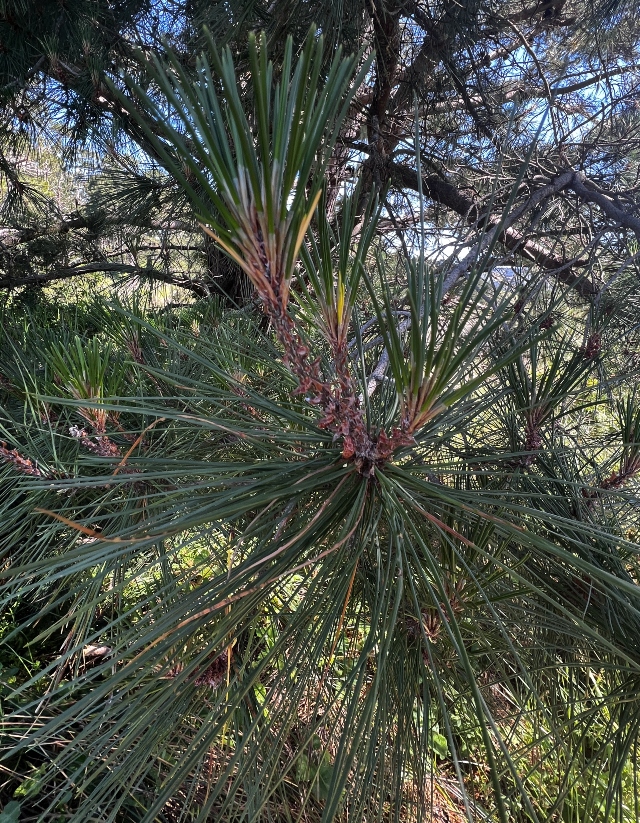
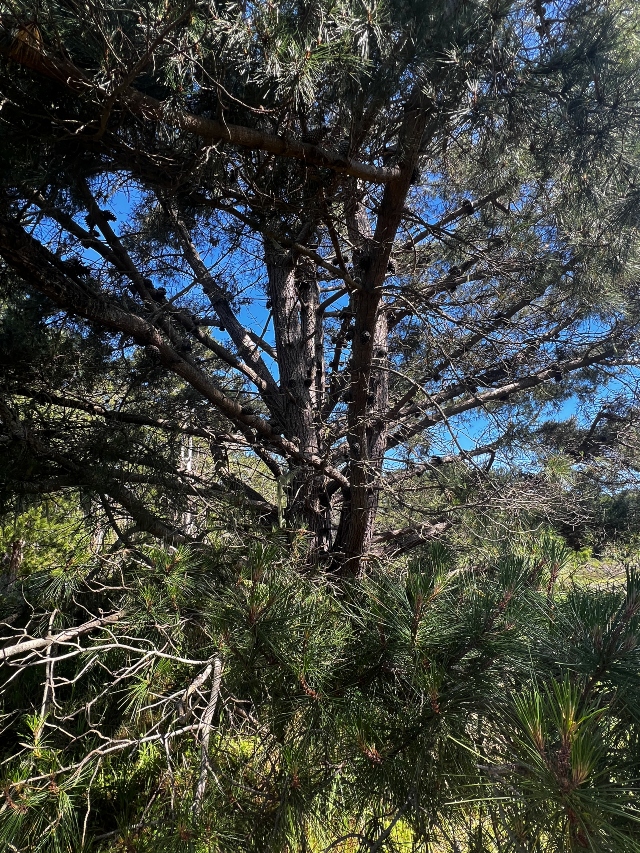
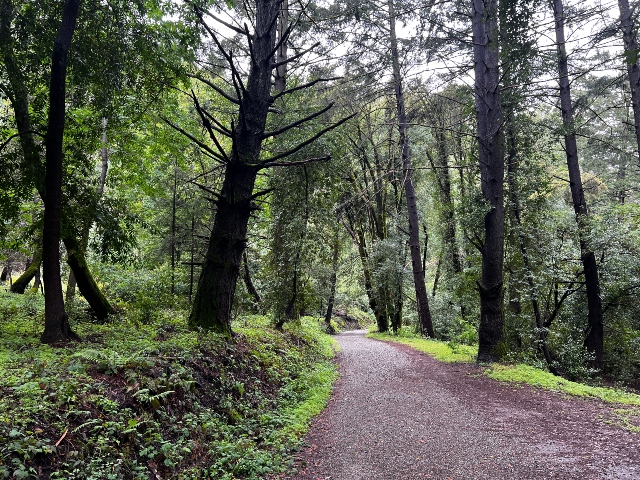
While visiting Point Reyes National Seashore in California, I encountered a few of these fine trees that grow in mild climates. They range from the mountains of southern Oregon to Baja California, with the greatest concentration in northern California and the Oregon-California border.

02 Knobcone Pine_1927

Knobcone Pines are tough trees, often growing in the poorest soils, so mature trees vary greatly in size from 25 to 75 feet tall, depending on the soil and other conditions. This conifer often has a scruffy appearance, likely due to the suboptimal conditions that it grows in. This is the most widely distributed of the West Coast closed-cone species. The Knobcone Pine community occupies a transitional position between chaparral and woodland and higher elevation forests.

03 Knobcone Pine_1919

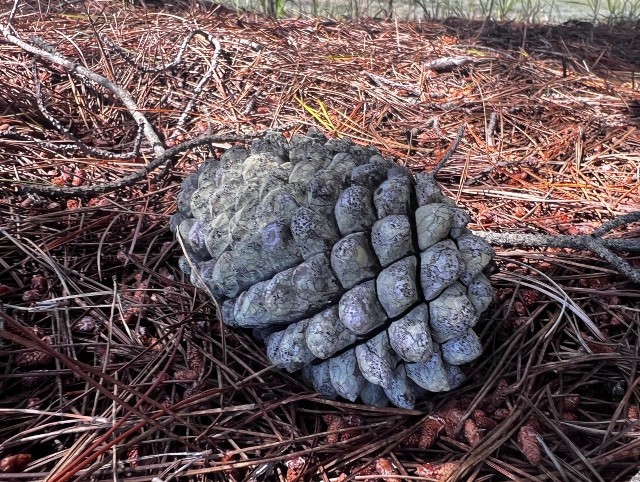
Unlike other closed-cone species whose cones open with hot weather, the Knobcone Pine must have fire for reproduction. Cones are sealed with a hard resin that requires a high temperature in excess of 350°F to open. An unburned Knobcone Pine cone will remain closed even after its host tree has decayed and fallen; it can stay viable for up to 50 years.

04 Knobcone Pine_1920

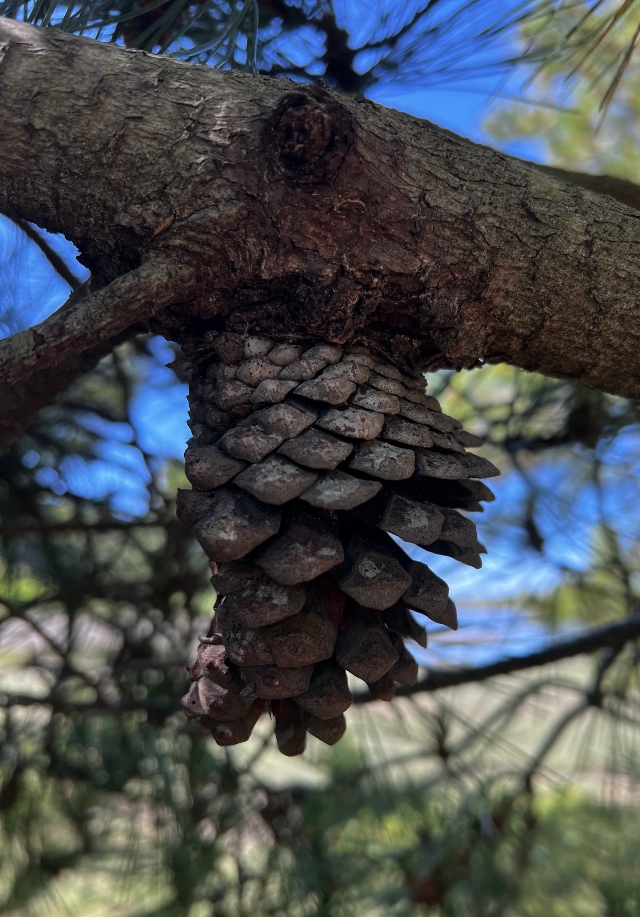
The cones are distinctive, as they grow clustered tightly around the branches in whorls rather than at the branch tips, as in other pine species. The cones are asymmetrical and since the scales are tightly shut, they appear knobby. Cones stay on the tree for years — so long, in fact, that the wood of the branches sometimes grows around them, leaving odd bulges in the branches.

05 Knobcone Pine_1922

The heavily spiked, closed cones deter most seed predators, although the Western Grey Squirrel consumes some seeds. The needles are a faded olive-green color and are borne in bundles of three.

06 Knobcone Pine_1929

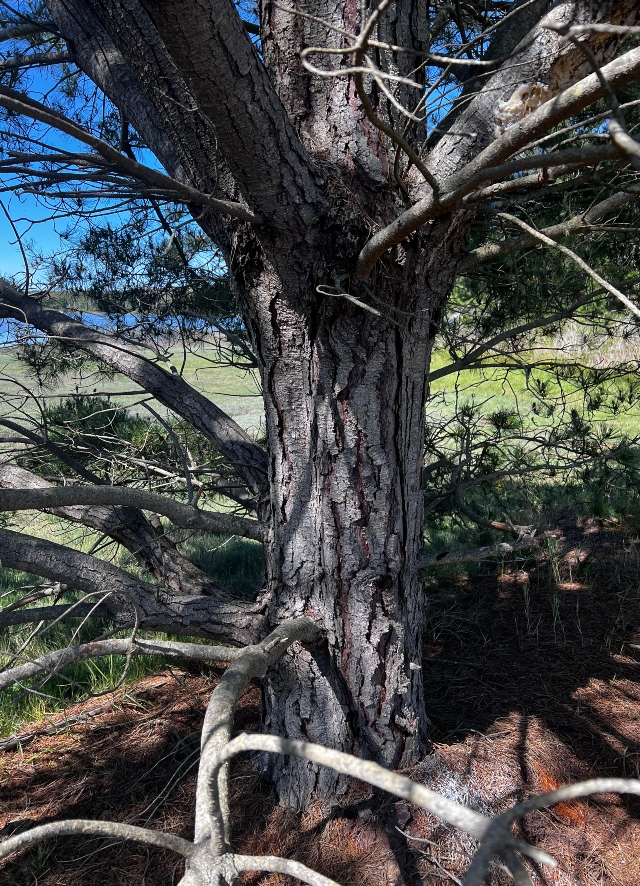
The bark is thin and smooth, flaky and gray-brown when young, becoming dark gray-red-brown and shallowly furrowed into flat scaly ridges in age. The twigs are red-brown and often resinous. Its wood is knotty and of little interest for lumber.

07 Knobcone Pine_1928

This was a neat tree to come across on my travels.

Third Eye Herp
E-mail