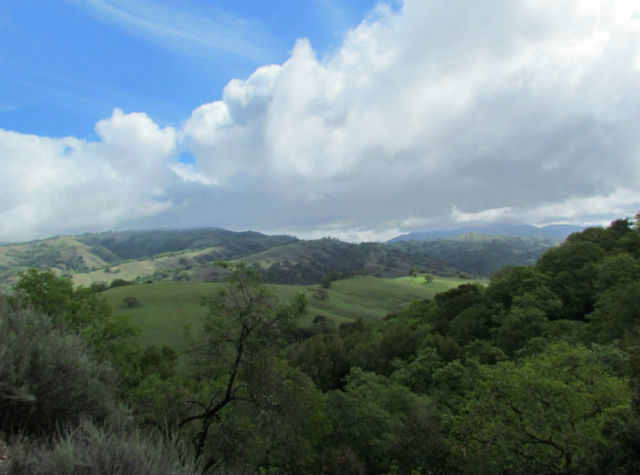
Arboreal Salamander

Arboreal Salamander_2770

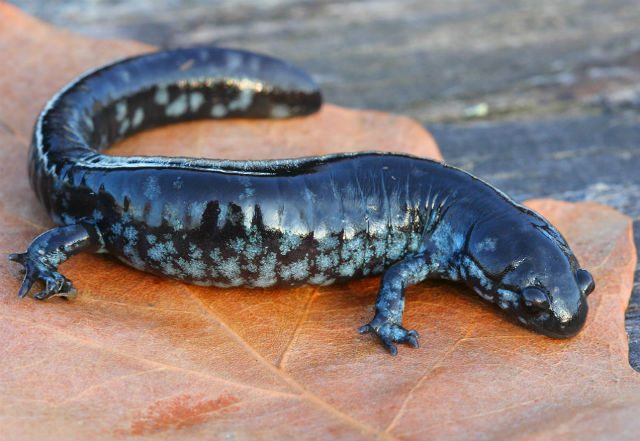
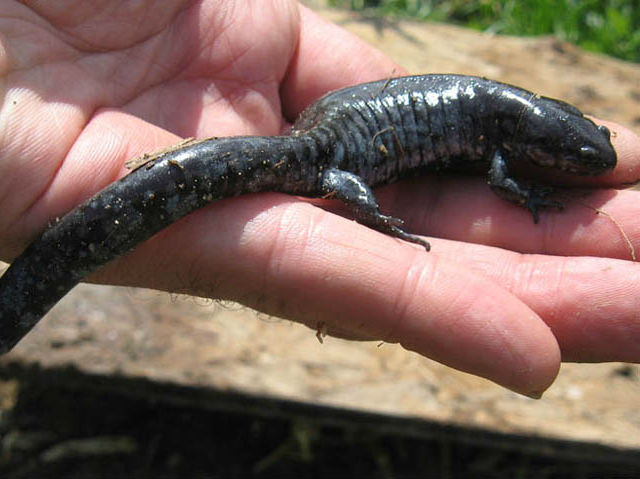
This species is found both on the ground as well as in trees. On the ground it often hides in logs and stumps or beneath bark and rocks. I enjoy coming across this amphibian when I visit California. Here’s one that I found yesterday.
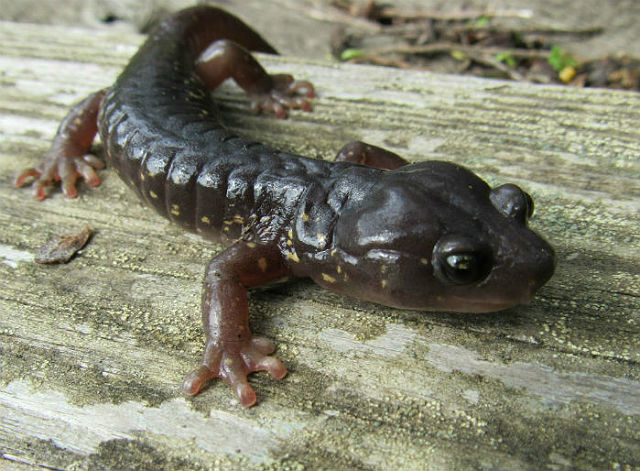
arboreal salamander_3066

It is also well known for its climbing abilities. “Back in the day” many individuals were found on the University of California Campus at Berkeley occupying cavities in trees, some at a height of 30 feet above the ground. This is a juvenile that I encountered this week (the rest of the photos in this post are from previous visits to California).
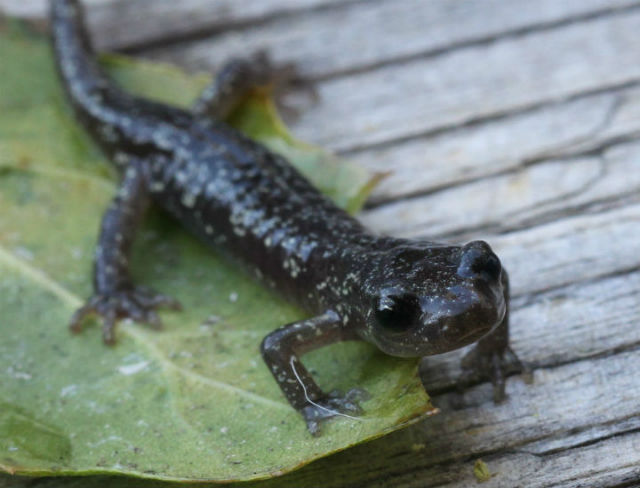
14 arboreal salamander_9156

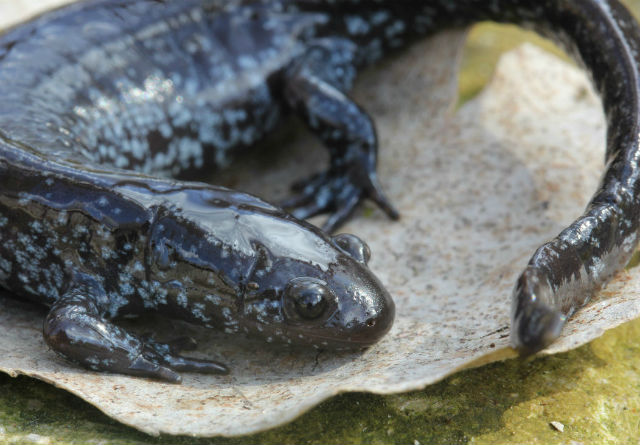
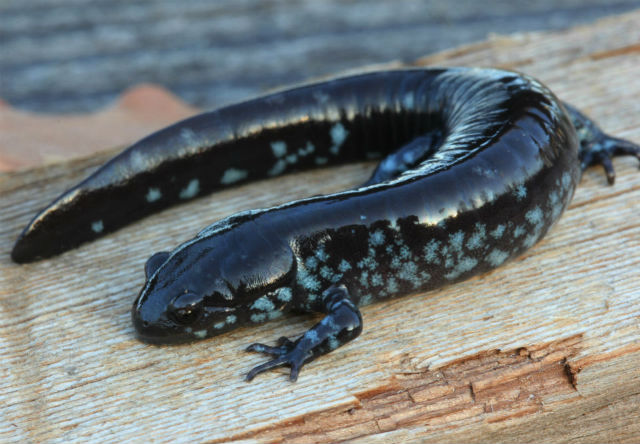
This is a fairly big salamander (the largest examples reach 7 inches, including the tail) with a large head and angular jaws. The eyes are prominent. Its stout legs undoubtably aid it in scaling trees. It is often chocolate-brown in color and sprinkled with pale yellow spots.

Arboreal Salamander 2015

This is one of the very few salamanders with vocal abilities. When handled it may bite and squeak.

Arboreal Salamander_5934

The Arboreal Salamander is mostly nocturnal and eats insects such as crickets and termites (as well as other invertebrates) found underneath leaf litter at night. These are lungless salamanders that breathe through their skin, so they are restricted to areas with plenty of moisture.
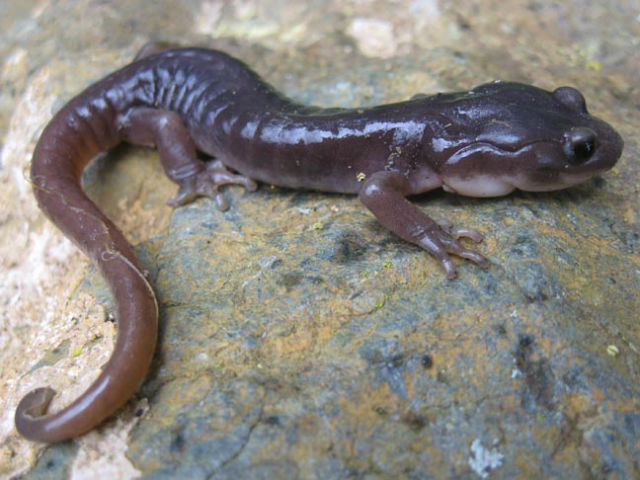
Arboreal Salamander l21

Not only do these amphibians have a interesting “look” to them, but their unique lifestyle makes them and enjoyable herp to find and observe in the wild.
Third Eye Herp
E-mail

Pacific Gopher Snake

Pacific Gopher Snake_0670

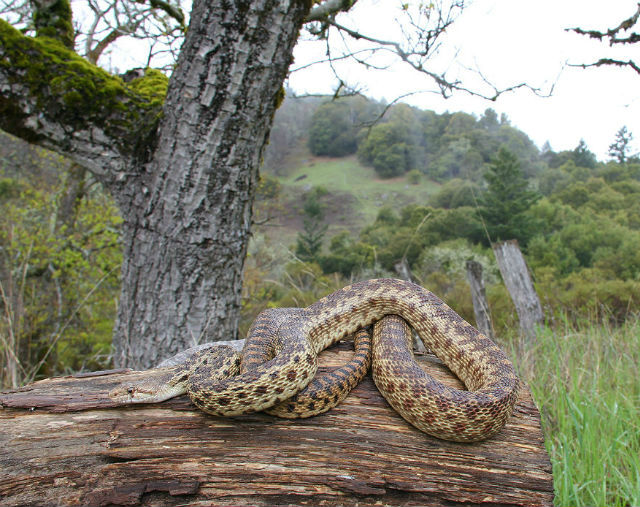
This large constrictor is native to the western coast of the United States. It is just one of the several subspecies of Gopher Snakes that we have living in the United States. I look forward to seeing more of them on my current visit to California.

Pacific Gopher Snake 2012

Although they can grow seven feet in length, most adults that I find are about half that size. I tend to find them in habitats such as meadows, fields and agricultural farmland; they are seldom found in dense forests.

Pacific Gopher Snake_9323

Pacific Gopher Snakes range from cream to light brown and have dark blotches on their backs and smaller dark spots along their sides. Young examples tend to be more boldly patterned than adults.

Pacific Gopher Snake_1689

Their keeled scales caused their skin to have a bit of a rough texture. Their pointed head and enlarged scale in the tip of the nose are adaptations for burrowing.

Pacific Gopher Snake_5176

The Pacific Gopher Snake can produce a loud hiss when agitated or fearful. This species will also inflate its body, flatten its head, and vigorously shake its tail, when threatened.

Pacific Gopher Snake 155

These snakes are primarily active during the day, though are sometimes seen moving and hunting at night – especially during warm weather. They are good climbers and burrowers.

Pacific Gopher Snake_1038

Harmless to humans, these reptiles are important to keeping the rodent population in check and maintaining their local ecosystems.

Third Eye Herp
E-mail

Mourning Dove

mourning dove_2186

This graceful, slender-tailed, small-headed dove is common across the continent. The Mourning Dove is the most widespread and abundant game bird in North America. They like to hang out on the deck rail, ground and backyard maple tree at my house.

Mourning Dove_9405

Part of the reason for its significant increase in population is that many forests have been converted to farmlands, pastures and towns – which provide ideal habitat, as this is an open-country bird.

Mourning Dove_0357

Their soft, drawn-out calls sound like laments (mourning). When taking off, their wings make a sharp whistling or whinnying sound. Mourning Doves have coloration that matches their surroundings. They are brown to tan overall, with black spots on the wings and black-bordered white tips.

Mourning Dove_8098

Seeds make up 99 percent of a Mourning Dove’s diet. It tends to feed busily on the ground, swallowing seeds and storing them in an enlargement of the esophagus called the crop. Once they’ve filled their crop, they fly to a safe perch to digest their meal.

Mourning Dove_0355

Although this is primarily a bird of open areas with scattered trees, and woodland edges, large numbers roost in woodlots during Winter.

Third Eye Herp
E-mail

False Turkey Tail Mushroom

turkeytail_8806
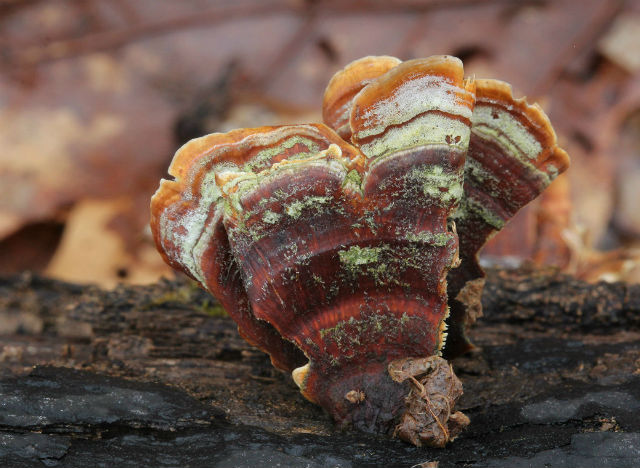
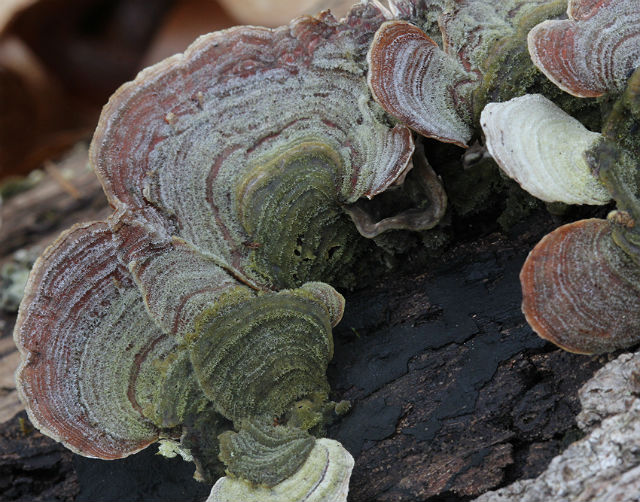
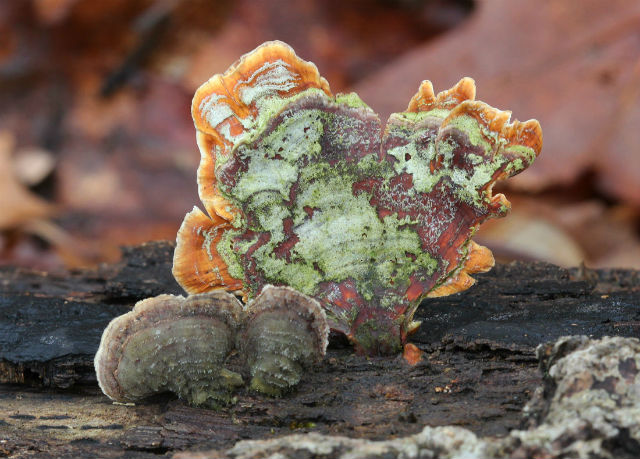
Like the “true” Turkey Tail, this has a colorful, somewhat fuzzy cap which displays patterns of brown, red, orange, buff and green.

false turkeytail_8857

The stemless fruiting body is shell-like, tough and inedible. It grows on tree bark. This fungus is native to North America, where it is widespread and grows all year round.

false turkeytail_8860

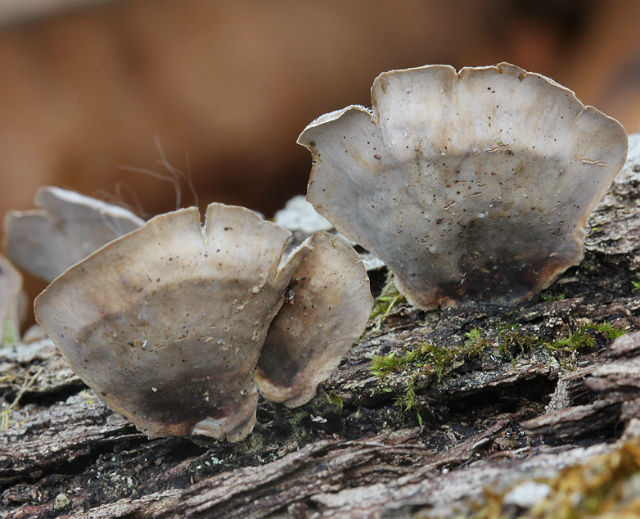
Both Turkey Tail and False Turkey Tail are highly variable in appearance and look strikingly similar. So how do you tell them apart? The answer can be found by looking at the underside of the cap. Turkey’s Tail has tiny holes for its spore tubes, while False Turkey Tail has a smooth to slightly wrinkly underside with no visible holes.

turkeytail_8804

While an imposter, False Turkey Tail Mushroom plays a crucial role in woodlands by breaking down dead wood, recycling nutrients back into the soil and creating space for new growth.

It also provides color to woodlands on Winter days.

Third Eye Herp
E-mail

Yellow-soled Slug

Yellow-soled Slug_0550

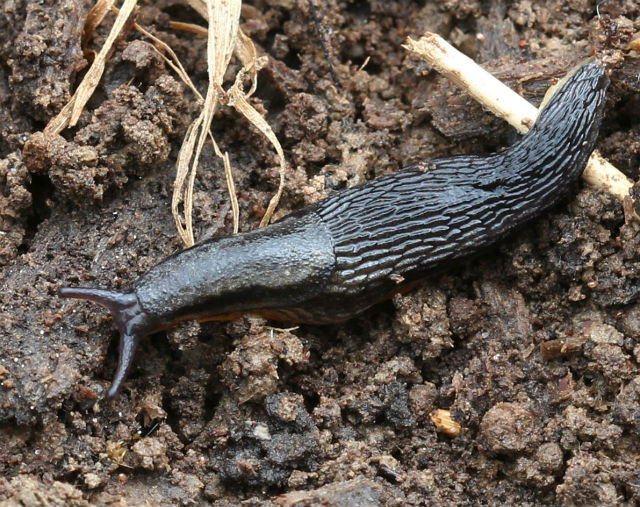
Also known by its common name the “Garden Slug,” “Small Striped Slug” or “Black Field Slug,” this species is small (about 1 inch). The “Yellow-soled” part of its name comes from its colorful foot.

Yellow-soled Slug_8794

This creature lives in gardens, fields, pastures and similar habitat and consumes agriculturally important crops; it often inhabits disturbed sites like roadsides.

Yellow-soled Slug_4679

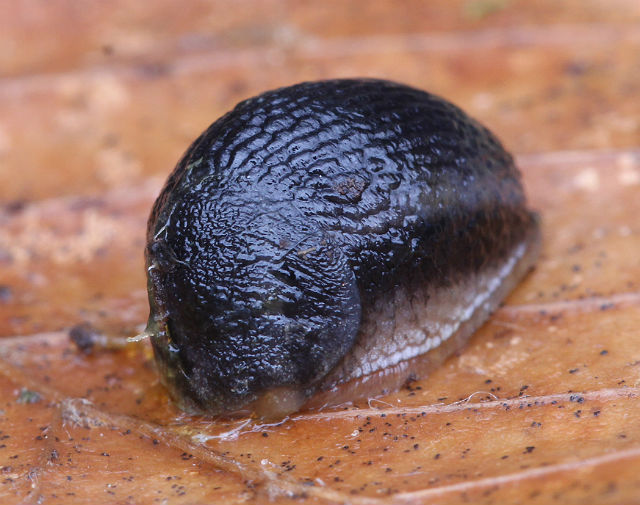
Their food is eaten by means of a rasping tongue known as a radula. Slugs are related to snails; in this species the shell is reduced to a group of calcareous granules below the mantle, which appears as a bulge on front part of the animal.

Yellow-soled Slug_8803

Yellow-soled Slugs emerge at night and spend the day in moist places beneath stones, logs and other objects. Although not a favorite of many people, I didn’t mind coming across this little creature on a warm Winter’s day.

Third Eye Herp
E-mail

Melanistic Eastern Gray Squirrel

Melanistic Eastern Gray Squirrel_1243

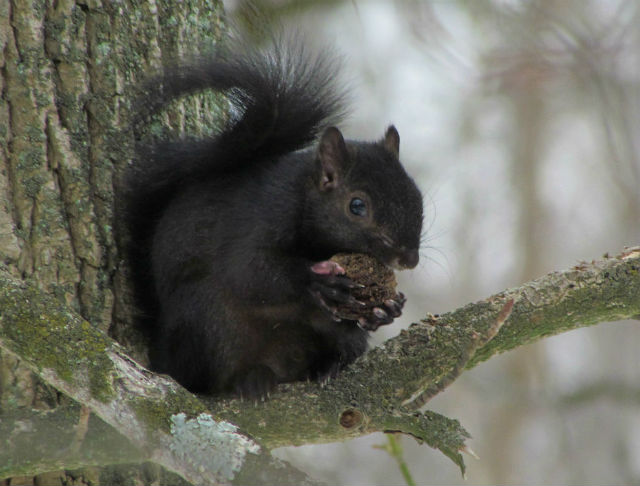
The black form of Eastern Gray Squirrel occurs as a “melanistic” subgroup. It is particularly abundant in the northern part of the mammal’s range.

Melanistic Eastern Gray Squirrel_9641

This is due to black squirrels having a considerably higher cold tolerance than that of gray colored squirrels.

Melanistic Eastern Gray Squirrel_0205

In addition, because the northern forests are more dense and therefore darker, dark colored squirrels have the benefit of better concealment in their dimly lit habitat.

Melanistic Eastern Gray Squirrel_2261

The black color is most likely the result of a mutation, which probably occurred by chance. As it turns out, the color mutation was favorable to the survival of the squirrels, became passed down through generations and spread.

Melanistic Eastern Gray Squirrel_8915

Although somewhat common in northeast Ohio, the rarity of the black squirrel has caused many people to admire them, and they enjoy great affection in some places as mascots.

Third Eye Herp
E-mail

Smallmouth Salamander

smallmouth salamander_9039

As Spring approaches here in northeast Ohio, I await the annual migration of mole salamanders and frogs as they leave their underground hibernation hideouts and head to vernal pools to lay their eggs. This week it happened.

smallmouth salamander_8720

One of the less common of these creatures around here is the Smallmouth Salamander. It is best identified by its short snout and small head. It usually grows to about five inches in total length.

smallmouth salamander_8878

The Smallmouth Salamander’s dark, earthtone ground color is occasionally accented with light flecks of blue pigment, especially along its sides and belly.

smallmouth salamander_8714

This amphibian’s habitat is forested floodplains, swampy areas and deciduous forests. It spends most of the year hidden in underground burrows or under logs, leaf litter and other debris.

smallmouth salamander 2010

Like the other mole salamanders in northeast Ohio, the Spotted Salamander and the Jefferson Salamander, the Smallmouth Salamander typically eats insects, slugs and worms.

smallmouth salamander_8870

I look forward to searching for and coming across this oddly proportioned amphibian each Spring and it was exciting to see one this week.

Third Eye Herp
E-mail

False Black Widow

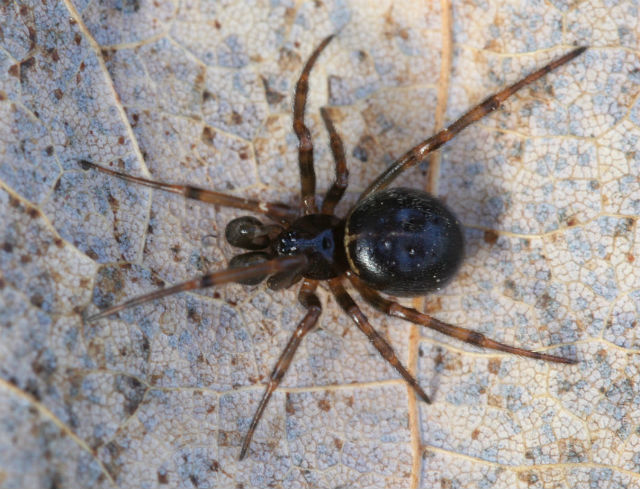
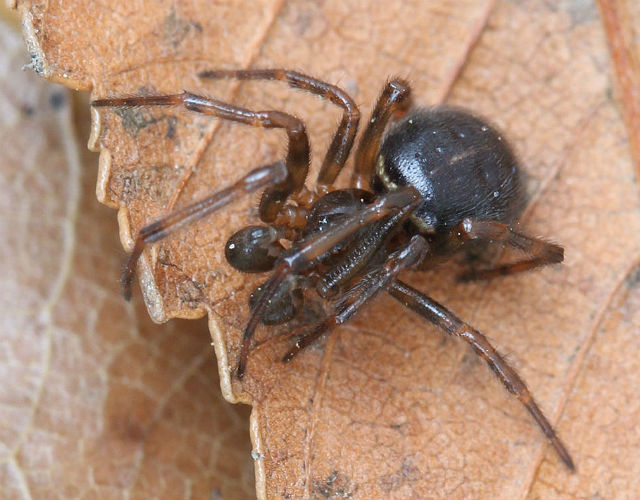
Stepping out my front door on a warm Winter day, I saw this creature. This species is in the genus Steatoda, which are commonly referred to as False Black Widow Spiders. They are closely related to the true Black Widow Spiders, but are not nearly as venomous.

false black widow_8768

Another common name for this arachnid is “Cupboard Spider,” because many species building their webs in dark, sheltered, undisturbed places around the house or garden, in sheds and garages, under garden furniture, bridges, wood piles compost bins and similar structures.

False Black Widow_8746

For a web, the False Black Widow builds a tangled, three-dimensional “cobweb” snare. The silk is not sticky, but prey easily gets tangled and begins to struggle, which sends vibrations to the spider. Using its two back legs, the spider then “throws” silk around the prey until it can no longer escape or harm its captor, at which point it delivers a venom-injecting bite and then begins to feed.

false black widow_8774

Female False Black Widows have been reported to live for up to six years (males live for a year to a year and a half), producing numerous offspring. These spiders have a total of eight eyes, arranged in two horizontal rows of four (a pattern typical of cobweb spiders in this family).

false black widow_8778

It was neat to come across this creature, a spider which I’ve never seen before, and all I had to do was take a couple of steps out my front door!

Third Eye Herp
E-mail

Mallard

mallard_1001

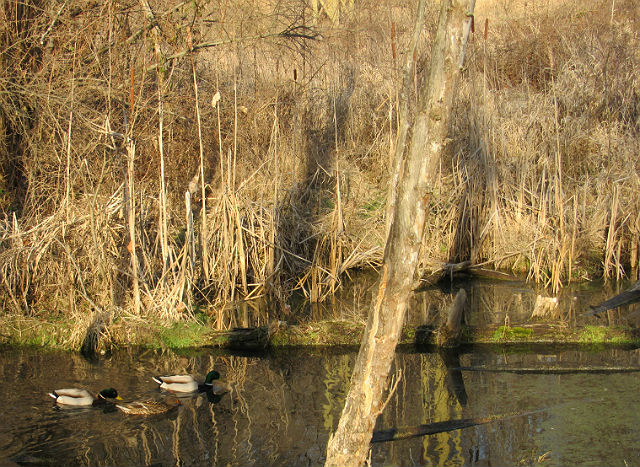
If someone is at a park is feeding bread to ducks, there’s a good chance there are Mallards in the fray. Perhaps the most familiar of all ducks, Mallards occur throughout North America and Eurasia in ponds and parks as well as “wilder” rivers, lakes and estuaries. This bird is found in both freshwater and salt water wetlands.

mallard_1006

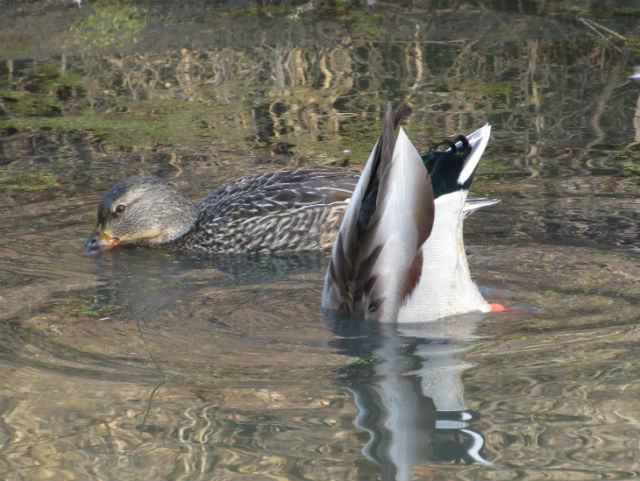
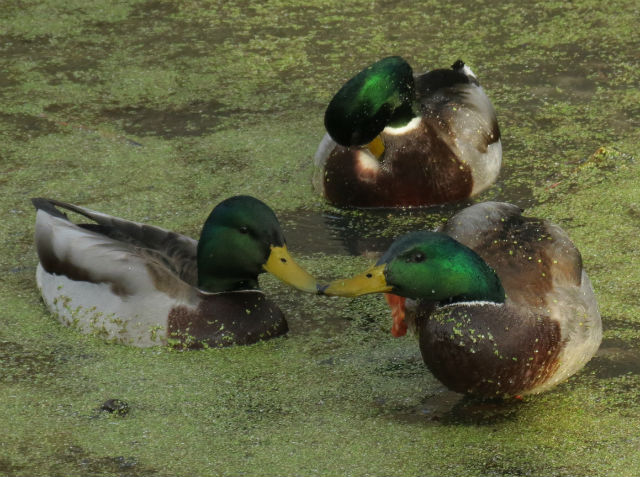
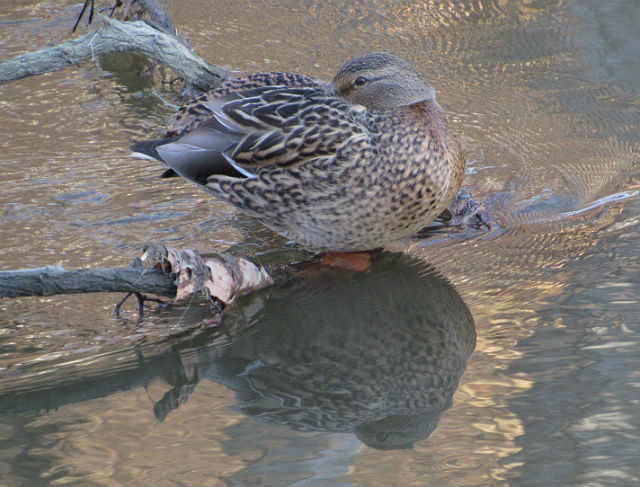
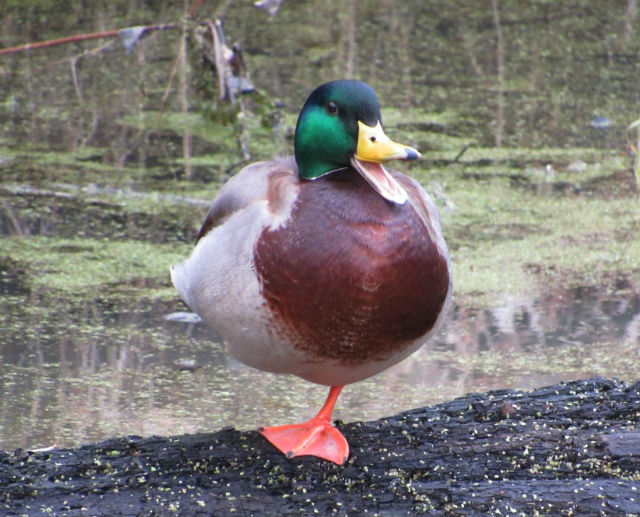
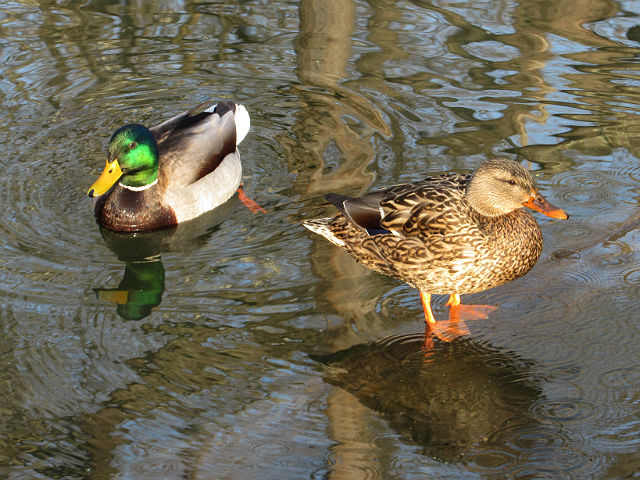
The males (drakes) have a glossy green head and are grey on their wings and belly, while the females (hens) have mostly brown-speckled plumage.

mallard_0866

Mallards eat water plants and small animals and are social animals, tending to congregate in groups or flocks of varying sizes. Mallards are “dabbling ducks” – they feed in the water by tipping forward and grazing on underwater and above-water plants. They almost never dive.

mallard_9723

These ducks can be very tame, especially those residing in city ponds. This species is the main ancestor of most breeds of domesticated ducks.

mallard_0223

Scientifically known as Anas platyrhynchos, the Mallard was one of the many bird species originally described by Carl Linnaeus in his 18th-century work Systema Naturae, and still bears its original binomial name. The scientific name is from Latin Anas, “duck” and Ancient Greek platyrhynchus , “broad-billed” ( from platus, “broad” and rhunkhos, “bill”).

mallard_0710

Common over most of the northern hemisphere, the Mallard is a well-known wild duck to many people; it is thought to be the most abundant and wide-ranging duck on Earth.

Third Eye Herp
E-mail

Bitter Oyster

Bitter Oyster 2343

Bitter Oyster is a widely distributed fungus that is also known as Luminescent Panellus, Stiptic Fungus, or Astringent Panus. It is more common in eastern North America than in the west. It frequently grows in groups, residing in dense forests. It is often found on logs, stumps and trunks of deciduous trees such as Birch, Oak and Beech.

Bitter Oyster 036

This little mushroom has reportedly been used as a styptic (blood thickening) agent. It is a relatively common species that is prevalent Spring through Fall (it can also be found in Winter in warm climates, or during Winter warm spells in temperate areas).

Bitter Oyster 009

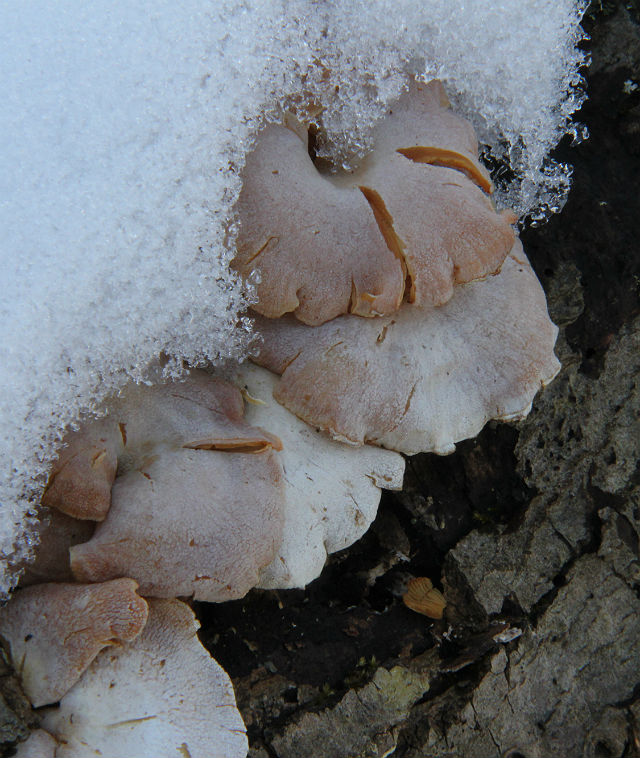
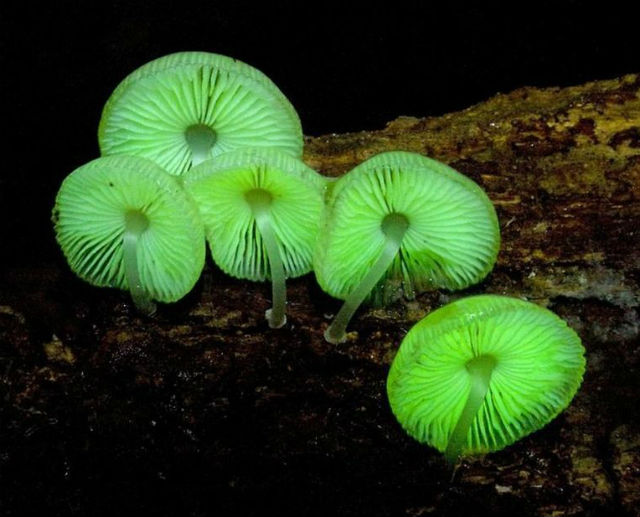
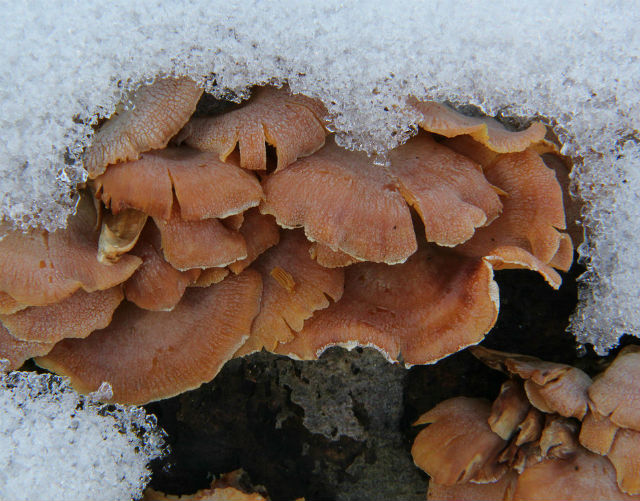
Bitter Oyster is an unassuming fungus by day. It forms waves of soft beige shelves and blends in with its surroundings. The edges of the mushroom cap have small rounded teeth that are curved inward. But at night things change; its gills, under their own power, glow – a characteristic known as bioluminescence.

Bitter Oyster 037

The luminescent glow of this and other fungi inspired the term “foxfire,” coined by early settlers in eastern and southern North America. Although generally very dim, in some cases foxfire is bright enough to read by. Bitter Oyster is a pretty cool organism that often goes unnoticed in today’s world.
Third Eye Herp
E-mail