Sacred Datura

Sacred Datura 754

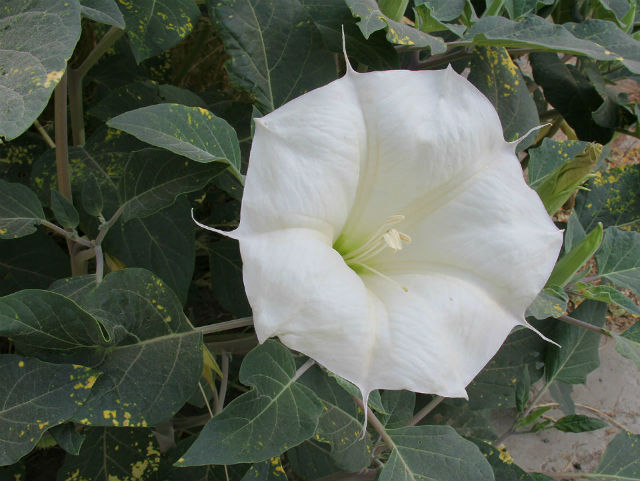
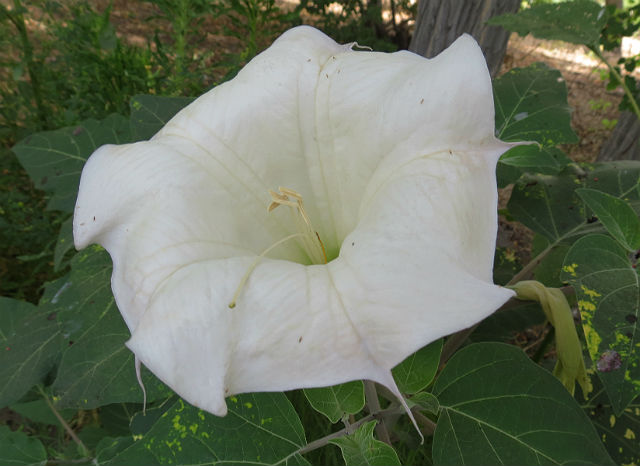
It’s hard to miss the gigantic white flowers on this plant which look like a Morning Glory on steroids. It is a member of the tomato, potato and eggplant family. This plant has several other common names, including Jimson weed, thorn apple, Indian apple, moon lily, moon flower and angel’s trumpet.
Sacred Datura_4668

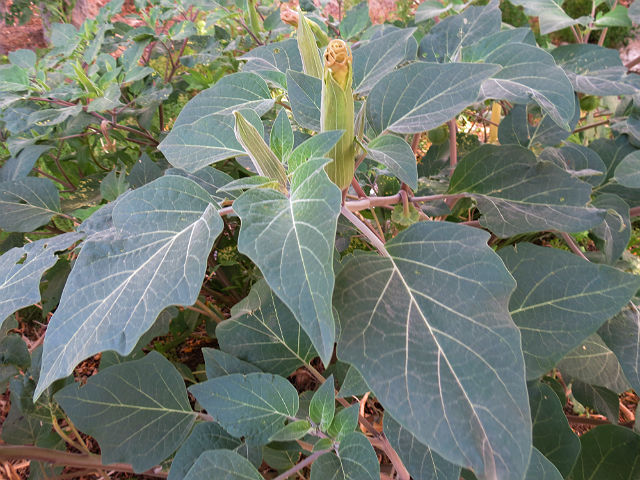
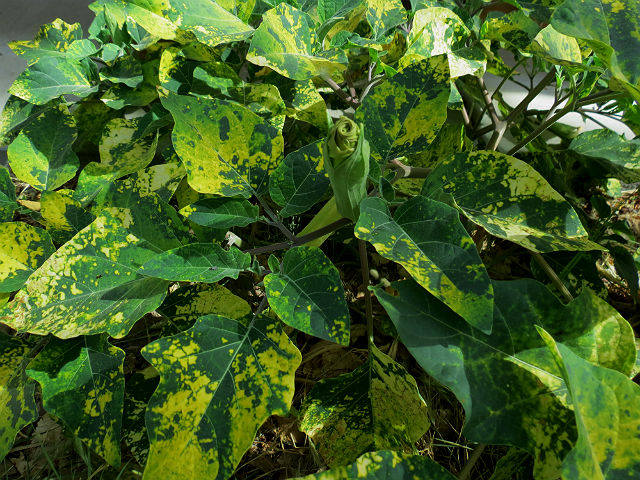
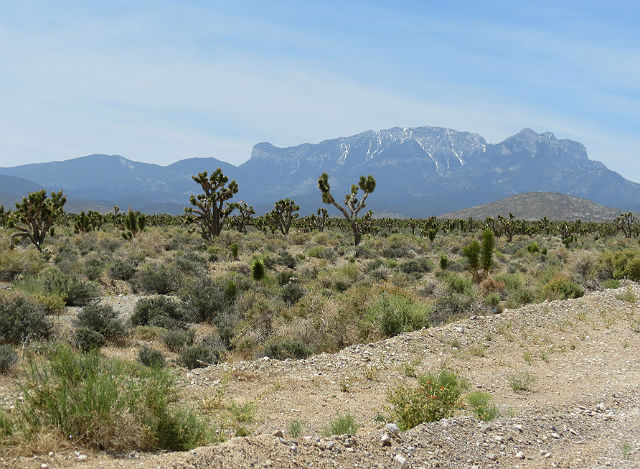
Sacred Datura mostly grows in sandy washes. Its dark grayish-green, heart-shaped leaves form mounds from which sprout striking, 6-inch-long, bright white flowers which ripen to become sharp-prickly seed-pods.
Sacred Datura_4675

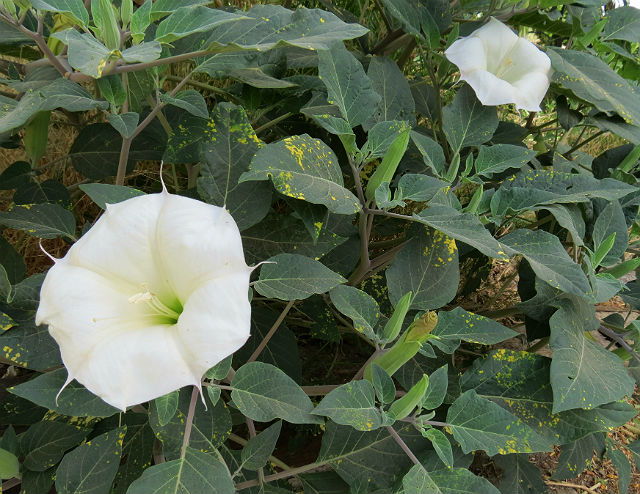
Each large, trumpet-shaped, blossom blooms for only one night and must therefore work fast to attract its pollinators. The flower opens at twilight and releases a strong lemon-like scent. Hawk Moths are its major nocturnal pollinators, but various other insects also arrive the following morning to enjoy the pollen at the heart of the flower.
Sacred Datura_4689

All parts of this strikingly massive plant are toxic.  It contains numerous poisonous alkaloids and their narcotic and hallucinogenic properties have made it part of sacred rituals and experimentations – both of which have resulted in many deaths.
Sacred Datura_4671

So it’s best to look, but not eat this very interesting part of the southwestern landscape.
Third Eye Herp
E-mail

Side-blotched Lizard

side-blotched lizard_4720

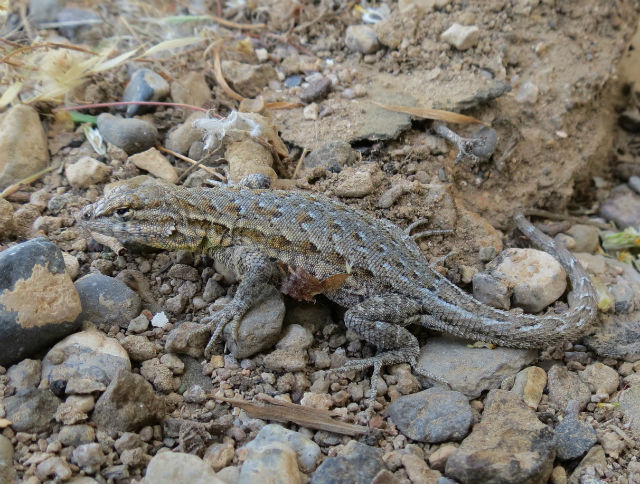
These are the most abundant and commonly observed lizards in the Las Vegas-area desert. They commonly grow to six inches long; their relatively small size enables them to warm up quickly and be active at cooler temperatures than most other desert reptiles.

side-blotched lizard_4740

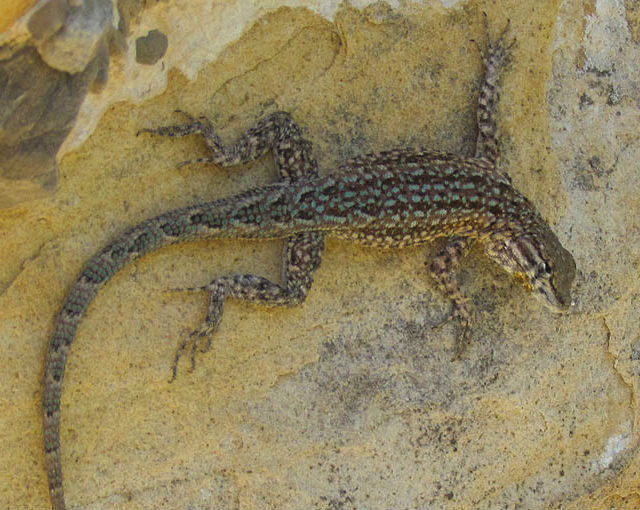
Males often have bright throat colors and can be quite beautiful. They are also amusing to watch, as they exhibit an array of behaviors, like doing “push ups” or walking around just using their front feet while their back end drags behind them.

side-blotched lizard_4729

Because of their small size and widespread distribution, Side-blotched Lizards are prey items for many desert species. Snakes, larger lizards and birds all have them on the menu. In turn, these reptiles eat arthropods, such as insects, spiders, and occasionally scorpions.

sideblotch042

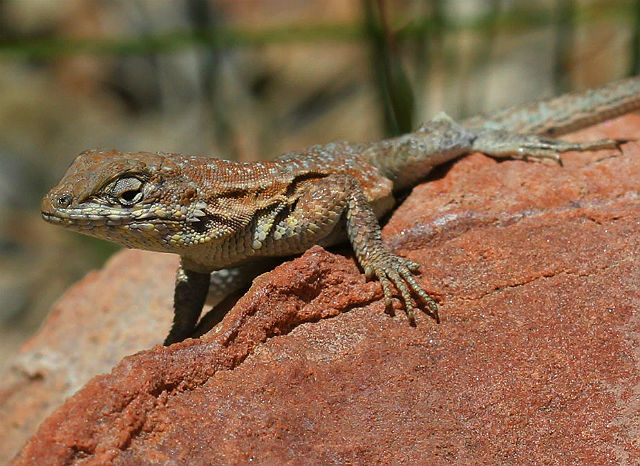
Side-blotched Lizards can be found in a wide variety of arid and semi-arid habitats with scattered shrubs growing in soil may be sandy, gravelly or rocky. The species is often found in sandy washes with scattered rocks and bushes.

side-blotched lizard_4799

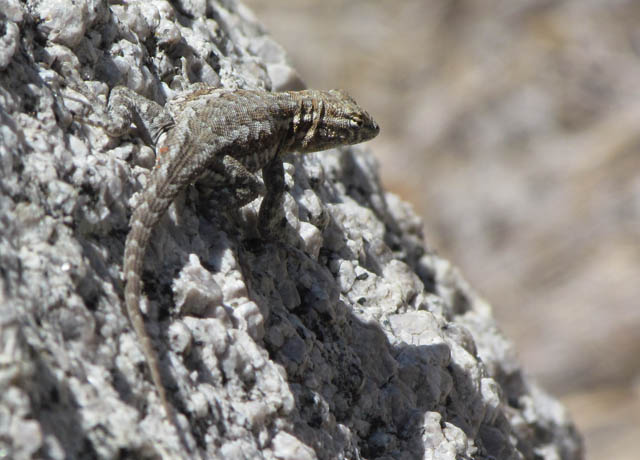
It is a day-active reptile and is usually the first lizard species out in the morning. It is active mostly on the ground, but it is also a good climber. I often see Side-blotched Lizards basking on rocks or hopping from boulder to boulder.

Third Eye Herp
E-mail

Tree Swallow

swallow_3152

The Tree Swallow is the first of the swallows to arrive in Spring. Although they are mainly insect eaters, they can survive on berries and seeds when there is snow on the ground.

swallow_5122

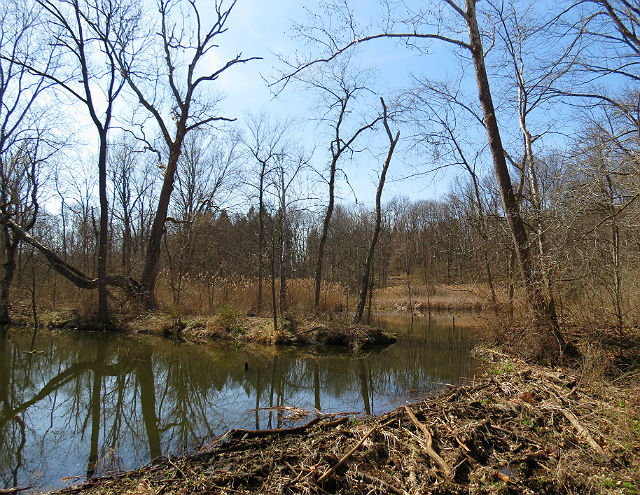
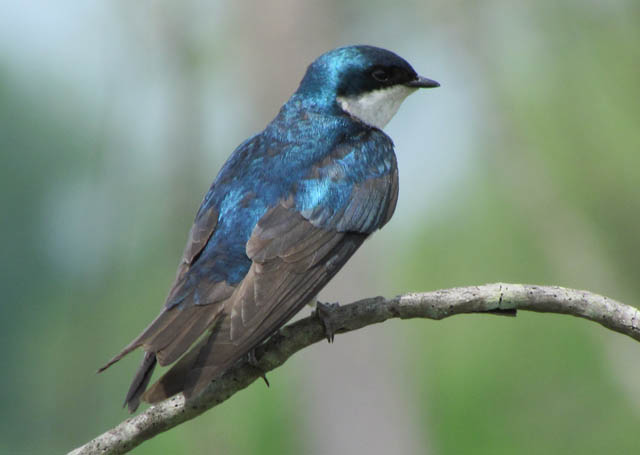
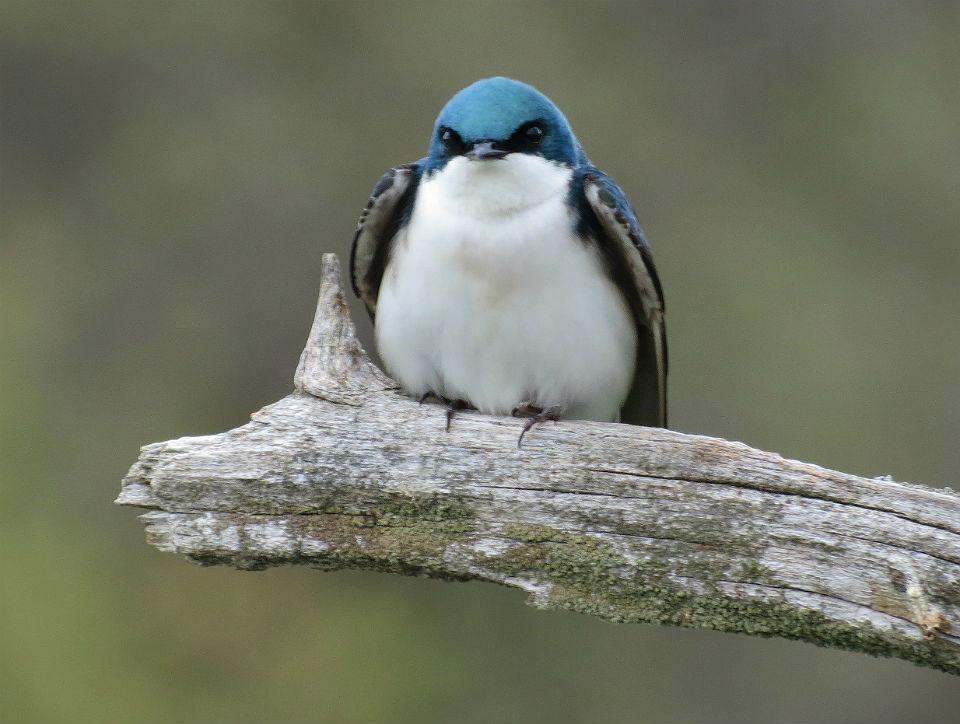
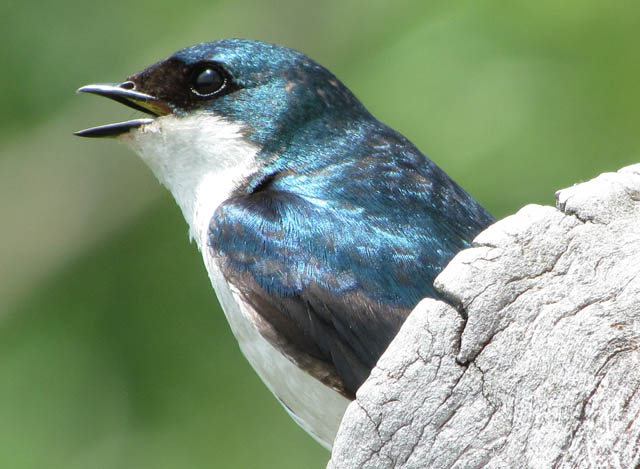
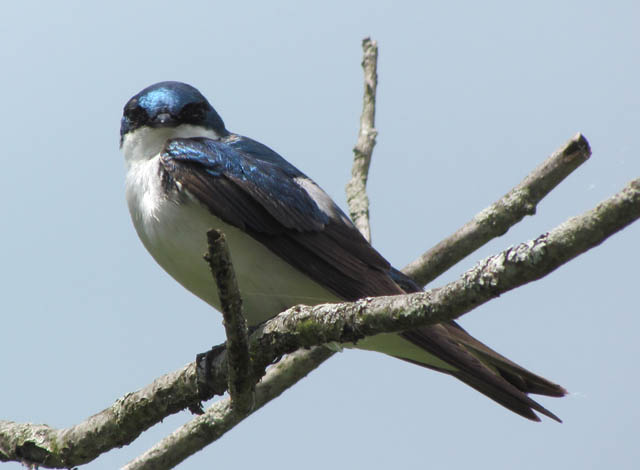
These birds are handsome aerialists with deep-blue iridescent backs and clean white fronts. They tend to reside near water and lately I’ve been seeing quite a few of them at Beaver Marsh on the Ohio & Erie Canal Towpath.

swallow_5120

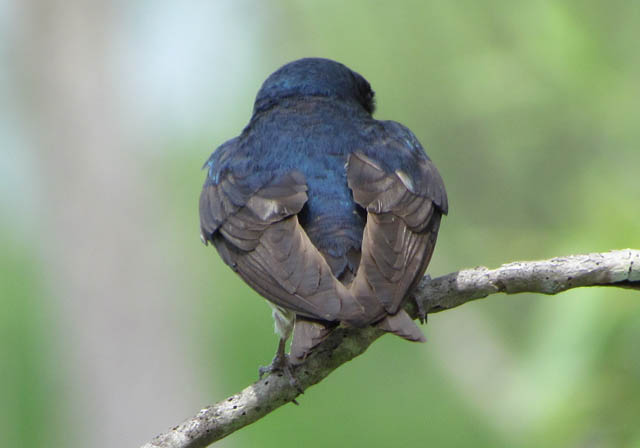
Tree Swallows are streamlined songbirds with long, pointed wings and a short, slightly notched tail. Their bills are very short and flat. They chase after flying insects with acrobatic twists and turns, their steely blue-green feathers flashing in the sunlight.

swallow_4095

Tree Swallows nest at this time of the year and you can see them entering and leaving their nests as they tend to their young. They nest near water in tree cavities and old woodpecker holes. The female builds a nest lined with grasses and feathers.

swallow_5172

These birds are highly social and may form flocks of several thousand birds at nighttime roosts outside of the breeding season.

swallow_5374

As their name suggests, Tree Swallows spend little time on the ground, preferring instead to perch. They spend much of their time in flight and tend to glide more than any other species of swallow. This is a great time of year to observe their airborne acrobatics.

Third Eye Herp
E-mail

Least Weasel

forest_09_21 016

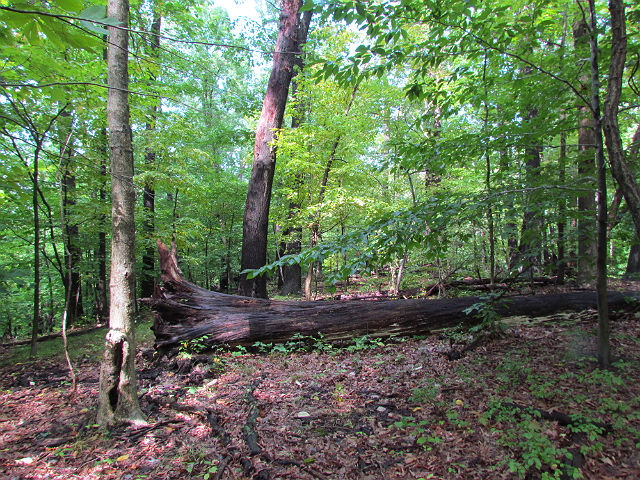
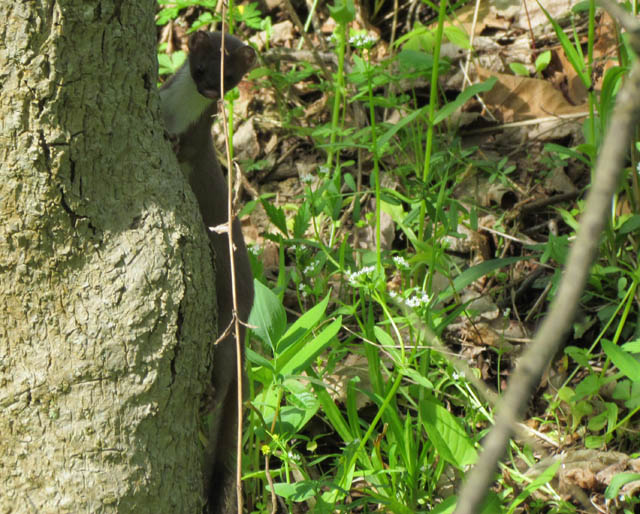
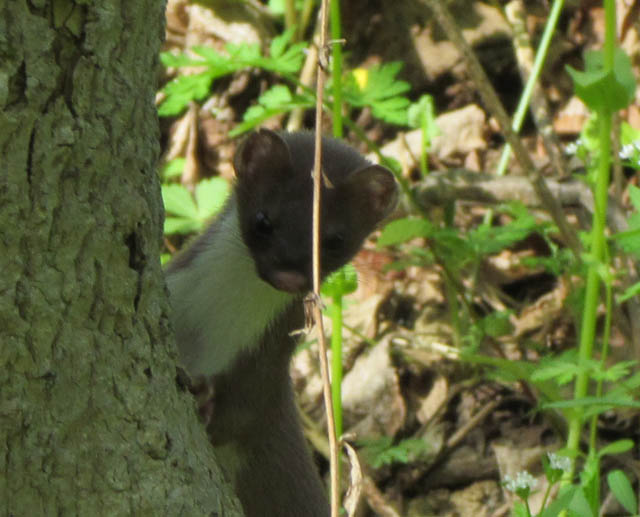
Walking along a trail, I heard a noise in the underbrush, so I decided to check it out. I ended up seeing my first wild weasel. The Least Weasel is the smallest living carnivore, growing to 10 inches.

weasel_3942

It has a long, slender body, short legs and a broad, slightly flattened head. Weasels bound or lope with their back arched. They swim well and climb trees easily. Least Weasels specialize in taking small prey such as mice and voles. They do most of their hunting in tunnels made by these rodents.

weasel_3941

In the Summer this mammal has a brown coat, but in areas where it snows the Least Weasel gets a white Winter coat. They are adaptable and do well in a wide variety of habitats, including open forests, farmlands, meadows and prairies.

weaselclose_3942

It was an unexpected surprise to come across this very cool creature.

Third Eye Herp
E-mail

Eastern Worm Snake

worm snake_04_28 Powershot 360

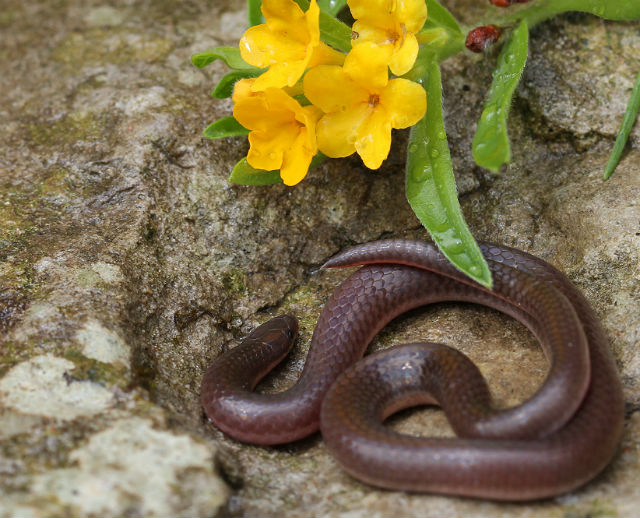
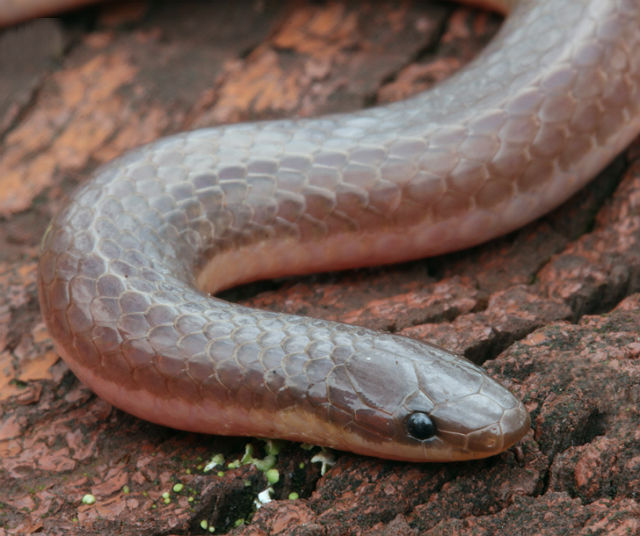
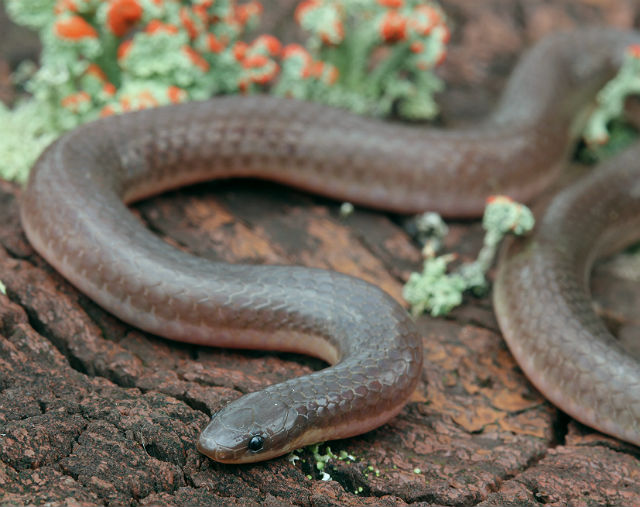
Worm Snakes are small snakes, only growing to about a foot long. Their color can vary from pinkish-brown to dark-brown. They somewhat resemble earthworms and spend most of their time underground, which is how they get their name. They are seldom seen.

worm snake 078

These reptiles are found where there is damp soil, especially in forests. They seem to prefer soils with abundant leaf litter. These snakes also live in meadows and along lakeshores.

worm snake 114

Their tail has a sharp tip. Although harmless to humans, this species will often press its pointed tail tip against its captor. Scientists think the pointy tail tip aids the snake in digging.

worm snake 076

Worm Snakes eat more earthworms than anything else. Other foods include slugs, snails, small salamanders and soft-bodied insect larvae like grubs and caterpillars.

worm snake 123

The scales of this reptile are smooth, iridescent and feel like satin. They have a pointed, flattened head and very tiny black eyes.

worm snake 117

These fascinating snakes are not native to northern Ohio (where I live) so this one was a pleasant find on my recent trip to Kentucky.

Third Eye Herp
E-mail

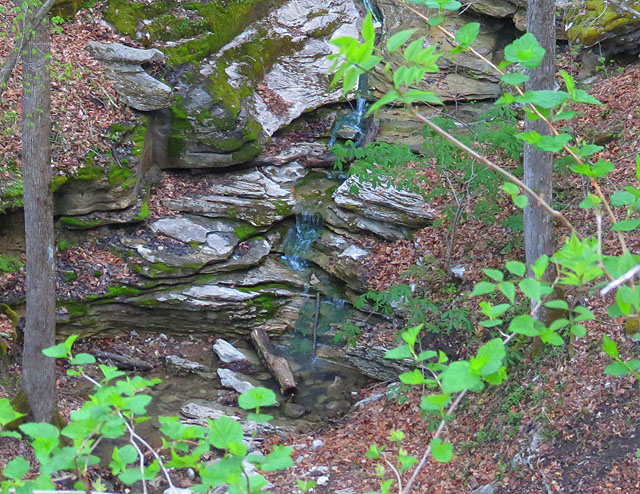
Spring Salamander

spring salamander_04_28 Powershot 366

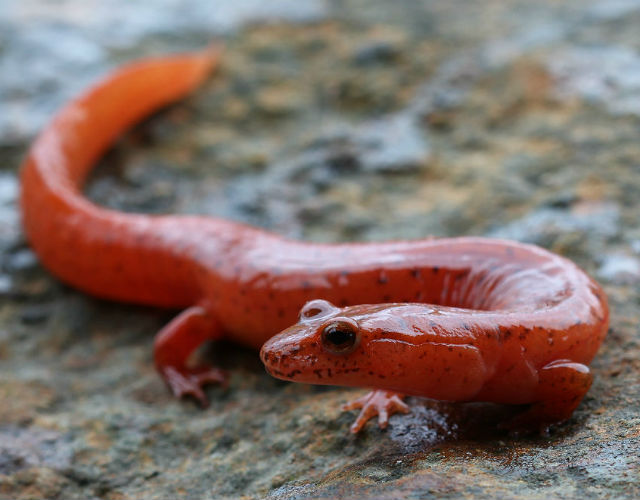
This amphibian is found in Canada and the United States. Spring Salamanders are semi-aquatic, spending a majority of their time in springs, wet caves, and cool, clear mountain brooks. Spring Salamanders can also be found under stones and logs near stream edges.

spring salamander 182

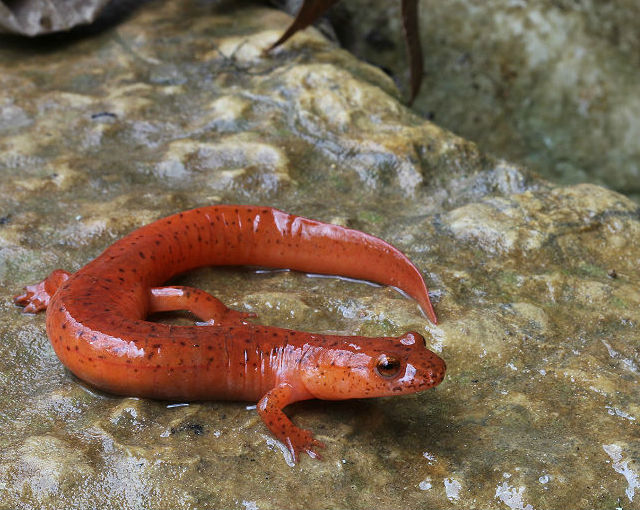
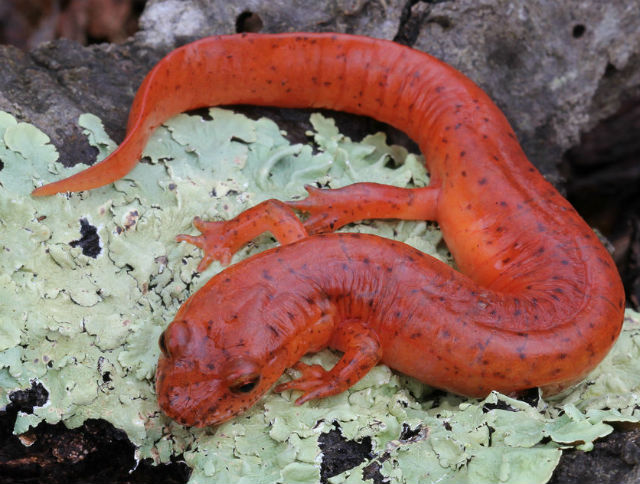
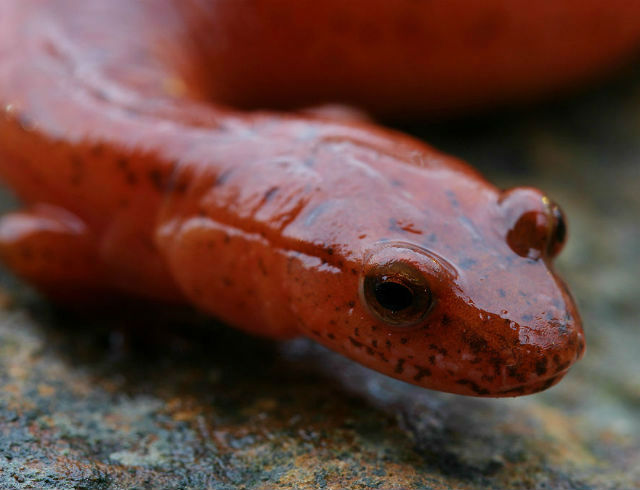
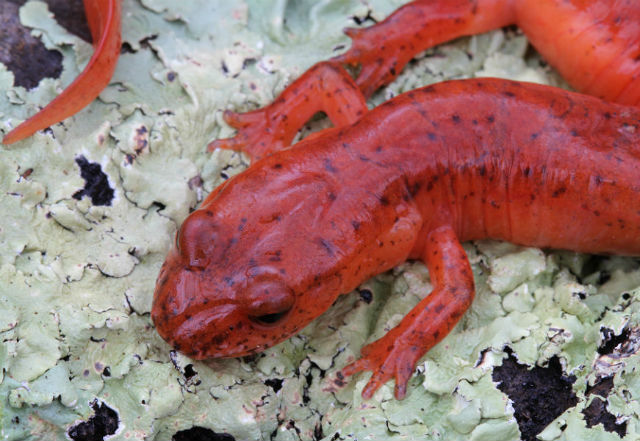
This is one of the largest species of lungless salamanders and can reach about 8 inches in total length. It is usually salmon-pink to brown-pink with a few small, dark spots on the back and sides, usually forming a row along the sides.

spring salamander 177

Because they are lungless, and obtains oxygen through its skin, the Spring Salamander is limited to areas where there is adequate oxygen and moisture. Though is not confined to the water, however, and will sometimes leave its aquatic habitat and venture out on land in search of food.

spring salamander 036

As an adult, the Spring Salamander’s tail has a prominent, knife-like keel on the top that enables it to swim in swift-moving water. Adults also have toxic, skin secretions and red coloration that mimics more toxic species, for protection from predators.

spring salamander 035

It is primarily nocturnal. The Spring Salamander hunts at night for a wide variety of food consisting of insects, crustaceans, centipedes, millipedes, earthworms, snails, spiders, and occasionally small frogs and salamanders.

spring salamander 170

It was pretty cool to see several of these amphibians in the wild during my recent trip to Kentucky.

Third Eye Herp
E-mail

Yellow Trout Lily

trout lily 025

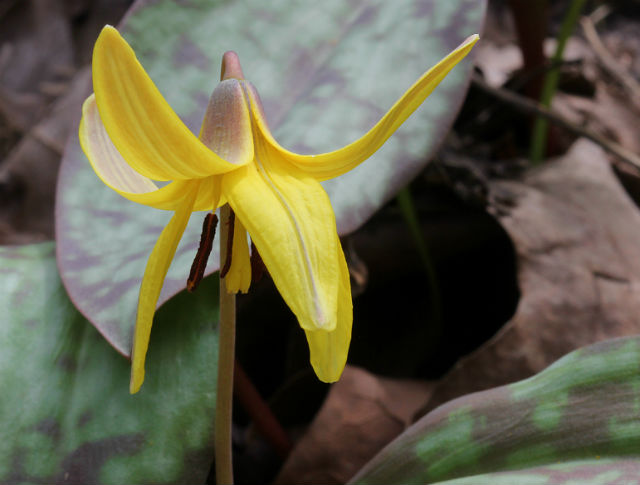
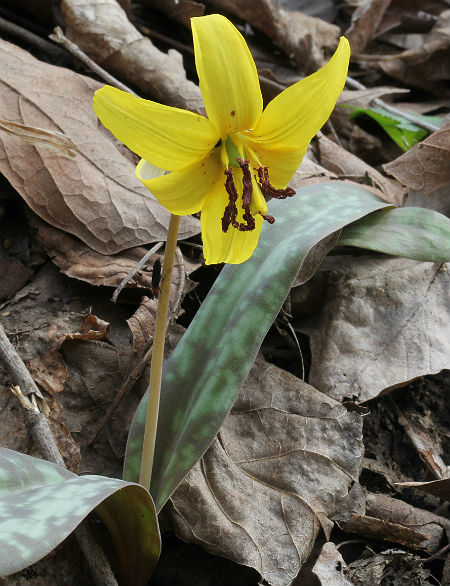
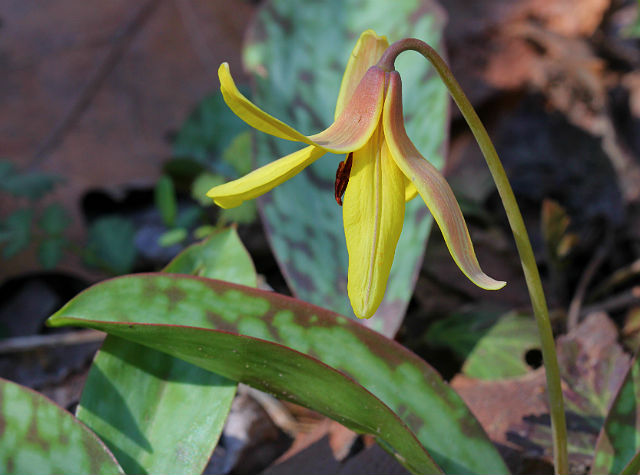
A pair of brownish-mottled leaves (which resembles the colors of a Brook Trout) at the base of a stalk which bears a solitary, nodding flower, yellow on the inside and bronze on the outside, are the components of many, many Yellow Trout Lilies which carpets the forest floor at this time of year.

trout lily 039

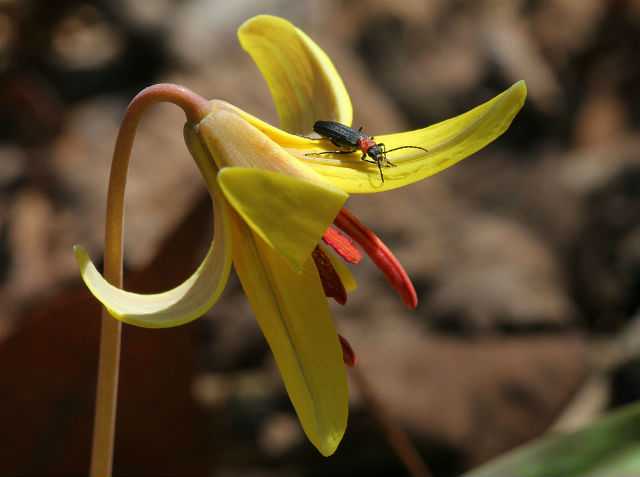
Yellow Trout Lily is pollinated by ants and after a seed is planted, it may take up to seven years before the plant becomes mature enough to flower.

trout lily 038

It is a small plant, reaching only about six inches tall. Other common names for this plant are Adder’s Tongue, Fawn Lily and Dog-tooth Violet.

trout lily 046

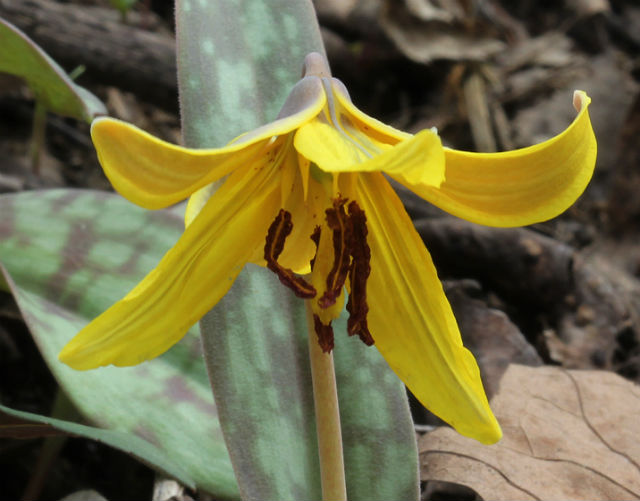
The common name of Adder’s Tongue is in reference the appearance of the emerging stamens of the flower, which protrude like the tongue of a snake.

trout lily 036

Fawn Lily is a name given in regards to the plant’s two spotted leaves that to some look similar to the alert, upright ears of a fawn.

trout lily 060

The common name of Dog-tooth Violet is in reference to the flower’s underground elongated bulb shape. It is unfortunately misleading, because this plant is not a member of the violet family.

trout lily 053

The Yellow Trout Lily root (known as a corm) is an edible vegetable.  According to the International Health Exhibition held in London in 1884, the roots were ground into a material for making confectionary. The leaves are also edible and can be eaten raw and put into salads.
trout lily 048

The diverse array of common names for this plant are evidence of this plant’s widespread distribution throughout much of the eastern United States and of its distinctive appearance and characteristics.

Third Eye Herp
E-mail

Margined Carrion Beetle

Margined Carrion Beetle 3056

In nature, not everything is as pleasing to the eye as a butterfly, nor does everything smell as sweet as wildflowers. There are aspects of natural history, although unpleasant to our human senses, that are critically important in the balance of nature.

Margined Carrion Beetle 3062

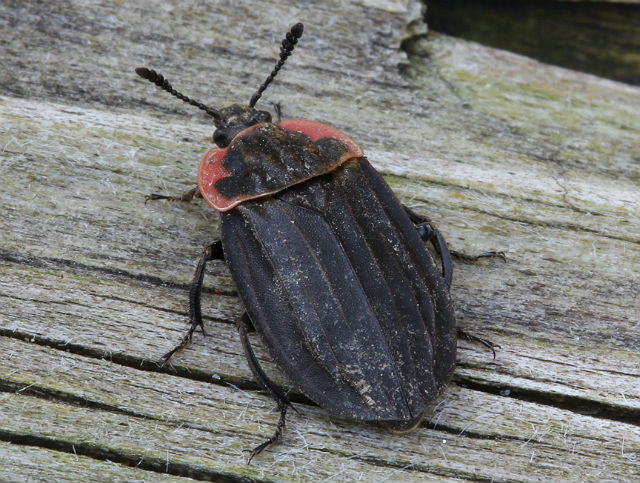
The Margined Carrion Beetle is an interesting and helpful insect. It gets its name from the fact that it eats and lays its eggs in carrion (dead animals).

Margined Carrion Beetle 027

Using its sense of smell, the insect can find a dead animal within hours of death at a distance of up to a mile and a half. It will then mate and lay its eggs on the carrion. Here’s what the larva look like after hatching from an egg, but before becoming an adult beetle.

Margined Carrion Beetle 008

Carrion beetles and other decomposers are important because they get rid of dead matter by eating it and breaking it down into smaller pieces that can be placed back into the ecosystem and used by other organisms.

Margined Carrion Beetle 033

They are also frequently associated with crime scene investigations, because they are used to substantiate and support timelines and help estimate the time of death of victims.

Third Eye Herp
E-mail

Jefferson Salamander

jefferson salamander_1352

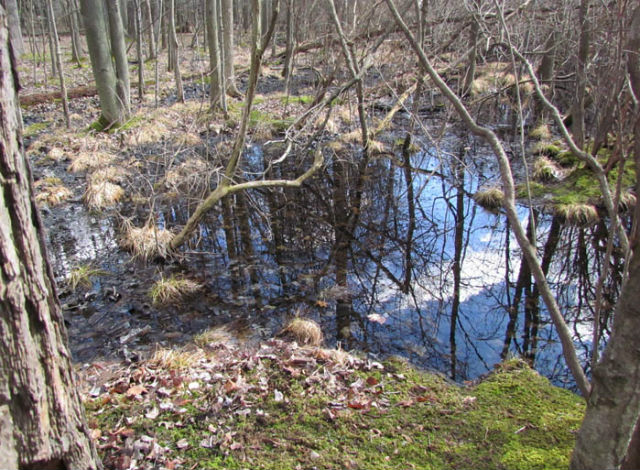
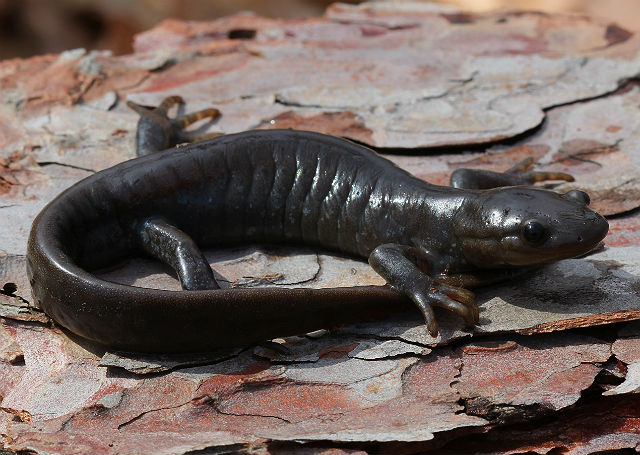
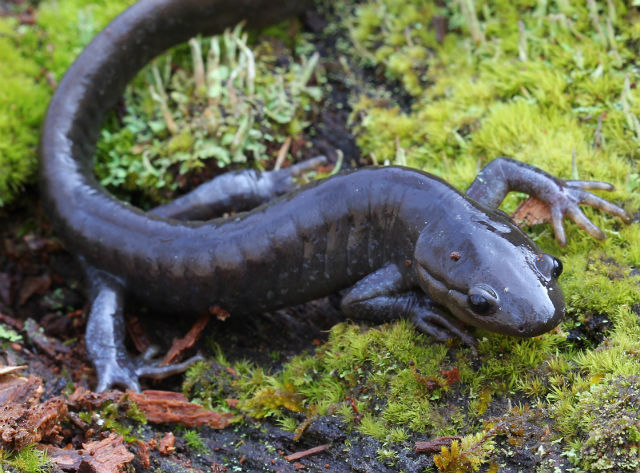
The Jefferson Salamander belongs to a group of amphibians known as mole salamanders, named because they spend most of their life underground. The only time you are likely to see them is now, when they are migrating to temporary pools in the woods to mate and lay eggs.

jefferson salamander 009

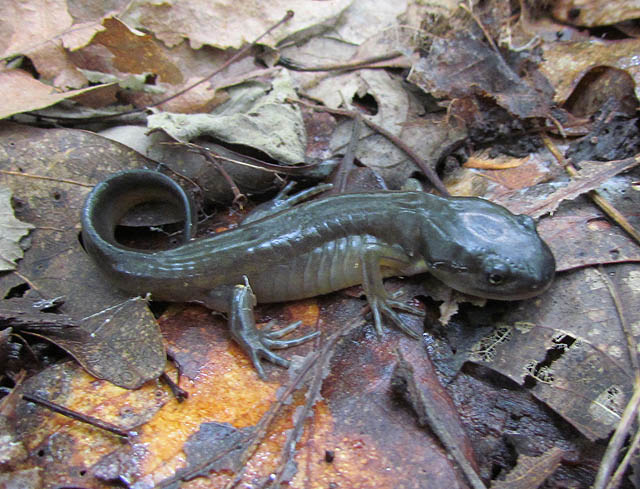
Egg masses contain 20-30 eggs are attached to fallen tree branches underwater. The time it takes for the eggs to hatch depends on water temperature and ranges from 2-8 weeks. The aquatic larvae complete metamorphosis in 2-3 months and like frog tadpoles, they go from an aquatic existence to a life lived on land. Here’s a newly metamorphosed individual that I found in July of last year.

jefferson_0446

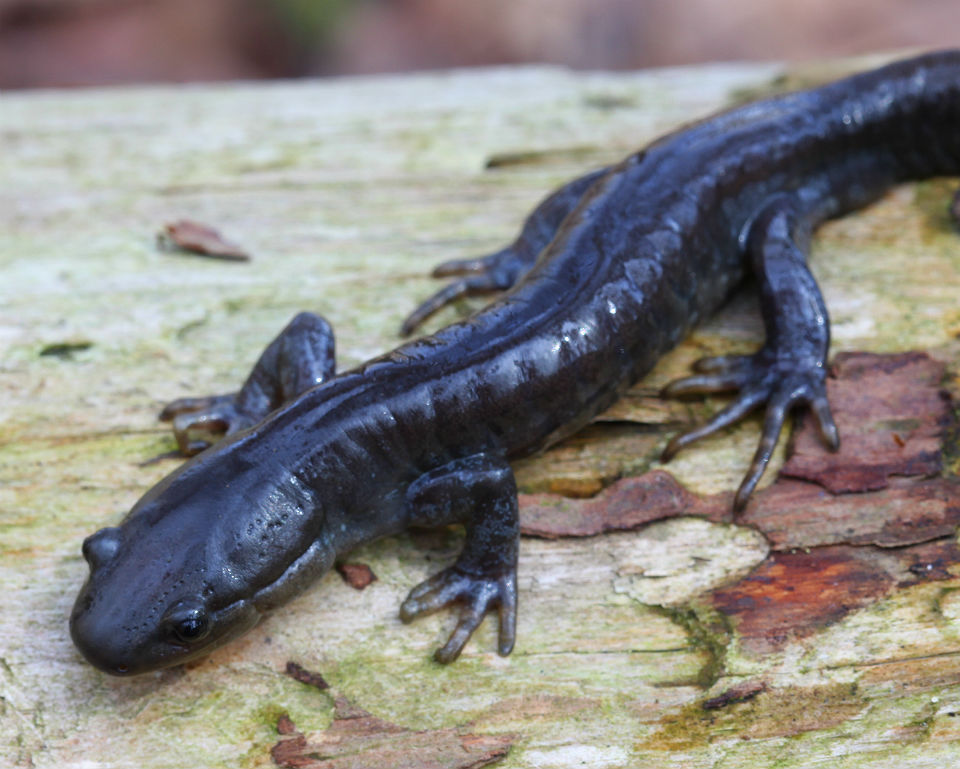
This amphibian is usually dark gray and often has silver or blue specks on its sides. The secretive adults hide under stones or logs, in leaf litter and in burrows in hardwood forests with damp conditions. Around here they share their habitat with Spotted Salamanders, though they are much less common. They tend to be more slender than spotteds, but are about the same overall length (about 7 inches).

jefferson salamander 028

The Jefferson Salamander feeds on insects, spiders, earthworms, slugs, pillbugs and other invertebrates. Because the adult salamanders spend most of the time outside of the breeding season hidden, their exact feeding habits are not known. Ecologically, salamanders play important roles in the organization of many terrestrial and aquatic communities. They are increasingly being used as indicators of environmental heath.

jefferson salamander 025

But they have an additional value to humans in the form of medical research subjects. Salamanders have extraordinary ability to regenerate toes, feet and entire limbs – they are the only vertebrate that can do this. Understanding the basis for their limb and tissue regeneration could have significant implications for the field of medicine.

jefferson salamander 023

The Jefferson Salamander is yet another of nature’s mysteries, cloaked in dark coloration and living an underground lifestyle that we know almost nothing about. I’m lucky if a see one or two of these fine salamanders each year, and I was glad to come across one this week.

Third Eye Herp
E-mail

Cinnamon Teal

Cinnamon Teal 005

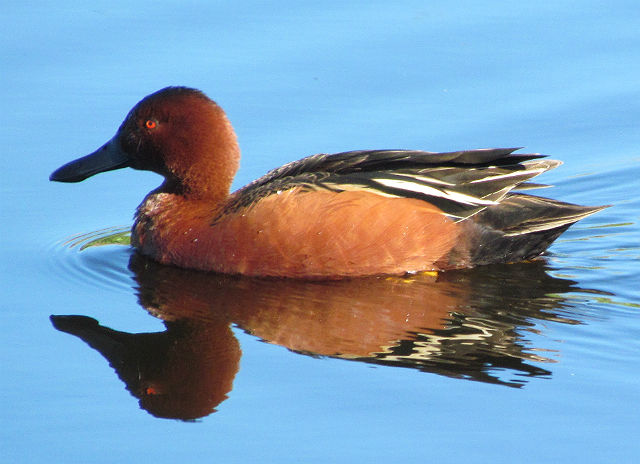
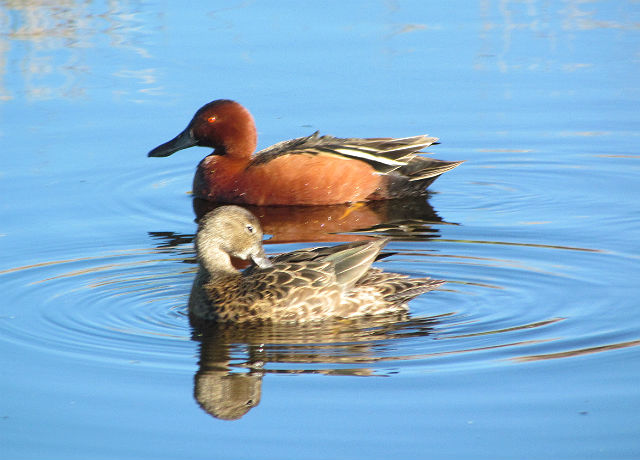
This small brightly colored duck caught my eye when I was visiting the bay area of California. The Cinnamon Teal is small, with bright rust colors on the male and duller brown plumage on the female. It lives in marshes and ponds, and feeds mostly on plants.

Cinnamon Teal_2857

Mating pair bonds are renewed each season, during the winter. Females attract the males by swimming in front of the desired mate. Cinnamon Teal are usually found in small flocks, comprising pairs of birds.

Cinnamon Teal_2854

They are very agile in flight. The birds make sudden and sharp turns while flying low and they take off to flight directly from water. Cinnamon Teal usually feed in shallow water where they scoop up floating plants, seeds and insects. They will also dive for food.

Cinnamon Teal_2862

It was neat to encounter this western species of duck that I have never seen before.

Third Eye Herp
E-mail