Western Skink

Western Skink_2770

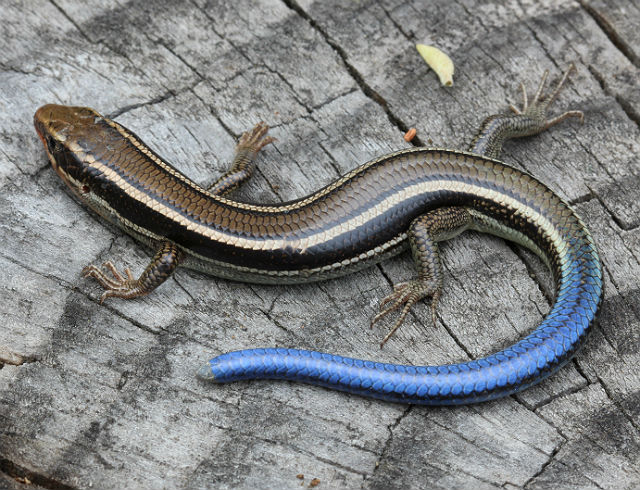
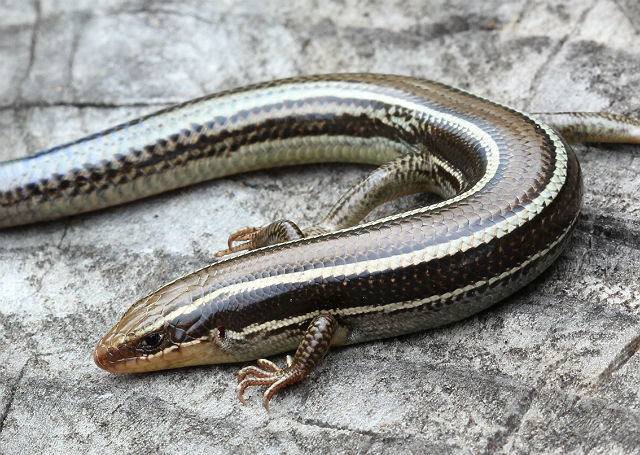
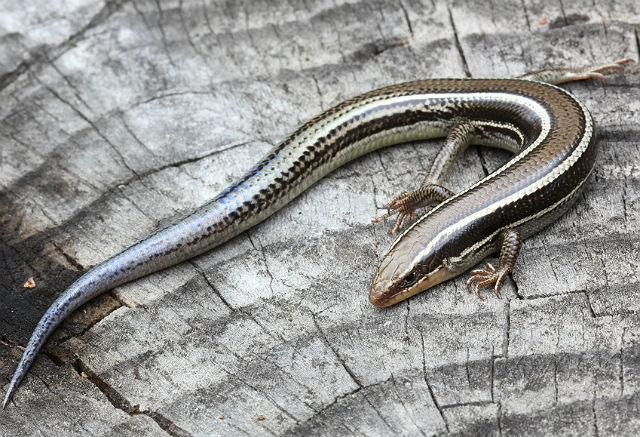
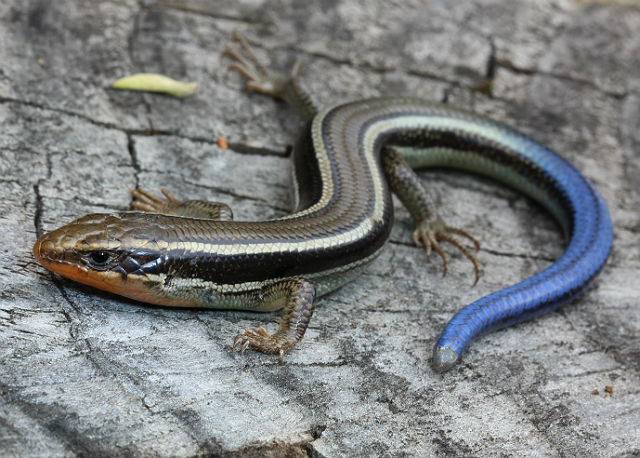
The Western Skink has a shiny appearance due to its smooth, glossy, rounded scales. It is brown with golden-yellow or cream stripes extending from its nose to its tail. Younger individuals have brilliant blue tails that become dull as they age.
Western Skink  010

Western Skinks readily autotomize (lose) their tails and the bright blue coloration found on juveniles may add to the wriggling tail’s distraction as the reptile makes an escape. They aren’t very large lizards, typically being 5 to 6 inches in total length.
Western Skink 021

Females exhibit parental care for their eggs. The skink will stay with the eggs, protecting them against predators, repairing the nest and possibly providing additional heat by basking and then returning to the nest.

western skink 007

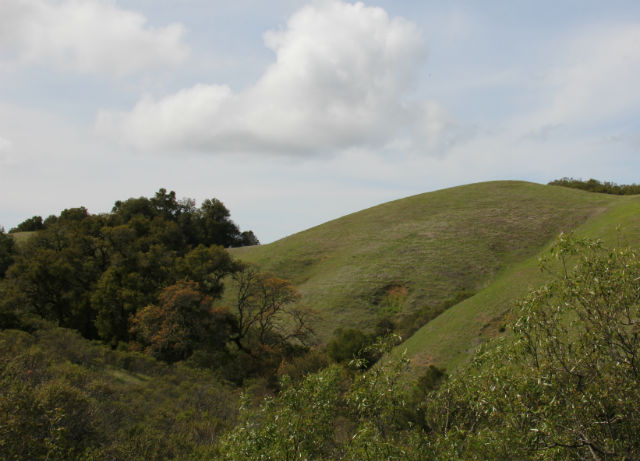
They avoid can be found in a variety of habitats, including dry oak woodlands, on mountains with southern rock outcroppings and open grasslands where there is ample cover like rocks and logs.
Western Skink 018

Western Skinks can eat a wide variety of foods, including crickets, beetles, flies, grasshoppers, spiders and earthworms.
Western Skink 013

It is always a joy to come across one of these small wonders; and I frequently do when visiting the Golden State.
Third Eye Herp
E-mail

Brown Garden Snail

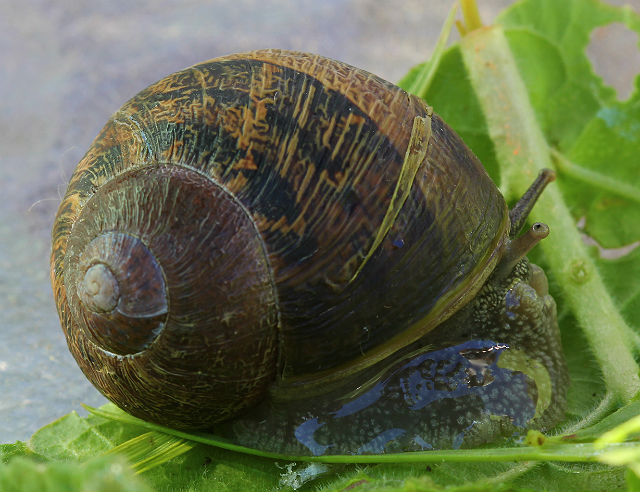
This creature was introduced to California in the 1850s as a source of escargot. This species is native to the Mediterranean region and has adapted well to the Golden State.

snail 001

Brown Garden Snails live in habitats like gardens and parks made by man, as well as in coastal dunes and brushland. The Brown Garden Snail is a herbivore and feeds on a wide variety of plants. Most land snails are nocturnal, but after a rain storm they may come out of their hiding places during the day. They move with a gliding motion by means of a long flat muscular organ called a foot.

snail 134

The head bears four tentacles, the upper two of which have eye-like light sensors, and the lower two of which are smaller, are used for touch and smell. The tentacles can be retracted into the head. The mouth is located beneath the tentacles, and contains a rasp-like structure which the snail uses to scrape up food particles.

snail 006

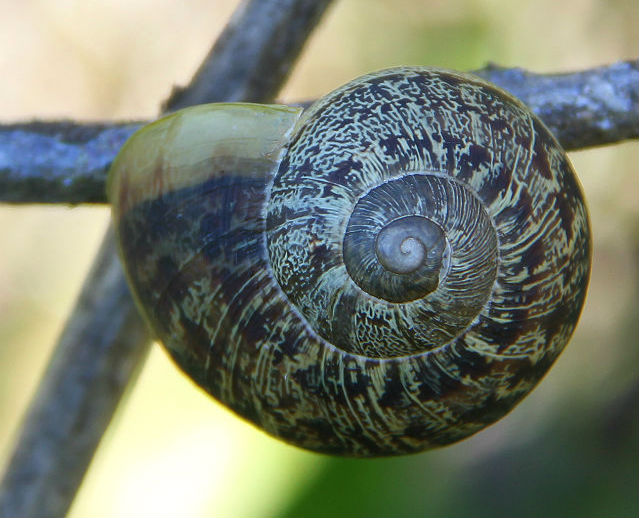
Mucus, constantly secreted by glands in the foot, which facilitates movement and leaves a silvery, slimy trail. The shell may be either yellow or horn-colored with chestnut brown spiral bands which are interrupted by yellow flecks or streaks.

snail 130

This species is one of the best-known of all terrestrial molluscs and one of the most widespread land snail species in the world. Transported by humans, today it can be found in Northern America, Southern America, Australia, New Zealand and South Africa.

Third Eye Herp
E-mail

Western Pond Turtle

western pond turtle 104

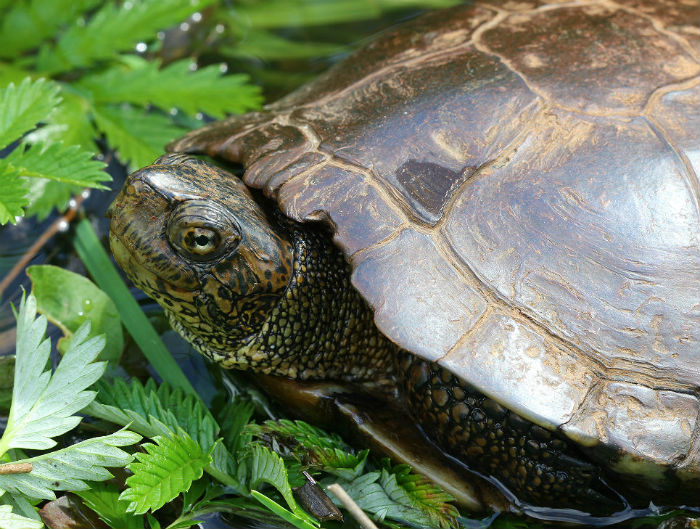
I haven’t had an “up close and personal” encounter with a Western Pond Turtle in 10 years, so it was pretty exciting to come across this one this week.

western pond turtle 076

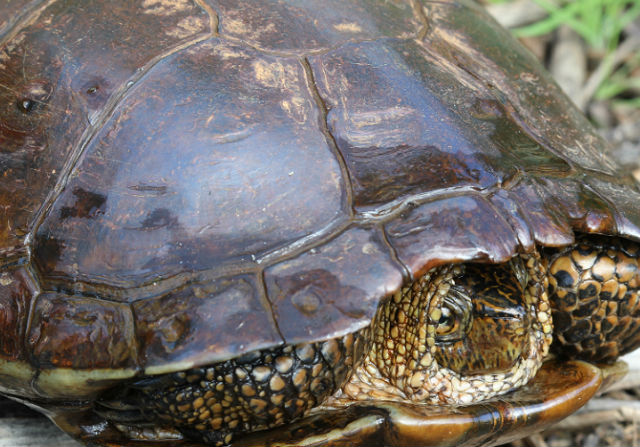
This is the only freshwater turtle native to California. Their preferred habitat consists of calm waters, such as streams or pools, with vegetated banks and basking sites, which are usually rocks or logs.

western pond turtle 083

These turtles are wary and secretive. When disturbed, they seek cover in water, diving beneath the surface and hiding in submerged vegetation. Their brown color makes them difficult to see at the bottom of a pond or stream.
western pond turtle 051

Habitat loss and fragmentation are threats to Western Pond Turtles. Development of housing, roads and eliminating waterways has taken a toll on this species. It has been further challenged by non-native predators and crowding by non-native turtle species.

western pond turtle 084s

The Western Pond Turtle is a “species of special concern,” according to the California Department of Fish and Wildlife, and are declining rapidly throughout the west. It was one of the many highlights of my trip to the Golden State to spend some time observing this reptile in the wild.

Third Eye Herp
E-mail

Northern Elephant Seal

elephant seal 147

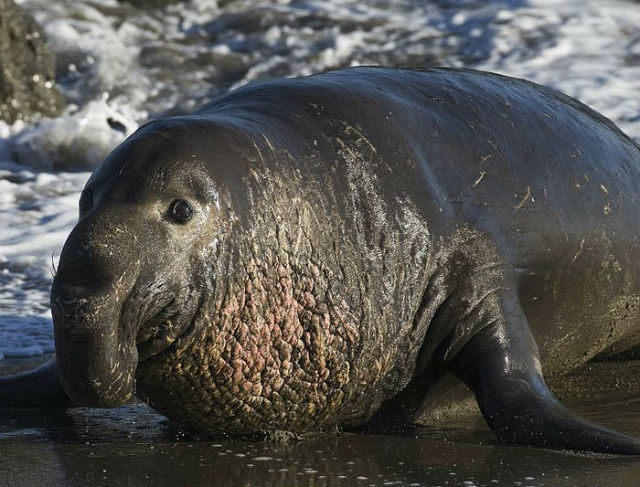
Renowned for their long distance migrations and their incredible diving abilities, Northern Elephant Seals are named because of the long elephant-like noses of males.

elephant seal 156

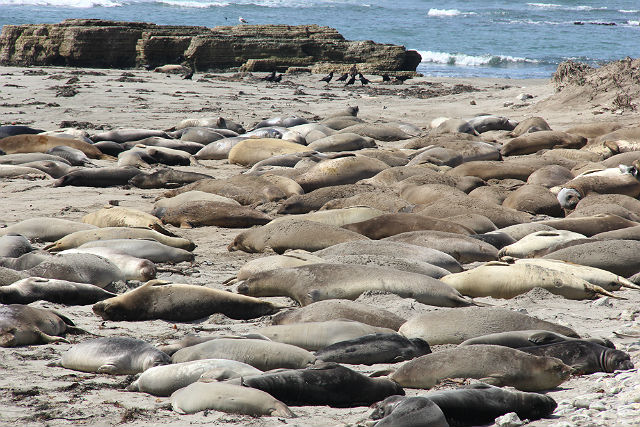
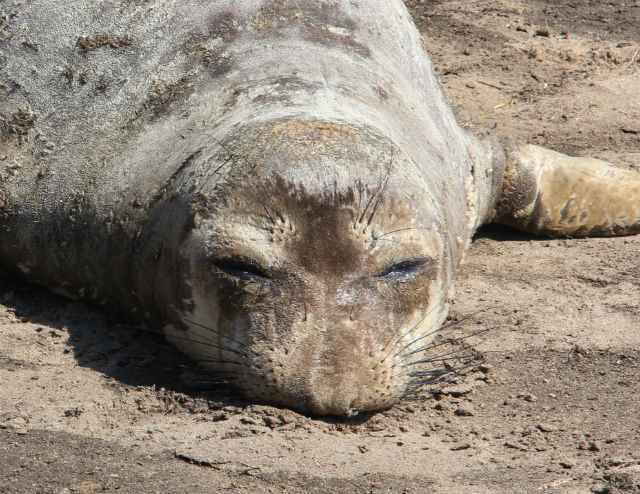
The many that I saw at Año Nuevo State Reserve today were females with their offspring, which were born earlier this year.

elephant seals 131

Northern Elephant Seals were almost hunted to extinction for the oil that could be rendered from their blubber. By 1892, only 50 to 100 individuals were left. In 1922 the Mexican government gave protected status to Northern Elephant Seals and the US government followed suit a few years later.

elephant seal 123

These are not small animals. Males, known as bulls, range from fourteen to sixteen feet long and weigh up to 2-1/2 tons. At sea, they can stay underwater for 20 minutes and dive to a depth of 1,000 to 2,000 feet in search of their food: rays, skates, squid and small sharks.

elephant seal 140

The pups are very curious and rather awkward. They are somewhat afraid of the water at first. But they learn quickly, spending more and more time swimming about. Then, during the last weeks of April, they go out to sea one by one.

Third Eye Herp
E-mail

Pacific Clubtail

Pacific Clubtail_2793

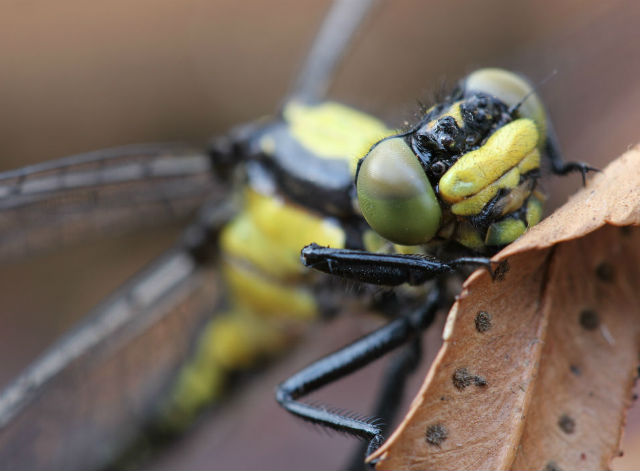
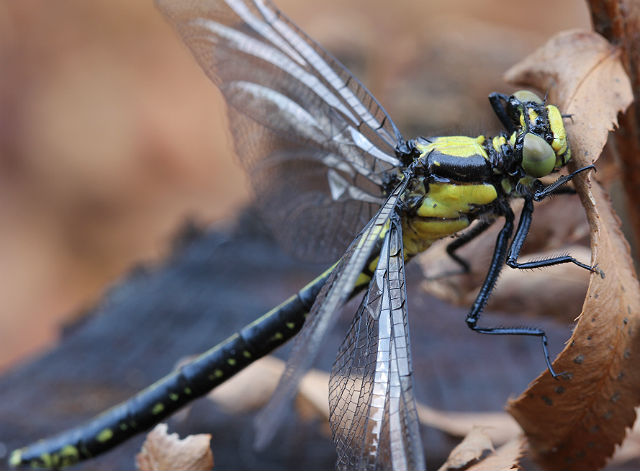
This dragonfly is at home near creeks in the mountains. It is an early flier, only seen as an adult in Spring, when males sit on rocks in the streams and chase females, or defend their territories against other males. Clubtail dragonflies are named for the expanded tip of their tails, which is more exaggerated in males.

Pacific Clubtail 026

An interesting feature of Pacific Clubtail is that the younger individuals are a lot brighter in color than mature adults. Immature males are bright yellow, but over time their colors become much more subdued.

Pacific Clubtail 036

They are important predators that eat mosquitoes and other small insects. Nearly all of the dragonfly’s head is eye, so they have incredible vision that encompasses almost every angle except right behind them.

Pacific Clubtail 055

Pacific Clubtails are expert fliers. They can fly straight up and down, hover like a helicopter and even mate mid-air. If they can’t fly, they’ll starve because they only eat prey they catch while flying.

Pacific Clubtail 047

Dragonflies were some of the first winged insects to evolve, some 300 million years ago. Modern dragonflies have wingspans of only two to five inches, but fossil dragonflies have been found with wingspans of up to two feet.

Third Eye Herp
E-mail

Sharp-tailed Snake

sharptail snake 029

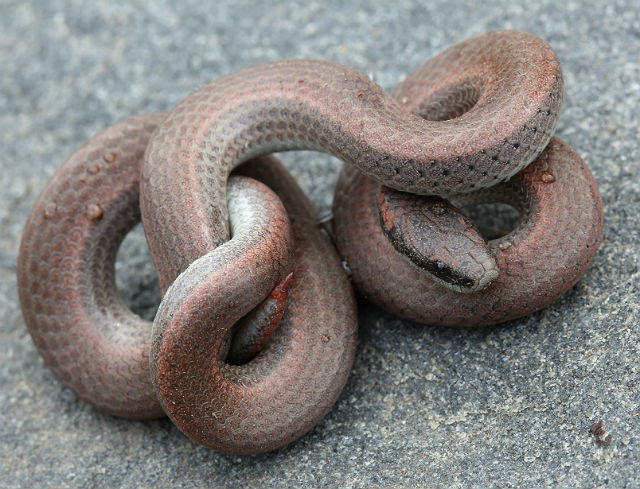
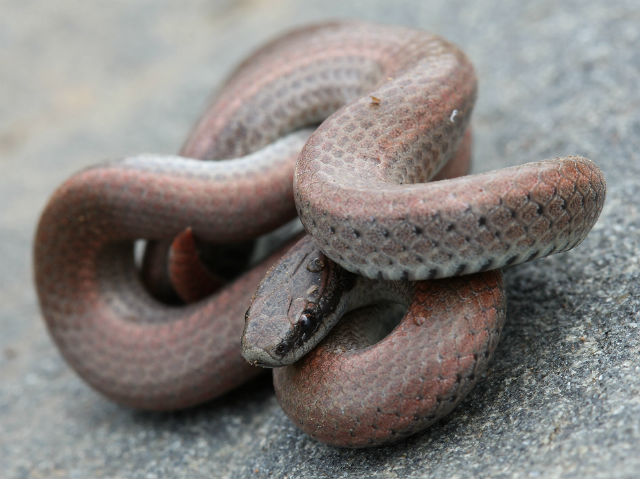
The small snake is unique in many ways. It does not seem to have a close relationship with any other snake species. It is secretive and little is known about its lifestyle and habits.

sharptail snake 115

The tip of the tail has a sharp spine whose function no one seems to have figured out. It may be an anti-predator defense, or an aid in burrowing; perhaps it anchors the snake when it is digging or eating.

sharptail snake 125

Adult Sharp-tailed Snakes are small – usually about a foot long. They specialize in eating slugs and have proportionally long teeth to catch and hold onto their slippery prey. They seem to prefer invasive European slugs over native varieties and may be expanding their range as new gardens and flower beds are made by people.

sharptail snake 120

Due to its food preference, this snake is out and about when temperatures are so cool that most other snakes would are inactive. It sometimes can be seen crawling on the forest floor during rainstorms. They like to live in small clearings in forests. These reptiles can also be found under stones bordering gardens. They burrow into damp soil and rotting logs, retreating underground when the weather becomes dry.

sharptail snake 114

I always enjoy coming across this unusual little serpent in the field. A Sharp-tailed Snake was the first California snake I ever found, underneath a piece of fallen Redwood Tree bark 10 years ago.

Third Eye Herp
E-mail

California Newt

california newt 026

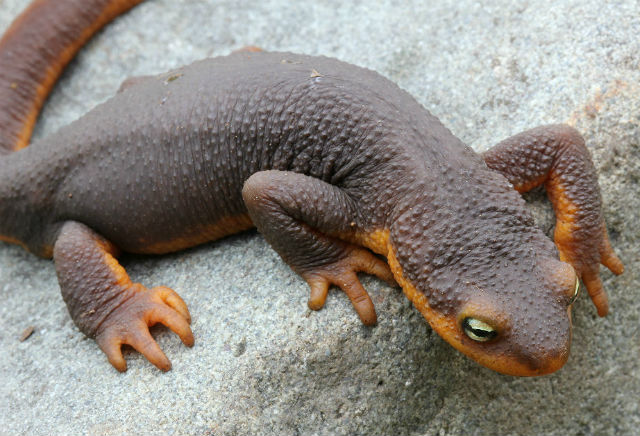
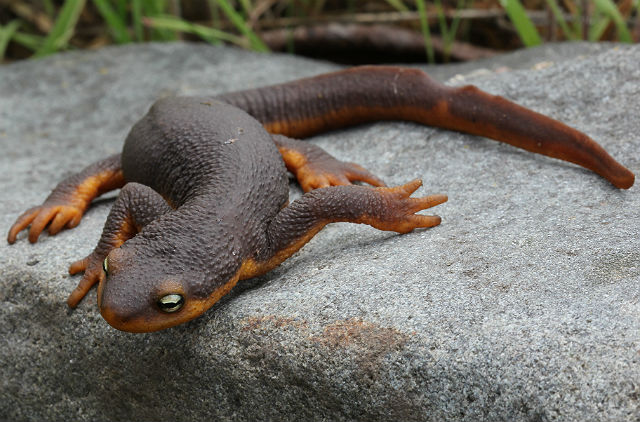
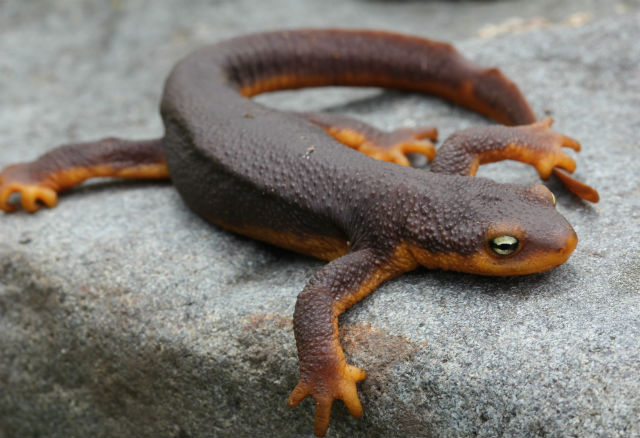
California Newts are large salamanders reaching a total length of around 8 inches. They are slow moving and have “expressive” faces. These amphibians have dry, warty skin that is not slimy and are light brown to black with a yellow to orange belly.

california newt 060

The California Newt has a unique way of fending off predators. First they raise their head and point their tail straight out to expose their bright underside as a warning. If the predator attacks, the California Newt secretes neurotoxin through its warty skin and can cause paralysis and or death to its attacker.

california newt 049

They spend the most of their lives under logs and in animal burrows during dry months. But during Spring rains, they migrate to breeding ponds. Several places in California close roads to insure the safe passage of these salamanders.

california newt 045

Newts eat mostly bugs and worms, as well as slugs and snails. When feeding, adults flip out their sticky tongues to capture prey. They can live up to 20 years in the wild.

Third Eye Herp
E-mail

Miner’s Lettuce

miners lettuce 028

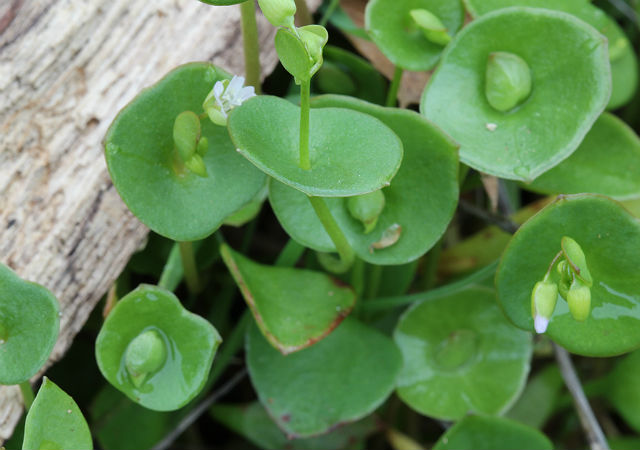
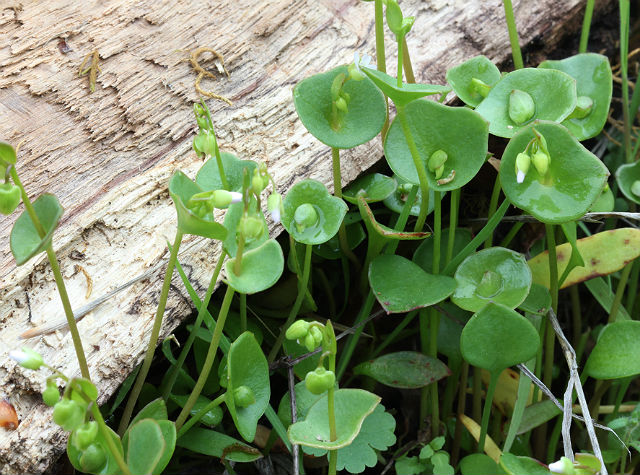
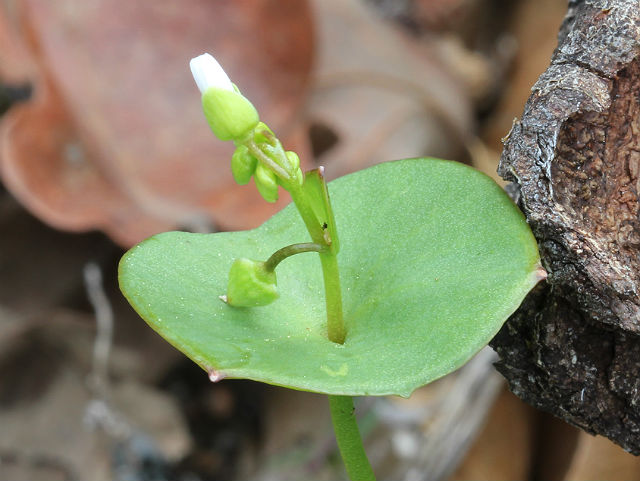
Miner’s Lettuce is a broadleaf plant found throughout California (except for the lower desert areas). It inhabits natural plant communities, agricultural land, and urban areas, with a preference for cool, damp conditions. It dries up with the onset of hot weather.

miners lettuce 087

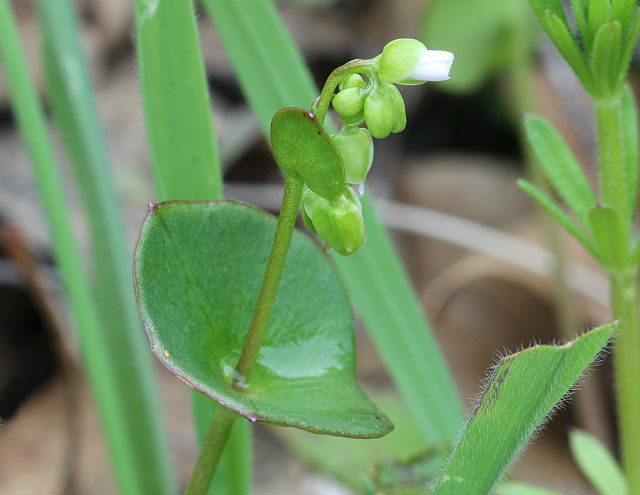
The flowers of Miner’s Lettuce bloom from February through May. Five to forty white to pale pink flowers on slender down-curved stalks cluster above a circular to weakly squared, often cuplike, green structure that looks like a leaf and completely surrounds the stem.

minors lettuce 082

This is an edible plant with pleasingly crunchy, mild-tasting, large leaves. The plant got its name because the Gold Rush miners ate it to stave off the scurvy, which is caused by a Vitamin C deficiency. It is one of the few North American wild plants exported to Europe as a salad green.

miners lettuce 088

Miner’s Lettuce is an important source of food for wildlife, providing a grazing source for gophers, quail, doves and rodents, while seed-eating birds eat the plant’s fruit. On a cool, rainy day like today, these plants seem to be thriving.

miners lettuce 085

Third Eye Herp
E-mail

Brown Marmorated Stink Bug

Brown Marmorated Stink Bug 002

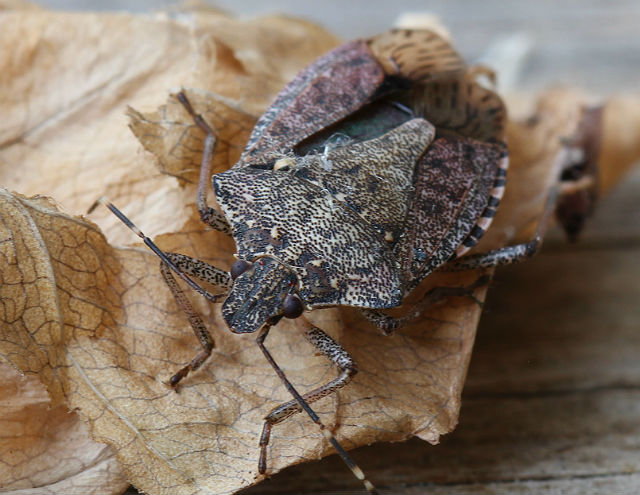
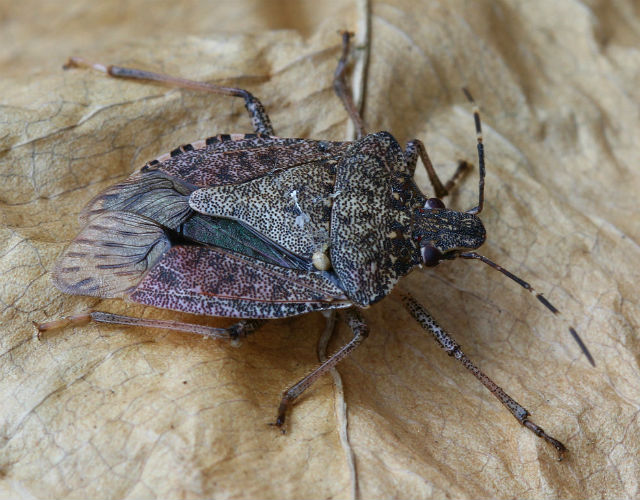
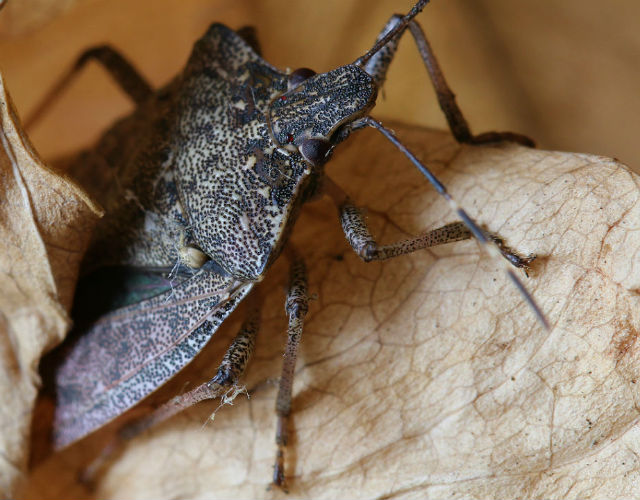
Here’s an insect that I recently found in my house. The Brown Marmorated Stink Bug, an insect not previously seen on our continent, was apparently accidentally introduced into eastern Pennsylvania about 10-15 years ago.

Brown Marmorated Stink Bug 023

It is native to China, Korea, Japan and Taiwan. This insect feeds on a wide range of fruits, vegetables and other plants. It is a sucking insect, a “true bug”, that uses its straw-like mouth to pierce a host plant in order to feed.

Brown Marmorated Stink Bug 008

Brown Marmorated Stink Bugs are attracted to the outsides of houses on warm Fall days while searching for protected, overwintering sites. They occasionally reappear during warmer, sunny periods throughout the Winter, and again when they emerge in the Spring.

Brown Marmorated Stink Bug 031

They are the typical “shield” shape of other stink bugs, almost as wide as they are long, which is less than an inch. The name “stink bug” refers to the scent glands which release an odor when the insect feels threatened. This prevents it from being eaten by many types of birds and lizards.

Brown Marmorated Stink Bug 009

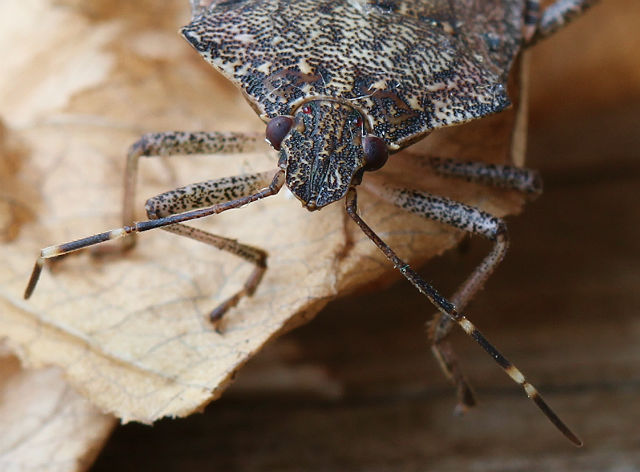
Adults can live from several months to a year. While sometimes confused with native stink bugs, to identify this species accurately, examine its antennae for alternating bands of light and dark on the last two segments.

Third Eye Herp
E-mail

Virginia Creeper

virginia creeper 050

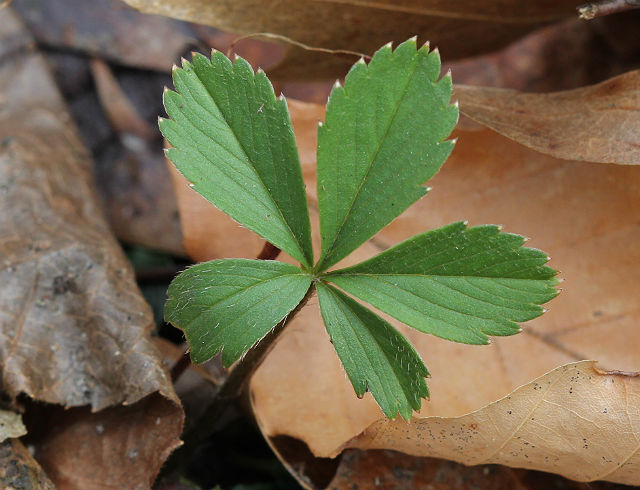
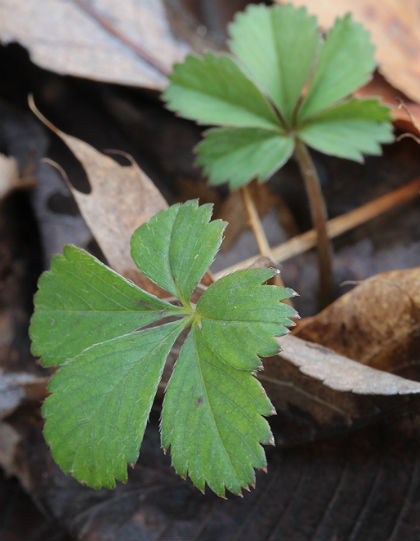
As the snow and ice begins to melt, bits of green can be seen on the forest floor. One plant responsible to adding color to the forest at this time of year is Virginia Creeper, which is beginning to sprout.

virginia creeper 015

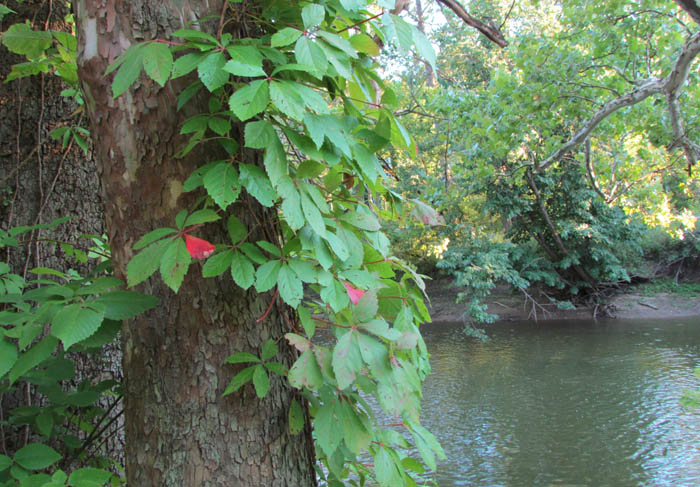
This plant is commonly misidentified as Poison Ivy due to its similar ability to climb upon trees. The easy way to tell the difference is the “Leaves of three, let them be,” slogan for Poison Ivy; Virginia Creeper has five leaflets.

virginia creeper 022

It is a prolific climber, in the Summer it can reach heights of 60 to 90 feet. It climbs smooth surfaces using small forked tendrils tipped with small strongly adhesive pads.

virginia creeper _4958

The berries of this plant are eaten by many animals, especially birds, including: bluebirds, cardinals, chickadees, woodpeckers and turkey. Other animals, such as mice, skunks, chipmunks, squirrels and deer eat them too.

virginia creeper _5879

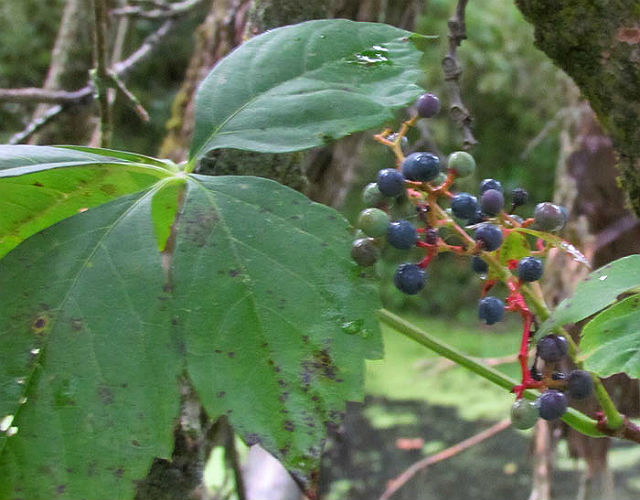
It’s easy to see from its fruit that Virginia Creeper is in the grape family. Though other animals enjoy eating it, it is poisonous to humans.

viginia creeper_5055

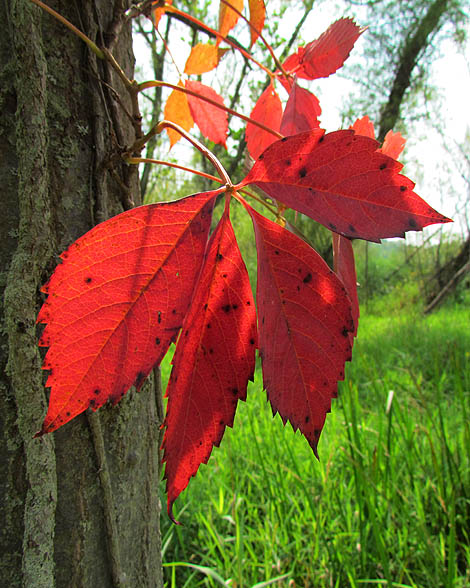
Since it is able to climb brick and stone walls, Virginia Creeper is widely planted as an ornamental. Its leaves turn a vibrant scarlet color in the fall.

Third Eye Herp
E-mail