Cattails

Cattails_9335

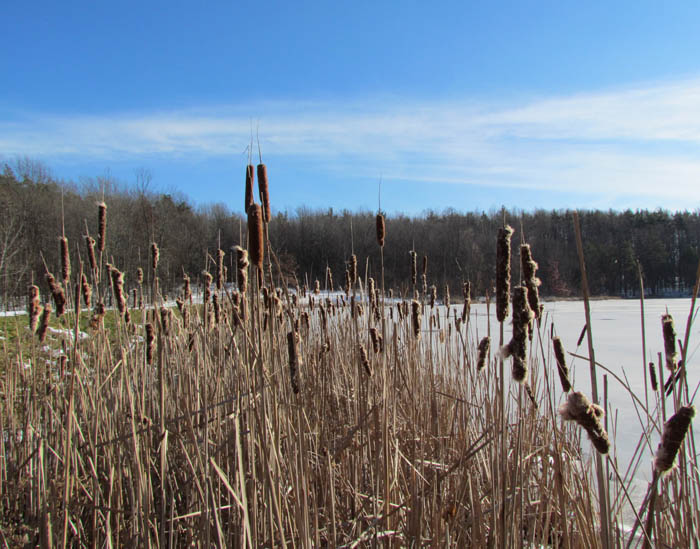
Cattails are one of the most common and easily identified of our water-loving plants. Most people are familiar with the long green leaves and hotdog-shaped brown flower spikes.
cattails011

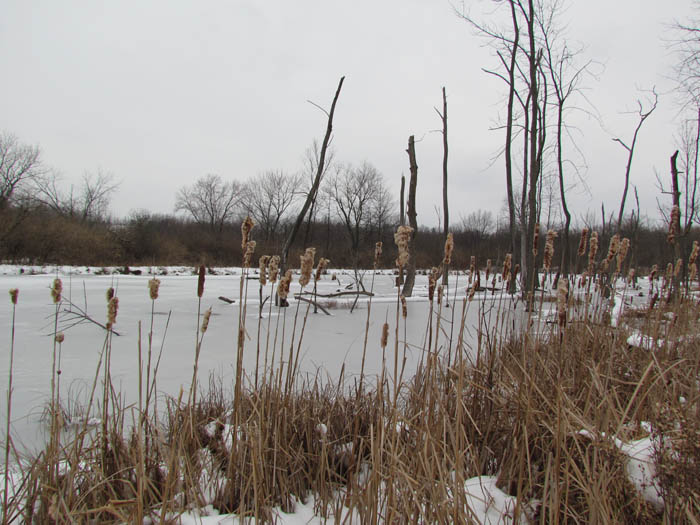
Cattails grow along lake edges and in marshes, often in dense colonies. The plants are often home to many insects, birds and amphibians.
Cattails_9181

They are a food source for Canadian geese, muskrats, insects and pond snails. Many birds find the soft texture of the seeds appropriate for lining their nests.
cattails022

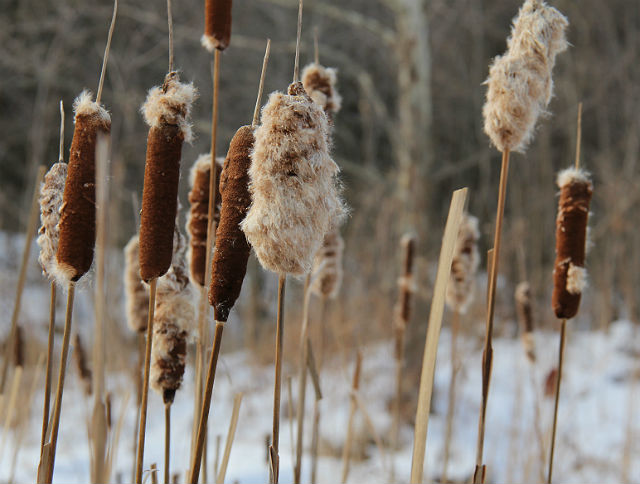
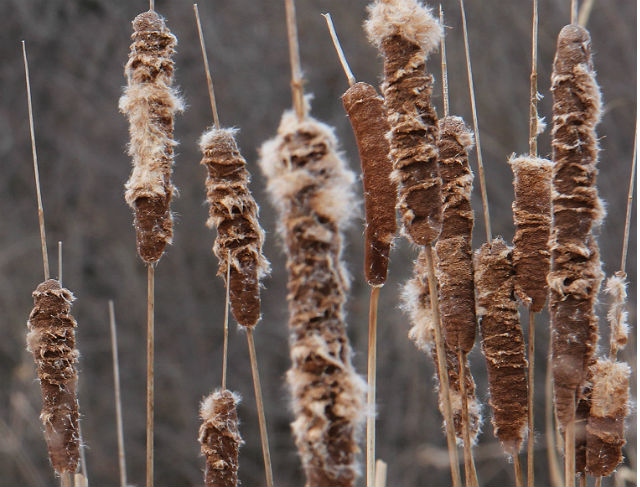
The Cattail’s flower has a brown, cylinder-shaped section with a yellow spike and blooms from May to August. In Autumn, the brown cylinder bursts, releasing the cotton-like seeds into the wind.
Cattails_8989

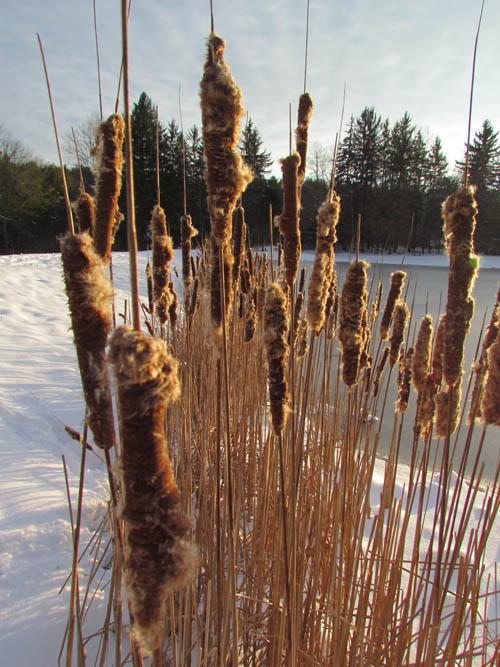
For centuries its dried leaves have been used for weaving chair bottoms, mats and baskets. The roots are a edible (I’ve eaten them many times) and nutritious (containing more starch than potatoes and more protein than rice).
Cattails_8985

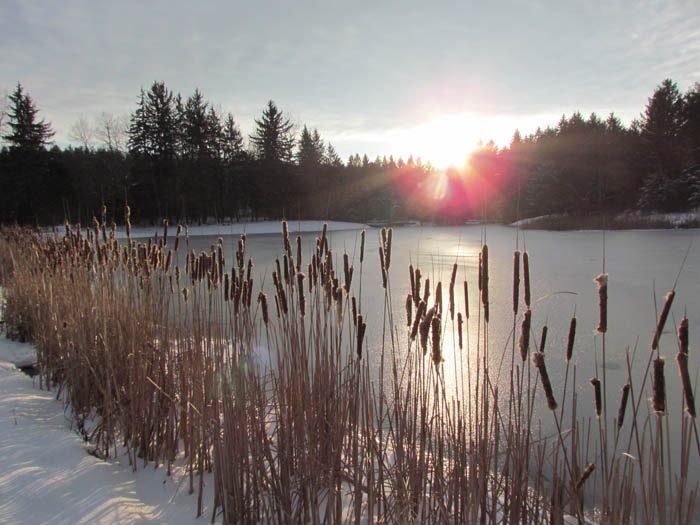
Despite all its uses to people and wildlife, sometimes this plant is simply nice to look at; it is often featured in autumn-themed floral arrangements.
Third Eye Herp
E-mail

Downy Woodpecker

downy woodpecker_9668

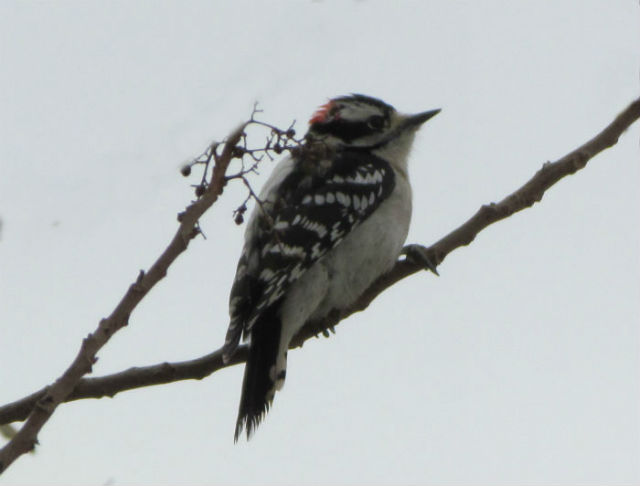
Not only is this bird one of our most common and widespread woodpeckers, it also has adapted to a variety of habitats. It can be found in mature hardwood forests as well as in fencerows along fields. It also regularly visits bird feeders.

downy woodpecker_8930

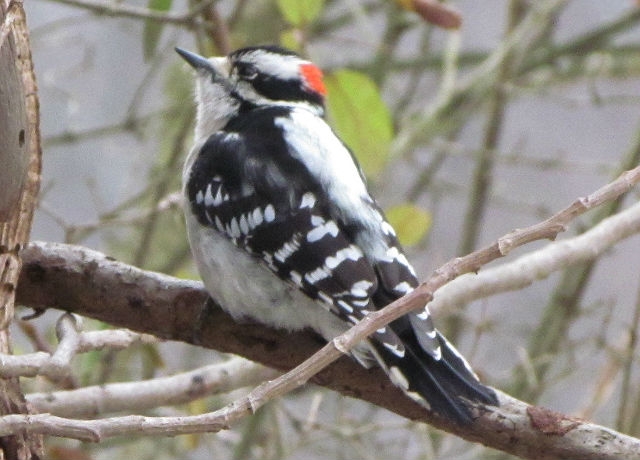
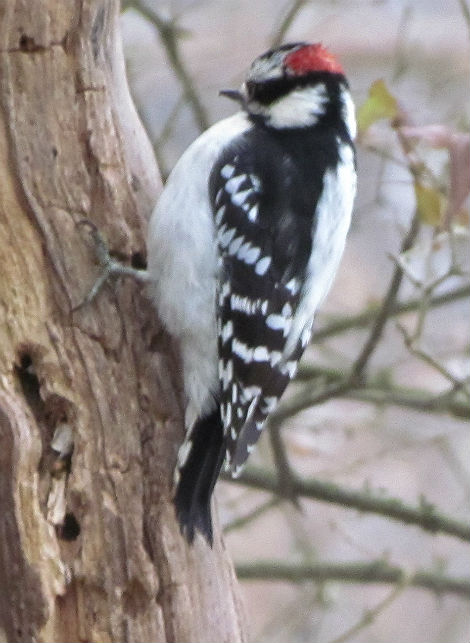
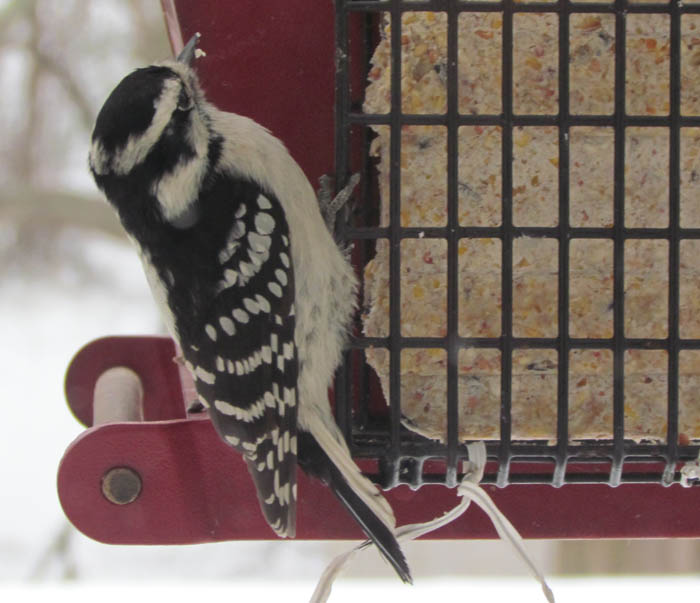
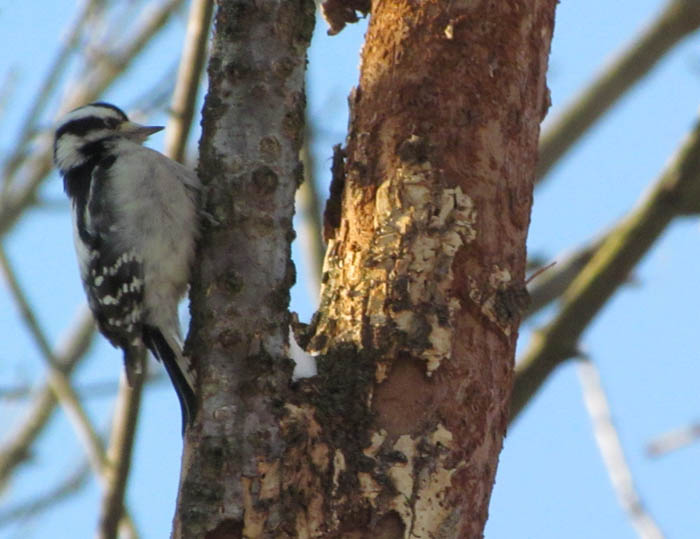
The Downy Woodpecker, our smallest woodpecker, is six inches long and has a small black bill. It has a white chest and back, black wings with white spots, a black tail and a black head with a white “mustache” and white “eyebrows.”

downy woodpecker_9949

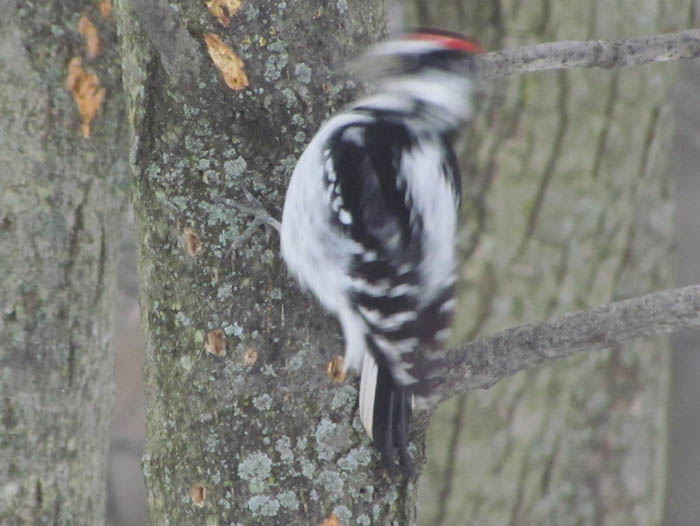
This bird always seems to be hard at work, constantly foraging for food or excavating holes in trees to be used as nests. Like other woodpeckers, it has several adaptations that allow it to hammer away relentlessly on trees. This includes a sturdy bill and strong neck muscles. Its brain is encased in a protective cavity in its reinforced skull.

downy woodpecker_9946

Another characteristic this bird shares with other woodpeckers is nostrils surrounded by feathers. This helps to filter out the sawdust created by pecking away at wood. The male has a small red patch on the back of his head; the female lacks this marking.

downy woodpecker_8687

Downy Woodpeckers use their bills to drill into trees and dig out insects like beetles, wasps, moths and their larvae. In the Winter they sometimes “join forces” and mix with other flocks of different species of birds while looking for food.

downy woodpecker_9950

While hiking its pretty commonplace to observe this bird busily searching trees and shrubs in search of insect eggs, cocoons and hibernating insects and spiders. It also consumes nuts and seeds, like this one was doing on the Ohio Erie Canal Towpath. They can be quite acrobatic in their pursuit of a meal.

downy woodpecker_8838

I usually don’t have to go far to see this lively creature which stays here year-round – sometimes all I have to do is look out the kitchen window.

Third Eye Herp
E-mail

Pixie Cup Lichen

pixie cup lichen 004

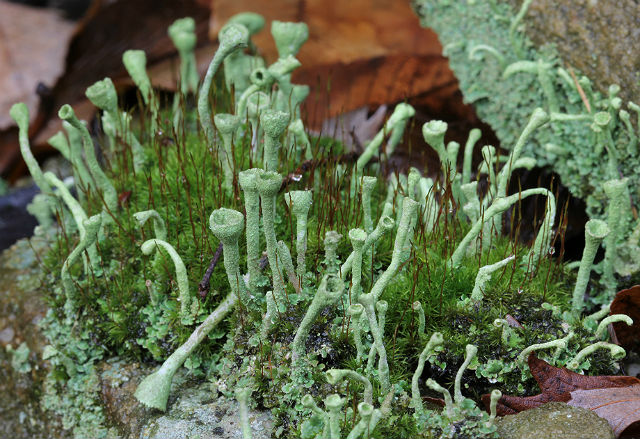
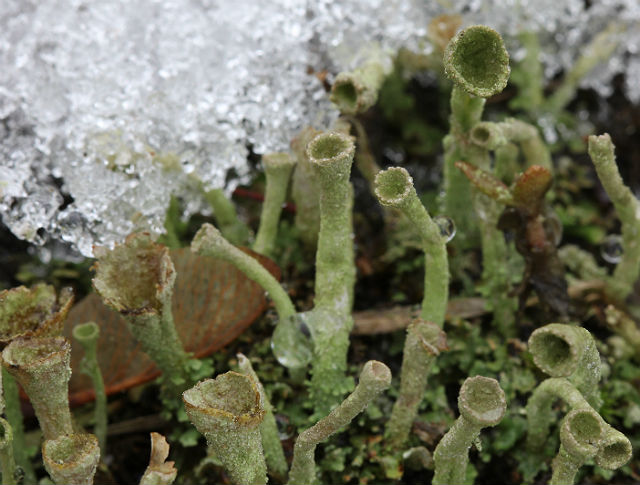
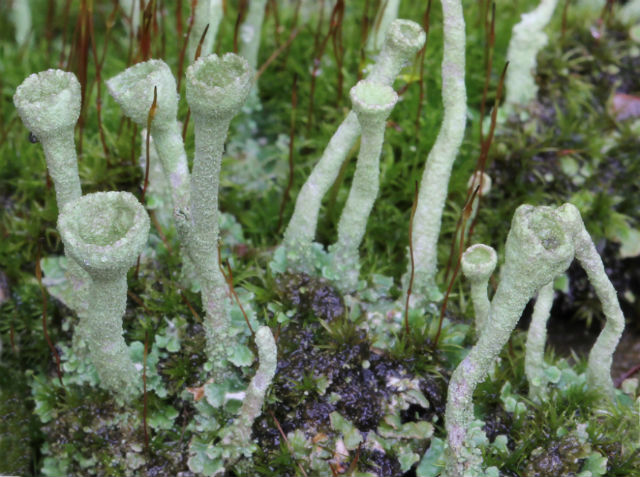
Pixie Cup Lichen typically grows on moss on the forest floor, usually on logs or at the base of trees. I have these growing in the rock garden in my backyard. Like other types of lichens, it is a symbiotic relationship between algae and a fungus. The algae provide nutrients with their chlorophyll while being protected from drying out by the fungus.

pixie cup lichen 013

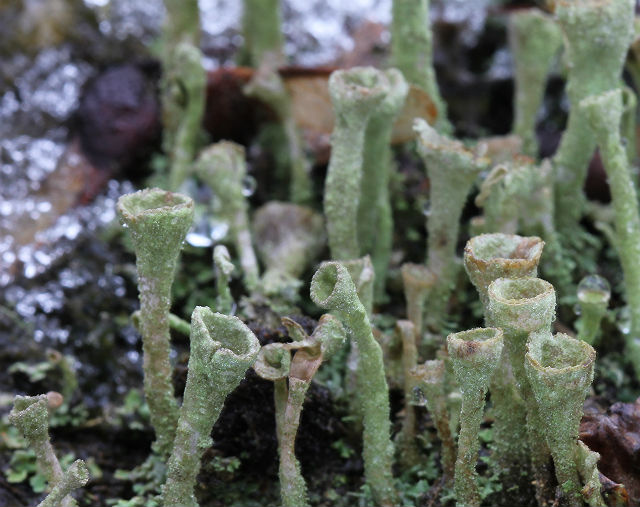
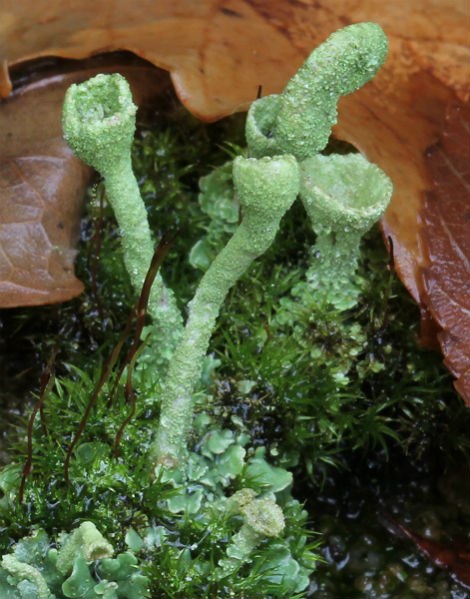
They are shaped like somewhat battered and sand-blasted miniature golf-tees. This lichen has an extremely rough appearance. The rim of the cup often has a reddish tint. The stem has scales which become larger the further down, as it reaches the ground. The “undergrowth” is a mass of these flattish scales. They are only about half an inch tall.

pixie cup lichen 016

The cup is thought to act as a spore dispersal mechanism when hit by raindrops. Pixie Cups and related species contain Didymic Acid which was once collected from the lichen and used in folk-lore medicine to treat tuberculosis.

pixie cup lichen 005

Not only is it an example of a symbiotic relationship with a cool shape and texture, but Pixie Cup Lichen is a sign of life that can been seen in the winter if you do some careful searching.

pixie cup lichen 017

Third Eye Herp
E-mail

Crayfish

crayfish_0354

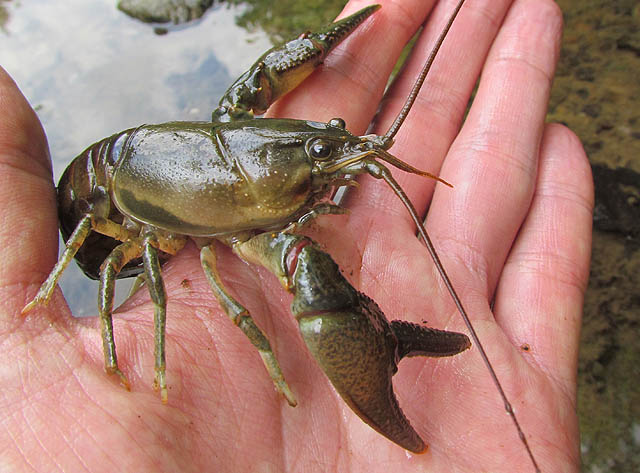
Freshwater crayfish are a wonderfully diverse group of organisms with over 605 described species of freshwater crayfish distributed throughout North America, Australia, southern South America, Asia, Europe, Madagascar and New Zealand.

crayfish_9091

They come in a variety of sizes, from the members of the dwarf crayfish, which reach less than an inch as adults, to the world’s largest freshwater invertebrate, the endangered Tasmanian Giant Freshwater Crayfish, which reaches lengths over 15 inches and weights of over 11 pounds.

crayfish_9043

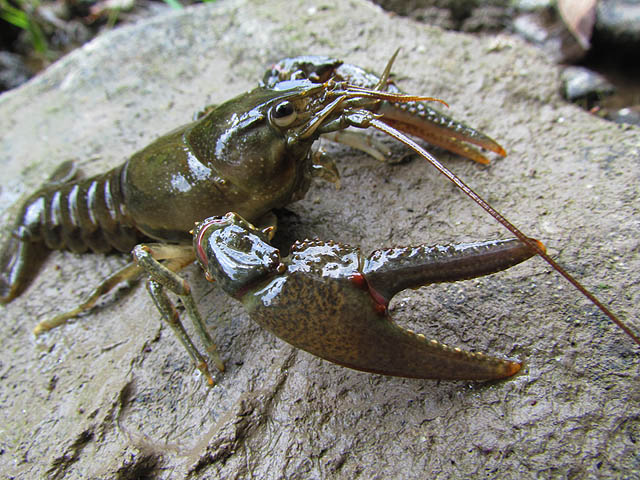
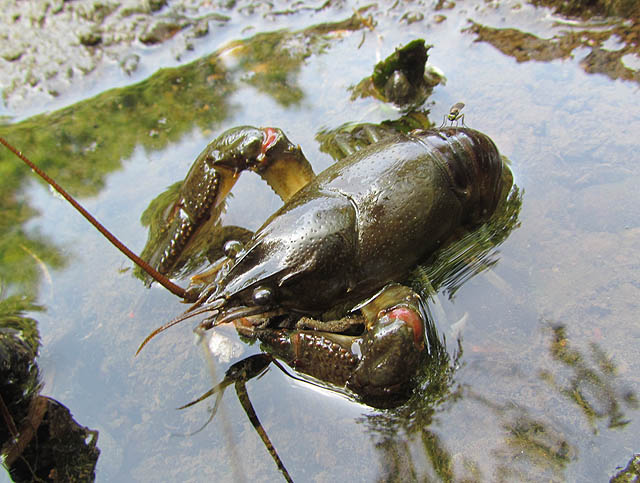
These beautiful creatures come in many colors, including red, blue, orange, green, brown, and even white. There are crayfish with spots, stripes, and various patterns. They also have a degree of ecological variation, inhabiting four main habitat types: fast flowing streams (like where this one was caught), mud burrows, slow water species (ponds and lakes) and cave species.

crayfish_9045

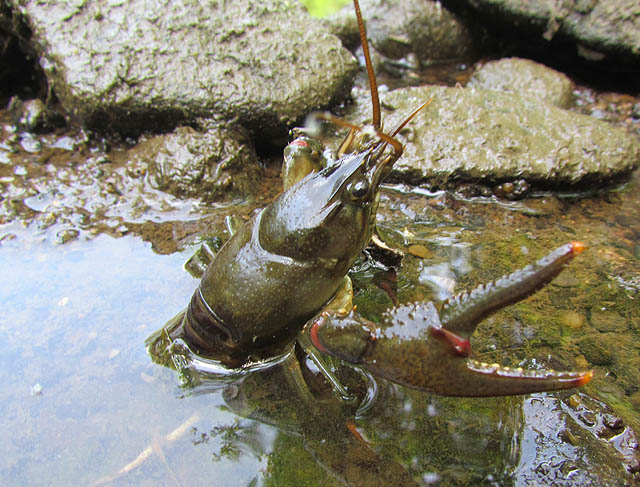
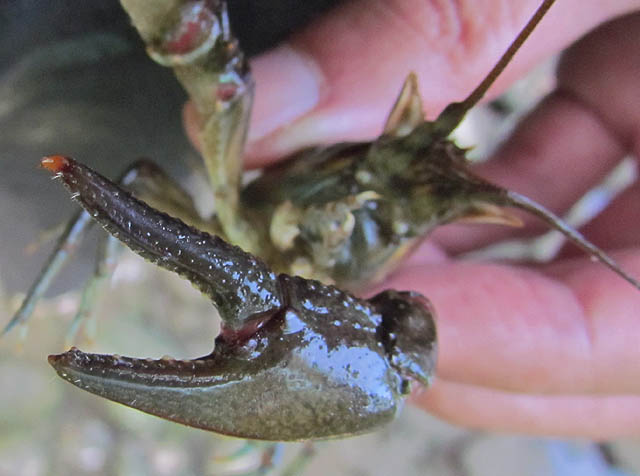
Like their relatives, lobsters and crabs, Crayfish are crustaceans. They are omnivores and will eat almost anything, plant or animal, live or dead. They belong to the order Decapoda, meaning 10 feet – 4 pairs of legs and 2 pincers. They are not afraid to use those pinchers to defend themselves or to start fights with other Crayfish.

crayfish_9025

Crayfish have long been used in research to determine the role of vitamin A in vision. They are also a food source for people as well as bait for fishermen. Crayfish have an extraordinary sense of smell. It is estimated that 40% of their brain is devoted to the sense of smell, as opposed to less than 1% of a human’s.

crayfish_9102

Some people keep Crayfish as pets – including me. Whenever I walk near my the tank, my Crayfish will come running out of its hiding place with its claws above its head, anticipating that I will feed it. Let’s face it: Crayfish may be smarter than we think.

Third Eye Herp
E-mail

Eastern Hemlock

hrmlock 05

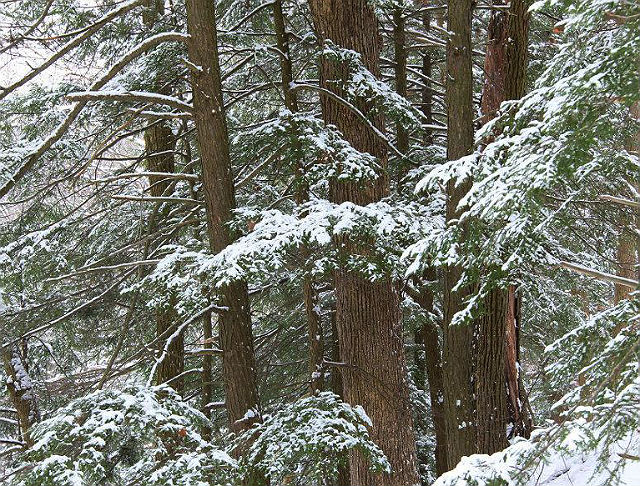
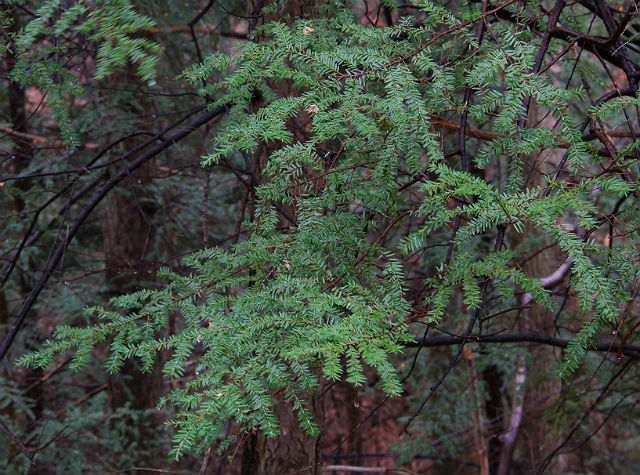
Among the longest-lived species in Ohio, this conical conifer with long, slender branches drooping to the ground grows between 60 and 70 feet tall and is extremely shade tolerant.

hemlock062

It may take 250 to 300 years to reach maturity and may live for 800 years or more. Many species of wildlife benefit from the excellent habitat that a dense stand of Eastern Hemlock provides.

hemlock 003a

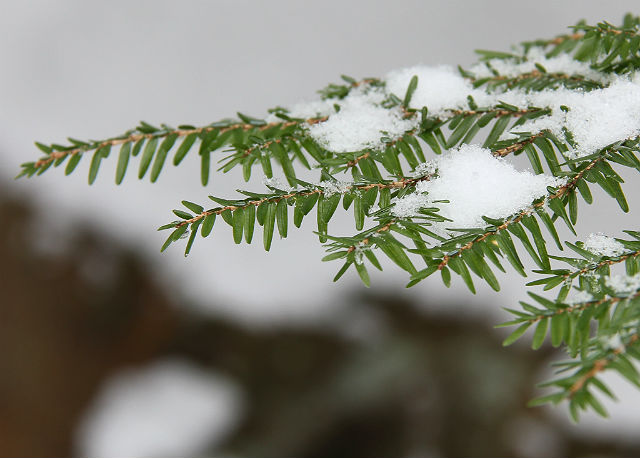
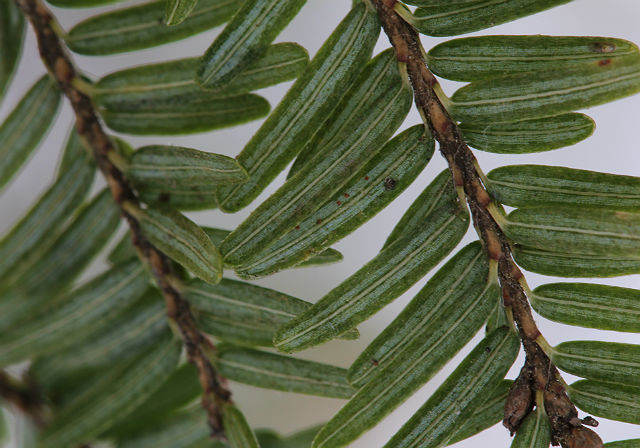
It is easy to identify. The distinctive, flat needles are glossy green above and pale green with two white lines below.

hemlock010

This tree grows best in cool, moist locations such as the north-facing slopes and ravines in eastern Ohio.

hemlock038

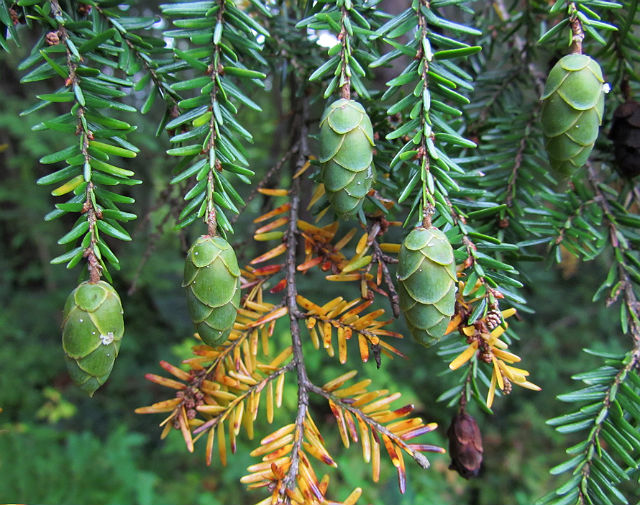
Eastern Hemlock has separate male and female flowers in mid-spring. The female flowers quickly develop into small green cones that hang from the tips of the new growth of twigs – here’s a photo from August.

hemlock_08_27 059

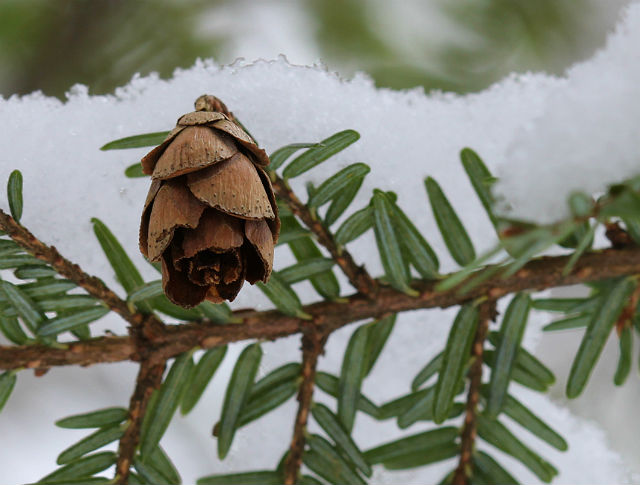
After the cones mature, turn brown and open to release their seeds; they may remain on the branches for several years. The cones are only about 3/4 of an inch long.

hemlock006

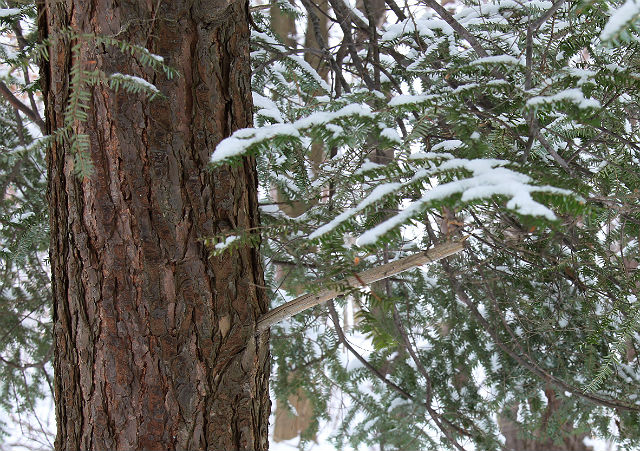
Eastern Hemlock has bark that starts out as fairly smooth, but it eventually transitions to a textured surface with prominent fissures and wide, flattened ridges, having a brown to brown-gray coloration.

hemlock023

Native Americans used the moist inner bark to create a paste to treat wounds and sores. Even today hemlock oil, distilled from the needles and twigs, is used in liniments.

hemlock055

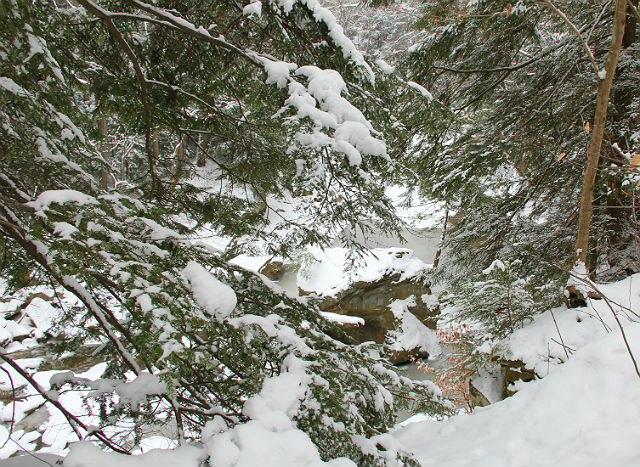
This straight-trunked, gracefully pyramidal tree with long, pendulous limbs and short-needled, feathery branches adds color, shape and texture to the Winter landscape.

Third Eye Herp
E-mail

American Coot

american coot_0330

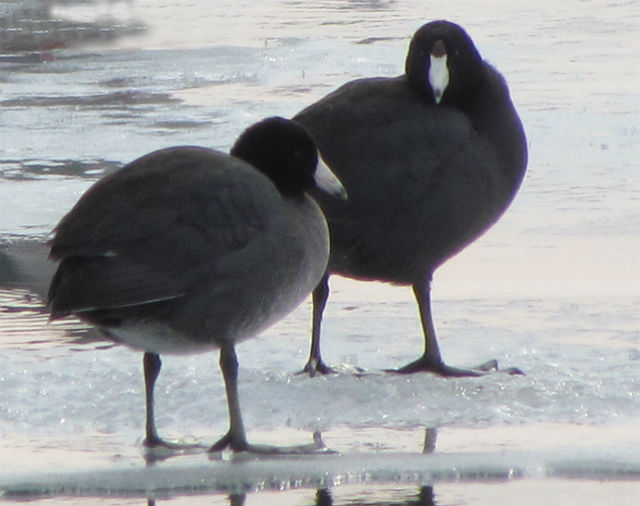
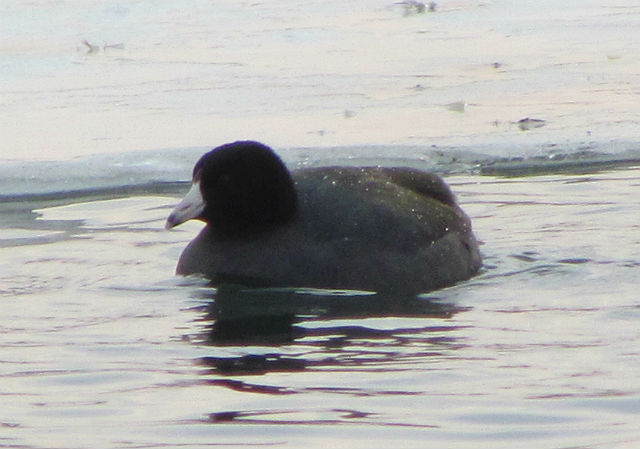
The American Coot is also known as a Mud Hen. The Toledo Mud Hens are a minor league baseball team located in Toledo, Ohio that are named after this bird. Coots live near water, typically inhabiting wetlands and open water bodies in North America.  These were seen on the Lake Erie shore.

american coot_0322

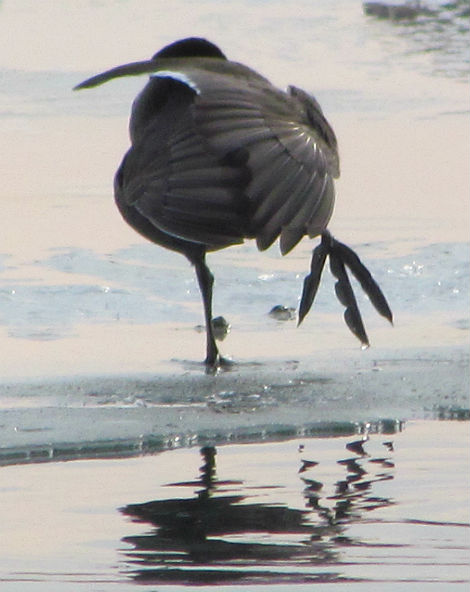
Though commonly mistaken to be ducks, American Coots belong to a distinct order, a group of shoreline birds called Rails. Instead of having the webbed feet of ducks, coots have broad, lobed scales on their lower legs and toes that fold back with each step in order to facilitate walking on land.

american coot_0337

This is a social bird species that lives in flocks. Coots are the only members of the Rail Family to live in groups. They can make a wide variety of noises, from grunting to clucking, as a means of communication, between each other and to threatening predators.

american coot_0311

They are nicknamed “marsh hen” or “mud hen” because of they way their heads bob when they walk or swim.  They eat small aquatic animals, insects and vegetation. American Coots have the ability to dive for their food, much like ducks. When diving, they gather plants that grow on the bottom of waterways. After bringing plants up to the surface, they go through them looking for edible parts.
american coot_0326

A group of these birds has many collective nouns, including a “codgery,” “commotion,” “fleet,” “shoal” and a “swarm” of coots.
Third Eye Herp
E-mail

Partridge Berry

partridgeberry026

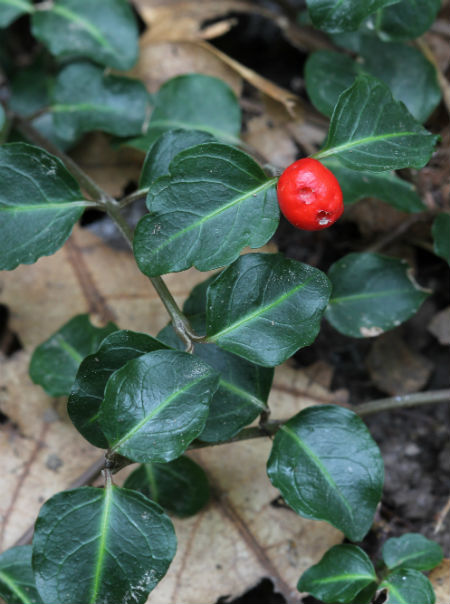
Here are some “Christmas colors” that I saw in the woods today. This is a small, woody, trailing vine with 6-12 inch slender stems. It does not climb but instead lays on the forest floor.
partridgeberry_10_15 004

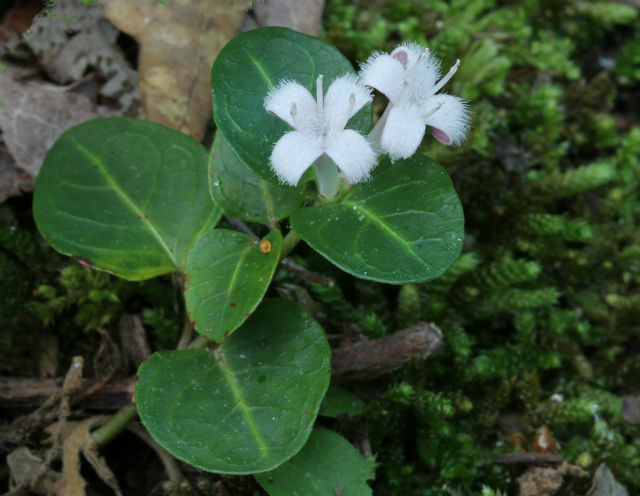
Partridge Berry produces trumpet-shaped flowers from late spring to early summer. The flowers grow in pairs and have white petals. They are pollinated by insects. Afterwards each pair of flowers produces a single bright red berry. Here are flowers that I saw in June.

p-berry 030

The berries contain eight seeds. Birds are the primary consumer of these fruits and therefore the main distributor of their seeds. For people, the berries are edible but rather tasteless, with a faint flavor of wintergreen.

partridgeberry_10_15 002

The humble Partridge Berry is a plant often underfoot and overlooked, but during the cold days of winter, it is a treat to the eyes with its deep, dark-green leaves and rich red berries.

Third Eye Herp
E-mail

Silver Shiner

shiner 003

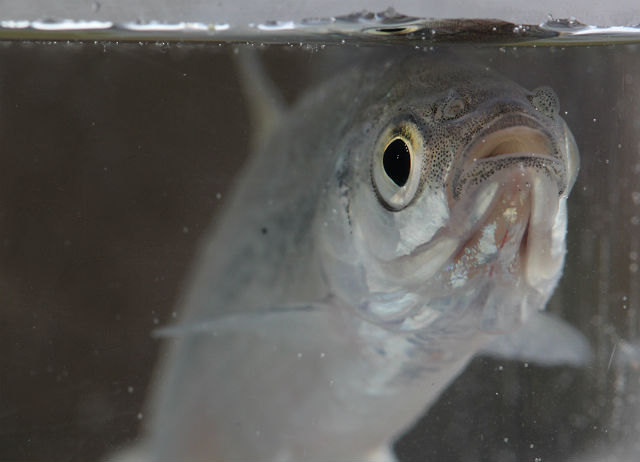
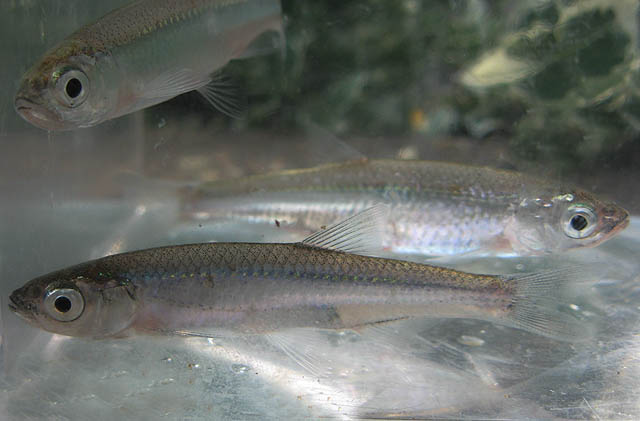
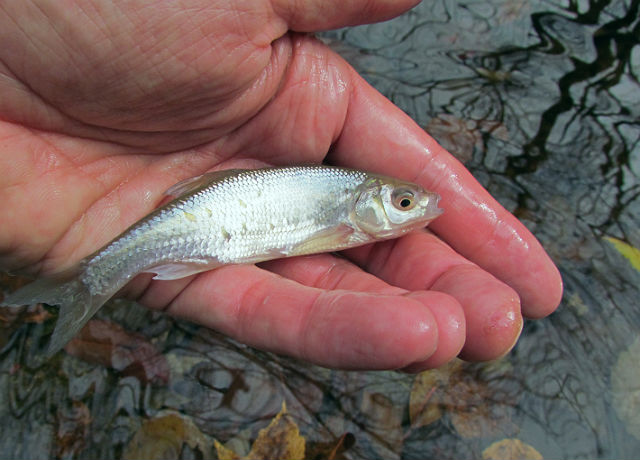
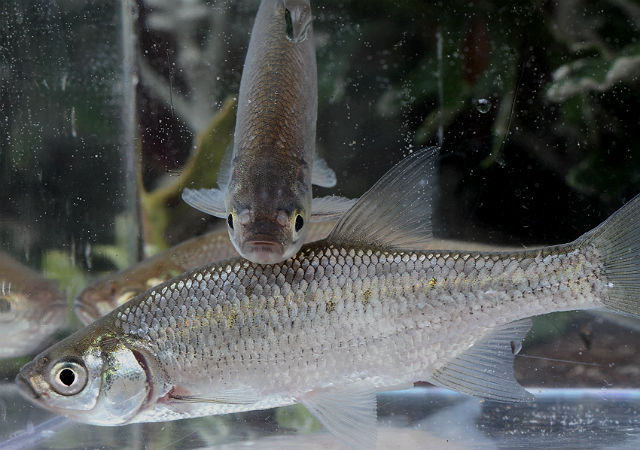
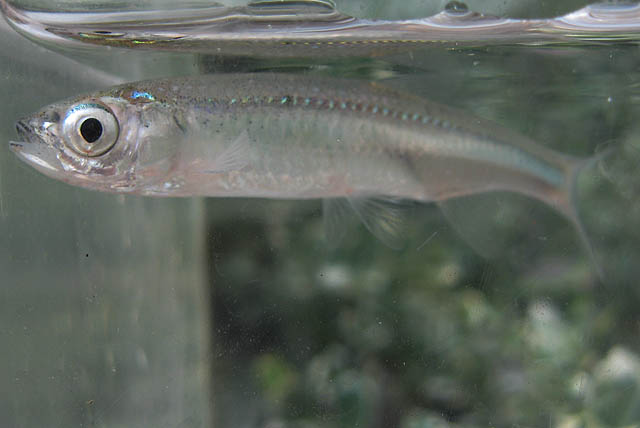
The Silver Shiner is a slender minnow with large eyes. Adults average three to four inches. The body is silvery, with some blue or green iridescence. All of the fins are transparent, with no spots or other distinctive markings.

shiner 020

Shiners are schooling fish. They feed, travel and spawn sometimes in very large groups. When feeding, the “dimpling” they create may look like raindrops on the water.

silver shiner_1848

They can often be seen jumping out of the water to capture flying insects at the tail end of deep swift riffles in moderate-sized, clear creeks.

shiner 032

This fish can be found in large streams and small rivers with clean water flowing over a bed of rocks. They typically avoid muddy bottoms and rooted aquatic vegetation.

silver shiner_1853

The Silver Shiner is considered to be a minnow. Minnows are a huge family of fishes. About 2,100 species are distributed in North America, Eurasia and Africa.

shiner_9550

Minnows are important food items for other fish species. They are essential in maintaining healthy aquatic systems. While several species of minnows are used as bait fish, the vast majority of them never even receive a passing glance from most humans.

Third Eye Herp
E-mail

Yellow Sac Spider

yellow spider_11_13 014

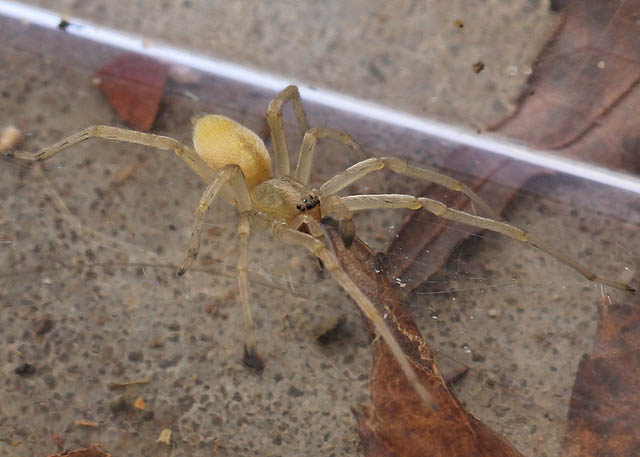
Normally these are outdoor spiders, but sac spiders often invade structures (like my house). Their numbers increase significantly in the Autumn when the weather turns cool and their food supply disappears.

yellow spider_11_12 025

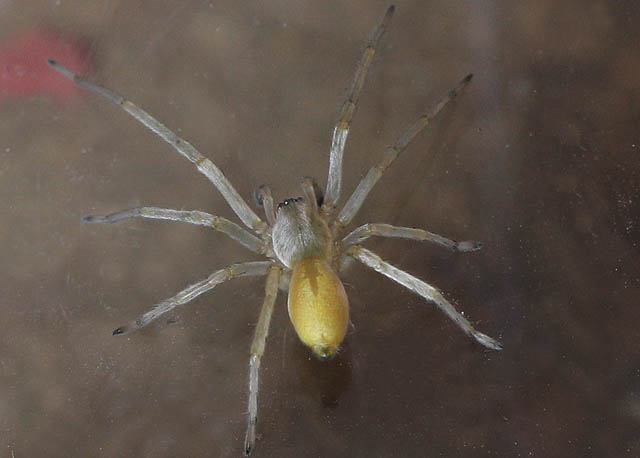
If there is food available, sac spiders can become established indoors. At night they actively search for small insects. When hunting, they run quickly while waving their forelegs in front of them. Their front legs are longer than their other three pairs of legs.

yellow spider_11_13 011

Indoors, they can be observed on walls and ceilings, but they quickly drop to the floor and seek cover when disturbed. Yellow Sac Spiders construct a silken tube or sac in a protected area, such as within a leaf, under a log, or at the junction of a wall and ceiling.

yellow spider_11_12 004

They use this sac as their daytime retreat; this is how the sac spider gets its name. These spiders do not build webs. Outdoors, this species occupies a wide variety of habitats, including trees, the forest floor, fruit orchards and other agricultural areas, as well as shrubs surrounding open fields.

yellow spider_11_12 009

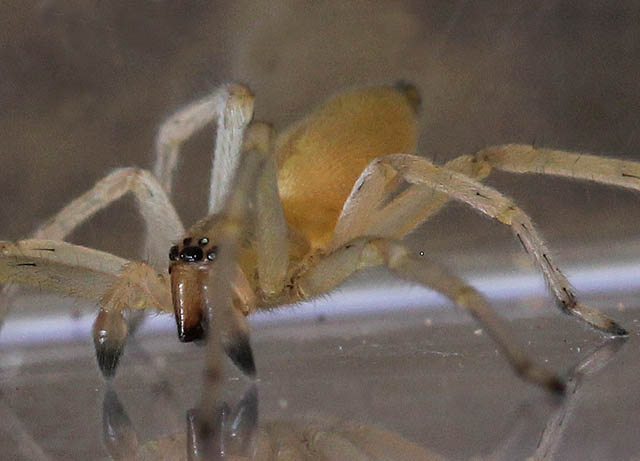
These creatures are usually pale in color and can range from yellow to beige. They are quite small (about 1/2 inch long) and easy to overlook, with no distinct markings.

yellow spider_11_11 017

This species has eight simple eyes aligned in two rows of four, consisting of secondary and primary eyes. Secondary eyes are light sensitive and are used to track movement. Primary eyes are the only set of movable eyes and are used to view close objects.

Third Eye Herp
E-mail

Northern Short-tailed Shrew

shrew_9692

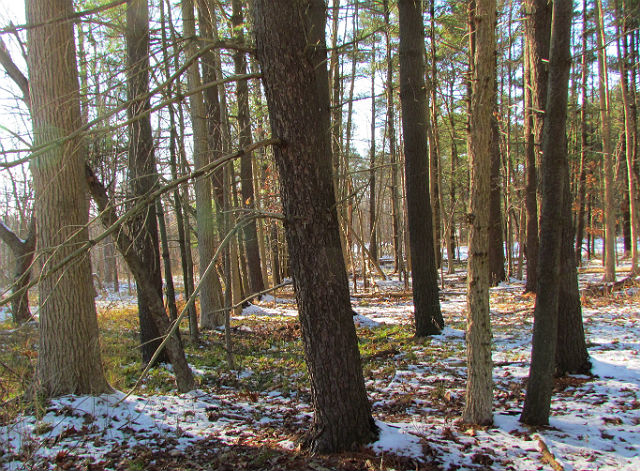
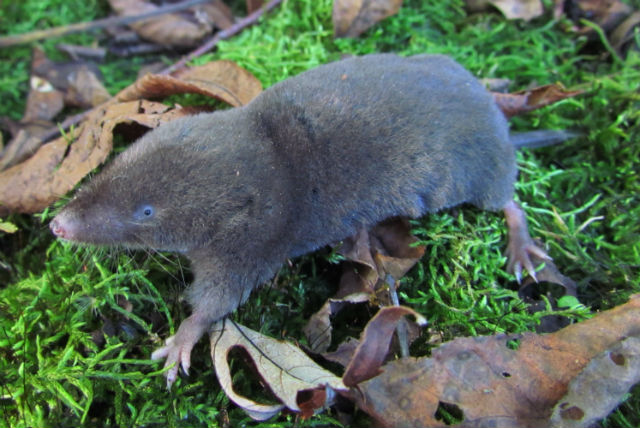
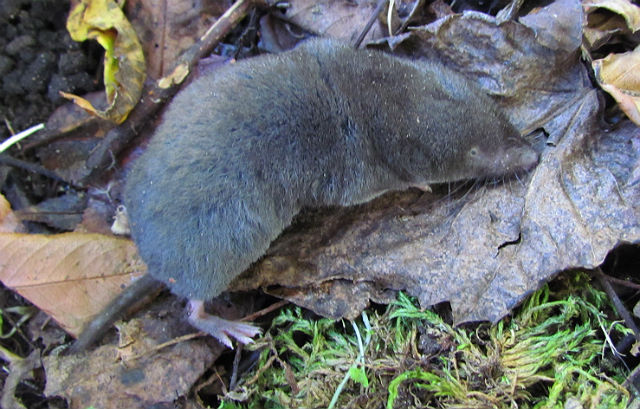
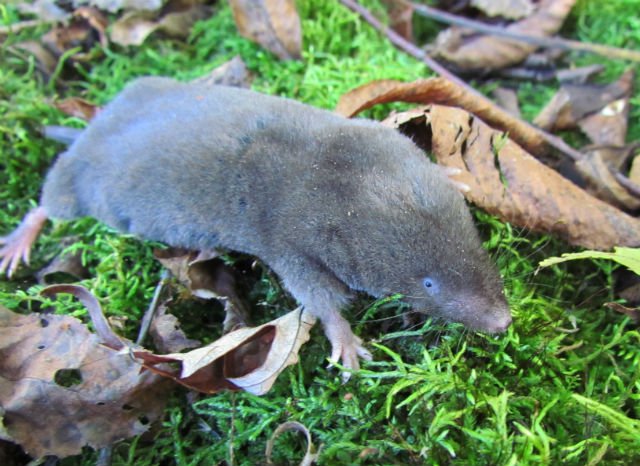
While checking out this habitat I came across an odd and seldom seen mammal. At three inches in size, it’s packed with energy. It is the largest shrew in North America.

shrew_8235

The Northern Short-tailed Shrew consumes up to three times its weight in food each day. It is mostly carnivorous, preferring insects, earthworms, voles, snails and mice for the bulk of its diet.

shrew_8224

It is one of the few venomous mammals that exist; its saliva is used to paralyze and subdue its prey. This enables them to kill mice and larger prey and paralyze invertebrates such as snails and store them alive for later eating.

shrew_8226

This animal can be found in grasslands, old fields, fencerows, marshy areas, forests and gardens; its preferred habitats are moist with a fair amount of leaf litter or thick plant cover. Northern Short-tailed Shrews construct elaborate runways under leaves, dirt, and snow and construct their nests in tunnels or under logs and rocks.

shrew_7503

Other shrews spend more time above ground than the Northern Short-tailed Shrew, which tends to tunnel below the ground or through leaf litter. Its tiny eyes indicate its poor eyesight due to a mainly subterranean lifestyle. Its ears are almost completely hidden by the fur.

shrew_8225

The tail is quite short, amounting to less than 25% of total body length (most shrews have significantly longer tails). The Short-tailed Shrew’s species name, brevicauda, means literally “brief (brevi) tail (cauda).” These deceptively ordinary little creatures are one of our most interesting and overlooked mammals.

Third Eye Herp
E-mail