Witch-hazel

Back in Ohio, the Witch-hazel is starting to bloom in South Chagrin Reservation. Its twisted yellow flowers appear in clusters of three. It has an unusual flowering time (in the autumn).

This small tree (typically less than 20 feet tall) usually has multiple crooked trunks. It tends to grow naturally along rivers and anywhere else where the soil is very rich.

Witch-hazel’s name strikes mysterious connotations. In colonial America, the shrub’s flexible forked branches were a favorite “witching stick” of dowsers used for searching out hidden underground water. This has nothing to do with witchcraft, rather it originates from the old English word for pliable – “wych.”
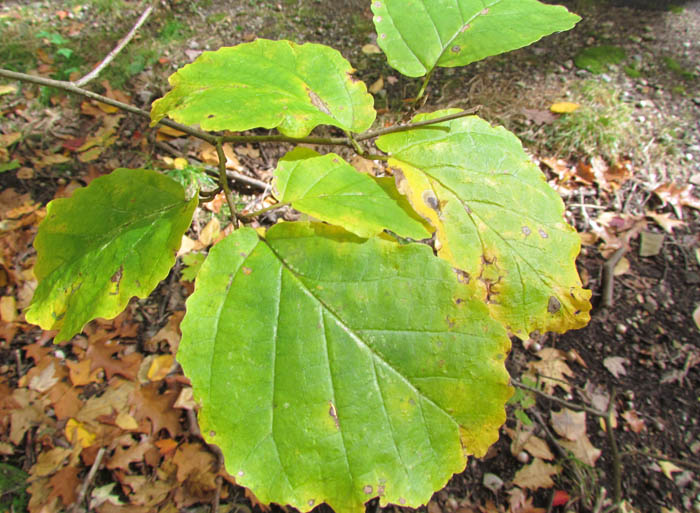
Although it’s not a hazel, the leaves have a striking resemblance to those of the common American Hazelnut.

Its leaves, twigs and bark are aromatic and have long been used for medicinal purposes. Witch-hazel produces an oil that is widely used as an ingredient in skin care products and pain relief medication.

Third Eye Herp
E-mail

Rough Green Snake

Crawling on and around the limestone bluffs were several slender and elegant Rough Green Snakes.

This is a mild-mannered snake that is often seen near water. It is frequently found climbing in low vegetation, where it blends in quite well – it is often overlooked because how well it can match its surroundings.

In the United States, their bright green coloration is only matched by their relative, the Smooth Green Snake.

They feed mainly on insects and spiders and are particularly fond of caterpillars. When captured, they never bite and are usually very gentle when held.

Third Eye Herp
E-mail

Five-lined Skink

Skinks belong to a superfamily of lizards with about 1200 species, their family the second most diverse family of lizards, exceeded only by geckos.

The Five-lined Skink is one of the most common lizards in the eastern U.S. They are ground-dwelling reptiles that prefer a moist, partially wooded habitat that provides cover as well as sites to bask in the sun.

The bright blue tail can be detached if the lizard is attacked by a predator. The tail will twitch for quite some time while the lizard makes its escape.

As their name implies, Five-lined Skinks have five light lines that run down their backs and tails. They tend to grow to 6 or 7 inches in total length.

They will often climb dead trees where there are a lot of insects, which are their main source of food.

Third Eye Herp
E-mail

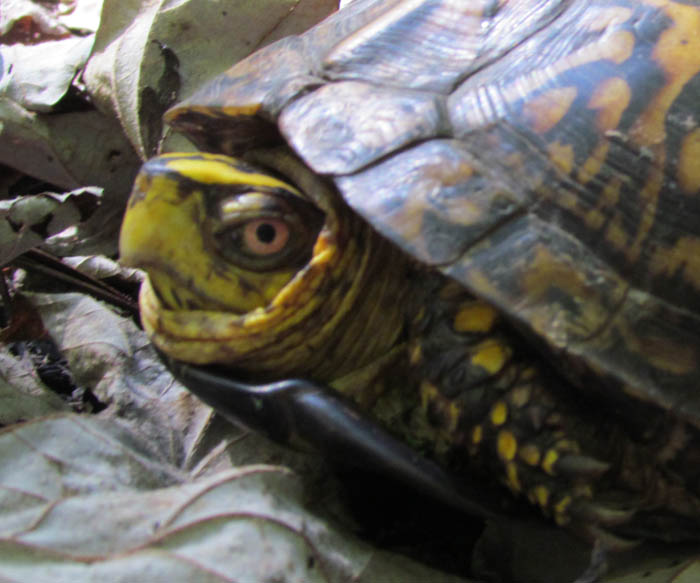
Eastern Box Turtle

Walking the edge of this cypress swamp, something up ahead caught my eye.

The box turtle gets its name for its ability to close up the bottom of its shell with a “hinge.” Although it lives on land, the box turtle is more closely related to aquatic turtles than tortoises.

This turtle lives in a wide range of habitats, including woodlands, field edges, thickets, marshes, bogs, and stream banks. Box turtles have high, domed shells and eat a variety of plant and animal matter.

Male Eastern Box Turtles, like this one, often have red eyes. Many Box turtles stay in a small home range (under five acres) most of their lives; they routinely live for several decades, and occasionally for a century or more.

Third Eye Herp
E-mail

Marbled Salamander

Today I found my first Marbled Salamanders ever. They are named because of their pattern.

Marbled Salamanders are part of a group known as “mole salamanders,” and spend most of its life under logs or in burrows.

Unlike most mole salamanders, instead of laying eggs in the spring, Marbled Salamanders lay their eggs in the fall in low areas that are likely to flood during winter rains. The female coils around the eggs until they can be underwater.

This reproduction strategy gives baby Marbled Salamanders a “head start.” The Marbled Salamander larvae gain a size advantage by feeding and growing for several months before the much larger Jefferson Salamanders and Spotted Salamanders hatch later in the spring.

Third Eye Herp
E-mail

Western Cottonmouth

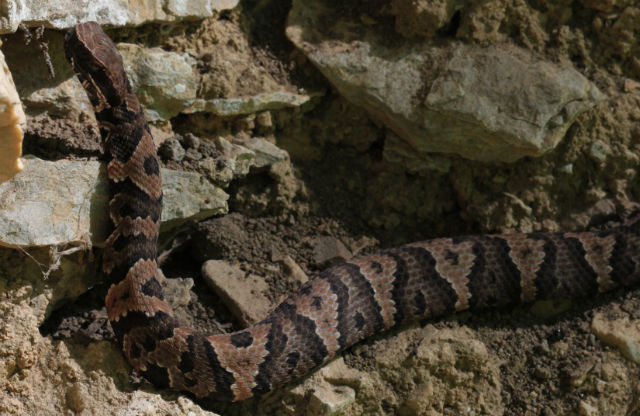
Greetings from southern Illinois. Let’s see what kind of cool stuff that can be found in the next few days. The first snake of the trip was this young Western Cottonmouth.

western cottonmouth_08sr 158

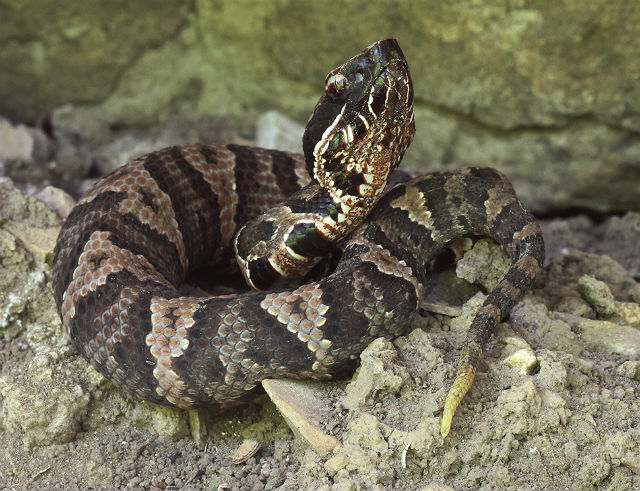
The cottonmouth is a dark, stout, thick-bodied venomous snake. The name “cottonmouth” is derived from the snake’s habit of opening its mouth in a defensive posture when it feels threatened. Other names for this snake are “water moccasin” and “trap jaw.”

western cottonmouth_10_08sr 244

This is a snake that is usually found in or around water. When swimming, the cottonmouth holds its head above water with most of its body barely touching the surface.

western cottonmouth_10_08sr 160

The young wiggle their tails so that the yellow tip appears to be a small worm. When small frogs and lizards see the wriggling tail, they think it’s something to eat and rush forward to grab it, only to be eaten by the baby cottonmouth.

Third Eye Herp
E-mail

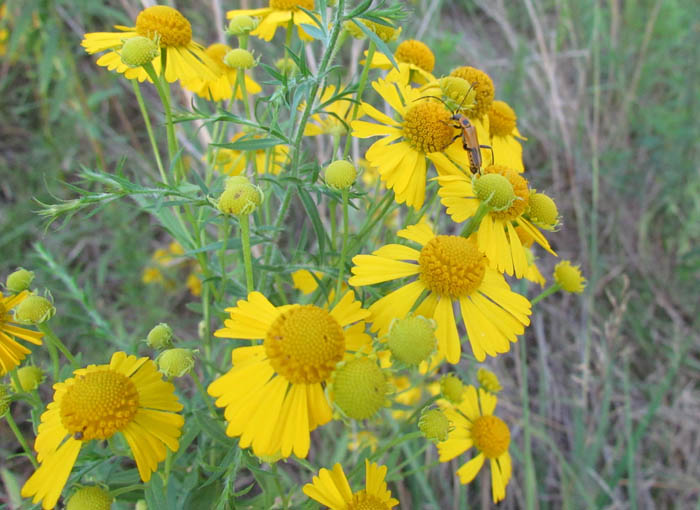
Autumn Sneezeweed

Lately I’ve been seeing a lot of this plant, which is a type of aster with clusters of up to 100 flower heads on each plant. The flowers are usually about an inch wide.

The common name is based on the former use of its dried leaves in making snuff, inhaled to cause sneezing that would supposedly rid the body of evil spirits. As the other part of its name implies, Autumn Sneezeweed blooms in late summer or fall.

Its Latin name, Helenium autumnale, is thought to have been named for Helen of Troy. The legend is that the flowers sprung up from the ground where her tears fell.

Third Eye Herp
E-mail

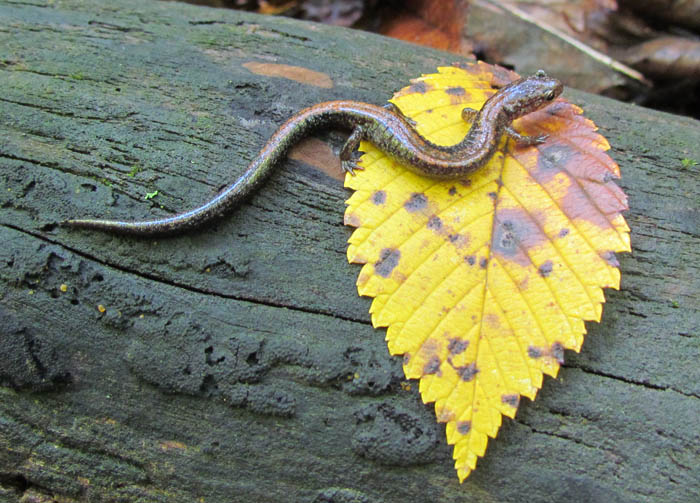
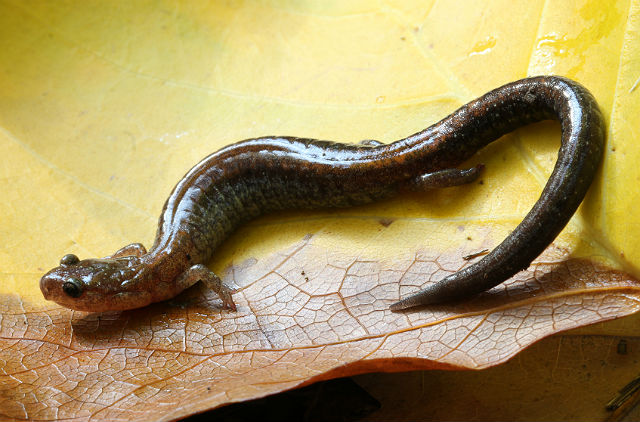
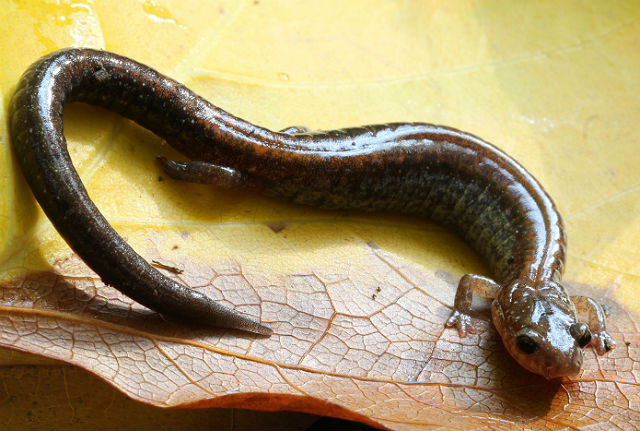
Northern Redback Salamander

red_6288

The recent heavy autumn rains have brought to the surface of the forest floor many tiny amphibians that have been waiting out the dry, hot summer deep underground.

Woodland salamanders with short legs, Redbacks are part of a large group known as “lungless salamanders.” Breathing is accomplished by absorbing oxygen through the skin and mouth lining. Lungless salamanders will drown if submerged in water for a long period of time.

redback salamander_10_20 027

Unlike most amphibians, Redback Salamanders are completely independent of water. There is no tadpole or larva stage. The eggs, usually six to eight, are laid in hanging grape-like clusters under moist rocks and logs. The female coils around the eggs to protect them from predators and prevent them from drying out during the six week incubation period.

redback006

These are small, slender creatures usually less than 4 inches in total length. The Northern Redback’s world is magical and unfamiliar to us – they hunt in the damp thickness of leaf litter just below the forest floor.

redback salamander_10_20 033

In addition to the highly variable “red” back (it also occurs in a “leadback” variation, which is dark and unpatterned) this amphibian is often sprinkled with greenish metallic highlights. Here is a “leadback” version:

redback salamander_10_20 020

Although not often seen, throughout most of their range Redback Salamanders are very common – they can be the most common vertebrate in the eastern woods. Population densities of Northern Redbacked Salamanders can range from 800 to 8,000 salamanders per acre. This species lives throughout most of the northeastern United States.

redback salamander_10_20 032

Because they’re so abundant, they play an important role in forest food chains. They’re active predators and eat just about anything they can catch (ants, termites, beetles, earthworms, spiders, slugs, mites, and millipedes).  On the other hand, Northern Redback Salamanders are important food items for small forest snakes and birds that forage in the leaf litter.

Third Eye Herp
E-mail

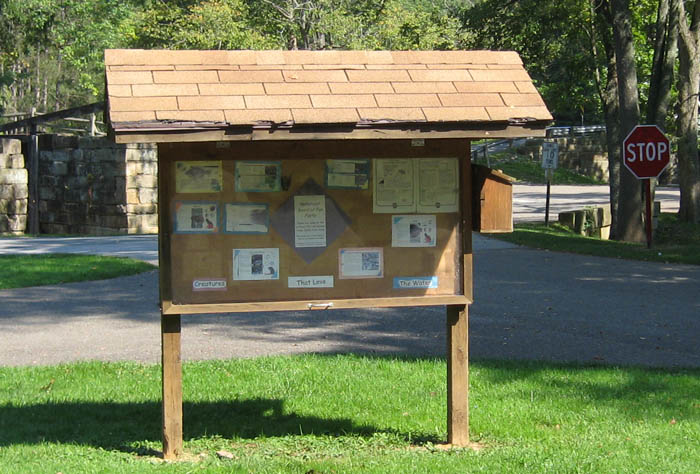
Bat in a Sign

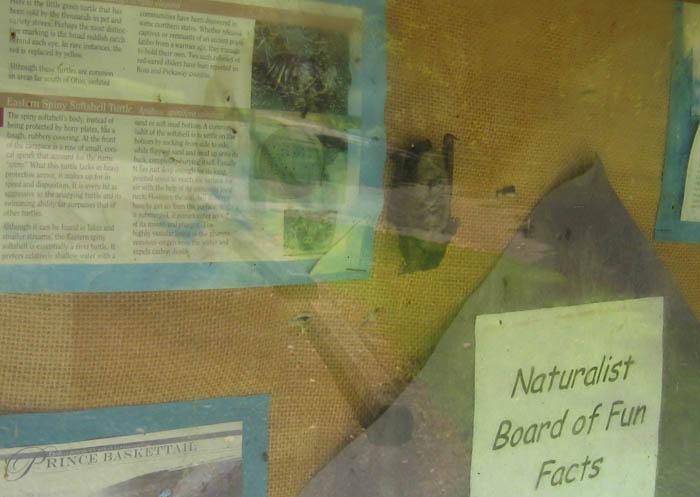
While visiting a State Park, I noticed something was a bit odd about the information sign.

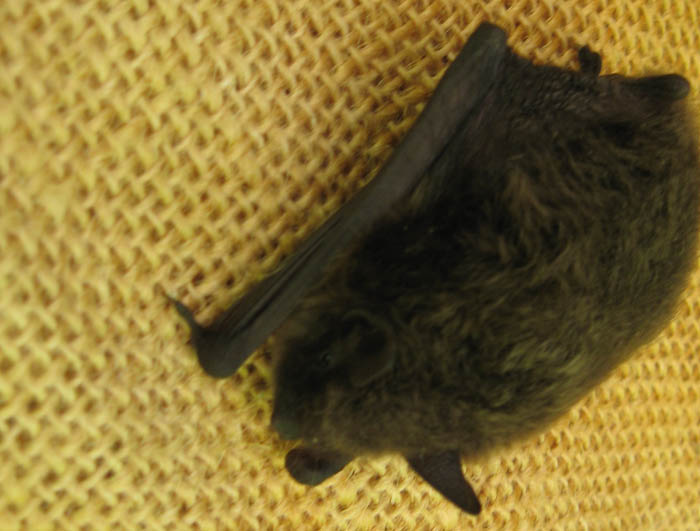
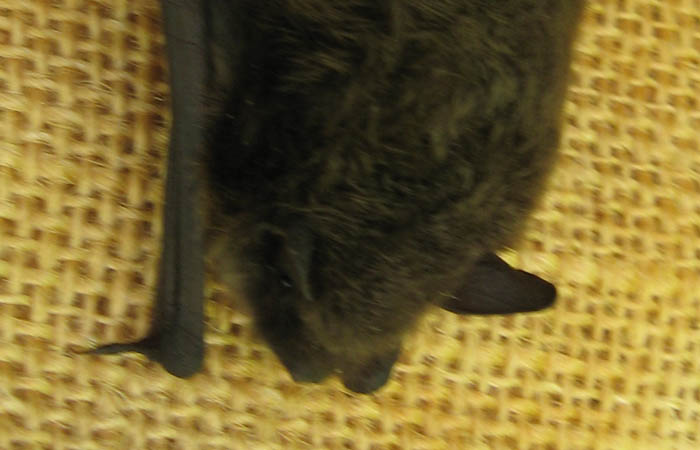
Closer observation revealed that there was a bat in the sign! I opened the sign up in an effort to release it, but the animal just “settled in” and made itself more comfortable.

The Little Brown Bat lives along streams and lakes (there was a creek nearby).  It eats insects like gnats, flies, moths, wasps and beetles. It hunts at dusk and at night. Bats are the only mammals capable of flight.

It uses echolocation to locate prey by sending out a high-frequency sound. When the sound hits an object, it bounces back to the bat. The bat then can identify what the sound hit and where it is. Echolocation is thought to be one of the most sophisticated systems ever developed. It is a rare occasion when a bat ever strikes any object, including a person.

They capture prey with their teeth, and by netting them with the tail membrane, or by deflecting an insect with a wing tip into the tail membrane. Bats may eat hundreds of insects each night.

The little brown bat migrates to caves or mines in the winter to hibernate. It wakes up every couple of weeks during hibernation. It doesn’t feed when it wakes up, but it may fly around outside the cave on warm nights. This species is about 3-1/2 inches long with a 10 inch wingspan.
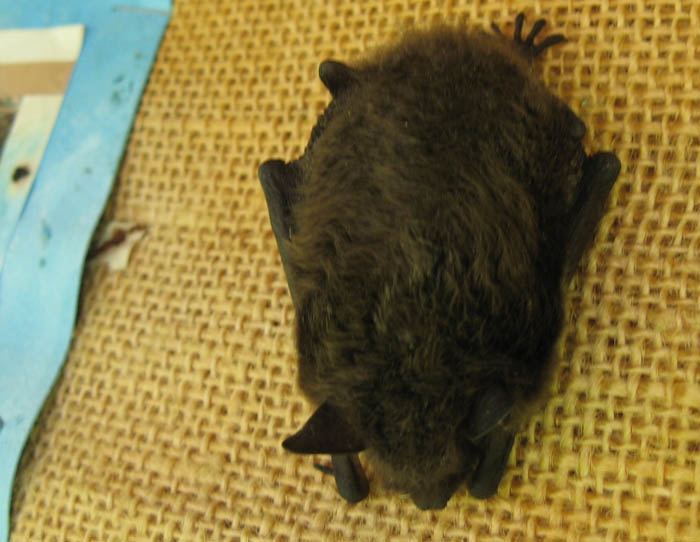
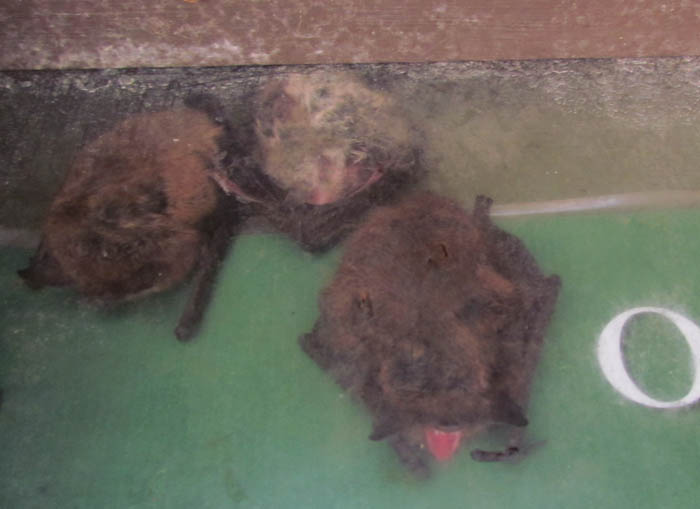
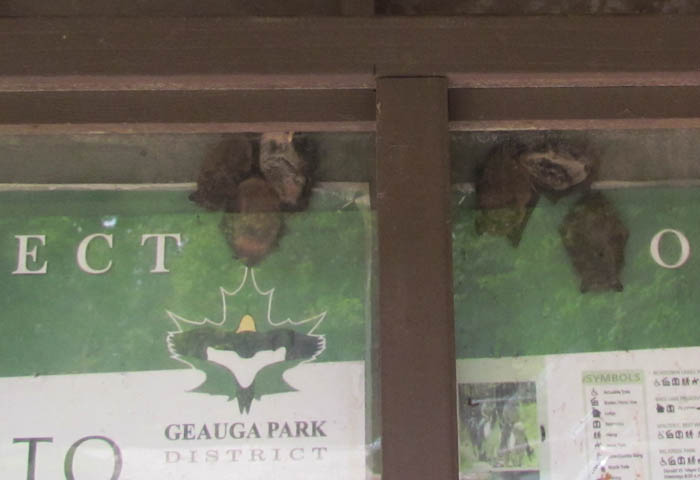
You may think that seeing a bat in a sign is a once-in-a-lifetime experience, but a few days later I visited a park along the upper Cuyahoga River. Guess what?

This one was so amused by my reaction that it stick its tongue out at me.

Third Eye Herp
E-mail

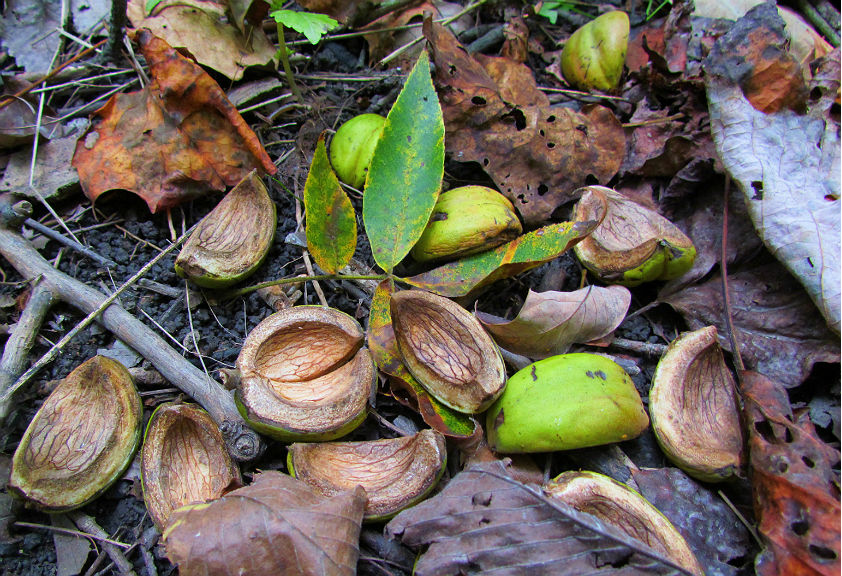
Shagbark Hickory

Shagbark Hickory is probably the most distinctive of all the hickories because of its loose-plated “shaggy” bark. Each long, thick bark plate is attached at the middle, with both ends curving away from the trunk, giving the tree a truly ragged appearance.

The nuts are edible with an excellent flavor, and are a popular food among people and squirrels alike.

2013_09_29a 082

It is a slow-growing but potentially massive tree located throughout Ohio and is frequently found in association with other hickories and oaks.

Shagbark Hickory’s timber is prized for making tool handles, athletic equipment and furniture. Its “green” wood (or sometimes seasoned, but freshly-wetted wood chips) is also sought after for the smoking of meats.

Third Eye Herp
E-mail