Smallmouth Bass

Smallmouth Bass_1581

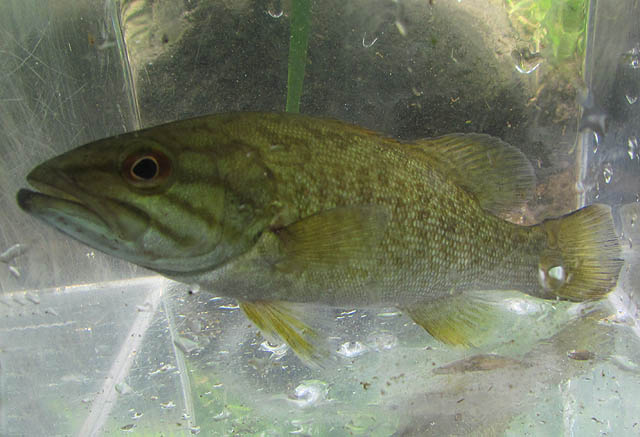
Smallmouth Bass are native to Ohio and are found in every county of the state. They are known for their acrobatic abilities and putting up a very strong fight when caught on hook and line. I caught this one with a net.
Smallmouth Bass_9116

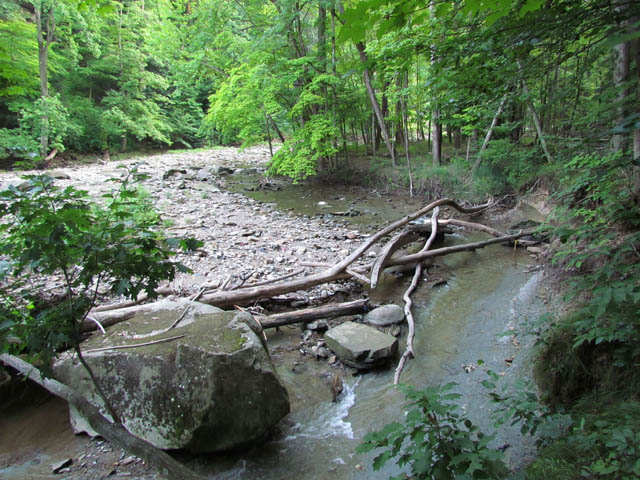
These fish thrive in streams with gravel or rock bottoms with a visible current. They feed primarily on crayfish and other large aquatic invertebrates, but will also feed on small fish and flying insects that fall into the water.

Smallmouth Bass_9114

Despite the common name, their mouth is relatively large, with the upper jaw almost reaching the rear margin of the eye. A distinguishing marking is dark bars which radiate back from the eyes.

Smallmouth Bass_9137

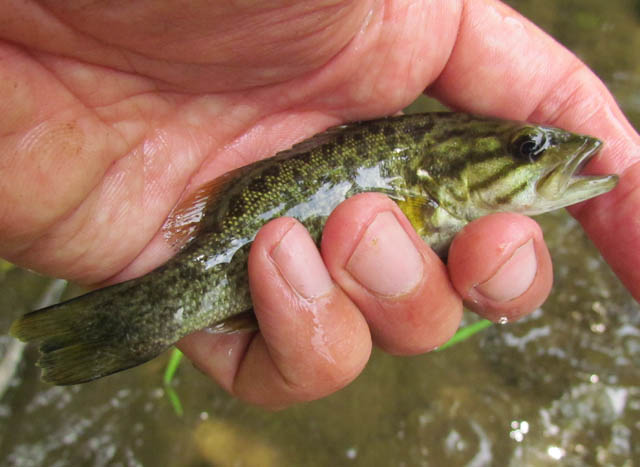
Smallmouth Bass also have dark, vertical bars which are usually green or gray in color. In Ohio, the average adult size is 9-12 inches – this one still has some growing to do.

Smallmouth Bass_9123

Sometimes called a “bronzeback” for its brassy brown hue, the Smallmouth Bass is one of the strongest fish for its weight. The second largest member of the sunfish family, the Smallmouth Bass is only smaller than its cousin, the Largemouth Bass.
Smallmouth Bass_9139

When the railroads spread around the country in the second half of the 19th century, so did the smallmouth. It was transported by train and eventually became a popular sport fish throughout the United States.
Third Eye Herp
E-mail

Baltimore Oriole

oriole_8980

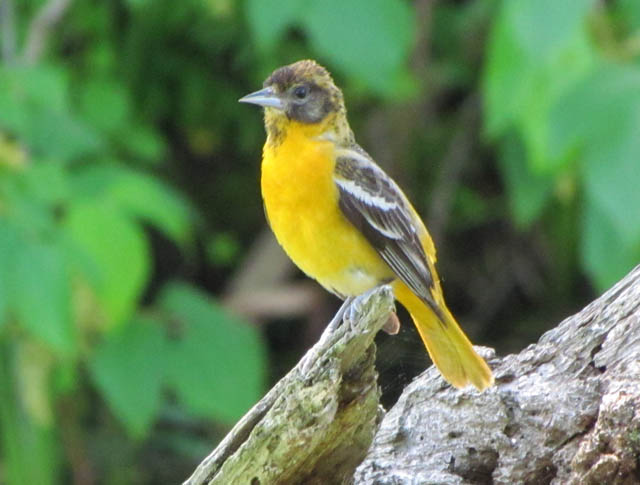
The Baltimore Oriole is Maryland’s official state bird. It has also been the namesake of the state’s professional baseball team, the Baltimore Orioles, since the late 19th century. Baltimore Orioles inhabit Maryland and the rest of the eastern United States only in the Summer months. In Winter, some of these migrating birds live in the southeastern United States, but most fly further south in search of warmer climates.
oriole 092

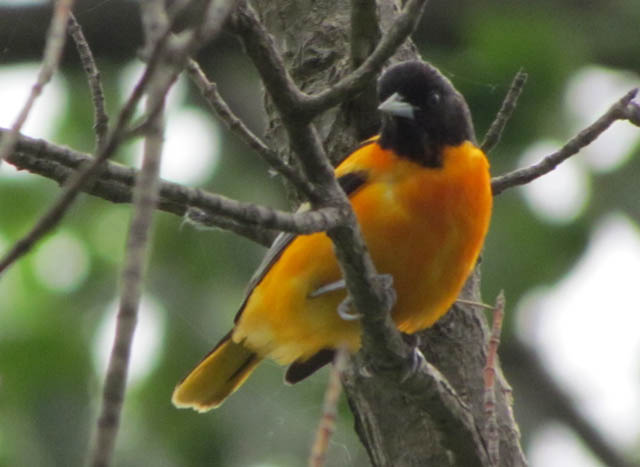
Male orioles are a bold orange hue with black wings and a black head. Females are not as brightly colored.

oriole_8885

These attractive birds frequent woodlands and mainly eat caterpillars and insects. They supplement their diet with fruits and berries. The Baltimore Oriole’s appetite for caterpillars may help protect forests from some destructive pests.
oriole_6454

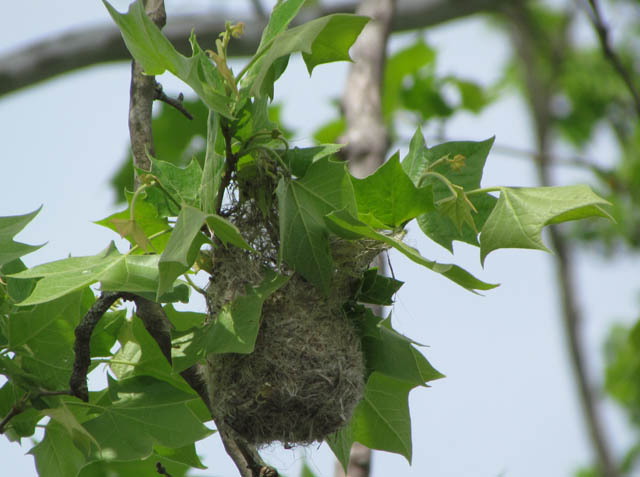
The nest of the Baltimore Oriole is one of the most distinctive bird nests. Females weave remarkable, sock-like hanging structures from slender fibers. The nest are suspended from small tree limbs. Along with natural materials, string or yarn is usually incoporated into the nest.
oriole_5112

The Baltimore Oriole is named for Lord Baltimore, an early leader of the British colony of Maryland. His coat-of-arms was orange and black, like the male oriole. You can sometimes hear the male’s loud, flutelike whistle from the tree tops. It may take some time, but catching sight of one of these brilliant black-and-orange birds is worth the effort.

Third Eye Herp
E-mail

Summertime Dragonflies

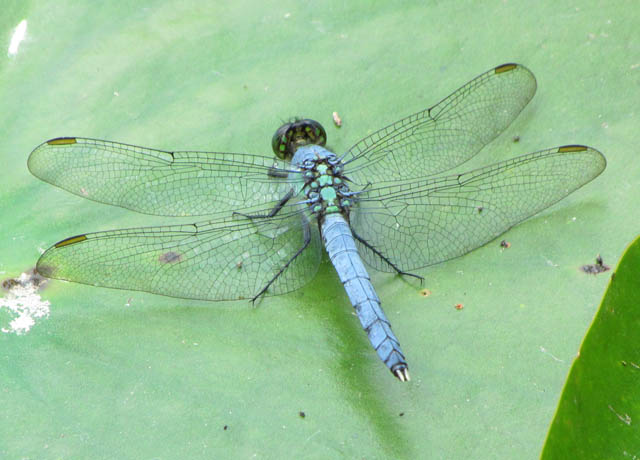
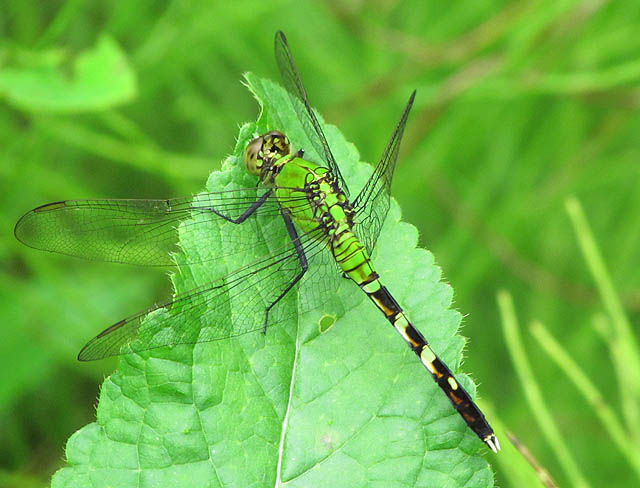
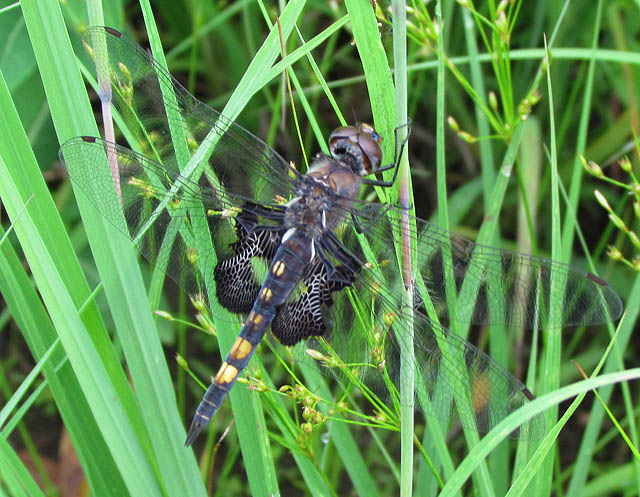
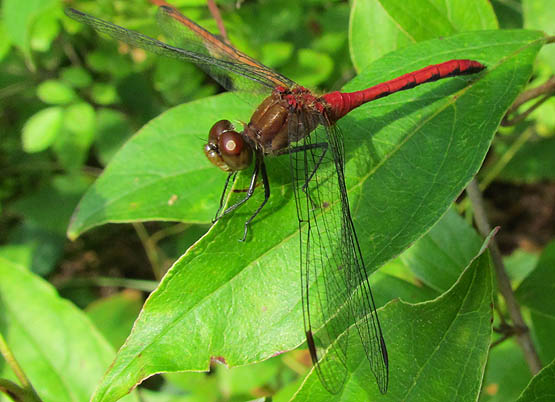
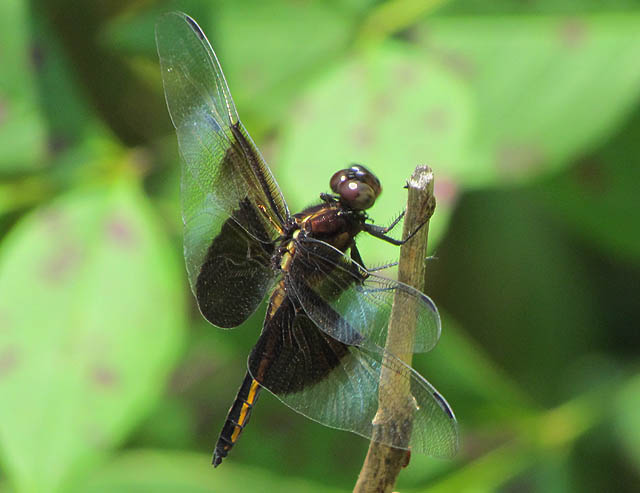
With the warm weather comes dragonflies. There has been quite a bit of rain the last few weeks, creating an ideal situation for mosquitos. Fortunately dragonflies are predators of small flying insects. Here are a few that I’ve seen recently.

Calico Pennant
calico pennant_0810

Common Whitetail
Common Whitetail (female)_9719

Eastern Pondhawk (male)
eastern pondhawk_9965

Eastern Pondhawk (female)
eastern pondhawk_0219

Black Saddlebags
Black Saddlebags_9848

Ruby Meadowhawk

 03 ruby meadowhawk_4031

Widow Skimmer
widow skimmer_9724

Third Eye Herp
E-mail

Gray Treefrog

swamp_6036

During late Spring and early Summer the trills of male Gray Treefrogs can be heard from treetops and backwater areas of rivers.

graytreefrog_3365

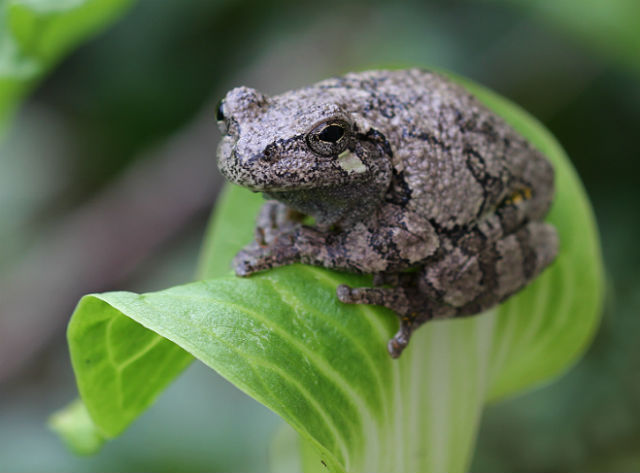
The Gray Treefrog lives in moist woodlands and swamps near water. It finds its insect food in the trees and shrubs. This amphibian is very acrobatic and will often jump from branch to branch to catch its prey.

grey treefrog 085

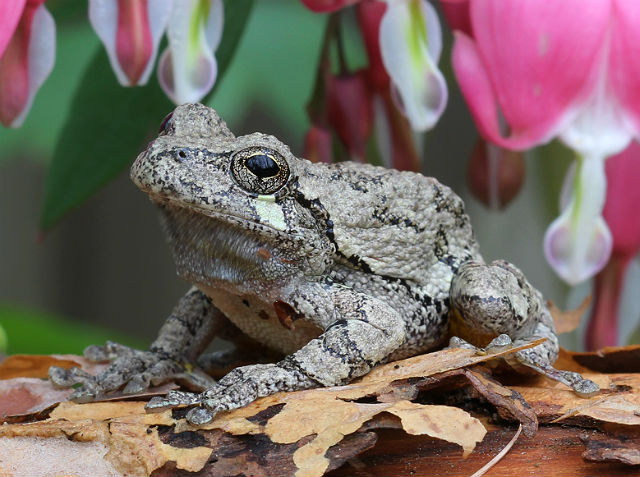
This is a well camouflaged frog that few people ever see. Encountering one outside of breeding season is largely a matter of chance. The Gray Treefrog has the ability to change colors and can be green, gray or brown. Large, rounded toe disks enable this creature to climb.

gray treefrog_3986

This amphibian has bright yellow or orange on the underside of each hind leg that is believed to startle or confuse predators.

grey treefrog 095

The Gray Treefrog have the remarkable ability to withstand freezing temperatures. Adults can survive for several days, partially frozen, at up to 20 degrees below zero. They produce a sort of “natural antifreeze” in their blood to accomplish this feat.

gray treefrog_3583

This is my favorite frog; not only because of the characteristics mentioned above and its “friendly looking” appearance, but also because I can hear it calling from my house and on occasion, find it in my neighborhood – like this one from 2011.

greytreefrog

Third Eye Herp
E-mail

Turk’s Cap Lily

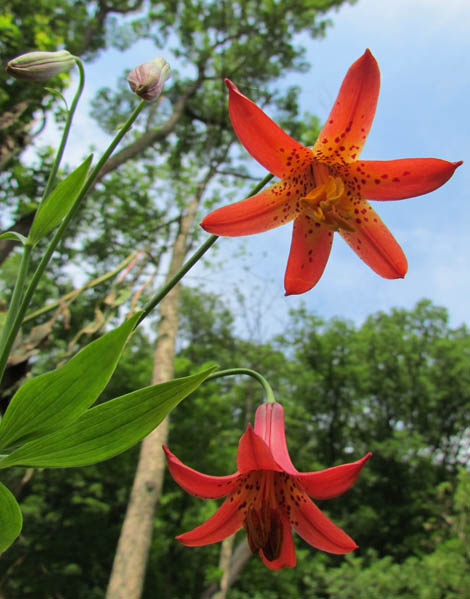
Turk's Cap Lily_9348

This gentle giant of Summer is our most spectacular and largest native lily. Up to 40 flowers have been counted on just one plant.

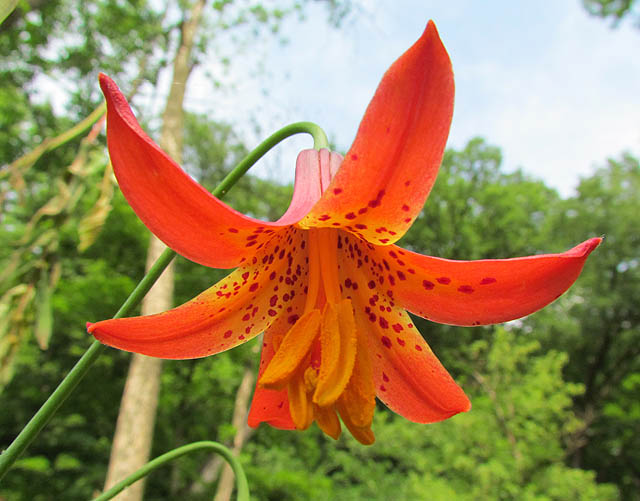
Turk's Cap Lily_9346

Turk’s Cap Lily can be found in eastern North America, where it occurs in wet meadows and moist woods from New Hampshire south to Georgia and Alabama – I saw these on the Ohio Erie Canal Towpath.

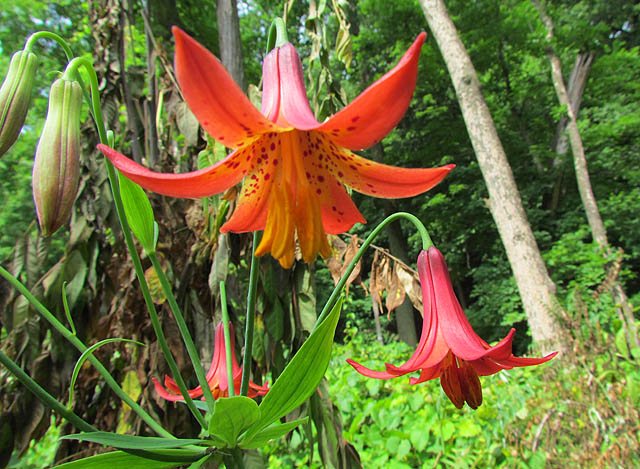
Turk's Cap Lily_9338

This is the tallest of the native American lilies, typically growing 4-6 feet (and less frequently to 8 feet) tall.

Turk's Cap Lily_9340

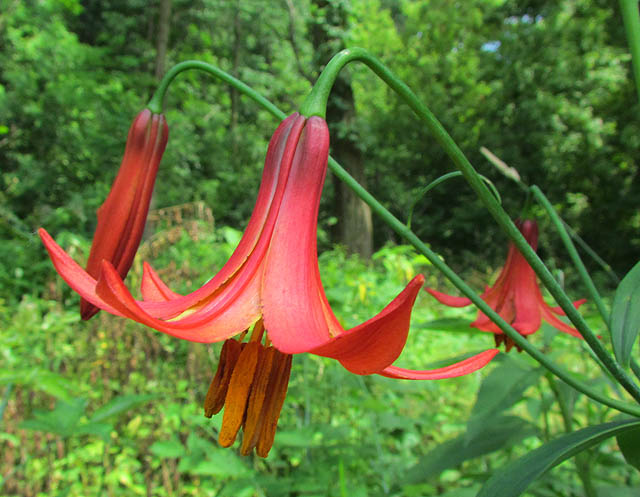
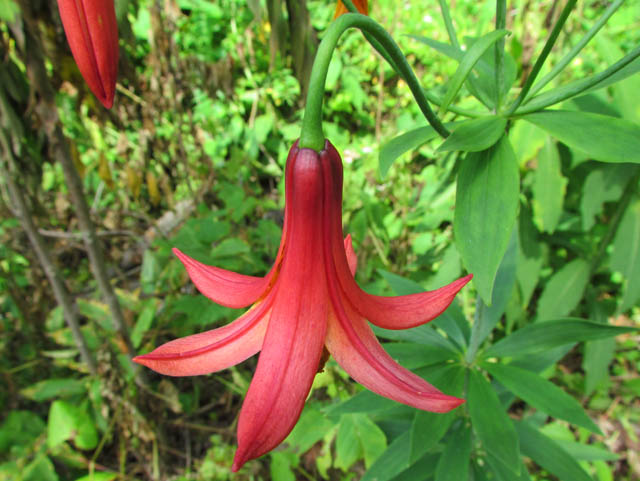
Downward-facing, nodding, orange flowers, up to 4 inches wide, with greenish throats are densely-spotted with maroon. Sharply-reflexed sepals and petals curve backward to touch at the stem, thus forming a “Turk’s cap.”

Turk's Cap Lily_9344

The bulb from Turk’s Cap Lily was used by Indians for soup making and seasoning stew and meat dishes, nearly driving the plant to extinction.

Turk's Cap Lily_9334

This was a nice plant to see in bloom the week of Fourth of July, as it’s a great example of nature’s “fireworks.”

Third Eye Herp
E-mail

Eastern Fox Snake

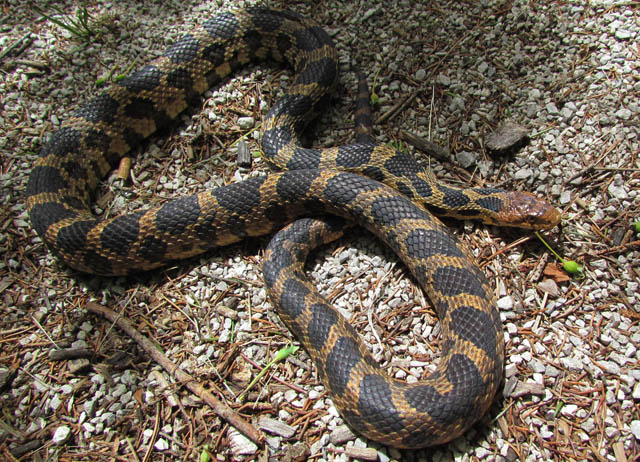
Eastern Fox Snake_6375

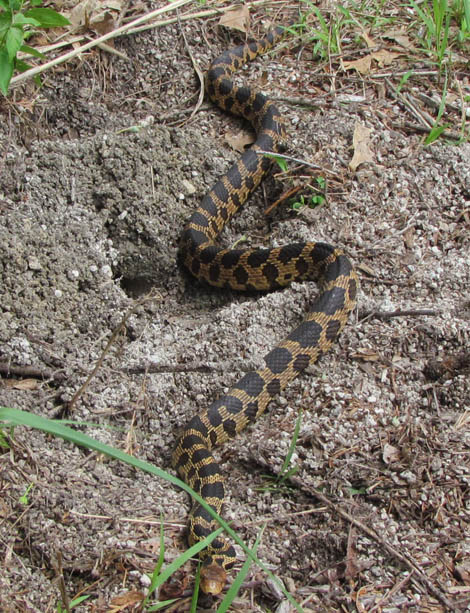
Listed as a “Species of Concern” by the Ohio Division of Wildlife, this reptile has a limited distribution around Lakes Erie and Huron in the United States and Canada. In Ohio, it is known from Lucas, Wood, Ottawa, Sandusky and Erie counties.

Eastern Fox Snake_6550

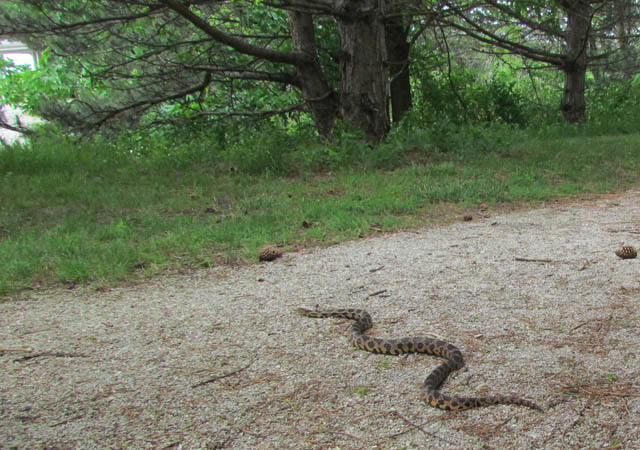
I was vacationing in this snake’s habitat earlier in the month and I came across one crawling alongside a hiking trail. Eastern Fox Snakes are major predators of small rodents, which can be agricultural pests. The fox snake is an excellent climber and a good swimmer, but it is seen more often on the ground. It frequents fields near streams and marshes.

Eastern Fox Snake_6543

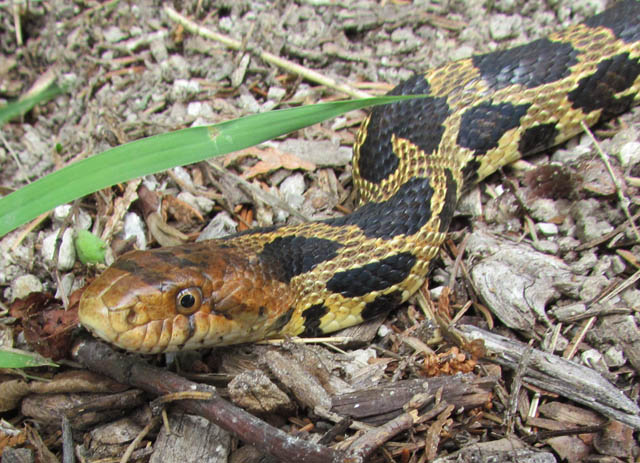
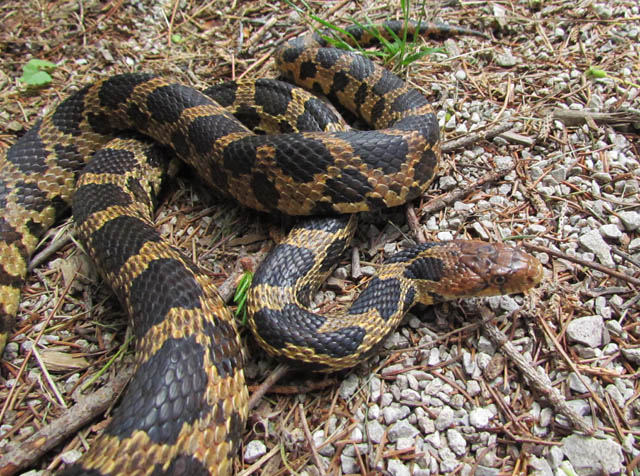
This constrictor is one of Ohio’s largest snakes and may grow to over five feet long. Its color is a yellowish to golden brown, with series of large dark brown blotches. The head is often more red or “coppery” than the body.

Eastern Fox Snake_6544

One of the defense mechanisms of the fox snake is to vibrate its tail as a warning to potential predators. This creates a sound similar to that of a rattlesnake by the rustling of the leaves beneath the snake.

Eastern Fox Snake_6561

When an Eastern Fox Snake is threatened it will secrete a strong substance which some say smells like the musty scent of a fox, hence the name “fox snake.”

Eastern Fox Snake_6559

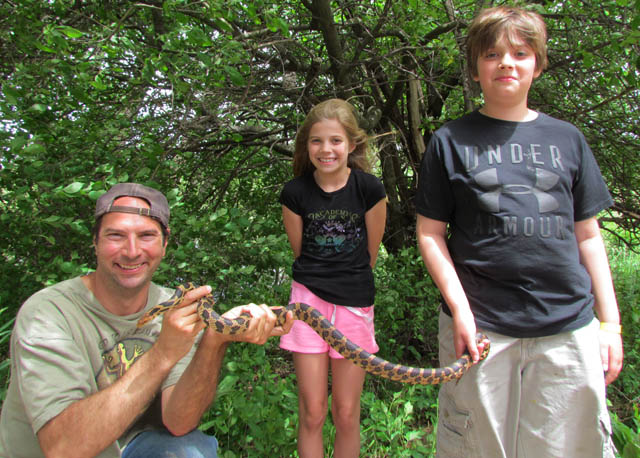
It was awesome to come across one of these snakes once again in the wild and better still to share the experience with my niece and nephew.

Eastern Fox Snake_6566

Third Eye Herp
E-mail

June Bug

forest_5548

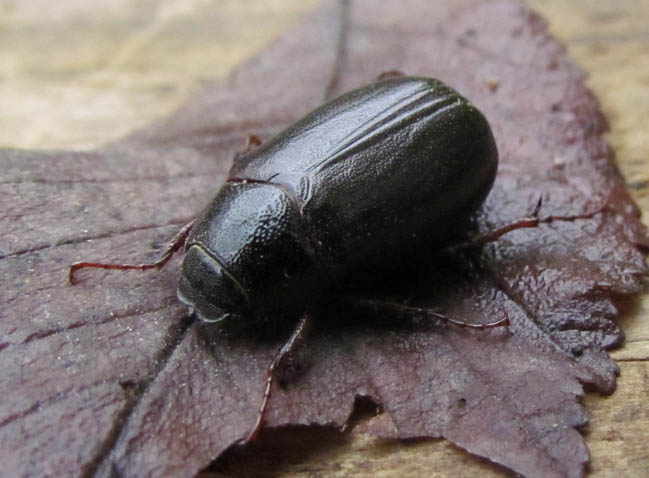
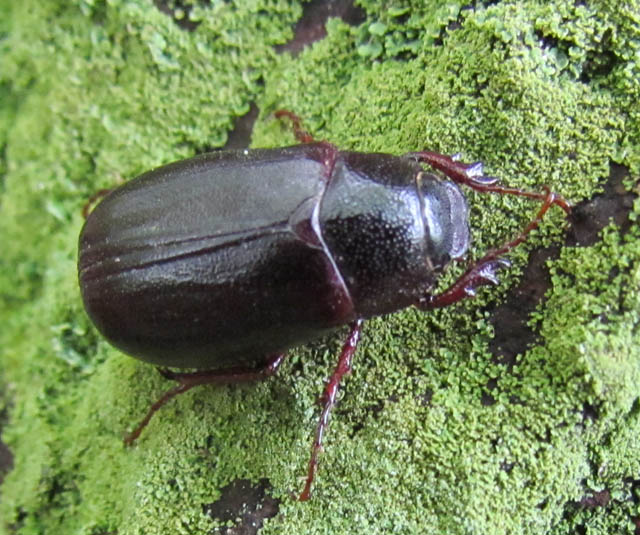
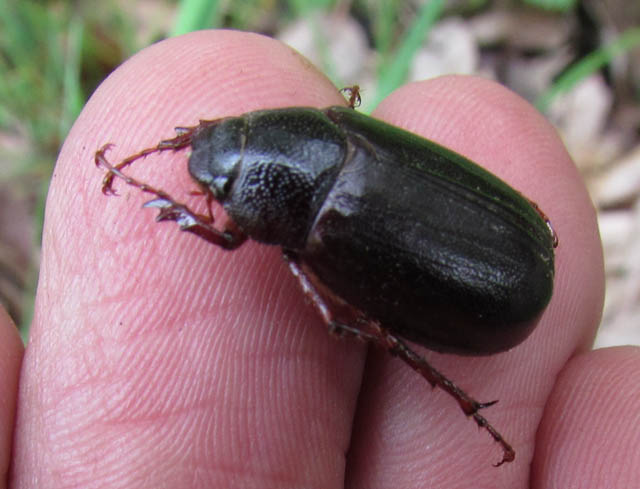
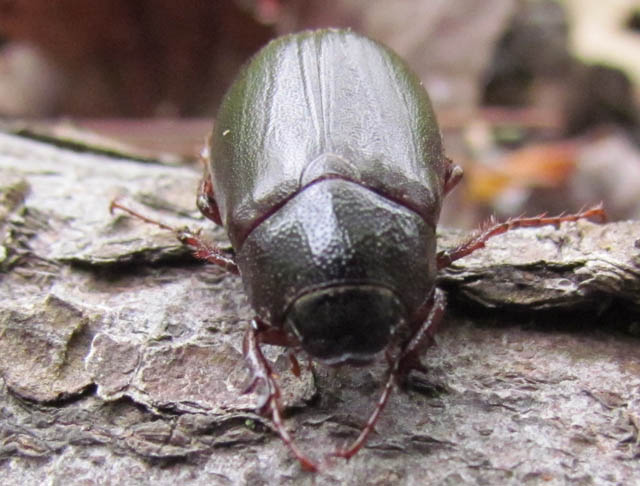
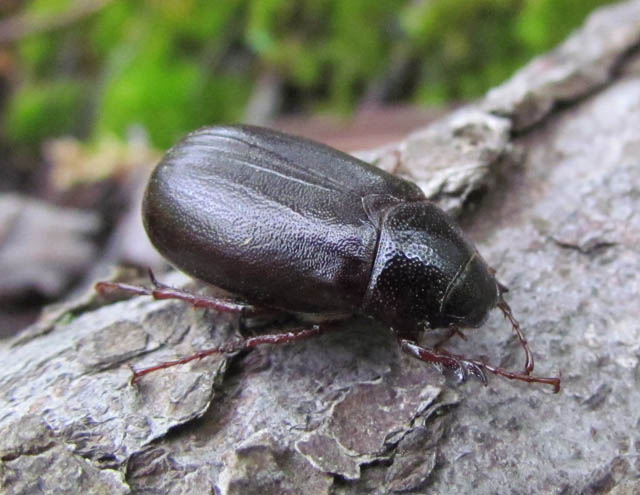
The June Bug (also known as a May Beetle) is a large brown beetle. They are about one inch long, with a small head, glossy back and slender legs. The beetles fly at night in Summer and are attracted to bright light.

june_4237

I found this one under a rock, but there are times when I hear them on the window screen at night. They are clumsy and noisy as they try to get into the house, due to them wanting to be near light.

june_4240 

Many species occur in Ohio, all in the scarab genus Phyllophaga. As such, they vary in color and somewhat in size, being some shade of brown, from tan through dark chocolate brown.

june_4250

Their family, Scarab Beetles is diverse; there are about 30,000 scarab species comprising about 10 percent of all known beetles.

june_4246

To the ancient Egyptians, scarab beetle symbolized hope and the restoration of life. Seals were created in the shape of a scarab and used to stamp documents. Artisans made scarab jewelry using precious gems and painted clay.

june_4244

I just like them because they’re big, bulky, awkward and noisy. Who doesn’t like a beetle with personality?

Third Eye Herp
E-mail

Tuliptree

Tuliptree_0919

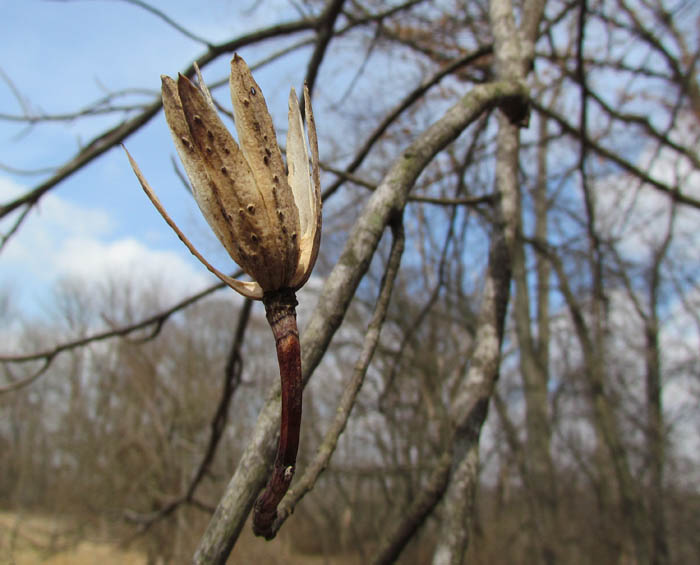
Back in March I noticed the remains of a structure on a tree while on a hike. The Tuliptree, found throughout Ohio, is named for the appearance of its showy flowers and the silhouette of its large leaves, both of which resemble tulips.

Tuliptree_3791

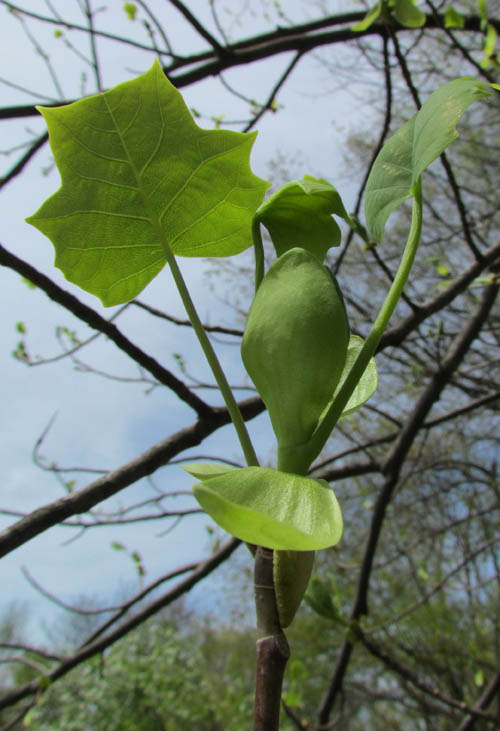
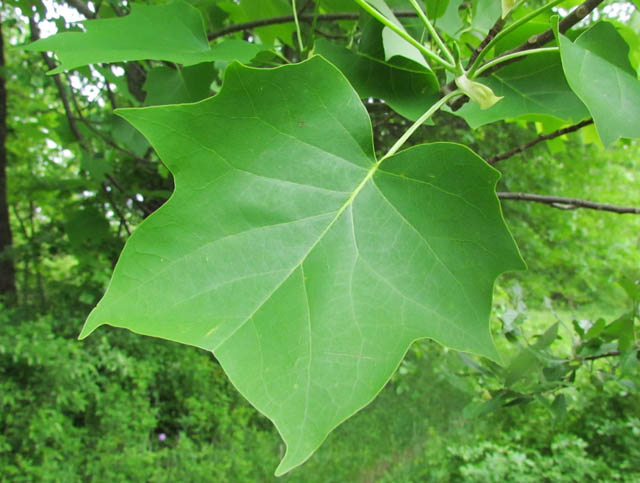
In May I checked on the tree, it was forming buds and leaves. The large, alternate leaves have an unusual shape, with a large blade that is almost square, except for the wide notch on its end.

Tuliptree_5793

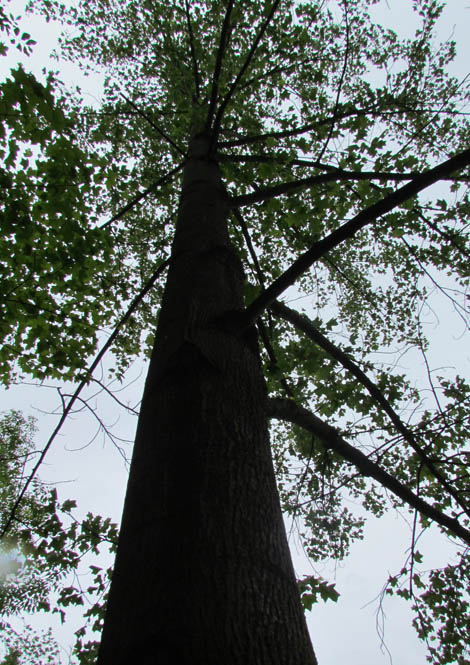
Tuliptree is the tallest tree of eastern forests with the straightest trunks, achieving heights of well over 100 feet and diameters of 4 feet. It is frequently found in moist woodlands and edges of fields, especially on downslopes where water drains.

Tuliptree_5802

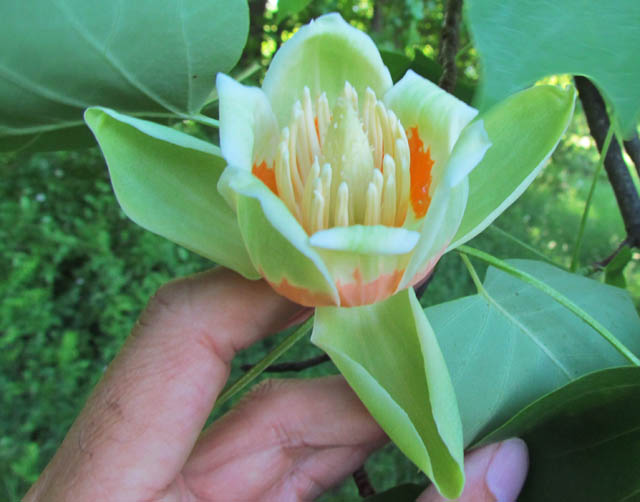
I made a trip back to see this tree yesterday and it was in full bloom. Tuliptree has the largest solitary flower of any native tree in Ohio. It is characterized by six petals that are yellow-green on the outside and orange-yellow on the inside.

Tuliptree_5804

While the flowers are large, they occur scattered in the fully foliaged canopy, and often only occur in the upper canopy of trees at least thirty feet tall. As such, the floral display may go unnoticed, so I considered myself pretty lucky to see this tree’s display at eye level.

Tuliptree_6692

Third Eye Herp
E-mail

Palmer’s Chipmunk

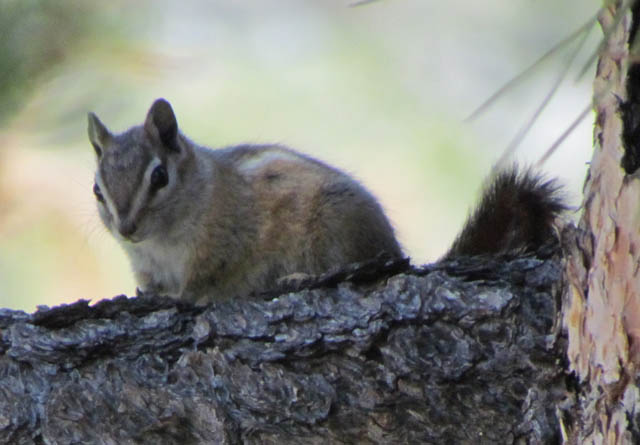
Palmer's Chipmunk_7528

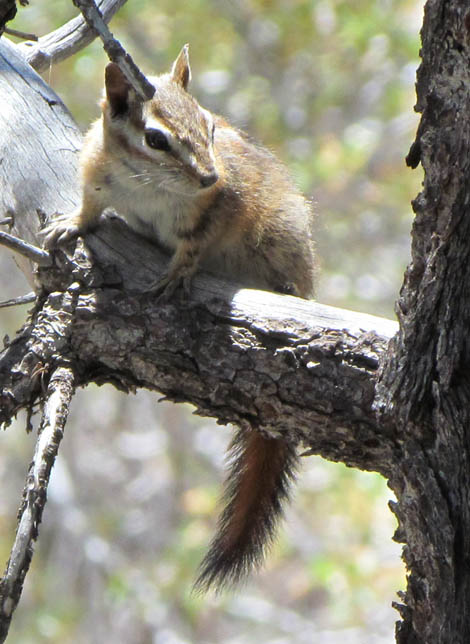
Palmer’s Chipmunks live in a “sky island”— Mount Charleston in southwestern Nevada, surrounded by a desert that the chipmunks cannot cross. These mammals are unique to this area. They occur here and nowhere else in the world.

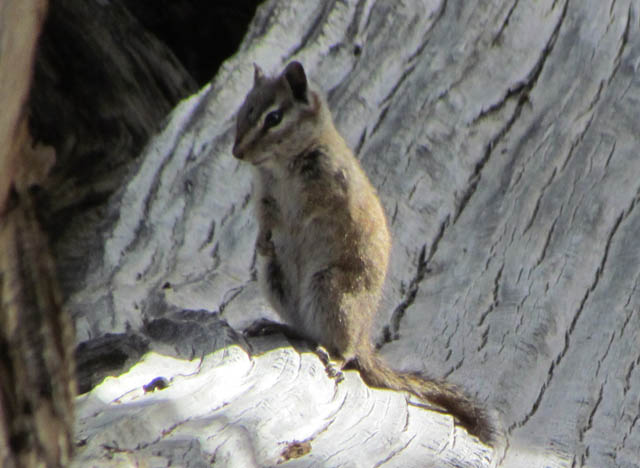
Palmer's Chipmunk_8187

This species only lives at higher elevations in the Yellow Pine Forest, Pine-Fir Forest and Bristlecone Pine Forest Life Zones. This species can be locally abundant, but is very limited in distribution. The total adult population size is unknown.

Palmer's Chipmunk_8195

The name “chipmunk” is derived from the chipping noises these animals make with their teeth. Loud trilling type noises are used to call to potential mates, as well as in defending territories.

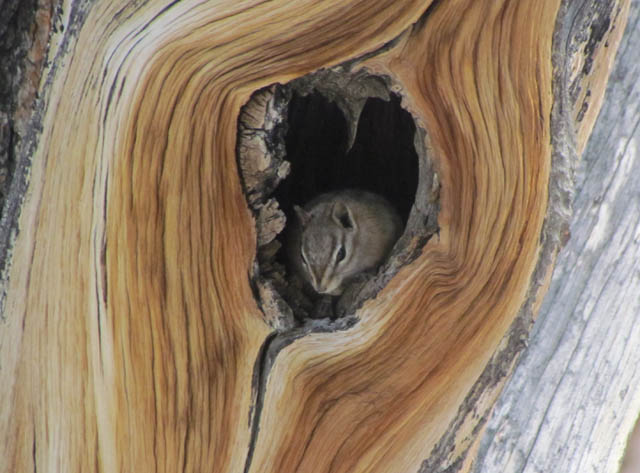
Palmer's Chipmunk_7644

It rarely ventures far from shelter among large rocks, logs, or cliff crevices.  Dens are typically on or near the ground but sometimes it nests in trees in cavities made by woodpeckers.

vIMG_7653

Palmer’s Chipmunks are omnivorous. Their diet includes seeds, fruits, various plants, fungus, and invertebrates such as worms, snails and insect larvae. Bird eggs and small mice are occasionally eaten.

Third Eye Herp
E-mail

Phainopepla

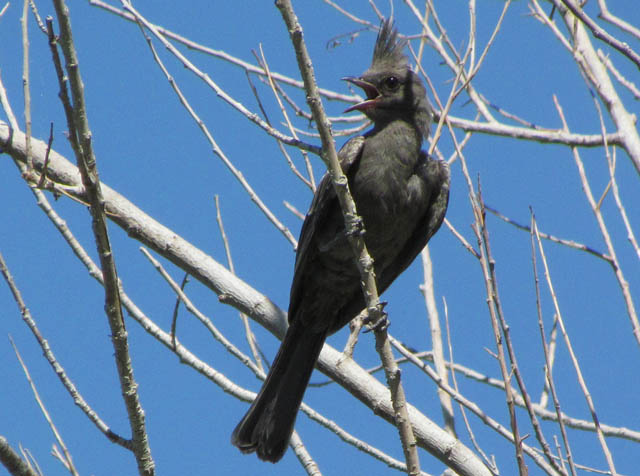
Phainopepla_8422

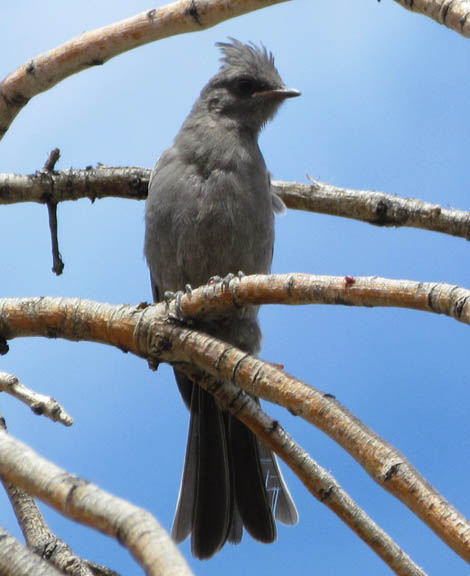
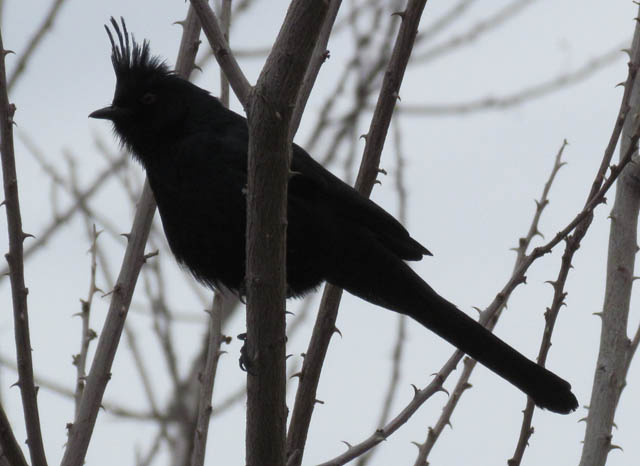
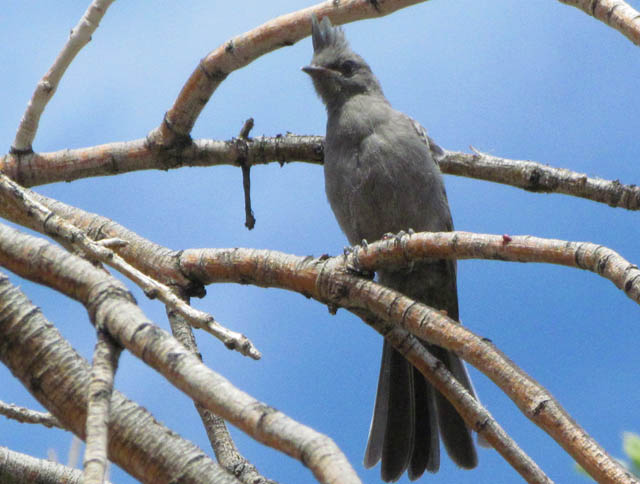
The Phainopepla is a striking bird, with a noticeable crest and a long tail; it is slender and has an upright posture when it perches. It is particularly notable for its mysterious pattern of breeding twice each year, in two different habitats. It is primarily found in washes, riparian areas and other habitats that support arid scrublands.

Phainopepla_7322

This bird belongs to a small group of birds known as the silky flycatchers, but they are not related to true flycatchers. The male is shiny and black with a crest and bright red eyes, while the female is gray.

Phainopepla_8467

The Phainopepla has a unique relationship with its main food source, mistletoe berries. Mistletoe berries are dependent on the bird to plant them on the branch of a tree. It does this by eating the berry and digesting the seeds, yet not harming them. The bird’s droppings, which contain the seeds, will hit a branch and then the seed will start to germinate. When there is an abundance of mistletoe berries, Phainopeplas will congregate in the hundreds; otherwise, they are hard to find.

Phainopepla_1094

An individual Phainopepla eats at least 1,100 mistletoe berries per day, when they are available. The Phainopepla rarely drinks water, even though research indicates that it loses about 95 percent of its body mass in water per day. Instead, it gets the water it needs from its diet of mistletoe.

Phainopepla_8468

The name “Phainopepla” (pronounced fay-no-PEP-la) comes from the Greek for “shining robe,” a fitting characterization of the shiny, jet-black plumage of the adult male. This one one of several really interesting birds that I observed on my Vegas trip.

Third Eye Herp
E-mail