Sooty Longwing

vIMG_8535

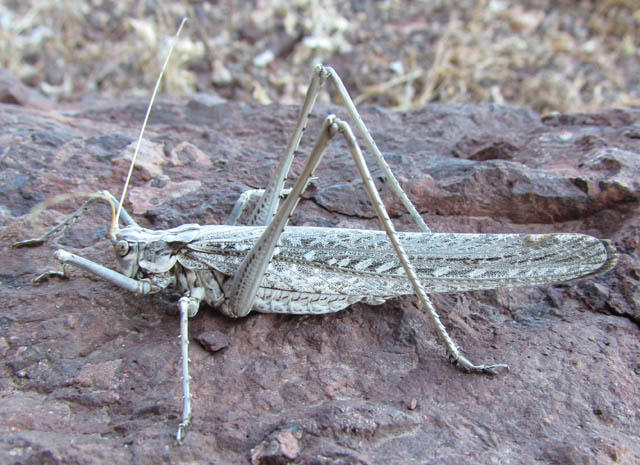
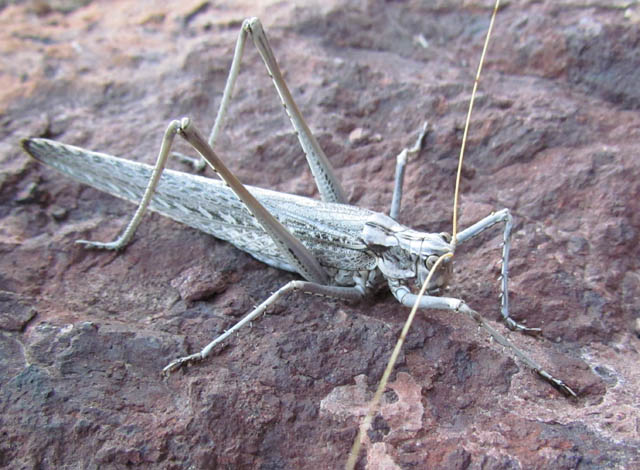
I’ve come across several of these large, shield-backed katydids on my trip. There is a green version of this insect, but I have yet to see one.
katydid_7182

Sooty Longwings are capable of feeding on a number of plant species. However, unlike its eastern relatives, this insect shows carnivorous tendencies and can watched hunting in shrubs at night with a flashlight.
katydid_7178

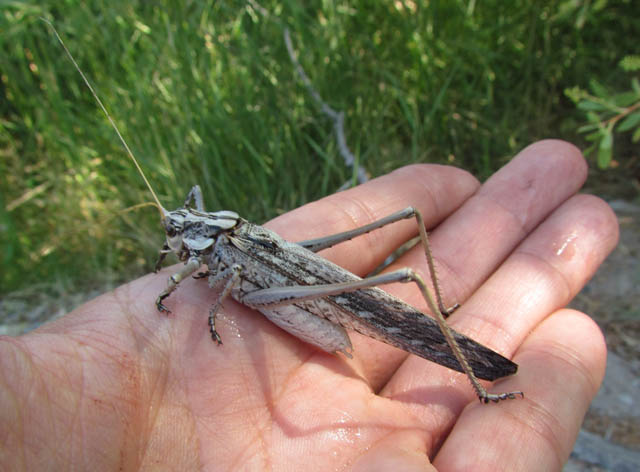
They are attracted to lights and capture and eat other insects that come to the lights. I’ve seen a few walking around paved roads at night, probably scavenging for food.
katydid_7310

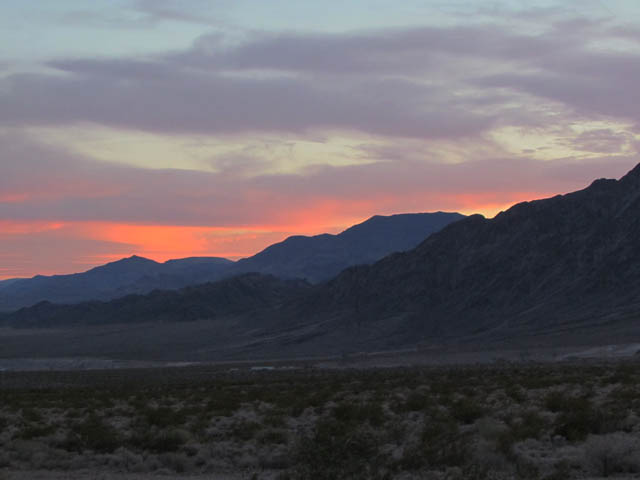
Mostly found in the desert, they are active from June through November and found in a variety of shrub species such as creosote and mesquite.

katydid_7183

The males call on warm nights with a loud, pulsating trill, punctuated by brief pauses. I enjoy the intricate lines and patterns on these katydids – it’s almost like a work of art.
Third Eye Herp
E-mail

Spotted Leafnose Snake

Spotted Leafnose Snake_7985

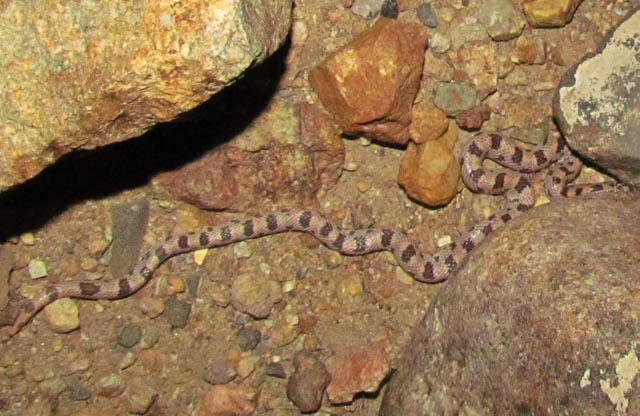
While driving in the Arizona desert at night, I spotted a silvery reflection in the road up ahead. I knew it must be a snake, so I hit the brakes, got out of the car, and went over to investigate.

Spotted Leafnose Snake_7809

The Spotted Leafnose Snake lives in areas with mixed sandy soil and rocky or firm soil with some brush cover. It is a small serpent, growing to about 18 inches. It is secretive and nocturnal. This snake preys extensively on small lizards and their eggs, especially geckos.

Spotted Leafnose Snake_7801

The genus name Phyllorhynchus is composed of two Greek words; phyllos, meaning “leaf”, and rhynchos, meaning “nose” or “snout.”

Spotted Leafnose Snake_7811

The enlarged nose scale is believed to aid in burrowing, though this little snake, because of its super-secretive nature, is still shrouded in mystery.

Spotted Leafnose Snake_7812

After taking a few photographs, I carried the snake to the other side of the road and released it into the night.

Third Eye Herp
E-mail

Great Basin Bristlecone Pine

bristlecone_7546

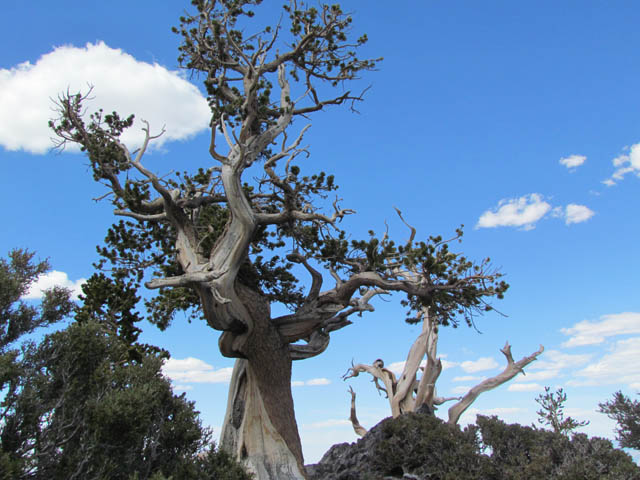
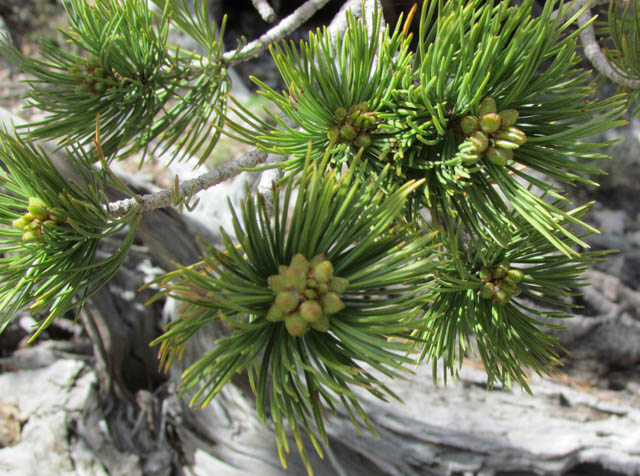
Great Basin Bristlecone pines are remarkable for their great age and their ability to survive adverse growing conditions. In fact, it seems one secret to their longevity is the environment in which most bristlecone pines grow.
bristlecone_7633

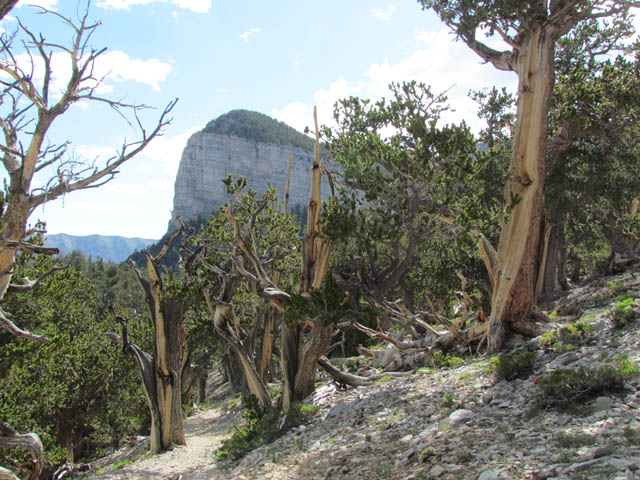
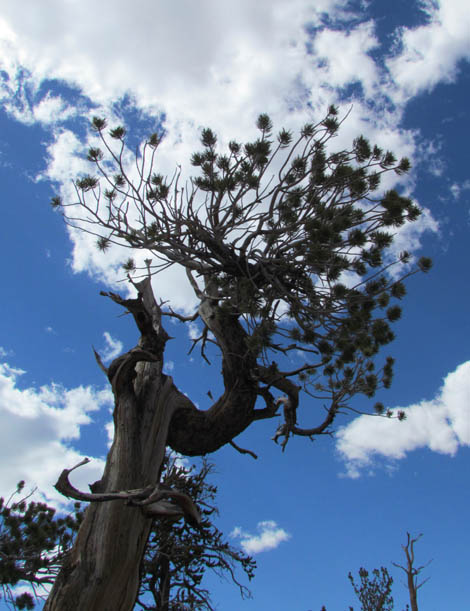
This tree most often grows where conditions are harsh, with cold temperatures, a short growing season and high winds. The examples I saw today were high atop Mount Charleston. Trees in these high-elevation environments grow very slowly and in some years don’t even add a ring of growth.

bristlecone_7531

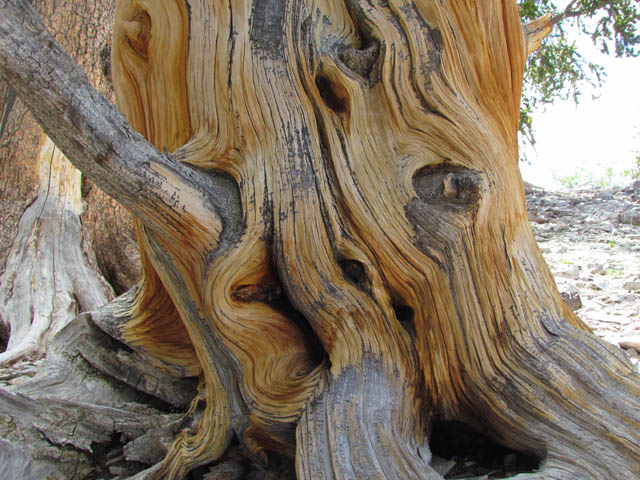
This slow growth makes their wood very dense and resistant to insects, fungi, rot and erosion. Vegetation is very sparse, limiting the role of fire. Bristlecone pine seeds are occasionally cached by birds at lower elevations.

bristlecone_7561

While they grow more rapidly in more “favorable” environments at lower elevations, they do not achieve their legendary age or fascinating twisted shapes.

bristlecone_7623

Not only are they cool to look at, bristlecone pine is the longest lived tree species in the world — a few are known to have lived for over 5,000 years.

bristlecone_7656

I set my sights on finding a particular Bristlecone Pine in Nevada that is over 3,000 years old. The six mile round-trip hike was at times at elevations of over 11,000 feet. I finally did get to meet up with that tree.

Third Eye Herp
E-mail

Giant Carolina Wolf Spider

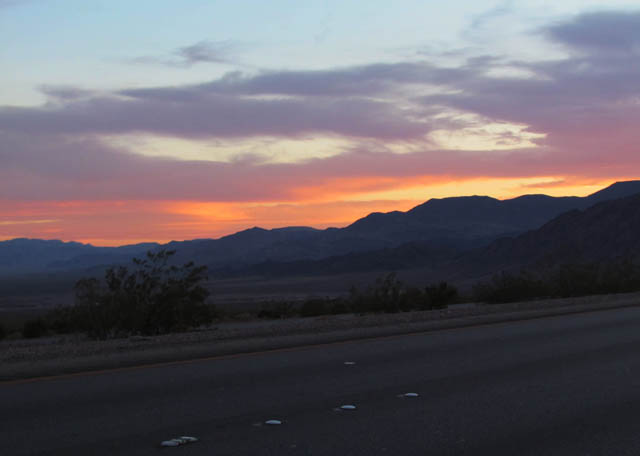
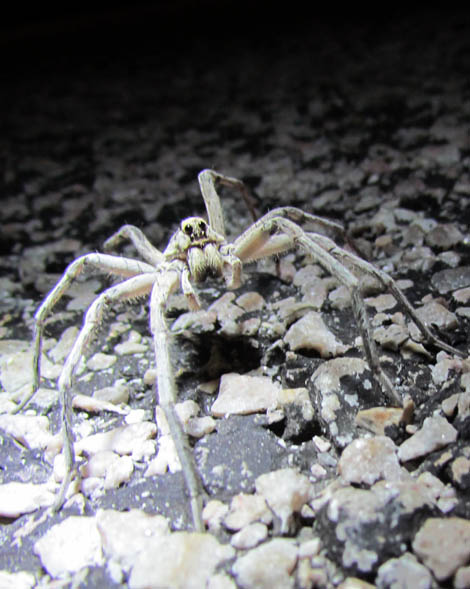
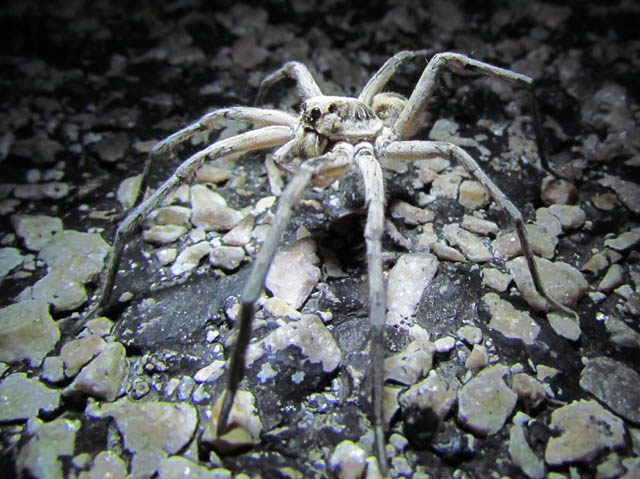
Driving remote roads at night, I can see the green reflections from the eyes of large invertebrates on the pavement.

Wolf Spider_7982

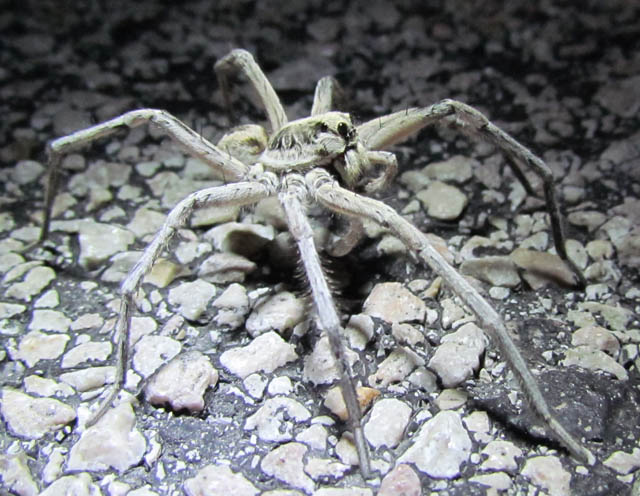
Wolf Spiders do not build webs to catch their food. Instead they use their vision and their sensitivity to vibrations to hunt for prey.

Wolf Spider_8034

This creature has eight eyes that are arranged in three rows. The bottom row has four small eyes, the middle row has two very large eyes and the top row has two medium-sized eyes.

Wolf Spider_8035

This is a pretty large spider – with a three to four inch legspan.  It may hunt actively at night or wait in ambush at the mouth of its burrow, where it hides during the day. Wolf Spiders are unique among their species because the females carry their eggs along with them in a round silken egg sack attached to their abdomens.

Wolf Spider_8047

Immediately after the babies hatch and emerge from their protective case, they climb up their mother’s legs like a ladder and all crowd together on her back. Here they’ll stay for a few weeks until they’re large enough to hunt on their own.

Third Eye Herp
E-mail

Arroyo Toad

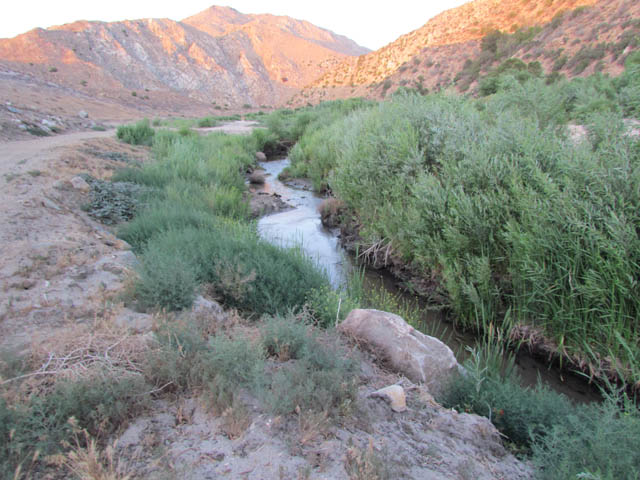
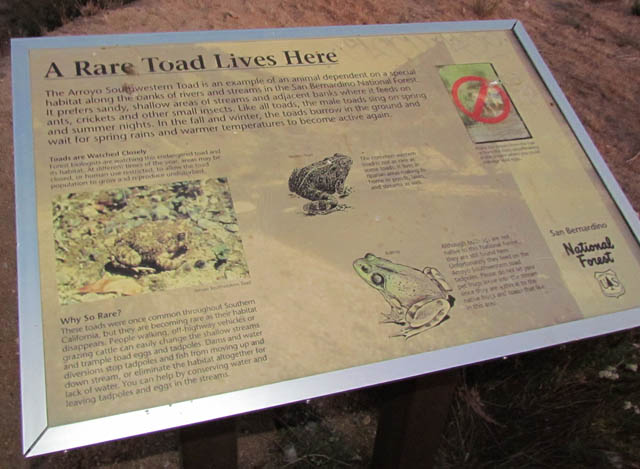
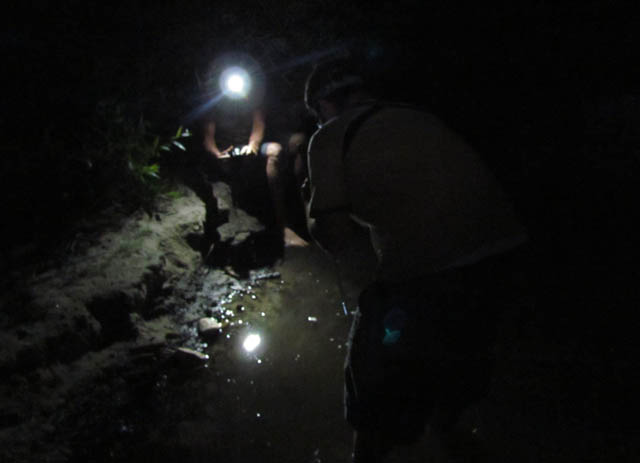
I took a road trip to Barstow, California. Some friends there agreed to help me look for a Federally Endangered amphibian that I’ve never seen in the wild  – the Arroyo Toad.

Arroyo Toad_6861

The reasons for this toad’s decline are similar to the plight of many amphibians – their specialized habitat is being damaged by water management practices, pollution and invasive species.

Arroyo Toad_6883

When darkness fell, we searched the creek with headlamps. California Toads, American Bullfrogs (an invasive species) and Baja California Treefrogs were found. Although it took awhile, we eventually found Arroyo Toads too.

Arroyo Toad_6898

They are a medium-sized toad that is plump and stocky with dry, uniformly warty skin. The advertisement call of the Arroyo Toad is a fast musical trill, about 10 seconds, rising in pitch, and ending abruptly. We were able to hear a few calling in the night.

Arroyo Toad_6909

Adults eat a wide variety of invertebrates, but mostly consume ants, especially nocturnal, trail-forming tree ants. So insuring that an animal has its food source is important in managing wild populations.

Arroyo Toad_6895

Arroyo Toads have extremely specialized habitat needs, including exposed sandy streamsides with stable areas for burrowing and scattered vegetation for shelter.

Arroyo Toad_6905

In addition, they need areas of quiet water or pools free of predatory fishes with sandy or gravel bottoms that do not contain silt. This is necessary for successful reproduction.

Third Eye Herp
E-mail

Desert Iguana

desert iguana_7109

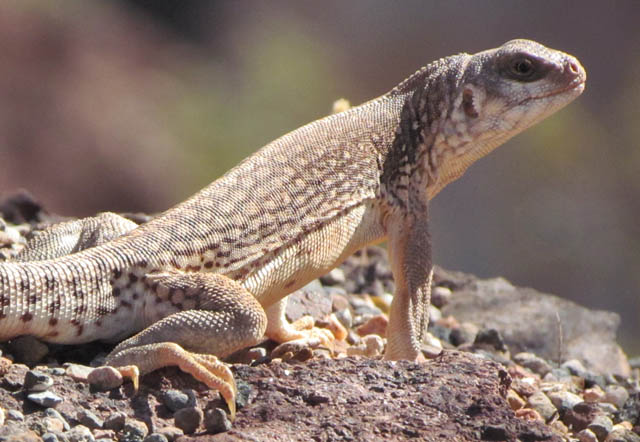
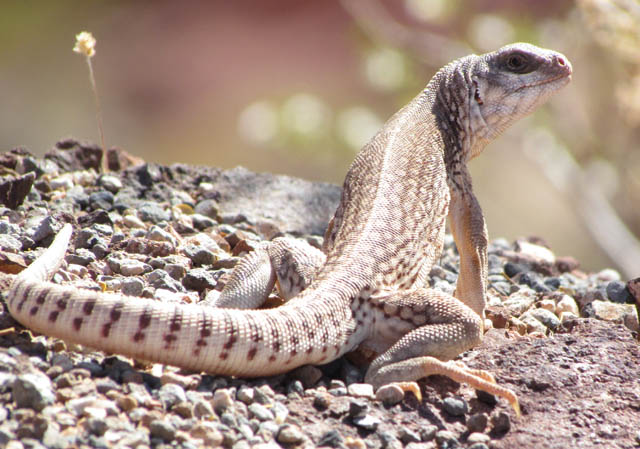
An adult desert iguana is large for a lizard, measuring head-to-tail 10-16 inches. The tail makes up most of the lizard’s length. Their genus is Dipsosaurus, which translates to “thirsty lizard.”

desert iguana_6982

Active in daylight, desert iguanas change color to regulate body temperature. They are darkest in the morning to absorb more heat from the sun, and they will turn nearly pure white by early afternoon to reflect sunlight. These lizards can stand hotter temperatures than most, remaining on 115º F days.

desert iguana_6994

Though desert iguanas seem to prefer open, relatively flat habitat, they rely heavily on the Creosote Bush in these areas for a number of needs. This plant provides some of the lizard’s diet (flowers), and the lizard burrows around and under the plant’s roots to avoid extreme temperatures and predators.

desert iguana_6990

I always enjoy seeing this large, heat-loving “classic” desert reptile.

Third Eye Herp
E-mail

Screwbean Mesquite

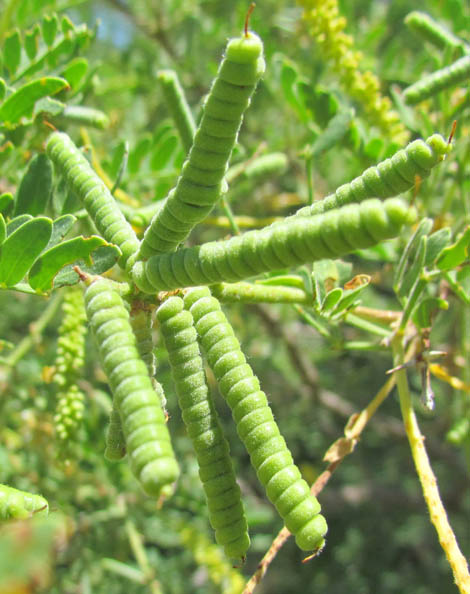
Screwbean Mesquite_7053

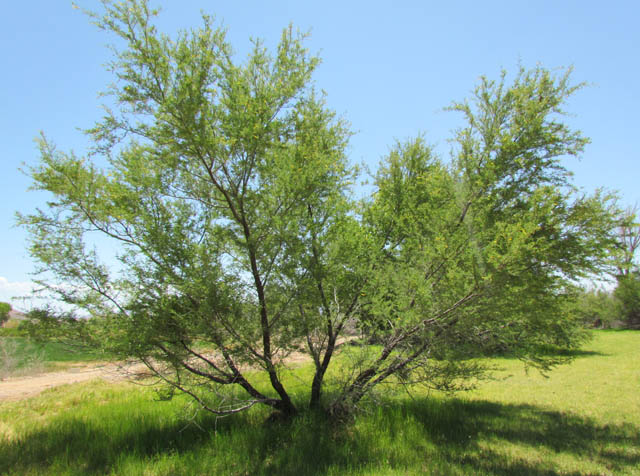
Perhaps the first thing you’ll notice about Screwbean Mesquite is the unusual spiral of the seed pods from which it takes its name.

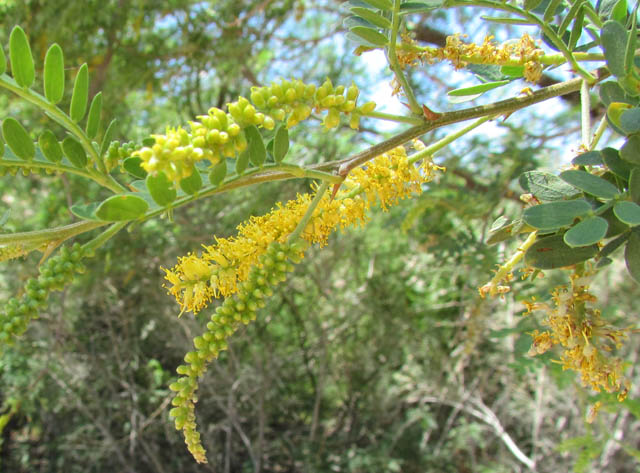
Screwbean Mesquite_7027

This is a medium-sized, spindly, many branched, thorny shrub with many straight, stout spines along the stems.

Screwbean Mesquite_7057

Native Americans relied on the mesquite pod as a dietary staple from which they made tea, syrup and a ground meal called pinole.

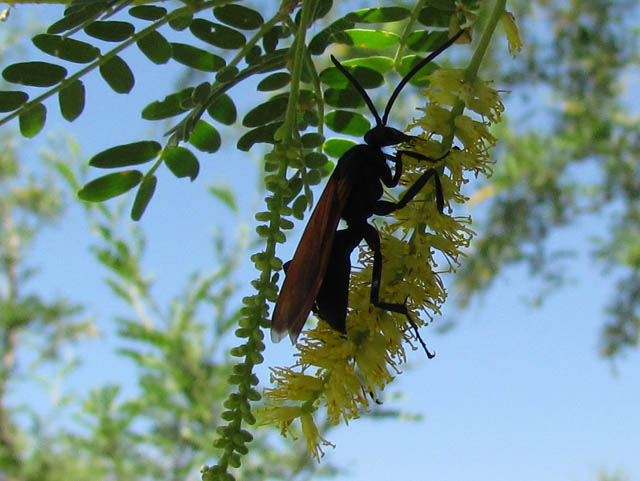
Screwbean Mesquite_7050

A favorite of bees and other insects (like this Tarantula Hawk), mesquite flowers produce a fragrant honey. Its pale to very bright yellow 2-to-3 inch spike blooms are produced from May to June.

Screwbean Mesquite_7079

This is a cool plant to see, smell, taste and touch in person.

Third Eye Herp
E-mail

Pinacate Beetle

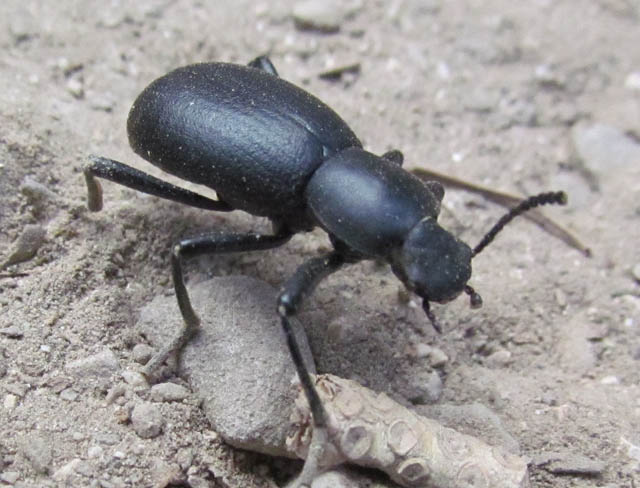
Pinacate Beetle_6979

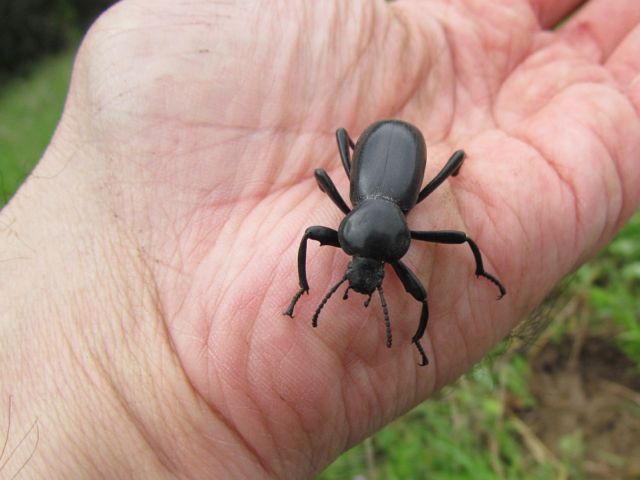
These shiny black beetles are common in the Southwest. They are called a number of other different names, such as desert stink beetles, clown beetles and headstanding beetles.

Pinacate Beetle_7607

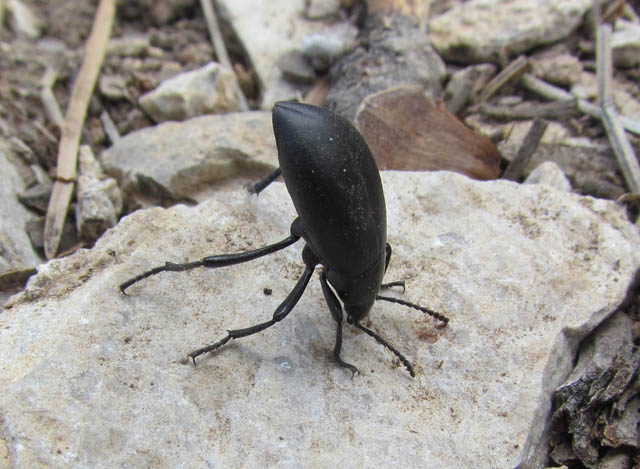
When threatened, it will raise up on its back legs to stick its bottom in the air. This is a warning to stay back. For protection, it can emit a bad-smelling odor.

Pinacate Beetle_7496

Thickened, leathery wing-covers protect their delicate flight wings, which they do not use. Pinacate beetles are one of the great walkers of the desert beetle world and are often encountered, seemingly wandering at random.

pinacate beetle_zps67e53367

They occur across a variety of habitats, from open dunes to shrubs to mountains. There are several genera and over 1400 species of beetles similar to this one.

Pinacate Beetle_7611

Third Eye Herp
E-mail

Gila Spotted Whiptail

Let’s see what’s up in the Las Vegas area this week, OK?

whiptail_7719

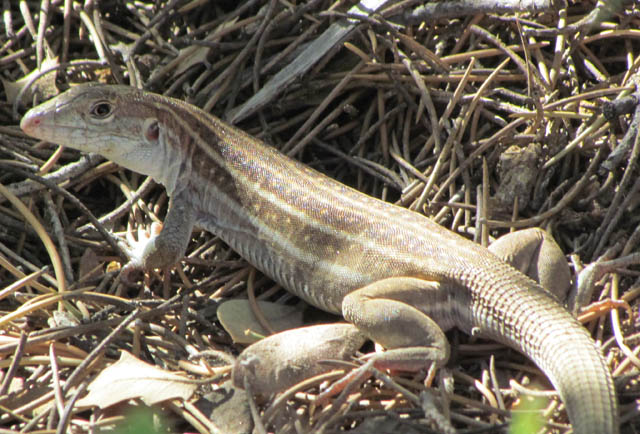
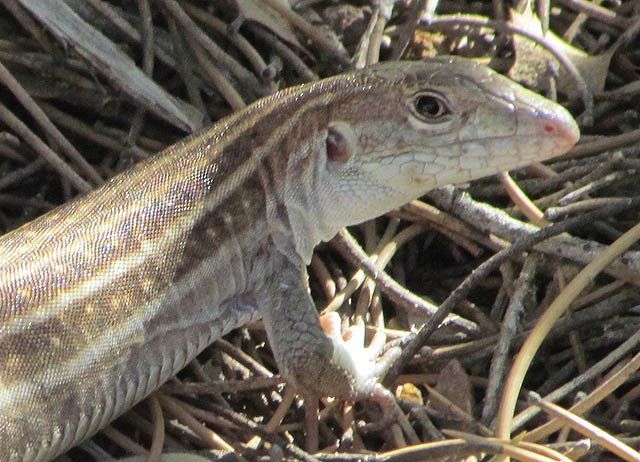
Today I went to the Cerbat Mountains in Arizona and saw this reptile. This lizard is usually found in relatively open and sunny areas, often in the vicinity of pine trees. It is an alert, day active, fast-moving ground-dweller.

whip_6760

It forages for a variety of insects and spiders by rooting around in leaves under bushes and digging in the soil around the bases of rocks.

whiptail_7715

Whiptails have distinctive pointed heads and very long, whiplike tails.

whip_6760j

Here’s a pretty crazy thing about these reptiles: All Gila Spotted Whiptails are female. Eggs are unfertilized and hatchlings are clones of the mother.

Third Eye Herp
E-mail

Pheasant’s Back Mushroom

Pheasant Back Mushroom_4460

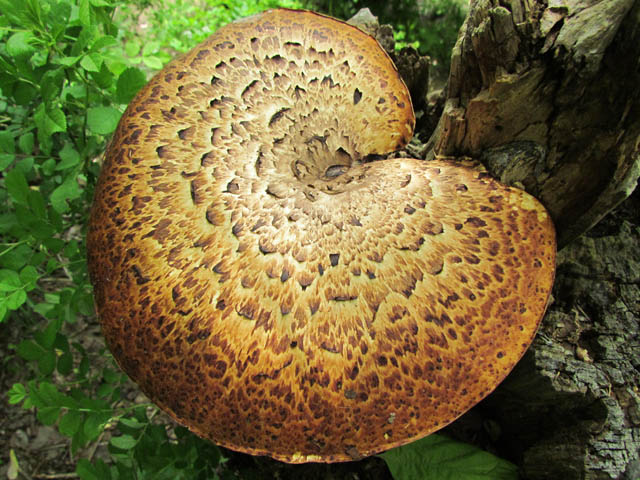
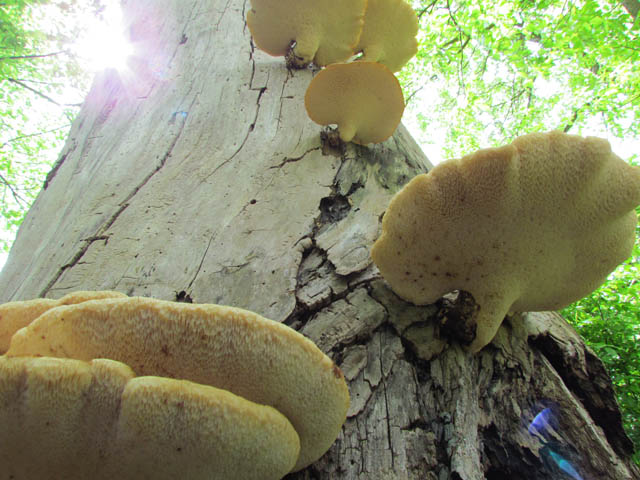
When out hiking recently I came across these large brackets growing out of dead trees. Their size (up to two feet across) and wild bird-like colors and patters were rather eye-catching.

Pheasant Back Mushroom_4474

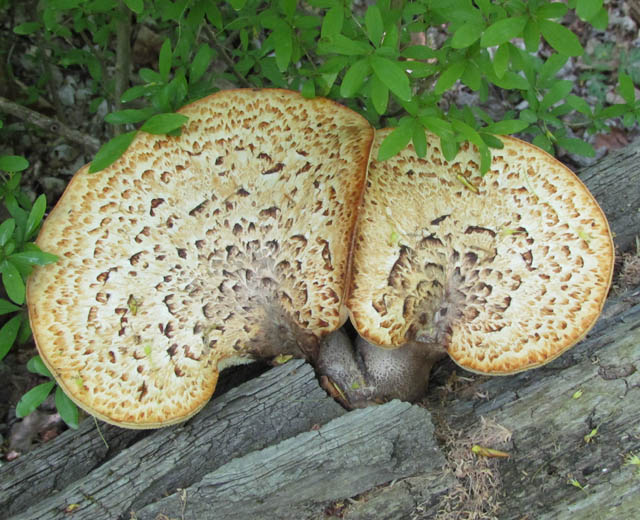
This large and distinctive fungus is not likely to be overlooked in nature. The radial bands of dark, flat scales on the upper surface of the cap make this species easy to identify, since there is nothing else quite like it in the forests of eastern North America.

Pheasant Back Mushroom_4464

The underside of the shelf has large, irregularly-shaped, angular pores instead of gills. Most grow as a shelf-shaped or fan-shaped structure with a thick stem. Occasionally they grow as a complete circular, funnel-shaped mushroom.

Pheasant Back Mushroom_4517

Like its relatives, Pheasant’s Back Mushroom plays an important role in breaking down the tough materials wood is made of and returning those nutrients to the soil. This is a key part of a forest’s recycling process.

Pheasant Back Mushroom_4487

This organism is also known as Dryad’s Saddle. In Greek mythology, dryads were forest nymphs who were responsible for the trees and did not mingle with the other gods. They were depicted with oak-leave crowns and carried axes to protect their charges from intruders.

Pheasant Back Mushroom_4149

This fungus is also pretty cool because it smells like watermelon!

Third Eye Herp
E-mail