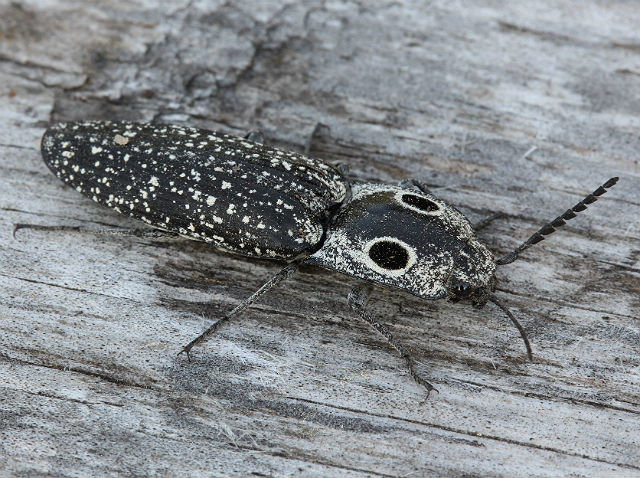
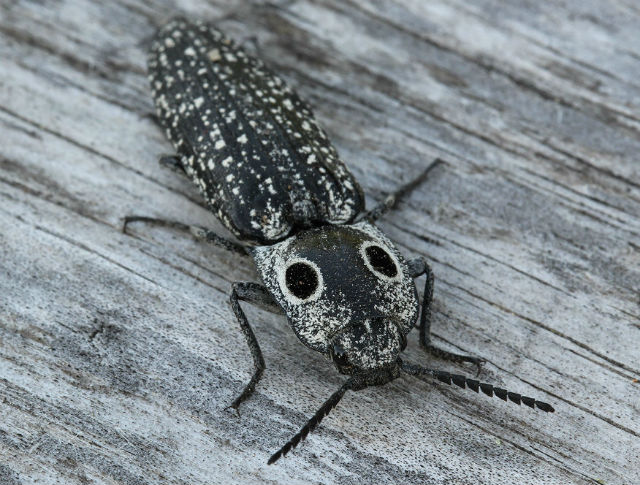
Cactus Longhorn Beetle

Cactus Longhorn Beetle_2597

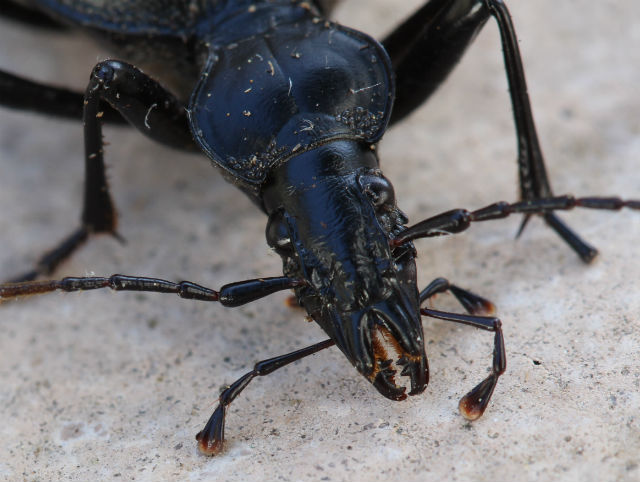
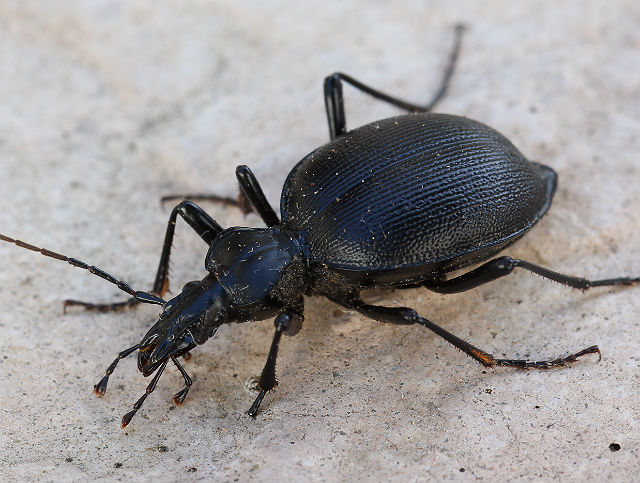
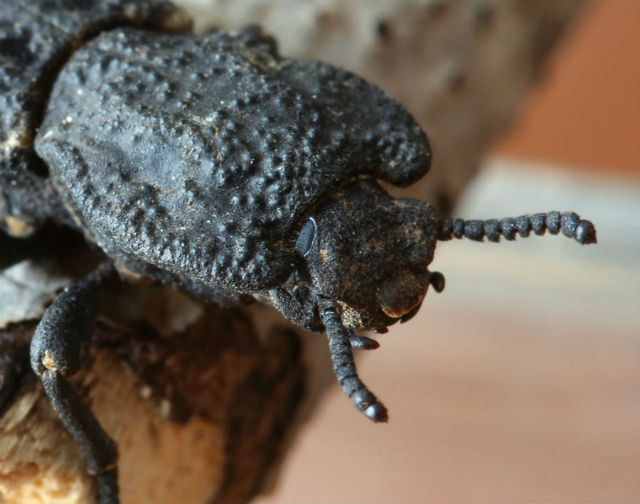
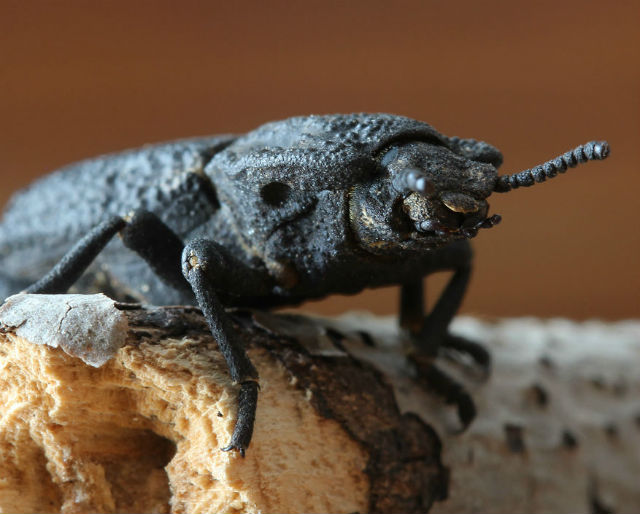
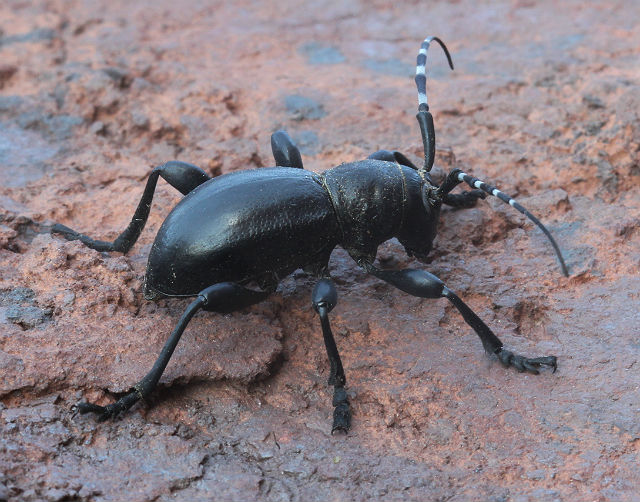
During my last visit to the Mojave Desert I had my first encounter ever with this very cool insect. It lives in the desert scrub and mesquite woodlands of the American Southwest. It spends most of its life cycle in and around various cactus plants, relying on the cactus for both food and shelter.

Cactus Longhorn Beetle_2980

These flightless black beetles have long antennae that stick up almost like horns, helping them earn their name. They are Darkling Beetle mimics and behave like darklings in that they raise the tips of their abdomens in the air when disturbed. Unlke Darkling Beetles, they are not able to produce a noxious smelling chemical defense.
Cactus Longhorn Beetle_5752

Adults are nocturnal and feed on cacti. They hide during the day at the base or under the pads of cacti. At night they crawl to the tops of plant to feed. Their larva feed underground on the base and roots of cacti. The adult beetles are over an inch long and rather imposing in appearance.

Cactus Longhorn Beetle Moneilema gigas_5761

Beetles comprise the largest group of insects on Earth, representing one-quarter of all living organisms and one-third of all animals – and this is one that I find intriguing.
Third Eye Herp
E-mail

Rove Beetle

rove beetle_1372

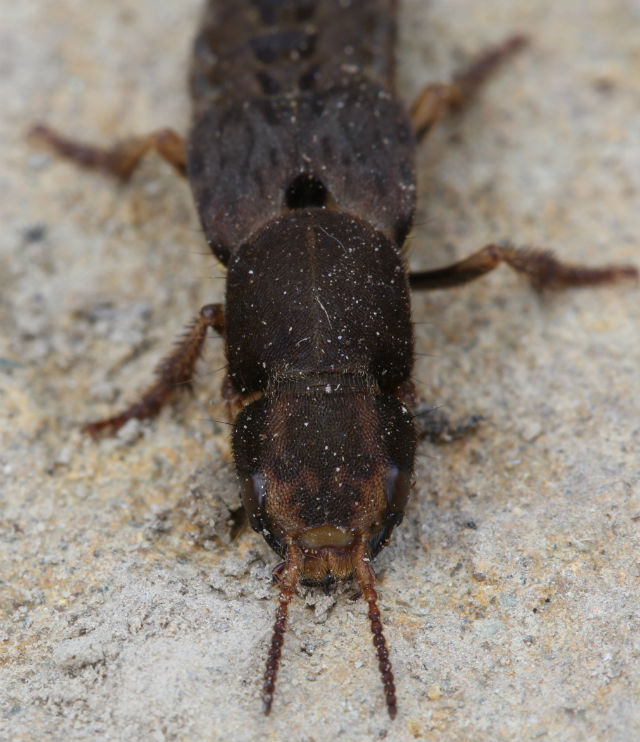
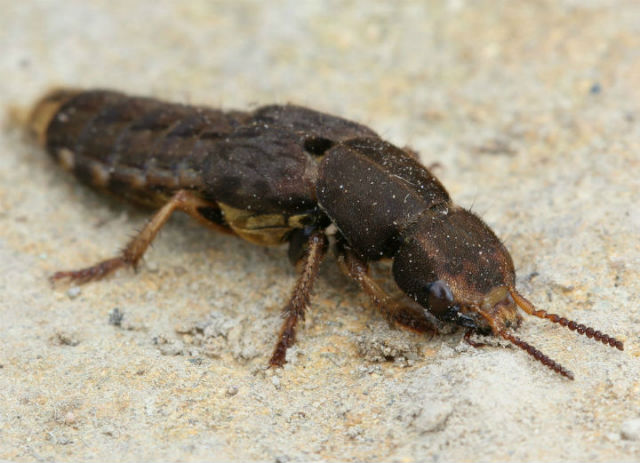
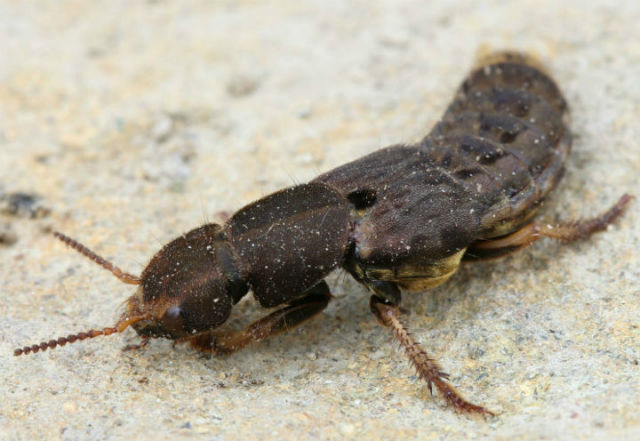
While visiting Lake Hope in Hocking Hills, I came across a couple of examples of this interesting insect. Rove Beetles are primarily distinguished by their short wing covers that typically leave more than half of their abdomens exposed.

rove beetle_5388

Their family is an ancient group, with fossil Rove Beetles known from the Triassic, 200 million years ago, and possibly even earlier. Most Rove Beetles are predators of insects and other invertebrates living in forest leaf litter. They are commonly found under stones, around the edges of freshwater environments.

rove beetle_5392

This type is known scientifically as Platydracus maculosus and is the largest and one of the most commonly encountered species, though its maximum size is only about an inch long. The brown spots on its abdomen are one of its identifying characteristics.

rove beetle_5394

These cool creatures are not harmful to humans and are considered beneficial because they are predators of insect pests.

Third Eye Herp
E-mail

Big-headed Ground Beetle

09 bighead_8975

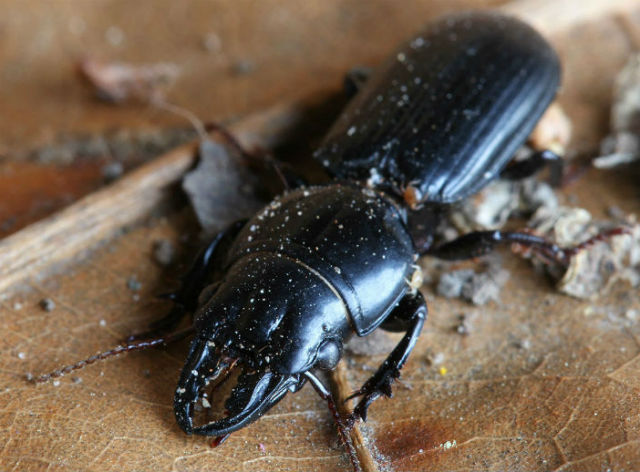
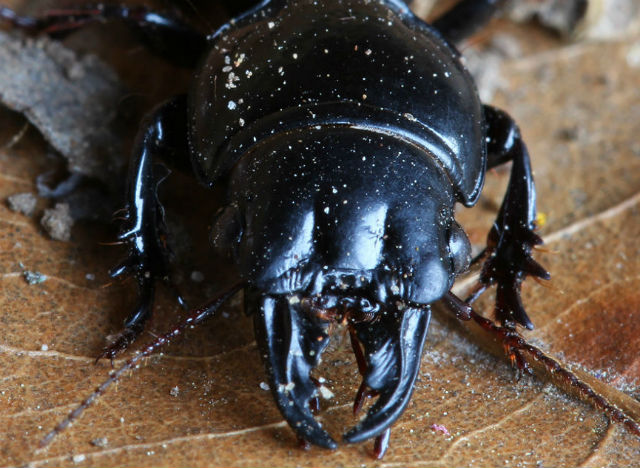
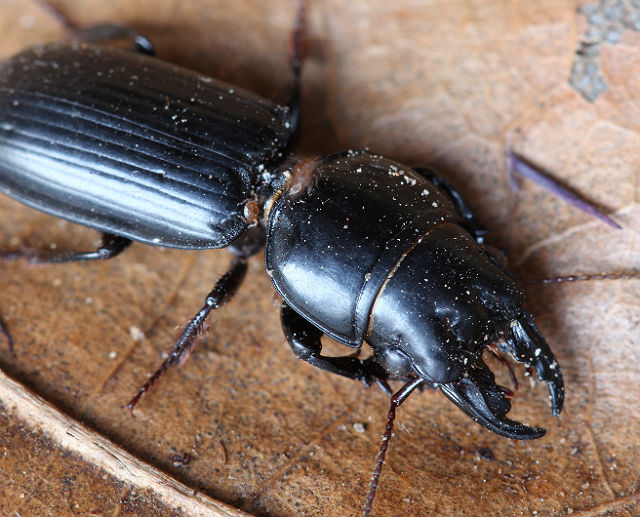
Although a bit scary looking, due to its small size, this insect poses no danger to humans. These distinctive, shiny-black creatures are usually about 3/4″ long and are named because of their large mandibles.

bighead_8976a

These beetles share physical characteristics of the tropical stag beetles, but are not closely related. Big-headed Ground Beetles can often be found under loose rocks and boards. If touched, they often “play dead” by folding in their legs and arching their backs.

bighead005

They are able to live in a variety of different habitats, including urban areas, woodlands and gardens. Big-headed Ground Beetles are frequently found in agricultural areas, where they hunt other insects (their main food source).

bighead 8985

Third Eye Herp
E-mail

Snail-eating Ground Beetle

snail eater_0878

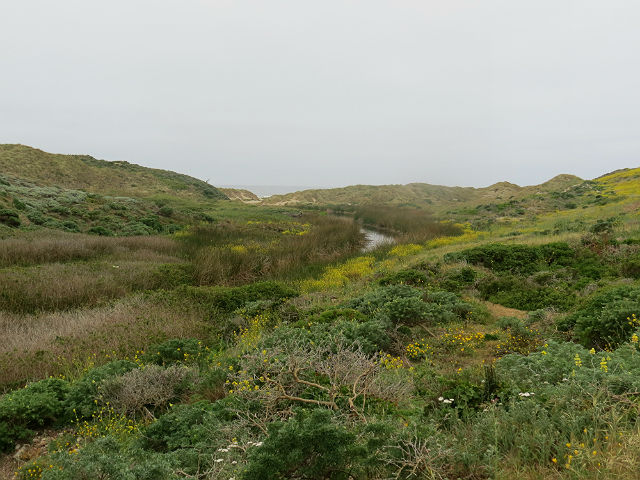
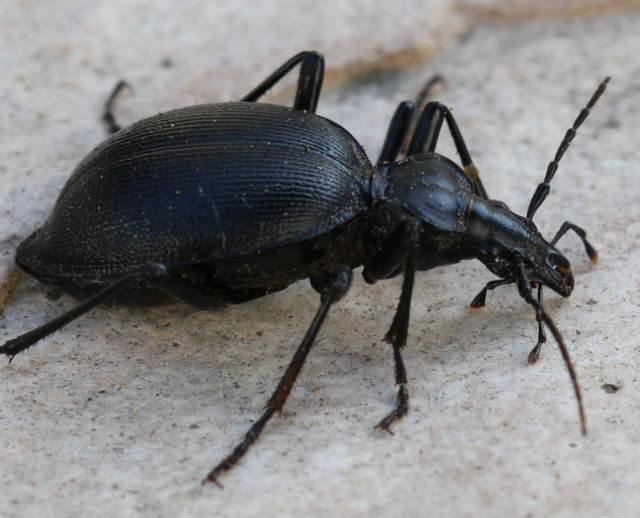
There are a lot of species of beetles. Of those many species, there are over 30,000 species known as ground beetles in 1500 genera world wide. The Snail Eater falls into this group. I encountered this one while on a visit to northern California.

snail eater_9350

This creature can be found in a variety of habitats, including forests, parks and gardens. It is nocturnal and usually encountered under rocks, logs and the loose bark of downed trees – especially around old, rotting tree stumps and fallen branches.

snail eater_9352

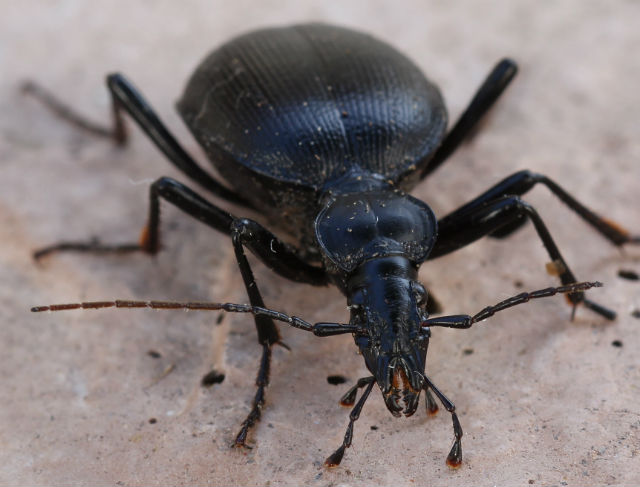
The Snail-eating Ground Beetle feeds solely on snails and has a narrow head to enable it to better reach its prey.

snail eater_9349

It defends itself is by squirting yellow acid out of its rear end to startle predators attempting to mess with it. The Snail-eating Ground Beetle can also make a noise when picked up that some describe as a squeak, but others refer to as a metallic hiss.

snail eater_9348

Both larvae and adults are carnivorous and specialize in eating slugs and snails, as well as eating a range of carrion. They can be found throughout the year, although they hibernate during the coldest winter months.

snail eater_9353a

This is just another example of one of the really cool beetles that can be found by doing a little bit of looking around.

Third Eye Herp
E-mail

Diabolical Ironclad Beetle

iron068

Back in June of 2013 I was herping in Southern California and came across this beetle. It turned out to be an easy-to-keep pet, and I still have it in a terrarium on my basement window sill.

iron097

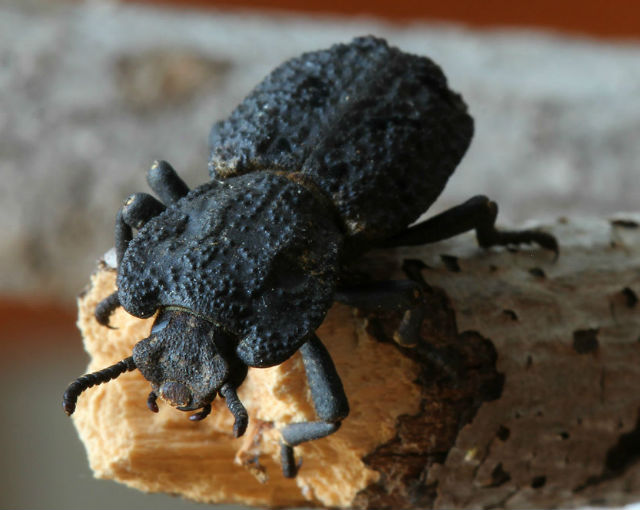
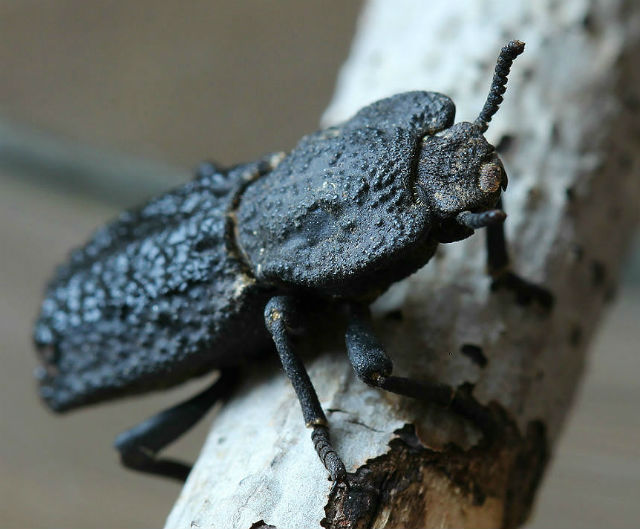
These beetles mainly eat fungus as well as some vegetation. As the common name implies, have one of the hardest of all arthropod exoskeletons. Adults are often found walking around out in the open; they may also be found under bark. They are about an inch long.

iron048

As a defense, the adults play dead, pulling in their legs and antennae. Their body has special grooves to hold these appendages.

iron065

This extremely durable beetle and its relatives reside in the American desert. Their hard exoskeleton is useful in retaining water. It is also nocturnal, venturing abroad when temperatures are cooler than in the daytime.

iron062

For as cool as this little insect is, not much is known about it – including how it got it’s “diabolical” name. This group of beetles have not been studied thoroughly and very little is known about their biology and habits.

Third Eye Herp
E-mail

Dogbane Leaf Beetle

dogbane leaf beetle 022

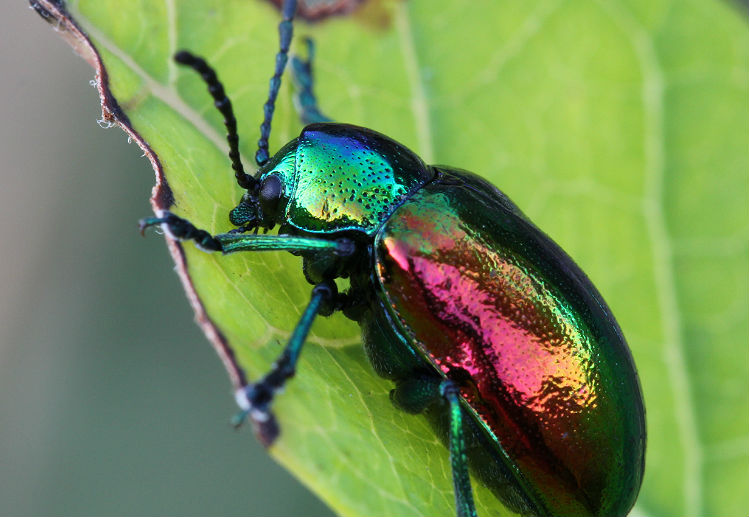
The leaf beetle family, Chrysomelidae, is one of the largest insect families. In round numbers, there may be 35,000 species worldwide. This insect has a special kind of iridescence that shines and changes color as it shifts position or we change position looking at it.

dogbane leaf beetle_1001

Adults and larvae eat the plant dogbane, and even the eggs are laid on plant, or on the ground nearby. They are also fond of milkweed. Their habitat is prairies and grasslands.

dogbane leaf beetle 026 crop

The plants Dogbane Leaf Beetle feed on have toxic sap. To deal with this issue, the beetle the makes an incision on a leaf vein “upstream” of where it intends to feed. As the sap flows out at the cut, the insect moves “downstream” to feed below the “leak.”

A person could easily mistake the Dogbane Leaf Beetle for an exotic creature from a far away rainforest, but this exotic-looking living jewel is rather common in the northeastern United States.

Third Eye Herp
E-mail

Fiery Searcher

pokeberry_1456

I saw a large, unusual shape clinging to the underside of a leaf on some low-growing vegetation and discovered this beetle. The Fiery Searcher is one of the largest ground beetles. It can grow to almost to one and a half inches long.

fiery searcher 008

Not only is it sizeable, but it is also quite colorful, being mostly a metallic green. It has a fierce appearance; if you look at the head of this insect, you will see sharp, curved jaws, used for grabbing prey. Fiery Searchers live in open woodlands, meadows and gardens. They are often under rocks, logs, leaves and bark. Both larvae and adults eat caterpillars. This beetle’s nickname is the “Caterpillar Hunter.” It will climb trees and plants to look for food.

fiery searcher 042

This is considered to be a beneficial creature, as Fiery Searchers eat more Eastern Tent Caterpillars and European Gypsy Moth caterpillars than any other type of caterpillars. These particular caterpillars do a lot of damage to trees.

fiery searcher 012

Although they run fast and bite hard, they have an additional trick up their sleeve to deter predators, which is releasing a noxious, bad-smelling spray when threatened.

fiery searcher 029

The Fiery Searcher is indeed interesting and appealing. It was awesome to encounter for the first time this Summer.
Third Eye Herp
E-mail

Red Flat Bark Beetle

forest_09_21 016

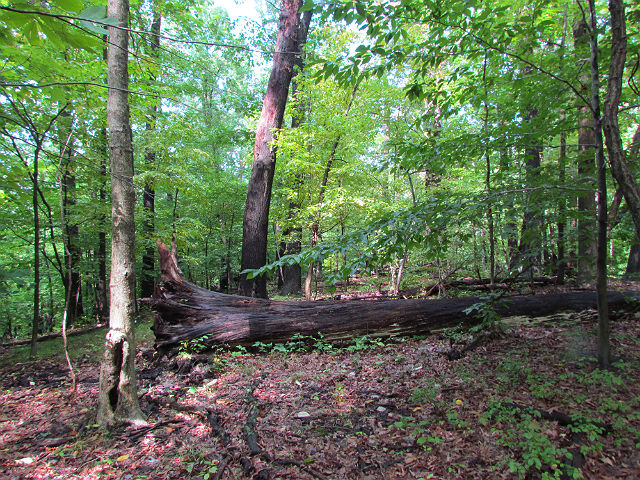
“Flat bark beetles,” are a family of distinctively flat insects found nearly worldwide under the bark of dead trees. Both larvae and adults live under bark; other than that, little is known of their habits.

red flat bark beetle 050

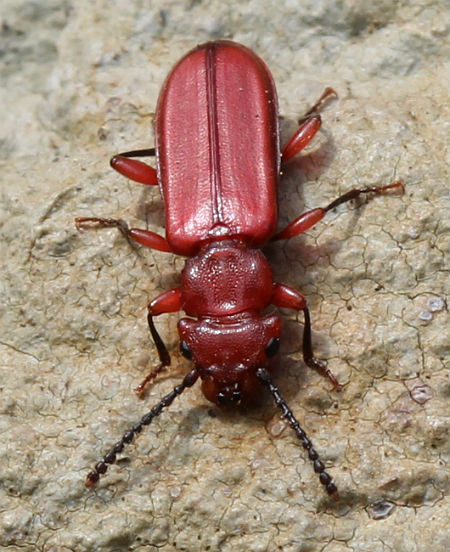
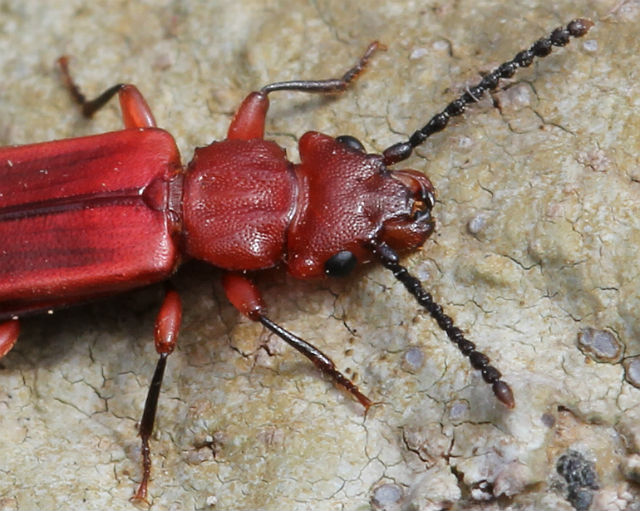
The Red Flat Bark Beetle has two “claims to fame.” The first should be obvious – this barely 3/8 of an inch long creature has extraordinary coloration.

red flat bark beetle 045

The second thing this insect is known for is the ability to survive extreme cold. Red Flat Bark Beetles can survive temperatures as low as -238°F (–150°C). They manage this by producing a type of antifreeze protein. Being able to withstand “unearthly” temperatures has allowed this beetle to reside in parts of the Arctic.

red flat bark beetle 051

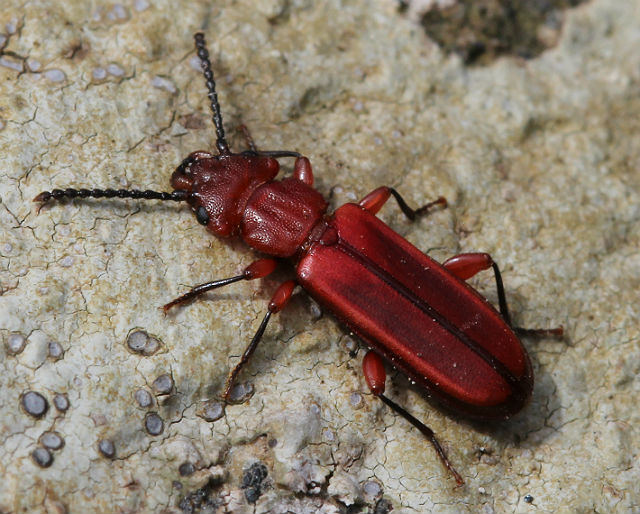
Their flattened bodies enable them to travel under loose bark with little effort. These beetles are considered beneficial to man because they eat harmful wood boring beetles that can damage timber. Their larvae are thought to be predatory as well.

red flat bark beetle 048

The diversity of insect life is astonishing, and the Red Flat Bark Beetle is just another example of six-legged awesomeness.

Third Eye Herp
E-mail

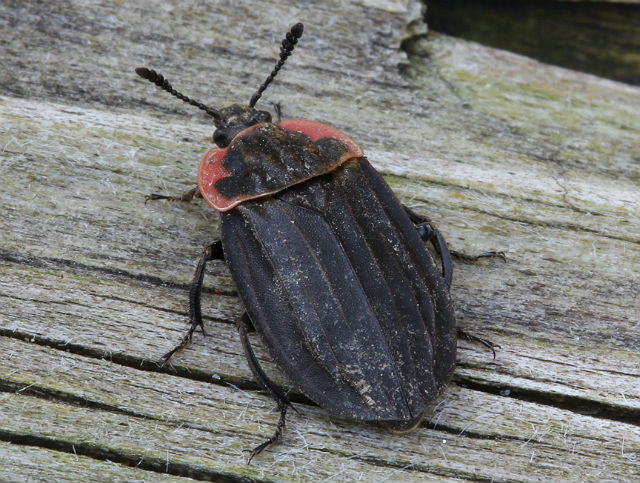
Margined Carrion Beetle

Margined Carrion Beetle 3056

In nature, not everything is as pleasing to the eye as a butterfly, nor does everything smell as sweet as wildflowers. There are aspects of natural history, although unpleasant to our human senses, that are critically important in the balance of nature.

Margined Carrion Beetle 3062

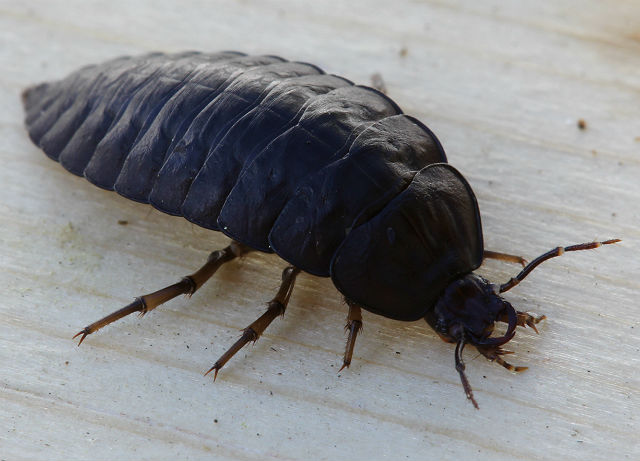
The Margined Carrion Beetle is an interesting and helpful insect. It gets its name from the fact that it eats and lays its eggs in carrion (dead animals).

Margined Carrion Beetle 027

Using its sense of smell, the insect can find a dead animal within hours of death at a distance of up to a mile and a half. It will then mate and lay its eggs on the carrion. Here’s what the larva look like after hatching from an egg, but before becoming an adult beetle.

Margined Carrion Beetle 008

Carrion beetles and other decomposers are important because they get rid of dead matter by eating it and breaking it down into smaller pieces that can be placed back into the ecosystem and used by other organisms.

Margined Carrion Beetle 033

They are also frequently associated with crime scene investigations, because they are used to substantiate and support timelines and help estimate the time of death of victims.

Third Eye Herp
E-mail

Eyed Click Beetle

Eyed Click Beetle_09_21 026

As a kid, I’d read “bug books” and always wanted to see one of these fascinating insects “in person.” This year it finally happened.

Eyed Click Beetle_6478

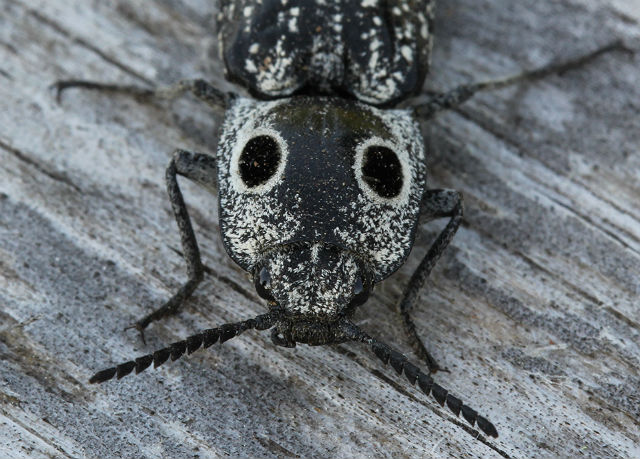
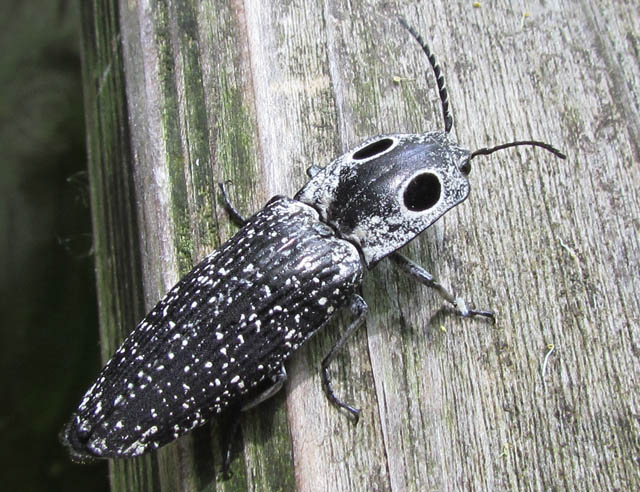
At nearly two inches long, this formally attired gray, black and white insect is one of the largest members of the Click Beetle Family; the huge eyespots make it one of the most easily identified. These are “false eyes,” of course – likely an adaptation to scare off potential predators. The true eyes of the Eyed Click Beetle are much smaller and located at the bases of its sawtoothed antennae.

click beetle 029

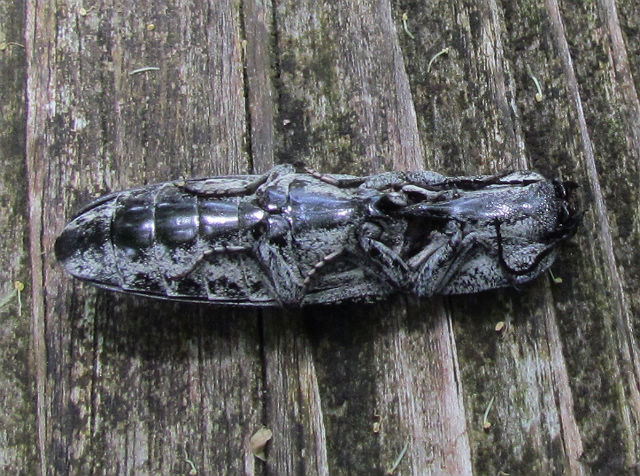
Click Beetles have a startling behavior that demonstrates how they got their primary name – as well as alternate nicknames of “snapping beetle,” “skipjack,” and “spring beetle.” When placed on its back (or when grabbed by a predator) a Click Beetle bends its front half backward and then straightens out suddenly with a snapping motion; this results in an audible click and launches the beetle several inches into the air.

IMG_6484

Another defense is to tightly tuck in its legs and antennae and “play possum” until the predator loses interest. This one displayed the clicking behavior as well as playing dead.

click beetle 024

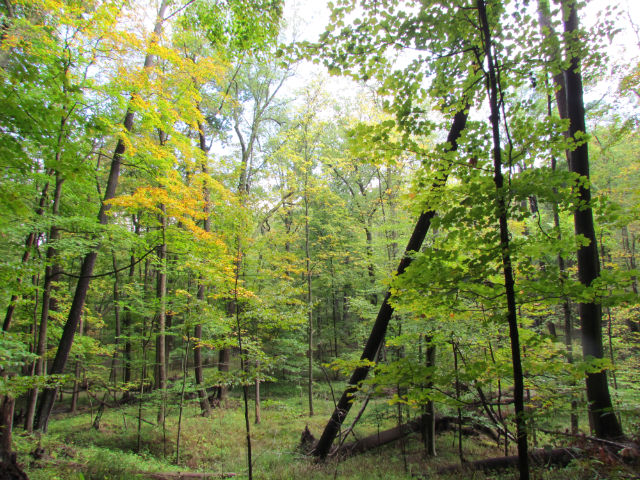
These beetles eat nectar from flowers and are mainly nocturnal. They can be found throughout the eastern United States Beetles around woods with many hardwood trees, such as cherry, apple or oak and especially in areas with a lot of rotting logs.

IMG_6494

I considered myself fortunate to finally experience this interesting insect up close for a little while before it went back into the wild.

click beetle 027

Third Eye Herp
E-mail