June Bug

forest_5548

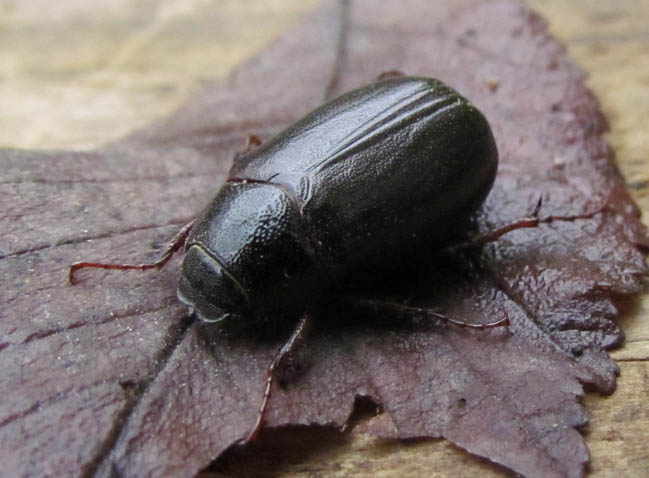
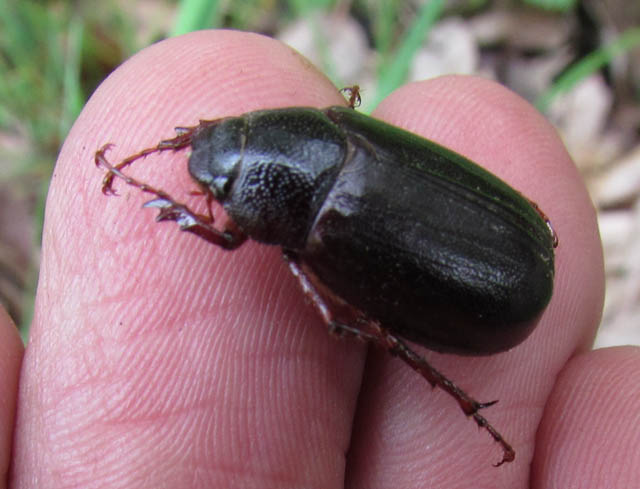
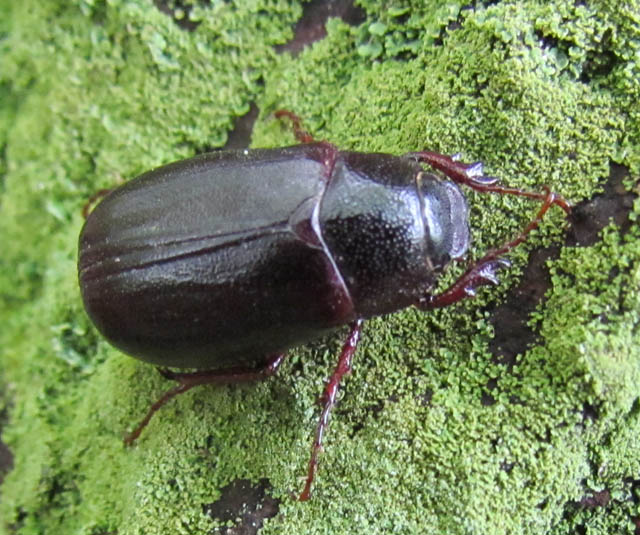
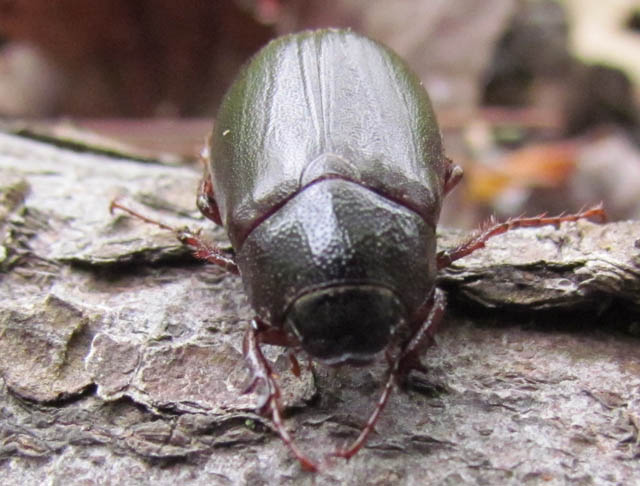
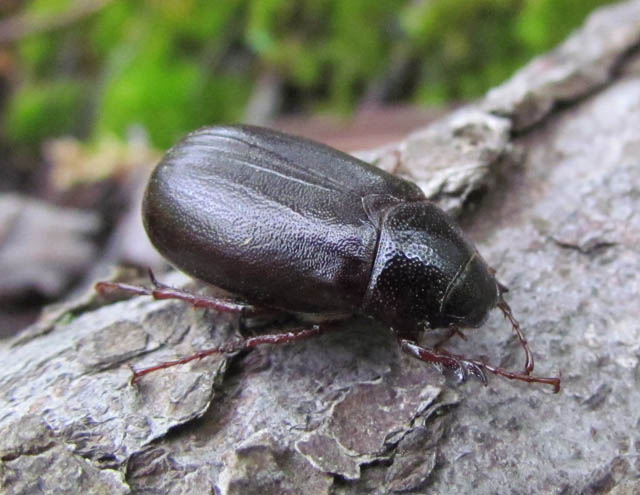
The June Bug (also known as a May Beetle) is a large brown beetle. They are about one inch long, with a small head, glossy back and slender legs. The beetles fly at night in Summer and are attracted to bright light.
june_4237

I found this one under a rock, but there are times when I hear them on the window screen at night. They are clumsy and noisy as they try to get into the house, due to them wanting to be near light.
june_4240 

Many species occur in Ohio, all in the scarab genus Phyllophaga. As such, they vary in color and somewhat in size, being some shade of brown, from tan through dark chocolate brown.
june_4250

Their family, Scarab Beetles is diverse; there are about 30,000 scarab species comprising about 10 percent of all known beetles.
june_4246

To the ancient Egyptians, scarab beetle symbolized hope and the restoration of life. Seals were created in the shape of a scarab and used to stamp documents. Artisans made scarab jewelry using precious gems and painted clay.
june_4244

I just like them because they’re big, bulky, awkward and noisy. Who doesn’t like a beetle with personality?

Third Eye Herp
E-mail

Pinacate Beetle

Pinacate Beetle_6979

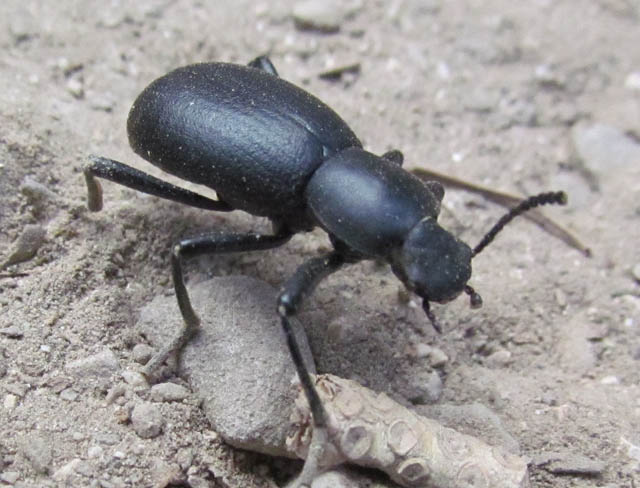
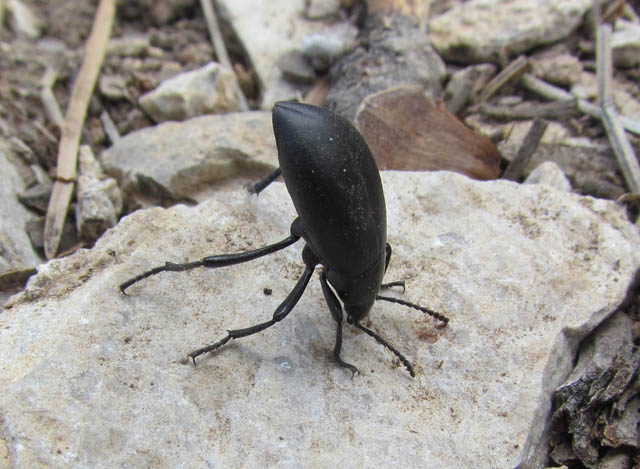
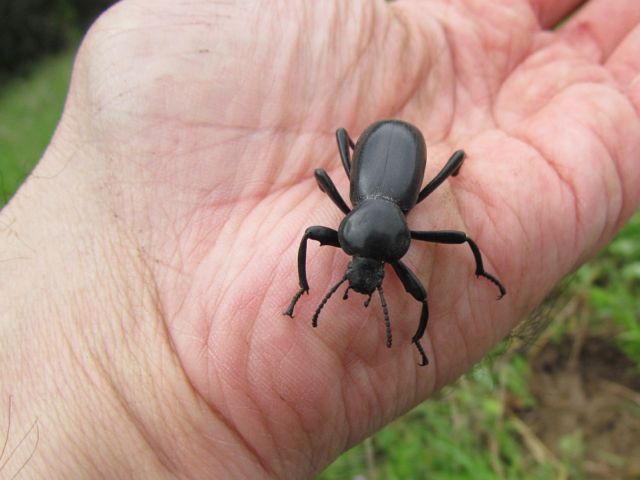
These shiny black beetles are common in the Southwest. They are called a number of other different names, such as desert stink beetles, clown beetles and headstanding beetles.

Pinacate Beetle_7607

When threatened, it will raise up on its back legs to stick its bottom in the air. This is a warning to stay back. For protection, it can emit a bad-smelling odor.

Pinacate Beetle_7496

Thickened, leathery wing-covers protect their delicate flight wings, which they do not use. Pinacate beetles are one of the great walkers of the desert beetle world and are often encountered, seemingly wandering at random.

pinacate beetle_zps67e53367

They occur across a variety of habitats, from open dunes to shrubs to mountains. There are several genera and over 1400 species of beetles similar to this one.

Pinacate Beetle_7611

Third Eye Herp
E-mail

American Oil Beetle

I flipped over a log today and found this very sluggish American Oil Beetle underneath it. Oil beetles are flightless and lack significant wings; instead they have stubby, shortened wing-pads that do not cover much of their bloated abdomen.

They belong to a family known as “blister beetles.” Like other blister beetles, the American Oil Beetle possess a chemical called cantharidin, which exudes from their leg joints when the insect feels threatened. The poisonous chemical causes blistering of the skin and painful swelling. It really does look like the motor oil you’d put in your car.

Oil beetles have some of the most extraordinary life cycles of any insect. The larva develop in bees’ nests where they eat the bee larva and the stored food of the bees.

To access a nest, the female oil beetle lays her eggs near the base of a flower. When the eggs hatch, the newly born larvae climb up the stalks to the blooming flower. Then the young larvae will cluster together and form a shape that very much resembles a female bee. To make the ruse even more complete, they emit a scent that smells like a female bee.

Male bees are often fooled and come to “mate” with the cluster of larvae. The larvae become his stowaways and eventually are transported to the nest. Different species of beetles have different hosts, the Solitary Ground Bee plays host to the American Oil Beetle.

Third Eye Herp
E-mail

Milkweed Borer

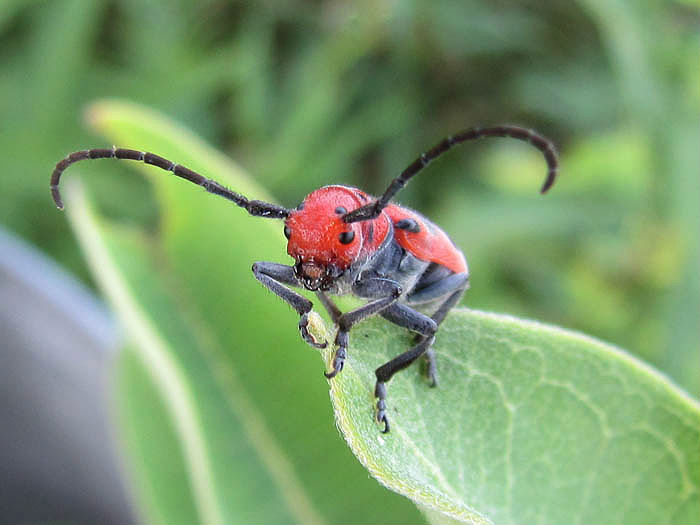
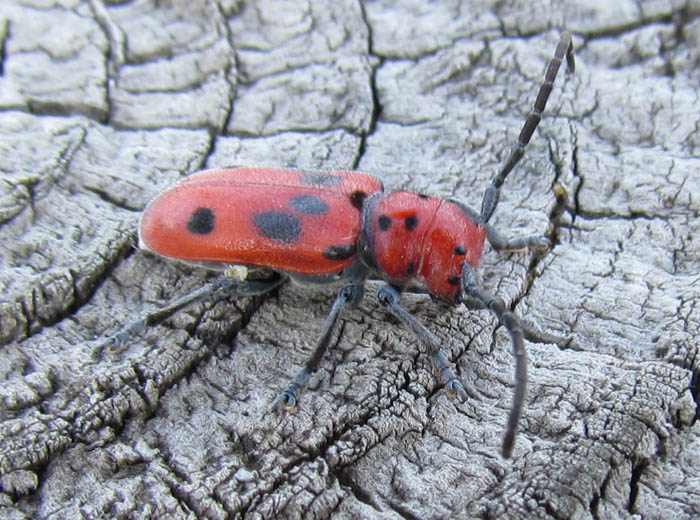
While checking out a some roadside Milkweed plants, I noticed a few of these bright red beetles known as Milkweed Borers. They spend almost all of their time on Milkweed, where they rest, feed, and mate.

Milkweed Borers can make at least two sounds. A “squeaking” noise may be produced if they are held, apparently it is used as a warning signal. A second “purring” noise has also been reported in some species – this may be used in communication between potential mates.

mb_9718

Before feeding on Milkweed leaves, the beetle drains the sticky, toxic sap of the plant by biting the part of the leaf that carrys the sap. Although colorful, Milkweed Borers are small, usually only about 3/4 of an inch long.

Third Eye Herp
E-mail

Majestic Long-horned Beetle

Have you ever nearly freaked out when you unexpectedly found a large bug crawling on you? That’s what happened today after I came in from doing some yardwork and saw this huge beetle crawling on my shirt.

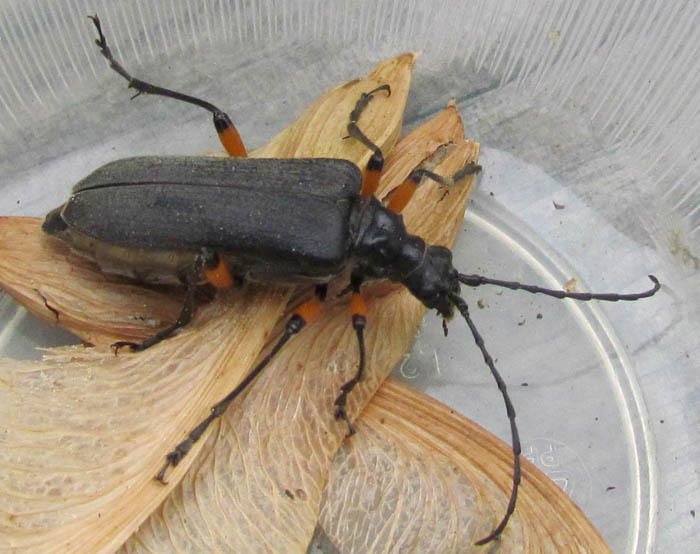
It’s a Majestic Long-horned Beetle. Longhorns are characterized by extremely long antennae, which are often as long as or longer than the beetle’s body.

There are 35,000 species of Long-horned Beetles worldwide. These are large, impressive insects. Here’s a different species that I caught in Nevada. It’s the biggest beetle I’ve ever seen in the wild.

The Majestic’s habitat is mature ash trees (I have several Blue Ash Trees in my backyard). They spend their larval life boring in wood and are sometimes known as Wood Boring Beetles.

Third Eye Herp
E-mail

Bess Beetles

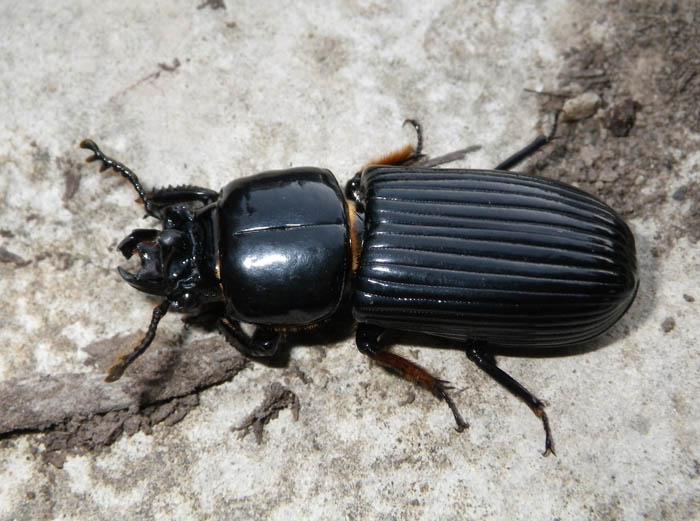
Walking around in the woods on a windy, thirty-something degree day may not seem to be the ideal conditions to observe wildlife. But just by turning a few sun-warmed logs, a “hidden treasure” of invertebrates can be found. At over an inch in length, a Bess Beetle was the largest of the creatures I came across.

The Bess Beetle can give you some idea on how complex life can be – even for an insect. They communicate with each other through squeaking and clicking noises. Their larvae can also make sounds. Bess Beetles have distinct sounds that communicate different messages such as aggression or courtship signals.

There are only two species of Bess Beetles in the United States, though a couple more have occasionally shown up from across the Mexican border. There are over 500 species in the tropics. Their entire life cycle is spent in darkness inside standing and fallen dead timber.

Unlike many insects, Bess Beetles take care of their young. Adults prepare decaying wood for the larvae by chewing and mixing it with saliva. The also help their larvae construct a pupal case for the life stage of the insects undergoing transformation to adults. One remarkable aspect of the Bess Beetle social system is that adult males help care for the young, a phenomenon almost unheard of among insects.

Another common name is Patent Leather Beetle, due to its shiny black sheen. They live in their adult form for over a year, which is a long time for a beetle. Although they may look intimidating, I’ve handled many and have never been bitten.

Third Eye Herp
E-mail