Least Brook Lamprey

lamprey_1426

The Least Brook Lamprey is an extremely unlikely-looking fish to encounter in the spring-fed creeks of our state. All lampreys have a long eel-like body and no scales. They have segments of muscles that are visible along their body and a jawless mouth.
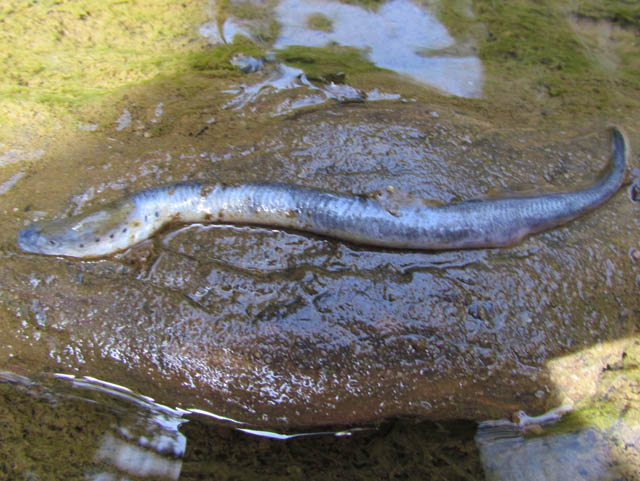
 brook lamprey_3277

As with all lamprey species, the Least Brook Lamprey spends the majority of its life as a worm-like larva. Larvae live burrowed in the sand at the bottom of a waterway for 3–7 years, feeding on microscopic plant and animal life.
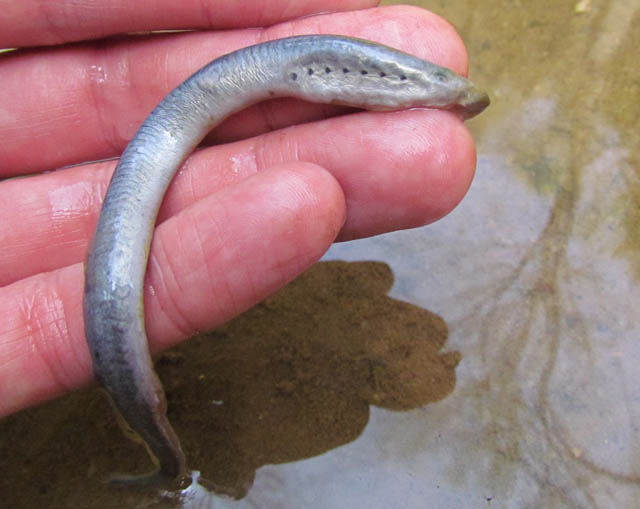
brook  lamprey_3282

This fish is found in clear brooks with fast flowing water and either a sand or gravel bottom. Prior to laying eggs, adults construct small nests by picking up pebbles with their oral disk and moving them to form the rims of shallow depressions.
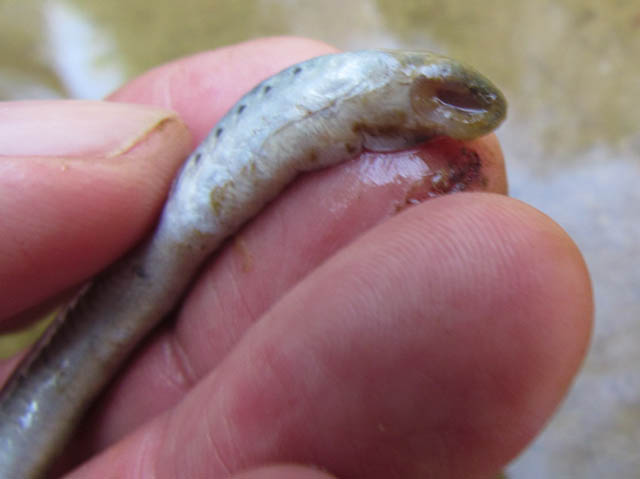
 brook  lamprey_3284

Adult Least Brook Lamprey cannot eat. Since they have a nonfunctional intestine, they only live for four to six months. Instead of eating, they spend all their time building nests, finding mates and laying eggs so the next generation will be there to carry on.
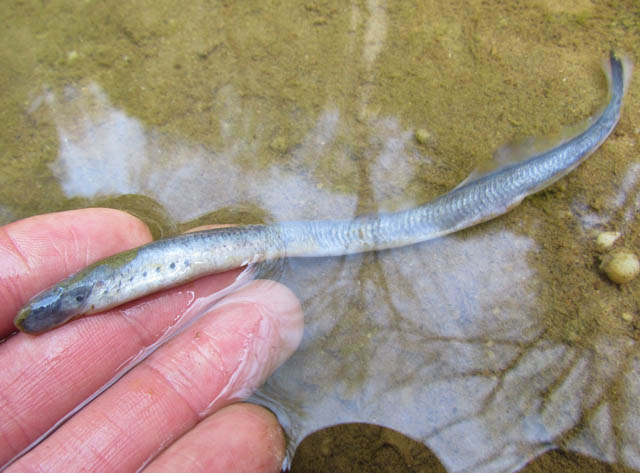
brook lamprey_3286

Lampreys are a diverse and ancient line of creatures tracing back to over 300 million years ago. Of the many fish species native to Ohio, this is one of the least known, but most interesting.

Third Eye Herp
E-mail

Brook Stickleback

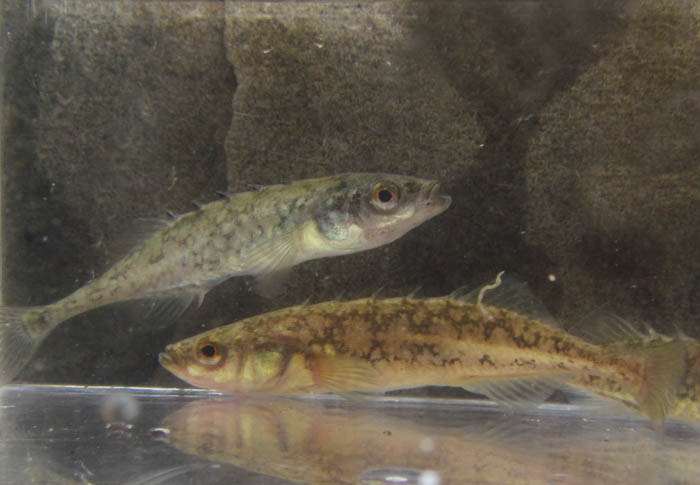
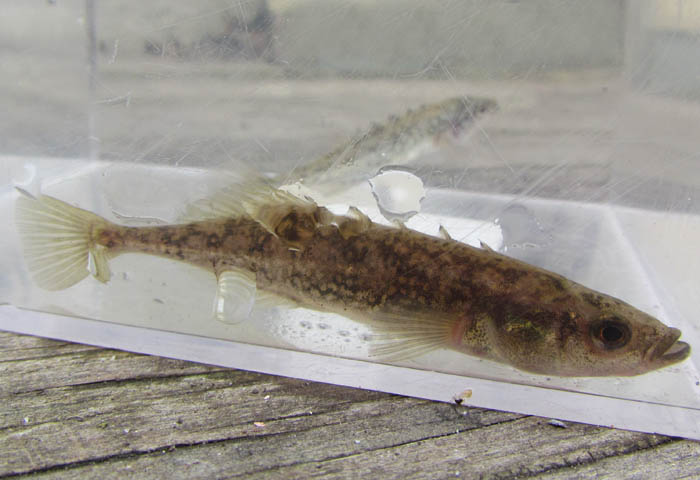
Today I encountered a fish that I’ve never seen “in person” before, but I knew exactly what it was. This species is easily identified by the four to six spikes on its back.

The Brook Stickleback has a pugnacious attitude. It aggressively defends its small territory from other fish. Despite its toughness, it is small and only grows to about two inches.

Its unique dorsal fin composed of an average of 5 short, isolated, backswept spines – followed by a more typical-looking back fin. This feature makes it distinguishable from all other Ohio fish.

In Northeast Ohio they can be found in small streams. They prefer cold, clear water with submerged vegetation. Sticklebacks eat tiny aquatic insects and crustaceans. They help control mosquitoes by eating the insect’s larvae.

The Brook Stickleback is a nest building species. Males have the ability to produce mucous from their kidneys, which they use to bind together a nest made out of bits of vegetation.

This fish is proof positive that very cool creatures sometimes come in rather small packages.

Third Eye Herp
E-mail

Western Blacknose Dace

Minnows are a huge family of fish. North America has over 230 species – let’s check out a type that lives in my backyard.

The Western Blacknose Dace is a small, slender minnow that grows to about three inches long. During the Winter this fish often wedges itself under rocks, where it is quite sluggish as it patiently waits out the cold weather.

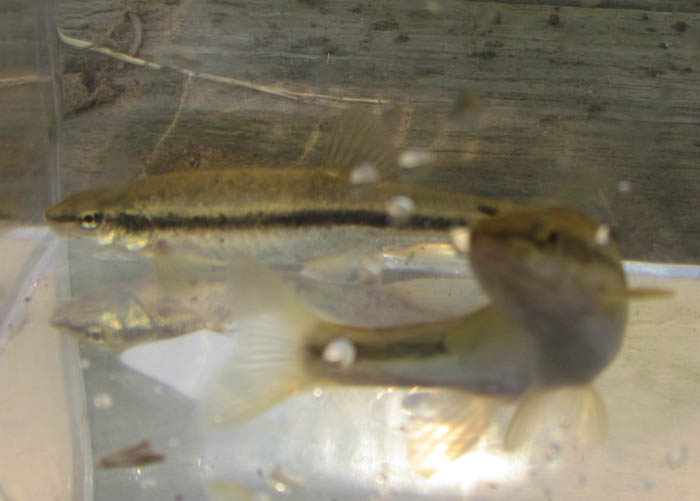
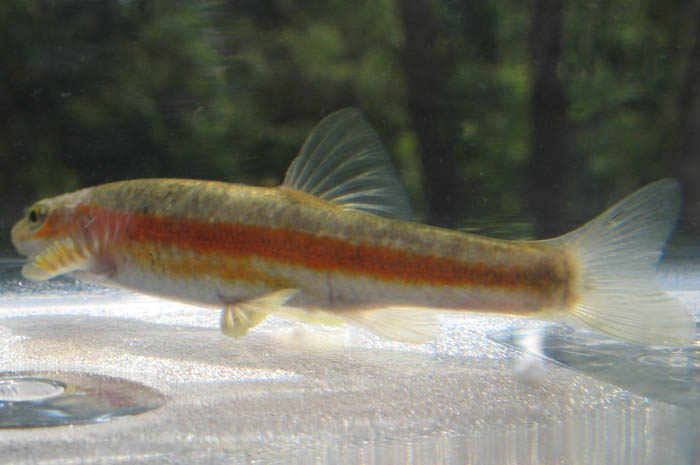
Its species name, atratulus, is derived from a word that means “clothed in black.” Sprinkled along the sides are dark scales that give the fish a spotted appearance. The fish’s most obvious characteristic is its black side stripe. The stripe runs from the snout through the eye, and along the length of the side to the tail.

These fish are creatures of flowing water. Although they thrive in stream pools as well as rocky riffles, they won’t be found in the still water of lakes and ponds. Dace feed on many types of aquatic insects, worms and algae.

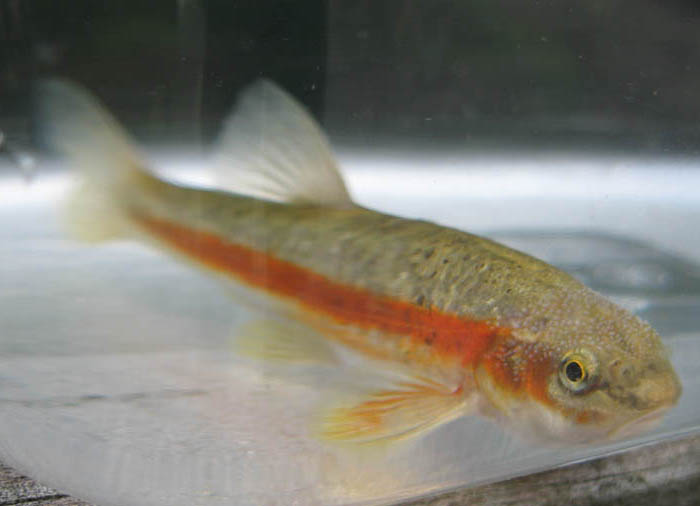
During breeding season, the male’s black side stripe transforms into beautiful red-orange hue. Here’s a male that I caught in the Summer. At this time a male will stake out a territory and guard a bit of underwater turf against other male minnows. The male circles the area and seems to “dance” to attract females.

Many fishing lures have been modeled after the Western Black-nosed Dace, because this fish is known to be a favorite prey item for many sport fish, especially trout.

The humble dace is a wonderful river species that inhabits tiny little streams to huge waterways.

Third Eye Herp
E-mail

Common Carp

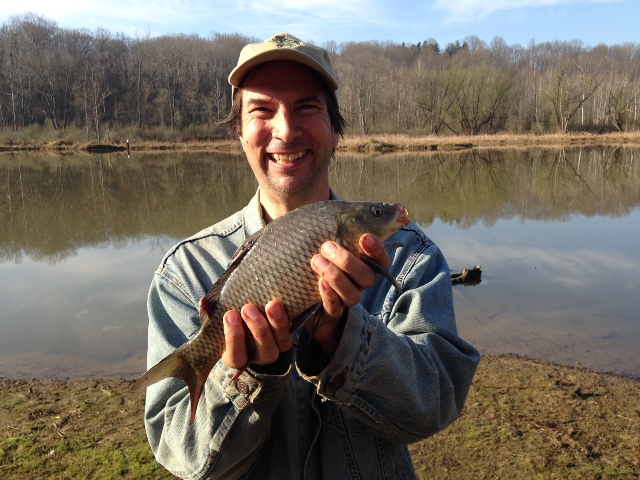
Today, while walking along the Erie Canal, I saw clouds of mud in the shallow water. I decided to further investigate the cause of this.

The Common Carp is native to Europe, but was first stocked into Ohio waters in 1879 as a food fish. This species thrives in a wide variety of conditions. They are highly tolerant of poor water quality and often become very abundant in areas where few other fish species will live.

carp_0048

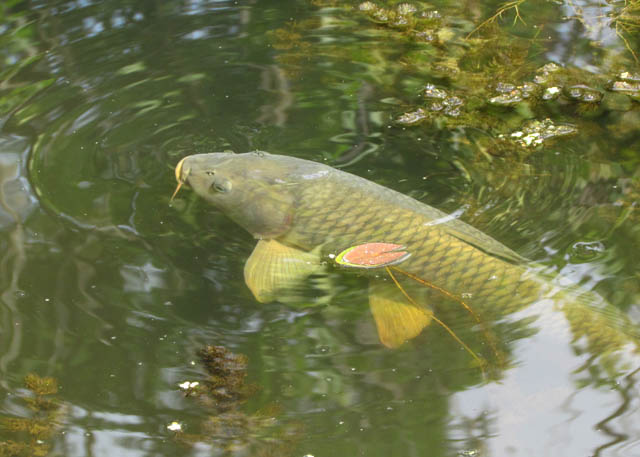
Common Carp root around on the bottom while feeding often uprooting vegetation and making the water very murky. You know I can’t see a fish and not want to catch it – here’s a closer look at a Common Carp.

Adults are typically 15-30 inches, but occasionally can reach over 40 inches. Their scales are a bronze-golden color. A variety of carp known as koi are very colorful and often kept in decorative ponds and fountains.

carp_5191

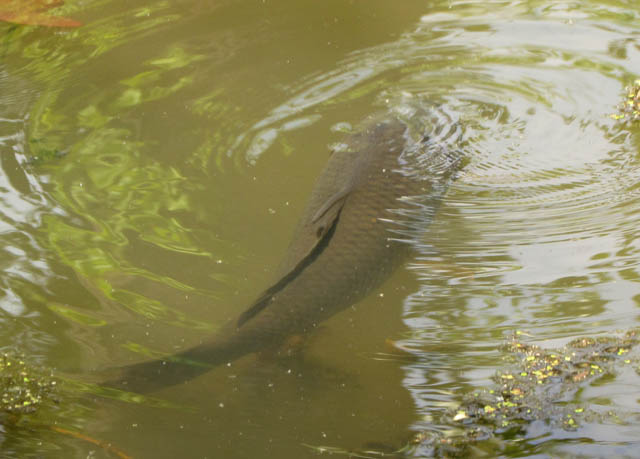
These fish are in the same family as minnows. They prefer a warm body of water with a muddy bottom. In hot weather when water dries up, Common Carp have been known to survive for weeks by burying themselves in the mud.

IMG_0521

Third Eye Herp
E-mail

Creek Chub

The Creek Chub is a common minnow throughout Ohio. Its back is olive-colored with silvery sides and it has a long blackish-brown stripe down each side. The Creek Chub has rounded fins. Young examples, like the one pictured above, tend to be more pale than older fish, like the one pictured below.

Creek Chub live mostly in small to medium-sized streams, but they sometimes live in lakes too. They prefer clear to slightly cloudy water with a gravel bottom. They are most abundant in small streams where they are often the top predator. They are a tolerant species that can withstand a wide variety of water conditions.

To breed, the male Creek Chub will build a nest. He digs out a pit on the bottom of the stream by moving pebbles with his mouth. He will then pile pebbles up to build a small ridge upstream of the pit. Once he is finished, the fish will defend his nest from other males. Eventually a female will come along and spawn if she finds the nest to be suitable.

Creek Chub can grow to 12 inches, but they are usually much smaller. They can live up to eight years, which is surprisingly long for a minnow. They are one of two species of “backyard fish” that I regularly find in my creek.

Third Eye Herp
E-mail

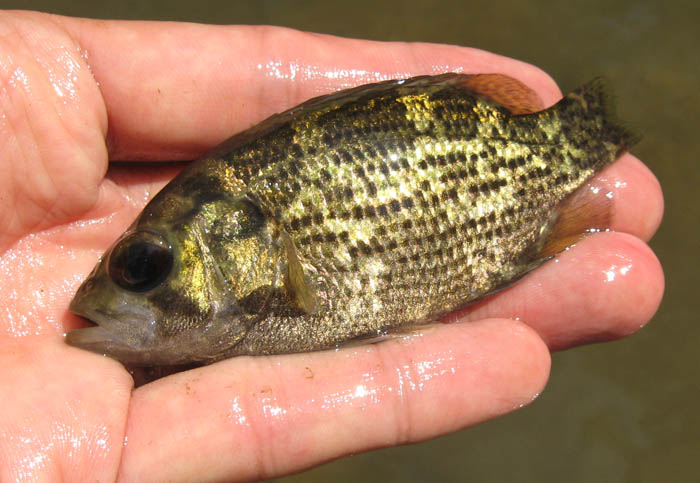
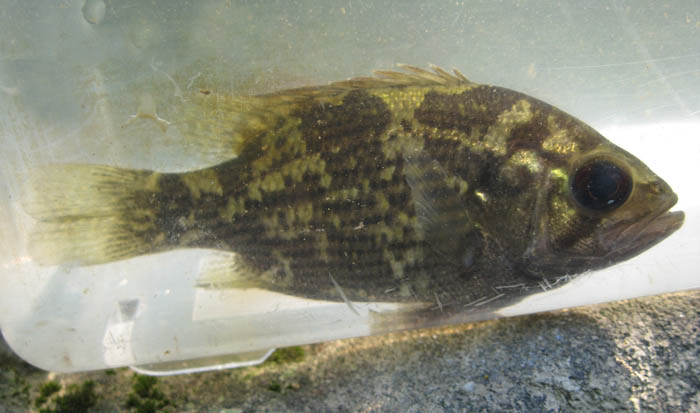
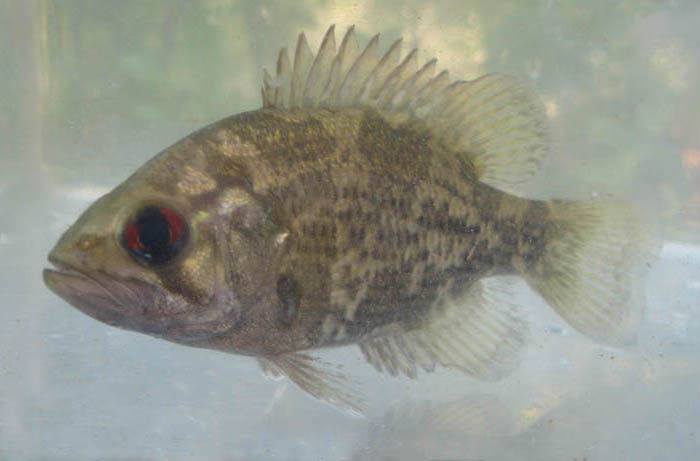
Rock Bass

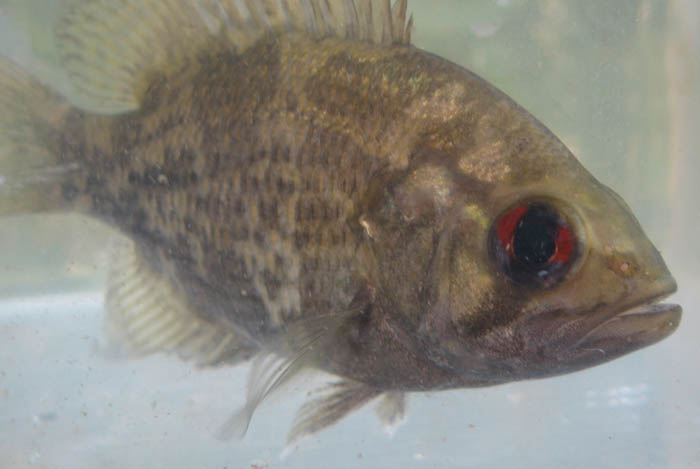
Today I caught this very cool fish. A Rock Bass can change from light to dark colored (and back again) very quickly to blend in with their surroundings. It has a very large mouth and red eyes. Rock Bass have a dark “teardrop” under each eye.

As their names implies, Rock Bass prefer clear streams and rivers with a rocky bottom. They often hide near large boulders, rock piles, or tree roots.

Male Rock Bass build nests in gravel, often next to a large boulder. Females then deposit up to 10,000 eggs in a nest, often with more than one female using the same nest. Males remain over the nest to fan the eggs and maintain water flow over the eggs until they hatch in three to four days.

Rock Bass do not get as large as other Ohio bass, they are usually 8 or 9 inches.

Third Eye Herp
E-mail

Northern Hog Sucker

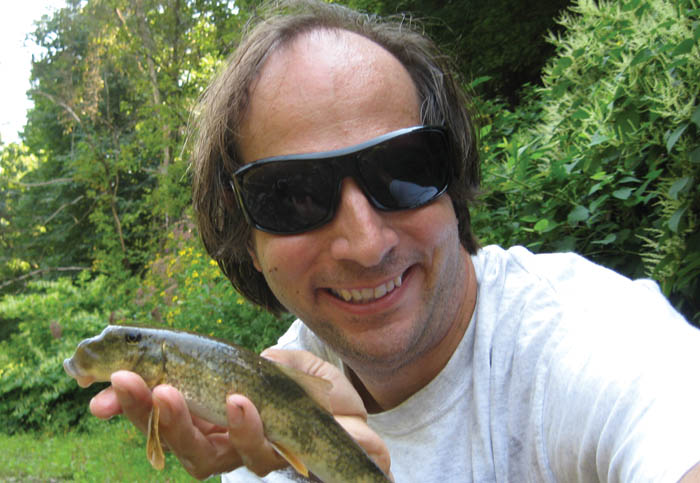
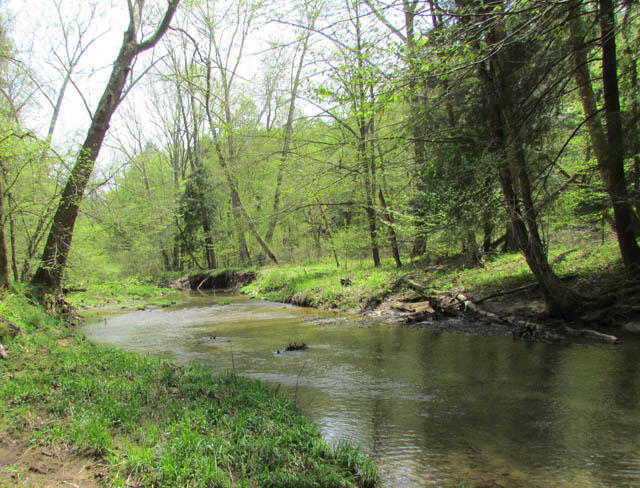
It was a pretty nice day, so I decided to explore this Ohio creek, because that’s what I do on days like today.

Although it is well camouflaged, I saw this fish in the shallow water – a Northern Hog Sucker. It has a large head and long, slender body.

This fish is known for its sucker mouth on the underside of its head. It almost looks a bit like a cartoon character.

Unlike the majority of other species of suckers in Ohio which are primarily pool oriented, the hog sucker has adaptations for life in fast currents. The Northern Hog Sucker has a very streamlined head and body that deflects the flow of water upward, pushing their body down. This allows them to sit effortlessly on a stream bottom with fast flowing riffles.

Hog suckers require streams with clean gravels and cobbles where they feed on the aquatic insect larva which live there. The rocky streambed also allows the fish to blend in because of their color and pattern.

I enjoyed finally meeting one if these fine fish “up close and in person,” but soon it was time to release it.

Third Eye Herp
E-mail

Banded Darter

We have some surprisingly colorful fish in northeast Ohio, some of them rivaling the appearance of tropical varieties. Today I found a couple of great examples of one of the more common darter species found in Ohio – the Banded Darter.

These 2-inch fish can be found in all sizes of streams, from small creeks to large rivers. In the same family as Perch, Darters are small, bottom dwelling fish with two dorsal fins. They are often noted for their brilliant coloration.

Like many darters, breeding males are very brightly colored (right), while females are duller in appearance (left).

Third Eye Herp
E-mail

Yellow Bullhead

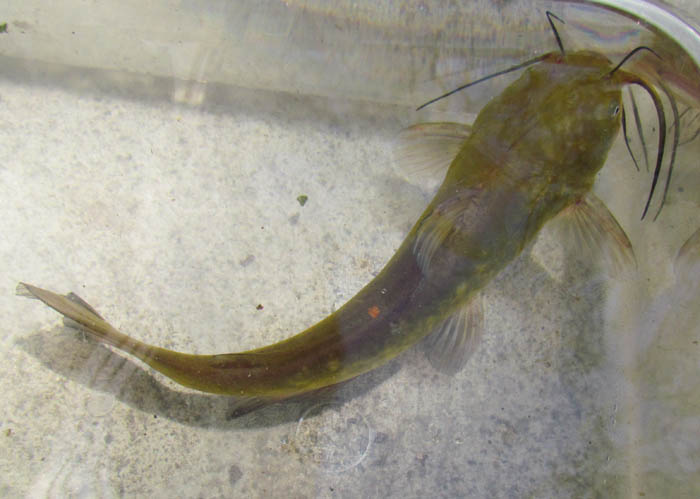
It’s springtime so my friend Dale and I decided to do some fishing. I caught a Yellow Bullhead.

A member of the same family as catfish, the Yellow Bullhead has whisker-like barbels, no scales, and sharp spines that can stab unwary anglers.

True to their name, Yellow Bullheads are yellowish brown. They are voracious scavengers, typically feeding at night on a variety of plant and animal material.

It was a great day for fishing.

Oh, and just in case you’re wondering, Dale knows how to catch fish too.

Third Eye Herp
E-mail