Black Cherry

black cherry_10_23 023

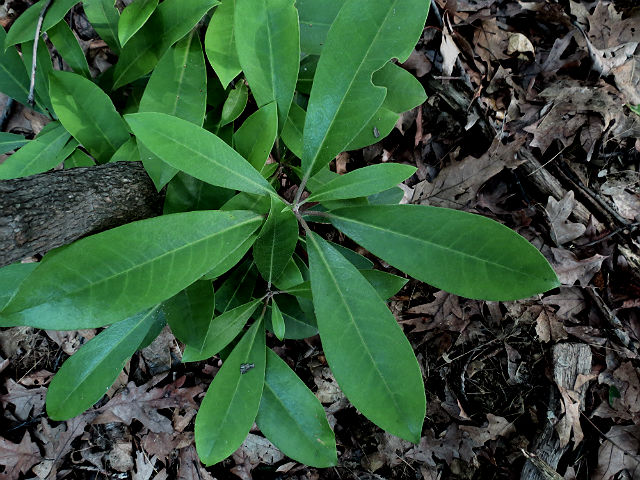
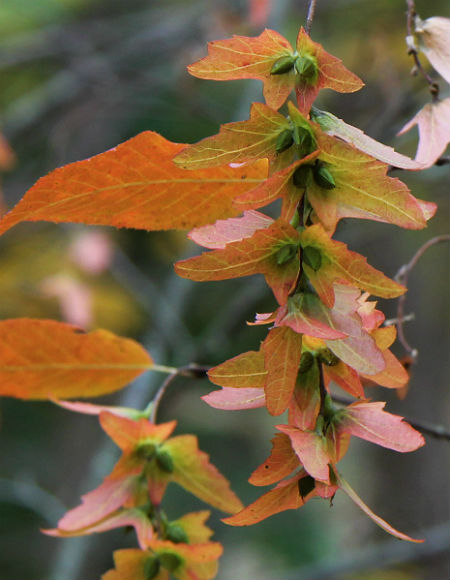
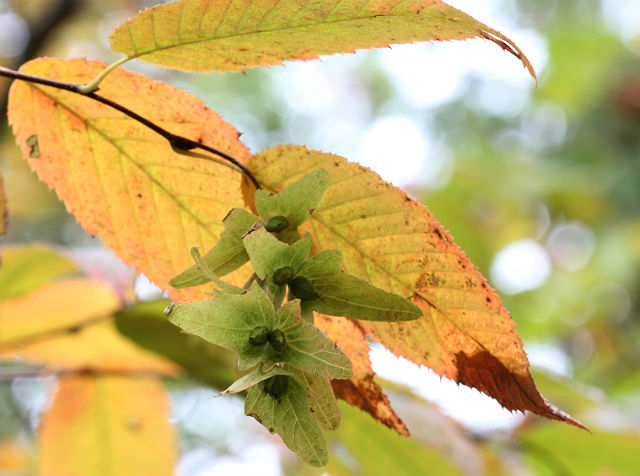
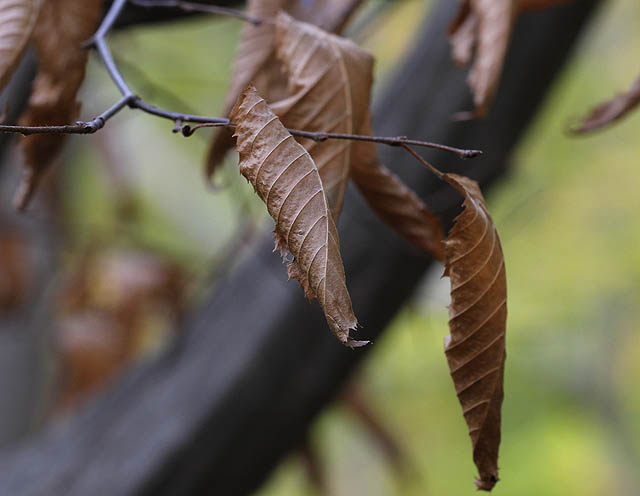
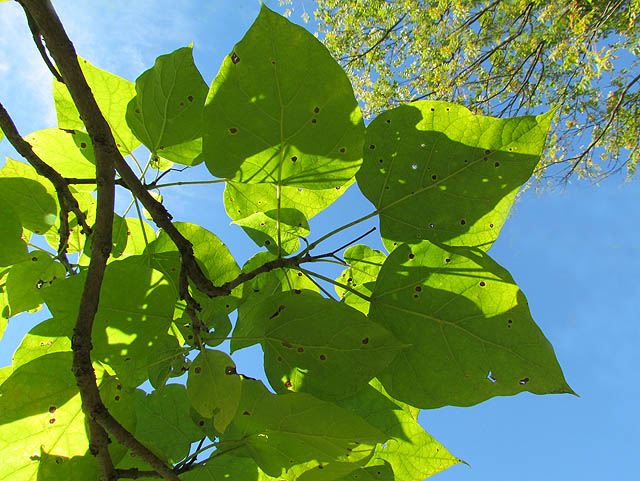
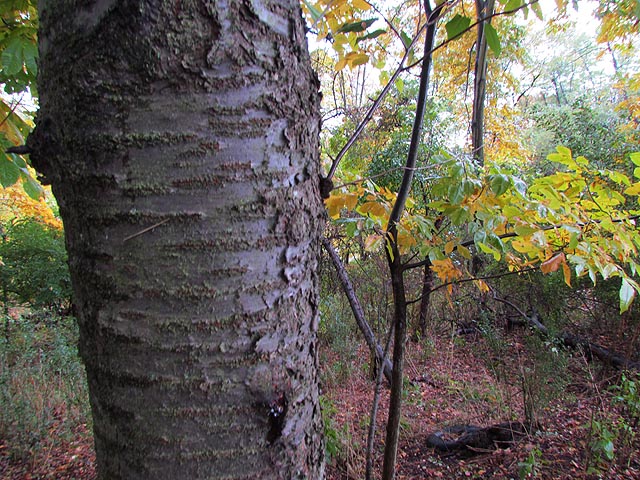
This is the largest of the native cherries and the only one of commercial value, it is found throughout the Eastern United States – including my backyard. Black Cherry is an aromatic tree; its crushed foliage and bark have distinctive cherry-like odor and bitter taste, owing to the same cyanide-forming toxic compounds found in the wood and leaves.
black cherry_10_23 031

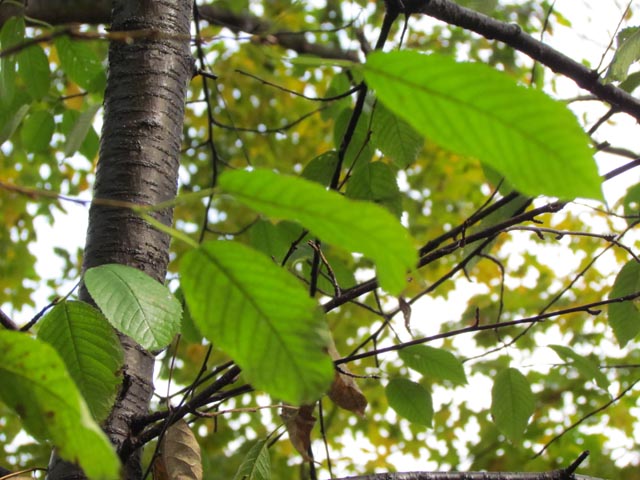
Its valuable wood is used particularly for furniture, paneling, professional and scientific instruments, handles and toys. The sweet-smelling inner bark of the Black Cherry Tree is used to make black cherry syrup, often an ingredient in commercial cough medicines.
black cherry_4599

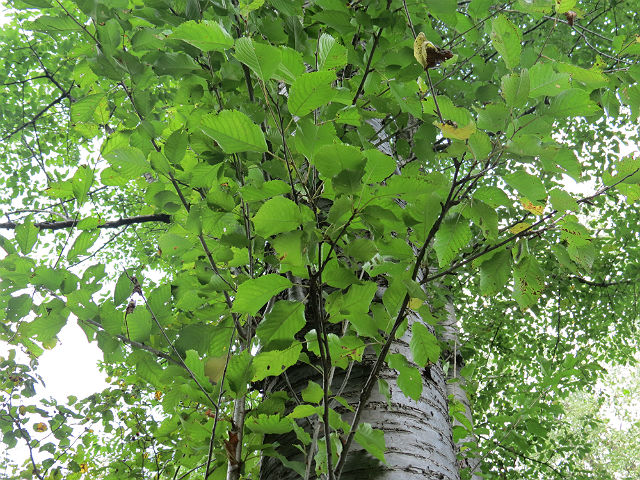
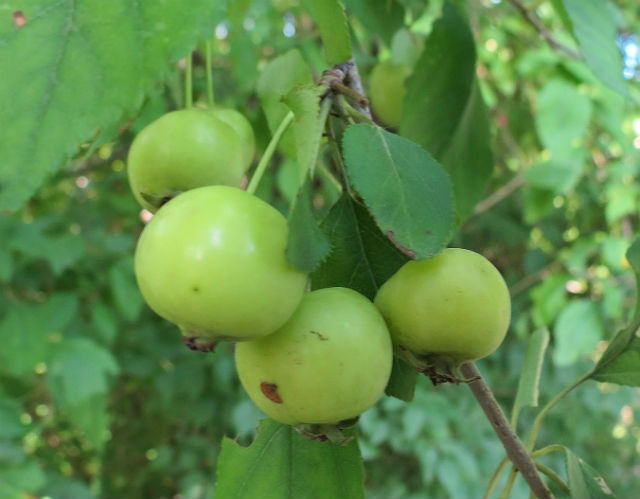
This was one of the first New World trees introduced into English gardens, it was recorded as early as 1629 in Europe. Black Cherry is valued for its ornamental features, specifically its cherry blossoms. The tart fruit of the black cherry tree is an important source of nutrition for many animals and the leaves are eaten by several species of caterpillars.
black cherry_3739

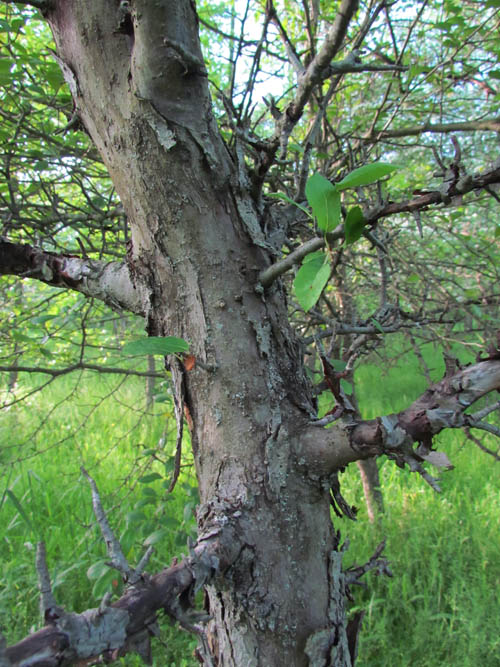
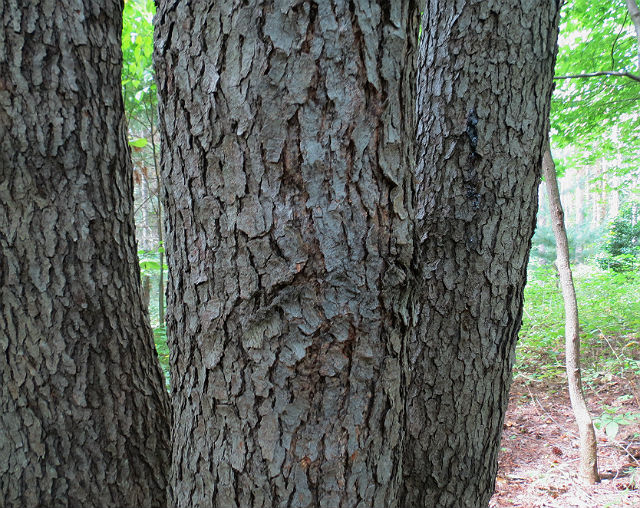
The bark of young trees is smooth and reddish-brown, maturing to an interesting scaly texture.
black cherry_5075

It’s hard to imagine a tree that has more to offer than Black Cherry!
Third Eye Herp
E-mail

Eastern Hemlock

hemlockcreek066

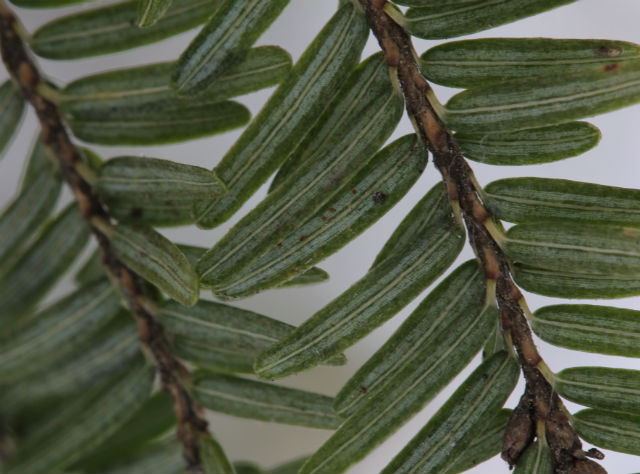
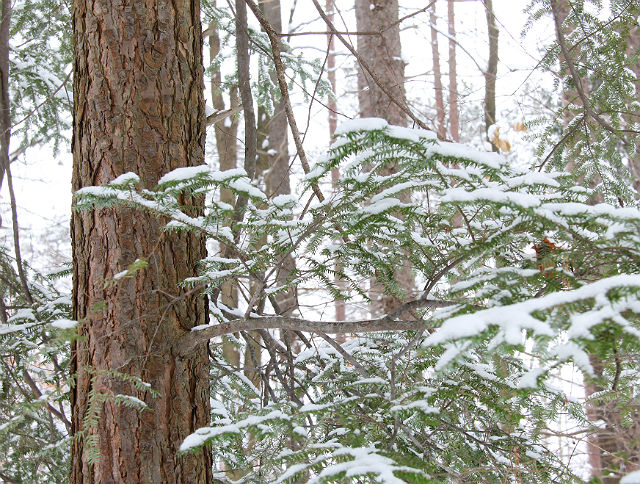
Ohio’s only native hemlock can be differentiated from other Buckeye State conifers by its flattened needles, featuring 2 white lines beneath them.

hemlock010

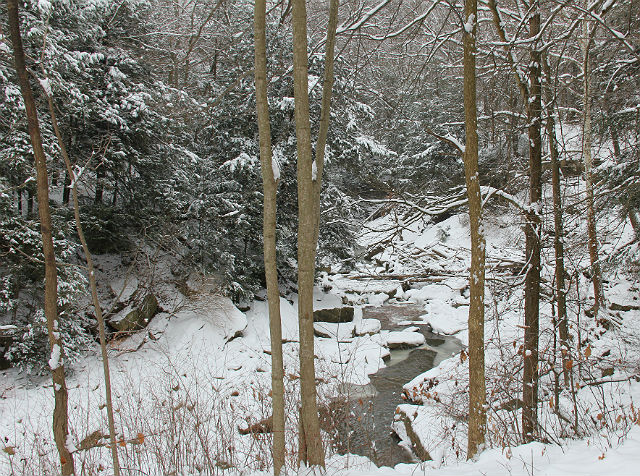
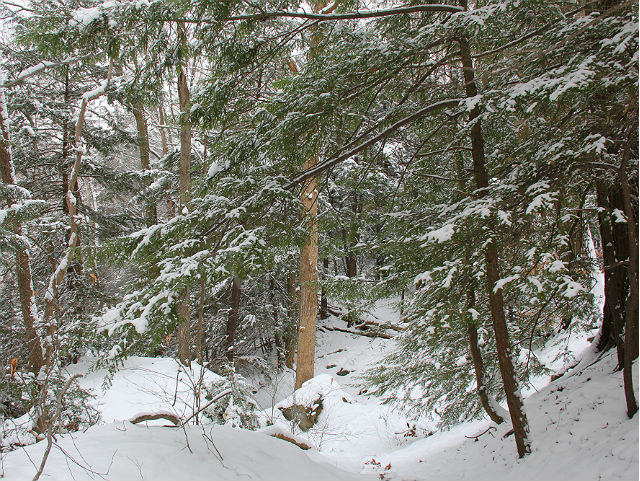
This tree grows best in cool, moist locations such as the north-facing slopes of deep ravines. The photos in this blog post were taken near Chippewa Creek in Brecksville Reservation.

hemlock004

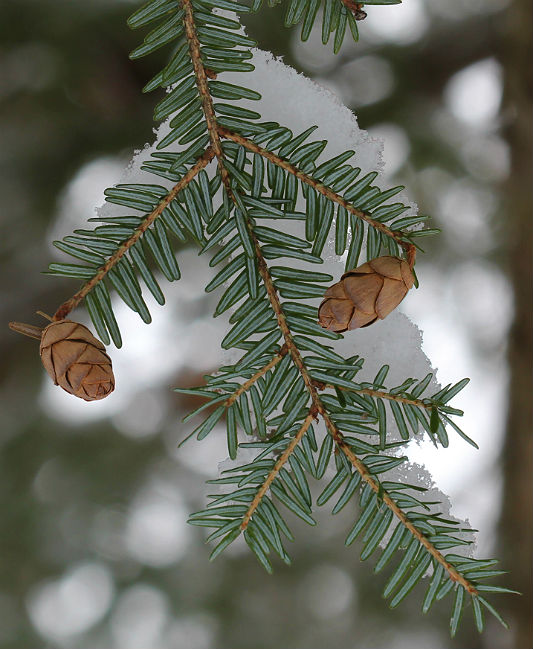
Its cones are very small (from ½ to ¾ of an inch long), and appear pale green in the early autumn and turn a darker brown in late autumn. The cones hang singly from the tips of twigs and have 2 small seeds underneath their rounded scales.

hemlockcones020

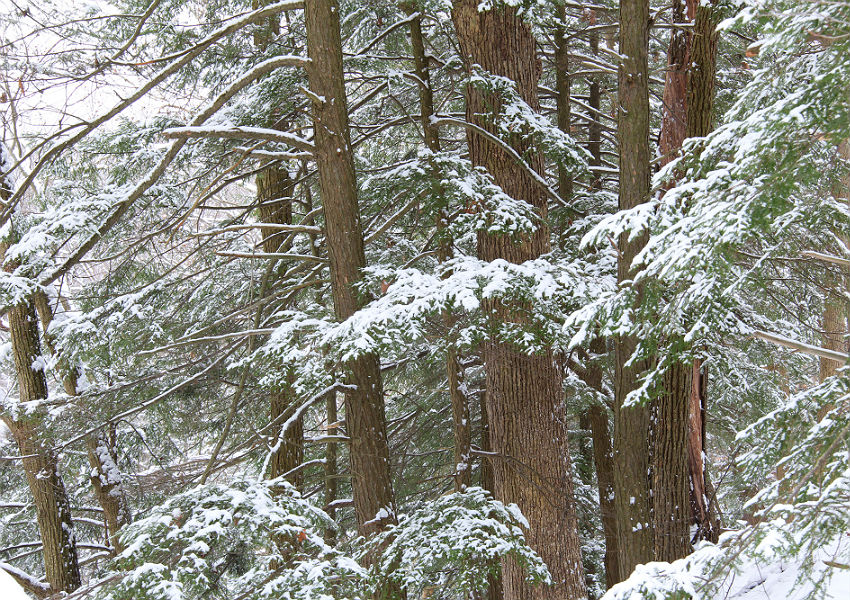
The Eastern Hemlock has a range that covers most of the eastern United States and extends into Canada and to the west. This is a slow-growing, long-lived tree, which unlike many conifers grows well in shade. Eastern Hemlocks can take 250 to 300 years to reach maturity and may live for 800 years or more.

hemlocks001

Its size varies tremendously, based upon local growing conditions, but in general Eastern Hemlock slowly reaches 70 feet in height by 35 feet in spread in favorable sites. Specimens can achieve twice that size under optimum conditions.

hemlock022

“Back in the day” its bark was much in demand for its tannic acid, which was used for tanning leather. Lumber production from eastern hemlock reached its peak between 1890 and 1910 but is seldom harvested for solid wood products now. Several birds and mammals feed on its seeds.

Third Eye Herp
E-mail

Hawthorn

hawthorn_08_26 017

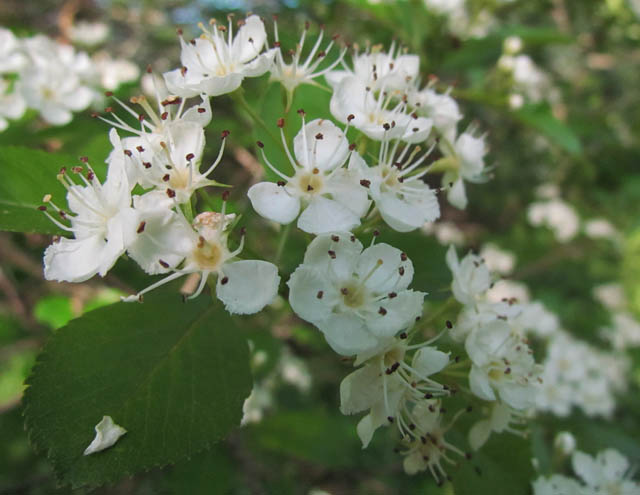
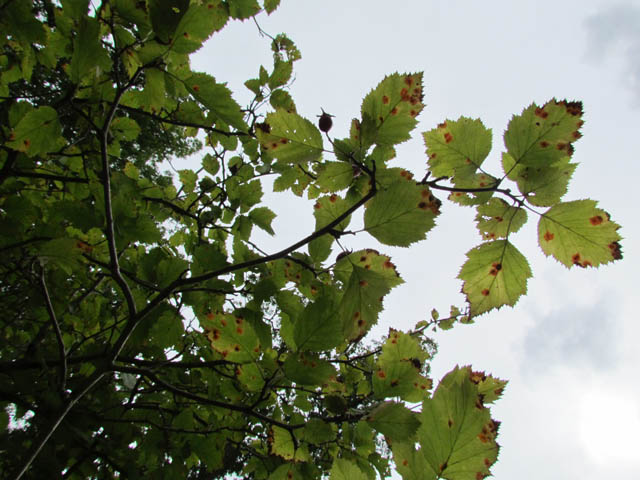
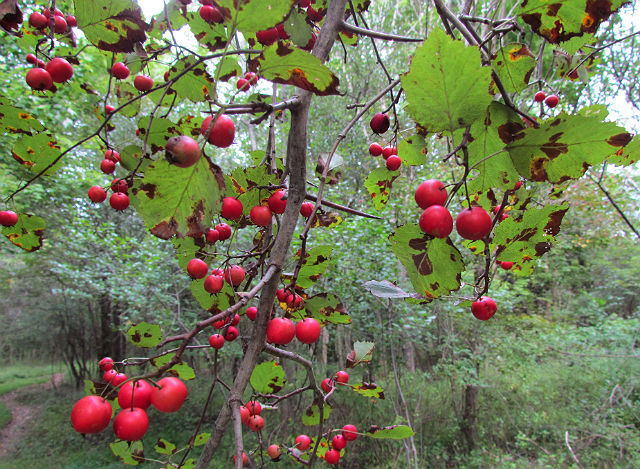
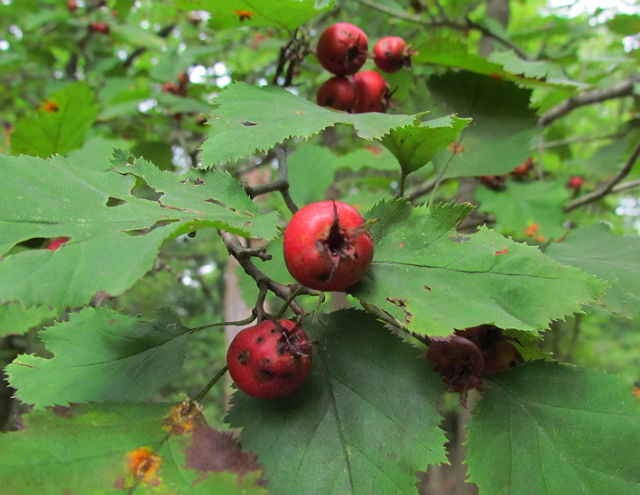
Hawthorns comprise the single largest group of trees and large shrubs that inhabit the woods and fields of Ohio, about 60 species.

hawthorn_5612

They are known primarily for their white Spring flowers and Autumn fruits, which can be yellow, orange, or red in color. Here are some flowers from back in May.

hawthorn_5616

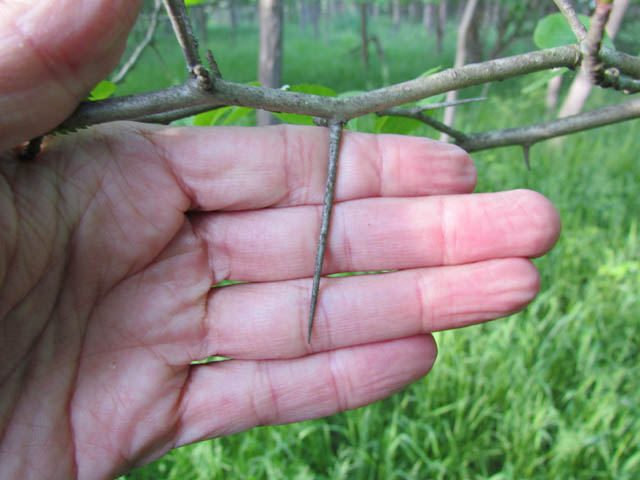
Hawthorns have a sturdy yet enchanting presence that exudes a mighty strength for such a relatively small, twiggy, thorny tree.

hawthorn_3386

These trees tend to colonize pastures, where their thorns prevent animals from grazing on them. Heights range from 10 to 25 feet, and widths about 15 to 30 feet.

hawthorn_5619

Hawthorn berries have been used to treat heart disease as far back as the 1st century. The extract from this tree’s leaves and berries are still used today to treat diseases of the heart and blood vessels.

hawthorn_09_16 049

These trees are so named by a combination of an alternative name for its fruits (haws) and the plentiful thorns found singly on its twigs.

hawthorn_09_03 021

The wild berries are consumed by birds and other wildlife. People eat the berries as well – and they are made into jellies, jams, pies and tarts.

Third Eye Herp
E-mail

Rosebay Rhododendron

Rosebay Rhododendron _5926

This “woody plant” is an evergreen, with a short, crooked trunk and branches.  It grows in woods, often in dense shade, so when in bloom its flowers really stand out.

Rosebay Rhododendron _5927

The rhododendron’s always-green, thick, leathery leaves set it apart from any other plant native to Ohio.

Rosebay Rhododendron 009

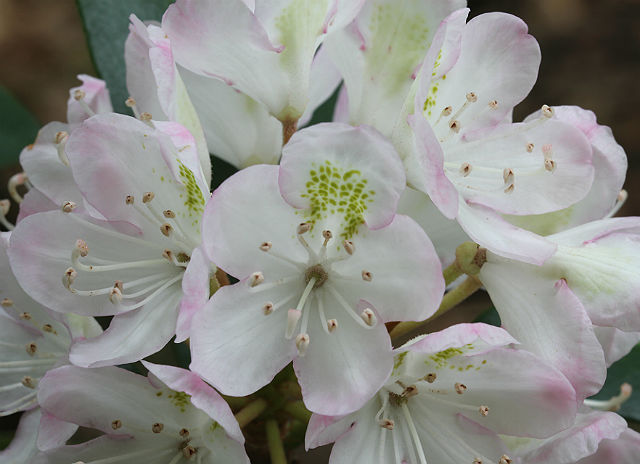
In late June and into early July, the flower buds open to reveal giant clusters of white blossoms edged with pink.

Rosebay Rhododendron 014

Though common in the Great Smoky Mountains and the state flower of West Virginia, in Ohio it is rather rare and occurs in localized, scattered populations growing naturally in the wilderness.

Rosebay Rhododendron 004

The popularity of rhododendrons for use in landscaping has made them and easy to attain at nurseries. This 8-12 foot shrub and its relatives grace the yards of many who appreciate its many attributes.

Rosebay Rhododendron 023

And they also contribute their elegance to Brecksville Reservation, where I saw and photographed these examples of this fine plant.

Third Eye Herp
E-mail

Eastern Hemlock

hrmlock 05

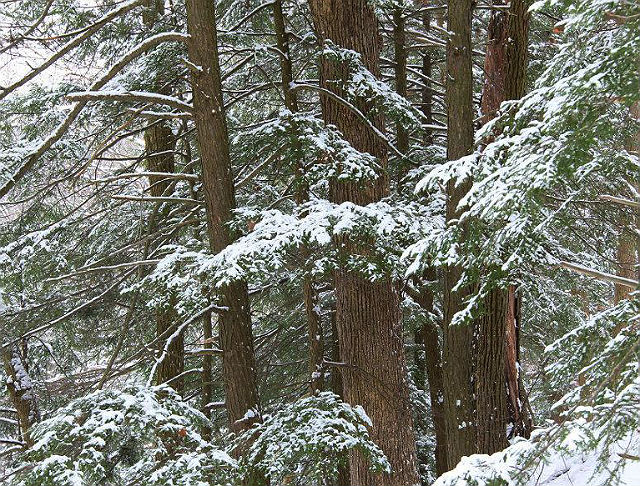
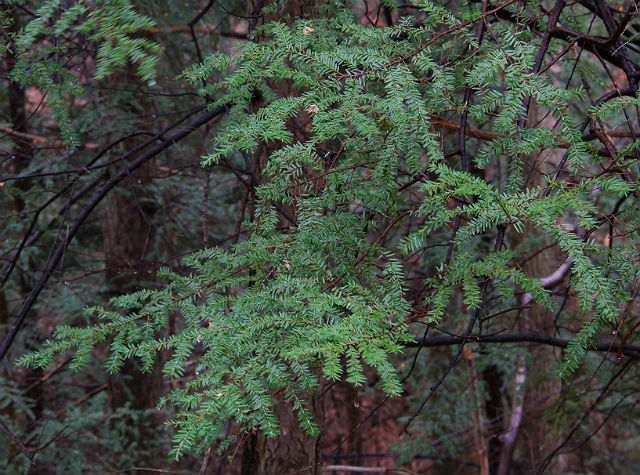
Among the longest-lived species in Ohio, this conical conifer with long, slender branches drooping to the ground grows between 60 and 70 feet tall and is extremely shade tolerant.

hemlock062

It may take 250 to 300 years to reach maturity and may live for 800 years or more. Many species of wildlife benefit from the excellent habitat that a dense stand of Eastern Hemlock provides.

hemlock 003a

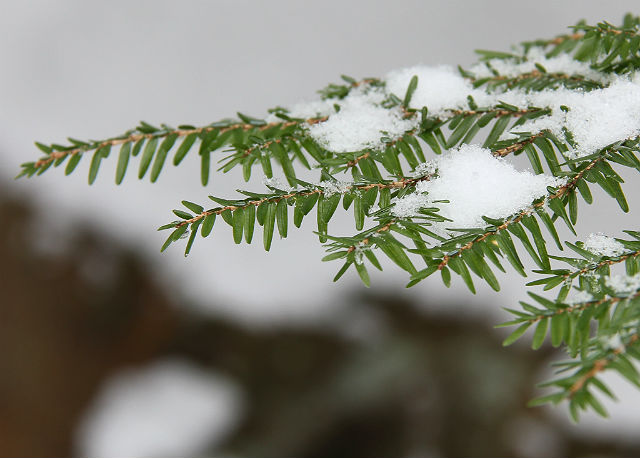
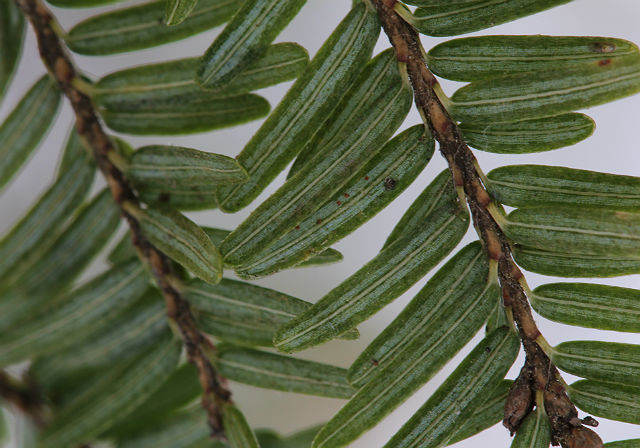
It is easy to identify. The distinctive, flat needles are glossy green above and pale green with two white lines below.

hemlock010

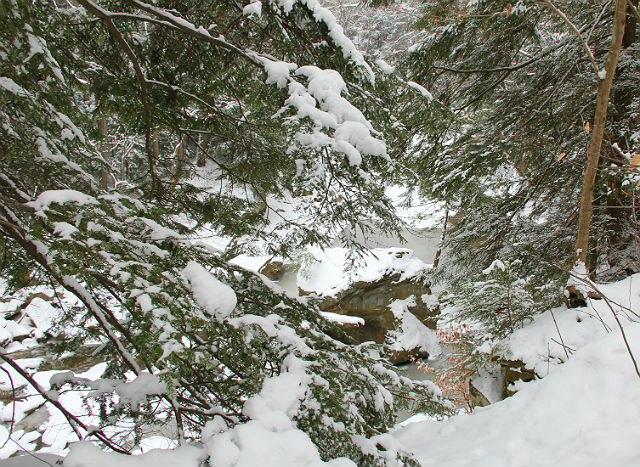
This tree grows best in cool, moist locations such as the north-facing slopes and ravines in eastern Ohio.

hemlock038

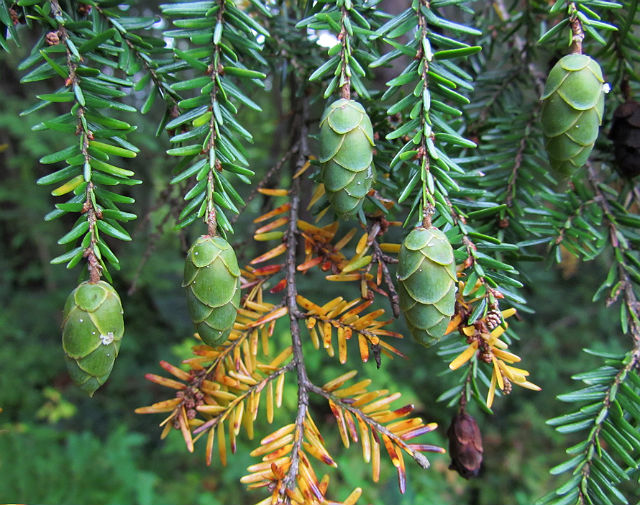
Eastern Hemlock has separate male and female flowers in mid-spring. The female flowers quickly develop into small green cones that hang from the tips of the new growth of twigs – here’s a photo from August.

hemlock_08_27 059

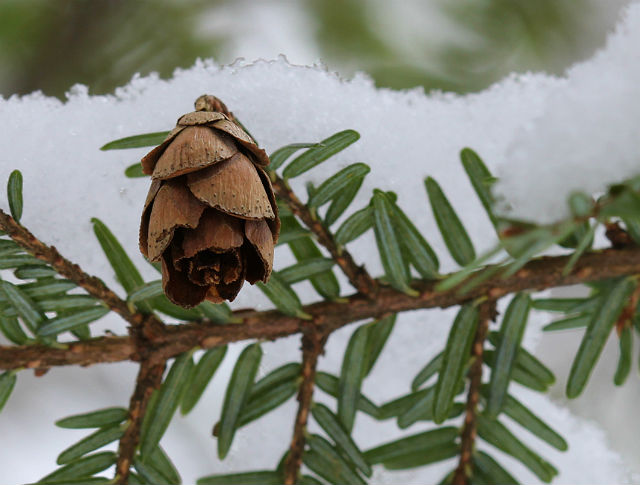
After the cones mature, turn brown and open to release their seeds; they may remain on the branches for several years. The cones are only about 3/4 of an inch long.

hemlock006

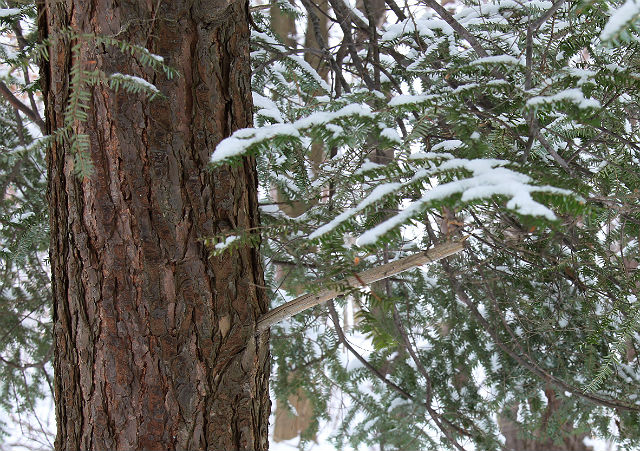
Eastern Hemlock has bark that starts out as fairly smooth, but it eventually transitions to a textured surface with prominent fissures and wide, flattened ridges, having a brown to brown-gray coloration.

hemlock023

Native Americans used the moist inner bark to create a paste to treat wounds and sores. Even today hemlock oil, distilled from the needles and twigs, is used in liniments.

hemlock055

This straight-trunked, gracefully pyramidal tree with long, pendulous limbs and short-needled, feathery branches adds color, shape and texture to the Winter landscape.

Third Eye Herp
E-mail

Red Oak

red oak 017

Red oak is a North American tree with spectacular reddish brown leaves in Autumn. It is a “Big Woods” forest species, typically occurring in mixed stands of elm, ash, beech and maple trees.

red oak 037

Along with Pin Oak, it is also one of the few oaks that is an important shade tree in the landscape industry. It is notable for its rapid growth rate.

red oak 042

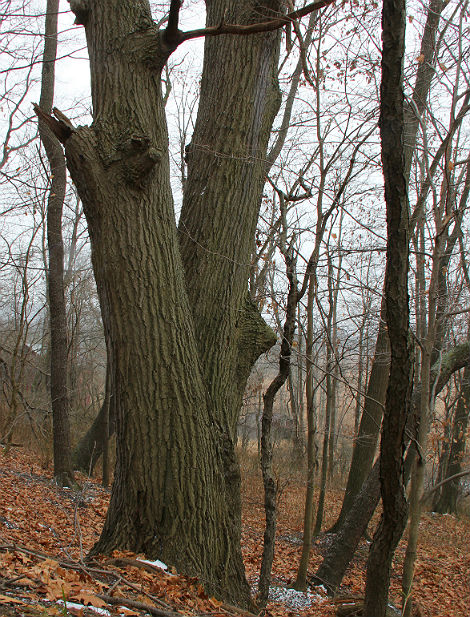
Red Oak is native to rich woodland areas where it grows to 90 feet tall. Its branches and upper trunk are marked with long, light gray lines which remind some people of ski trails.

red oak 045

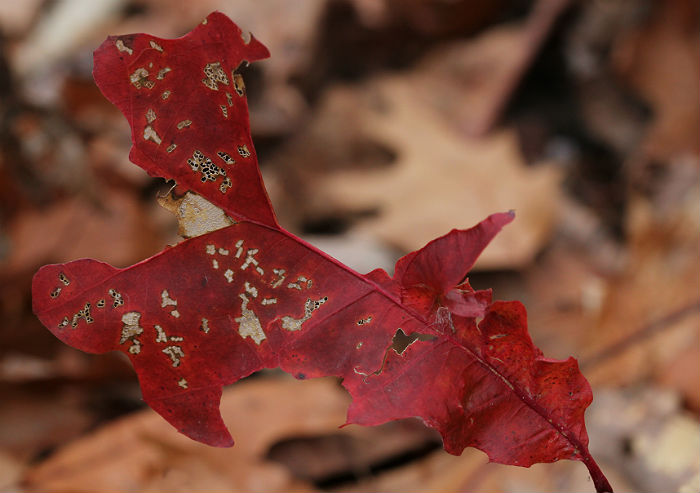
Widespread in the eastern United States, it was long ago introduced into Europe as a landscaping tree. The Red Oak’s leaves contain tannin, a substance that makes them leathery and hinders their decomposition. At this time of the year they are dark red and fading to brown. They may remain on the tree well into Fall.

red oak 054

Each leaf has 7 to 11 lobes and the tips of the lobes are bristle tipped. The sinuses (cut out areas) of the lobes are U-shaped. The leaves of saplings tend to be very shallowly lobed.

red oak 040

The tough, heavy wood of this tree has a reddish-orange coloration, and is an important hardwood for the Ohio timber industry. It is used for beams, veneer, furniture and flooring.

red oak 003

Its large acorns mature earlier in the season than those of most other oaks and provides a source of food by late Summer as well as Autumn and Winter for many forms of wildlife, including Blue Jays, woodpeckers, Wild Turkey, mice, squirrels, raccoon and deer.

red oak 900

Third Eye Herp
E-mail

Ironwood

ironwood_9061

This is a tree with a few different common names. One is Blue Beech, in reference to the blue-gray, smooth bark that looks similar to American Beech. It is also known as American Hornbeam; “horn” means “tough” and “beam” means “tree” in Old English.

ironwood_3363

It is noted for both its interesting bark and interesting mature fruits, as well as its Fall leaf colors. When found in the open, it may reach 30 feet tall and 20 feet wide. Though I’ve seen it more frequently as understory tree in mature forests.

ironwood 037

The smooth gray bark is one of the most distinguishing features of this tree. It has a sinewy surface resembling a muscled arm.

ironwood_3362

Ironwood has separate male and female flowers that emerge in early May. The resulting fruit, known as a nutlet, begins to form in late May, and is surrounded by bracts. These clusters hang downwards and are another attractive aspect of this tree.

ironwood 018

An additional appealing feature of Ironwood is its fall color. It turns from green to yellow to a brilliant orange in late October. After finally turning brown, the leaves tend to stay on the tree well into Winter.

ironwood_10_14 006

Ironwood is strong and hard, but because the tree is so small, it is rarely harvested for the manufacturing of wood products. Nevertheless, it is useful for tool handles, levers, and mallets.

ironwood_10_30 003

This tree provides an important food source for Gray Squirrels in bottomland hardwood forests.

Third Eye Herp
E-mail

Northern Catalpa

catalpa_7606

Northern Catalpa, native to a relatively small area of the central Mississippi Valley basin, has been extensively cultivated in Ohio for over 200 years. It is now naturalized in urban and rural areas and these days is primarily used as a large, ornamental shade tree.

catalpa_7612

Farmers introduced Northern Catalpa to Ohio in order to produce large amounts of relatively lightweight timber for fenceposts, since its wood is very resistant to rotting. Its rapid growth rate assisted in this need, until metal fenceposts were developed and largely replaced wooden posts.

catalpa_9592

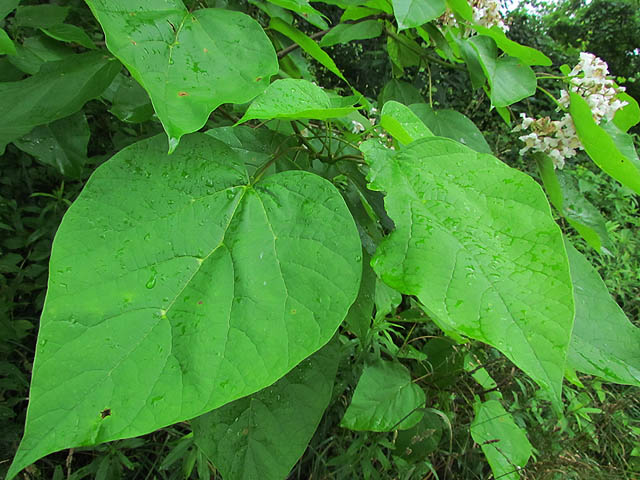
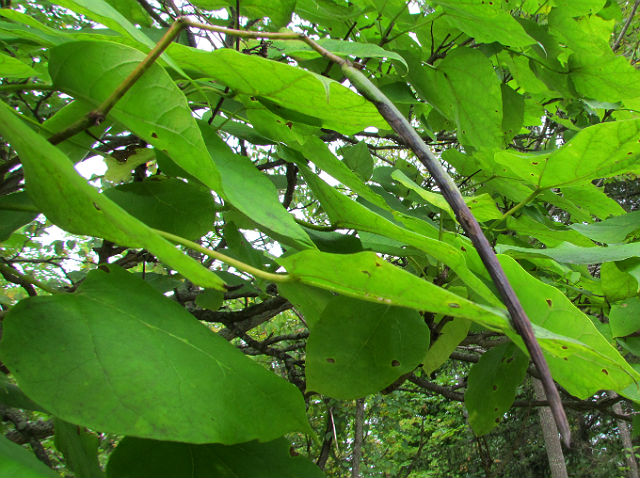
The medium-green leaves of Northern Catalpa are large and heart-shaped. They are some of the biggest leaves on any Ohio tree.

catalpa_9590

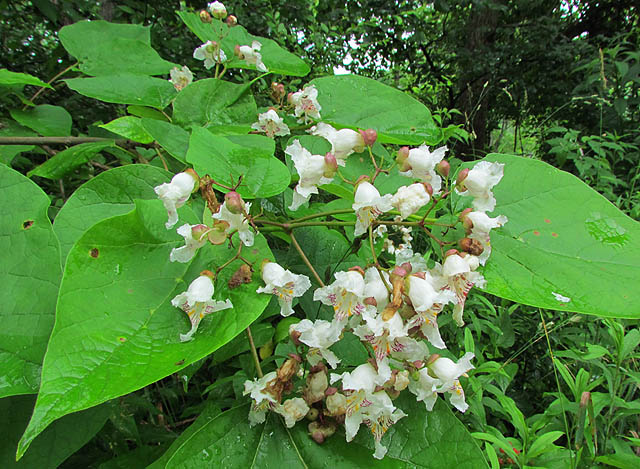
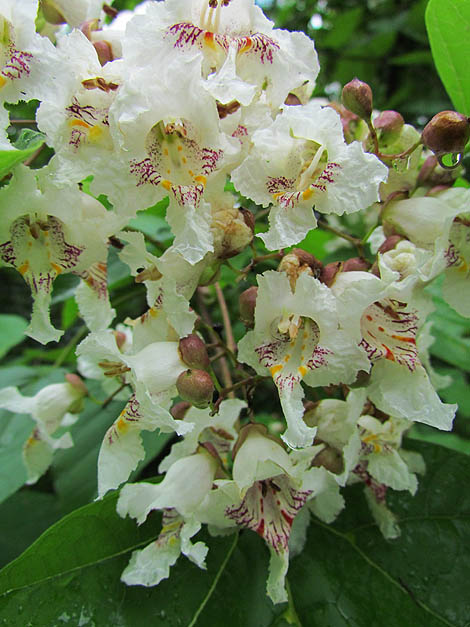
In Spring large, white flowers form in upright clusters from the branch tips, creating a striking floral effect. The flowers are composed of fused white petals with small amounts of yellow, orange and purple.

catalpa_9591

Pollinated flowers produce long, vanilla bean-like pods in early Autumn. The seedpods are slender and green in the Summer and grow to 10-24 inches, looking similar to an exaggerated green bean.

catalpa_09_15 013

The seedpods mature in the Fall, turn dark brown and split open lengthwise to release the seeds inside.

catalpa_0551

The size, shape and color of the mature seedpods gives rise to another common name for this plant – the “Cigar Tree.”

catalpa_6744

Third Eye Herp
E-mail

Staghorn Sumac

sumac_3196

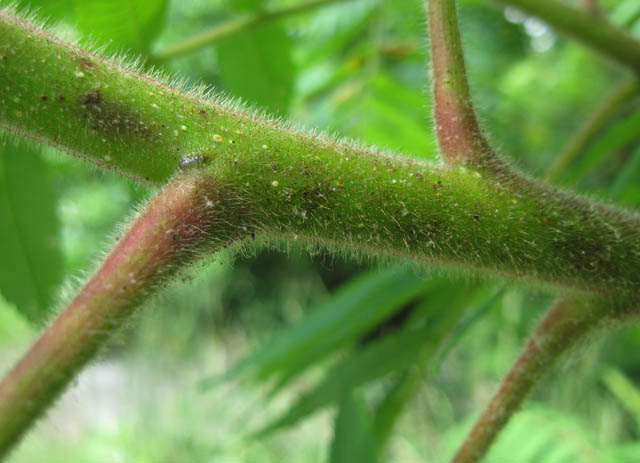
The common name for this tree is derived from the fine, felt-like hairs on young stems, giving them the texture of a deer’s antlers.

sumac_1802

“Back in the day” Native American Indians made a lemonade-like drink from its crushed fruit. And tannery workers used the tannin-rich bark and foliage as a tanning agent.

sumac_8621

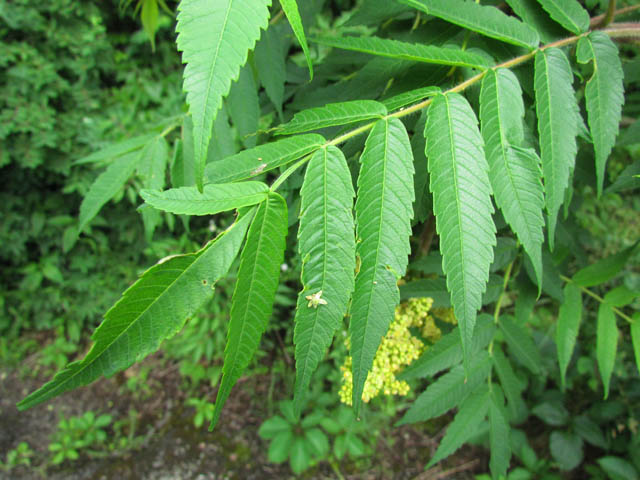
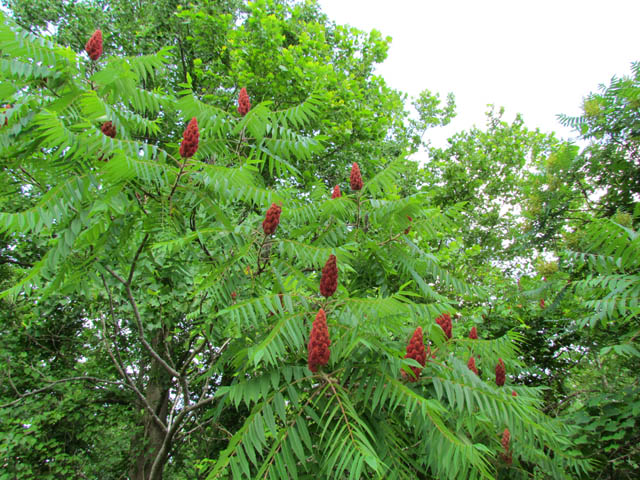
This is a small (15-30 foot) colony-forming, tree with crooked, leaning trunks, picturesque branches and velvety twigs.

sumac_0038

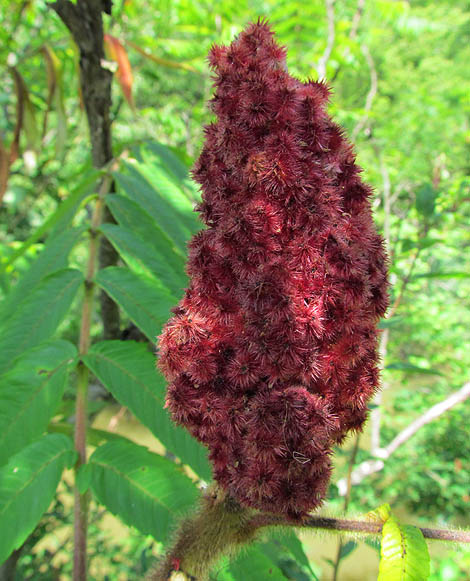
On female plants, yellow-green flowers are followed by fuzzy, bright red berries in erect, pyramidal clusters which last throughout winter.

sumac_8622

Many species of birds have been observed eating the fruits of Staghorn Sumac, especially during the Winter months.

sumac_2915

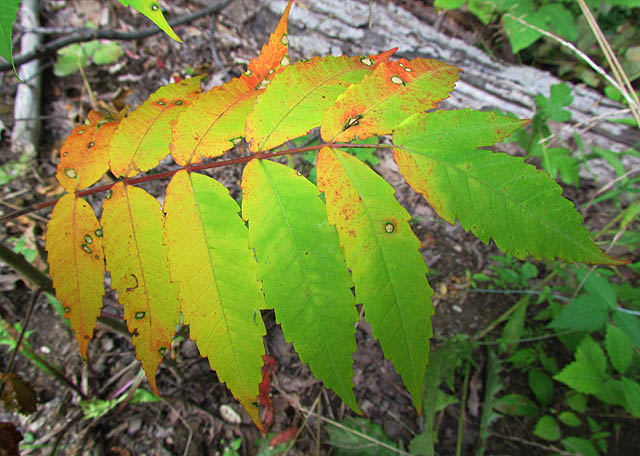
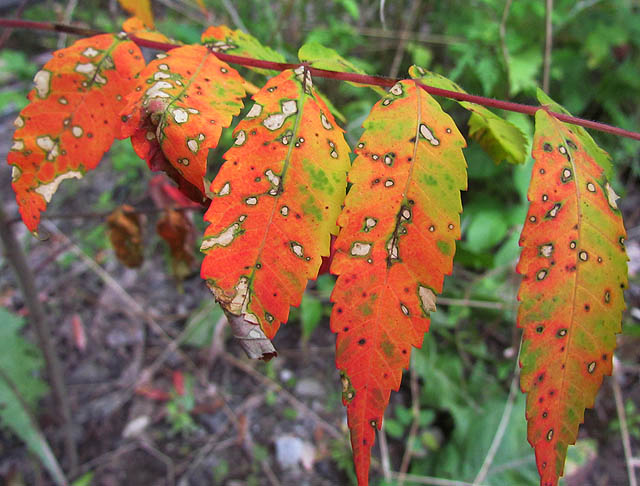
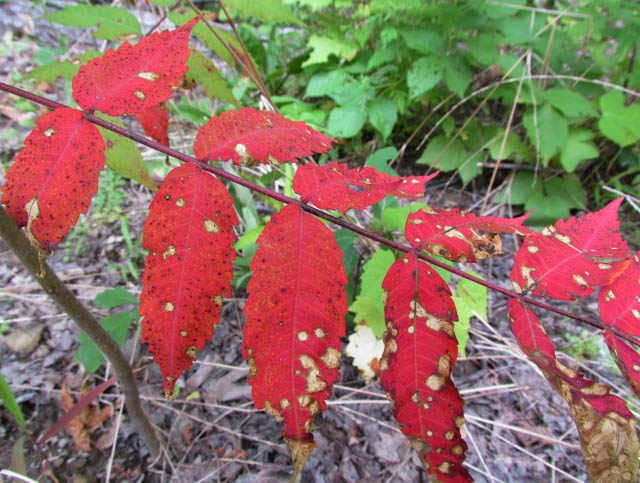
This is one of the first trees to change color. Vibrant orange, vermilion, vivid yellow and sometimes purple may be seen all together on a single tree. I’ve noticed that the leaves on some trees start turning in late July.

 sumac_3851

Staghorn Sumac is shade intolerant, so is most often found along the edges of forests, in forest openings, on the edges of grasslands and fields and along roadsides.

sumac_3673

With appealing features that can be enjoyed year-round, Staghorn Sumac is indeed a tree for all seasons.

sumac_3677

Third Eye Herp
E-mail

Tuliptree

Tuliptree_0919

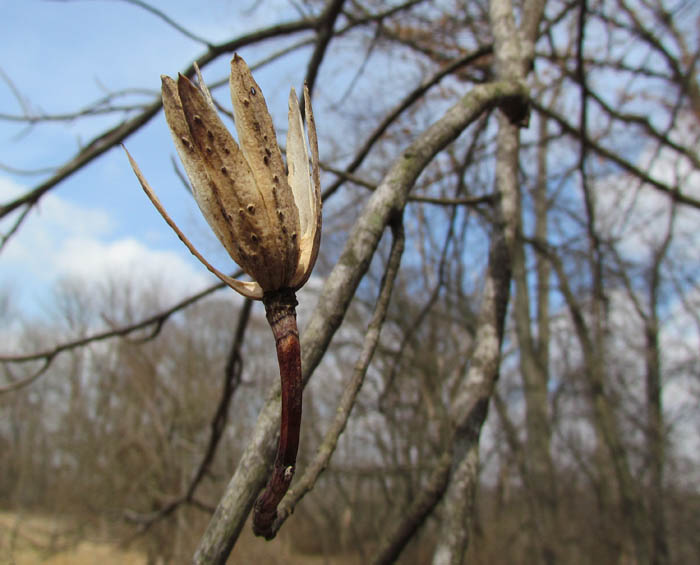
Back in March I noticed the remains of a structure on a tree while on a hike. The Tuliptree, found throughout Ohio, is named for the appearance of its showy flowers and the silhouette of its large leaves, both of which resemble tulips.

Tuliptree_3791

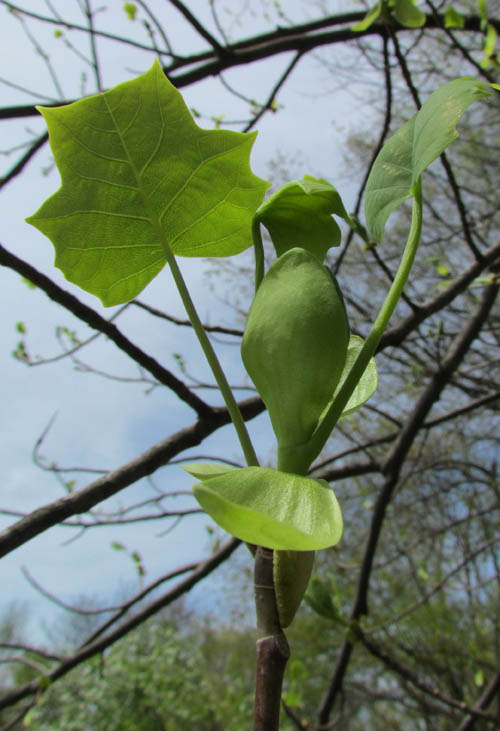
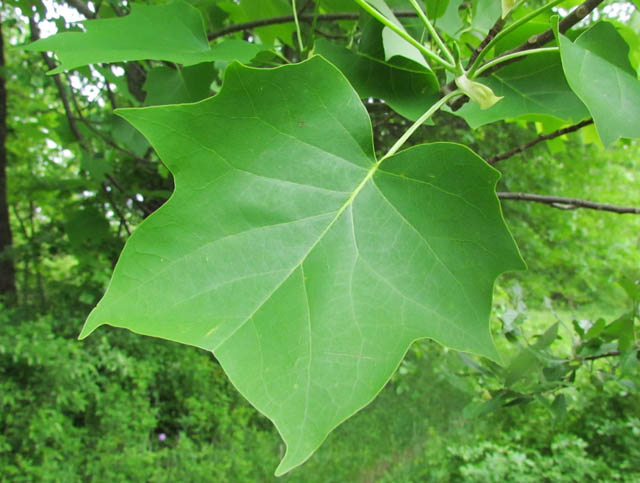
In May I checked on the tree, it was forming buds and leaves. The large, alternate leaves have an unusual shape, with a large blade that is almost square, except for the wide notch on its end.

Tuliptree_5793

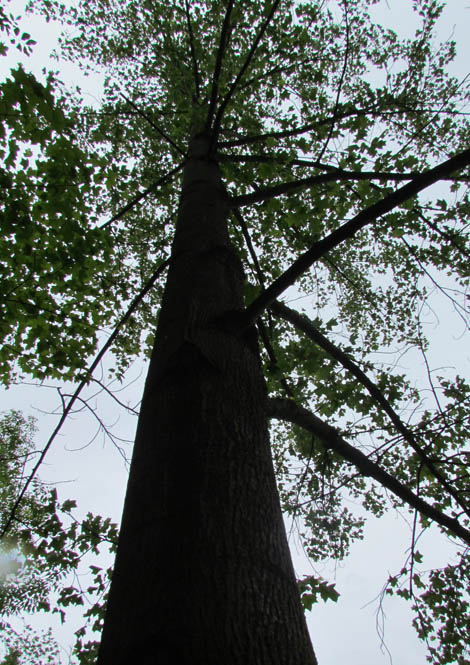
Tuliptree is the tallest tree of eastern forests with the straightest trunks, achieving heights of well over 100 feet and diameters of 4 feet. It is frequently found in moist woodlands and edges of fields, especially on downslopes where water drains.

Tuliptree_5802

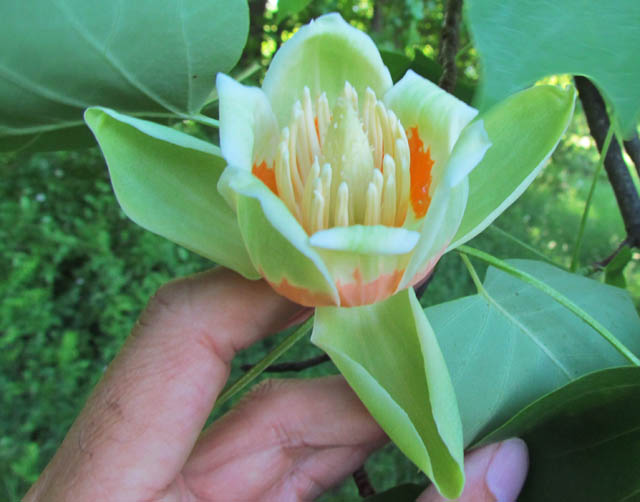
I made a trip back to see this tree yesterday and it was in full bloom. Tuliptree has the largest solitary flower of any native tree in Ohio. It is characterized by six petals that are yellow-green on the outside and orange-yellow on the inside.

Tuliptree_5804

While the flowers are large, they occur scattered in the fully foliaged canopy, and often only occur in the upper canopy of trees at least thirty feet tall. As such, the floral display may go unnoticed, so I considered myself pretty lucky to see this tree’s display at eye level.

Tuliptree_6692

Third Eye Herp
E-mail