Nuttall’s Linanthus

01 Nuttall's Linanthus_1646

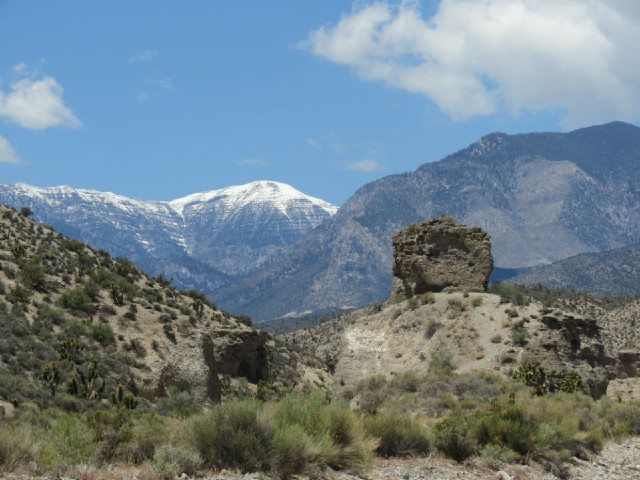
While hiking on Mount Charleston in southern Nevada, I noticed the small flowering plant growing close to the ground.

02 Nuttall's Linanthus 050

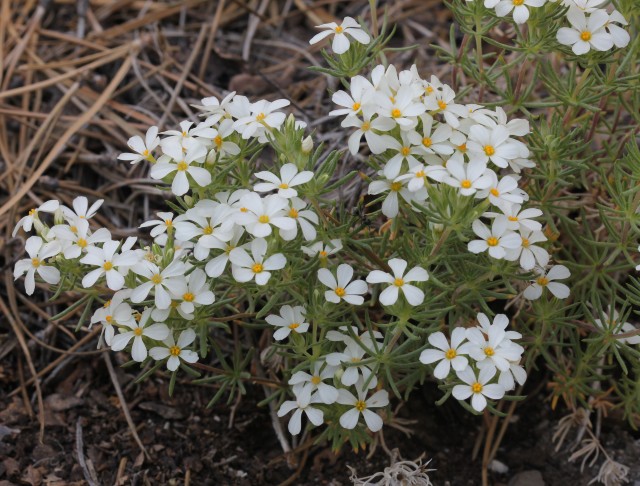
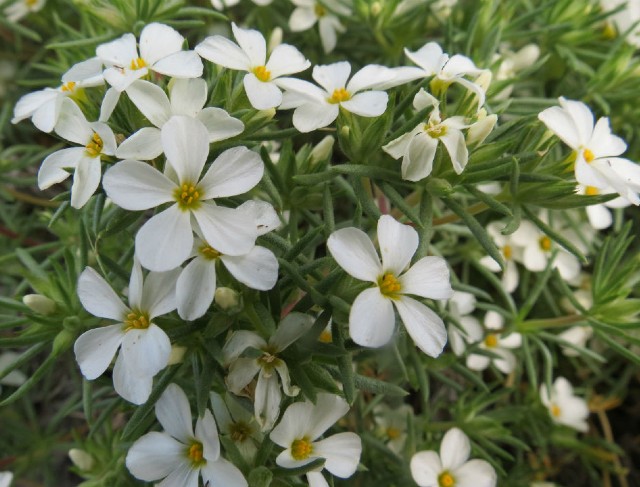
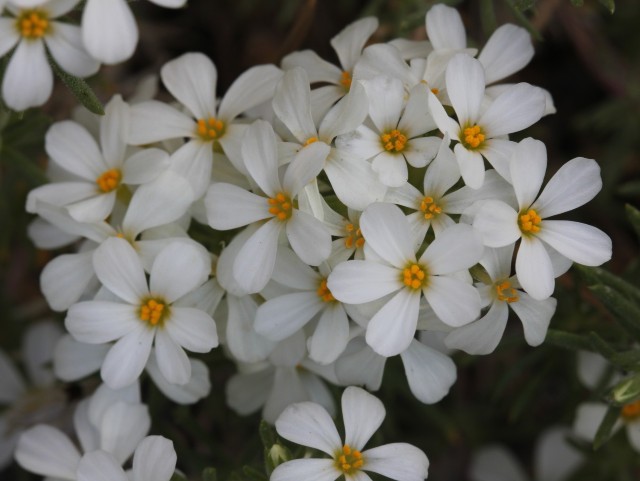
This member of the Phlox Family is a sweetly aromatic, clump-forming perennial with a round mound of stems clad with a distinctive whorled foliage.

03 Nuttall's Linanthus 052

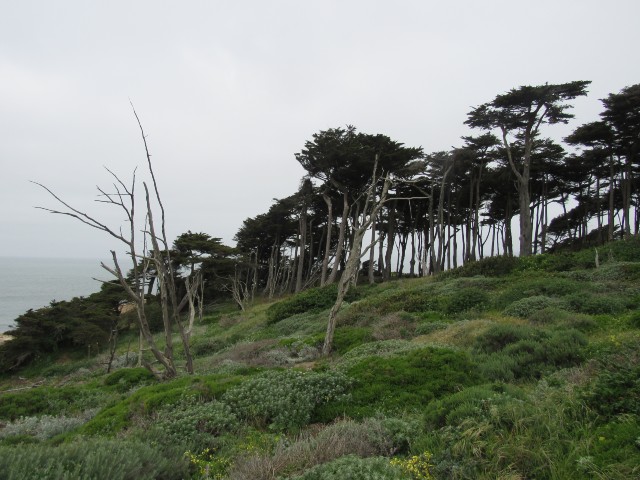
Native to much of the southwestern United States, it lives on dry, open or lightly wooded, often rocky slopes from the foothills to well up into the mountains.

04 Nuttall's Linanthus_1738

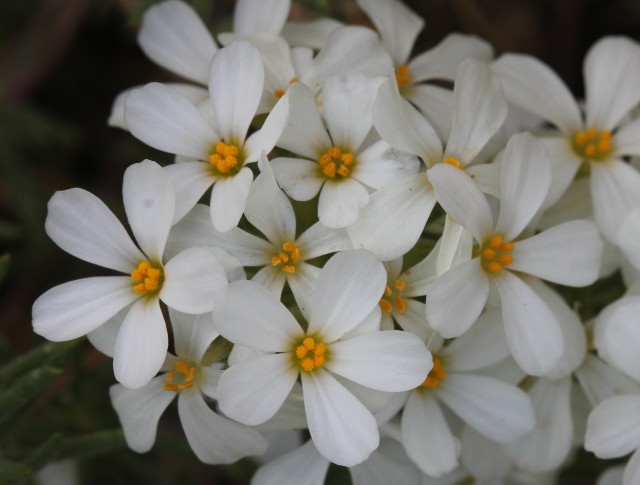
Nuttall’s Linanthus’ flowers are very similar to many other members of the Phlox Family. They are white or pale cream in color, about half an inch across and have five unnotched petals, centered on a yellow tube.

05 Nuttall's Linanthus 053

This species was named in 1870 from a specimen collected by famed botanist and Harvard teacher, Thomas Nuttall.

Third Eye Herp
E-mail

Seaside Daisy

01 Seaside Fleabane_3459

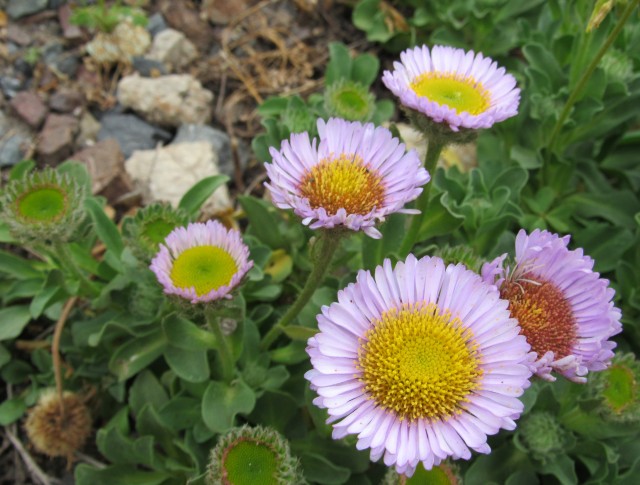
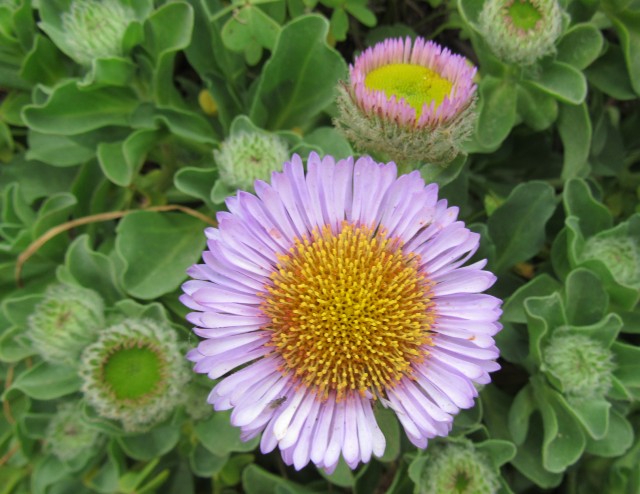
While on the Pacific Coast in April, I came across this cool-looking plant. This wildflower is native to the coastline of Oregon and California where it grows on beaches, coastal bluffs and dunes.

02 Seaside Fleabane_3478

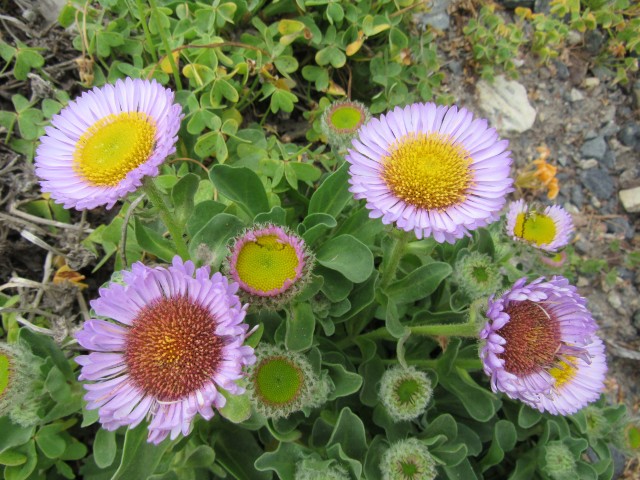
Seaside Daisy is a low-growing perennial, which forms a cushion of semi-double, lavender-to-pink flowers adorned with yellow centers.

03 Seaside Fleabane_3474

This plant blooms for months from mid-spring until late summer, when its blossoms almost cover its leathery foliage of thick, spoon-shaped, blue-green leaves.

04 Seaside Fleabane_3476

Its Latin name is Erigeron glaucus. The name erigeron is from the Greek eri meaning “early” and geron meaning “old man,” referring to the fact that the flowers bloom in spring, then turn gray like hair.

05 Seaside Fleabane_3472

This fine plant is also known as Seaside Fleabane and Beach Aster.

Third Eye Herp
E-mail

Blue Witch

01 hamilton 030

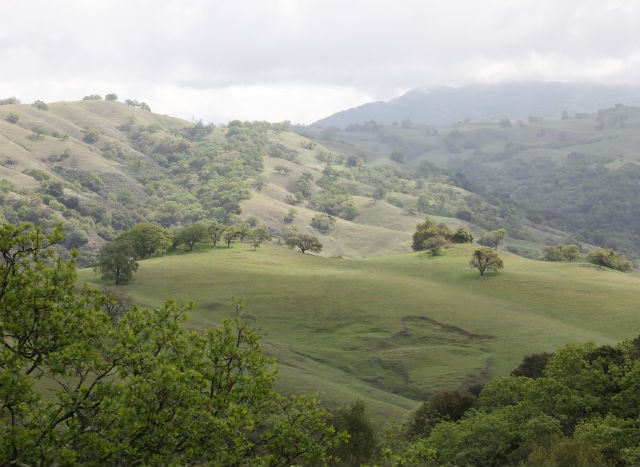
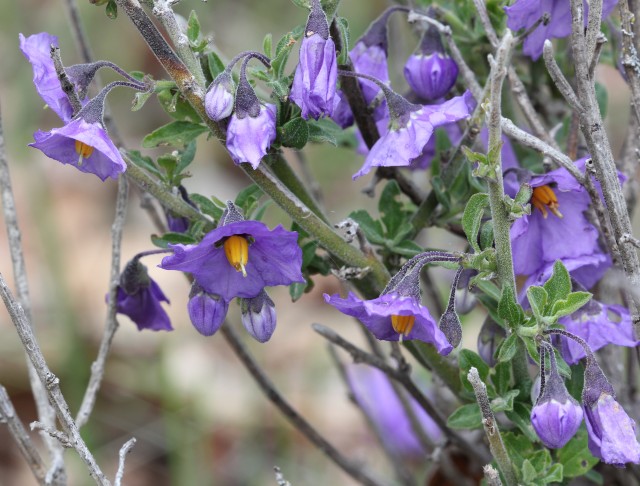
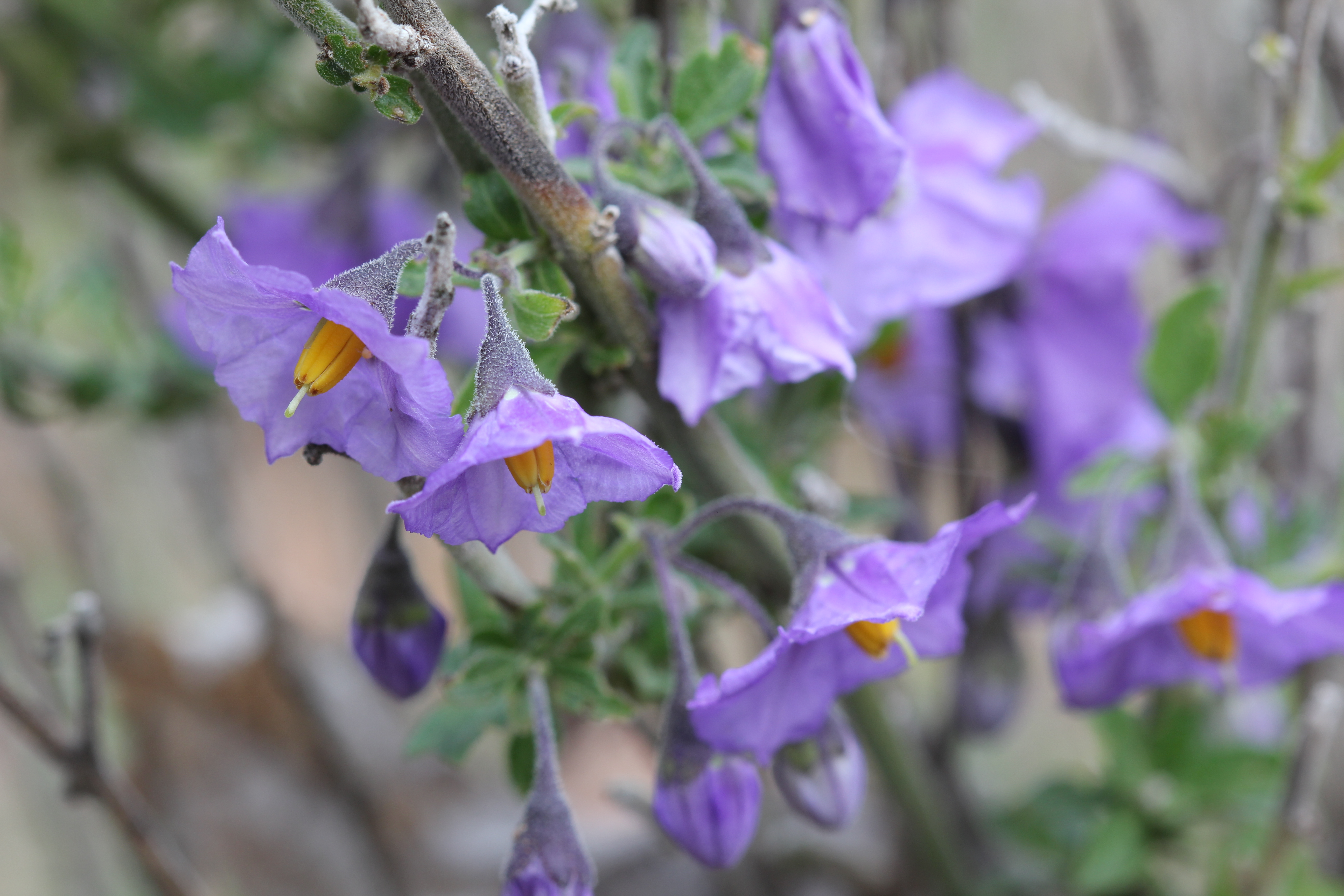
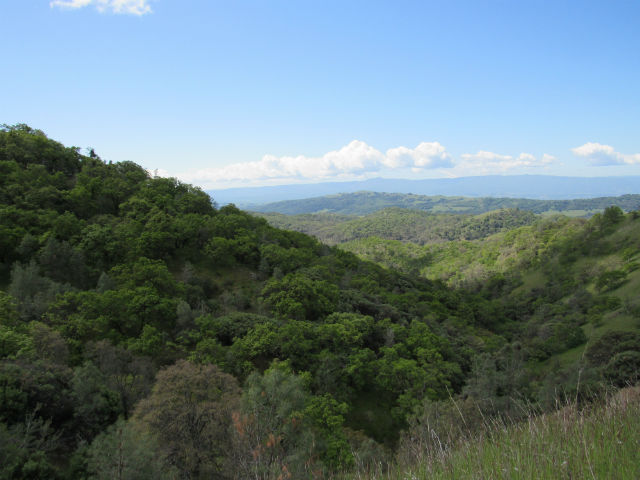
This is an evergreen shrub up to three feet high and wide, displaying purple flowers about one inch in diameter. It can be found in chaparral habitat and low-elevation oak woodlands in California and parts of Baja California and Arizona.

02 purple nightshade blue witch 141

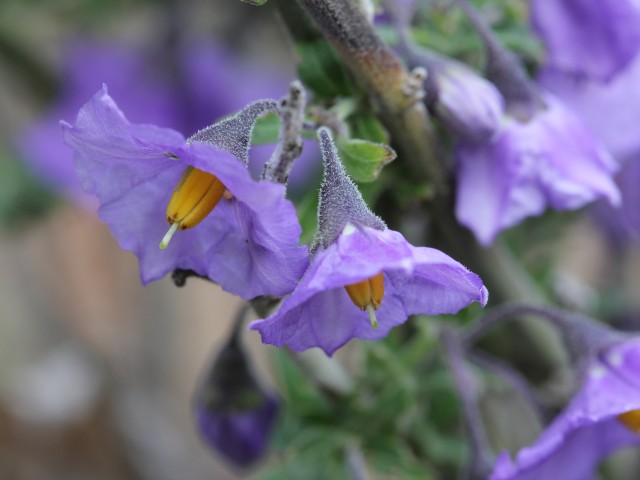
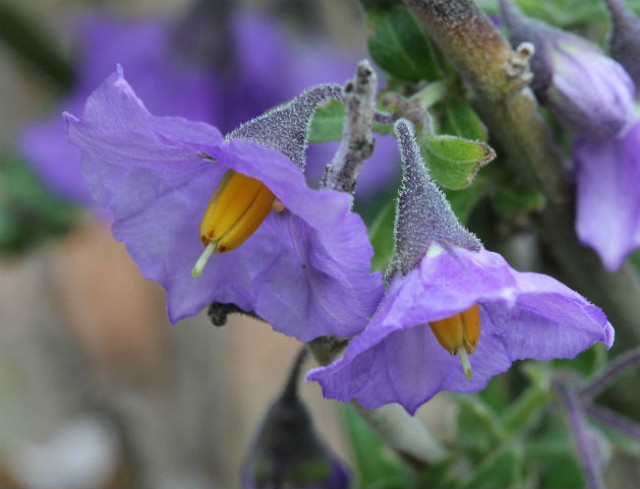
It has bright purple or blue frilly flowers with thick yellow anthers at the center. The flowers close into spherical buds overnight. Its dark gray-green oval-shaped leaves grow on hairy green stems. All parts of the plant are toxic to people and some animals. However, it is very attractive to insects.

03 purple nightshade blue witch 144

Though the main bloom period is spring and summer, some flowers will occur for most of the year. When a Blue Witch flower finishes blooming, it bears small round green fruits which turn purple when ripe and resemble tiny eggplants.

04 purple nightshade blue witch 143

While beautiful to look at, it is also a tough shrub which can grow in rocky and clay soils and springs up in areas recovering from wildfires or other disturbances.

05 purple nightshade blue witch 145

This plant is also known as Purple Nightshade, Purple Witch and Parish’s Nightshade – it was neat to encounter it while hiking on Mount Hamilton during my visit to California.

Third Eye Herp
E-mail

Silver Bush Lupine

01 Lupine_4351

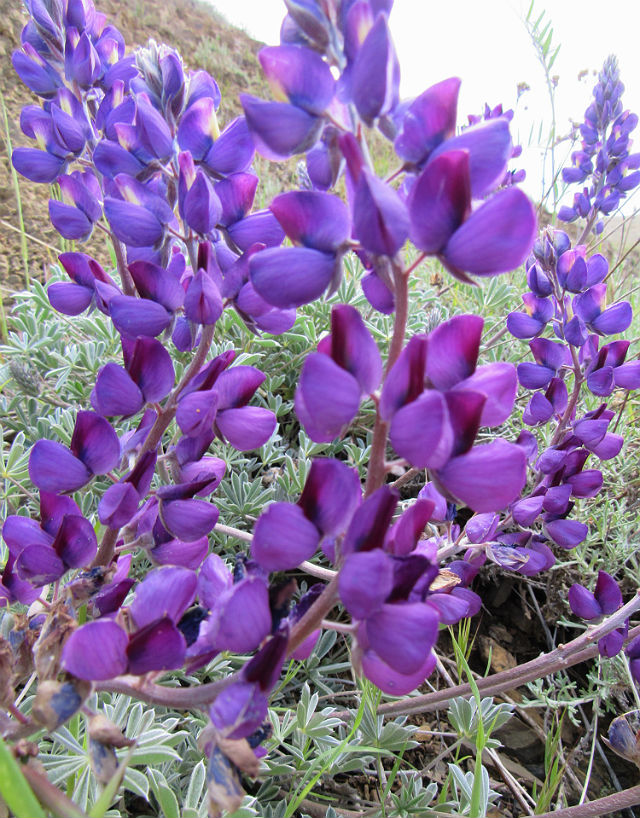
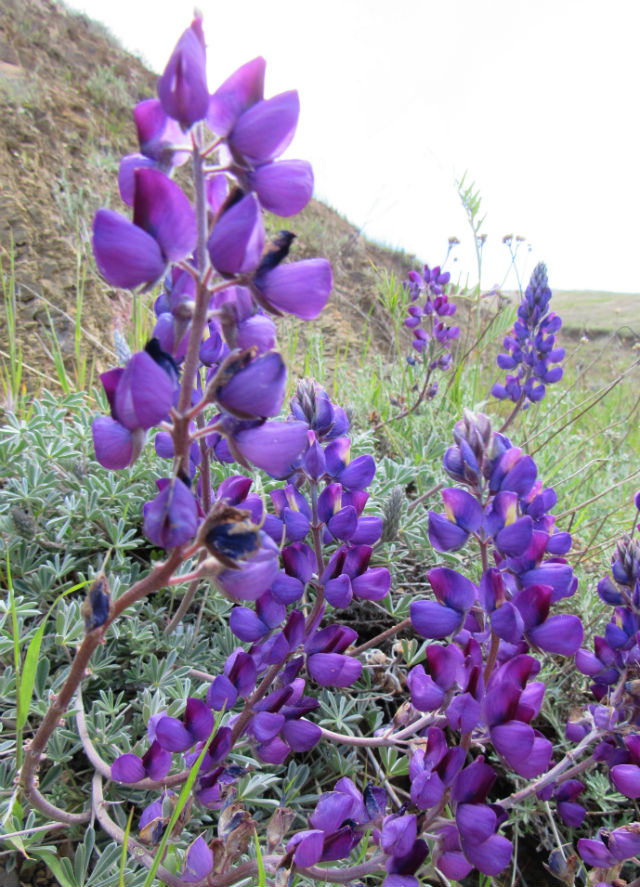
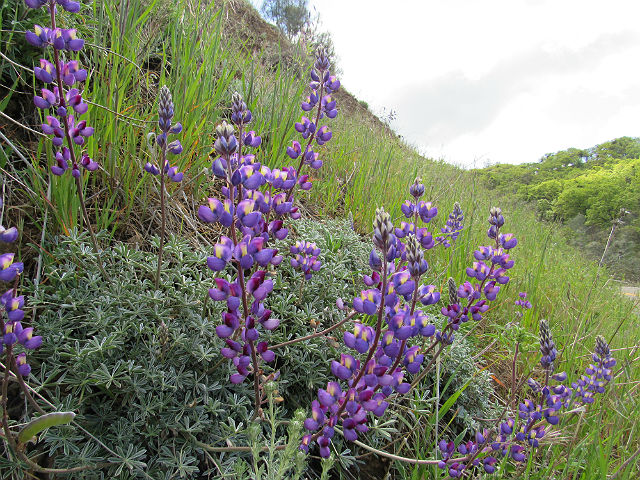
While exploring Mount Hamilton in north-central California, it was hard not to notice this colorful purple wildflower.

02 Lupine_4352

This plant grows in the hills and valleys of the Golden State. It requires good drainage and needs little water once the roots are established.

03 Lupine_4353

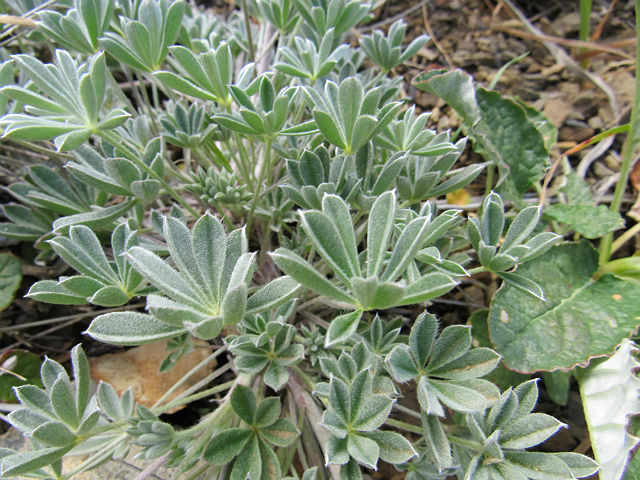
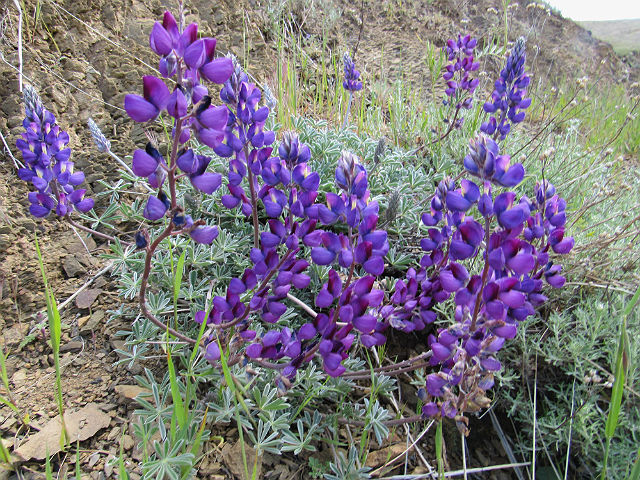
When Silver Bush Lupine blooms, its flower is light blue to purple on three- to twelve-inch stalks. Its foliage is silver with a feathery texture.

04 Lupine_4357

Not only is it beautiful, but this plant performs a valuable function. It is a member of the Legume Family and has nitrogen-fixing nodules on their roots.

05 Lupine_4354

As a result, they are important for soils, as they can take nitrogen from the air and “fix” it into the ground for the purposes of plant growth and prosperity.

06 Lupine_4360

Like other perennial shrubs, Silver Bush Lupine can live for many years.

Third Eye Herp
E-mail

Giant White Wakerobin

01 Giant White Wakerobin_5197

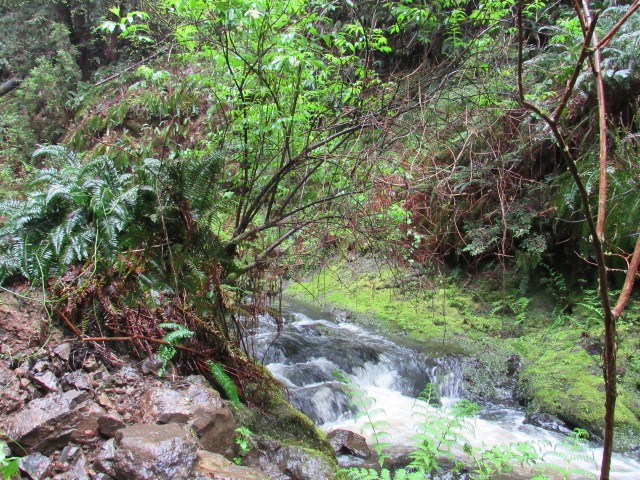
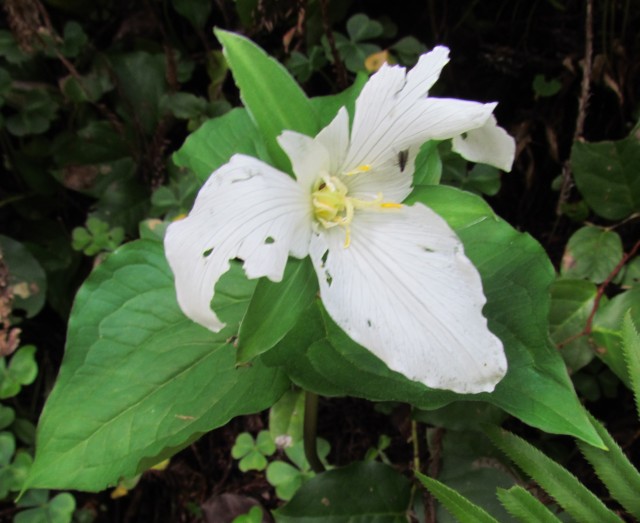
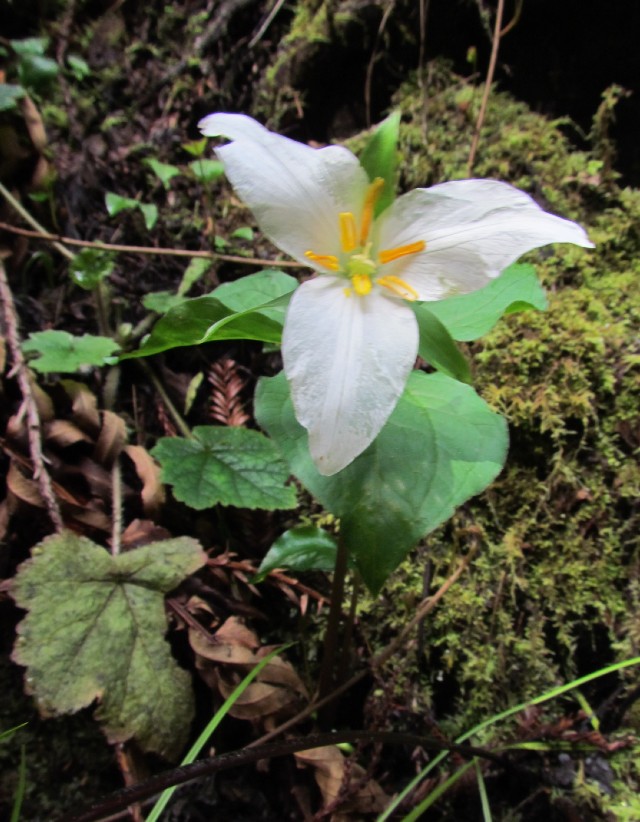
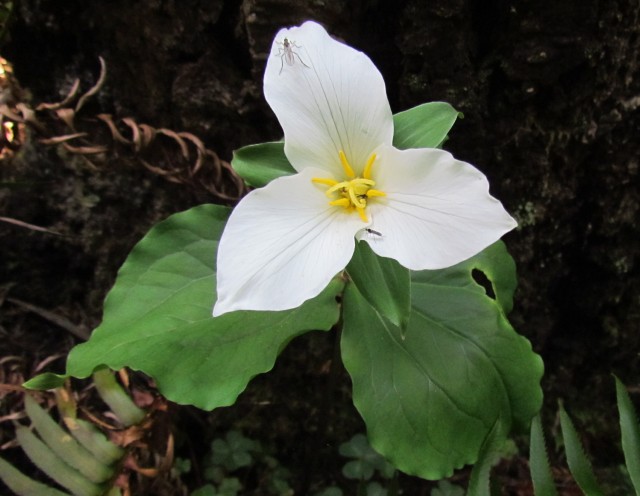
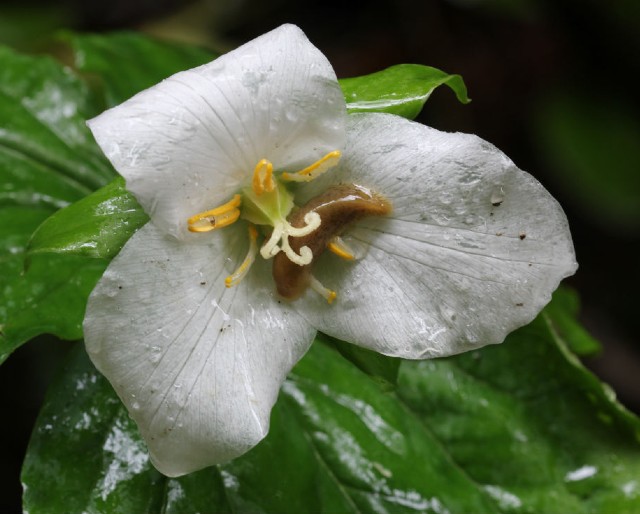
This spectacular wildflower was easy to spot in the overcast, rainy Pacific Northwest forest. This largest and showiest type of trillium is frequently cultivated in wildflower gardens.

02 Giant White Wakerobin_6127

The species is endemic to the western United States, ranging from west central California through Oregon to Washington. It is found in diverse habitats, such as the moist slopes of mixed deciduous-coniferous forests, among shrubs, thickets and along stream banks and river beds.

03 Giant White Wakerobin_6099

This plant has an elegant appearance in low-growing clumps of large green leaf-like bracts and brilliant white flowers. Scientifically known as Trillium albidum, this is a very long lived genus, with some species known to live for multiple decades. In the wild, most species take 7-10 years to produce flowers from seeds.

04 Giant White Wakerobin_6130

Giant White Wakerobin’s seeds are mainly dispersed by ants, which transport the seeds to their homes in order to consume part of the seed coat. This plant also spreads underground through rhizomes.

05 Giant White Wakerobin_4245

As its common name suggests, it is one of the earliest blooming of California native flowers and a herald of spring.

Third Eye Herp
E-mail

Dutchman’s Breeches

01 Dutchmans Breeches_5546

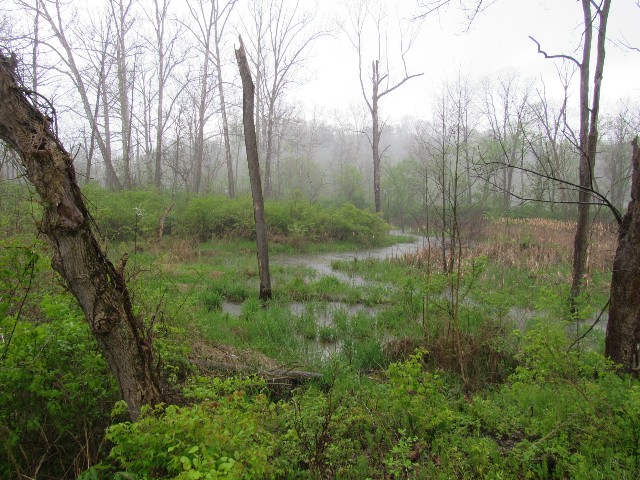
I recently saw this wildflower while hiking the Ohio & Erie Canal Towpath Trail in northeast Ohio. This native plant is common throughout the eastern United States and also occurs in the Pacific Northwest, though it is less common there.
02 Dutchman's Breeches_2170

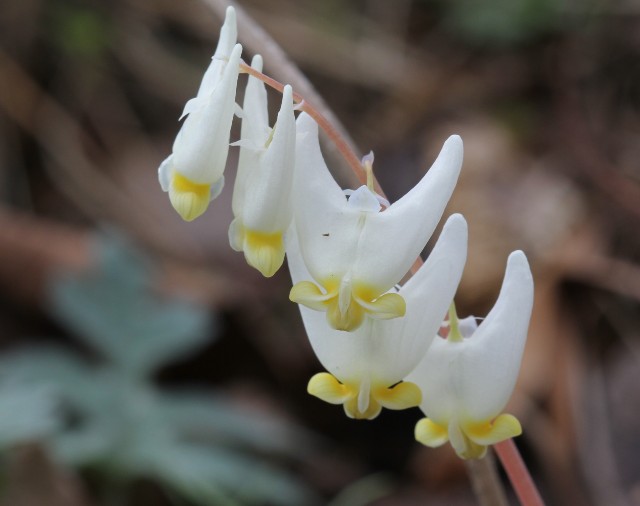
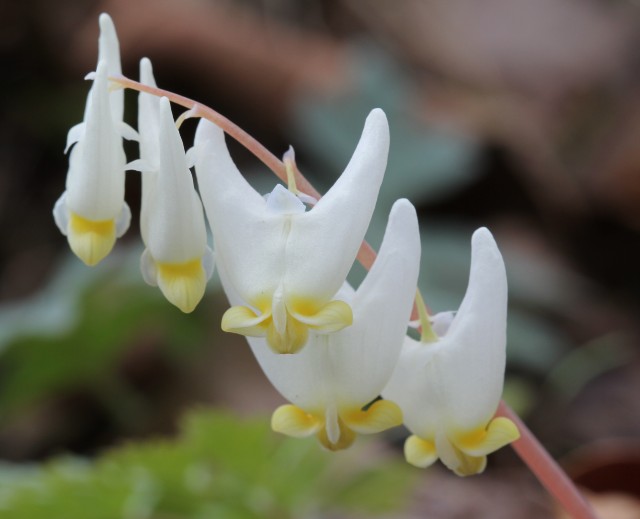
Dutchman’s Breeches blooms in the early Spring from March to April. Its flowers are white to pink and resemble a pair of pantaloons hanging upside down. It has one or more finely compound leaves that make the plant appear fern-like.
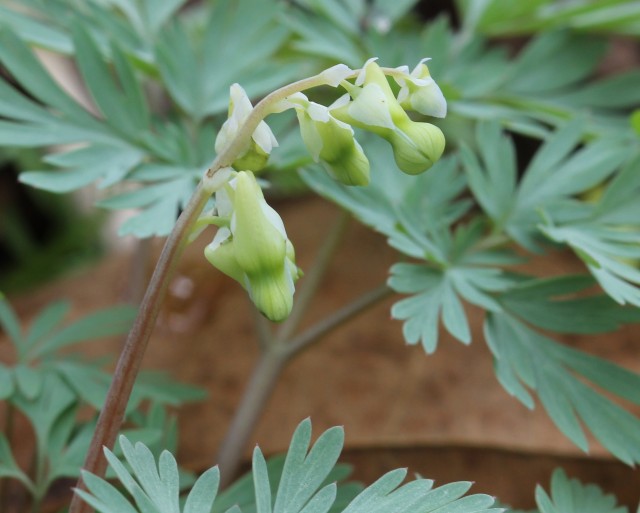
03 Dutchman's Breeches_2183

The flowers are pollinated by early bumblebees, which have tongues that are long enough to tap the nectar. Unlike the closely related Squirrel Corn, its flowers lack fragrance.
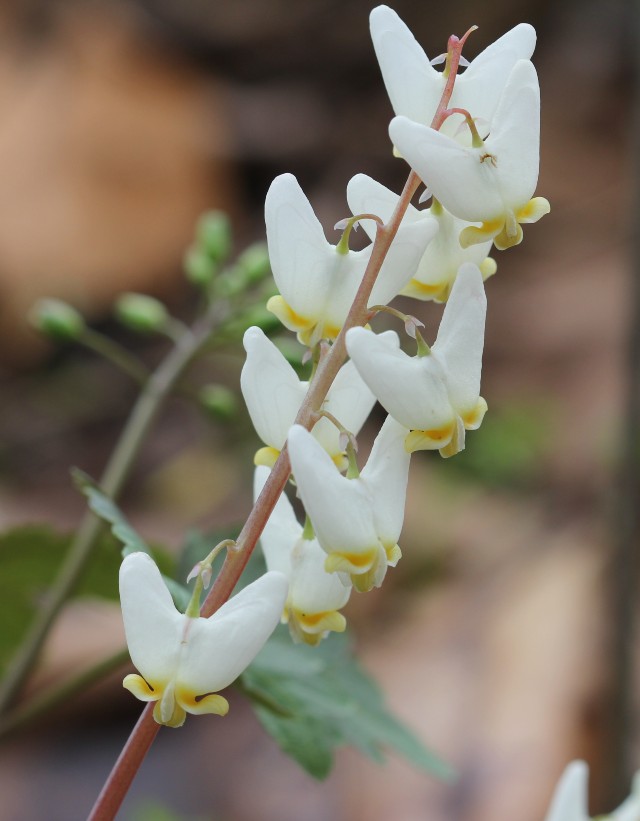
04 Dutchman's Breeches_2180

This plant’s seeds are kidney-shaped, with a faint net-like pattern. Each one has a fleshy organ called an elaiosome that attracts ants. Dutchman’s Breeches is just one of many plants whose seeds are spread by ants, a process called myrmecochory.
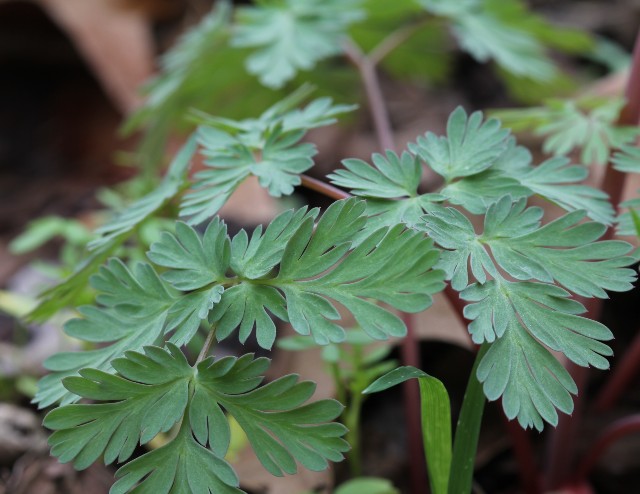
05 Dutchman's Breeches_2176

The ants take the seeds to their nest, where they eat the elaiosomes and then put the seeds in their nest debris, where they are protected until they germinate.
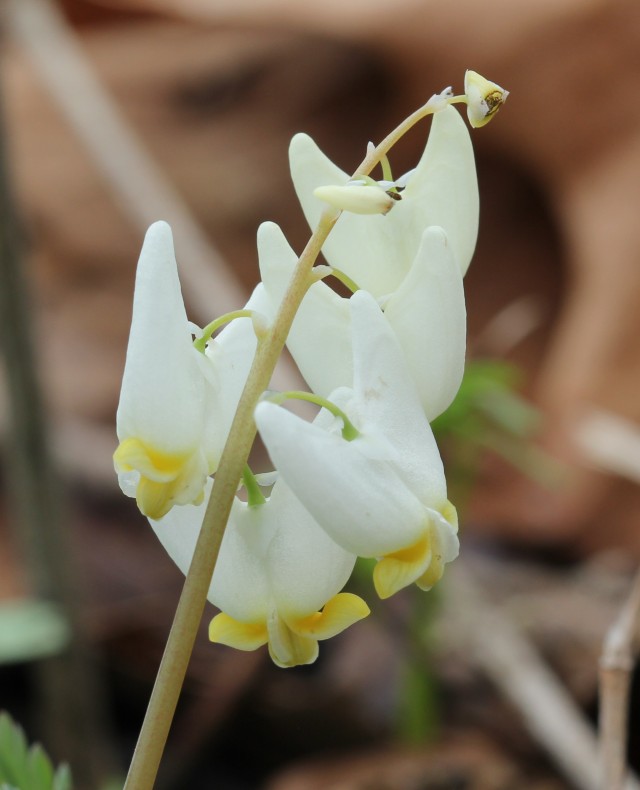
06 Dutchman's Breeches_2189

Dutchman’s Breechess can be found in deciduous forests, especially along gentle slopes, ravines or ledges along streams. This species most often occurs in original woodland that has never been plowed under or bulldozed over. It’s abundance in such places can be highly variable.
07 Dutchman's Breeches_2191

It has several common names, depending on which part of the country you find it in. “Bleeding Heart” is one, due to its sometimes pink flowers. Another common name is “Little Blue Staggers,” derived from its ability to induce drunken staggering if cattle graze on it, due to the narcotic and toxic substances it contains.

Third Eye Herp
E-mail

Great White Trillium

White Trillium_4044

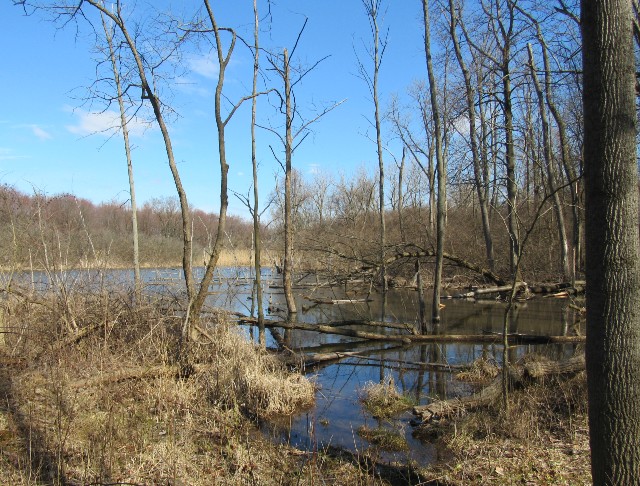
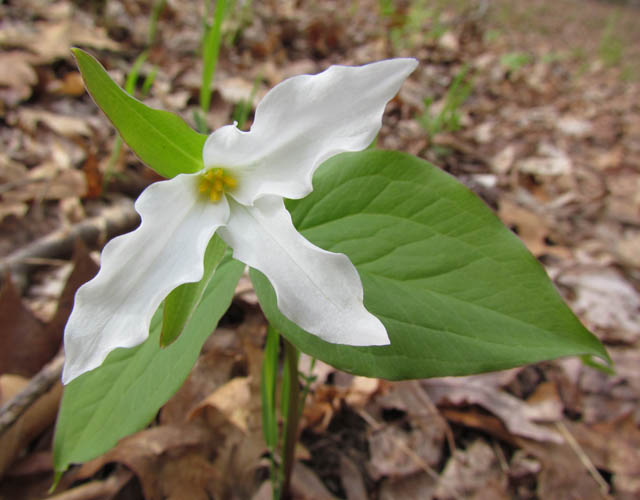
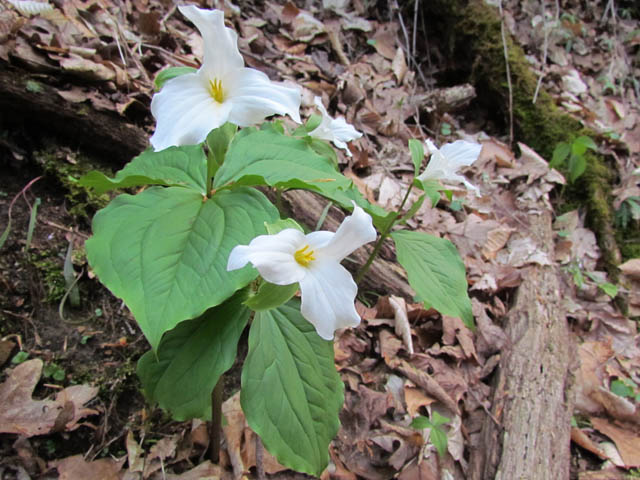
Trillium is also a much-loved native wildflower in the United States. Its presence above ground is just for a short time each year – after the snow melts, but before the woodland trees leaf out and completely shade the forest floor.

trillium_2968

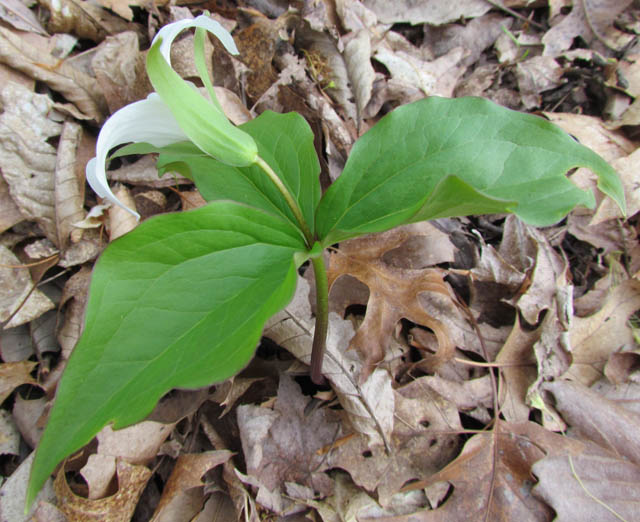
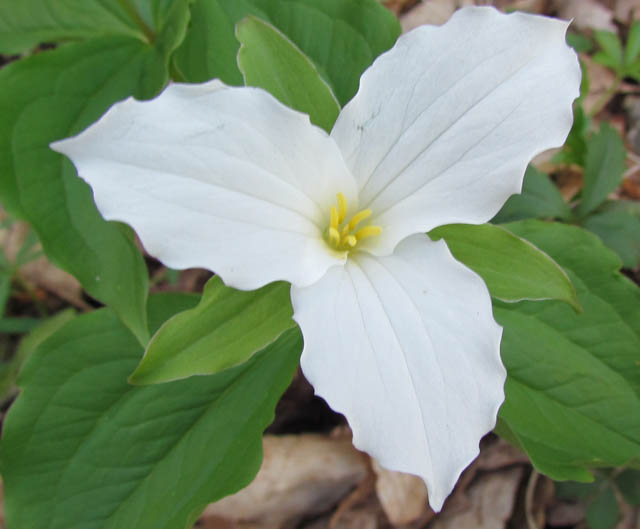
The name “trillium” derives from the plant’s repetitions of three. Each plant produces a whorl of three broad leaves with a three-petaled blossom on a single stem.

trillium_2963

Like many other Spring wildflowers, the seeds of the trillium are dispersed by ants. The plant’s seeds contain a food that is attractive to ants. The ants carry the seeds to their nests to feed their larvae, then discard the undamaged seeds. This allows the trillium to produce new plants in nearby locations.

trillium_3010

This plant has a lifespan approaching that of a human – it requires some 17 years to reach maturity and may reach 70 years of age.

trillium_3004

In 1986, Great White Trillium took its place alongside the Ohio state flower, Red Carnation, as the state’s official wildflower. Ohio’s General Assembly chose this plant because it grows in each of the state’s 88 counties.

Third Eye Herp
E-mail
Yerba Mansa

Yerba Mansa_3045

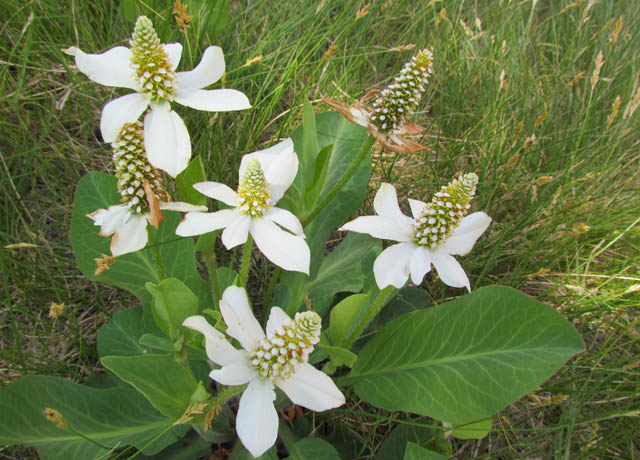
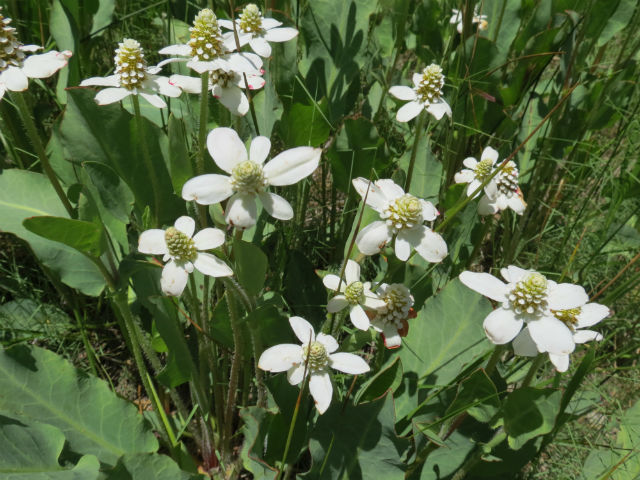
This is a neat plant native to the southwestern United States, though I’ve only seen it in Nevada. It is a perennial herb and its genus only has one species.

Yerba Mansa_8431

Yerba Mansa, also known as Lizard Tail, prefers very wet soil or shallow water. I’ve only encountered in in areas of the desert where there are natural springs.

Yerba Mansa_3262

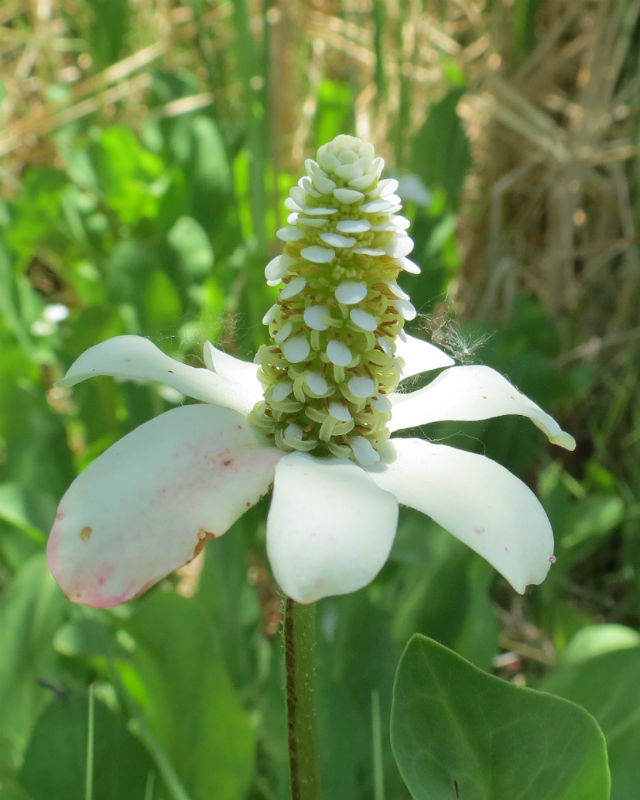
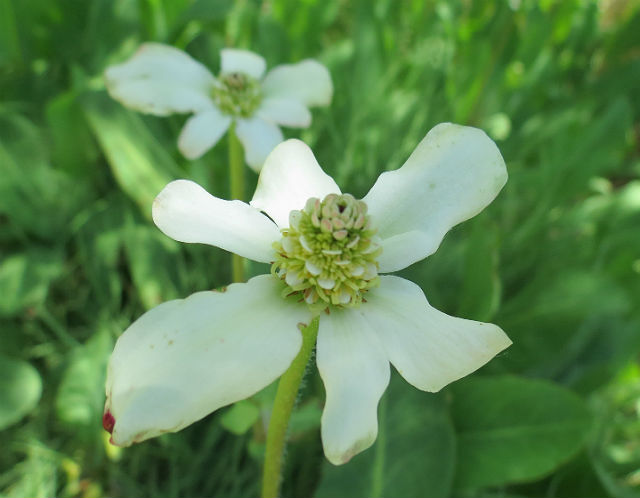
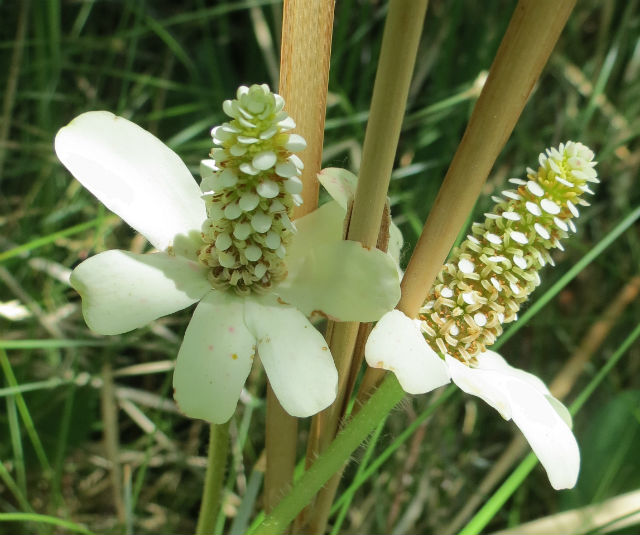
This plant is showy in Spring when in bloom. It forms a compact group of tiny flowers that grow in an unusual, conical flower head and are surrounded by white petal-like leaves.

Yerba Mansa_3261

Yerba Mansa is commonly pollinated by bees and other insect pollinators. Once it has finished blooming, the entire cone-like flower structure develops into a hard fruit that falls off the plant travels down waterways to spread the plant’s seeds.

Yerba Mansa_3266

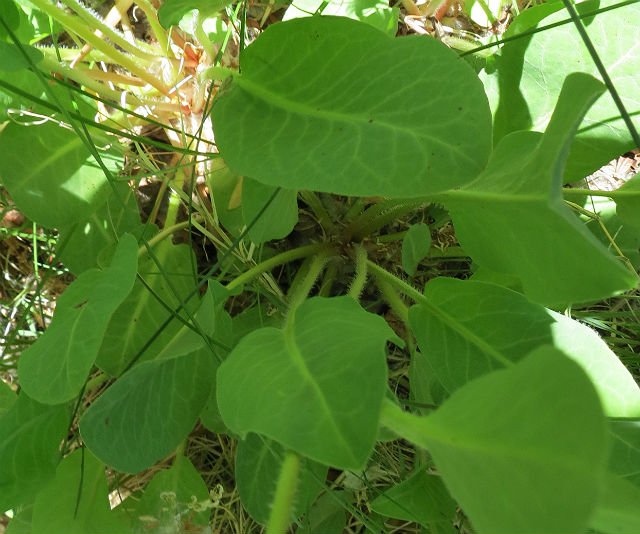
The leaves growing nearest to the ground have a rounded tip, and are often heart-shaped at the base, while the stem leaves are much smaller.

Yerba Mansa_3058

Historically, Yerba Mansa was used to disinfect and treat open wounds and sores, as well as to treat colds, coughs, and ulcers. Today it is still used to treat a variety of medical ailments.

Yerba Mansa_3265

I always enjoy coming across this odd, yet very cool plant on my hikes.

Third Eye Herp
E-mail
Wild Blue Phlox

Wild Blue Phlox_0433

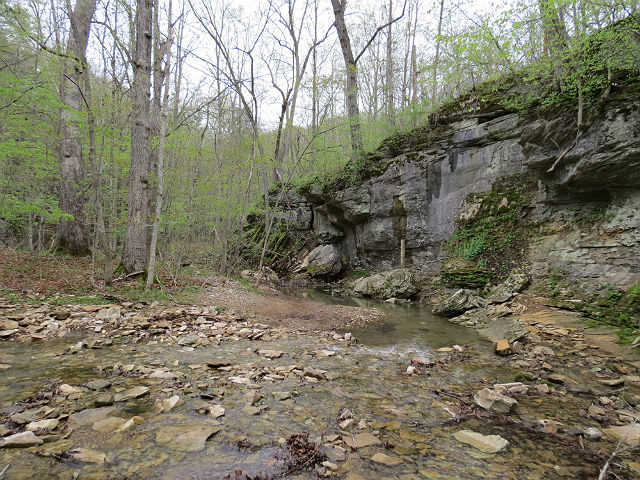
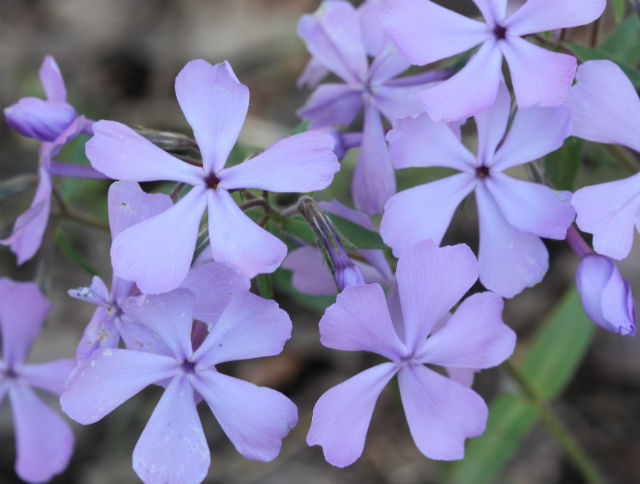
This species of flowering plant is native to forests and fields in eastern North America. I expect to see it in my home state of Ohio in a few weeks, but for now am enjoying it on my visit to Carter Caves, Kentucky.

Wild Blue Phlox_9557

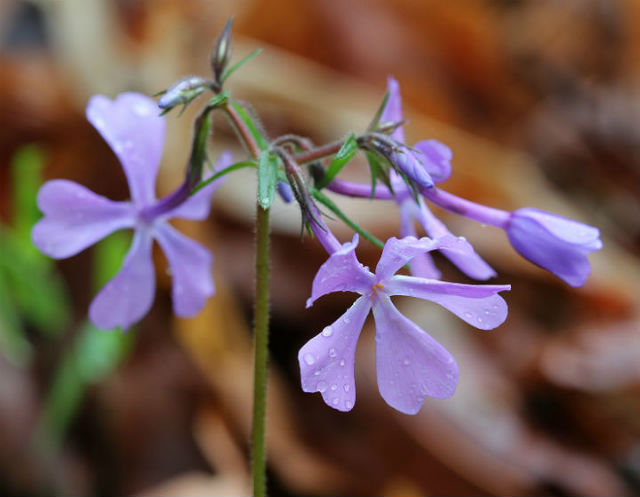
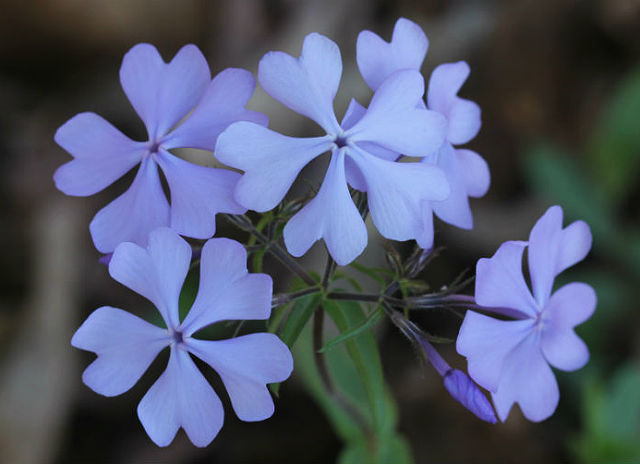
Wild Blue Phlox is a woodland species that resides in forests, fields and along streams. It has loose clusters of slightly fragrant, tubular, lilac-to-rose-to-blue flowers with five, flat, notched, petal-like lobes that appear at the stem tips in Spring.

Wild Blue Phlox_9550

Its blooms attract butterflies (Swallowtails, Grey Hairstreaks and Pygmy Blues), clearwing moths and hummingbirds.

Wild Blue Phlox_0404

This plant can form large colonies as the weak stems flop over and root at the nodes. It then disappears in mid-summer after flowering dropping seeds.

Wild Blue Phlox_9414

The genus name, Phlox, is derived from the Greek word for flame in reference to its bright flowers. This plant is also known as Woodland Phlox and Wild Sweet William.

Third Eye Herp
E-mail
Douglas Iris

Douglas Iris_2406

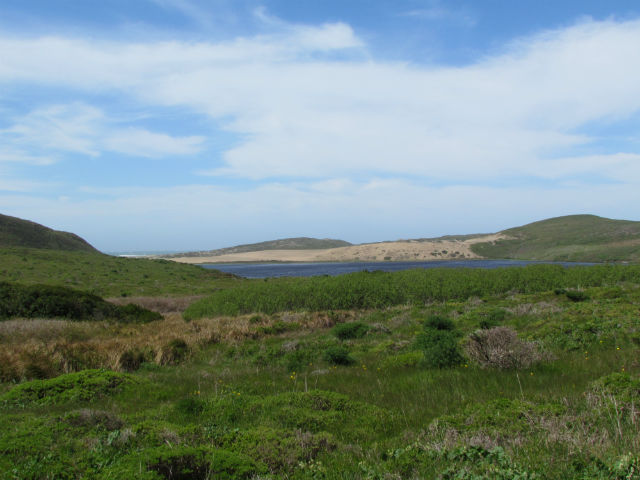
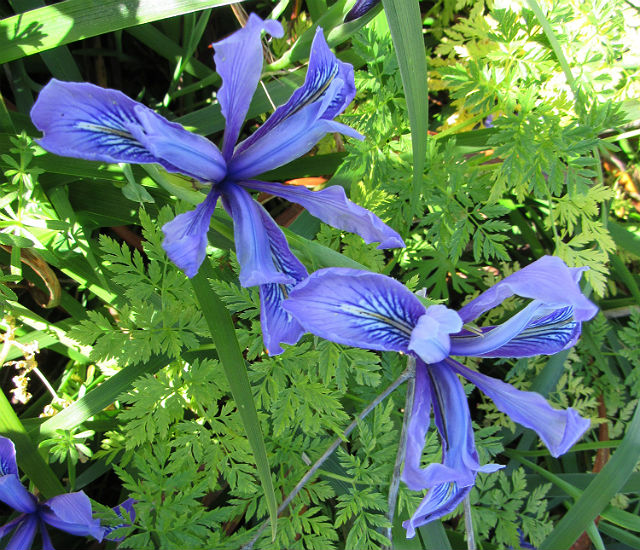
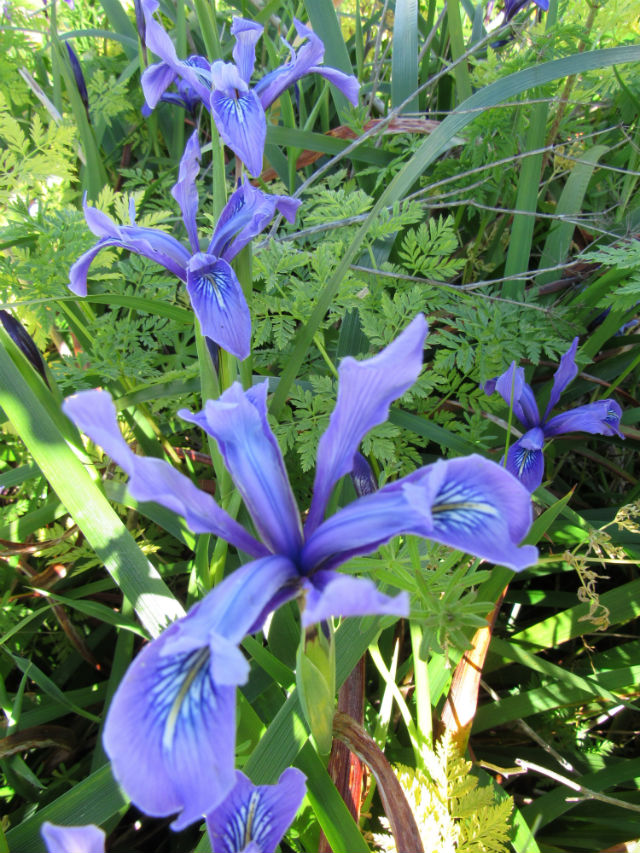
When visiting Point Reyes National Seashore I often encounter this common wildflower of the coastal and central regions of Northern and Central California.
Douglas Iris_2674

The Douglas Iris was first described by 19th century botanist David Douglas Scottish who traveled through the American Northwest collecting a variety of plants. He also has the Douglas Fir named after him.

Douglas Iris_0934

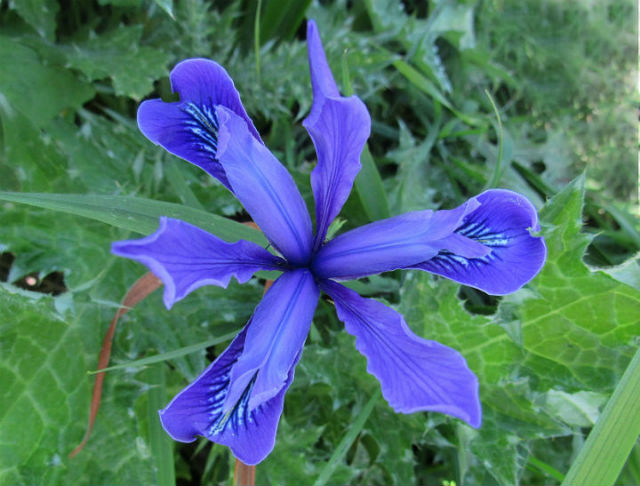
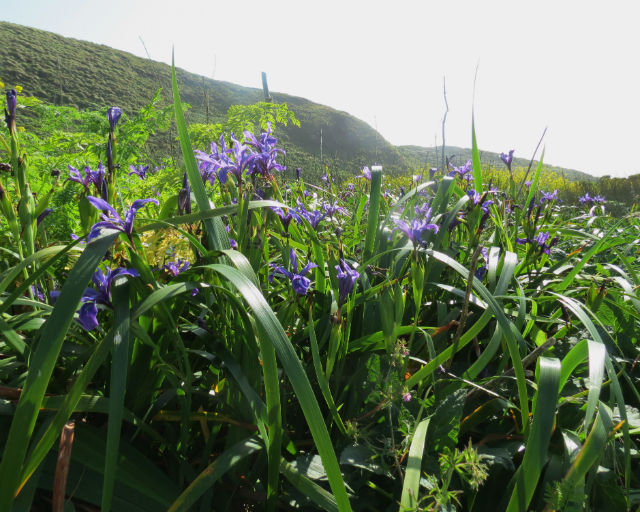
In Spring, large clumps of iris with flowers ranging from cream to deep purple bloom in grasslands along the coast, and in the deep shade of coastal forests.

douglas iris_3940

The flowers are intricately patterned with nectar guidelines for potential pollinators, such as bees and butterflies.

douglas iris_3938

The Douglas Iris’ sword-shaped leaves overlap and can reach over one foot long, rising from underground stems called rhizomes.

Douglas Iris_012

“Back in the day,” Native Americans in California extracted a single fiber from each leaf margin and used it to create strong silky fibers for fishing nets, rope and snares for catching game.

Third Eye Herp
E-mail