Snowdrops

snowdrops_4570

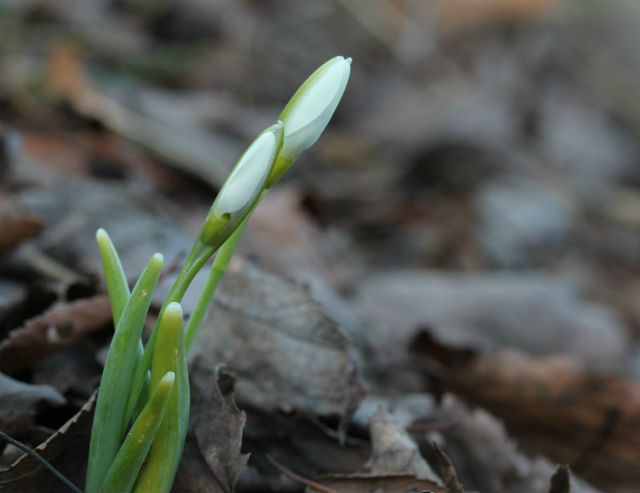
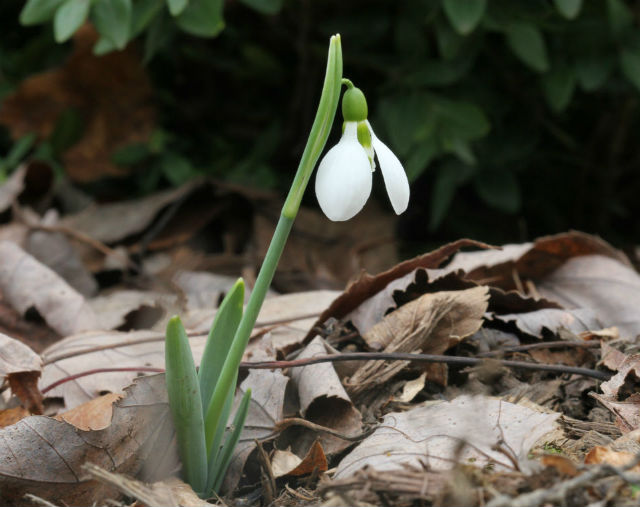
The young shoots of snowdrops emerging from the frost-covered ground provides anticipation for the beginning of Spring.
snowdrop_8855

Snowdrops are in the amaryllis family and there are only a dozen cultivated species, mostly native to the deciduous woodlands of Europe and western Asia.
snowdrops_3328

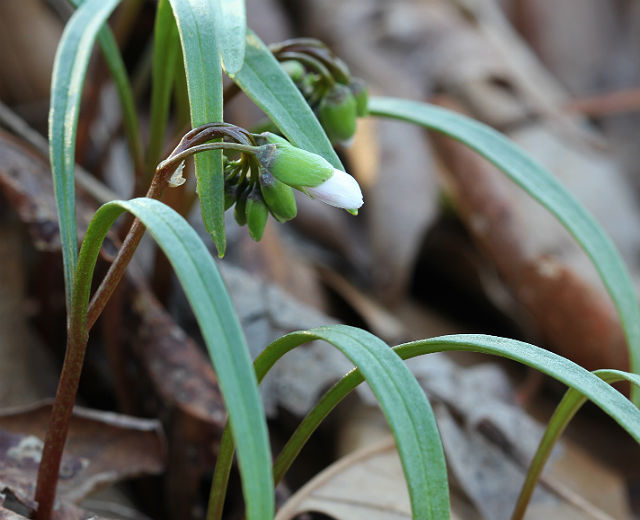
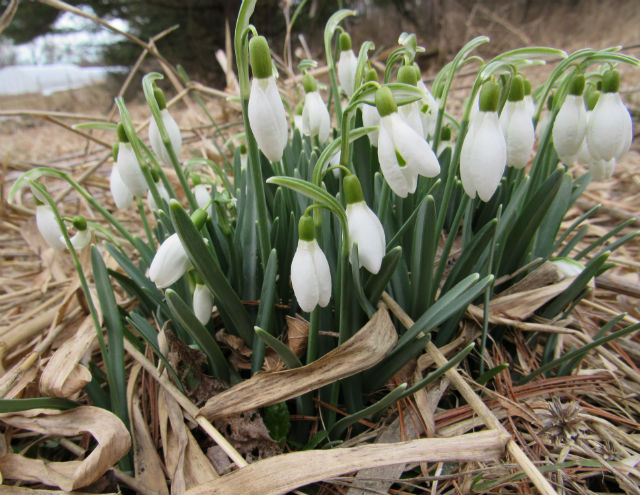
Flowering from January to March, it can naturally be found growing in the woods and by streams. The plants have two linear leaves and a single small white drooping bell-shaped flower.
Snowdrops_0111

Snowdrops have been known since early times, being described by the classical Greek author Theophrastus in the fourth century BC.

snowdrops_3327

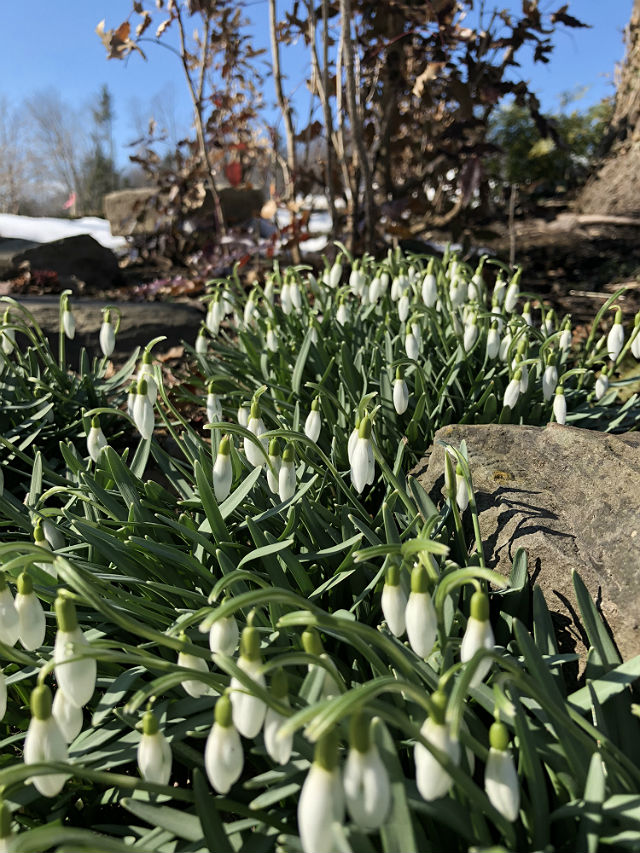
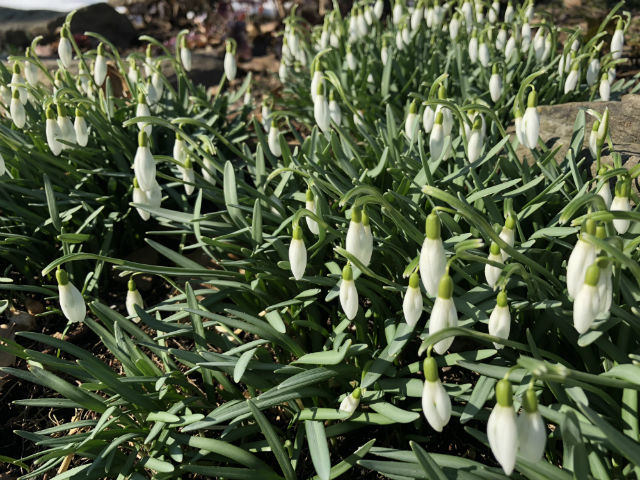
Celebrated as a sign of Spring, Snowdrops can form impressive carpets of white in areas where they are native or have been naturalized.
Snowdrops_0110

I enjoy seeing them in my yard as well as when I’m out and about in late Winter and early Spring.
Third Eye Herp
E-mail

Virginia Waterleaf

IMG_5339

Hiking on the Ohio & Erie Canal towpath trail around this time of year I often encounter this Spring wildflower of low-lying damp woods, stream terraces and floodplains.

virginia warerleaf_5685

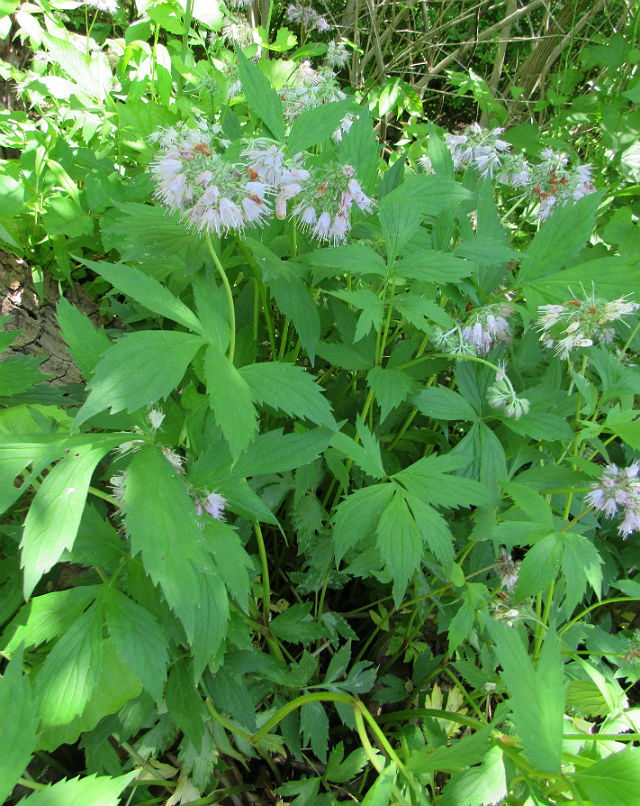
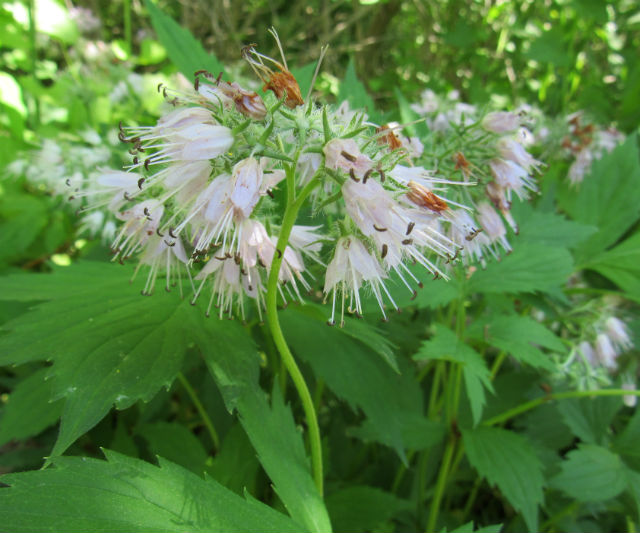
This is a classic northwoods plant, that often look messy, growing in dense clusters of eight to twenty blossoms. This plant grows by both rhizomes (underground stems) and seeds.

virginia warerleaf_5686

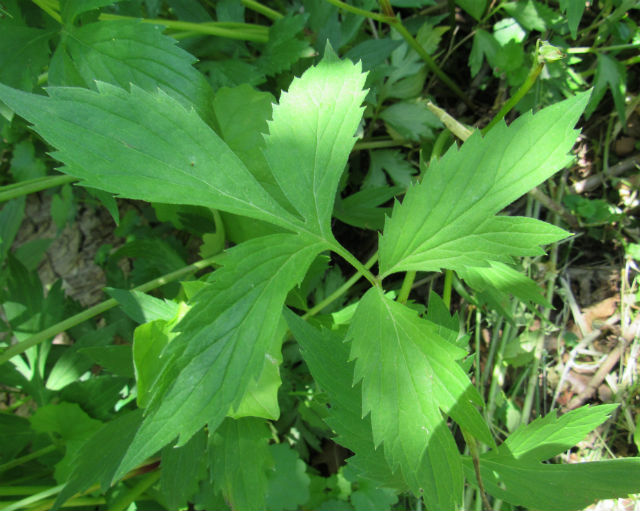
This plant’s genus, Hydrophyllum, refers to water; its early season leaves often have a bleached appearance as if they’ve been stained by water.The whitish marks on the leaves fade as Summer progresses and by mid-Summer the plant dies back to the ground and is no longer apparent.

Virginia Waterleaf 031

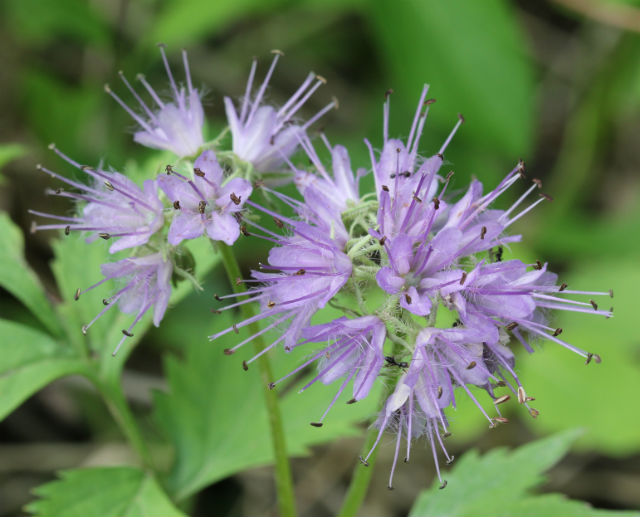
Virginia Waterleaf’s flower color varies from pale pink, to deep purple, to occasionally white. They are small, bell-shaped blossoms borne in clusters with stamens and pistils protruding well out of the flower.

virginia warerleaf_5689

When young and tender, the leaves are good eating. People still gather wild Virginia Waterleaf for food. It’s other common name, John’s cabbage, also speaks to its tasty nature.

Third Eye Herp
E-mail

Yellow Monkeyflower

Yellow Monkey Flower_0878

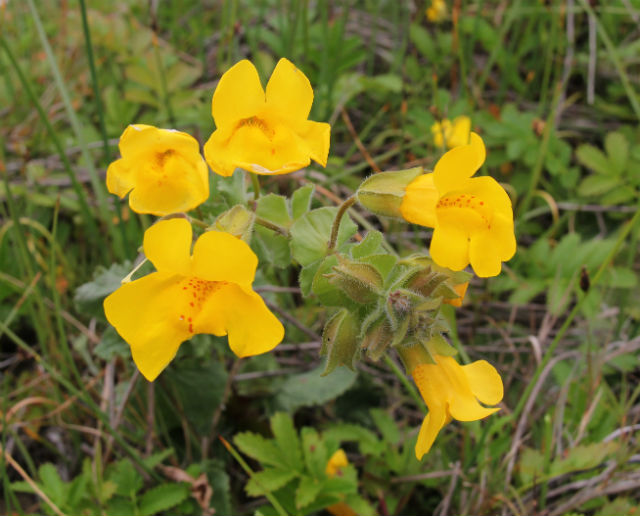
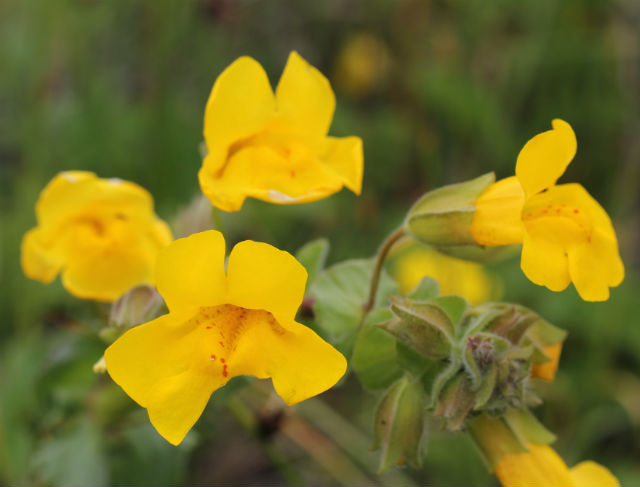
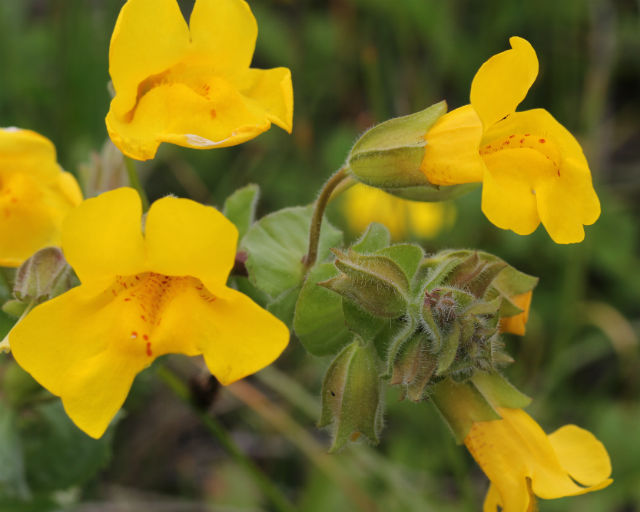
I sometimes come across this wildflower while visiting California. It is a member of the figwort family, the same family as Snapdragons, which I grow in my garden. The resemblance is clear.

Yellow Monkey Flower_9275

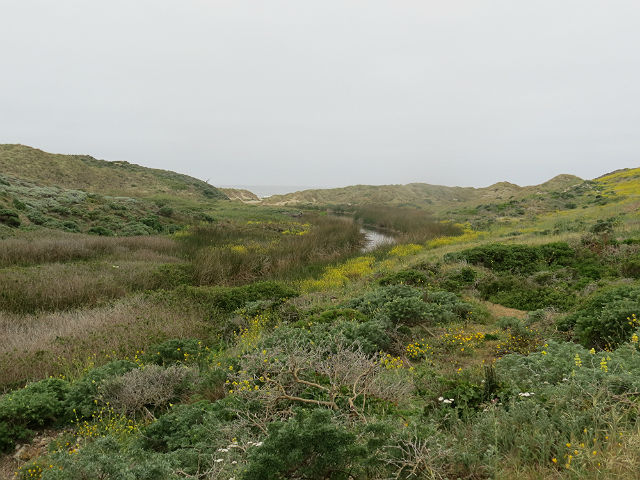
Yellow Monkeyflower is found in a wide range of habitats, but prefers wet places, including the splash zone of the Pacific Ocean, the chaparral of California, the geysers of Yellowstone National Park and alpine meadows. I see them the most in the Santa Cruz Mountains, where it can be quite misty.

Yellow Monkey Flower_4984

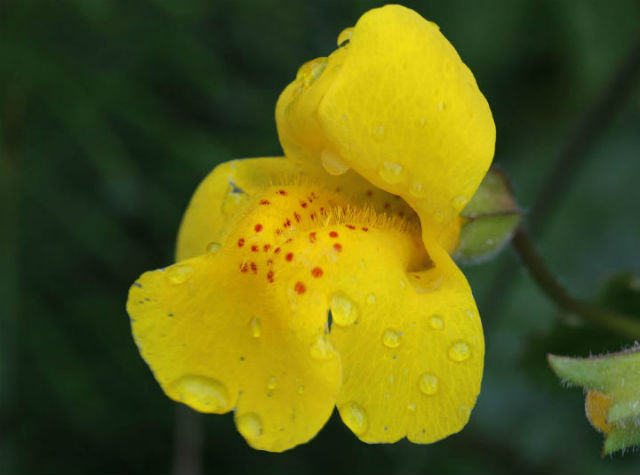
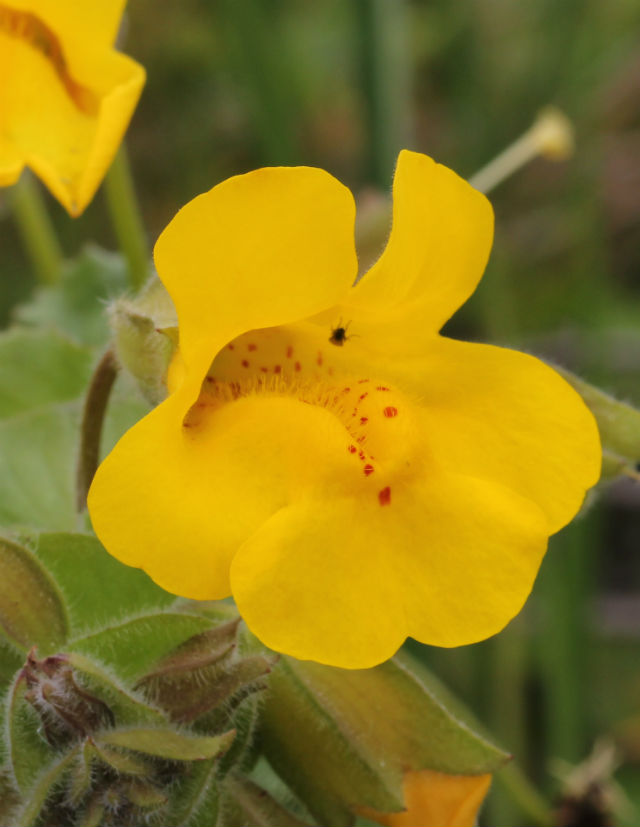
This plant can grow as high as three feet. The flowers have red or maroon spots on the wide, hairy throat of the lower lip petal. Its coarsely toothed leaves are edible and can be eaten raw or cooked; they are sometimes added to salads as a lettuce substitute, though they have a slight bitter taste.

Yellow Monkey Flower_9279

Over the years, Yellow Monkeyflower has been a model organism for studies of evolution and ecology. There may be as many as 1,000 scientific papers focused on this species.

Yellow Monkey Flower_9283

It’s genus, Mimulus, comes from the Latin word that refers to “mime,” a reference to the funny clown-like face the flower resembles. “Monkeyflower” is another reference to the shape of the flower.

Yellow Monkey Flower_9276

Funny or not, this eye-catching bright yellow-flowered plant is a welcome sight while on my travels.

Third Eye Herp
E-mail

Star of Bethlehem

Star of Bethlehem_3811

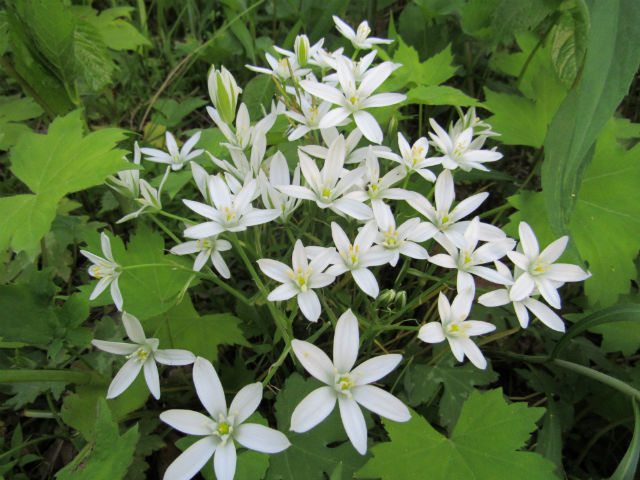
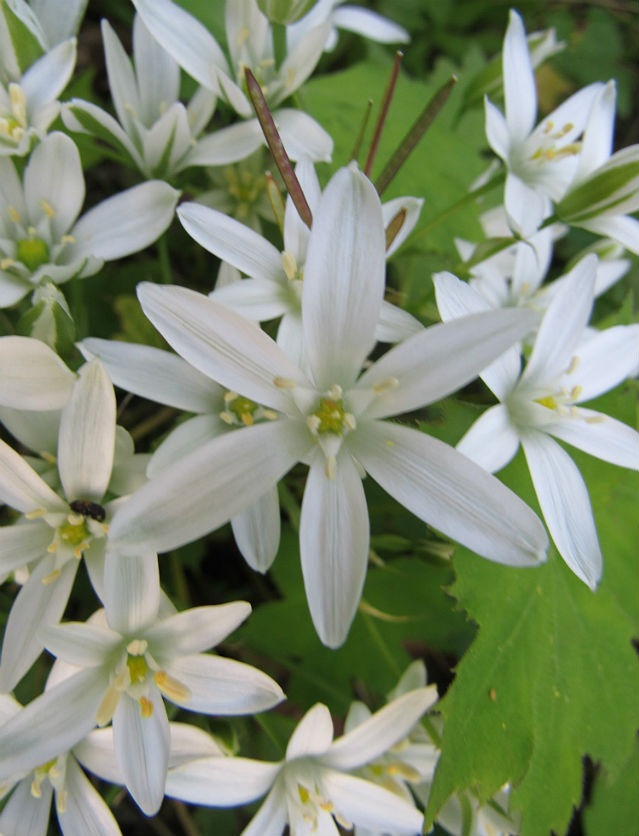
Lately, when hiking on the Ohio & Erie Canal Towpath, I’ve been seeing a lot of this plant. Star of Bethlehem belongs to the Lily Family and blooms in late spring or early summer. It is native to the Mediterranean region and is similar to wild garlic (though it does not have a garlic smell).

Star of Bethlehem_4239

The English name “Star of Bethlehem” seems to date from the Middle Ages. The bulbs were sometimes brought home as souvenirs during pilgrimages to the Holy Land.

star of bethlahem_9797

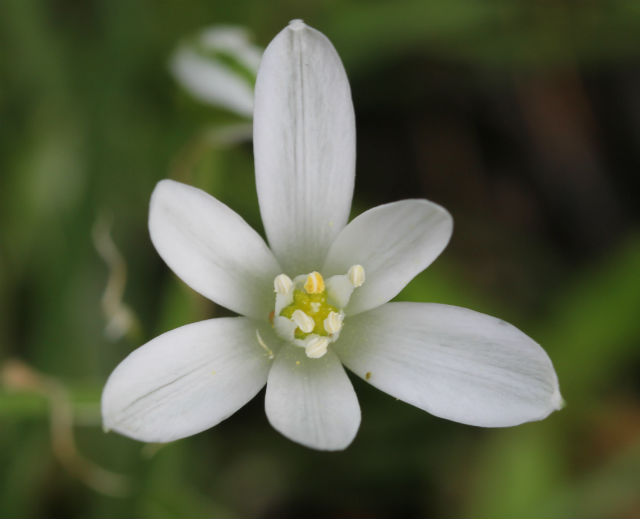
Its flowers are clustered at the tips of stems up to one foot tall. The three sepals and three petals form an attractive star, white on the upper surface, with green lines on the underside. It blooms from April to June; all parts of this plant are poisonous.

Star of Bethlehem_4237

The blooms open during the early morning hours and close by noon. This characteristic habit gives it the nickname “Nap By Noon.” Its leaves are grasslike, very dark green, rolled inward with a white center vein.

Star of Bethlehem_4235

Star of Bethlehem can be found in a variety of situations, including pastures, bottomland and upland forests, roadsides, suburban lawns and disturbed areas.

Third Eye Herp
E-mail

Eaton’s Firecracker

eatons firecracker_1537

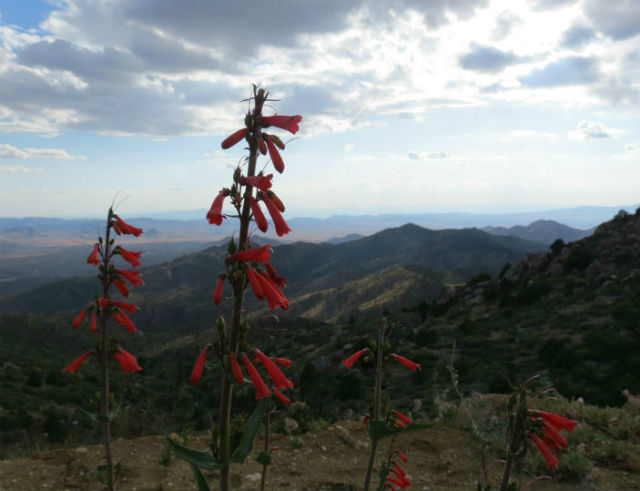
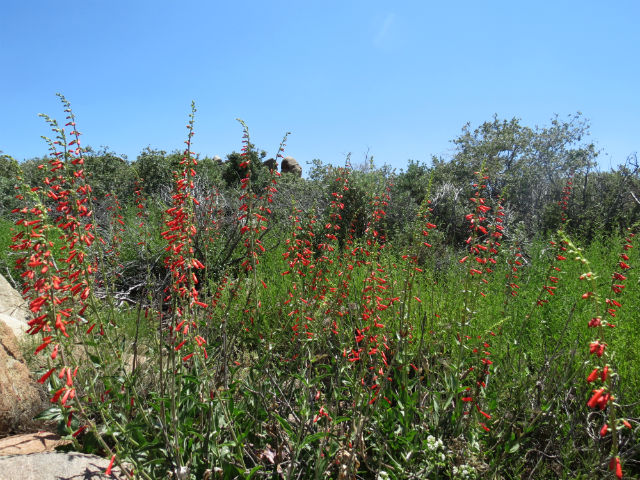
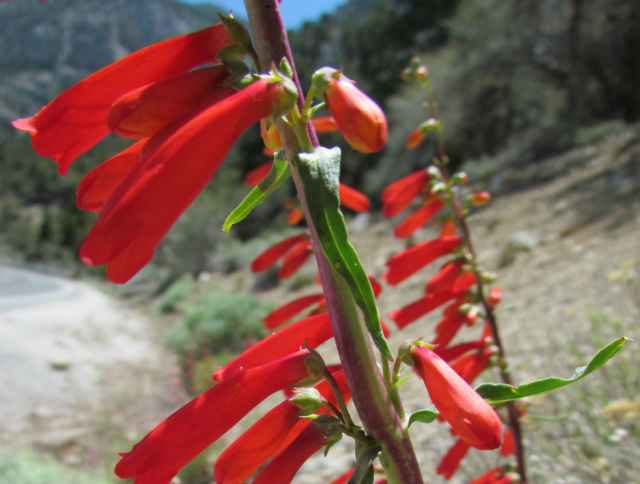
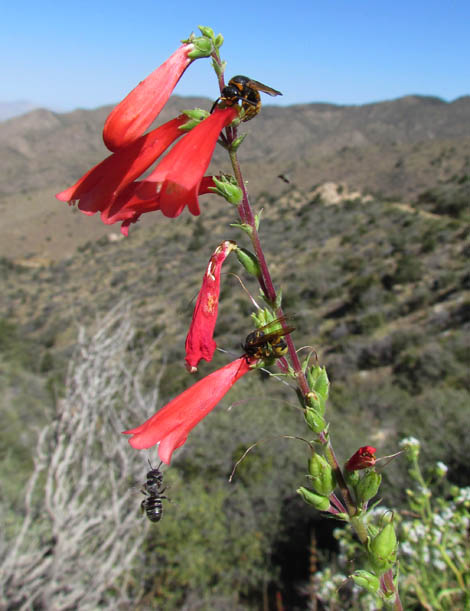
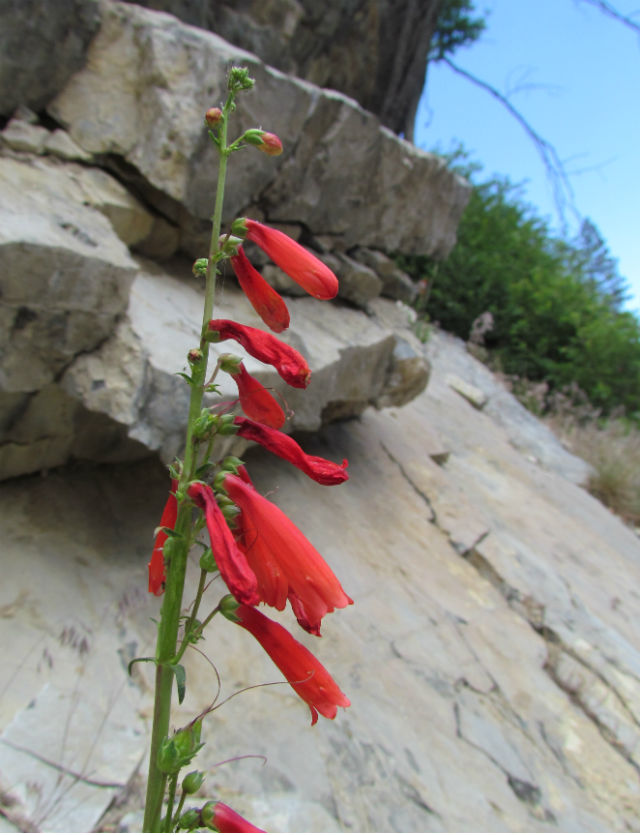
This perennial herb produces several sprawling to erect stems reaching about 3 feet in height. I enjoy seeing the inch-long showy, tubular flowers in shades of bright red when I visit mountains in the Mojave Desert.

IMG_3420

Eaton’s Firecracker is native to the western United States from California to the Rocky Mountains, where it grows in many types of desert, woodland, forest, and open plateau habitat. In California it is found primarily in high desert areas.

IMG_8247

I usually see it in habitats like dry sagebrush scrub and pine woodlands. It is a type of Penstemon and does best on well-drained soils. I tend to find them in open areas, but they will tolerate semi-shaded conditions.

vIMG_6766 2013

Its attractive flowers attract pollinators and other insects, which provide a food source for birds and other animals.

IMG_7401

When in bloom, Eaton’s Firecracker more than lives up to its name. Its sprays of brilliant color are a bright spot in the desert ecosystem.

Third Eye Herp
E-mail

Mottled Trillium

mottled trillium_4601

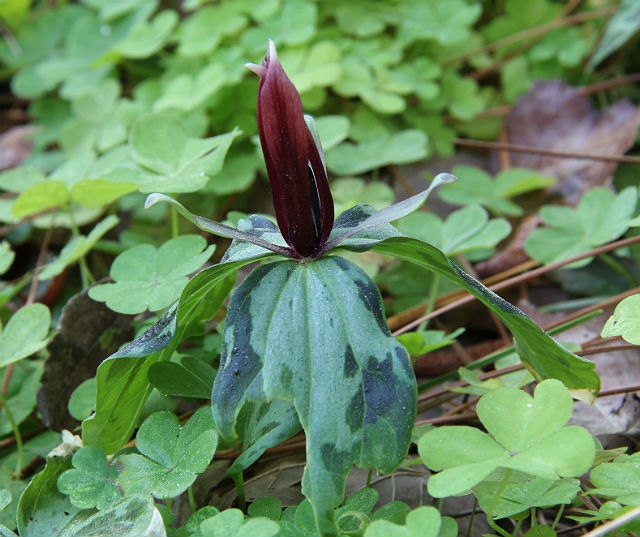
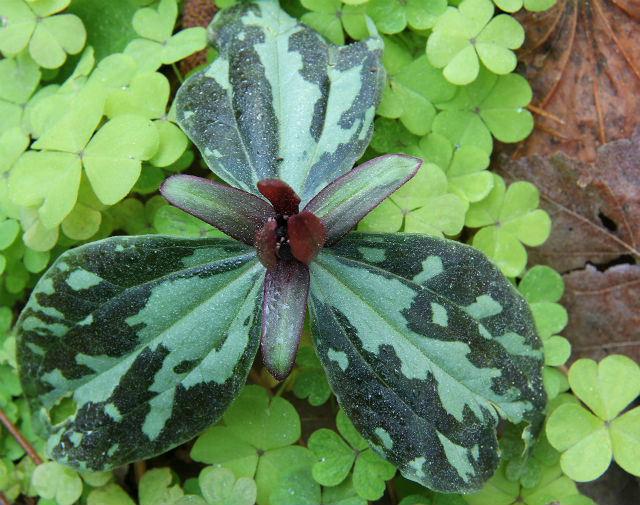
While visiting South Carolina earlier this month I discovered my first wildflower of the year. Mottled Trillium is a relict species, meaning there are a few remaining groups of a species that was once more abundant when conditions were different.

mottled trillium_4600

Significant habitat loss has occurred through clearing of forests for agricultural and pine farm uses; in 1988 this plant was officially listed as an endangered species. Mottled Trillium grows in undisturbed hardwood forests that sometimes include mature pines and that are free of understory plants such as shrubs and vines.

mottled trillium_4596

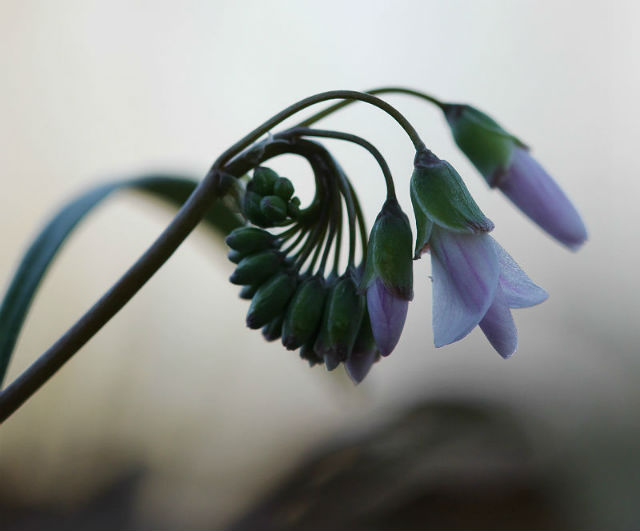
This is one of the first trillium species in Georgia and South Carolina to appear in the early spring. Prior to blooming, its three mottled leaves that are blue-green, to green to silver in color.
mottled trillium_4599a

It was totally awesome to not only see my first wildflower of the year, but also one that I have never seen before.

Third Eye Herp
E-mail

Jack-in-the-pulpit

jack_9591

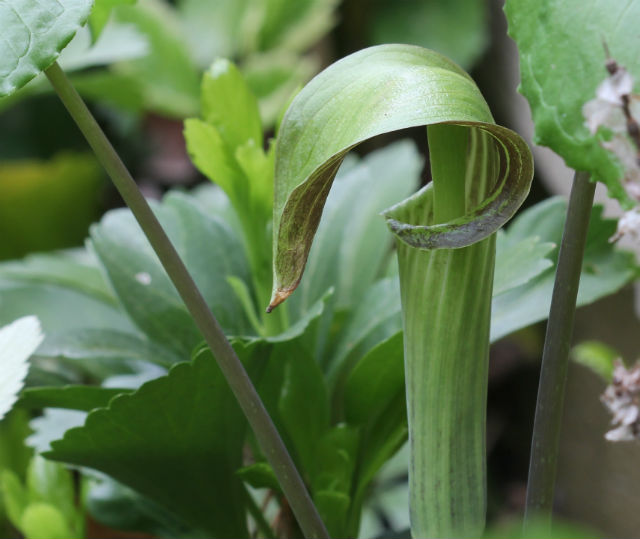
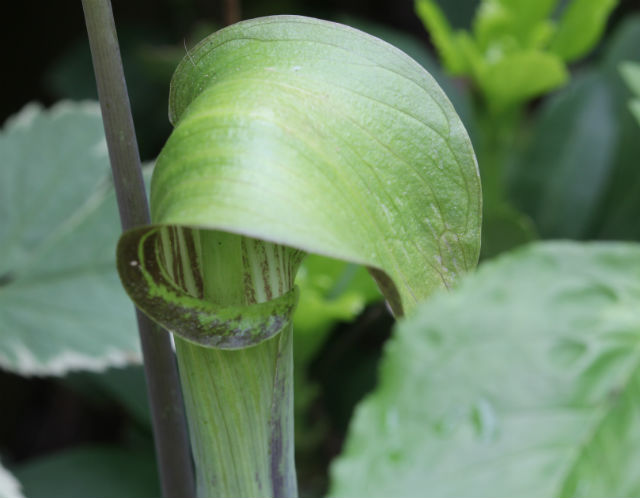
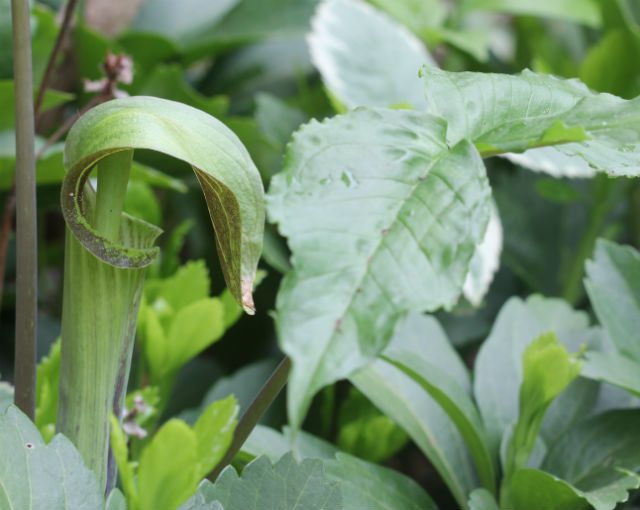
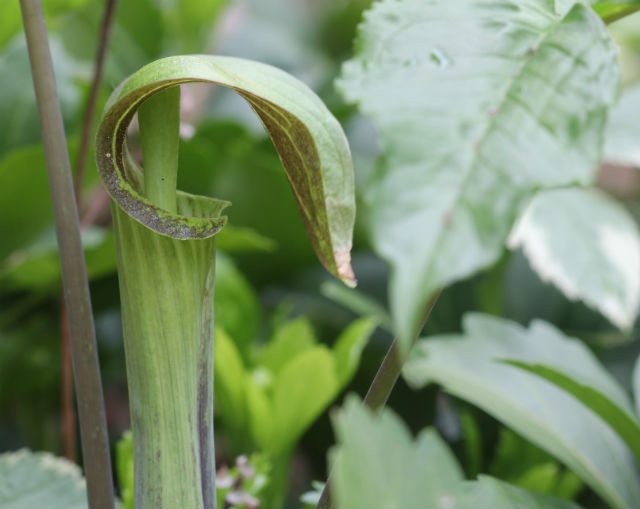
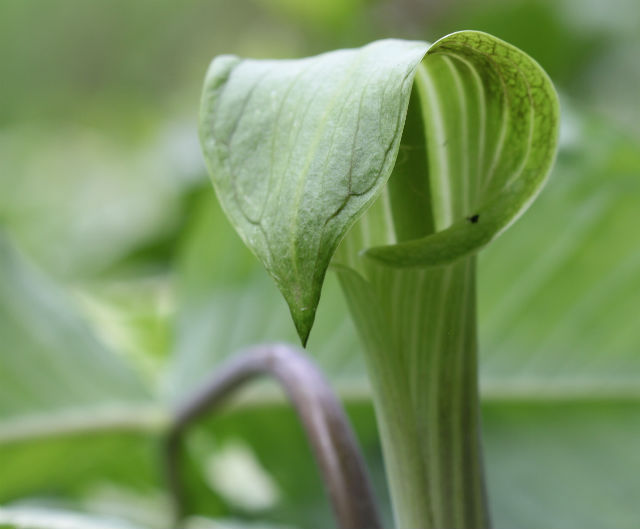
A sure sign of Spring is seeing this unique plant with an interesting growth habit. Its flower structure consists of the spadix (Jack) which is an erect spike containing numerous, tiny, green to purple flowers and the sheath-like spathe (pulpit).

jack_9594

Two large green, compound leaves, divided into three leaflets each, emanate upward from a single stalk and provide umbrella-like shade to the flower. The fleshy stalk and leaves lend an almost tropical aura to the plant (though it can be found through the United States as well as parts of Canada).

jack_9593

As protection, this plant contains a high concentration of crystals of calcium oxalate which is a salt of oxalic acid (COOH), a weak acid that is an ingredient in some bleaches and anti-rust metal cleaners. The chemical is infused throughout the plant, protecting it from ingestion by insects and mammals.

jack_9597

In Autumn, Jack-in-the-Pulpit’s mace-like cluster of red berries at the top of an otherwise bare stem has inspired a plethora of folk names.

jack_9602

Jack-in-the-pulpit is a species requiring shade and is found in rich, moist, deciduous woods and floodplains. It is a long-lived perennial and can live to 25 or more years of age.

Third Eye Herp
E-mail

Spring Beauty

spring beauty_0562

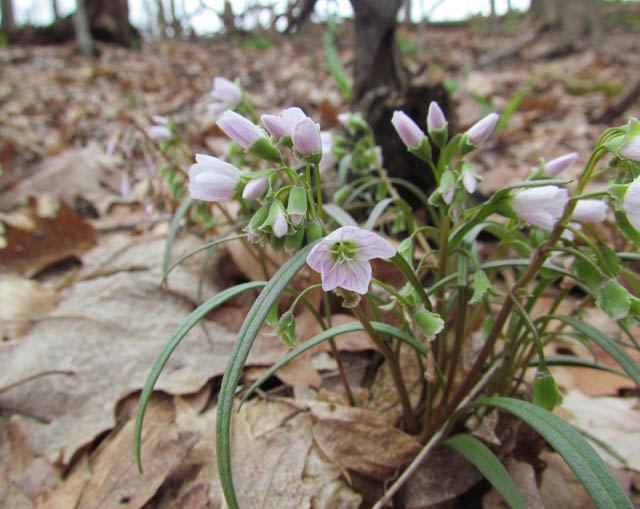
One of our prettiest and earliest-blooming wildflowers is also a delicious vegetable. It may be the definitive tater tot. Spring Beauties are small, low-to-the-ground wildflowers that feature a star-like cluster of five white to light pink flowers. Closer examination of the petals will reveal an array of fine pink stripes and a pleasant floral fragrance.

spring beauty_2820

It sports grasslike, succulent, dark green leaves that usually occur in pairs. In early spring, and are usually found in pairs. It is noted for its abundance throughout many parts of its range, especially in forests.

spring beauty_8894

Spring Beauty is found in the eastern two-thirds of the United States. One reason for why the spring beauty is so common is its ability to survive in areas that have suffered land degradation such as livestock grazing and partial tree removal.

spring beauty_8891

According to the Brooklyn Botanic Gardens, Spring Beauties are not only beautiful spring ephemeral, but a tasty spud-like vegetable. The tiny, sweet tubers are high in potassium and vitamin A and are a good source of calcium and vitamin C. They can be eaten raw, boiled, fried, roasted, or mashed.

Third Eye Herp
E-mail

Prickly Pear Cactus

prickly pear cactus_5326

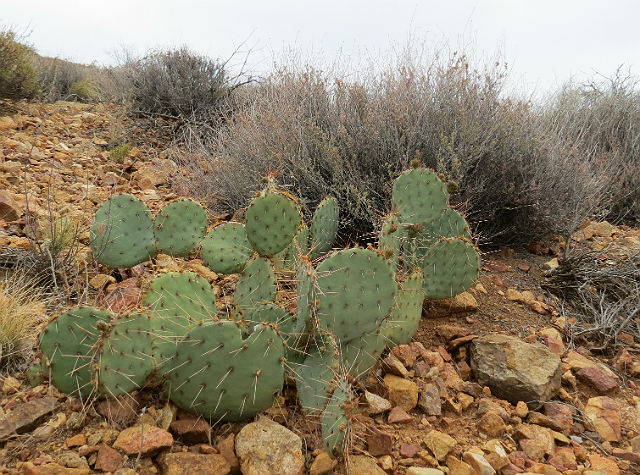
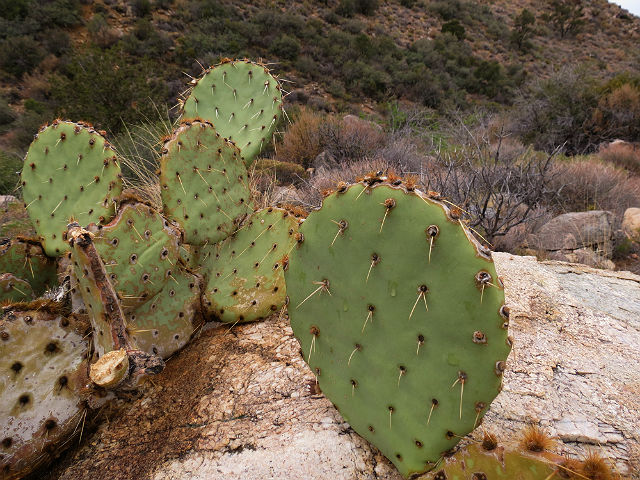
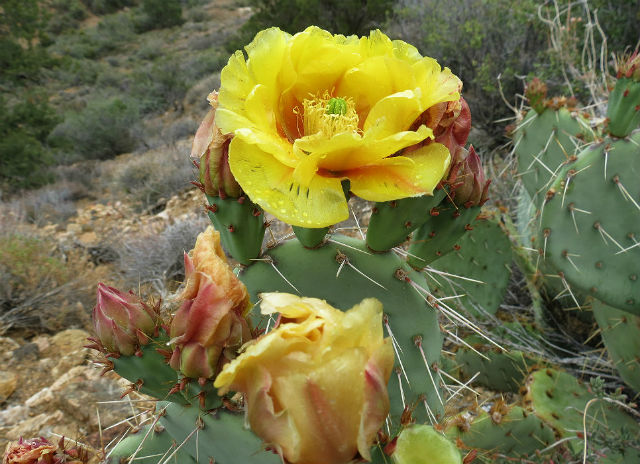
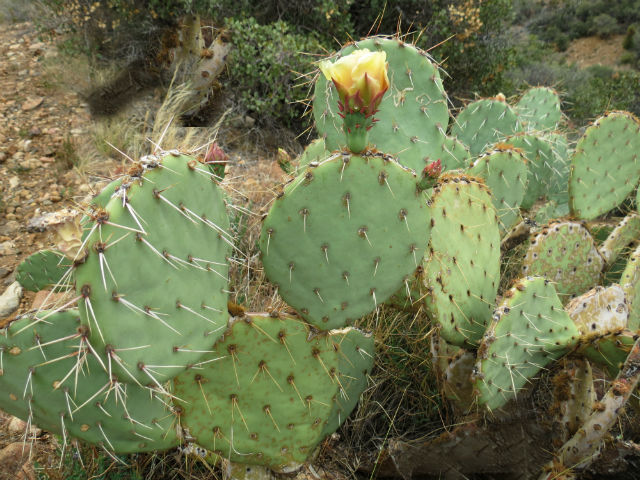
This classic North American desert plant consists of about a dozen species. All have flat, fleshy pads that look like large leaves. The pads are actually modified branches or stems that serve several functions — water storage, photosynthesis and flower production.

prickly pear cactus_5320

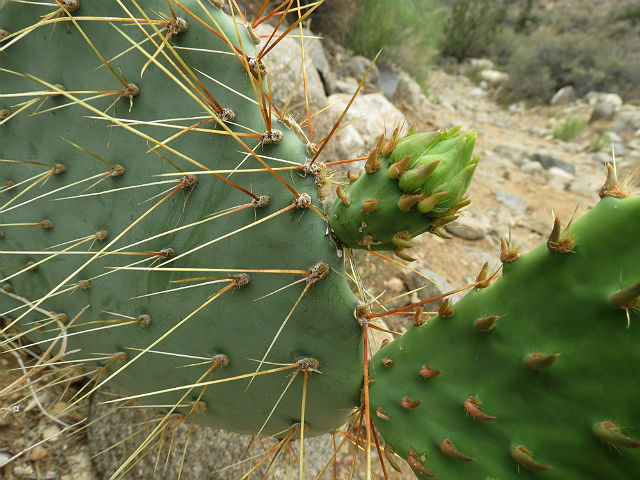
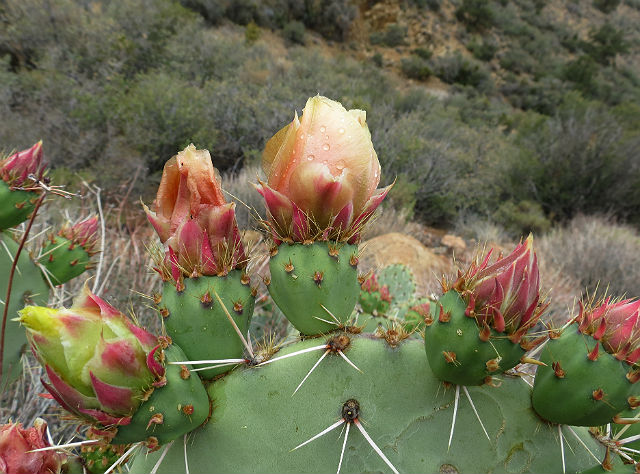
Most Prickly Pear Cactus have yellow, red or purple flowers – even among the same species. They vary in height from less than a foot to 6 or 7 feet. Like other cactus, most prickly pears have large spines, which are actually modified leaves growing from tubercles (small, wart-like projections).

prickly pear cactus_5331

The fruits of most prickly pears are edible and sold in stores. Prickly Pear Cactus branches (the pads) can be cooked and eaten as a vegetable.

prickly pear cactus__5315

Prickly Pear Cactus are found in all of the deserts of the American Southwest, with different species having adapted to different localities and elevation ranges.

prickly pear cactus_5319

There has been medical interest in the Prickly Pear plant. Some studies have shown that the pectin contained in the Prickly Pear pulp lowers levels of “bad” cholesterol while leaving “good” cholesterol levels unchanged.

prickly pear cactus_5311

I enjoy seeing the different forms of this “classic” desert plant whenever I visit the Mojave Desert. And with its many uses to man, who knows what other secrets this arid-dwelling succulent may reveal?

Third Eye Herp
E-mail

Yellow Trout Lily

trout lily 025

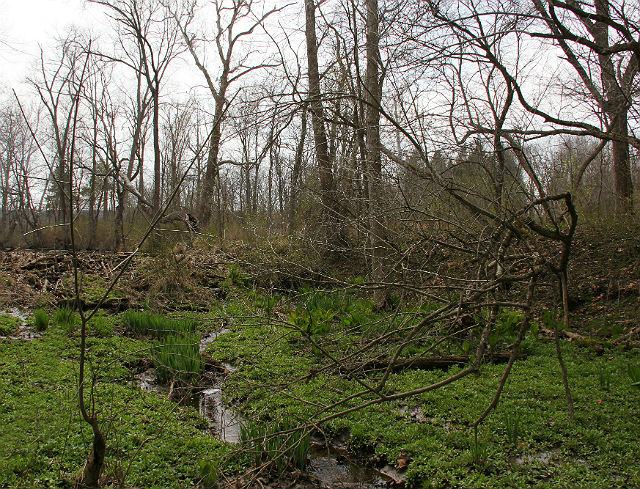
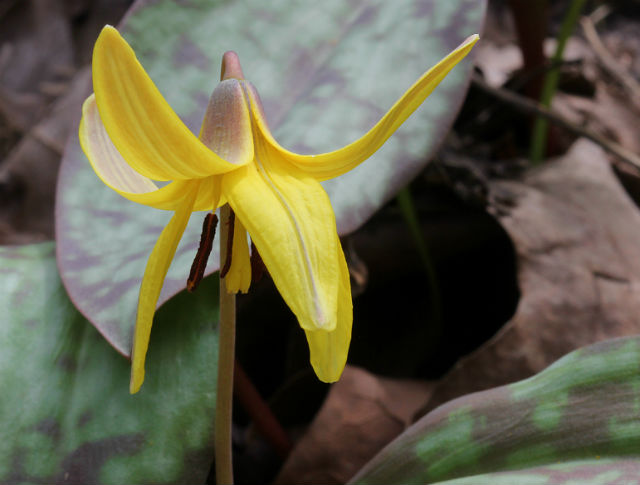
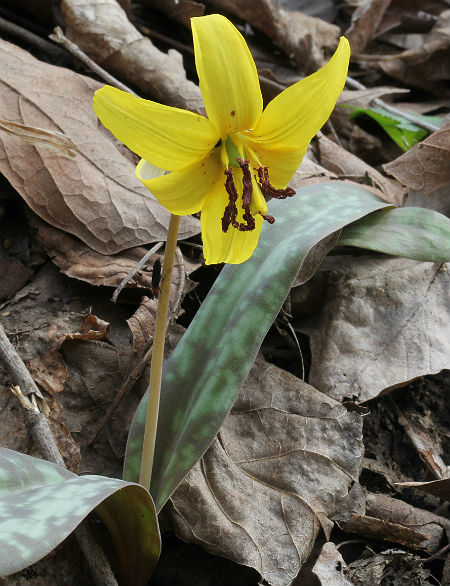
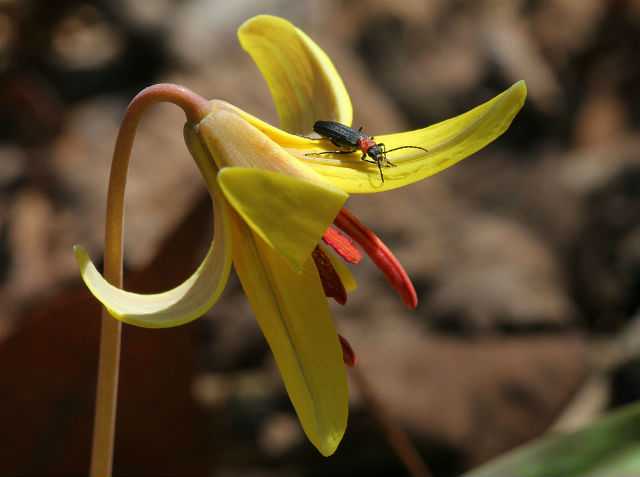
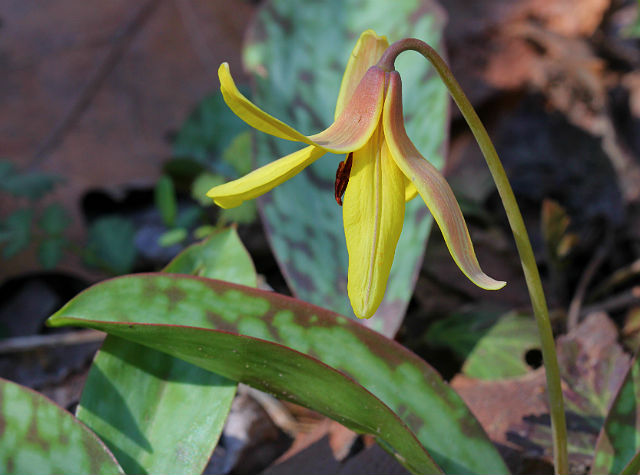
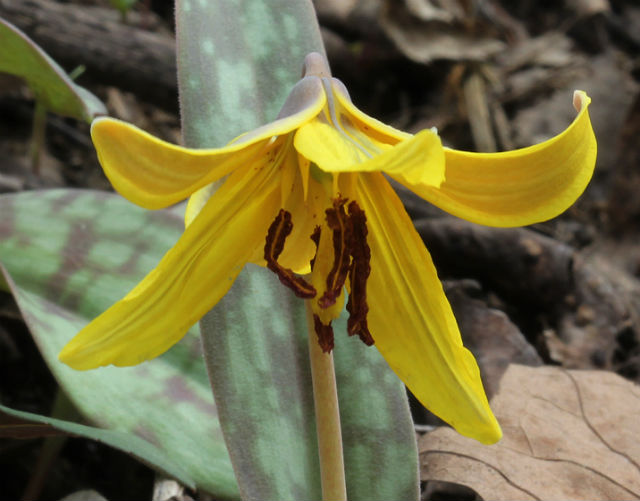
A pair of brownish-mottled leaves (which resembles the colors of a Brook Trout) at the base of a stalk which bears a solitary, nodding flower, yellow on the inside and bronze on the outside, are the components of many, many Yellow Trout Lilies which carpets the forest floor at this time of year.

trout lily 039

Yellow Trout Lily is pollinated by ants and after a seed is planted, it may take up to seven years before the plant becomes mature enough to flower.

trout lily 038

It is a small plant, reaching only about six inches tall. Other common names for this plant are Adder’s Tongue, Fawn Lily and Dog-tooth Violet.

trout lily 046

The common name of Adder’s Tongue is in reference the appearance of the emerging stamens of the flower, which protrude like the tongue of a snake.

trout lily 036

Fawn Lily is a name given in regards to the plant’s two spotted leaves that to some look similar to the alert, upright ears of a fawn.

trout lily 060

The common name of Dog-tooth Violet is in reference to the flower’s underground elongated bulb shape. It is unfortunately misleading, because this plant is not a member of the violet family.

trout lily 053

The Yellow Trout Lily root (known as a corm) is an edible vegetable.  According to the International Health Exhibition held in London in 1884, the roots were ground into a material for making confectionary. The leaves are also edible and can be eaten raw and put into salads.

trout lily 048

The diverse array of common names for this plant are evidence of this plant’s widespread distribution throughout much of the eastern United States and of its distinctive appearance and characteristics.

Third Eye Herp
E-mail