Eaton’s Firecracker

eatons firecracker_1537

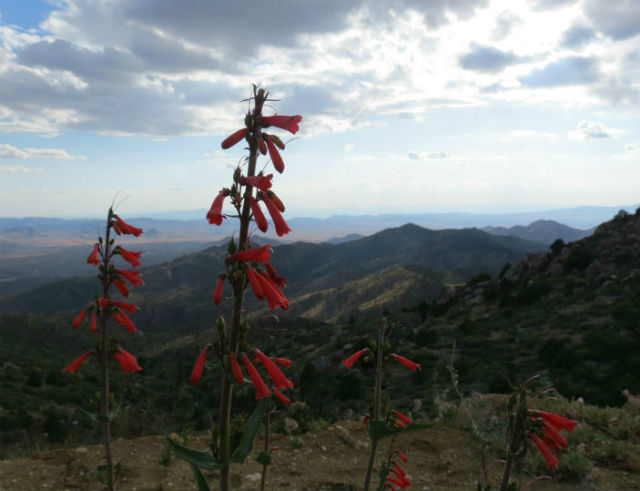
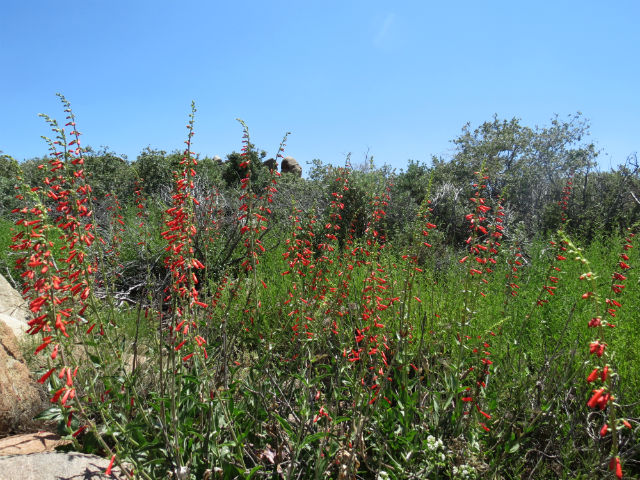
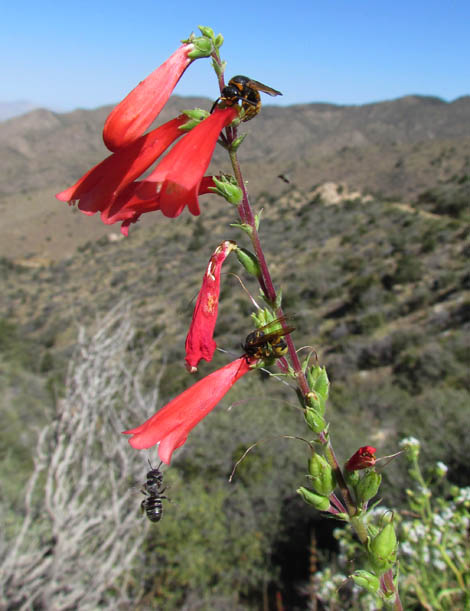
This perennial herb produces several sprawling to erect stems reaching about 3 feet in height. I enjoy seeing the inch-long showy, tubular flowers in shades of bright red when I visit mountains in the Mojave Desert.
IMG_3420

Eaton’s Firecracker is native to the western United States from California to the Rocky Mountains, where it grows in many types of desert, woodland, forest, and open plateau habitat. In California it is found primarily in high desert areas.

IMG_8247

I usually see it in habitats like dry sagebrush scrub and pine woodlands. It is a type of Penstemon and does best on well-drained soils. I tend to find them in open areas, but they will tolerate semi-shaded conditions.
vIMG_6766 2013

Its attractive flowers attract pollinators and other insects, which provide a food source for birds and other animals.

IMG_7401

When in bloom, Eaton’s Firecracker more than lives up to its name. Its sprays of brilliant color are a bright spot in the desert ecosystem.
Third Eye Herp
E-mail

Desert Night Snake

sunset_2775

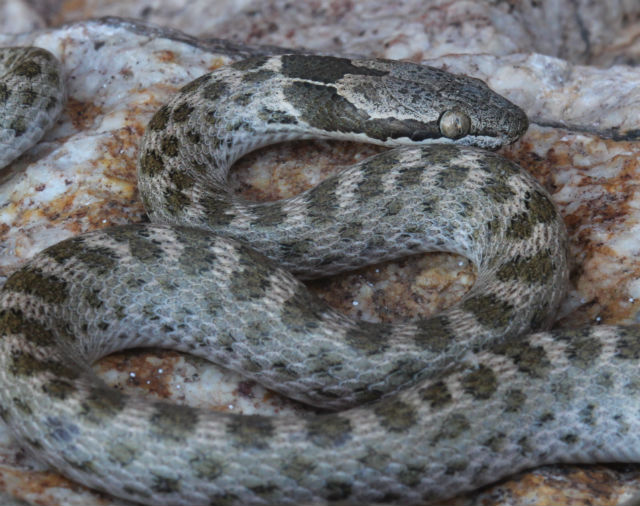
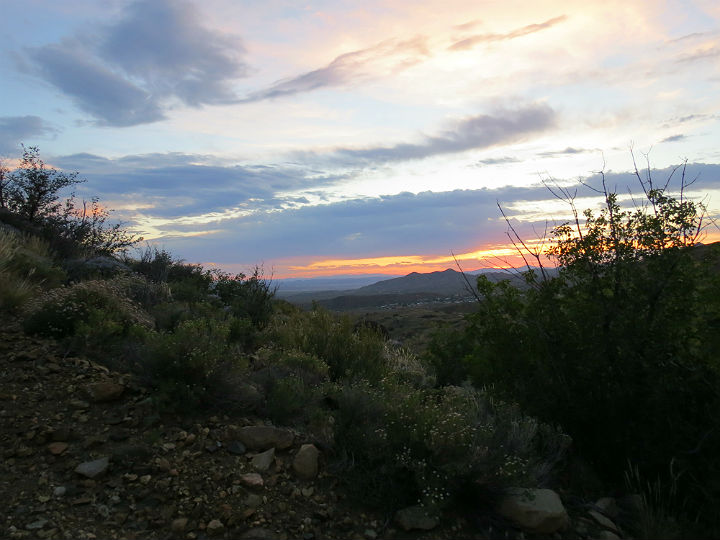
While driving on a remote, Las Vegas Area road one night last month, I noticed a tiny serpent on the pavement, crossing the street.

desert night snake_5990

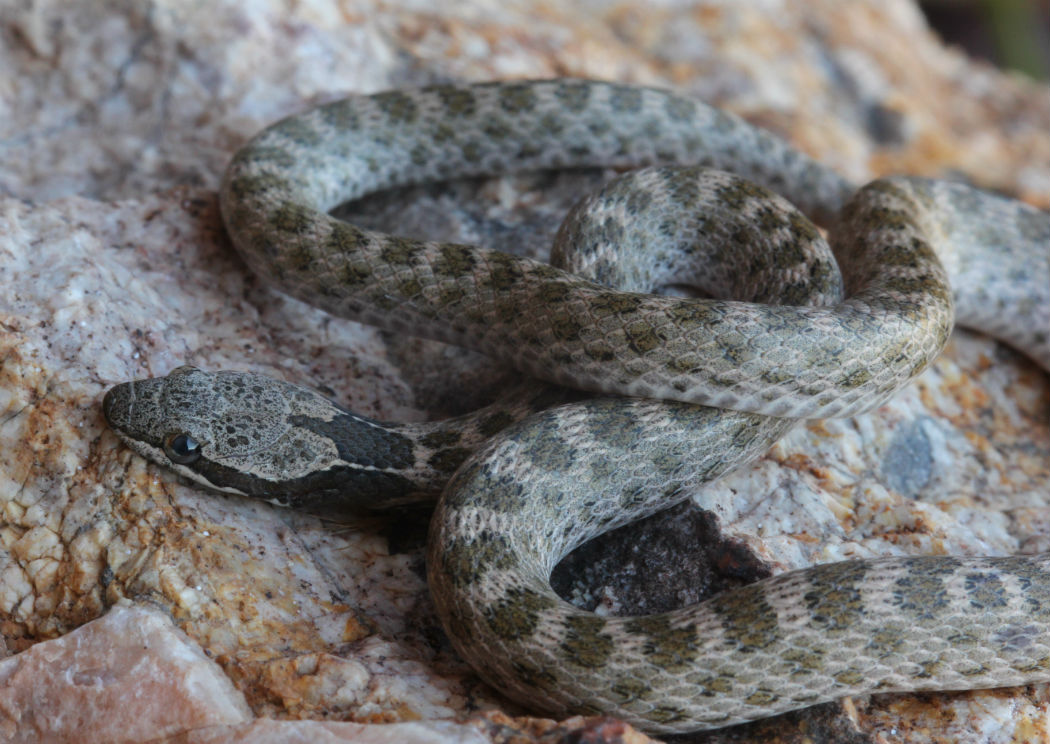
The Desert Night Snake is unusual among colubrids (the family it belongs to) in that it has elliptical pupils and is rear-fanged (mildly venomous, though harmless to humans).

desert night snake_5962

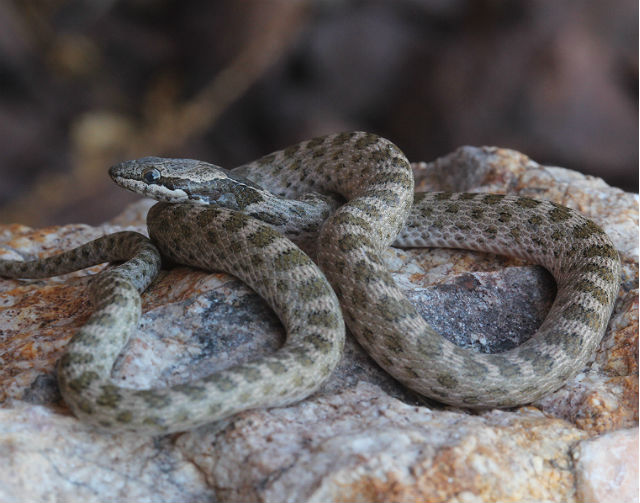
They tend to be small snakes, between one and two feet long, featuring pale gray or light brown ground color with brown blotches on its back and sides. Its head is flattened and triangular and it usually has a pair of dark brown blotches on the neck.

desert night snake_5966

These snakes can occupy a variety of habitats other than deserts, like grasslands, chaparral, woodlands and sagebrush flats. Their primary food item is lizards, which they use their venom to subdue.

desert night snake_5982

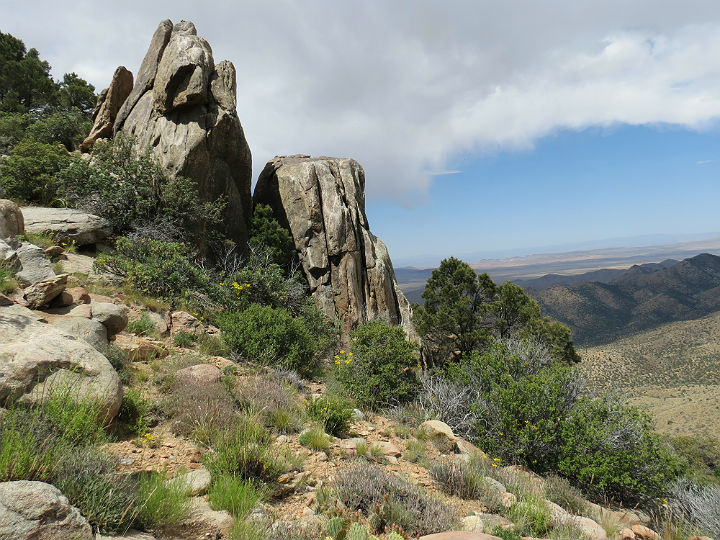
I haven’t seen one of these snakes in a few years, so it was really neat to encounter this one on my visit to the Mojave Desert.

Third Eye Herp
E-mail

Ornate Tree Lizard

cerbat mountains_2652

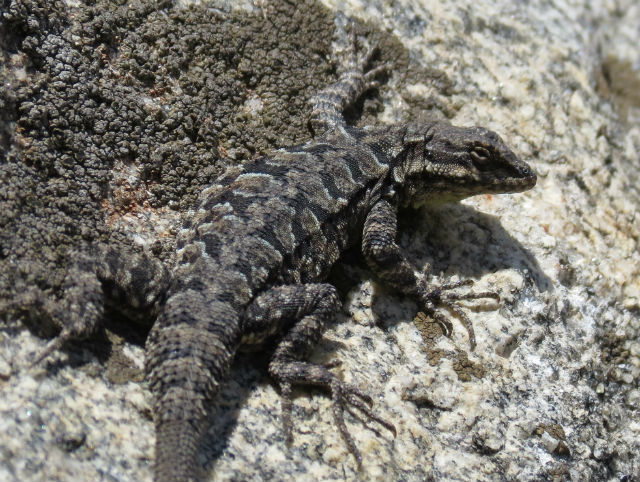
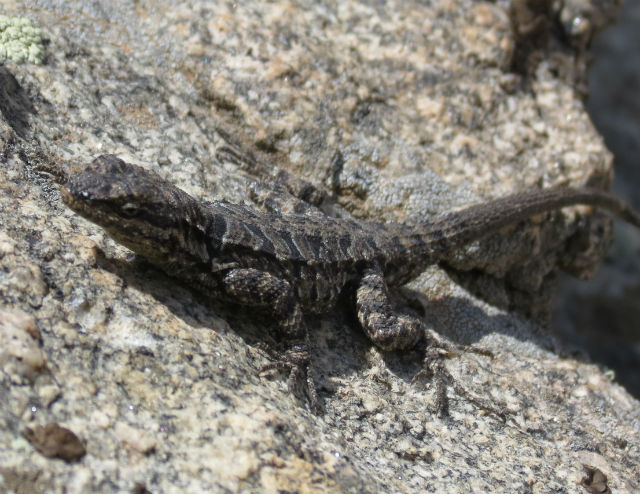
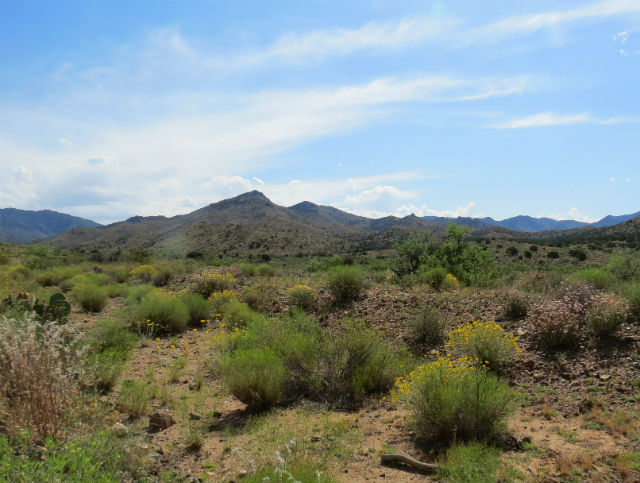
Hiking in the Cerbat Mountains last week, I came across a few examples of this reptile. Although they are called “tree lizards,” they often spend a lot of time on rocks. Tree lizards are found in the southwestern United States and northern Mexico. This lizard is an excellent climber and it is commonly seen basking and foraging on logs, boulders and trees.

ornate tree lizard_2677

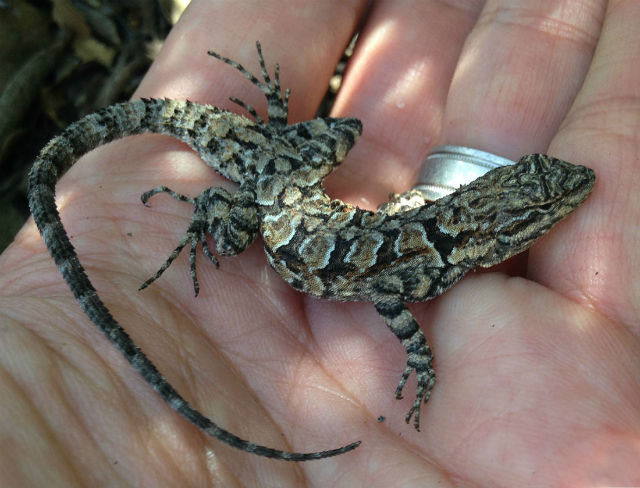
Ornate Tree Lizards are slim, gray-brown, and feature an ornate pattern of thin, dark lines. They eat variety of insects including aphids, beetles, flies, ants, bees, wasps, termites, moths, butterflies, grasshoppers and crickets. They also feed on a variety of spiders.

ornate tree lizard_2670

They are a behaviorally complex species. Males are quite territorial, at least during the breeding season; I saw them arch their backs and display their bright yellow and blue colors to each other while I observed them on my hike. The territorial displays also include “push-ups” and extending their brightly colored throat dewlaps.

ornate tree lizard_2340

Ornate Tree Lizards tend to bask in the morning and then shuttle between shade and sun to maintain a fairly constant body temperature. This reptile is relatively short-lived. It matures and produces multiple egg clutch species. Very few individuals live to an age of three or more years.

ornate tree lizard_2666

The species has been used to research the physiological changes in the body during the fight-or-flight response as related to stress and aggressive competition.

03 ornate tree lizard_2344

It was a neat lizard to encounter in a remote place and made for an enjoyable morning.

Third Eye Herp
E-mail

Arizona Black Rattlesnake

arizona black rattlesnake_2581

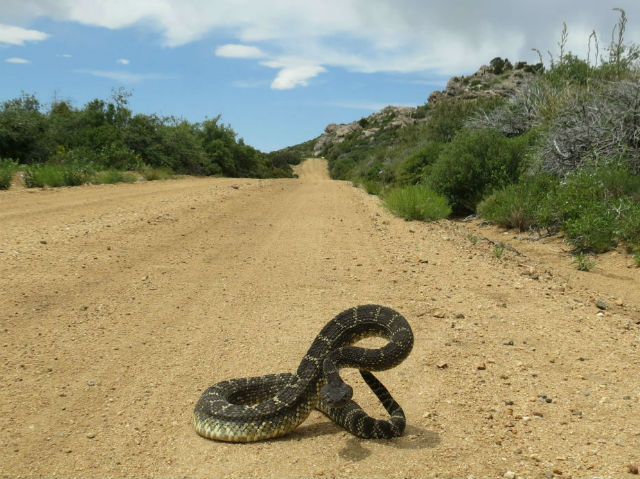
Driving through the Cerbat Mountains in Arizona on Memorial Day, I was enjoying the weather and the variety of wildflowers in bloom. Then, up ahead in the road, I noticed the unmistakable shape of a rattlesnake in the road. The snake’s presence in a high-altitude habitat and its dark coloration distinguishes it from other subspecies of the western rattlesnake.
arizona black rattlesnake_2708

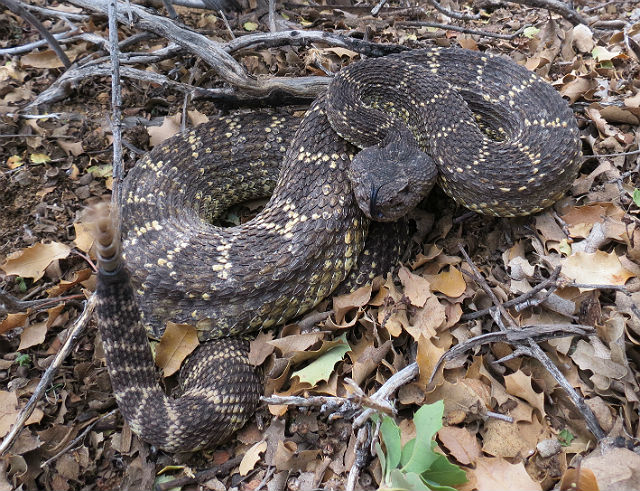
Like other Pit Vipers, the Arizona Black Rattlesnakes is venomous and have a broad, wedge-shaped head much wider than their neck, large, erectable fangs that it uses to inject venom into their prey or predators, and heat-sensing pit organs in front of their eyes that they use to detect warm-blooded prey like rodents and birds.

arizona black rattlesnake_2716

Arizona Black Rattlesnakes were initially considered to be a subspecies of the Prairie Rattlesnake. Until recently, they were then instead considered to be a subspecies of the Western Rattlesnake. Now, after DNA analysis, Arizona Black Rattlesnakes are considered to be their own species, Crotalus cerberus.

arizona black rattlesnake_2728

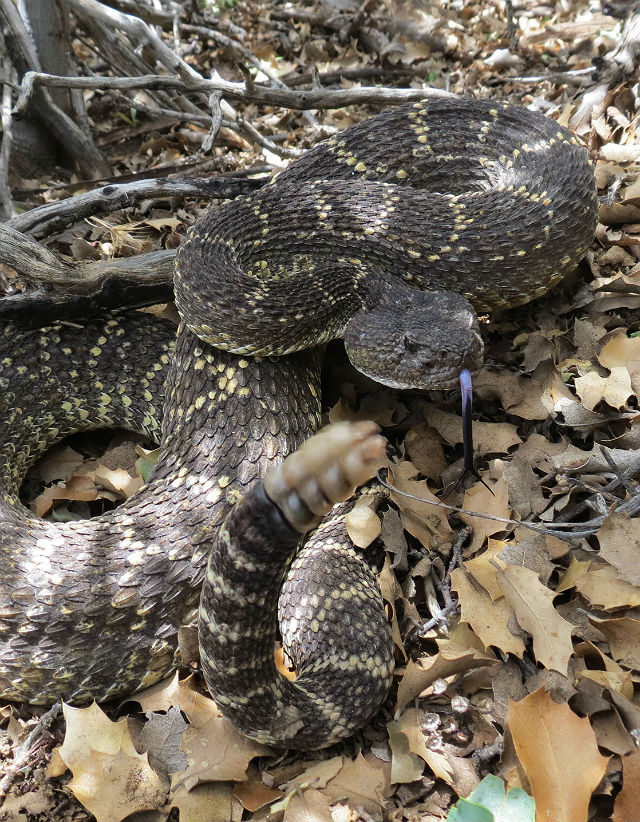
When threatened, a rattlesnake will often (but not always) rattle its tail, producing a loud, dry rattling sound meant to warn threats to go away. A rattlesnake may also coil up into a tight, defensive posture, puffing itself up and arching its back to make itself look more threatening.

arizona black rattlesnake_2733

Like others of their kind, Arizona Black Rattlesnakes produce live offspring. The babies are usually born between August and October. This was the first species of snake observed to exhibit complex social behavior, and parenting behavior reminiscent of that in mammals. Females often remain with their young in nests for several weeks, and mothers have been observed cooperatively parenting their broods.

Third Eye Herp
E-mail

Hairy-tailed Mole

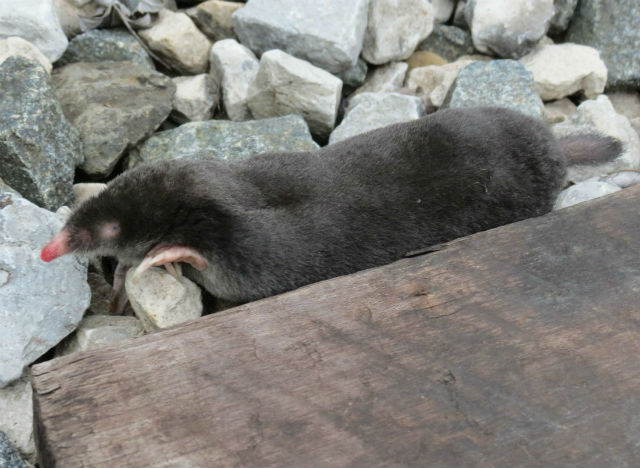
hairy-tailed mole_1994

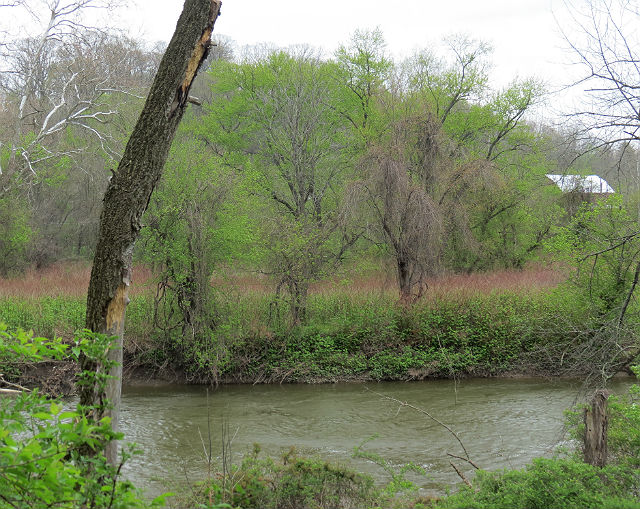
I was walking along the Cuyahoga River on a cloudy day when I stopped to listen to and photograph a Baltimore Oriole that I heard calling. While enjoying the sight and sounds of the orange and black bird, I heard something shuffling at my feet. I looked down and saw this Hairy-tailed Mole crossing the railroad tracks.

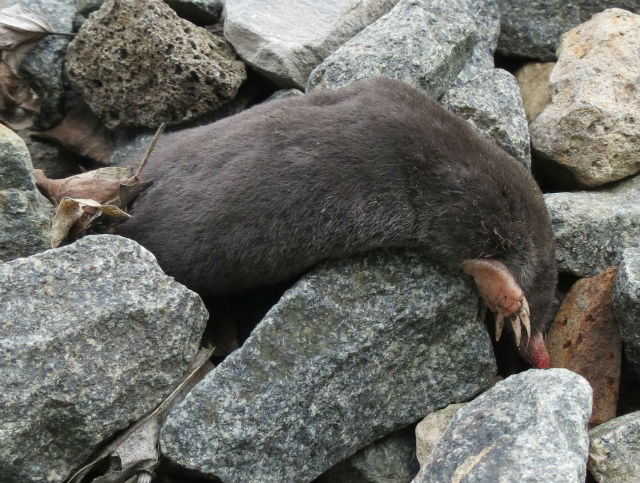
hairy-tailed mole_1970a

As the name implies, this mammal is very similar to an Eastern Mole, except that it has a distinctly hairy tail. Its broad front feet with outward-facing palms help it to dig through soil. Since it spends most of its time underground, its eyes are tiny and it has no external ear openings.

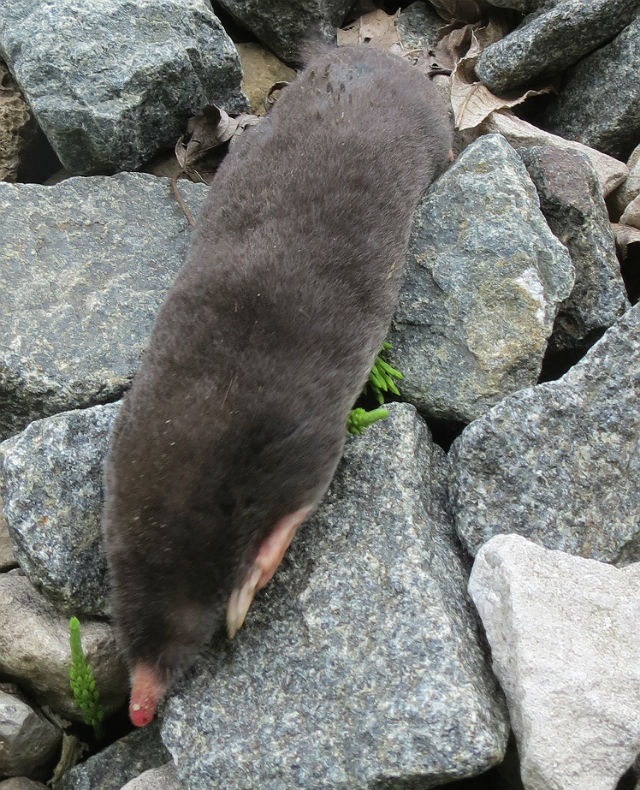
hairy-tailed mole_1991

The Hairy-tailed Mole is about six inches in length and has a long, red-tipped snout. As in other moles, its fur is short, very dense, soft, and silky – and therefore a good coat for traveling through underground tunnels.

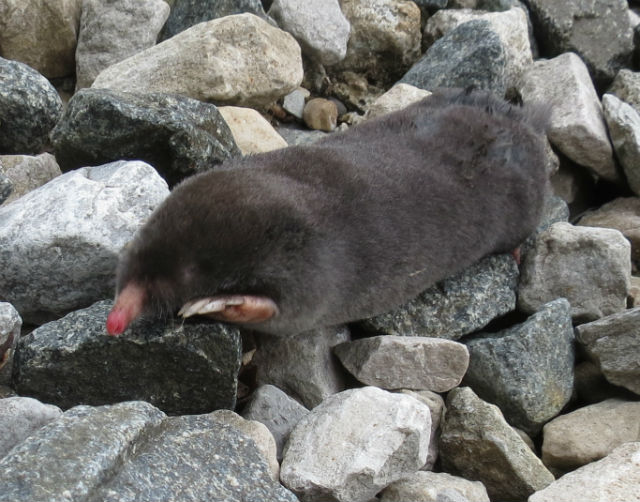
hairy-tailed mole_1992

The Hairy-tailed Mole digs deep tunnels, and then loosens soil particles with one front foot at a time. It then pushes loose soil under its body with the front feet and kicks the soil backwards with the hind feet. By shoveling the residual piles to the surface this animal cleans the tunnel and creates a characteristic molehill, about 3 inches deep.

hairy-tailed mole_1988

This animal spends most the day underground searching for food. They have a voracious appetite for insects, including destructive types, such as cutworms and Japanese beetles; the mole’s daily food consumption can equal 50-100% of its weight. The underground tunnels that they create may be used eight years or more by many generations of moles.

Third Eye Herp
E-mail

Rove Beetle

rove beetle_1372

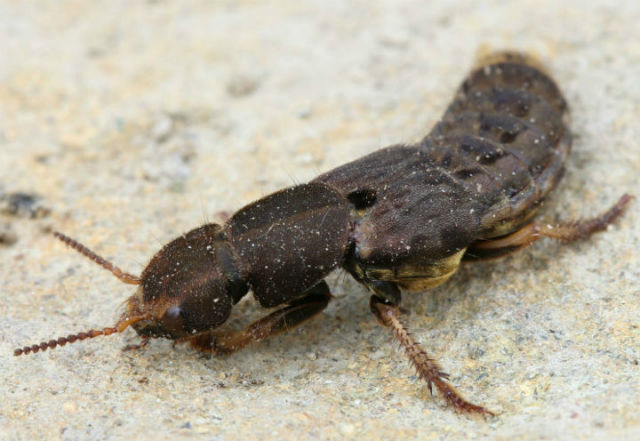
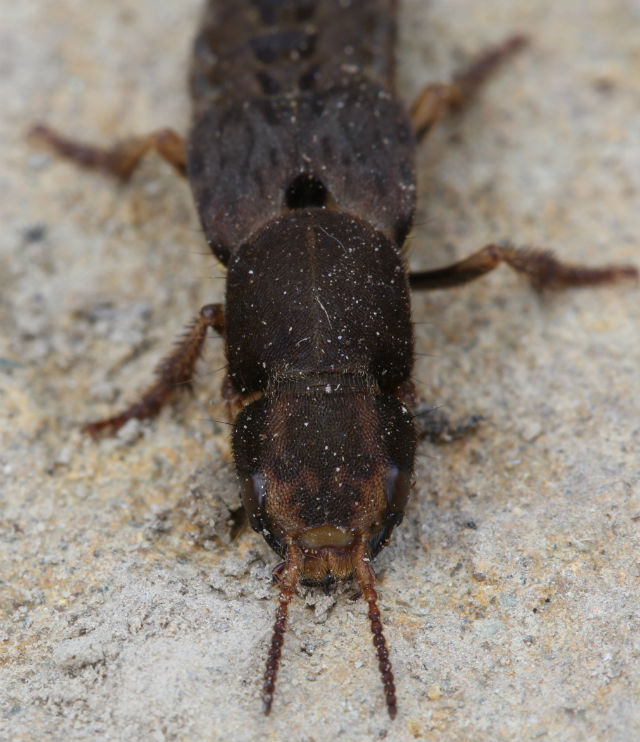
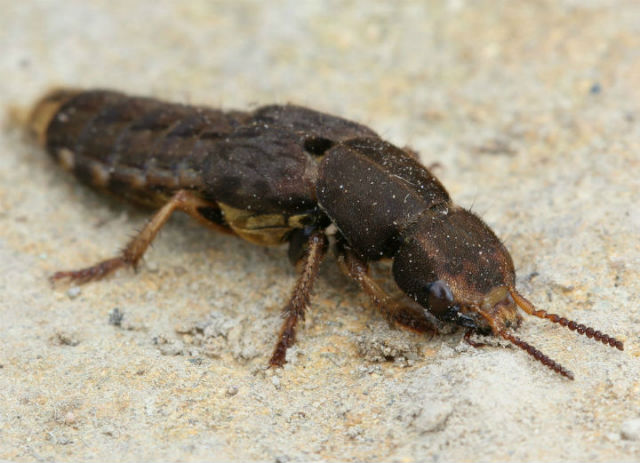
While visiting Lake Hope in Hocking Hills, I came across a couple of examples of this interesting insect. Rove Beetles are primarily distinguished by their short wing covers that typically leave more than half of their abdomens exposed.

rove beetle_5388

Their family is an ancient group, with fossil Rove Beetles known from the Triassic, 200 million years ago, and possibly even earlier. Most Rove Beetles are predators of insects and other invertebrates living in forest leaf litter. They are commonly found under stones, around the edges of freshwater environments.

rove beetle_5392

This type is known scientifically as Platydracus maculosus and is the largest and one of the most commonly encountered species, though its maximum size is only about an inch long. The brown spots on its abdomen are one of its identifying characteristics.

rove beetle_5394

These cool creatures are not harmful to humans and are considered beneficial because they are predators of insect pests.

Third Eye Herp
E-mail

California Striped Racer

California Striped Racer_0776

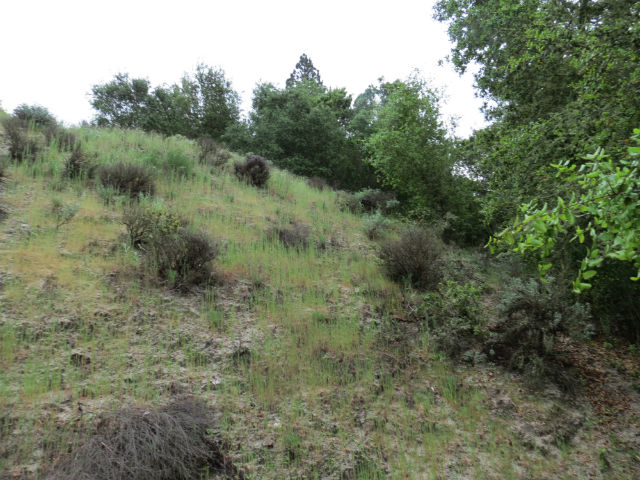
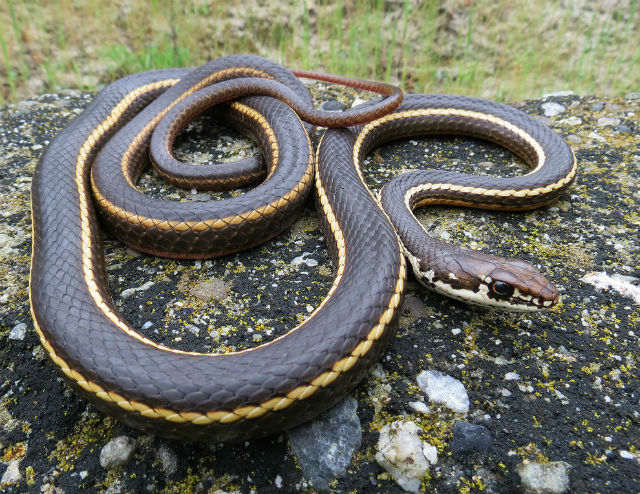
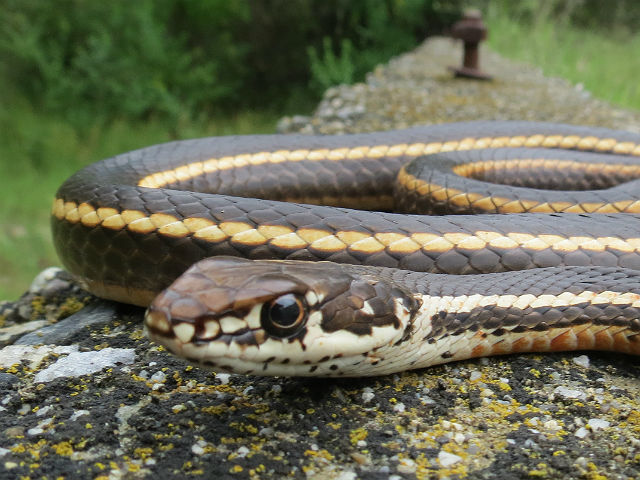
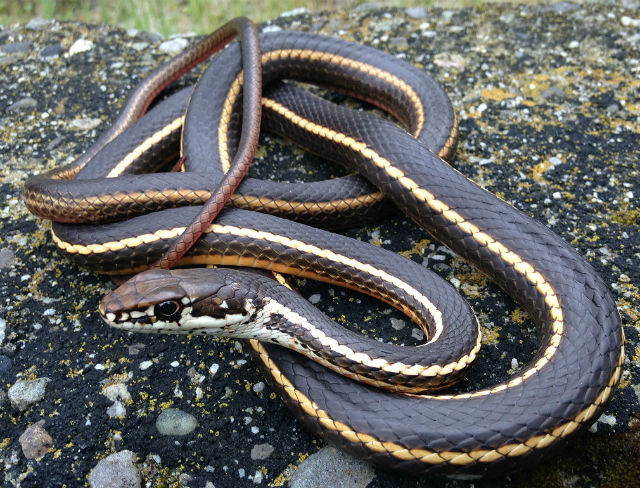
One morning last month while hiking near Santa Cruz, California I encountered this fine reptile. It has a distinctive “look” with a bold pattern, thin body, large eyes, elongated head and smooth scales.

California Striped Racer_0783

These serpents are also known as Whipsnakes and are long, slender and fast-moving (a yellow-orange “racing stripe” runs down each side of their body). They are active in the daytime and inhabit chaparral, scrubland, open woodlands and rocky hillsides.

California Striped Racer_0763

California Striped Racers can reach 5 feet, but are usually 3 to 4 feet long. They are whitish, cream, pale yellow, or orange below, becoming coral pink on the underside of the tail.

California Striped Racer_0780

These reptiles are known to eat a variety of prey including insects, lizards, snakes, birds and small mammals. They show a strong preference for lizards, which are captured by a grasp of the mouth and swallowed alive.

California Striped Racer_2017

California Striped Racers hold their heads high to look over grass or rocks. They are good climbers that can escape into shrubs or trees. It was awesome to see this snake on my visit to the Golden State.

Third Eye Herp
E-mail

Tule Elk

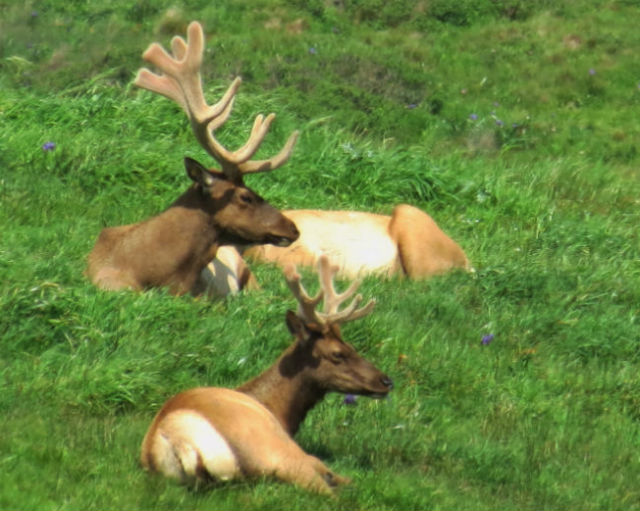
tule elk_1312

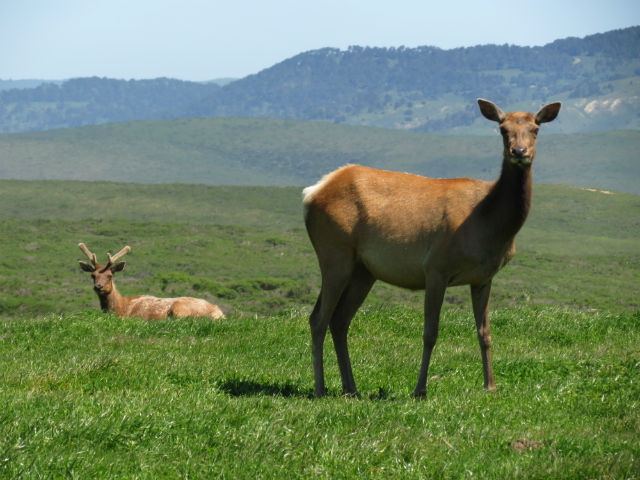
I saw these majestic animals on my visit to California. This is a subspecies of elk native is to California and found nowhere else, ranging from the grasslands and marshlands of the Central Valley to the grassy hills on the coast.

Tule Elk_0944

When the Europeans first arrived, an estimated 500,000 tule elk roamed the state, but by 1870 they were thought to be extinct, primarily due to uncontrolled hunting and displacement by cattle. By some accounts, fewer than 30 remained in a single herd near Bakersfield in the mid-1870s. Through conservation efforts, their numbers are now around 4,000.

tule elk_1308

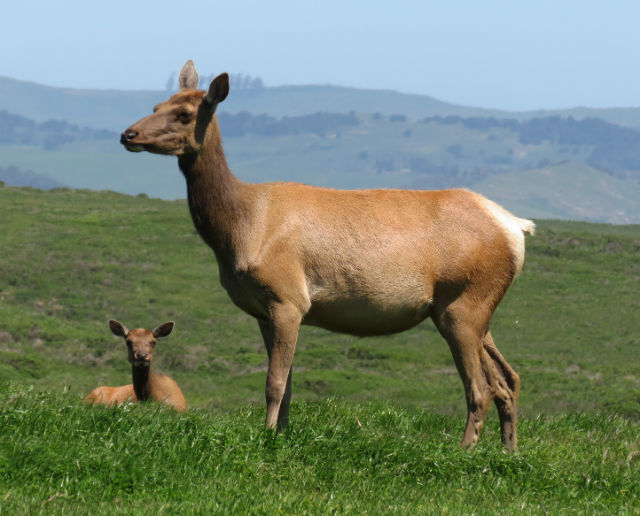
Elk are highly social animals, but the extent of herding can vary by their gender and the time of year. A fully matured bull (or stag) can weigh 700 pounds with the females about three-fourths as large. Only males have antlers, which are rounded and widely spread and average four to six points on each antler.

tule elk_1315

These mammals play a critical role in preventing succession of open grasslands to less diverse, shrub-dominated ecosystems. Their grazing seems to have a positive impact on native grassland species abundance and diversity.

tule elk_1313

The Tule Elk will probably never return to their historic numbers or range because of human’s use of the land and lack of suitable elk habitat, but it was cool to see these animals for the first time.

Third Eye Herp
E-mail

Yellow-eyed Ensatina

Yellow-eyed Ensatina_0730

An Ensatina is a type of lungless salamander found in coniferous forests, oak woodland and chaparral. I came across a few of them on my recent visit to California.

Yellow-eyed Ensatina 057

One of their characteristics are their large, expressive eyes. They also feature a tail that is constricted at the base. A bright yellow patch on the eye gives this salamander its common name.

Yellow-eyed Ensatina_5125

This subspecies of Ensatina is orange-brown to dark brown above, with orange coloring below. They are typically 3-5 inches in total length.

Yellow-eyed Ensatina 187

Since they are lungless, they conduct respiration through their skin, which requires them to live in damp environments on land and to move about on the ground only during times of high humidity.

Yellow-eyed Ensatina 095

When feeling threatened, an Ensatina can drop its tail to distract the attention of a predator while the amphibian can crawl away to safety. The tail can grow back. As another defense behavior, an Ensatina will stand tall in a stiff-legged defensive posture with its back arched and its tail raised up and secrete a milky white poisonous substance, while swaying from side to side.

Yellow-eyed Ensatina_1945

These amphibians eat a wide variety of invertebrates, including worms, ants, beetles, spiders, scorpions, centipedes, millipedes, sow bugs and snails. They tend to catch their food with their sticky tongue, like a toad does.

Yellow-eyed Ensatina_5167

These are neat creatures to encounter and I had a great time seeing them in the field when herping California.

Third Eye Herp
E-mail

White-crowned Sparrow

White-crowned Sparrow_1233

While visiting Point Reyes National Seashore in California, I saw many of these distinctive birds with bold black and white stripes on their heads.

White-crowned Sparrow_1264

Juveniles are not as brightly colored as the adults. Immature White-crowned Sparrows are tan with brownish head stripes.

White-crowned Sparrow_1272

They require a patchy mosaic of bare ground and shrubby areas for breeding. These birds fan out into open ground away from sheltering bushes as they feed.

White-crowned Sparrow_1266

They use a two-footed scratching maneuver to locate food in the leaf litter which consists of seeds, grass, buds, fruits. insects and spiders.

White-crowned Sparrow_1274

I saw several males calling from shrubs. The White-crowned Sparrow is one of the best-studied songbirds in North America. Much of our knowledge of bird song and development is based on studies of this species.

White-crowned Sparrow_1292

It was enoyable not only to see these birds, but to hear them pour out their songs over and over again, adding to the sights and sounds of the Bay Area.

Third Eye Herp
E-mail