Sweat Bee

sweat bee_2656

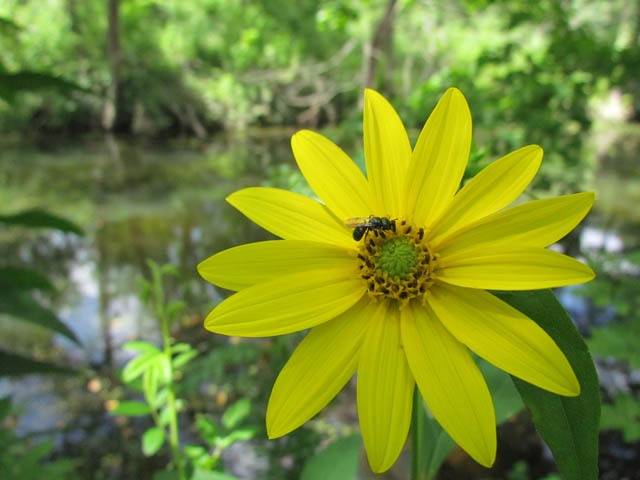
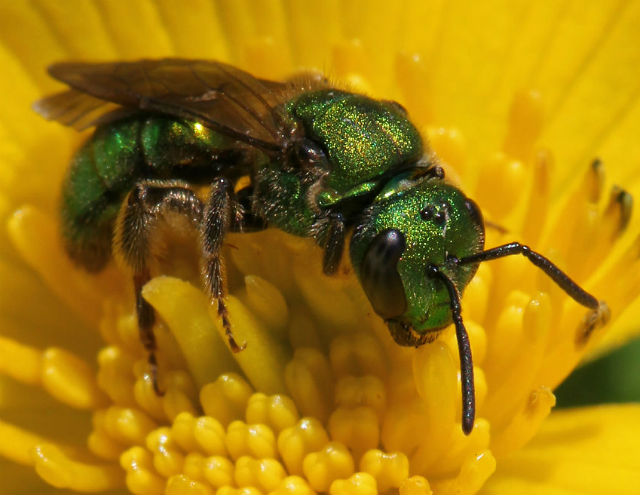
Sweat bees are the most brightly colored native bees in our area. The shiny, metallic green insects are quite eye-catching.
sweat bee 084

Augochlora Sweat Bees nest in the ground, building long vertical nest cavities. Most are solitary nesting, but some species share the same nest entrance, but build their own cavities.
sweat bee_6698

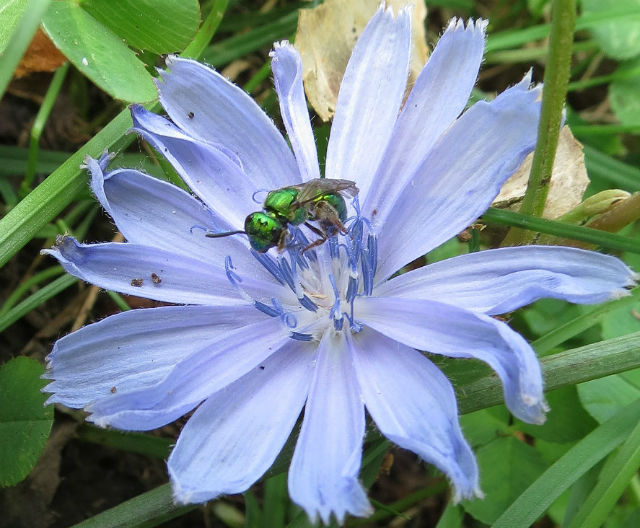
They are short tongued, so they visit shallow or easily accessible flowers for nectar. They also steal nector collected by plant parasites, like aphids.
sweat bees_4054

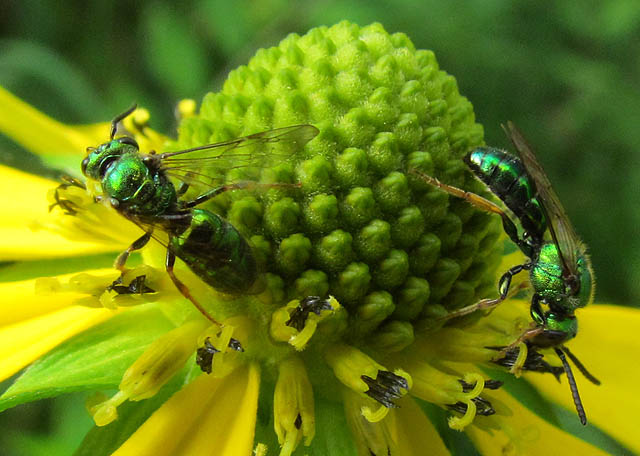
These insects are tiny (less than 1/2 an inch) and are named because of their habit of landing on people and licking the perspiration from the skin in order to obtain salt.
sweat bee 085

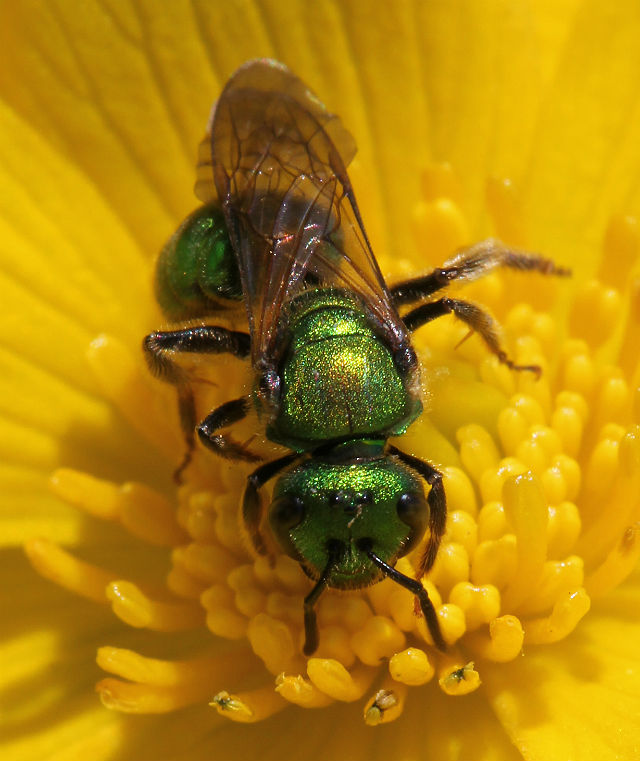
This brilliant “living jewel” performs the same function as other species bees – they are very important pollinators for many wildflowers and crops.

sweat bee_5878

Lately fair numbers of them have been visiting my deck garden and I enjoy seeing them every day.
Third Eye Herp
E-mail

Prairie Racerunner

Prairie Racerunner_7410

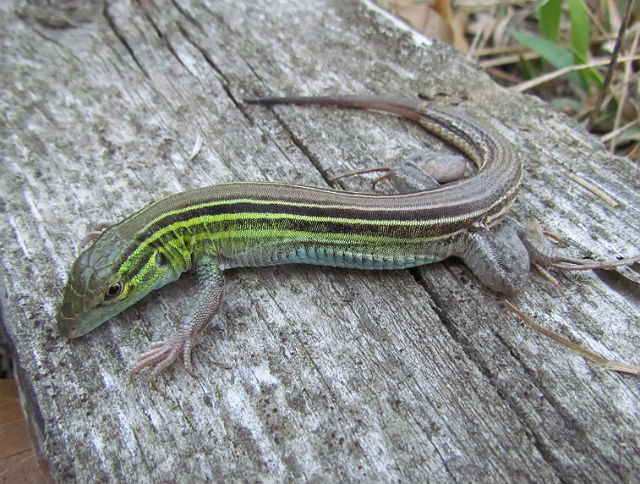
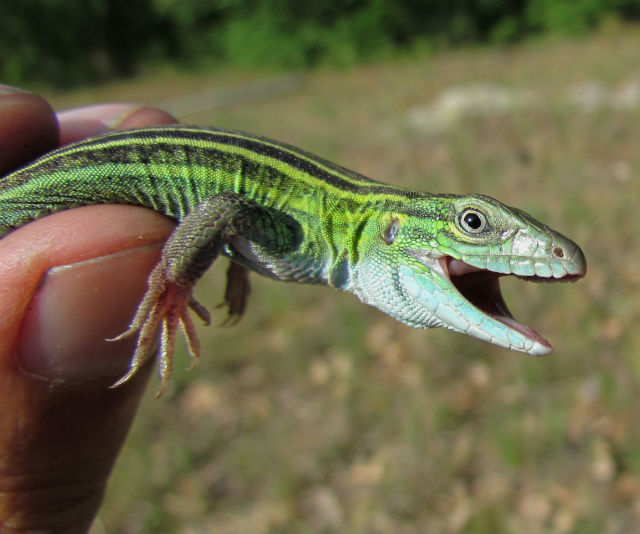
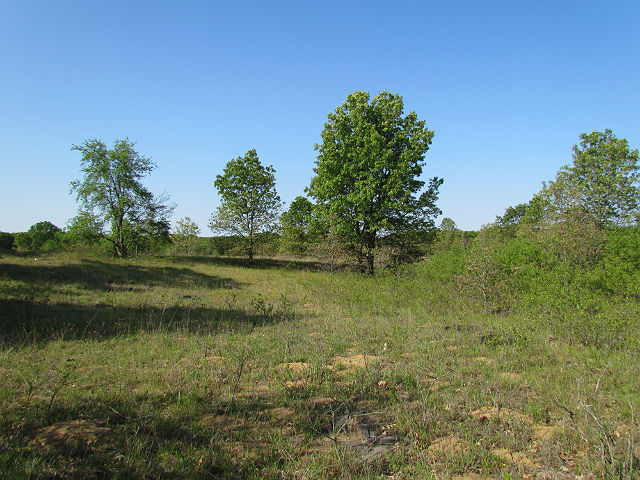
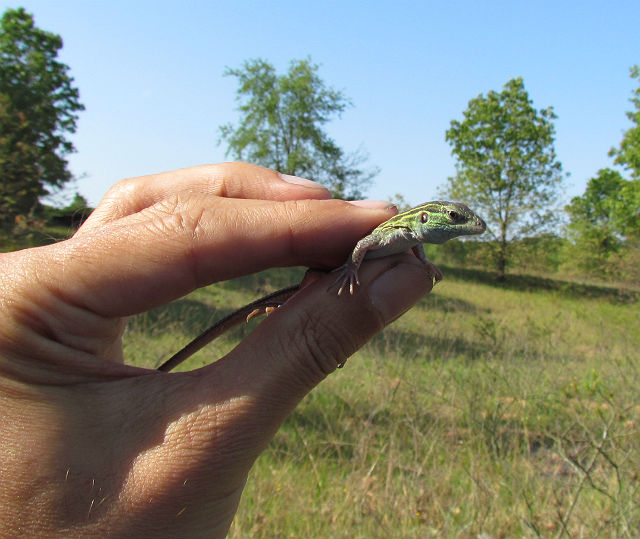
What’s the fastest lizard in the land? Here in the United States, that distinction would go to racerunners, which have been clocked at 18 miles per hour. While visiting the sandhill prairies of Illinois, I caught a few of the reptile speedsters.

Prairie Racerunner_7414

Related to the whiptail lizards of the western US, these are a day-active species which prefer a habitat of scrubby areas and sandy substrate for burrowing. This liazrd’s close relative, the Six-lined Racerunner, resides in the southeastern United States.

Prairie Racerunner_7428

As its name implies, the racerunner is extremely fast and agile. These lizards are quite striking in appearance. Adult males obtain a vibrant green coloration on their heads and necks. Like its relative to the east, the Six-lined Raxcerunner, this subspecies has six pale blue or yellow horizontal lines that run along the length of its 6-10 inch body.

Prairie Racerunner_7422

This reptile has to be quick to grab dinner as well escape being eaten by predators. Insects and spiders comprise the bulk of the diet, though other prey of suitable size may also be eaten. The Prairie Racerunner is a very active forager. It moves along the ground with quick, jerky movements as it samples smells with its tongue while it looks about.

Prairie Racerunner_7425

It was very cool to come across this midwest speed specialist while visiting the Land of Lincoln.

Third Eye Herp
E-mail

Ohio Buckeye

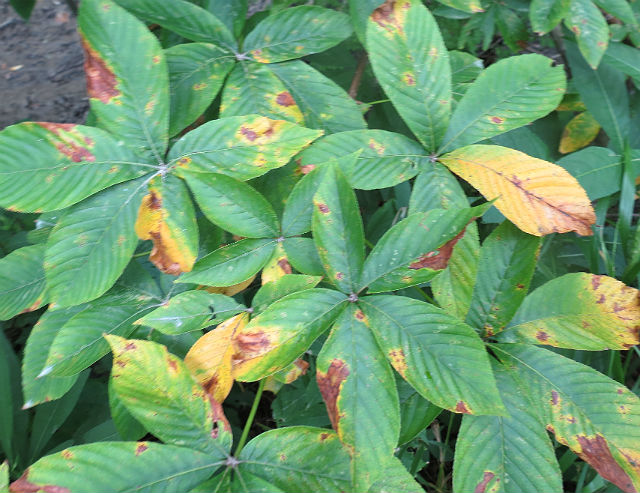
ohio buckeye_6351

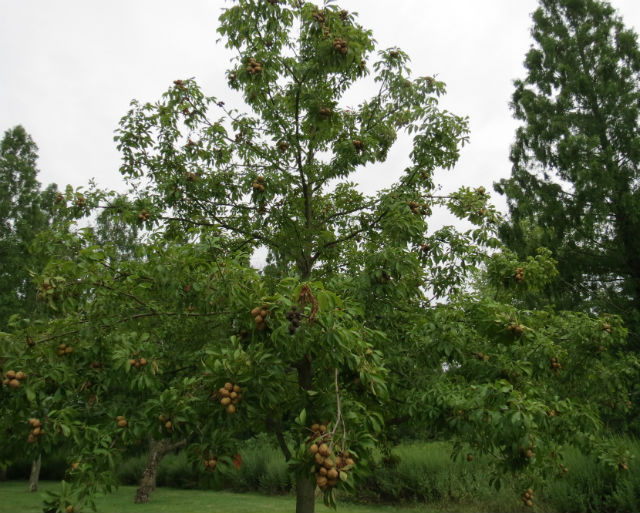
This tree typically occurs in rich or rocky wooded areas of valleys, ravines, bluff bases, slopes and thicket. It is a low-branched, small to medium-sized deciduous tree that typically grows 20 to 40 feet.

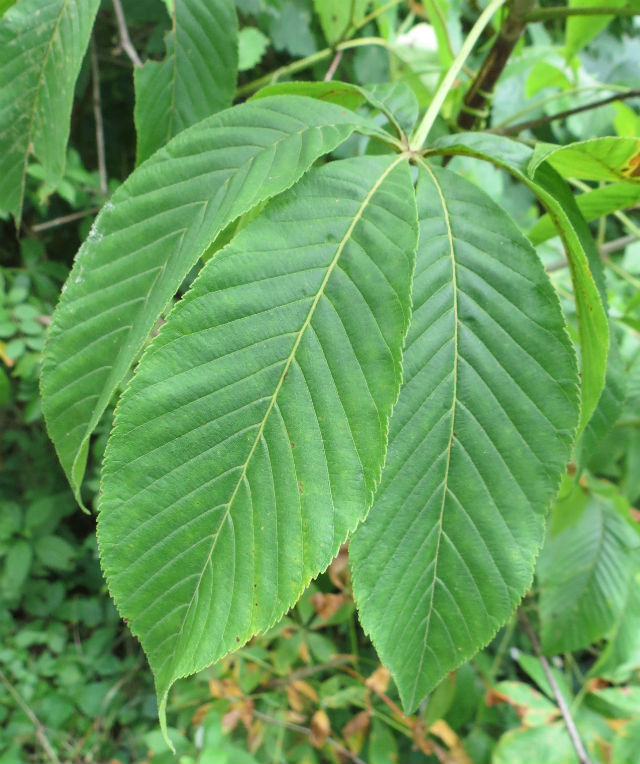
ohio buckeye_6357

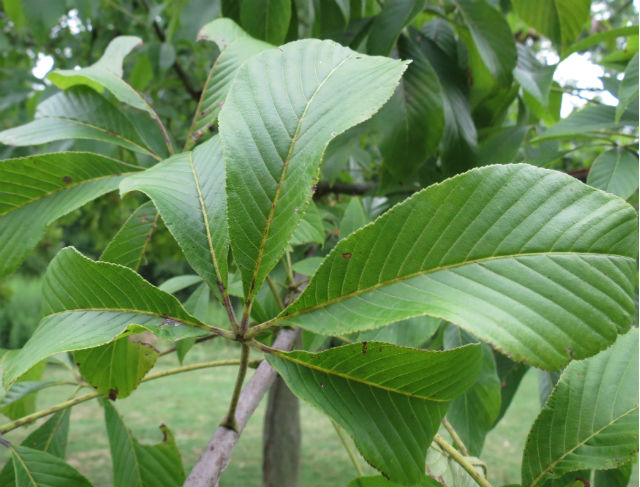
The leaves have a shape similar to that of a hand with the fingers extended; they have leaflets, 3 to 6 inches long and broad. Ohio Buckeyes tend to change color early – their Fall color is usually yellow, although their foliage may develop interesting and attractive shades of orange and red.

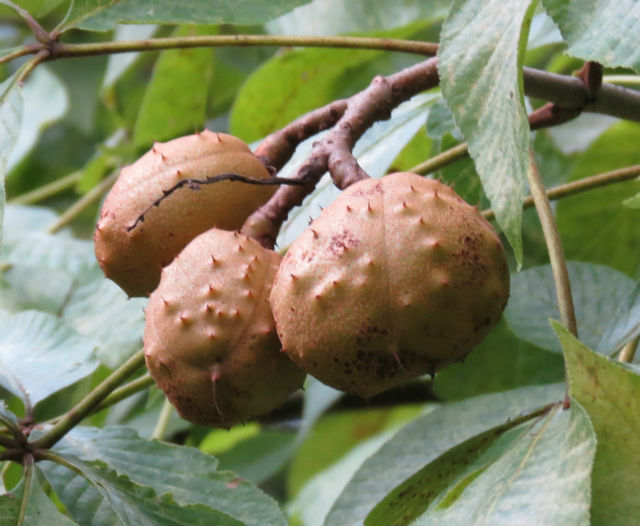
ohio buckeye_5536

The Ohio Buckeye’s fruit is a globular capsule consisting of 1-2 buckeyes encased by a leathery light brown partitioned husk covered with warty spines.

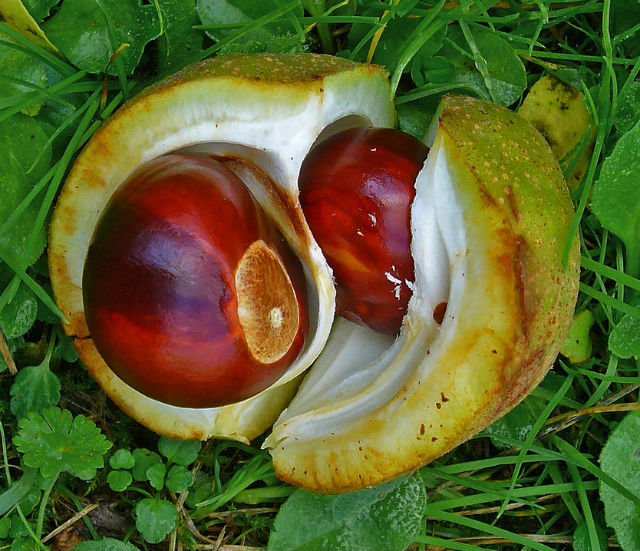
ohio buckeye_6256

When ripe, each buckeye turns a handsome shiny dark mahogany brown with a light tan eye. Since colonial times, buckeyes have been carried by many school children and adults as good luck charms.

ohio buckeye_5537

The Ohio Buckeye is the state tree of Ohio, and its name is an original term of endearment for the pioneers on the Ohio frontier, who traversed the wilderness in the spring of 1788, and began the settlement of Ohio.

Ohio Buckeye_010

Buckeye candy, made to resemble the tree’s nut, is made by dipping a ball of peanut butter fudge in milk chocolate, leaving a circle of the peanut butter exposed. These are a popular treat in Ohio, especially during the Christmas and college football seasons.

Third Eye Herp
E-mail

Eastern Screech-Owl

screech owl_6251

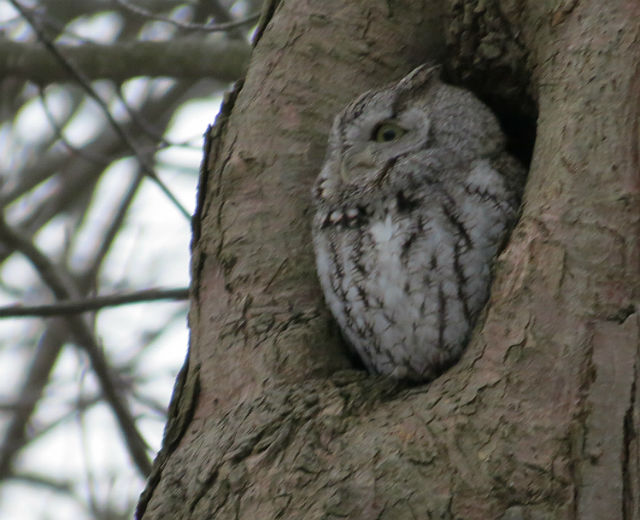
These are common, yet hardly ever seen birds. Their nocturnal habits and great camouflage make them elusive to observe. They often conceal themselves in tree cavities during the daytime.

screech owl_8493

These birds occur in a wide range of habitats and can often live in urban areas. There are two distinct color morphs – red and gray. They are only about the size of a Robin.
screech owl 040

The Eastern Screech-Owl hunts at dusk and at night. It does so mostly by watching from a perch and then swooping down to take prey from the ground. It eats a fair amout of large insects and crayfish during the warmer months and mainly eats rodents during colder months.

screech_8994

Its whinnying and trilling songs are familiar, but its vocalizations also include rasps, barks, hoots, chuckles, and screeches.

screech owl_1721

The Eastern Screech-Owl was first described by Carolus Linnaeus, in 1758. They have also been called the Common Screech Owl, Ghost Owl, Dusk Owl, Little-eared Owl, Spirit Owl, Whickering Owl, Little Gray Owl, Mottled Owl, Mouse Owl, Cat Owl, Shivering Owl and Little Horned Owl.

screech owl_8496

A group of owls has many collective nouns, including a “bazaar,” “glaring,” “parliament,” “stooping” and “wisdom” of owls.

Third Eye Herp
E-mail

17 Year Cicada

03 cicada 002

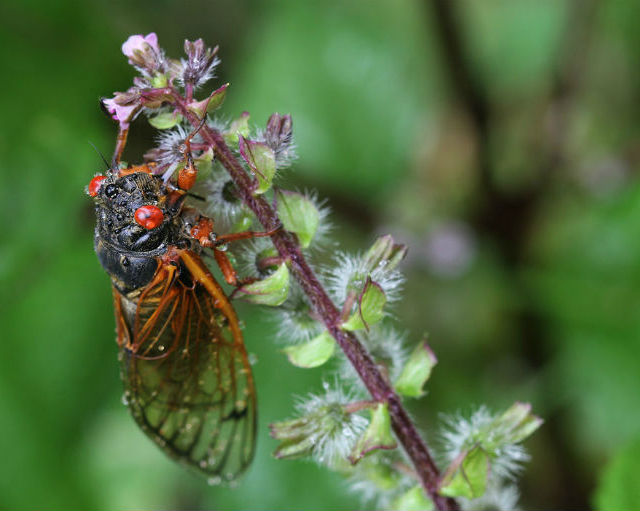
This year has been a special one for fans of insects in northeast Ohio. The emergence of millions of ciciadas occured. Magicicada is the genus of the 13-year and 17-year periodical cicadas of eastern North America.

cicada_3644

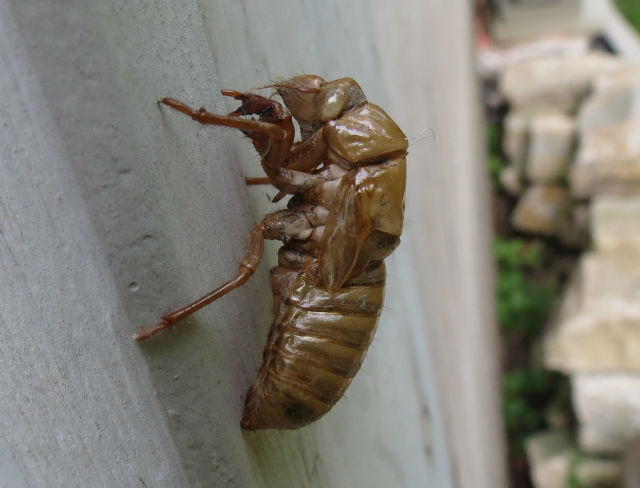
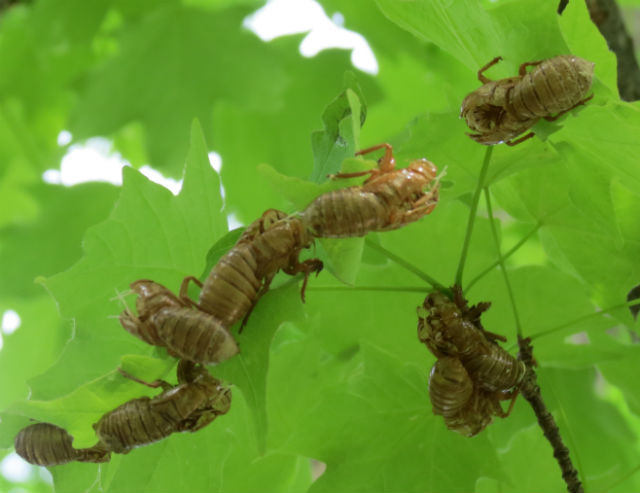
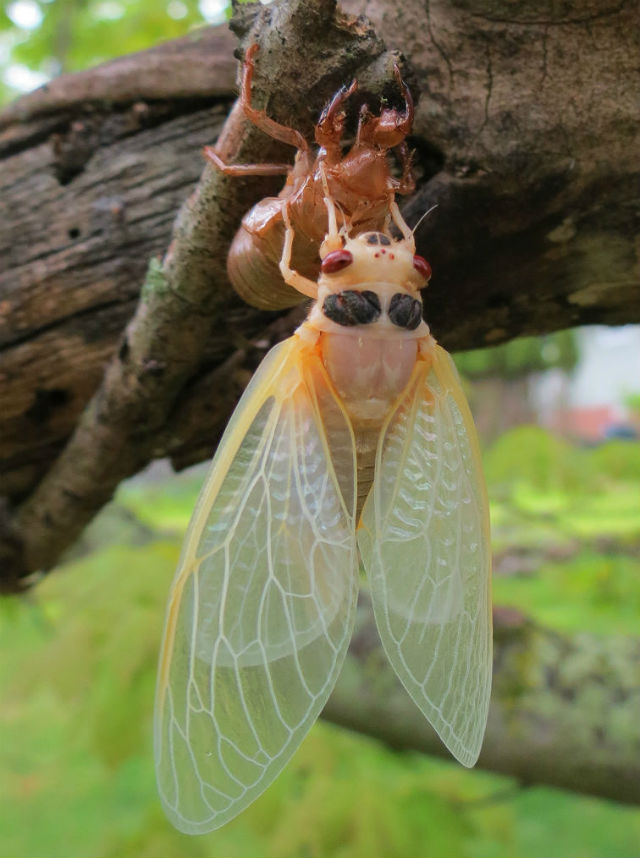
They have spent the past 17 years underground as nymphs feeding on fluids from roots of deciduous trees. At night, when it gets warm enough, the nymphs climb the nearest available tree (or man-made structure), and begin to shed their nymph exoskeleton.

IMG_2570

In the morning their exoskeletons could be seen in large numbers, where the creatures which the creatures that previously lived underground, see light for the first time after more than a decade and a half of a subterranean lifestyle. They also get wings.

IMG_2563

Free of their old skin, their wings inflate with fluid and their adult skin hardens. Once their new wings and body are ready, they can begin their brief adult life, which lasts 4 to 6 weeks.

cicada_2438

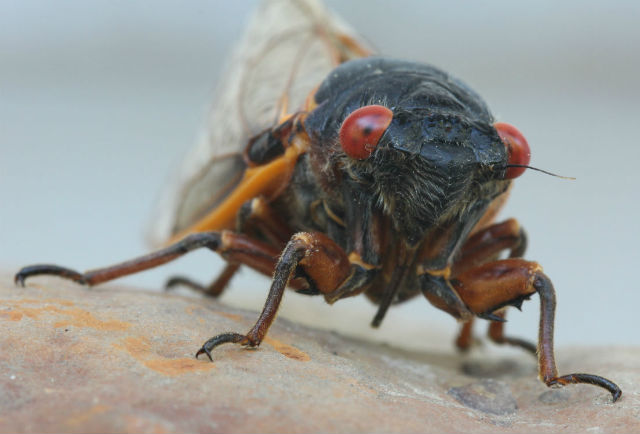
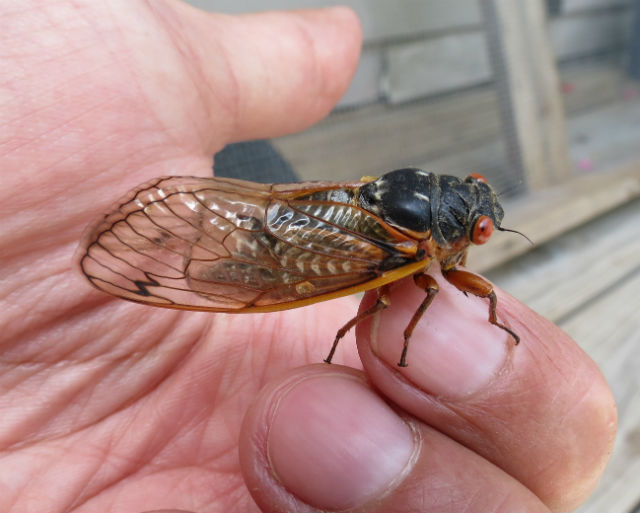
As an adult, a cicada has one job to do: make baby cicadas. To accomplish this task, an adult male will spend the last part of his life in furious song. Their sounds are sometimes reminiscent of chirps, rattles, or high-pitched screams, and when males gather in trees to form a chorus, the noise can exceed 100 decibels. Their song can be heard by females up to a mile away.
cicada_3707

A single brood can contain billions of cicadas, with as 1.5 million insects per square acre in some parts of the region. Simultaneously emerging in such great numbers is a survival strategy known as predator satiation.
cicada_6059

With a lifespan of 17 years, cicadas are among the longest-living insects on earth.

IMG_2557

Third Eye Herp
E-mail

Rosy Boa

Rosy Boa_1449

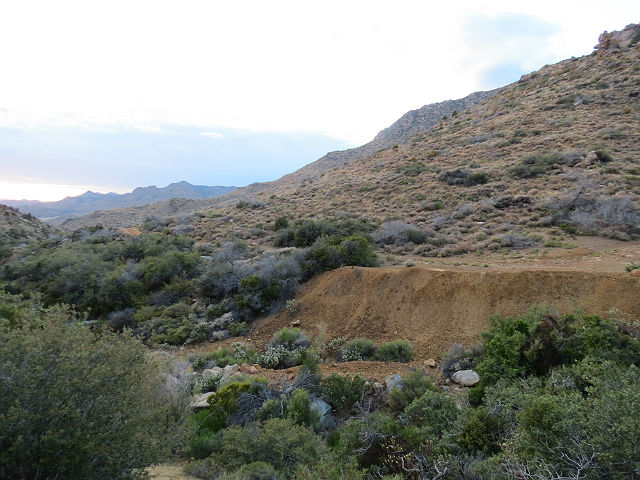
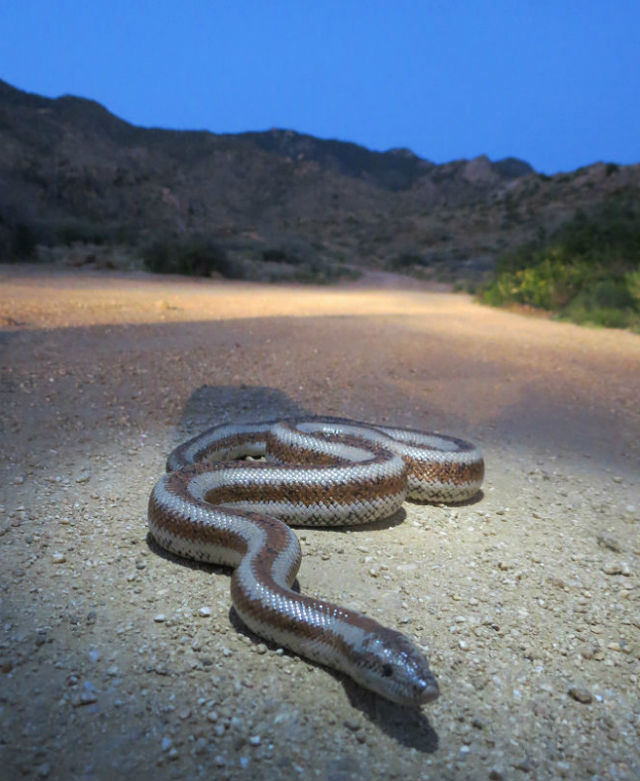
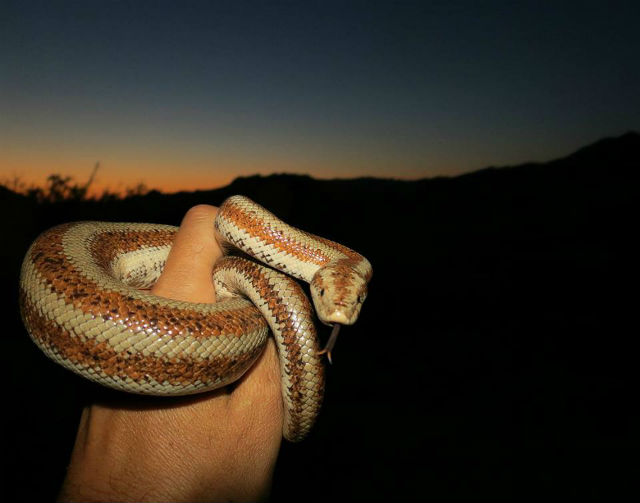
The highlight of my visit to the Mojave Desert was finding a snake I’ve been in search of for quite some time. One evening while hiking at the base of a mountain, I saw this creature crawling across the dirt trail.

rosy boa_3447

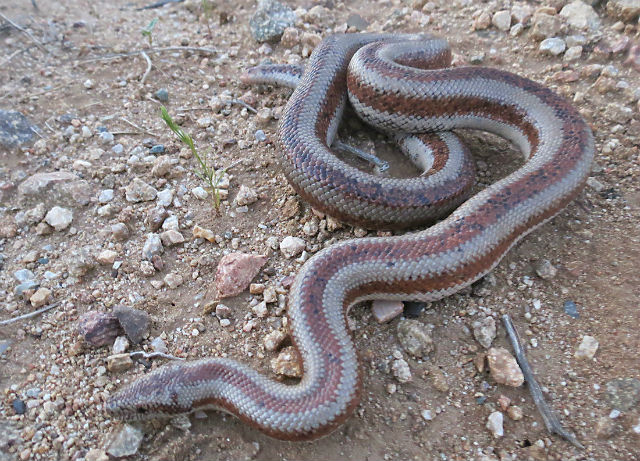
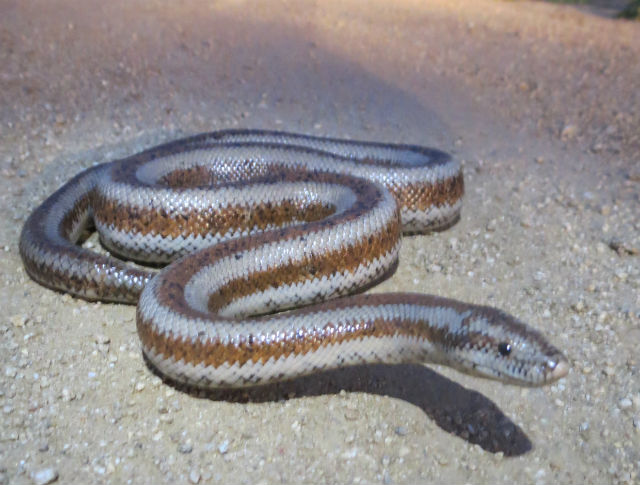
Rosy Boas are one of the two “true” boas residing in the United States, like it’s counterpart, the Rubber Boa, it is relatively small, usually under 3 feet in length. These snakes tend to have at least some trace of three longitudinal stripes, one down the center of the back, and two on the lower sides.

rosy boa_3464

In the United States, it is only found in California and Arizona. The common name is derived from the rosy or salmon coloration that often adorns some populations of these snakes. Like other boas, they produce live offspring (usually about 6).

Rosy Boa_3460

Rosy Boas spend most of their lives hidden beneath rocks and in crevices to escape the elements and natural predators. In the cool of the evening they are often out and about, foraging for small mammals, which they subdue by constriction.

rosy boa 12

It was awesome to come across this creature and a fine way to conclude my Mojave Desert herping adventure.


Third Eye Herp
E-mail

Woodhouse’s Toad

corn creek_3187

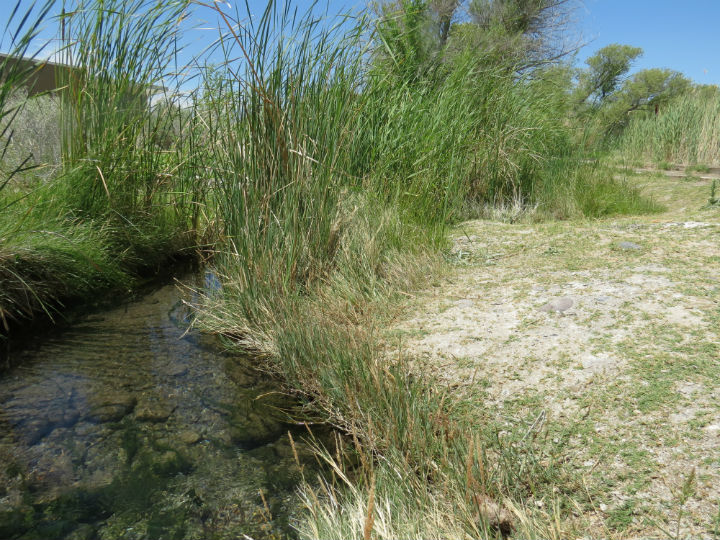
Amphibians in the desert? It almost seems like a contradiction of terms, yet there are some types of toads that find a way to make a living in the arid, hot Mojave Desert. I saw one of them while visiting this desert spring this month.

woodhouse toad_3186

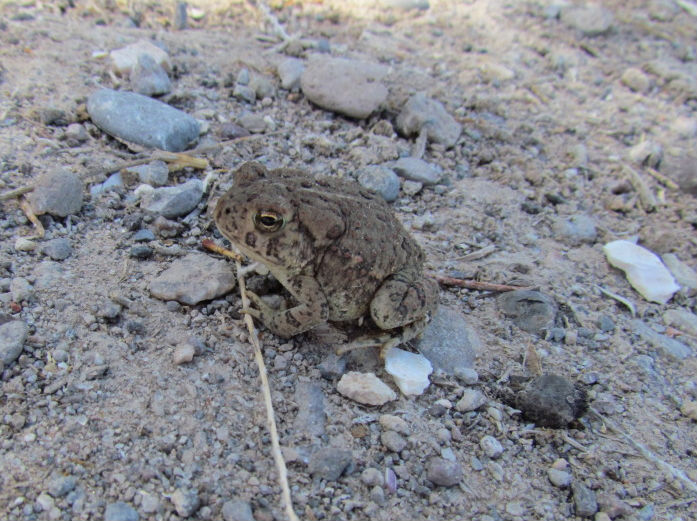
The Woodhouse’s Toad is a robust, medium-sized amphibian that can get up to five inches in length. Their call resembles the bleat of a sheep and lasts one to three seconds. Like most True Toads, it has warty skin, horizontal pupils, and neck (parotoid) glands which store poison, the toad’s main defense against being eaten.

SmallToad

In the desert part of its range, this amphibian is usually found in lowland areas, beside streams and rivers. They hide in burrows during the daytime to avoid the desert heat.

woodhouse1

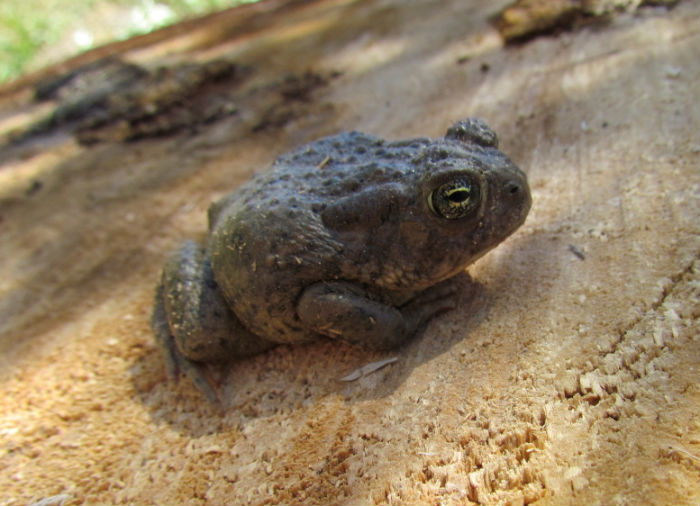
As an adult, it is a nocturnal creature feeds on insects and other small invertebrates. The young toads can be seen in the daytime and I’ve come across them a few times along desert waterways. The Woodhouse’s Toad hibernates during the Winter and becomes active once the weather warms. One of its first activities after hibernation is breeding. Like other species of toads, this species lays several thousand eggs in flooded areas as well as permanent bodies of water.

vIMG_7299

This amphibian’s adaptability goes beyond being able to live in a harsh climate: They coexist well with introduced American Bullfrogs, crayfish and fish.

Third Eye Herp
E-mail

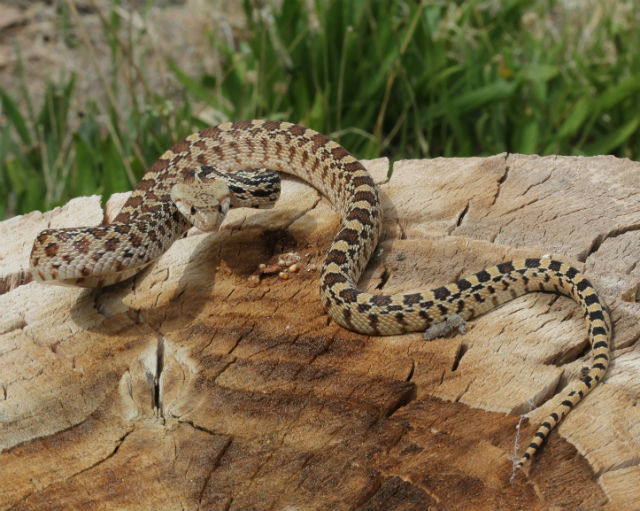
Great Basin Gopher Snake

012

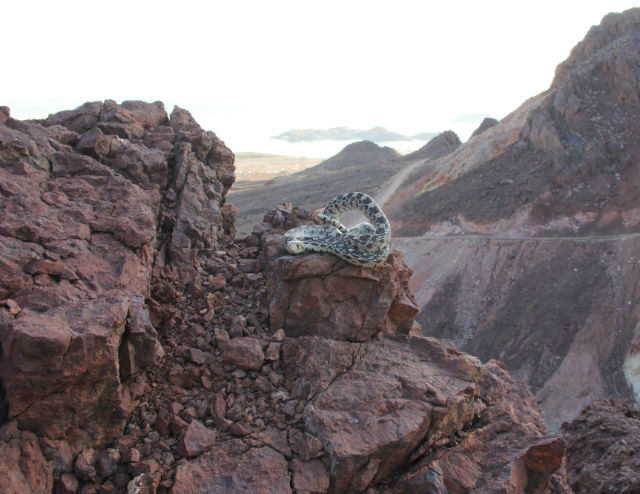
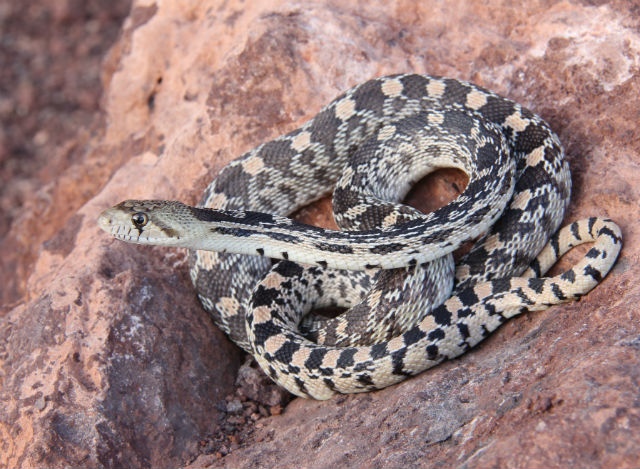
On my last visit to the Mojave Desert, I found several examples of this fine serpent. It resides in a wide range of habitats: dry sandy areas, pine woodlands, plains, abandoned fields, deserts, grasslands and mountain scrub.

019

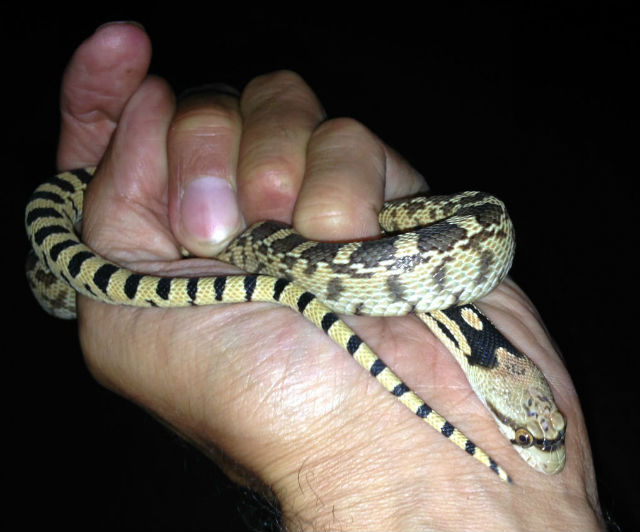
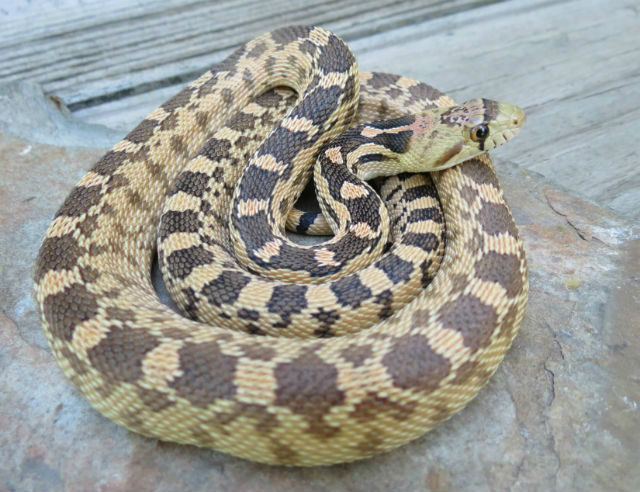
Like other Gopher Snakes, it is straw or pale brown colored with a row of large square blotches, reddish brown and black on the back and similar smaller blotches on the sides. The head is quite pointed, an adaptation for burrowing.

IMG_3605

A unique feature that Gopher, Pine and Bull Snakes have is a filament of cartilaginous flesh in the mouth is situated immediately in front of the breathing passage. When the snake is angry and the mouth is partially opened, the filament is raised and breath is violently expelled against it – creating a very loud hissing noise.

074

As the name implies, this constrictor eats gophers and other rodents. It is mainly active in the daytime in Spring and Fall, though in the heat of Summer it changes its activity pattern to become nocturnal during the intense desert heat.

gopher snake_2403

The individuals I have come across are usually 3-4 feet, but this snake can get over 6 feet in length. It is a harmless snakes and actually quite beneficial to man, due to the large number of rodents it consumes.

Third Eye Herp
E-mail

Desert Tortoise

35 red rock_3011

While visiting the Mojave Desert last month, I saw this ancient creature lumbering across the arid landscape.

desert tortoise_3029

The Desert Tortoise has a lifespan of 80 to 100 years and grows slowly. It is not a fan of the desert heat and most of its life is spent underground in a burrow. The Desert Tortoise’s burrow creates a subterranean environment that also can serve as a shelter for other desert inhabitants like snakes, lizards, mammals and invertebrates.

desert tortoise_3041

Its shell length is about a foot long. This reptile’s legs are elephantine (or “columnar”), to support its relatively heavy body. The front legs are protected by a covering of thick scales and equipped with claws to dig burrows.

desert tortoise_3017

The Desert Tortoise’s diet is made up of a variety of vegetation, including grasses, wildflowers and cacti. They often emerge from their burrows to drink from pools of water after rainstorms. Adults can survive a year or more without access to water.

desert tortoise_3022

The Mojave Desert population of this species is listed as “Federally Threatened” under the Endangered Species Act. Livestock grazing, urban development and off-road vehicles (as well as highways) degrade the tortoise’s quickly disappearing habitat.

desert tortoise_3034

I’ve only seen a few of these reptiles during my many trips to Nevada, so it was nice to come across this one. The Desert Tortoise is the state reptile of Nevada and California.

Third Eye Herp
E-mail

Cactus Longhorn Beetle

Cactus Longhorn Beetle_2597

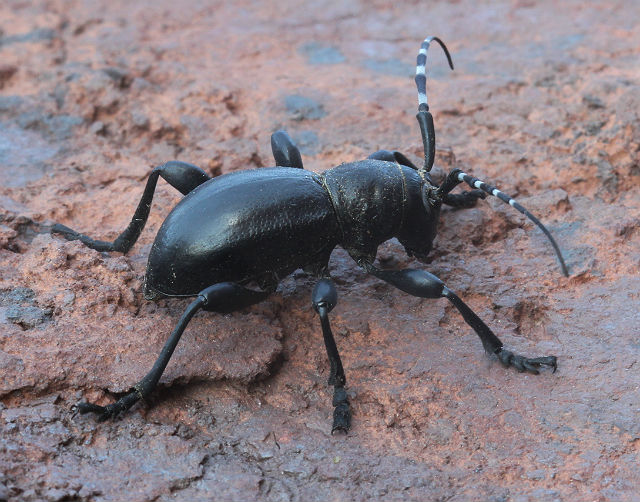
During my last visit to the Mojave Desert I had my first encounter ever with this very cool insect. It lives in the desert scrub and mesquite woodlands of the American Southwest. It spends most of its life cycle in and around various cactus plants, relying on the cactus for both food and shelter.

Cactus Longhorn Beetle_2980

These flightless black beetles have long antennae that stick up almost like horns, helping them earn their name. They are Darkling Beetle mimics and behave like darklings in that they raise the tips of their abdomens in the air when disturbed. Unlke Darkling Beetles, they are not able to produce a noxious smelling chemical defense.

Cactus Longhorn Beetle_5752

Adults are nocturnal and feed on cacti. They hide during the day at the base or under the pads of cacti. At night they crawl to the tops of plant to feed. Their larva feed underground on the base and roots of cacti. The adult beetles are over an inch long and rather imposing in appearance.

Cactus Longhorn Beetle Moneilema gigas_5761

Beetles comprise the largest group of insects on Earth, representing one-quarter of all living organisms and one-third of all animals – and this is one that I find intriguing.

Third Eye Herp
E-mail