Rubber Boa

rubber boa_0893

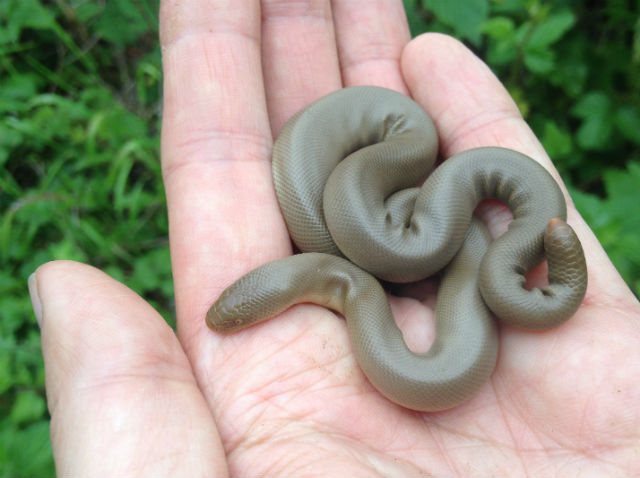
When most people hear the word “boa” they think of a tropical serpent of gigantic proportions. But not only is the Rubber Boa the most northerly-occurring member of the boa and python family, it also is rather small, never getting to 3 feet in length.
rubber boa_0698

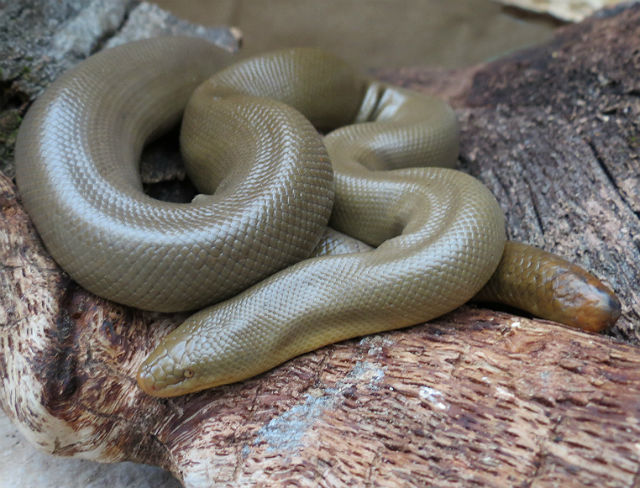
Named for its lithe, pliable skin, this reptile, especially in older literature, is sometimes called the “Two-headed Snake,” since its blunt tail is about the same size and shape of its head.
rubber boa_1912

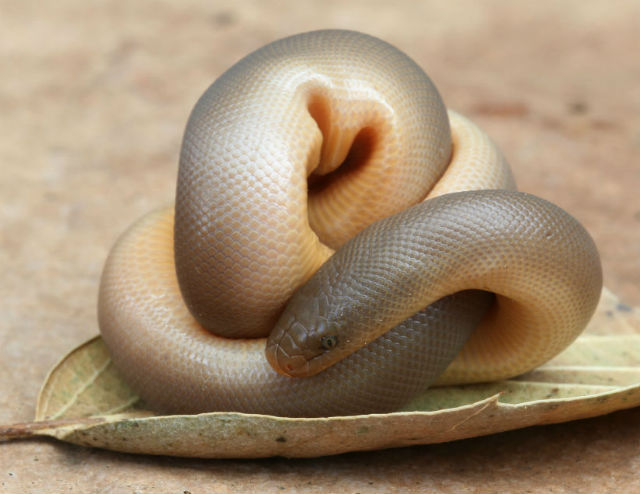
The Rubber Boa is shy and rarely attempts to bite when caught. It is slow-moving and tends to curl up in a ball and hide its head when confronted with danger that it cannot escape from.
rubber boa_5070

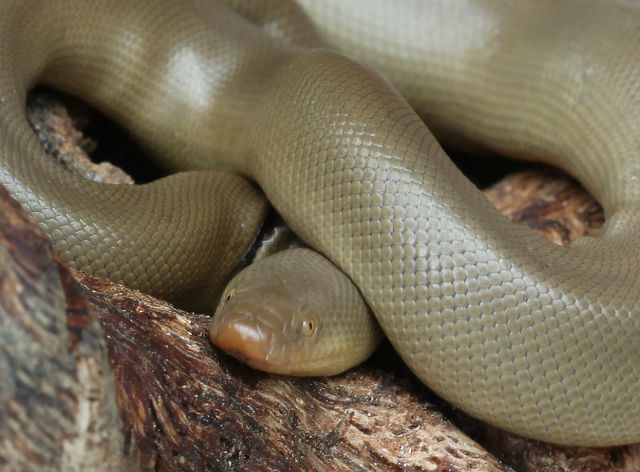
Unlike most snakes, the very secretive Rubber Boa likes relatively cool temperatures – 50-60 degrees. These snakes have a subterranean existence at least some of the time, they disappear in warm weather and seek cooler surroundings and moisture – often underground.
rubber boa_5067

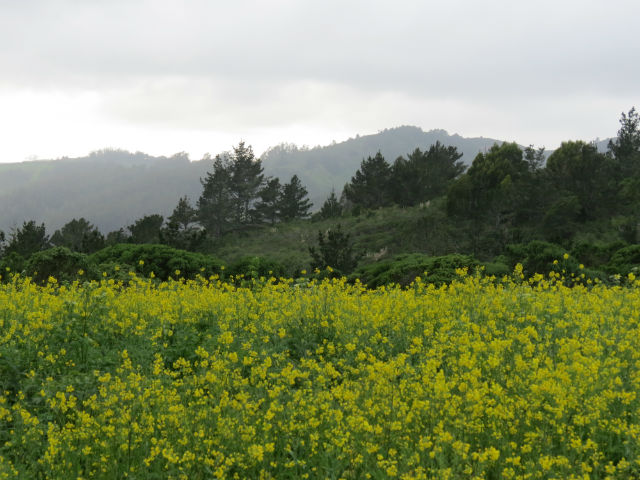
This snake was found on a mountain. Because they tend to live in relatively cold areas of the United States and sometimes at high elevations, these snakes may hibernate six months out of the year in some areas.
rubber boa_5058

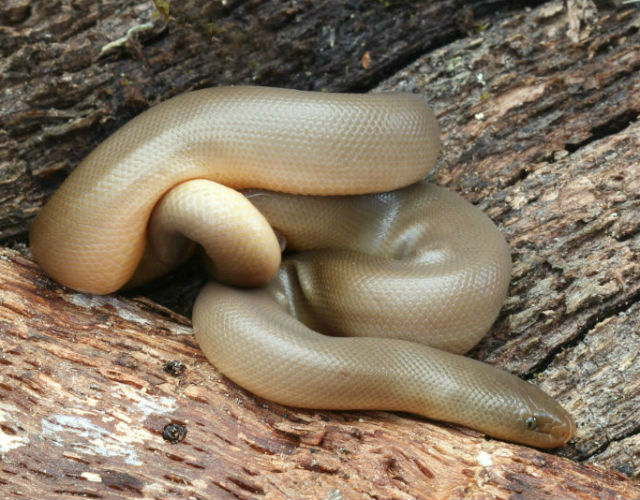
They are small, averaging 20-25 inches. Rubber Boas are unicolored and usually a drab shade of grey, brown or olive-green. It’s odd lifestyle and habits make this one of North America’s most unique serpents.
Third Eye Herp
E-mail

American Alligator

alligator_9770

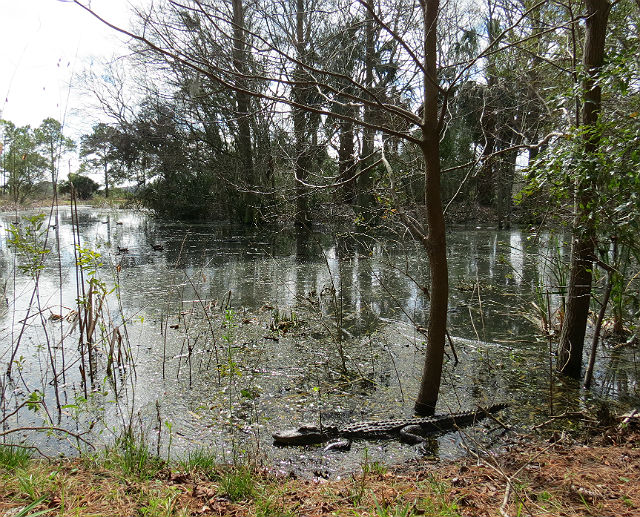
When visiting South Carolina during the first week in March, I had the chance to get reacquainted with a reptile I haven’t seen in awhile, due to not having visited the southeast states (they only place where they live) in 20 years.

alligator_9580

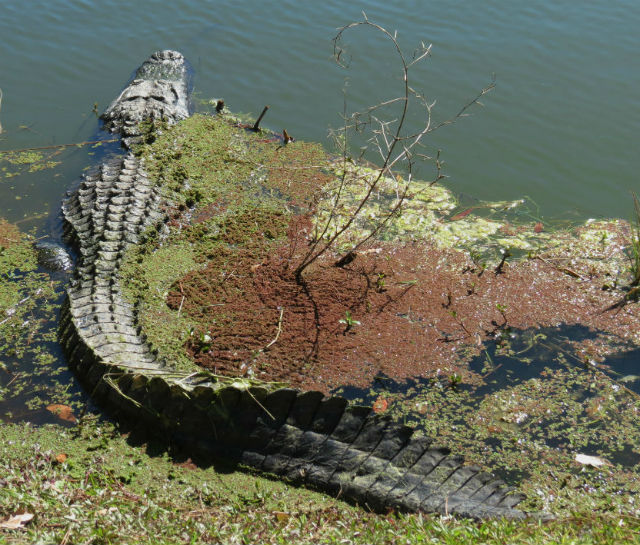
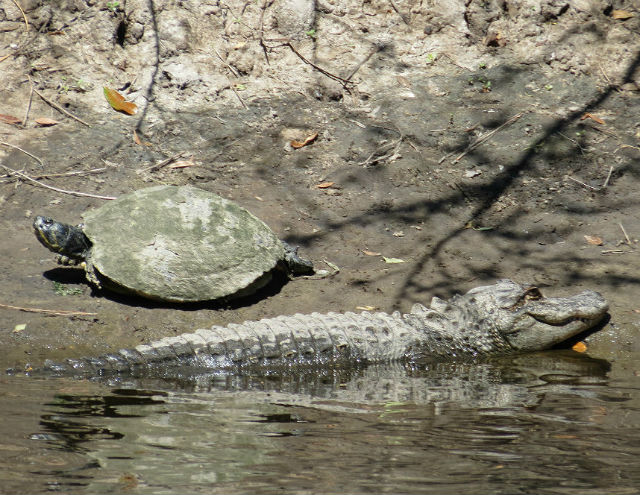
The American Alligator inhabits freshwater wetlands, such as marshes and cypress swamps from Texas to North Carolina. Large individuals can be more than 10 feet in total length. Like other reptiles, they warm themselves in the sun on cool days, as these were doing.

alligator_9553

These reptiles are apex predators and consume fish, amphibians, reptiles, birds and mammals. They also play an important role in the ecosystem through the creation of alligator holes, which provide both wet and dry habitats for other creatures.

alligator_9841

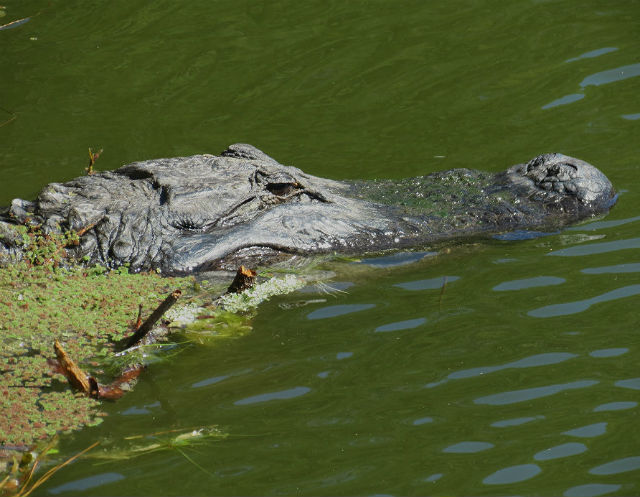
The American Alligator propels itself through the water with its muscular, flat tail. The skin on the back is armored with embedded bony plates called osteoderms or scutes. Their long snout with upward-facing nostrils at the end lets them breathe while the rest of their body is under water.

alligator_9578

Historically, hunting decimated their population, and they were listed as an endangered species by the Endangered Species Act of 1973. Subsequent conservation efforts have allowed their numbers to increase and the species was removed from the list in 1987. It is a rare success story of an endangered animal, not only saved from extinction, but that is now thriving.

alligator_9551

American Alligators are long-lived animals whose life spans can exceed 60 years. Alligators and their relatives are the last of the living reptiles that were closely related to dinosaurs, and their closest modern kin are birds. There is only one other alligator species, the Chinese Alligator.

alligator_9589

The American Alligator is the official state reptile of three states: Florida, Louisiana, and Mississippi.

Third Eye Herp
E-mail

Southern Live Oak

live oak_9641

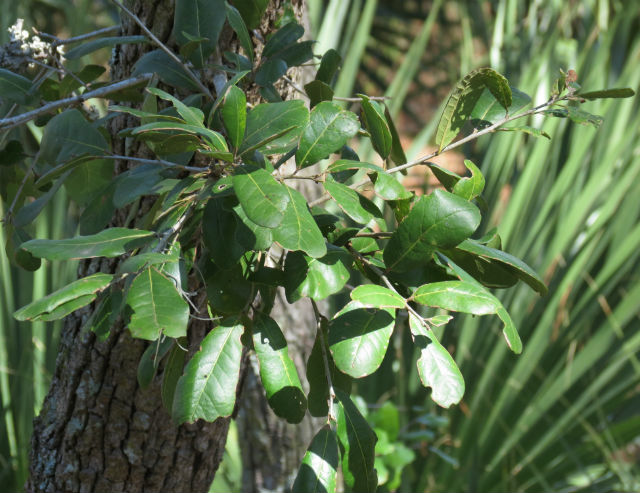
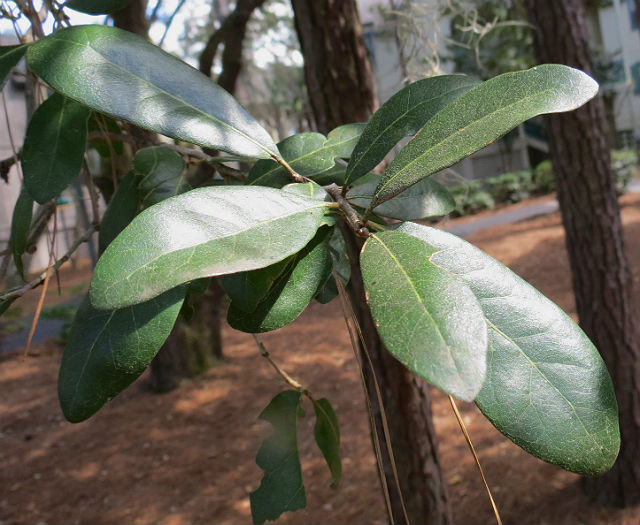
These trees have the characteristic of evergreen foliage; they remain green and “live” throughout winter, when other oaks are dormant and leafless. Southern Live Oaks are confined to warm parts of the country, because of their inability to survive freezing temperatures.

live oak_9631

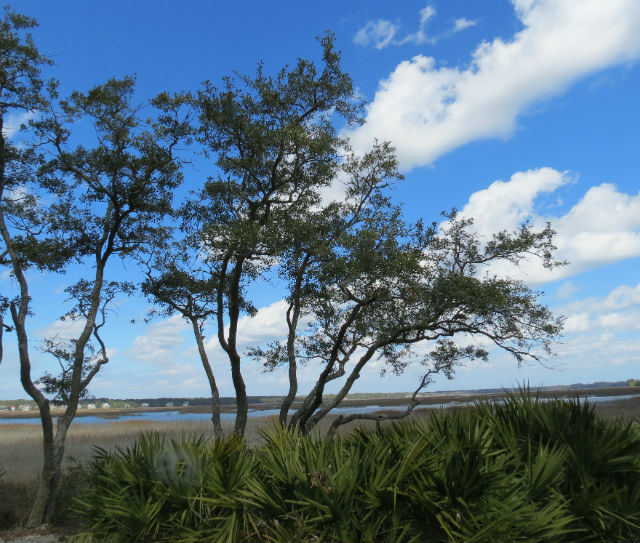
I enjoyed seeing this tree on my visit to South Carolina last month. To me they are an iconic part of the southeast states. Although live oaks retain their leaves nearly year-round, they are not true evergreens, since they drop their leaves immediately before new leaves emerge in the spring.

live oak_9644

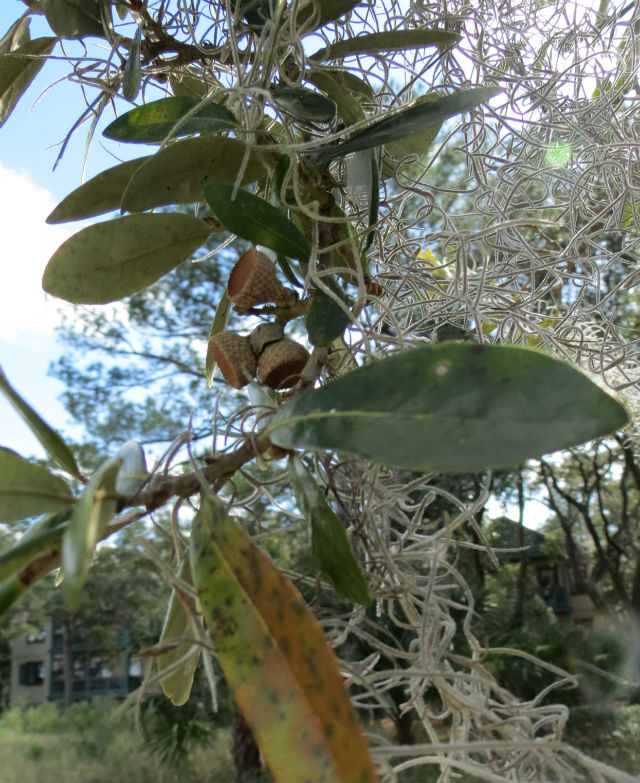
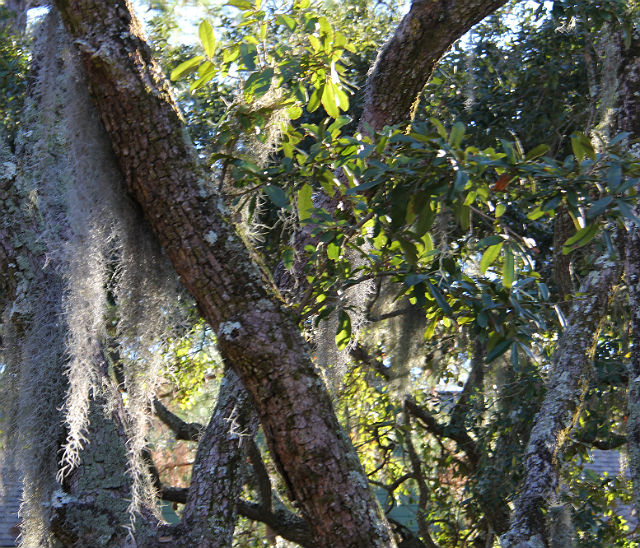
The bark is dark, thick, and furrowed longitudinally. The leaves are stiff and leathery, with the tops shiny dark green and the bottoms pale gray. The moss that frequently hangs from the tree branches it often used by birds to construct nests.

live oak_4663

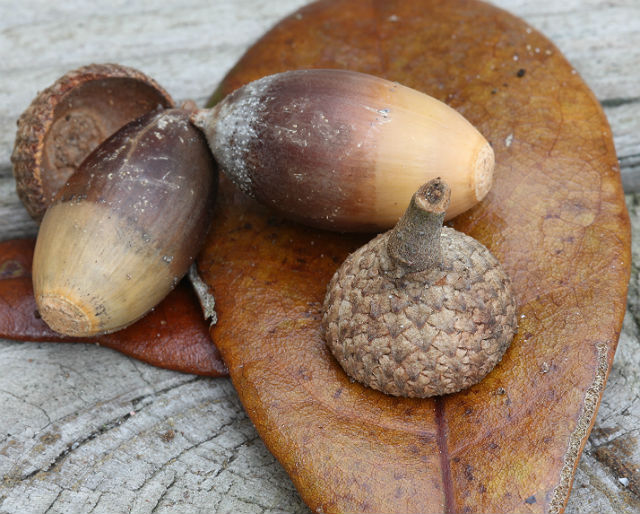
Its small (1/2 to 1 inch) acorns are oblong in shape, shiny and tan-brown to nearly black and are often black at the tips. They are eaten by birds and mammals, including sapsuckers, mallards, wild turkey, squirrels, black bears and deer.

live oak_9637

Southern Live Oaks tend to survive fire, because often a fire will not reach their crowns. Even if a tree is burned, its crowns and roots usually survive the fire and sprout vigorously afterwards.

live oak_4637

These are majestic trees that are emblems of the South. When given enough room to grow, their sweeping limbs plunge toward the ground before shooting upward, creating an impressive array of branches.

Third Eye Herp
E-mail

Southern Flounder

Southern flounder_9654

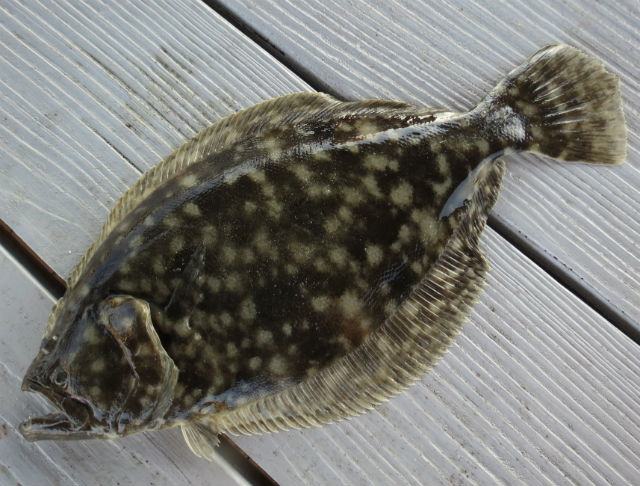
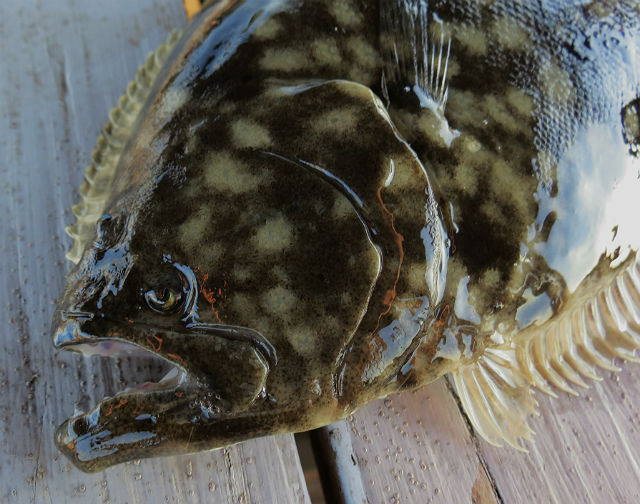
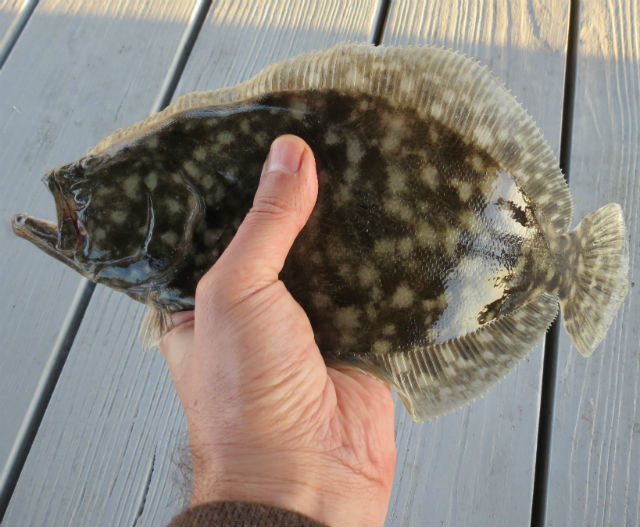
I did a bit of fishing when visiting South Carolina earlier this month and caught one of these cool creatures. This fish likes to reside on mud, and to a lesser degree, sand bottoms in relatively shallow water. Southern Flounders commonly enter fresh water and have been found 100 miles up rivers.

Southern flounder_9662

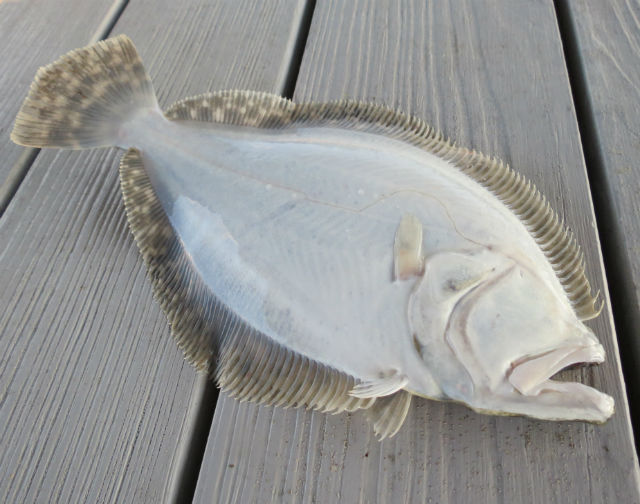
The body is very compressed laterally and right side is white and eyeless. The left side has both eyes and is olive brown in color with dark and white spots.

Southern flounder_9661

Flounders are known for their unique and spectacular transformation from a normal-looking fish with an eye on each side of the head to both eyes on the same side of the head. Movement of the right eye to the left side of the head begins when the fish is a to ½ inch in length and is complete when the fish is ¾ inch to 1 inch in length. During this time, the left side develops its dark color and the right side turns white.

Southern flounder_9660

These fish are well adapted for ambushing quick-moving prey such as fish or shrimp. Their flattened shape allows them to become nearly invisible on the bottom. Their brain has large optic lobes to provide them with good vision, and they have large mouths and strong teeth.

Southern flounder_9666

Typically Southern Flounder range from 15 to 18 inches, but the fish can grow to as large as 33 inches. It was an awesome experience to meet one of these fish “in person.”

Third Eye Herp
E-mail

Anhinga

water turkey_9604

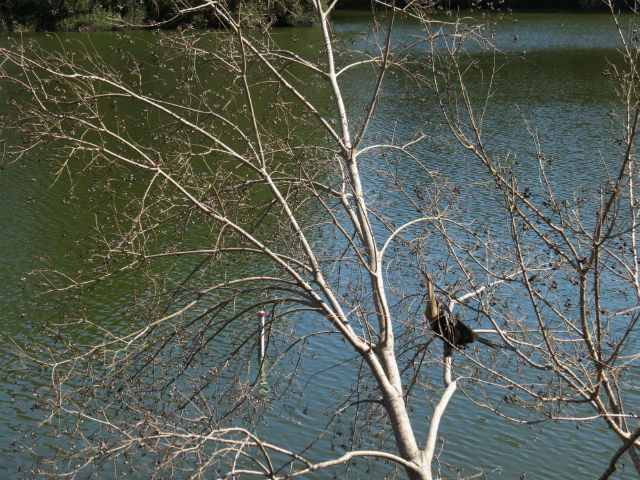
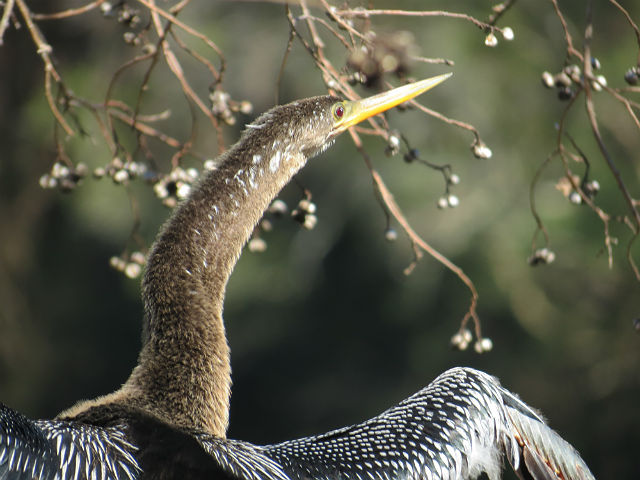
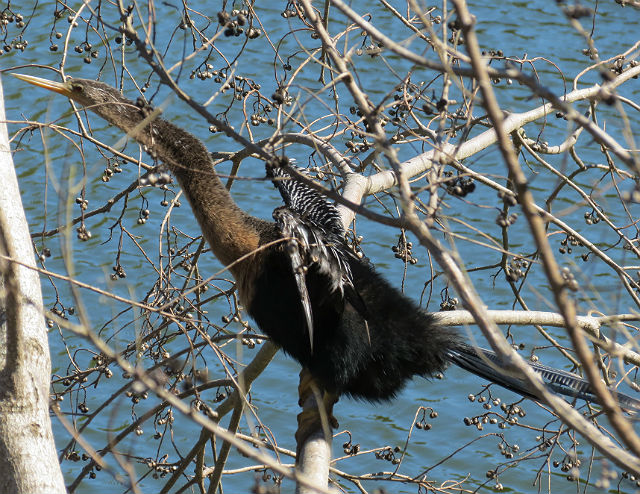
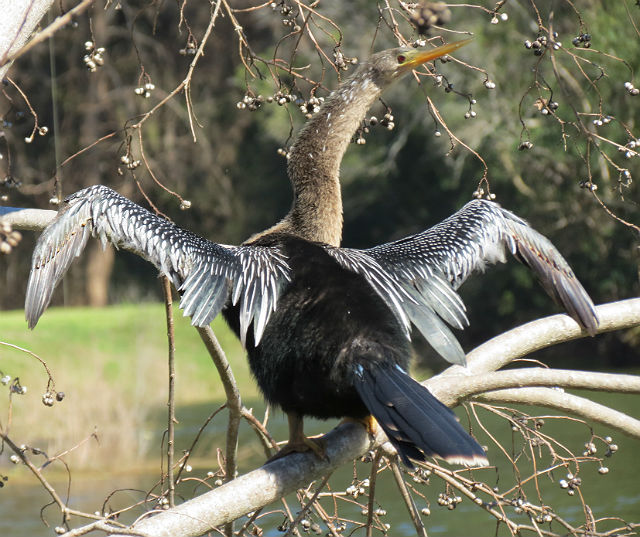
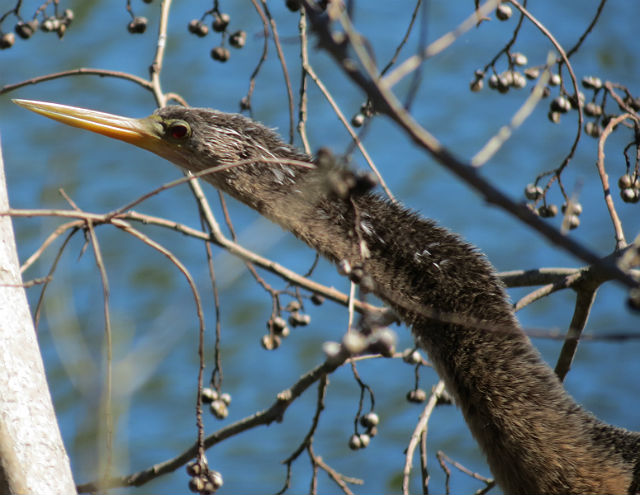
A resident of southern swamps, this bird is known as the Water Turkey for its swimming habits and broad tail, and also as the Snake Bird for its habit of swimming with just its long head and neck sticking out of the water. It is a large bird with a long S-shaped neck and a long, pointed bill.

water turkey_9612

I saw a few of these interesting creatures on my recent visit to South Carolina. In order to dive and search for underwater prey, like fish and amphibians, the Anhinga does not have waterproof feathers (like ducks do). Because of this, the Anhinga is barely buoyant and it can stay below water more easily and for longer periods of time.

water turkey_9606

If it attempts to fly while its wings are wet, this bird has difficulty, flapping vigorously while “running” on the water. To dry its feathers, it will stand with wings spread and feathers fanned open in a semicircular shape, which led to the Anhinga being sometimes referred to as “water turkey.”

water turkey_9611

This bird is most often found in freshwater ponds and swamps where there is thick vegetation and tall trees. Using their sharp bills, Anhingas spear fish, flip them in the air and swallow them head-first.

water turkey_9607

These birds are found in the warmer parts of the Americas. They are members of the darter family and are related to pelicans and cormorants. I enjoyed seeing these odd, yet cool inhabitants of the Palmetto State.

Third Eye Herp
E-mail

Mottled Trillium

mottled trillium_4601

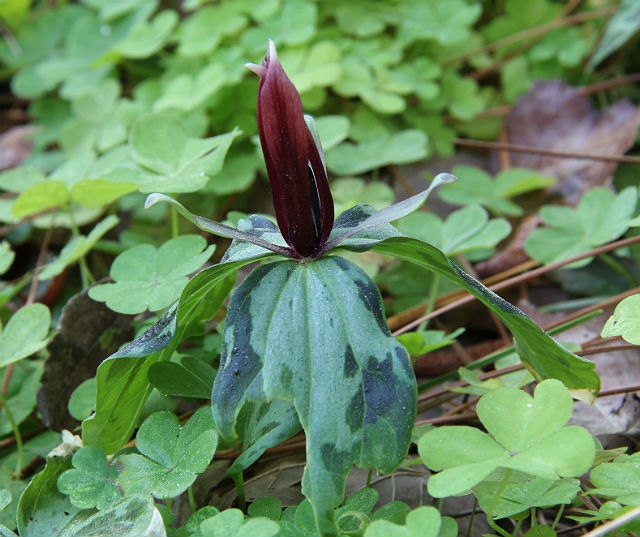
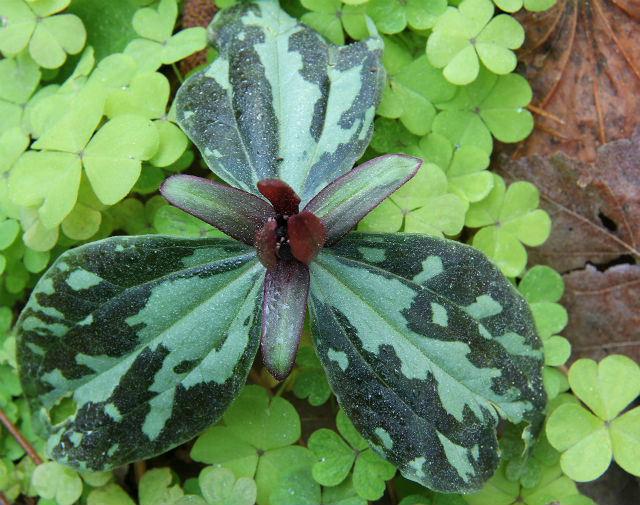
While visiting South Carolina earlier this month I discovered my first wildflower of the year. Mottled Trillium is a relict species, meaning there are a few remaining groups of a species that was once more abundant when conditions were different.

mottled trillium_4600

Significant habitat loss has occurred through clearing of forests for agricultural and pine farm uses; in 1988 this plant was officially listed as an endangered species. Mottled Trillium grows in undisturbed hardwood forests that sometimes include mature pines and that are free of understory plants such as shrubs and vines.

mottled trillium_4596

This is one of the first trillium species in Georgia and South Carolina to appear in the early spring. Prior to blooming, its three mottled leaves that are blue-green, to green to silver in color.

mottled trillium_4599a

It was totally awesome to not only see my first wildflower of the year, but also one that I have never seen before.

Third Eye Herp
E-mail

Green Anole

Green Anole_9418

On my recent trip to South Carolina I had a chance to get reacquainted with a reptile from my childhood. As a kid I kept Green Anoles as pets in the classroom in grade school as well as at home.

Green Anole_9421

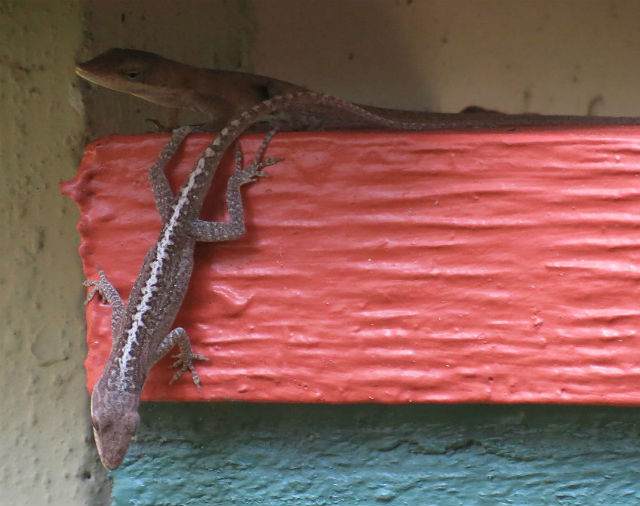
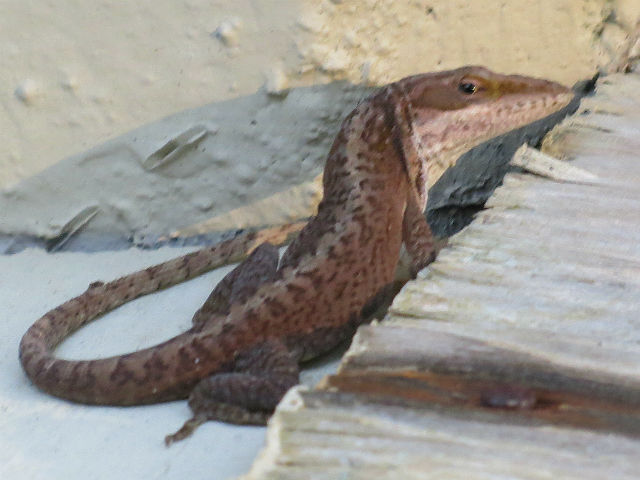
Despite its name, this lizard can be either green or brown depending, on environmental conditions. When brown, it may have faint markings on the back. It is sometimes referred to as the “American Chameleon” due to its ability to change color from several brown hues to bright green.

Green Anole_4630a

These lizards are active by day in warm weather and often bask in vegetation, occasionally charging away from their basking spots to grab an insect or chase off a rival Anole. During cool weather anoles are often found hiding under tree bark, shingles or in rotten logs. Sometimes several of these reptiles can be found taking refuge in one spot.

Green Anole_9514

The Green Anole’s head is long and pointed with ridges between the eyes and nostrils, and smaller ridges on the top of the head. The toes have adhesive pads to facilitate climbing.

Green Anole_9621

This creatures diet consists of small insects such as crickets, grasshoppers, spiders and other arthropods.

Green Anole_9401

The male anole performs a series of visual displays to establish dominance and territory. It will bob its head up and down, do “pushups” and flare its pink dewlap.

green anole_9809

It was cool to come across these reptiles at several places that I visited on my trip to Hilton Head.

Third Eye Herp
E-mail

Lemon Disco Fungus

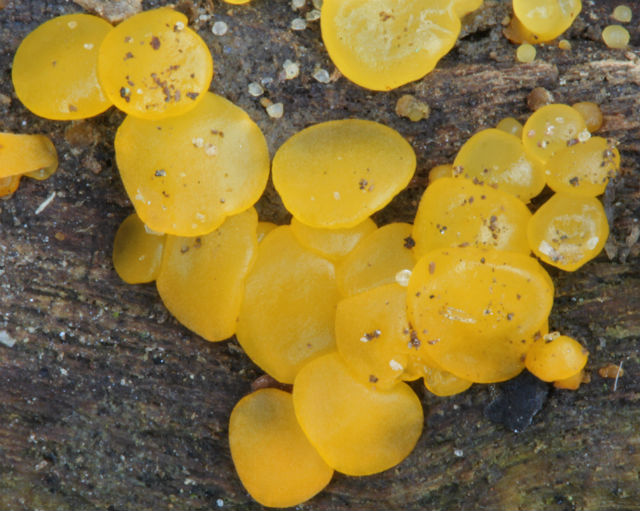
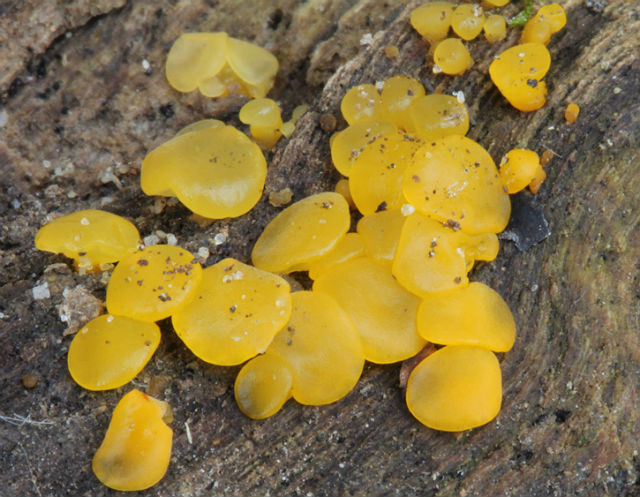
I was doing some yardwork this week and I came across this fine fungi. It produces tiny yellow cups about a tenth of an inch in diameter, often without stalks, that fruit in groups or dense clusters on decaying wood that has lost its bark.

Lemon Disco Fungus_4547

Lemon Disco Fungus is fairly common, but is easily overlooked due to its small size. It is also wide-ranging and can be found in North Africa, Asia, Europe, North America, and Central and South America.

Lemon Disco Fungus_4545

Fruit bodies begin as spherical, closed globules, before expanding to become shallowly cupped or disc-shaped. The inner surface becomes smooth and bright yellow, while the outer surface is a more pale yellow. Fruit bodies that are dried are wrinkled and have a dull orangish-brown color. Its species Latin name, citrina, is a derivation of the word citrin – which means “lemon-yellow.”

Lemon Disco Fungus_4546

Like other fungi, Lemon Disco Fungus plays an important part of nature’s continuous rebirth by breaking down dead wood into useful nutrients. Fungi digest their food outside their bodies by releasing enzymes into the surrounding environment and converting organic matter into a form they can absorb; nothing else is able to perform the function of reducing these forest byproducts back down into soil.
Lemon Disco Fungus_4548

It was a nice surprise to come across this tiny treasure on an otherwise ordinary day.

Third Eye Herp
E-mail

Black and Yellow Flat Millipede

black and yellow_8973

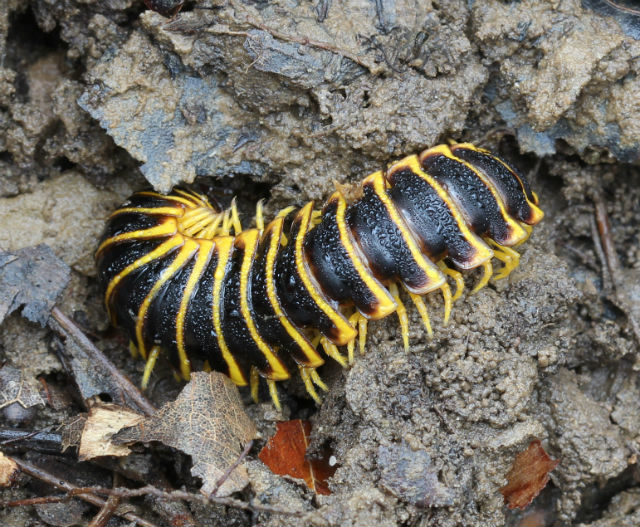
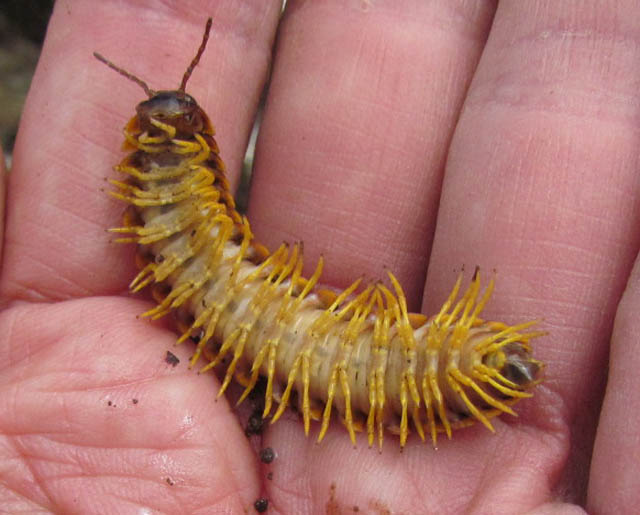
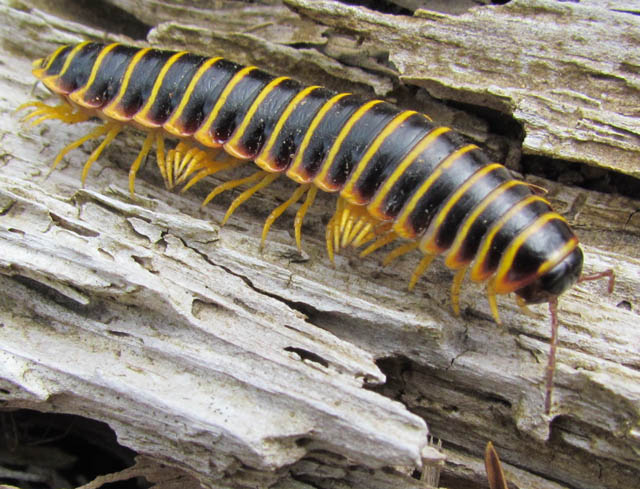
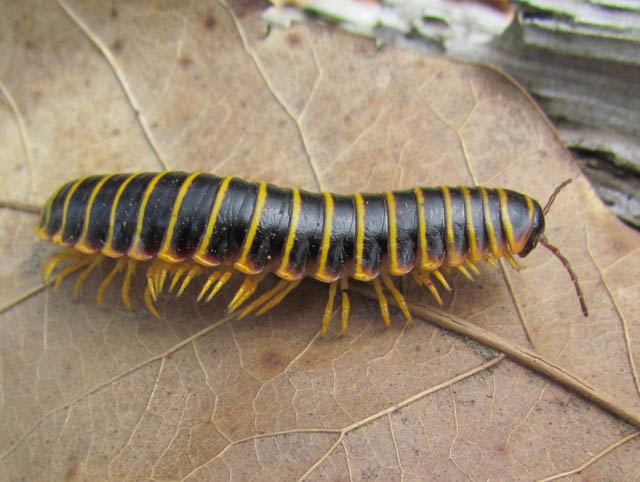
It’s still cold and snowy, but turning over a few logs on the woods can reveal hidden life. This 2-3 inch black millipede has yellow bands separating each segment along its back. It also has very bright yellow legs.

Black and Yellow Flat Millipede 046

Millipedes are long, multi-segmented creatures that resemble centipedes, but centipedes have only one pair of legs on each segment, while millipedes have two legs on most segments.

Black and Yellow Flat Millipede_3291

Generally found in leaf litter, millipedes tend to avoid light. They do not bite humans. Centipedes and millipedes belong to subphylum Myriapoda, meaning “many footed.”
Black and Yellow Flat Millipede_3300

Millipedes commonly consume rotting vegetation rather than of living plant tissue. Their feeding activities speed up the decomposition of plant materials, playing an important part in Nature’s “recycling” process.
Black and Yellow Flat Millipede 001

Despite their many legs, millipedes cannot run very fast. They have two main defenses. One is curling up in a ball. The other is emitting a smell. If you pick up a flat millipede, it will often release a scent resembling almonds or cherrys. While this might be pleasant for humans to smell, it apparently is distasteful to some predators.

Black and Yellow Flat Millipede_3302

Fossil evidence suggests that millipedes were the earliest animals to breathe air and make the move from water to land.

Third Eye Herp
E-mail

Coyote

coyote_0348

While hiking in Brecksville Reservation this week I noticed two dogs romping in an open field. It was not the first time I’ve come across Coyotes in the wild, but it was a nice encounter, because I was able to observe some of their natural behavior.

coyote_8819

This mammal is not native to Ohio; we tend to associate Coyotes with the open, deserted lands of the west. But this mammal has the ability to make the best of a bad situation and survive…or even prosper. As its presence in the Buckeye State shows, this versatile animal can make a home most anywhere.

coyote_8823

They often will hunt in unrelated (non-family) pairs or large groups. Coyotes typically eat small mammals, but they also consume vegetation and fruit, such as summertime berries. These were very busy listening to mice, voles or shrews tunneling under the snow. It was amusing to watch them as they playfully pounced on prey that they could hear, but not see.

coyote_8822

Coyotes have a bushy tail which is usually tipped in black and is carried down at a 45 degree angle as the animal moves. They stand about 1-1/2 to 2 feet tall and are between 41 to 53 inches in length. Males are larger than the females and weigh anywhere from 20 to 50 pounds.

coyote_8828

The Coyote’s strength is that it can adapt and exploit almost any habitat to its advantage. It first arrived in Ohio in 1919 and can now be found in all of Ohio’s 88 counties – and they continue to expand their range.

coyote_8830

While most wildlife species have avoided developed areas and often declined as a result of man’s expansion, the Coyote seems to be thriving.

Third Eye Herp
E-mail