Red-shouldered Hawk

red shouldered  hawk_7391

Although the Red-tailed Hawk is the most commonly seen raptor in my part of Ohio, I occasionally come across this smaller hawk.

red shouldered  hawk_1602

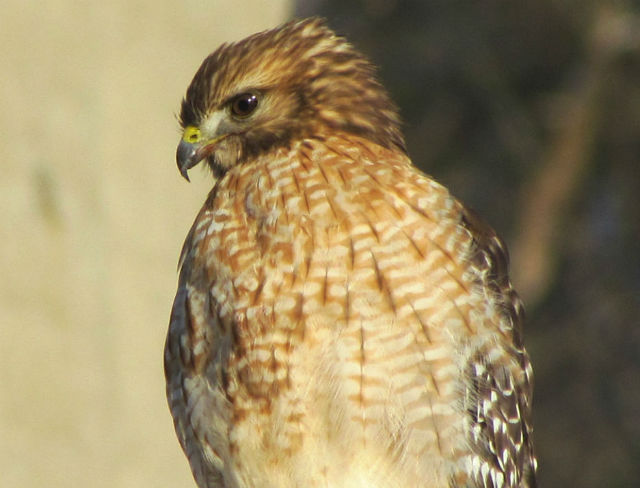
It is rather beautiful, sporting high contrast checkering on its wings, rufous barring on its chest and a boldly banded tail.

red shouldered  hawk_0131

Rather than inhabiting open fields, like the Red-tailed Hawk, the Red-shouldered Hawk inhabits bottomland woods, wooded streamsides, swamps. At one time, it was more common than the Red-tailed Hawk, but as forests were cleared, the open areas that resulted were better suited for Red-tails.

red shouldered  hawk_5435

This bird usually hunts by watching from a perch, either within forest or in the open, swooping down when it locates prey. Its diet includes includes small mammals, amphibians, reptiles and birds.

red shouldered  hawk_1559

The Red-shouldered Hawk is a dietary generalist, changing its diet to reflect the local or seasonal abundance of different prey species.

red shouldered  hawk_1598

This bird builds its nest 20 to 60 feet above the ground in the branches of deciduous trees in wet woodland areas. The nest usually is in a fork about halfway up the trunk and often close to water, such as along a river or stream.
red shouldered  hawk_1507

Red-shouldered Hawks are about the size of crows. They show reverse sexual size dimorphism, meaning that females are larger than males.

red shouldered  hawk_1595

Its intricate patterns make seeing this bird an enjoyable experience whenever I come across one on a nature hike.

Third Eye Herp
E-mail

Longtail Salamander

longtail salamander 0004

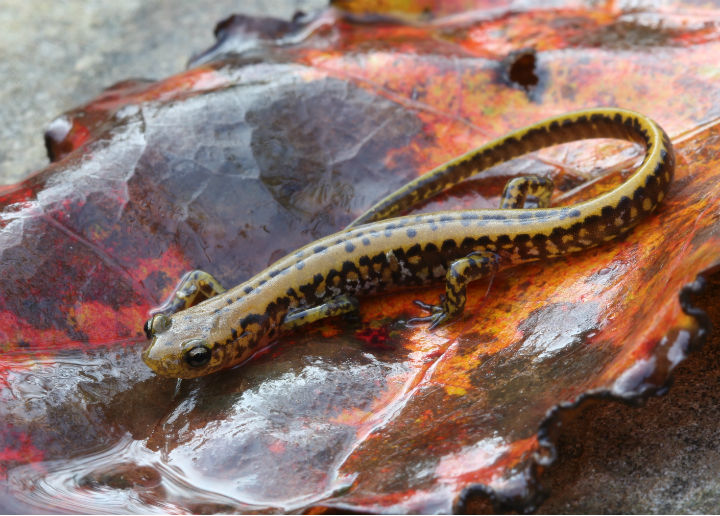
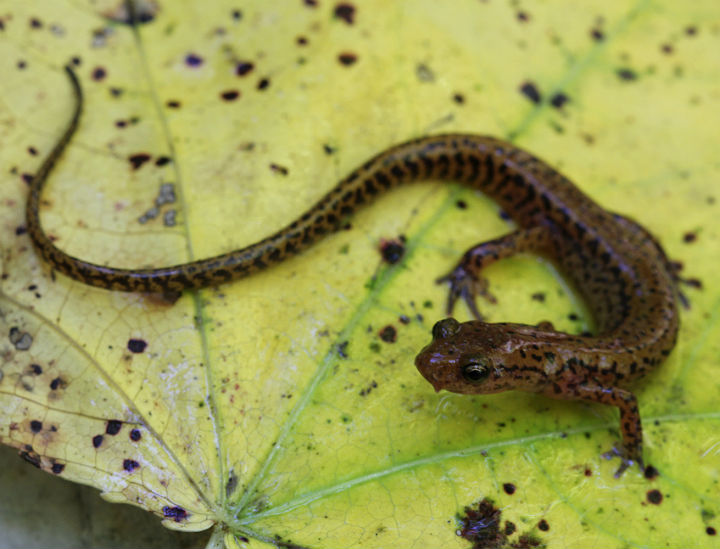
One of Ohio’s longest salamanders, the tail of this aptly named animal comprises 60-65% of its total length (up to 9”). They do not live in my part of northeast Ohio, but I have found them while visiting the southern part of the state, as well as in Kentucky. The examples in the photos above and below lost sections of their tails, which grow back, though not as long or with the same color and pattern of the original.

longtail salamander 98

This amphibian can be rather attractive, with a ground color that is usually some shade of yellow or orange, but it may be brownish in some individuals. They feature black spots on their back, sides and legs. The herringbone-like pattern on the tail is the key identifying characteristic to differentiate it from its lookalike – the Cave Salamander.

longtail salamander 20061

Streams, springs, seeps, caves, and wet shale banks are the primary habitats for this amphibian. I usually find them under rocks along the banks of creeks.

longtail salamander 02

Females lay between 60 and 110 eggs in the Winter and attach them to the undersides of rocks that are submerged in water. The eggs hatch in 4 to 12 into an aquatic gilled larval stage that inhabit streams until they metamorphose.

longtail salamander 26

Like all salamanders, it is a carnivore. Long-tailed salamanders feed on a wide variety of aquatic and forest-floor dwelling invertebrates such as spiders, flies, mites, ticks, slugs and worms

longtail salamander 12

This is a lungless salamander that breathes through its skin. Like most other lungless salamanders, the home ranges of adults do not typically exceed more than a few dozen square yards.

longtail salamander 9002

I always enjoy coming across these colorful, elongated creatures while searching for reptiles and amphibians.

Third Eye Herp
E-mail

Red-bellied Woodpecker

Red-belly Woodpecker_8209

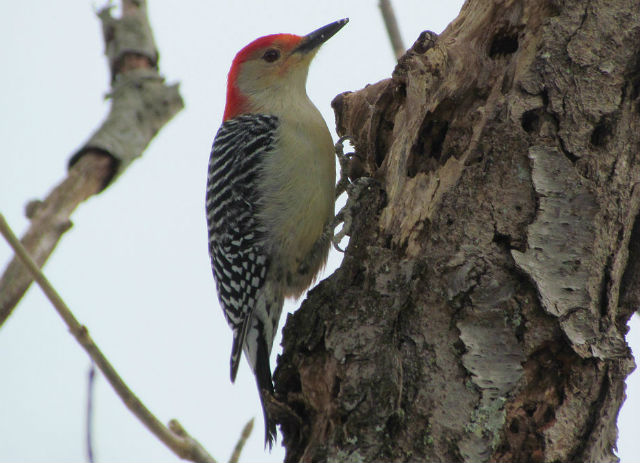
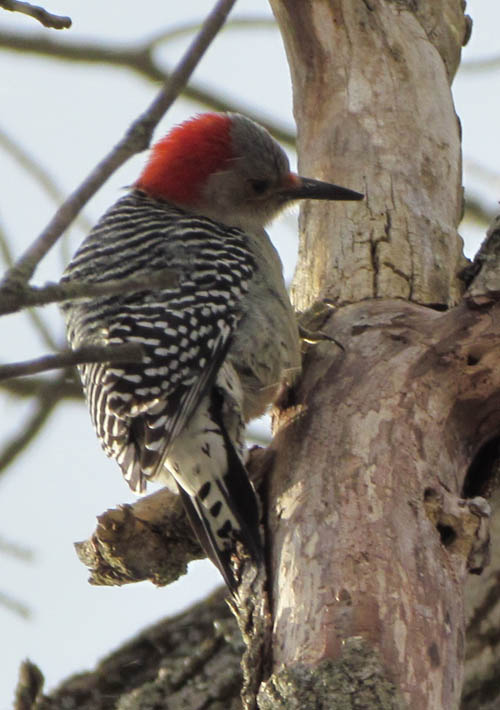
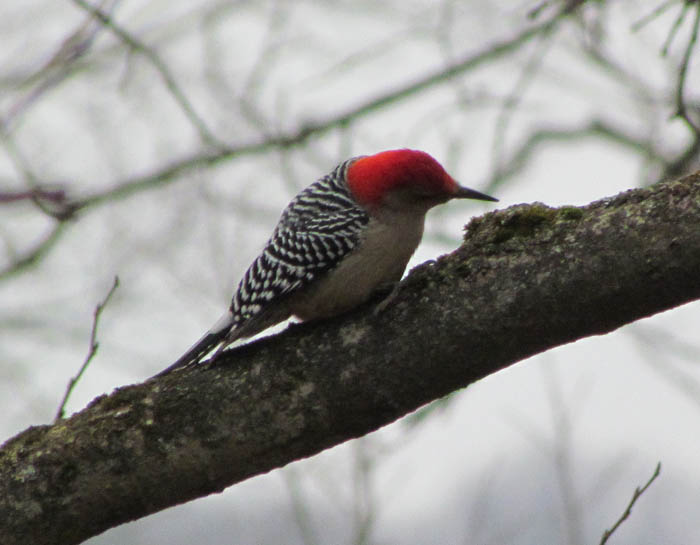
This woodpecker has a black and white zebra-like pattern on its back and a red neck. Males have red on the crowns of their heads, while females do not.

red-bellied woodpecker_2228

As it name implies, there is a red patch edged with yellow on the belly, but it is often hidden from view as the bird perches or feeds against a tree trunk.

red-belly_9871

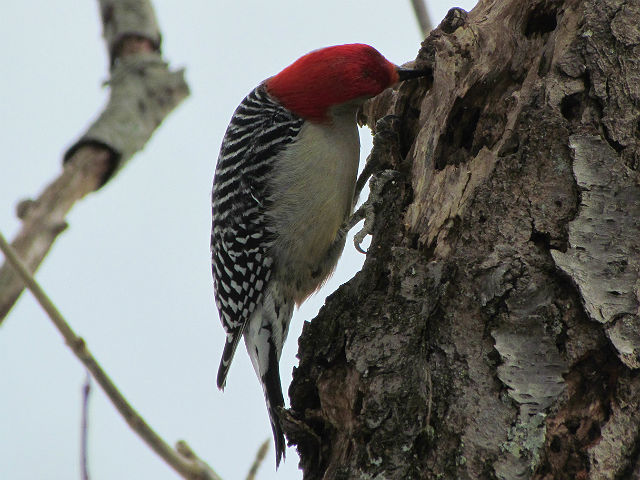
Unlike most birds, Red-bellied Woodpeckers have a zygodactyl toe arrangement. What the heck does that mean, you ask? Answer: Two toes face forward and two face backward. This enables the woodpecker to grasp the bark of tree trunks as it looks for food.

redbelly_0004

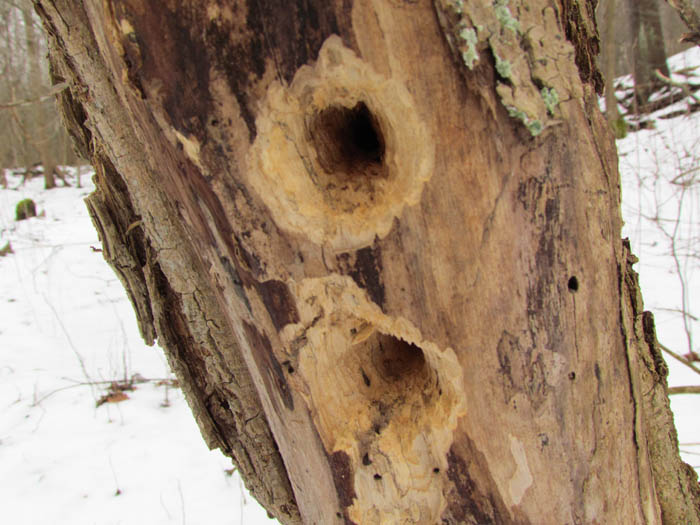
These birds tend to live in old forests with large hardwood trees. Their nests are built in cavities carved into tree trunks.

red-bellied woodpecker_2227

Red-bellied woodpeckers have been seen playing. They play by flying and dodging around trees as if they were trying to escape a predator.

redbelly_9567

Male woodpeckers do not sing well, so they use another strategy to appeal to potential mates. In the Spring, woodpeckers are especially attracted to any sound that resonates, including aluminum shed roofs and even the hoods of cars. These birds often utilize man-made objects to get the word out.

Red-belly Woodpecker_9764

They eat a wide variety of fruits, nuts, seeds, berries and tree sap, as well as insects. They are frequent visitors to bird feeders – including mine.

Third Eye Herp
E-mail

Spined Micrathena

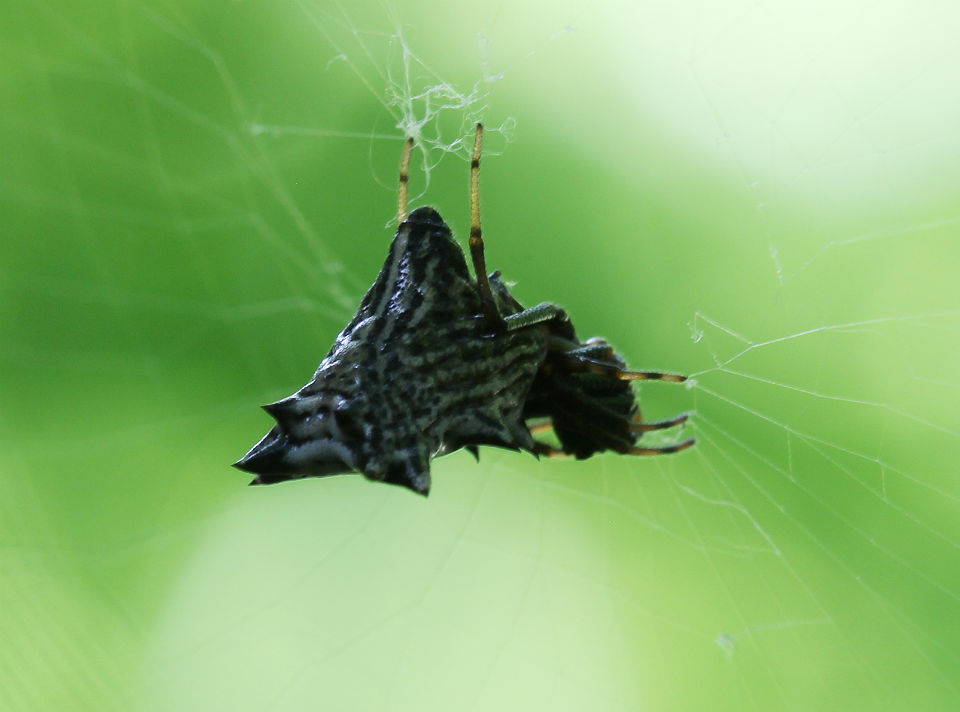
If you’ve ever walked through a spider web in the woods, chances are it was a micrathena’s web. As an added “bonus” they tend to make their webs at face level.

spined micrathena_09c

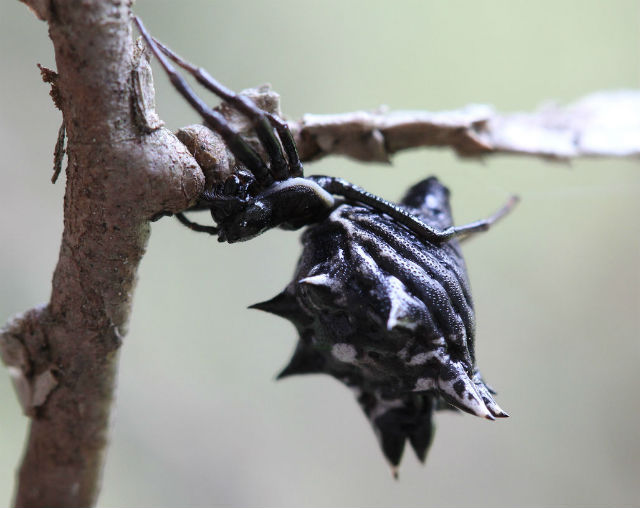
This is a small species, about 1/2 inch long, with a chunky abdomen with ten spines on it. The abdomen can vary in color, but is usually it is whitish, yellow, or brownish-black. Only female Spined Micrathenas build webs. Male are about half the size of females. They only have a couple of spines and a much flatter abdomen.

Spined Micrathena_2172

To trap prey, this spider builgs her web between shrubs or small trees, three to seven feet off the ground. Insects that try to fly in between the trees don’t see the web and get caught.

spined micrathena 009c

The female Spined Micrathena eats her web each evening and constructs a new web the following morning. I had one that is living in my front yard this past Summer, and she built each web in the same spot.

spined micrathena_3686

In the daytime the spider hangs out in the center of her web, with her head pointing down. As soon as she feels the vibrations of prey trapped in her web, she runs to bite it. These spiders are slow and clums and many insects escape before they are caught.

Male Spined Micrathenas don’t build webs, though they do weave a “mating thread.” The male finds a female’s web, and weaves his mating thread onto her web. When he’s ready, he quickly runs out and mates with her. Males often do not survive the encounter.

spined micrathena_1299a

This is a small, yet very cool spider that I usually enjoy coming across (unless I walk face-first into one of their webs).

Third Eye Herp
E-mail

Dwarf American Toad

dwarf american toad_5530

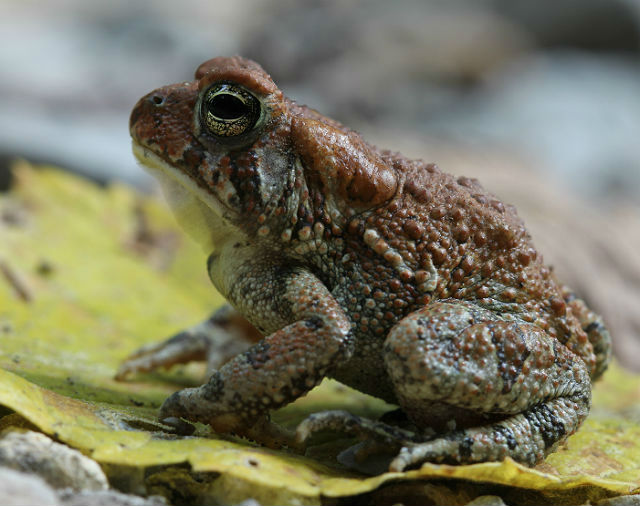
I love toads and finding a new type while on a herping adventure is always a thrill. In October, while visiting southern Illinois, I came across a couple of examples of this little gem.

dwarf american toad_3248

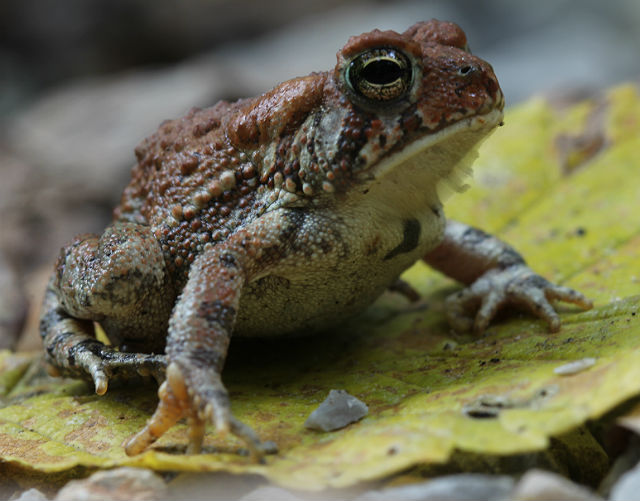
As the name implies, the Dwarf American Toad is rather small – about 1-1/2 to 2-1/2 inches. These creatures are often brick red in color without any distinct pattern. The bumps behind their eyes are called paratoid glands; they produce a foul-smelling, toxic chemical. This keeps some predators from trying to eat these toads.

dwarf american toad_3252

These amphibians are found in most of the south central region of the United States. They live in habitats ranging from forests, open fields and pastures and even residential areas – as long as the habitat contains leaf litter, sandy or loamy soil for burrowing, moist hiding places, and an abundance of food.

dwarf american toad_3253

Toads are most often seen and heard in the Spring when they are breeding. They are also seen frequently in the Fall when they look for new places to live and hibernate. They are mostly active at night.

dwarf american toad_3254

Dwarf American Toad are predators and they eat a lot. Insects, spiders, earthworms, snails, and slugs make up most of their diet, but they will eat just about anything that fits in their mouths. They catch food by lashing out with their sticky tongues to grab prey. If the prey is large, they will use their arms to stuff it into their mouths.

dwarf american toad_3258

This amphibian’s Latin subspecies name, charlesmithi is in honor of its discoverer, Charles Clinton Smith – an American naturalist and educator in the early 1900s.

Third Eye Herp
E-mail

Virginia Pine

Virginia Pine_7783

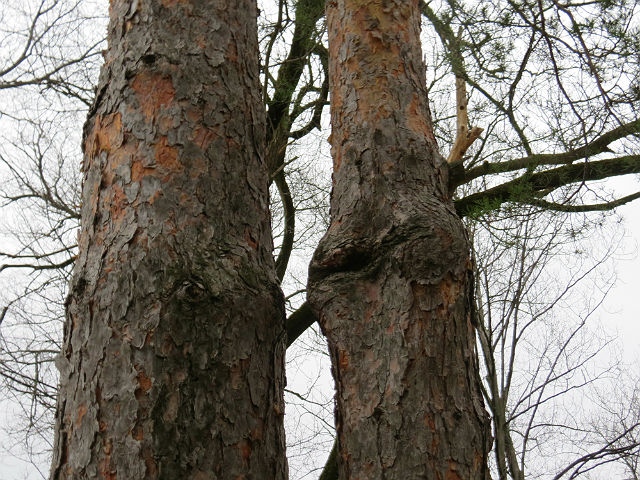
Virginia Pine are small to medium-sized pine trees, growing up to 60 feet. They have long, spreading branches and reddish brown bark.

Virginia Pine_7670

Their pine cones are small and oval-shaped, up to two-and-a-half inches long; small seeds come from the cones. Their short yellow-green needles are paired and are often twisted.

Virginia Pine_7671

I have these trees growing in my front and back yard – they don’t fare well in forests, because thay have shallow roots and must have plenty of sun to survive. They eventually get pushed out by larger trees. Because of this, Virginia Pines are good pioneer plants, meaning they are some of the first trees to take over a field.

Virginia Pine_7767

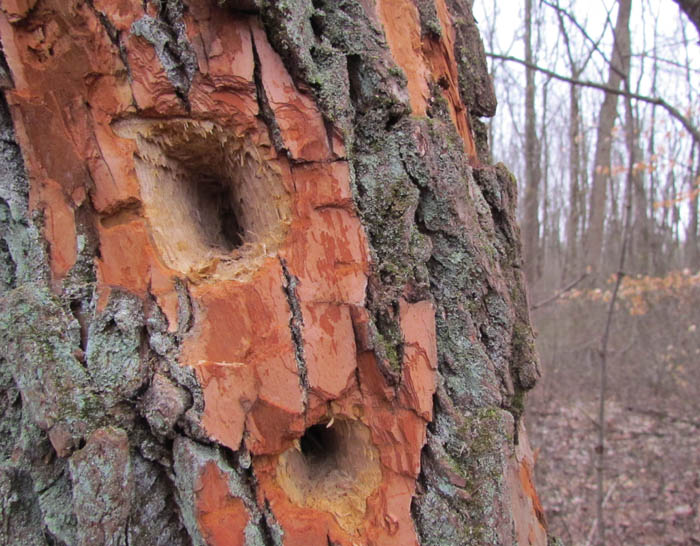
Virginia Pine seeds are consumed by many birds and small mammals. These animals help spread the seeds by carrying them to new places. These trees are a favorite of woodpeckers, because of the soft wood in older trees.

virginia pine_0118

Another enjoyable aspect of this tree is its easy-to-remember scientific name – Pinus virginiana.

Third Eye Herp
E-mail

Central Stoneroller

central stoneroller_7518

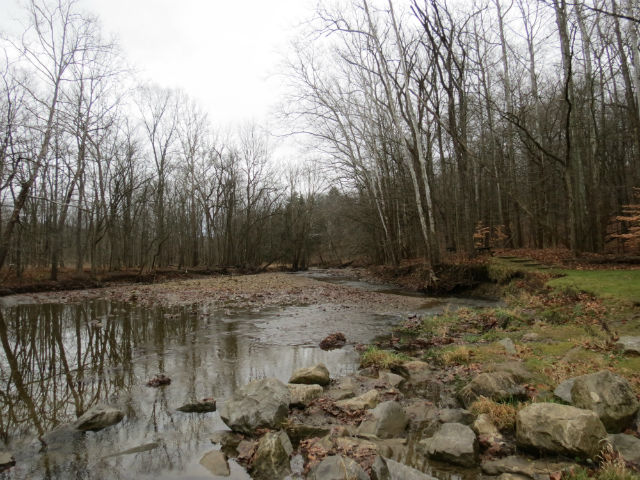
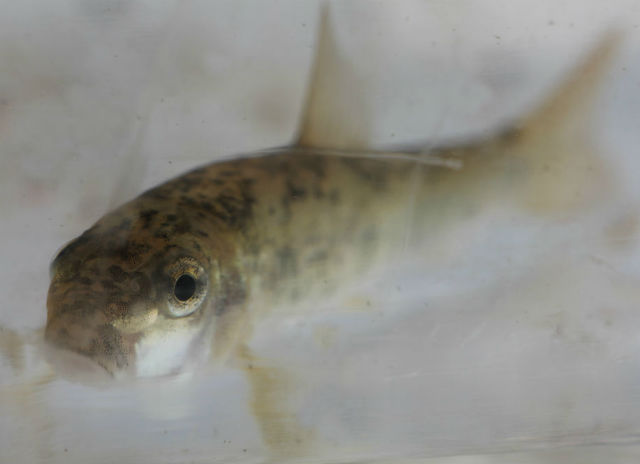
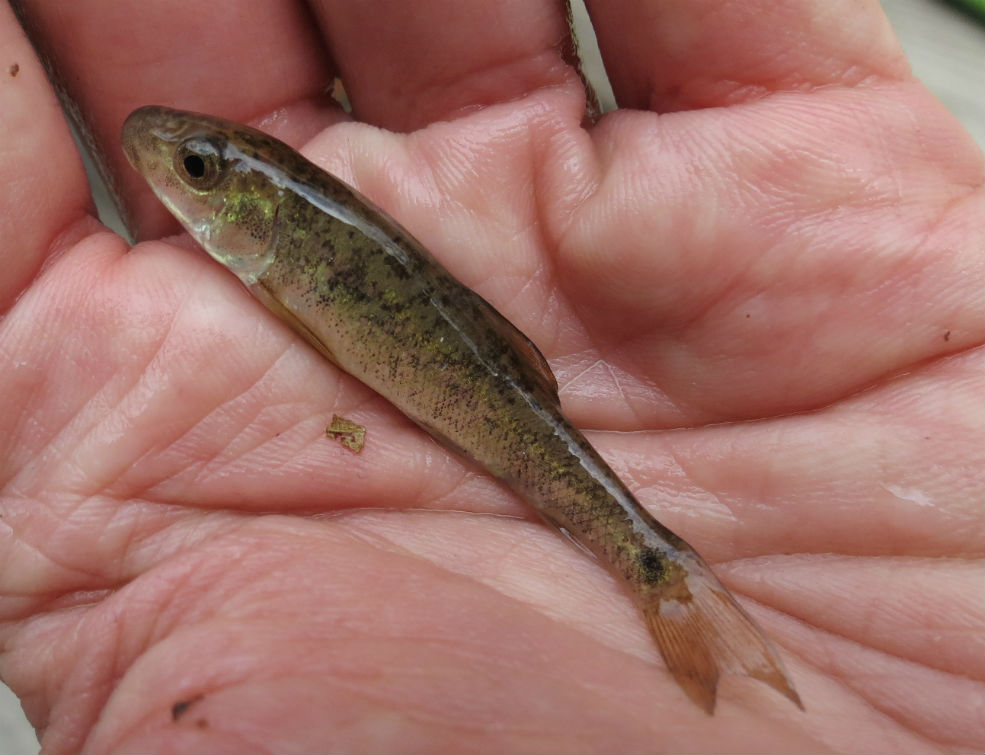
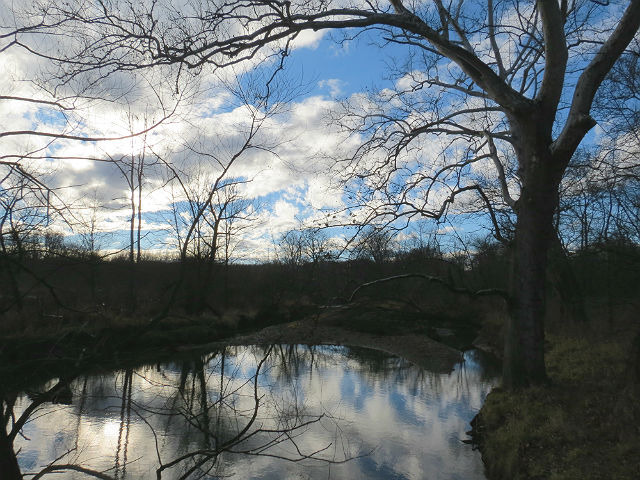
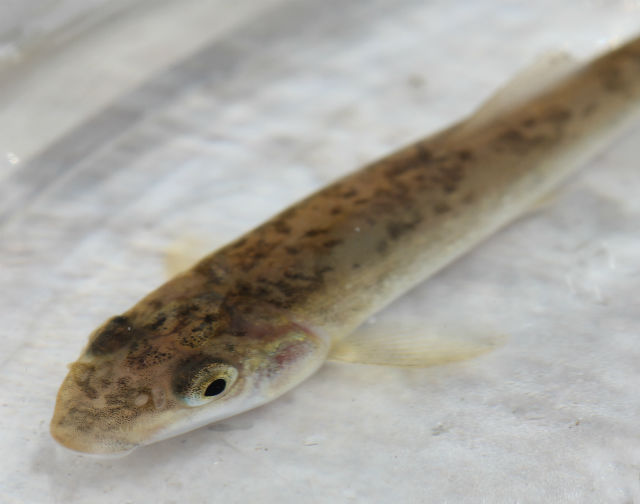
After spending a bit of time exploring this creek, a caught a cool fish. The common name for this fish, “central stoneroller,” comes from the behavior of the male excavating a nest by moving gravel with its nose.

central stoneroller_640

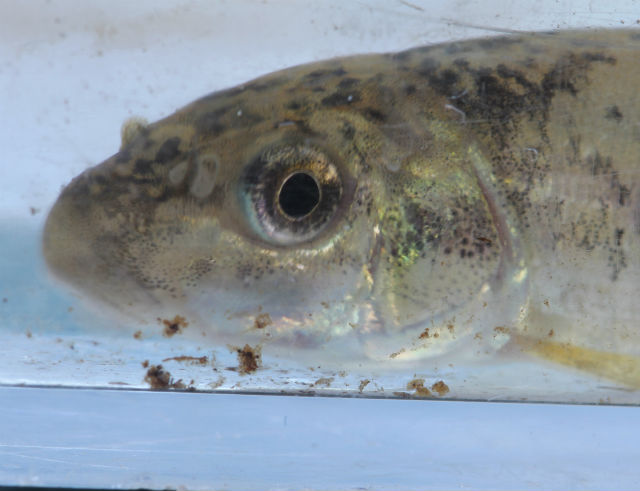
These are moderately stout, brownish colored minnows with small eyes and short, rounded fins. The snout is bluntly rounded and projects beyond their nearly horizontal mouth. Their mouth is white.

central stoneroller_5754

The Central Stoneroller is found throughout Ohio in moderate to high gradient streams with sand to gravel bottoms. They prefer riffle areas where riffles and pools alternate in rapid succession. Adults range in length from 3 to 5 inches, but they can reach 7 inches and males are generally larger than females.

Central Stoneroller_2061

They feed by scraping algae and and other organic matter from rocks and logs with the spade-like extension of their lower jaw. It is classified as a grazing minnow in its feeding behavior, and large schools of these fish often feed together.

Central Stoneroller_1929

The Central Stoneroller belongs to the Minnow and Carp family of fish. It goes by several other names: Dough Belly, Racehorse Chub, Rotgut Minnow, Steel-backed Chub, Stone Luger, Stoneroller, and Tallow-mouth Minnow.

Third Eye Herp
E-mail

Red Squirrel

red squirrel 7313
The Red Squirrel is a small squirrel (compared to the Gray Squirrel and Fox Squirrel) with reddish to reddish-gray fur on top and a white underside. It has white around its eyes. Its tail is not as long or bushy as the tail of other tree squirrels. In the Summer, the red squirrel may have a black stripe on its sides.

red squirrel 0988

Its curved front claws and powerful hind legs make it a very good climber and jumper. The Red Squirrel can reside in pine, deciduous (trees with leaves) and mixed pine-deciduous forests.

red squirrel 9574

This mammal eats a wide variety of foods including insects, seeds, bark, nuts, fruits, mushrooms and pine cones. In the Autumn it will remove green pine cones from trees and store them in the ground. It also stores nuts and seeds in piles or under logs, at the base of trees and underground.

red squirrel 7276

It doesn’t always find or eat all of the seeds and nuts it has stored. Because of this, the Red Squirrel plays an important role in spreading seeds throughout the forest. This animal also drinks tree sap from maple trees. It bites a tree until the sap flows out and returns to drink it after the water in the sap has evaporated.

red squirrel 1421

The Red Squirrel is very vocal and chatters, growls and screeches. You can usually hear more of these forest creatures than you can see. Its bright eyes, perky disposition and chattering, rattling call add to the “personality” of the forest.

Third Eye Herp
E-mail

Northern Map Turtle

map turtle_4668

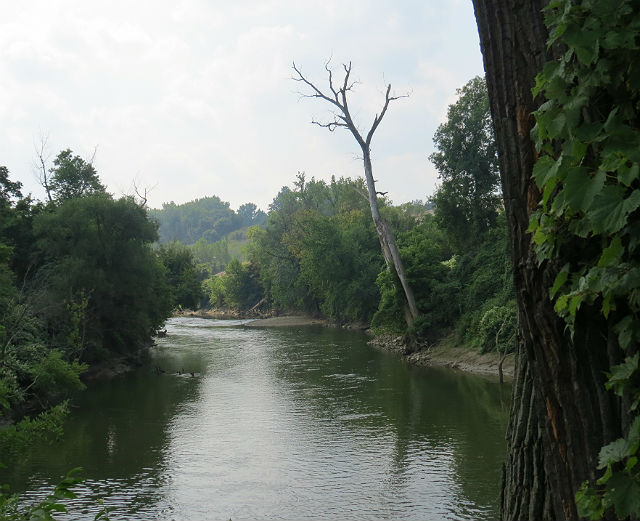
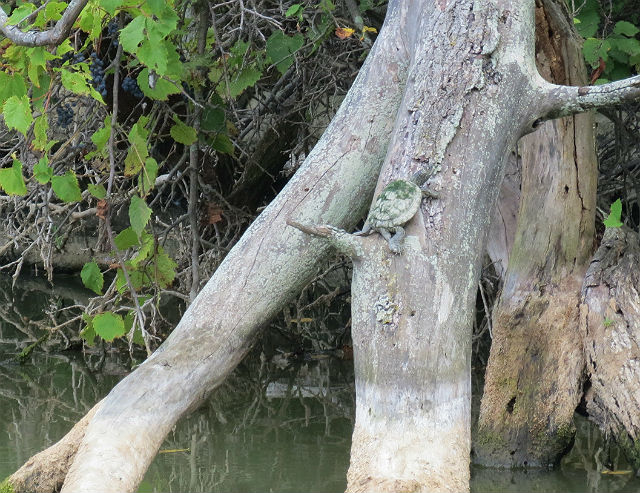
Walking along the Ohio & Erie Canal Towpath this Summer I encountered a turtle that I had never seen in the wild before. Its Latin species name is geographica and both this and its common name “map turtle,” refer to the markings on the skin and shell.

map turtle_4658

Part of the difficulty in finding this turtle is that it prefers to live in large rivers and is very wary, diving into the water at the slightest disturbance. It prefers large bodies of water and areas with fallen trees and other debris for basking. These turtles are more often found in rivers than in lakes or ponds.

map turtle_4649

Northern Map Turtles are more carnivorous than most other water turtles. Adult females have wide heads and broad, flat crushing surfaces in their mouths which they use to feed on molluscs, their primary prey, as well as insects and crayfish.

map turtle_4612

It is not unusual to see these turtles walking around under the ice, for they are among the very last turtles to go into hibernation – if they go at all – and among the earliest to reappear in spring.

map turtle_4631

The female of this species attains a shell length of about 10 inches, while the male’s seldom exceeds five inches. These reptiles are found throughout the eastern half of the USA and northward into southern Canada. In addition to being called Map Turtles, they are also known as Sawback Turtles. Whatever you call it, it was awesome to see this reptile in the wild!

Third Eye Herp
E-mail

Bald-faced Hornet

Bald-faced Hornet_6996

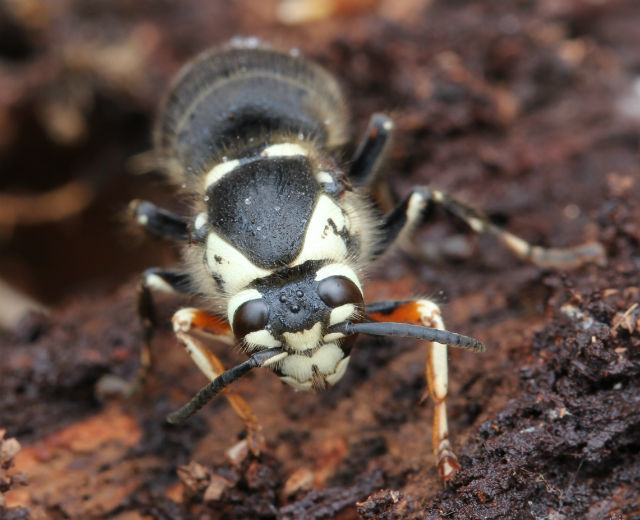
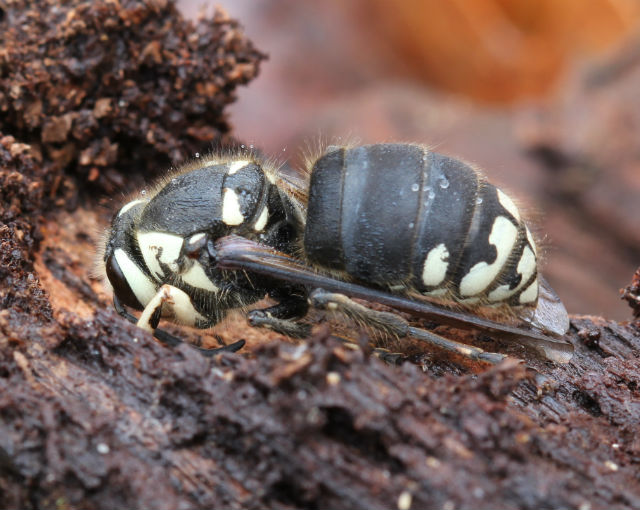
It may be December, but a walk through the woods can still yield insect life, if you are willing to turn a few logs. Earlier in the week I found this hardy creature.

Bald-faced Hornet_4070

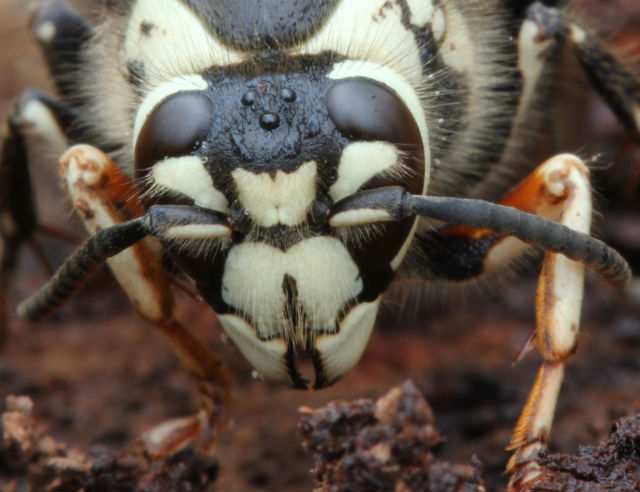
This insect gets the first part of its name from the ivory-white markings on the face. Despite the second part of its name, the Bald-faced Hornet is not a “true” hornet, rather it is a a type of yellowjacket.

Bald-faced Hornet_4077

Fertilized queens like this one overwinter in protected places such as in hollow trees, rock piles, under bark and in the walls and attics of buildings.

Bald-faced Hornet_4069

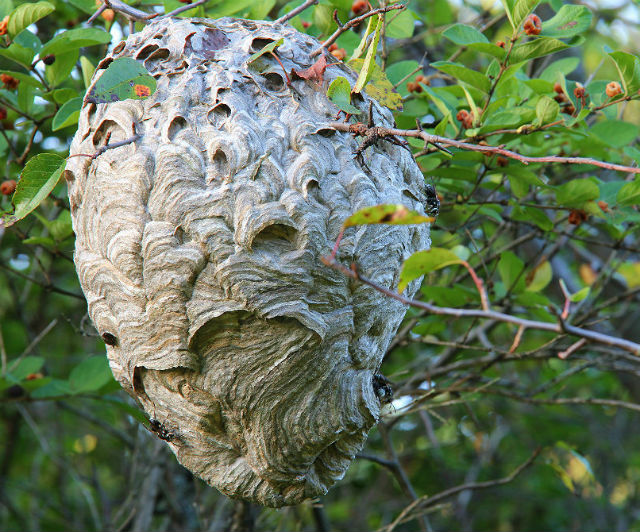
In springtime, she collects cellulose from rotting wood by chewing it. She then adds her saliva and creates a paste to make a papery material with which to construct a football shaped, grey paper-like nest.

Bald-faced Hornet 057

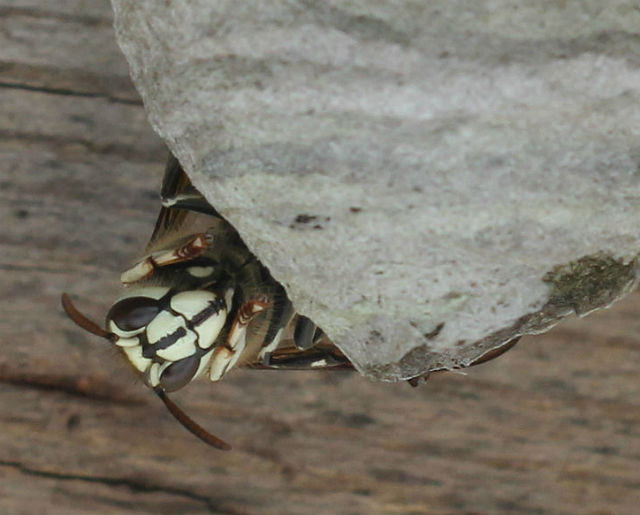
The queen creates a few brood cells within the nest and deposits eggs in them and feeds the larvae when they hatch. This Bald-faced Hornet built her nest on my deck in the summer.

Bald-faced Hornet 119

Though they don’t have much of a “fan base,” Bald-faced Hornets are considered a beneficial insect because they reduce populations of unwanted insects (including other yellowjackets) and pollinate flowers when they are searching for nectar…and I think they are a cool creature to come across on a December hike.
Third Eye Herp
E-mail