Are you ready to spend a week in the desert? Click here for the full trip report.

Are you ready to spend a week in the desert? Click here for the full trip report.
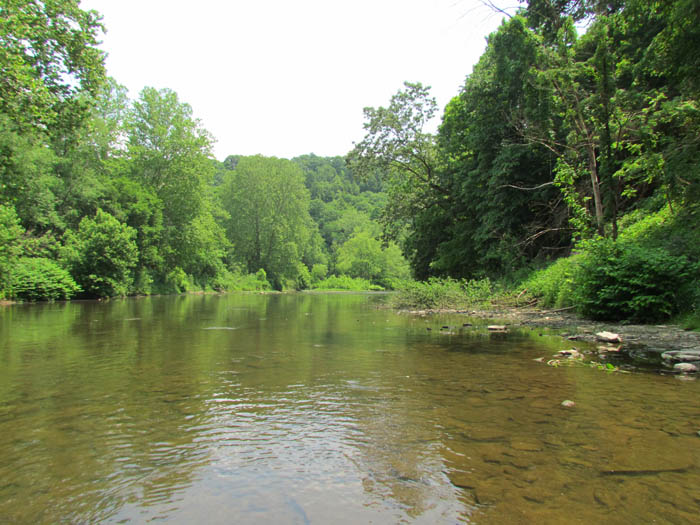
This creek near the Ohio/Pennsylvania border looked like a cool place to explore.
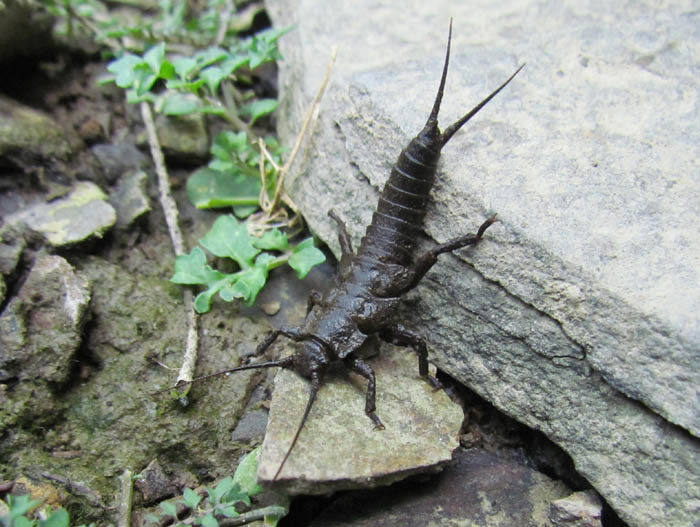
There were many cool freshwater invertebrates to be found, such as this: a Stonefly larva.
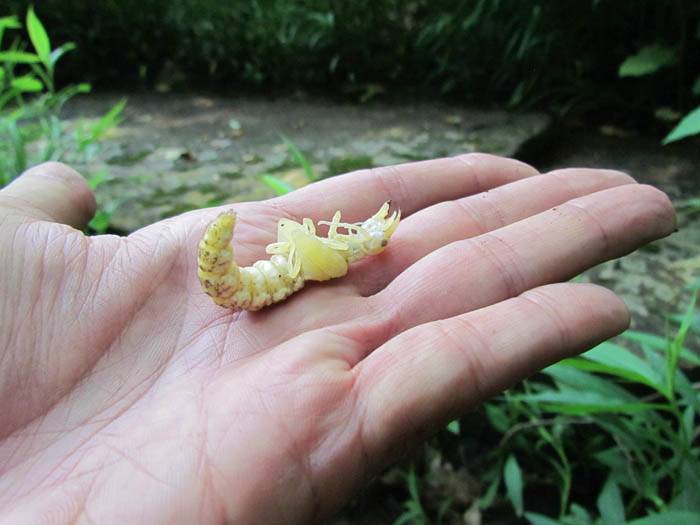
A bit later I found something that I’ve never seen before, a Dobsonfly pupa. It was pretty weird looking.
Turning rocks in the creek revealed a number of small fish like darters, suckers and catfish. One rock had a large creature under it that at first I thought was a catfish. Then I realized that it had no fins and I was looking at an amphibian that I have not seen in the wild for over 20 years – a Mudpuppy.
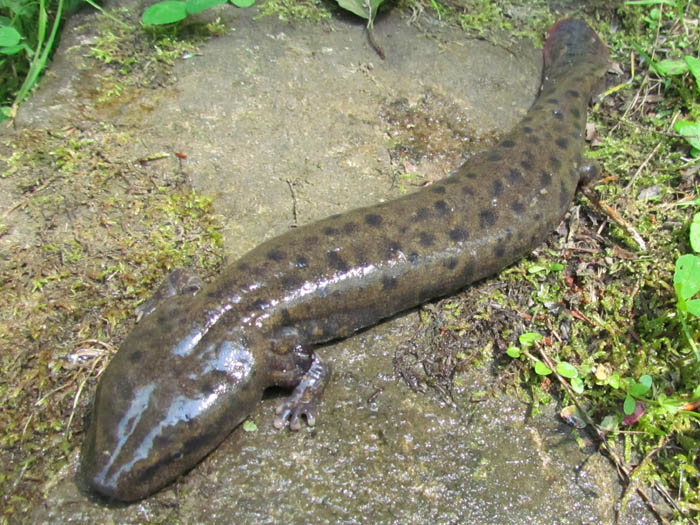
Mudpuppies are large aquatic salamanders. They have gills and spend their entire life underwater. They show a degree of parental care, tending to their eggs after attaching them to submerged stones and logs.

Mudpuppies prefer shallow lakes and streams that have slow moving water and rocks to hide under. They have a voracious appetite and eat a large variety of food items, which enable them to survive under diverse conditions. These foods include worms, water insects, crayfish, mollusks and small fish.

It was awesome to see one of these big amphibians in the wild again!
Lately I’ve been coming across these red-eyed insects in tall fields of vegetation. These are known as “periodical cicadas” and they’re only found in eastern North America. All other cicadas are “annual cicadas.”

Larva for periodical cicadas live underground and develop very slowly, taking either 13 or 17 years (depending on the species) to reach adulthood. Here’s a larva that I found in central Ohio, though I’ve also seen them in my yard on occasion, under rocks and logs.
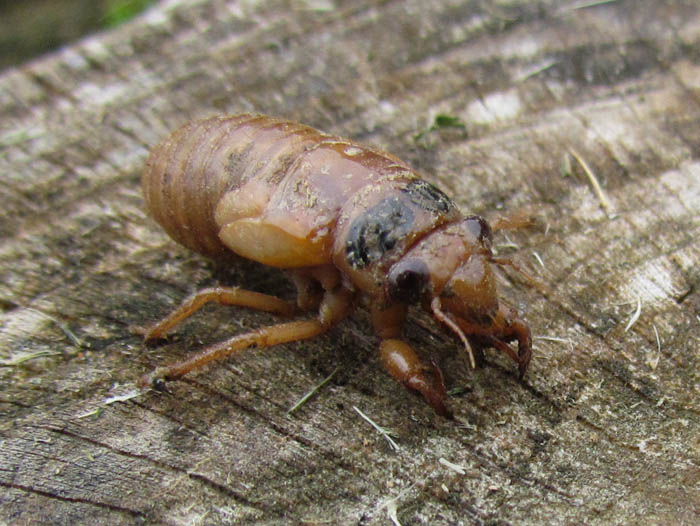
Populations of periodical cicadas are called broods, and each emerge all at once as winged adults – sometimes by the thousands…and sometimes by the millions.

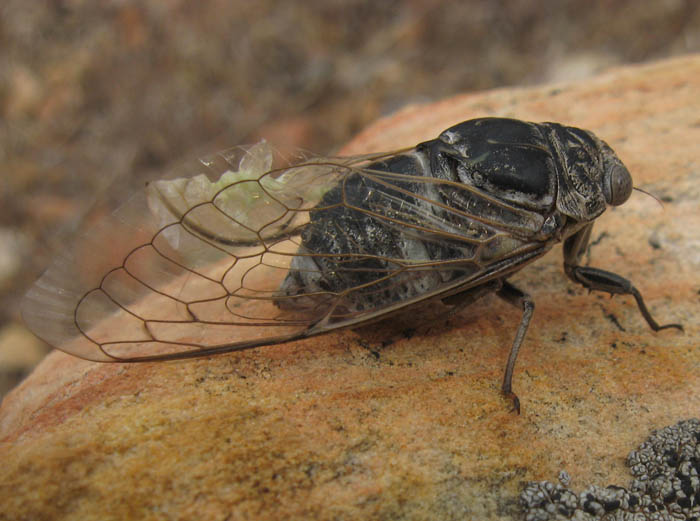
Annual cicadas don’t have red eyes. Their loud, buzzing sawlike call is the loudest in the insect world. Adults don’t eat and only live a few days. Here’s one that I found in Las Vegas in 2009.
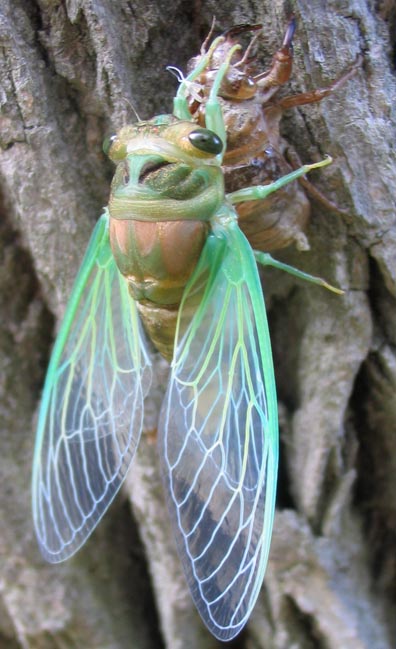
When the larva emerges from underground the back of its shell splits and a soft, pale adult emerges. It takes a few hours for the insect’s exoskelton to harden and for its wings to dry. Here’s one that I saw on a tree in my backyard that had recently emerged.
This insect’s amazing lifestyle has been a source of fascination since ancient times. Several cultures, such as the ancient Chinese, regarded these insects as powerful symbols of rebirth. Here’s a carved jade sculpture of a cicada that I got in China Town (San Francisco) – it resides on my kitchen windowsill.

I’ve been seeing a fair amount of this graceful, sword-leaved plant with three showy, downward-curved, violet, boldly veined petal-like sepals.

This is a native iris of northeastern wetlands. Insects attracted to its sepals facilitate the plant’s pollination.

Northern Blue Flag Iris can be seen in marshes, swamps, wet meadows, along shorelines, and in forested wetlands. It grows to be about three feet tall.

Its rootstalks have long been used in herbal medicine to treat a variety of ailments.
Ever since I was a kid and read about an elusive seven-foot white snake with a bold, black pattern which lives underground, I’ve been fascinated with Northern Pine Snakes. I’ve been keeping them for a number of years. Here is one of my females laying eggs today. She lined the first half-dozen up neatly in a row.

The secretive nature of pine snakes makes them difficult to find in the wild. They spend much of their time in the subterranean tunnels of pocket gophers, their favorite food item. Occasionally a Northern Pine will enter an animal burrow, consume the inhabitants, and then take possession of the burrow.

Not only do wild Northern Pine Snakes dig nests for egg-laying purposes, but they also practice communal nesting. Multiple pine snakes return to the same site year after year to deposit eggs. A pine snake burrow is truly an impressive sight, with the sand pile excavated by the female sometimes being 2 or 3 feet across.

Northern Pine Snakes prefer to inhabit pine barrens and sand-hill regions throughout their scattered range.

Walking along the banks of the Cuyahoga River, I heard a noise in the underbrush. Further investigation triggered something to leap away in a series of zigzag jumps. It was the tell-tale getaway method of the Northern Leopard Frog.

Eventually I caught up with the creature. It’s easy to see how this spotted frog gets its name. I consider the Northern Leopard Frog to be the most beautiful of all of North America’s amphibians. It is also common and can be found (along with other species of Leopard Frogs) across much of the United States.

In late winter while searching for Wood Frogs and Spring Peepers, I’d occasionally hear the calls from this frog, which sound like a person snoring. The leopard frog can even call under water.

Northern Leopard Frogs utilize many aquatic habitats, such as marshes, ponds, lakes, rivers, or streams. During warmer months, these frogs may leave the water and venture into fields or pastures to forage. Their diet consists mainly of insects.
The Ohio Erie Canal Towpath is a very popular destination for hikers and bikers. A decent variety and quantity of reptiles and amphibians can be found in the canal, Cuyahoga River, and surrounding areas. Here’s a Black Rat Snake that I saw crossing the Towpath this morning.

The Black Rat is not only Ohio’s largest snake, it is also my favorite snake. Occasionally reaching over 8 feet in length, it is typically about half that size.

When first encountered, a Black Rat Snake tends to freeze and remain motionless. Though if it feels threatened, the snake adopts a “stand up and fight” stance, with its forebody raised up and head drawn back in an S-curve.

This is essentially a forest-loving snake, often found in clearings or at the edge of where wooded areas meet fields. It is an accomplished climber and can sometimes be found high in trees.
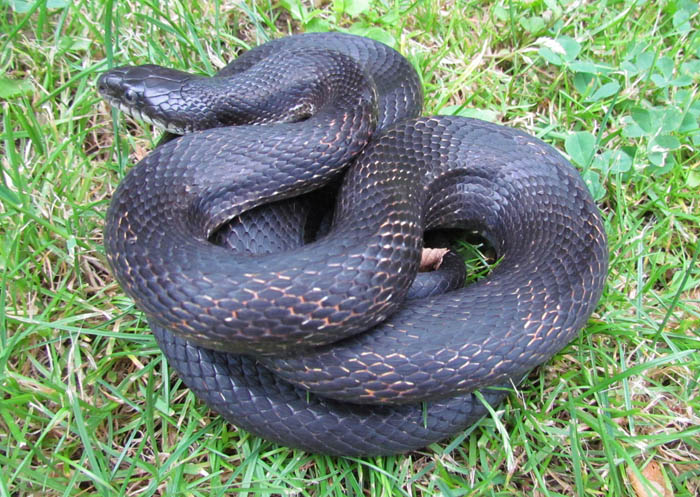
The Black Rat Snake, a constrictor, is perhaps Ohio’s most beneficial snake to man in regards to the role it plays in controlling destructive rodents.

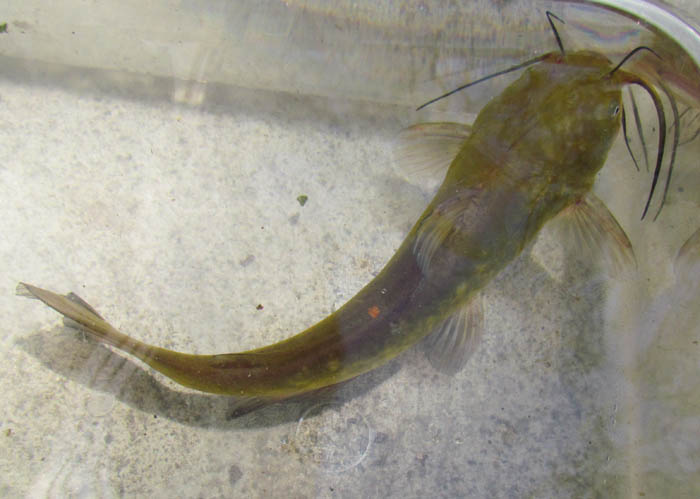
It’s springtime so my friend Dale and I decided to do some fishing. I caught a Yellow Bullhead.

A member of the same family as catfish, the Yellow Bullhead has whisker-like barbels, no scales, and sharp spines that can stab unwary anglers.

True to their name, Yellow Bullheads are yellowish brown. They are voracious scavengers, typically feeding at night on a variety of plant and animal material.
It was a great day for fishing.

Oh, and just in case you’re wondering, Dale knows how to catch fish too.

Walking the Canal Towpath as well as a few large ponds, it’s easy to observe the activities of a medium-sized mammal – the Muskrat. The Muskrat is not really a rat, but it is a rodent. It has thick brown fur and a long, scaly tail. They can grow up to two feet long (with tail). Their back feet are webbed for swimming, and their eyes and ears are very small.
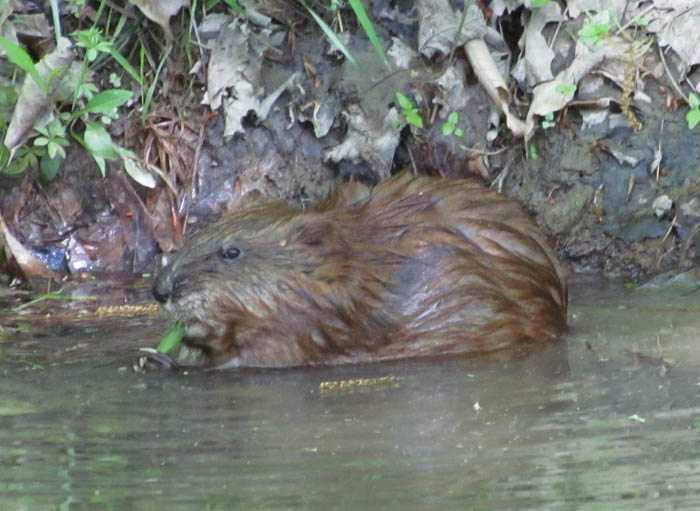
Muskrats build a house, called a lodge, out of aquatic plants, especially cattails. It can be up to eight feet across and five feet high. A Muskrat lodge looks a lot like a Beaver lodge. Muskrats also burrow holes in stream or pond banks. When a Muskrat builds a lodge, it helps a lot of animals besides itself. Lodges can also be the home of snakes, turtles, frogs, toads, and waterfowl.

When Muskrats eat large numbers of cattails, they open up areas of shallow water. This provides nest sites for water birds, and allows other water plants to grow.

Muskrats are excellent swimmers and can stay under water for 15 minutes. Their tails are used to steer, and they can swim forwards and backwards. They can even chew food underwater.

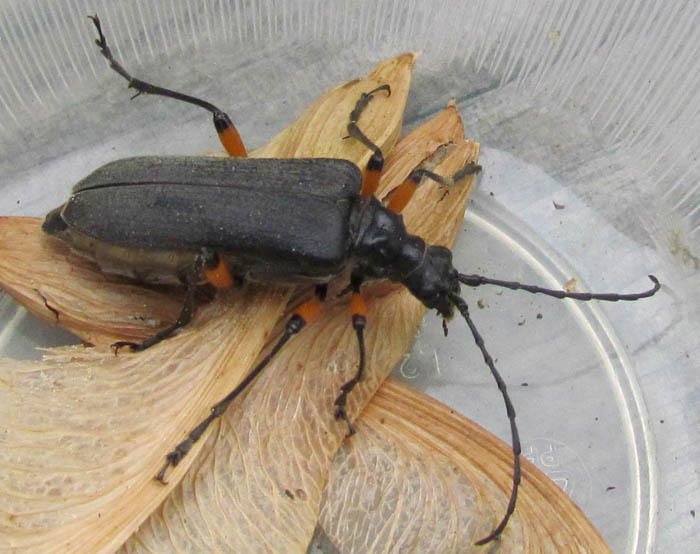
Have you ever nearly freaked out when you unexpectedly found a large bug crawling on you? That’s what happened today after I came in from doing some yardwork and saw this huge beetle crawling on my shirt.

It’s a Majestic Long-horned Beetle. Longhorns are characterized by extremely long antennae, which are often as long as or longer than the beetle’s body.

There are 35,000 species of Long-horned Beetles worldwide. These are large, impressive insects. Here’s a different species that I caught in Nevada. It’s the biggest beetle I’ve ever seen in the wild.

The Majestic’s habitat is mature ash trees (I have several Blue Ash Trees in my backyard). They spend their larval life boring in wood and are sometimes known as Wood Boring Beetles.