Eastern Fox Snake

Eastern Fox Snake_6375

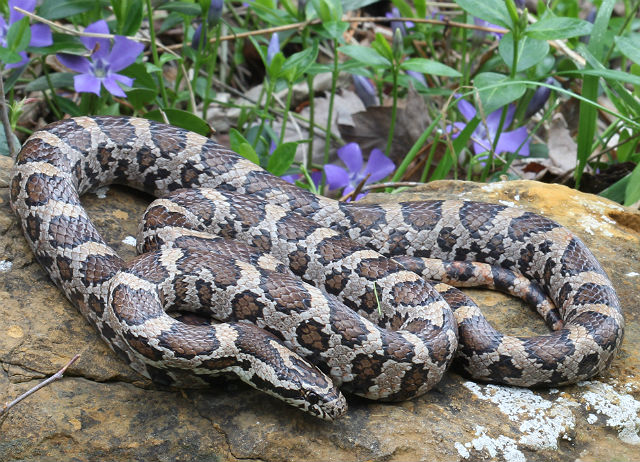
Listed as a “Species of Concern” by the Ohio Division of Wildlife, this reptile has a limited distribution around Lakes Erie and Huron in the United States and Canada. In Ohio, it is known from Lucas, Wood, Ottawa, Sandusky and Erie counties.
Eastern Fox Snake_6550

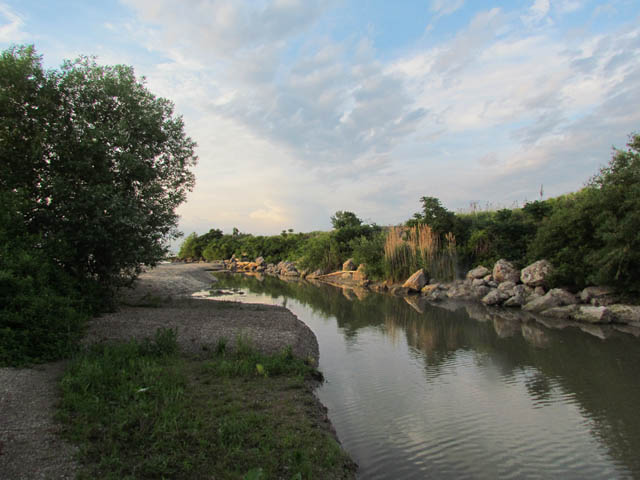
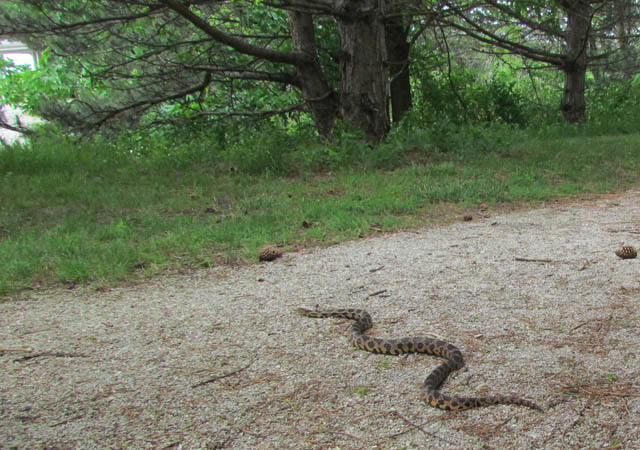
I was vacationing in this snake’s habitat earlier in the month and I came across one crawling alongside a hiking trail. Eastern Fox Snakes are major predators of small rodents, which can be agricultural pests. The fox snake is an excellent climber and a good swimmer, but it is seen more often on the ground. It frequents fields near streams and marshes.
Eastern Fox Snake_6543

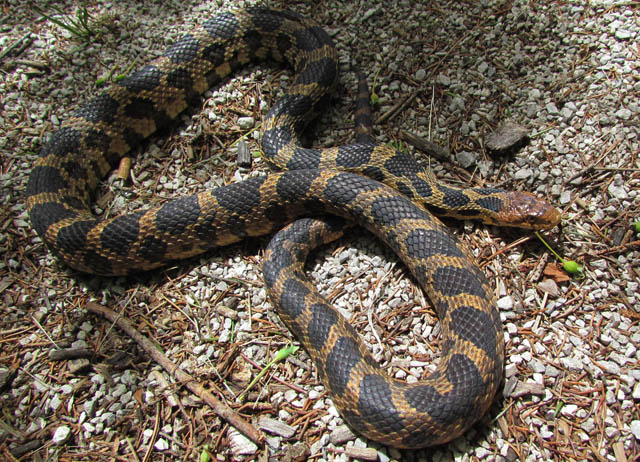
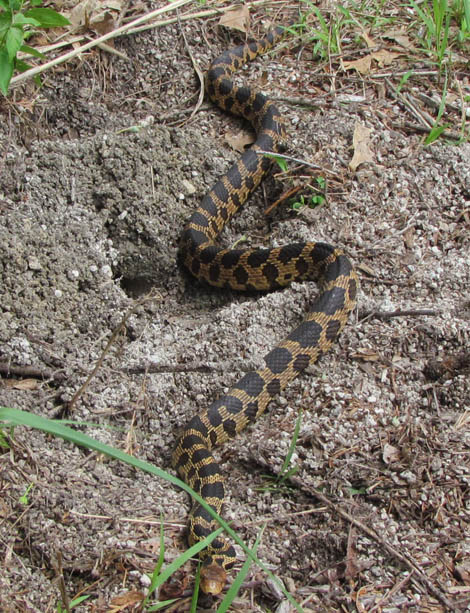
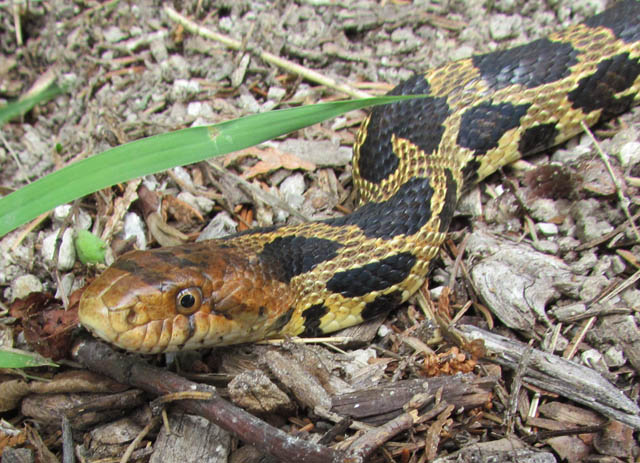
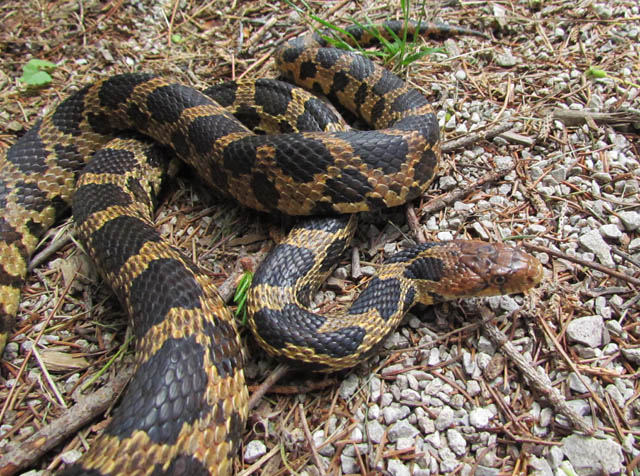
This constrictor is one of Ohio’s largest snakes and may grow to over five feet long. Its color is a yellowish to golden brown, with series of large dark brown blotches. The head is often more red or “coppery” than the body.
Eastern Fox Snake_6544

One of the defense mechanisms of the fox snake is to vibrate its tail as a warning to potential predators. This creates a sound similar to that of a rattlesnake by the rustling of the leaves beneath the snake.
Eastern Fox Snake_6561

When an Eastern Fox Snake is threatened it will secrete a strong substance which some say smells like the musty scent of a fox, hence the name “fox snake.”
Eastern Fox Snake_6559

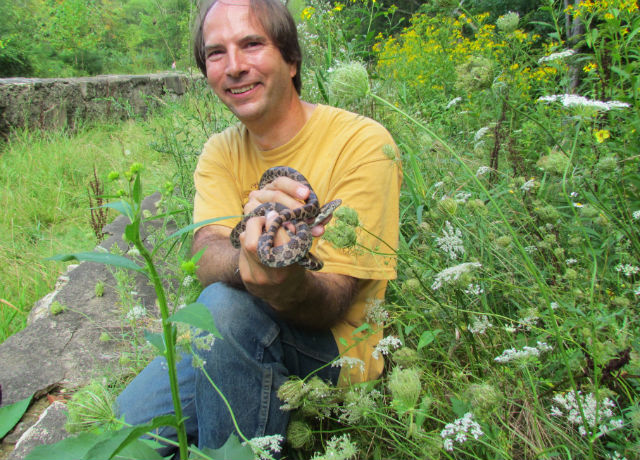
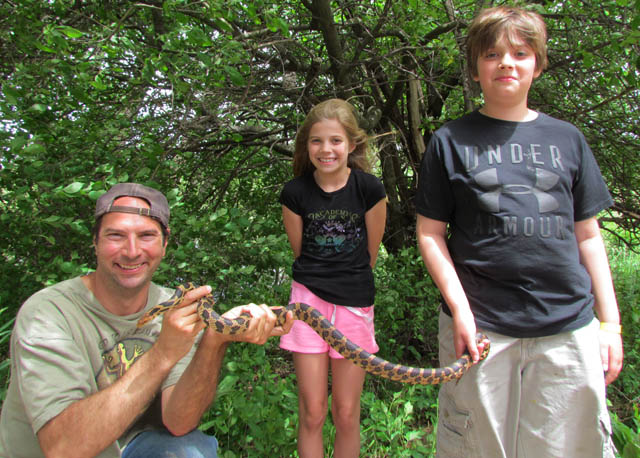
It was awesome to come across one of these snakes once again in the wild and better still to share the experience with my niece and nephew.
Eastern Fox Snake_6566

Third Eye Herp
E-mail

Spotted Leafnose Snake

Spotted Leafnose Snake_7985

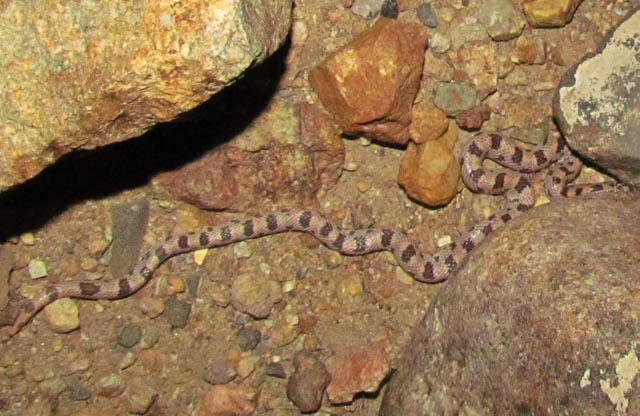
While driving in the Arizona desert at night, I spotted a silvery reflection in the road up ahead. I knew it must be a snake, so I hit the brakes, got out of the car, and went over to investigate.

Spotted Leafnose Snake_7809

The Spotted Leafnose Snake lives in areas with mixed sandy soil and rocky or firm soil with some brush cover. It is a small serpent, growing to about 18 inches. It is secretive and nocturnal. This snake preys extensively on small lizards and their eggs, especially geckos.

Spotted Leafnose Snake_7801

The genus name Phyllorhynchus is composed of two Greek words; phyllos, meaning “leaf”, and rhynchos, meaning “nose” or “snout.”

Spotted Leafnose Snake_7811

The enlarged nose scale is believed to aid in burrowing, though this little snake, because of its super-secretive nature, is still shrouded in mystery.

Spotted Leafnose Snake_7812

After taking a few photographs, I carried the snake to the other side of the road and released it into the night.

Third Eye Herp
E-mail

Northern Red-bellied Snake

redbelly snake_3787

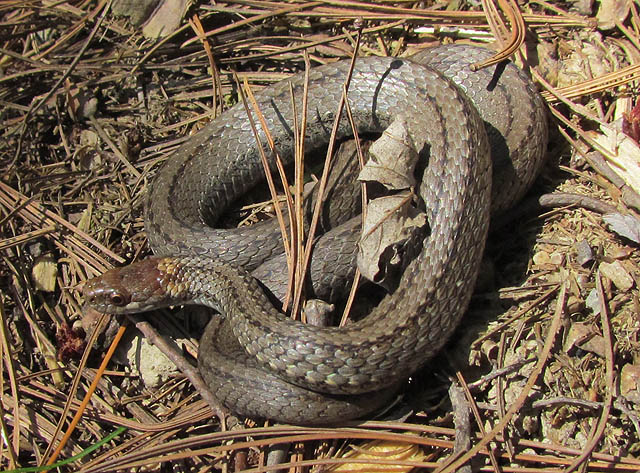
While exploring this clearing in the woods, I came across a snake that I have not seen in quite some time and have never seen in Cuyahoga County.

redbelly_3491

This is Ohio’s smallest snake, growing to only 8-10 inches long. Northern Red-bellied Snakes feed mostly on slugs and snails. This species has jaw and tooth adaptations that assist in the extraction of snails from their shells.

redbelly snake_3417

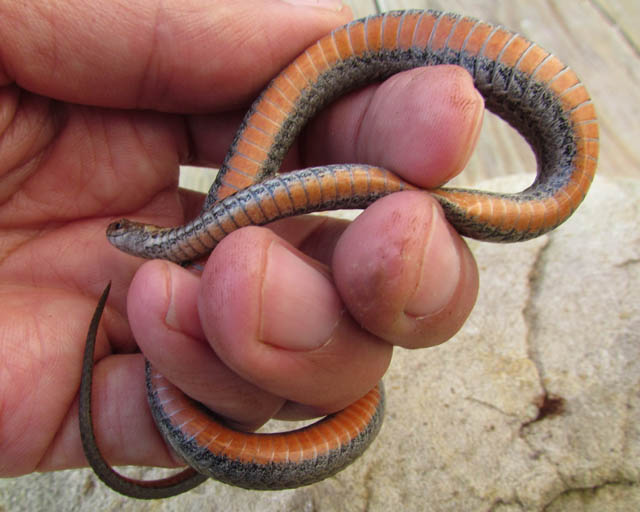
A uniformly scarlet or red-orange belly and three well-defined light blotches immediately behind the head are this reptile’s most distinctive characteristics. It is very secretive and spends most of its life hidden. Females give birth to 7 or 8 tiny, live offspring in late Summer.

redbelly snake_3419

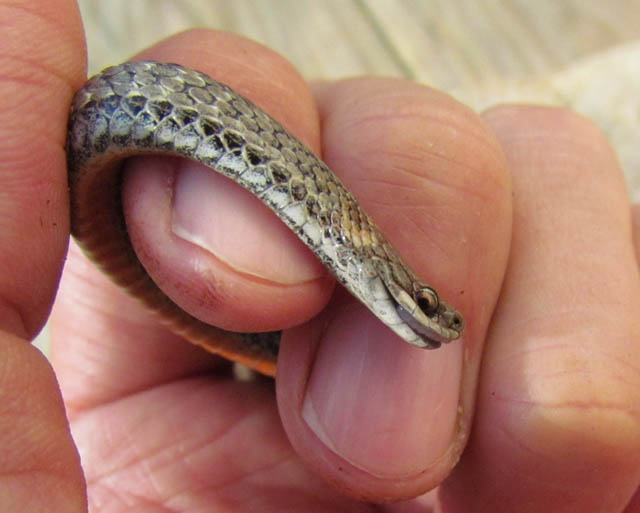
The Northern Red-bellied Snake has the curious habit of curling its upper lip and exposing its teeth when it feels threatened, though it is harmless and makes no attempt to bite.

redbelly snake_3411

Another defense is exposing its bright red belly, which may be enough to startle a predator momentarily and allow the snake escape.

redbelly snake_3415

Having and unexpected encounter with this remarkable reptile made for an excellent outing.

Third Eye Herp
E-mail

Western Yellow-belly Racer

Western Yellow-belly Racer_1622

Racers are slender and agile snakes. Adults are uniformly pale blue, bluish-green, olive-green, gray, or brown above. As you might expect, the belly is cream to bright yellow in color.

Western Yellow-belly Racer_1612

Young racers are marked with brown blotches which disappear as the reptile grows. Racers are a family of snakes that can be found across the United States, living in abandoned fields, sparse brushy areas and clearings in woodlands.

This species is active by day and will take shelter under rocks, brush or in animal burrows if pursued. As the name implies, they can move very fast – especially through tall grass or brush.

Western Yellow-belly Racer_1619

This snake averages about three feet in length and does not constrict its prey, rather it simply overpowers it. The racer’s food items includes frogs, lizards, snakes, small rodents and birds.

Western Yellow-belly Racer_1620

I enjoy coming across them in the morning when the weather is cool and they are somewhat easy to catch. Their large scales have a satiny shine and their alert, curious nature gives them a special appeal.

Third Eye Herp
E-mail

Northern Brown Snake

With back-to-back weekend days sunny and in the 60s, I decided to see what was up on the Erie Canal Towpath today.

It wasn’t long before I spotted this in the vegetation.

I removed it and set it on the pavement to get a better look at it. A Northern Brown Snake was the first wild snake that I ever caught; which took place on a family outing a long time ago. Later I learned that I could ride my bike to vacant lots in Cleveland and find them. One summer my friends and I caught a total of 17 of them – all in the same lot and all under the same truck mudflap.

We grew up calling these snakes DeKay’s Snakes, which is a common name that is not used as much anymore. The snake is named is in honor of American zoologist James Ellsworth De Kay who collected the first specimen in Long Island. It’s Latin name, Storeria dekayi, honors zoologist D. Humphreys Storer and James De Kay. This is the only North American snake whose scientific name is a double honorific – that is, both the genus and species name honor people.

This reptile is often mistaken for a baby Garter Snake. It is usually less than a foot long and mainly eats worms and slugs. Like the Garter Snake, it gives birth to live offspring. This secretive snake does well in urban areas and they seem to coexist well with humans in city settings and can be found in gardens, city parks, vacant lots, and old cemeteries as well as Metroparks.

Dekay’s Snakes are usually some shade of tan with two parallel rows of dark spots down their backs. Sometimes they sport a broad, lighter stripe in between the rows of spots. Though they are harmless, when they get scared they puff up or flatten out, showing white skin between their scales.

Third Eye Herp
E-mail

Rough Green Snake

Crawling on and around the limestone bluffs were several slender and elegant Rough Green Snakes.

This is a mild-mannered snake that is often seen near water. It is frequently found climbing in low vegetation, where it blends in quite well – it is often overlooked because how well it can match its surroundings.

In the United States, their bright green coloration is only matched by their relative, the Smooth Green Snake.

They feed mainly on insects and spiders and are particularly fond of caterpillars. When captured, they never bite and are usually very gentle when held.

Third Eye Herp
E-mail

Eastern Milk Snake

A barn off in the distance looked like it would be good snake habitat. Snakes like clearings in the woods, where they can bask in the sun. They also like hiding under man-made objects like metal or wood that may be lying in the ground.

eastern20milk20snake20047

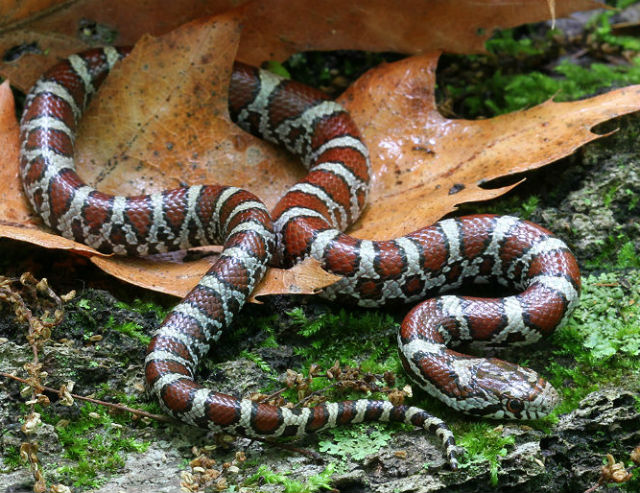
It turned out that the spot had a few Eastern Milk Snakes. Milk snakes get their name because “back in the day” they would often be seen hanging around barns. When farmers had low milk production from their cows, they accused the snakes of drinking milk right from the cows’ udders!

milk 128

This of course is silly, but the name stuck. Snakes like barns because one of their favorite foods, rodents, can also be found in and around them.

2013_08_29 079b

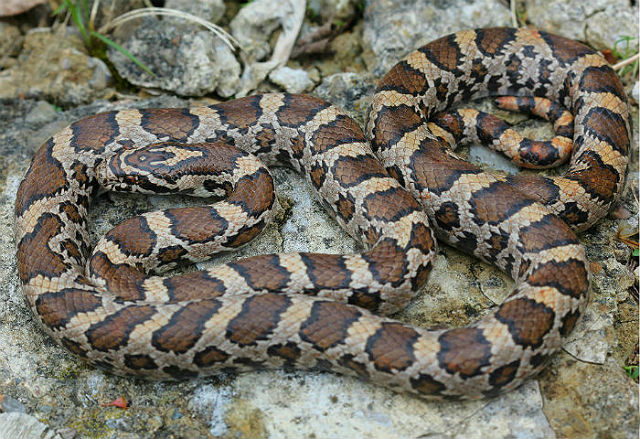
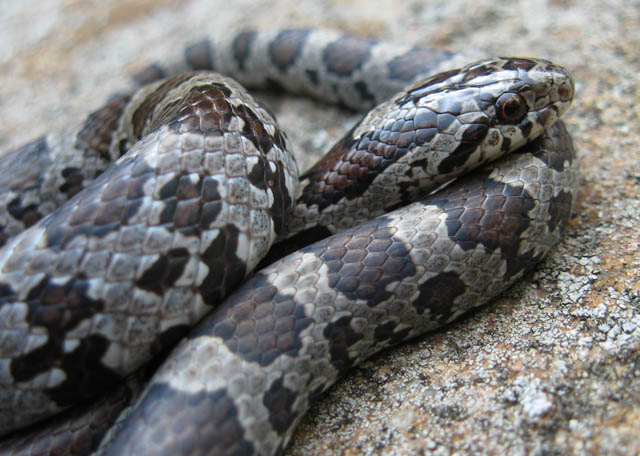
There are 25 subspecies of milk snakes, and the eastern is one of only a few which does not have red, yellow and black bands resembling a Coral Snake. These snakes have a light colored v-shaped or y-shaped patch on their neck and a checkered belly.

emilk_1874_zps51c786ef

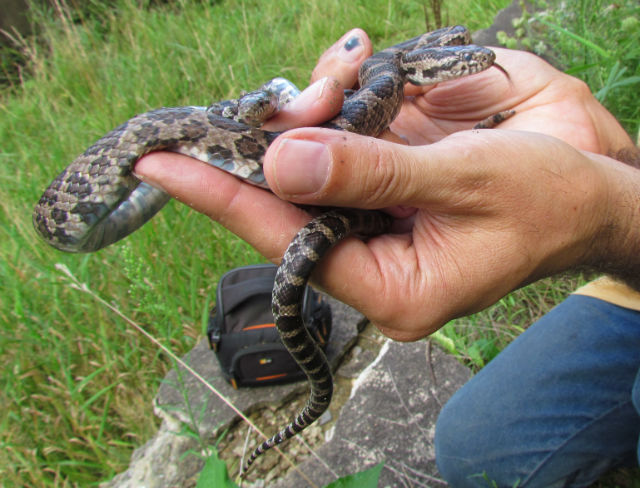
Although adults usually have brown blotches on a tan background; young Eastern Milks have maroon blotches on a gray background – over time the colors change.

milk 124

The Eastern Milk Snake is one of our only constricting snakes in Northeast Ohio. In addition to eating rodents, it also eats other snakes.

milk 138

This snake can be encountered throughout Ohio in a variety of habitats, including woods, meadows, and river bottoms and even within cities, where they occasionally enter buildings in search of mice.

2013_08_29 093b

Third Eye Herp
E-mail

Queen Snake

Walking along this creek, it was apparent that it contained a large number of crayfish.

They could be seen scurrying along the bottom, slowly exploring the surfaces of rocks, or rapidly backswimming away when they sensed my approach.

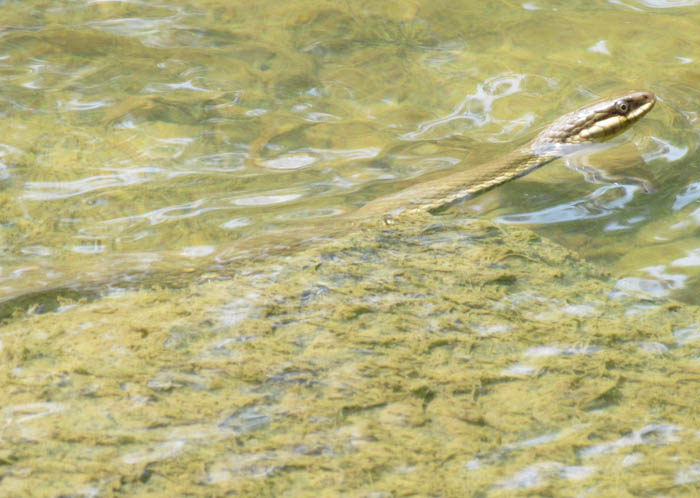
It wasn’t long before I came upon a Queen Snake, also in the water and actively exploring the rocks in the bed of the creek. It would swim over to a rock and poke around along and under the edges before moving on to another rock.

This snake is semi-aquatic and only eats one thing: crayfish. Not just any kind of crayfish, but those which have recently shed their exoskeleton and therefore are soft-bodied for a period of time before their shell hardens.

These are medium-sized snakes, typically about 2-3 feet in length. This particular snake is a female and probably carrying babies. Queen Snakes give birth to live offspring.

They often bask on overhanging shrubbery or tree branches at the water’s edge. When not basking or foraging, Queen Snakes often remain concealed beneath flat rocks on the shoreline.

Third Eye Herp
E-mail

Glossy Snake

This snake’s smooth, shiny scales distinguish it from the similar looking Gopher Snake, which has keeled dorsal scales. They are also smaller than gopher snakes, with narrow, pointed heads, and a variety of patterns and colors. Here’s one that I found in Arizona.

It is usually found in relatively flat, open, shrubby areas with sandy soil. This nocturnal ground-dweller is good burrower that spends the majority of its time underground. The Glossy Snake is a constrictor that feeds on small mammals, lizards, snakes, and birds.

It is a mild mannered snake that rarely attempts to bite. I haven’t seen one of these snakes in a few years, so I was stoked to come across one again in the wild.

Third Eye Herp
E-mail

Black Rat Snake

The Ohio Erie Canal Towpath is a very popular destination for hikers and bikers. A decent variety and quantity of reptiles and amphibians can be found in the canal, Cuyahoga River, and surrounding areas. Here’s a Black Rat Snake that I saw crossing the Towpath this morning.

The Black Rat is not only Ohio’s largest snake, it is also my favorite snake. Occasionally reaching over 8 feet in length, it is typically about half that size.

When first encountered, a Black Rat Snake tends to freeze and remain motionless. Though if it feels threatened, the snake adopts a “stand up and fight” stance, with its forebody raised up and head drawn back in an S-curve.

This is essentially a forest-loving snake, often found in clearings or at the edge of where wooded areas meet fields. It is an accomplished climber and can sometimes be found high in trees.

The Black Rat Snake, a constrictor, is perhaps Ohio’s most beneficial snake to man in regards to the role it plays in controlling destructive rodents.

Third Eye Herp
E-mail