Black Caterpillar Hunter

leveeroad_8075

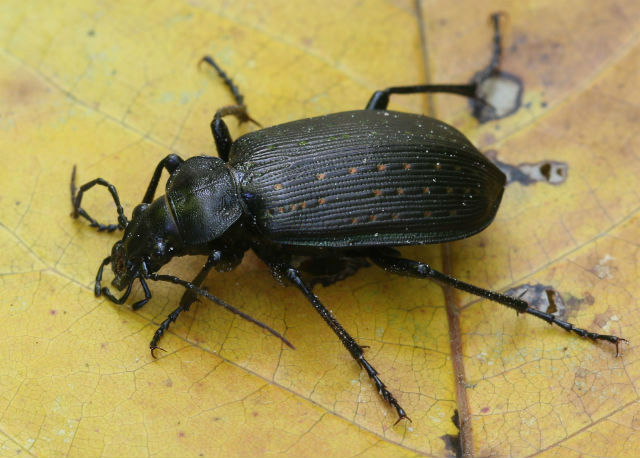
This It is a somewhat large beetle reaching about an inch in length that is more common in the southern United States than the north. It tends to roam at night and rest under rocks and debris in the daytime.
IMG_3362

This large, beautiful black beetle that is especially fond of caterpillars. Its favorite meal is the caterpillar of the dreaded Gypsy Moth. The Black Caterpillar Hunter, while found in the woods, can also be found in cultivated grounds, especially in city parks and gardens. Its large jaws help it to dispatch and devour its meals.

European Ground Beetle_3363

Although dark in color, it has hints of metallic green, blue, bronze and purple that look airbrushed. Its lifespan can range from 2 to 3 years, which is rather long for a beetle.

European Ground Beetle_3366

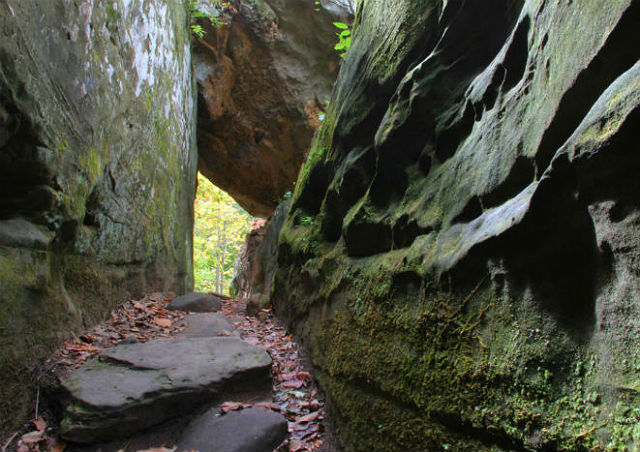
The Black Caterpillar Hunter secretes an unpleasant odor to deter would-be attackers. It is identified by its black body that is often ‘punched’ with small dots of red or gold lines  It was nice to get acquainted with this fine creature while out herping.
Third Eye Herp
E-mail

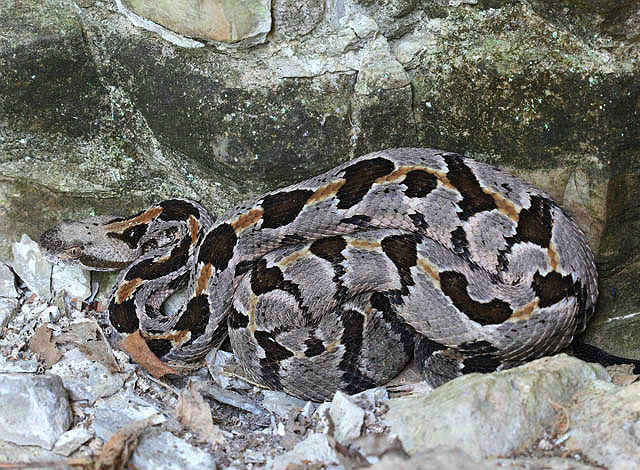
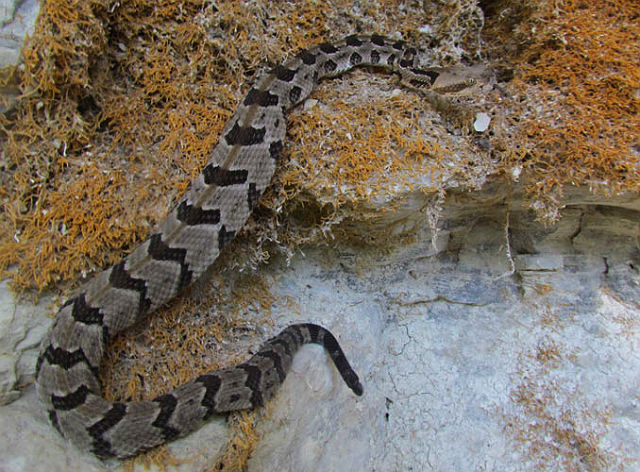
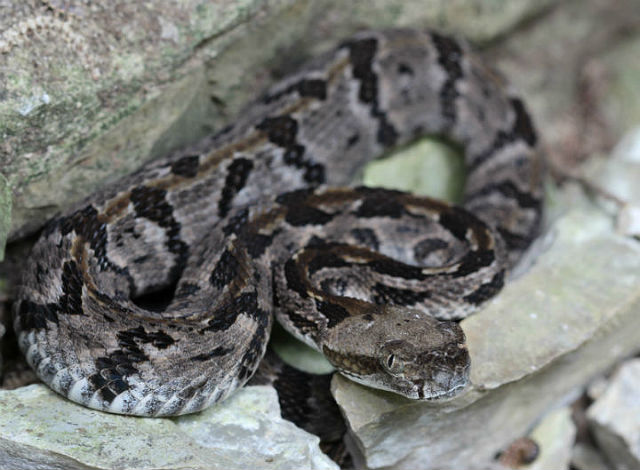
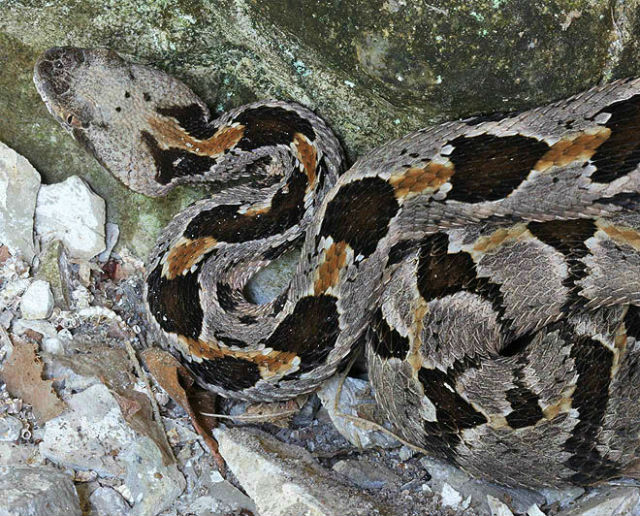
Timber Rattlesnake

giant city

Adaptable with a wide range, this is the only rattlesnake in most of the populous northeastern United States. This species is found in deciduous forests in rugged terrain. I have encountered them several northeast states, including southern Illinois on my trip there last month.

timber_1478

Adult Timber Rattlesnakes are typically from 3 to 5 feet in length. They have a pattern of dark brown or black crossbands on a yellowish brown or grayish background. The crossbands have irregular zig-zag edges, and may be V-shaped or M-shaped. Often a rust-colored stripe down the back is present.

sr_7098

This reptile is potentially one of North America’s most dangerous snakes, due to its long fangs, impressive size, and high venom yield; fortunately it tends to have a rather mild disposition. Contrary to popular belief, Timber Rattlesnakes are shy, retiring creatures that wish nothing more than to be left alone.

timber rattlesnake_8195

These serpents eat a wide range of small birds and mammals, including rodents, moles and rabbits. When it comes to hunting, they have a specialized adaptation. Like all pit vipers, these snakes have heat-sensitive pits located on each side of the head. These sensors help them hone in on warm blooded prey.

timber_1473

Timber Rattlesnakes give birth to live young in Autumn. When born, a young rattlesnake has a single “button” at the end of its tail. With each shed a new segment is added to its rattle. The segments are loosely attached and when the snake vibrates its tail they shake against one another, making the “rattle” sound.

timber_8208

Rattlesnakes are found only in the Americas.

Third Eye Herp
E-mail

Bald Cypress

bald cypress_7383

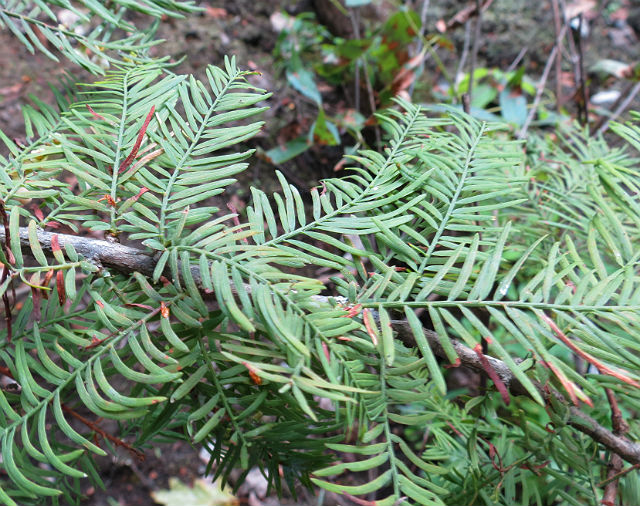
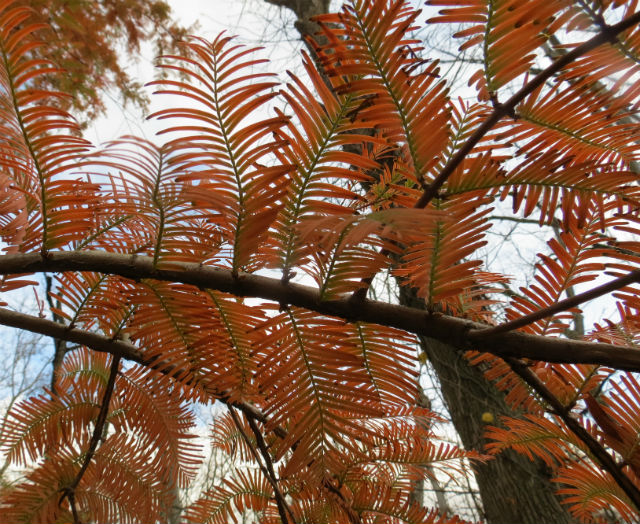
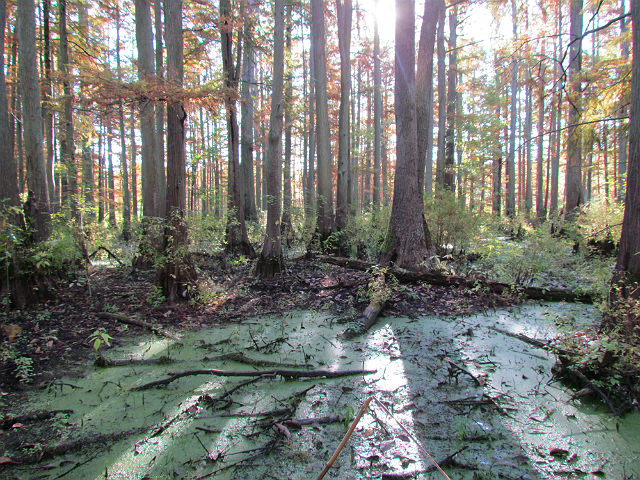
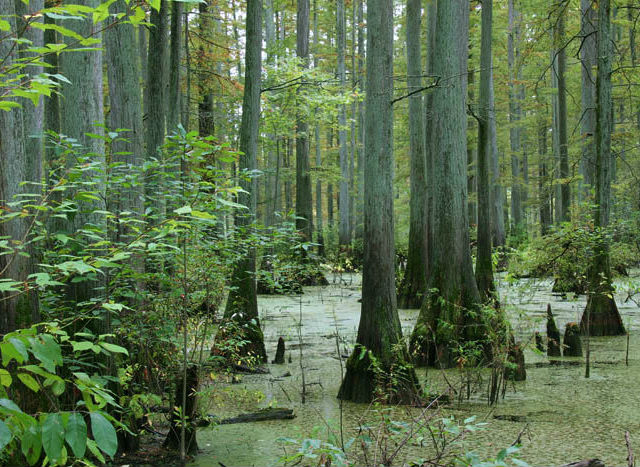
This is a classic tree of southern swamps. It resides in flooded areas because it out-competes with most other trees in this habutat. It is a is a deciduous conifer, so while a member of the Pine Tree Family, it looses its needles in the Winter months, hence the name “bald.”

bald cypress_7380

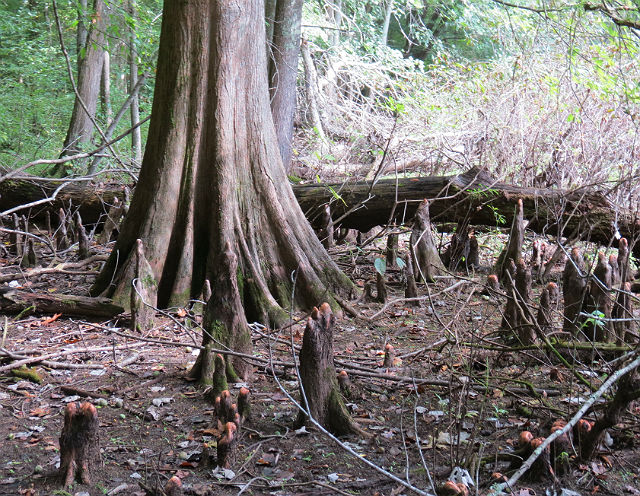
Bald Cypress trees growing in swamps have a peculiarity called “knees.” These are woody projections from the root system that go above the ground or water. Their function was once thought to be to provide oxygen to the roots, but a more likely purpose is for structural support and stability.

bald cypress_7382

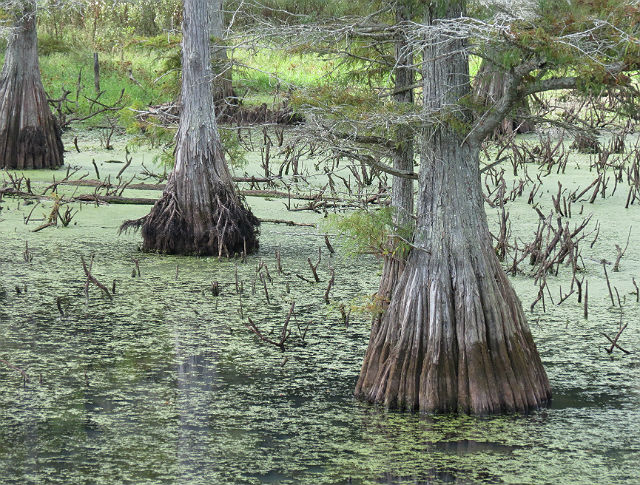
These are slow-growing, long-lived trees that regularly reach up to 600 years in age. Since they tend to grow along rivers and in wetlands, they are excellent at soaking up floodwaters and preventing erosion. They also trap pollutants and prevent them from spreading. The trunk base is swollen when the tree grows in water.
bald cypress_7371

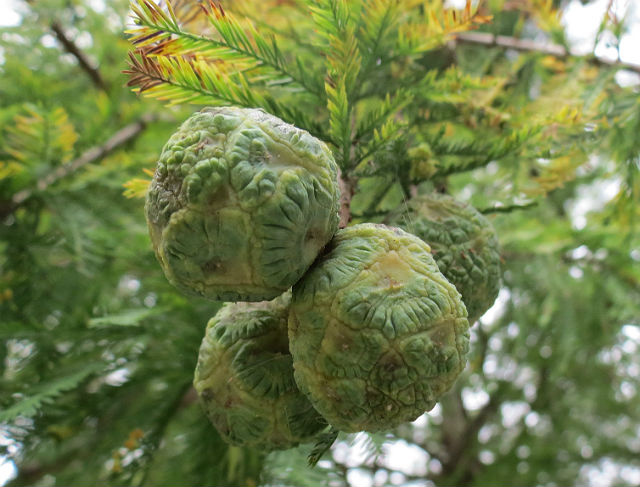
They have globose cones which turn from green to brownish-purple as they mature from October to December. The cones are measure 1/2 to 1-1/2 inches in diameter and have scales that break away after maturity. Each scale can bear two triangular seeds.

bald cypress_7454

Though I see them when visiting marshy, boggy places, like Heron Pond in southern Illinois, in yards in my home state of Ohio Bald Cypress is a popular ornamental tree, grown for its light, feathery foliage and orange-brown to dull red fall color. It thrives on a wide range of soils, including well-drained sites where it would not grow naturally due to the inability of the young seedlings to compete with other vegetation.

bald cypress_8866

I enjoy seeing this classic swampland inhabitants on my travels. Snakes, turtles, birds and other animals rely on Bald Cypress swamps for habitat, while bees, wood ducks and owls nest in its hollow trunks.

Third Eye Herp
E-mail

Mole Salamander

Mole Salamander_6563

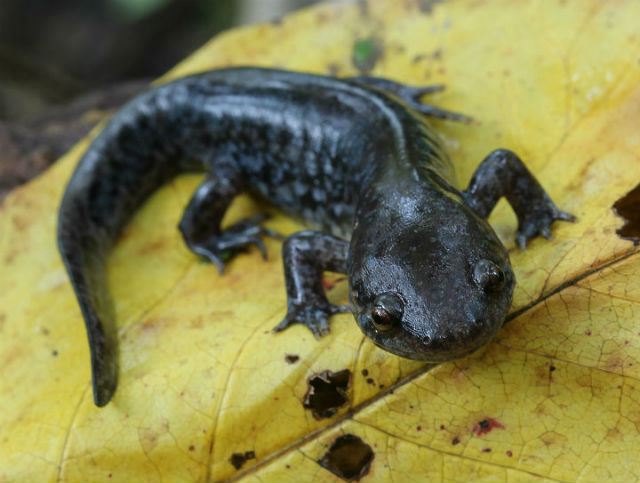
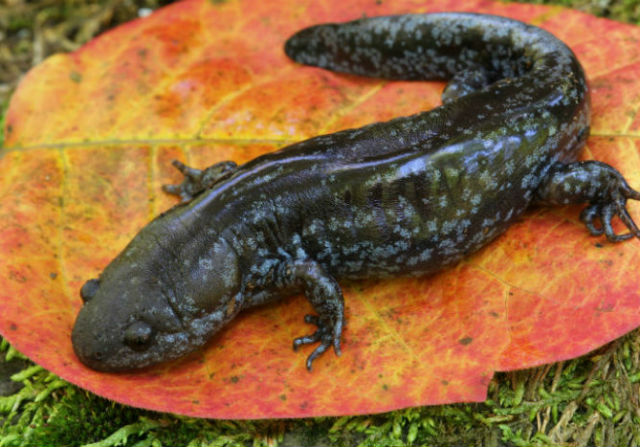
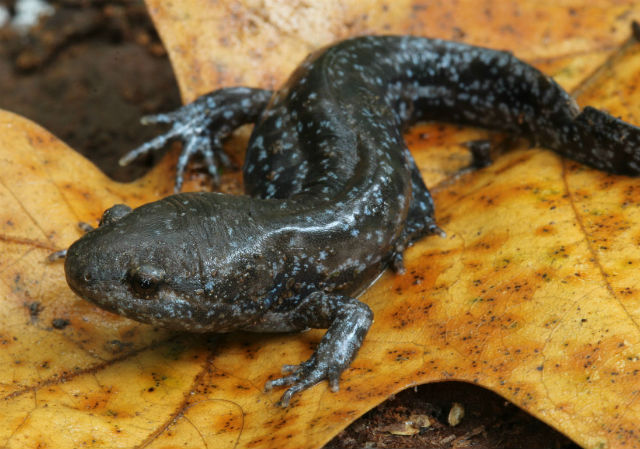
This 3 to 4 inch amphibian seems to have a head and feet too big for the rest of the creature. It kind of reminds me of a Bulldog.

Mole Salamander_3050

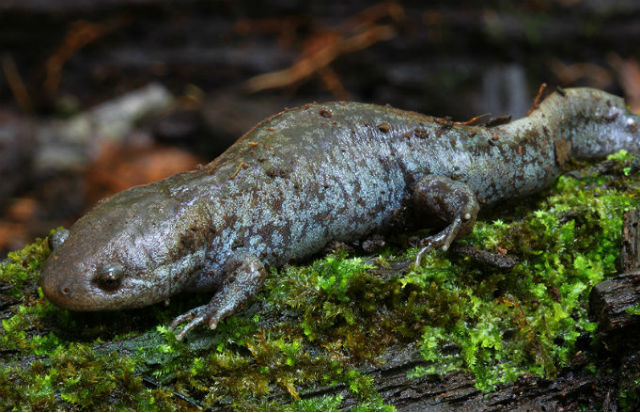
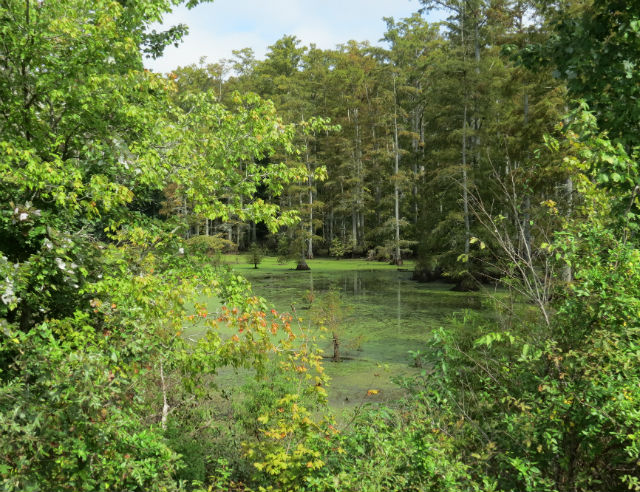
Mole Salamanders are black, brown or grey in color, with pale bluish or silvery flecks. Adults are found in forested habitats like bald cypress and tupelo swamplands, flatwoods sloughs and nearby ponds. I sometimes find them under logs or in moist leaf litter.

Mole Salamander 0031

These were all from a swamp edge I investigated while visiting southern Illinois. Adult Mole Salamanders are nocturnal and burrow during the day; their common name comes from their underground lifestyle.

mole salamander_7980

Adults move to fish-free pools or swamp edges for courtship and egg-laying during late autumn and winter rains. Females attach 200-400 small eggs, in jelly-covered clusters, to underwater twigs and leaves.

Mole Salamander 20038

Mole Salamander larvae transform during summer or autumn and, in a few permanent ponds, some large larvae are known to overwinter. They have gills and breathe like fish until they metamorphose into adults.

mole salamander_8001

It is always cool to come across this oddly proportioned amphibian, which is not native to my home state of Ohio.

Third Eye Herp
E-mail

Leopard Slug

Limax maximus_7350

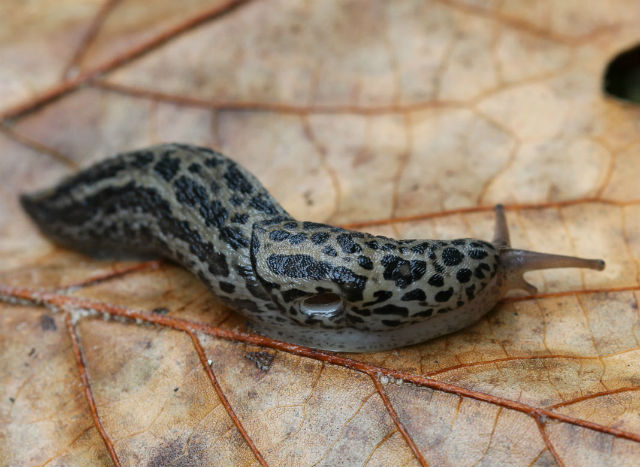
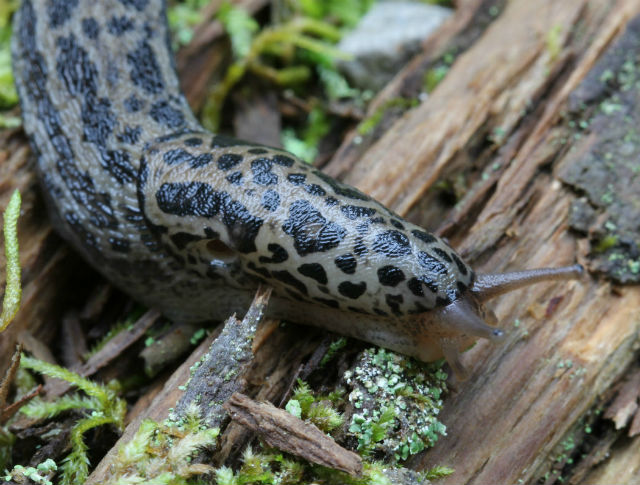
The Latin name for this creature is Limax maximus, which literally means “biggest slug.” It is also known by the common name Great Grey Slug. Although I occasionally see them in my home state of Ohio, I saw quite a few while visiting southern Illinois.

Limax maximus_7863

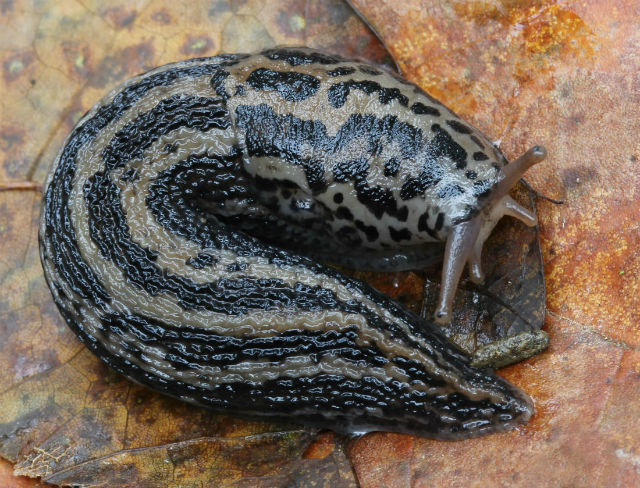
Adults measure 4 to 8 inches in length and are usually a light grey or grey-brown with darker spots and blotches, although their coloration and patterning is quite variable. Although native to Europe, this species has been accidentally introduced to many other parts of the world.

Limax maximus_7951

It makes its home in forests, but is often also found in cellars and in cultivated areas. Leopard Slugs are mainly active at night, though they may also be seen in daytime during wet, warm and overcast weather. During the day they hide under stones, logs and in dark wall crevices.

Limax maximus_7869

Leopard Slugs don’t tend damage living plants, but instead eat other slugs, including species that can damage garden plants and vegetables. They also eat dead and rotting plants along with fungi and this recycles nutrients and fertilizes the soil.

Limax maximus_7946

All slugs are slimy, but this species is especially so, giving it a highly unappealing and defense against predators.

Third Eye Herp
E-mail

Eastern Hognose Snake

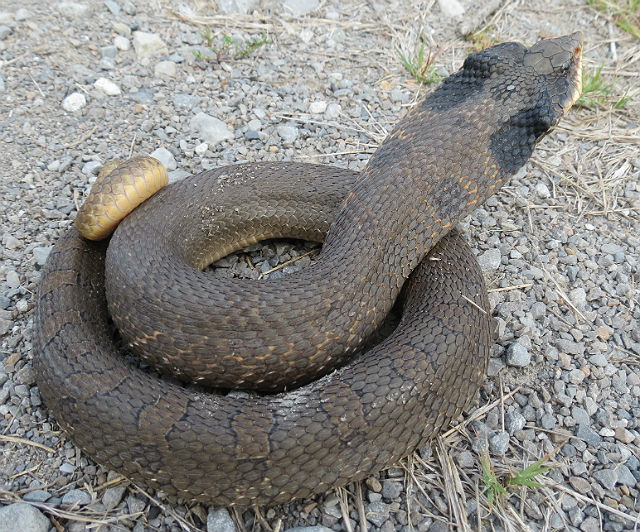
eastern hognose snake_5669While driving down a country road in southern Illinois this month, I came across one of the most unusual serpents in North America. This snake is found in woodlands with sandy soil, fields, farmland and coastal areas. It is active during the day.

eastern hognose snake_7773

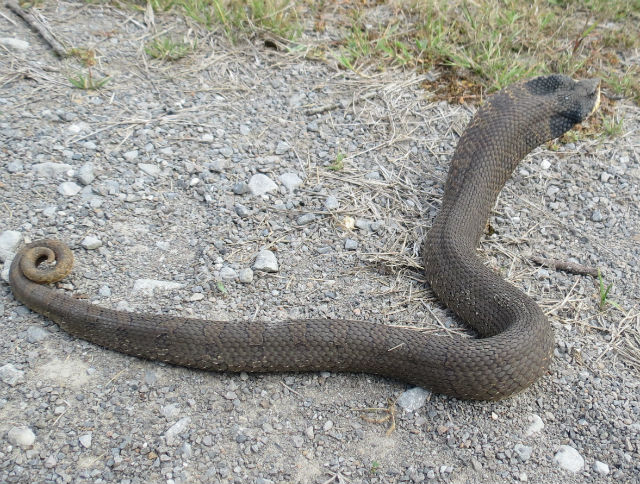
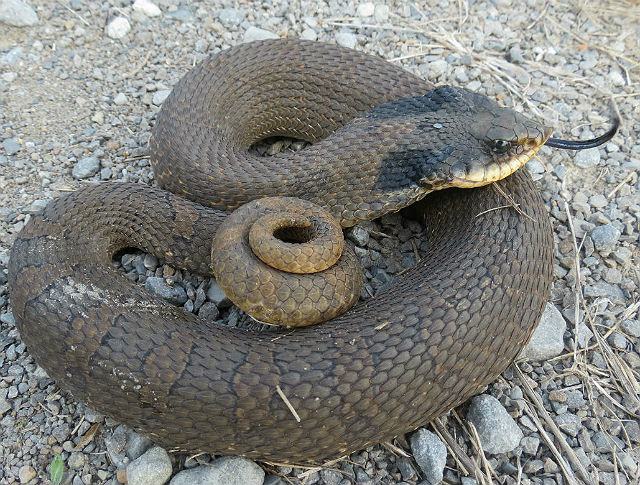
This Eastern Hognose Snake gets its name from its upturned snout, which it uses to dig up its favorite food – toads. It is medium-sized, usually 2 to 3 feet in length and stocky. This reptile can be yellow, brown, gray, black, olive or even orange. It often has large rectangle-shaped spots and blotches down its back and sides, but it can also be solid black or gray.

eastern hognose snake_7779

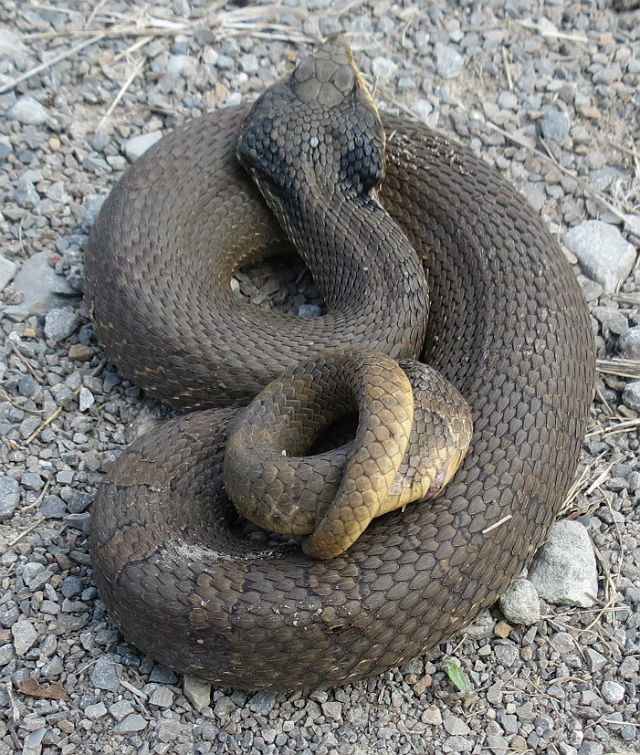
The “claim to fame” of this creature is its remarkable defensive behavior. It will first hiss loudly and inflate its neck in a cobra-like fashion. This has led to local names like “puff adder” or “hissing viper.” It is only bluffing, however, and rarely bites. Its bite is harmless to humans.

eastern hognose snake_7780

Then, if the bluff fails to ward off the potential predator, the Eastern Hognose Snake will begin writhing about before flipping over on its back and playing dead. At this point the it will appear to be completely lifeless, unless turned over on its belly, upon which it will promptly flip over on its back again.

eastern hognose snake_2785

Female Hognose Snakes lay their eggs in early summer and the young snakes hatch out about 60 days later; they are able to spread their necks and hiss immediately upon hatching.
eastern hognose snake_7776

I was thrilled to come across this extraordinary creature that I have not seen in the wild in several years.
Third Eye Herp
E-mail

Green Treefrog

swamp_1808

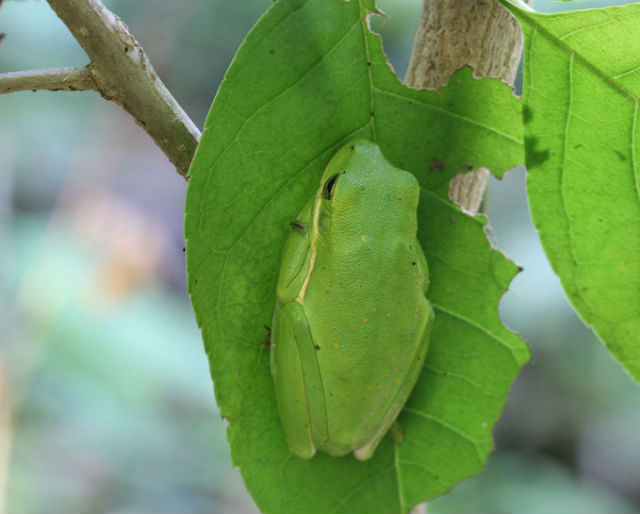
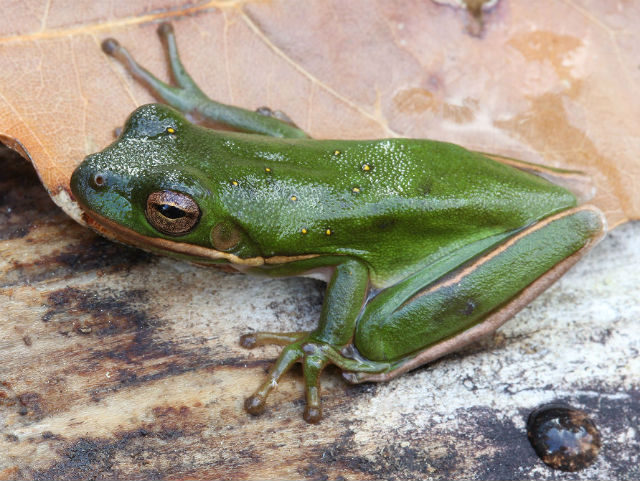
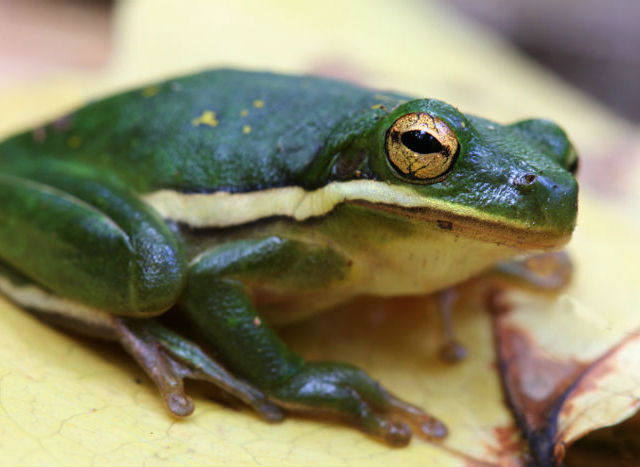
These frogs are found in the central and southeastern United States and have large toe pads to help them grip the trees and other plants they climb. They may have a light white or yellowish stripe that runs from their jaw along the side of their body.

green treefrog_6656

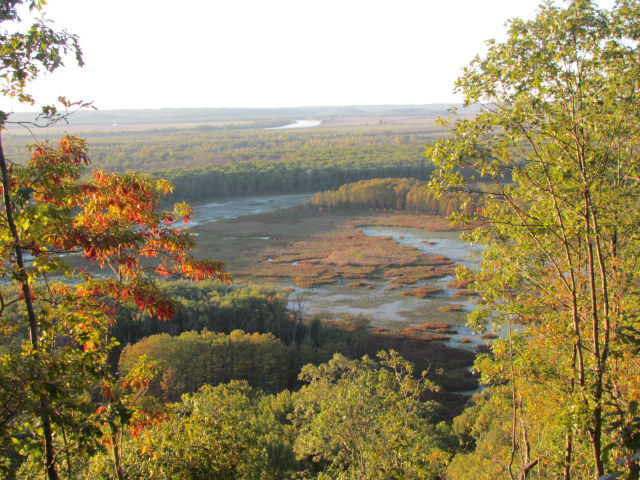
The Green Treefrog can be found in marshes, wet fields, cypress swamps and along the edges of lakes, ponds and streams. It likes spots with lots of ground cover and aquatic vegetation. During the day, it often sleeps on the undersides of leaves or in other moist, shady places; I saw this one napping on Poison Ivy near a swamp.

Green Treefrog 2801

The creatures are sometimes called rain frogs. Some people think that they are good indicators of rainy weather because they call loudest during damp weather.

green treefrog_4650

Like many other frogs, Green Treefrogs are insectivores that commonly consume flies, mosquitoes, and other small insects. Males are usually smaller than females and have yellow to greenish-yellow throats.

Green Treefrog 055

A familiar backyard species, it is popular as a pet, and is the state amphibian of Georgia and Louisiana.

Third Eye Herp
E-mail

Southern Black Racer

IMG_6830

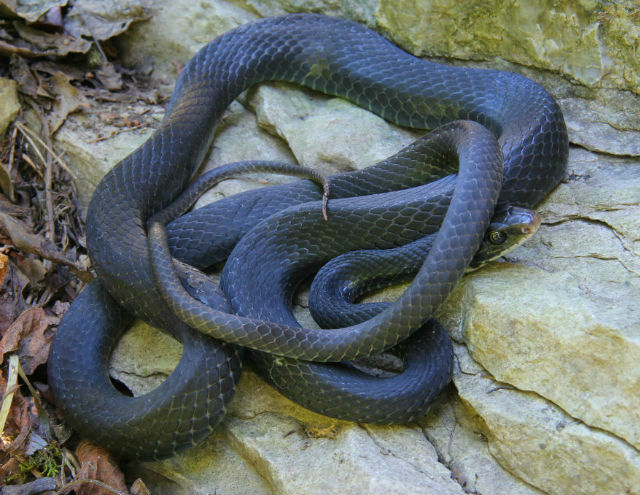
On my current visit to southern Illinois, I’ve encountered a snake that I more-often-than-not see when I visit the Land of Lincoln.

Black Racer 0054

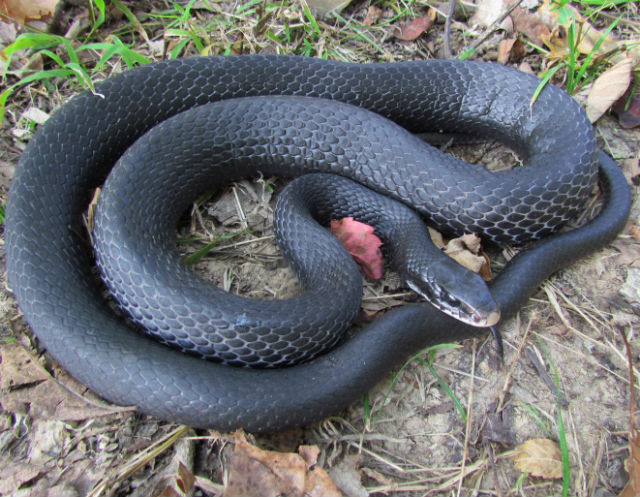
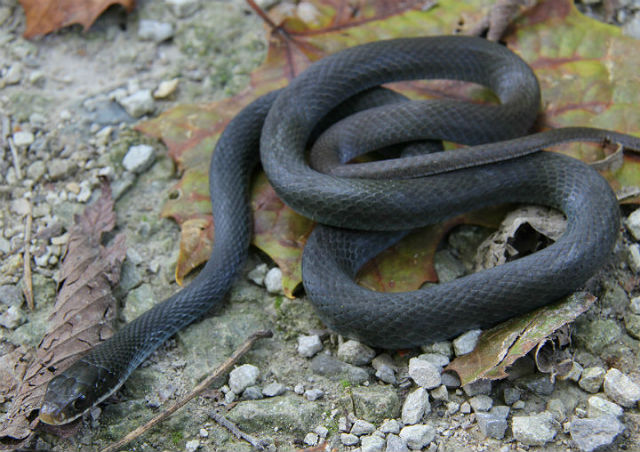
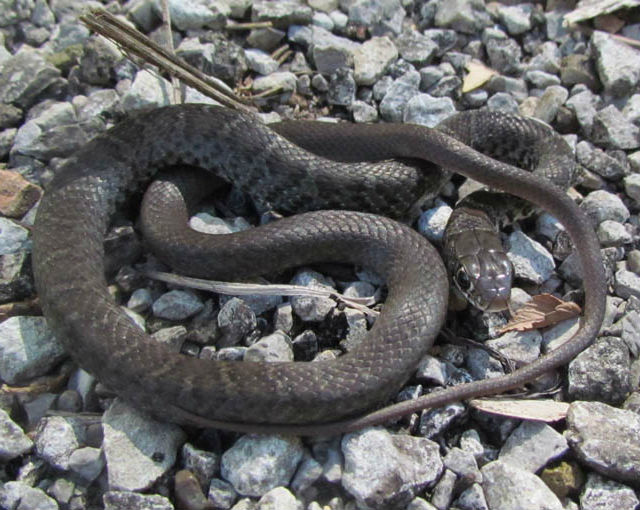
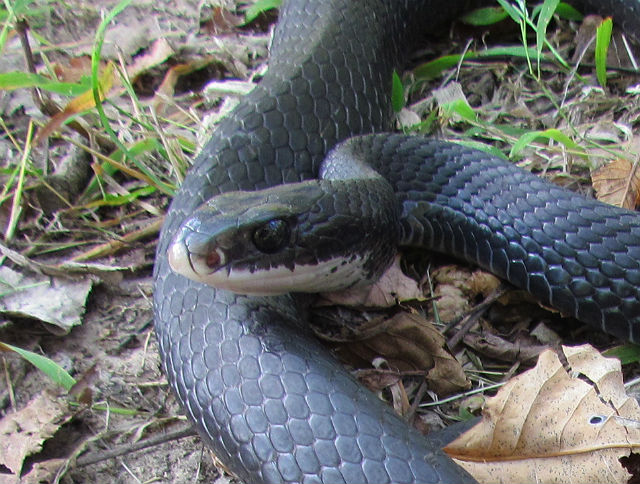
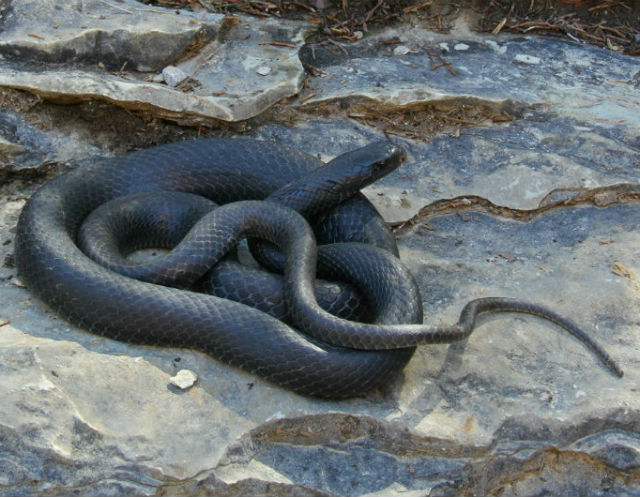
Adult Southern Black Racers are relatively large – to 5 feet – fairly slender, solid black snakes. They have smooth scales, large eyes, and often have some white under their chin.

Black Racer_3792

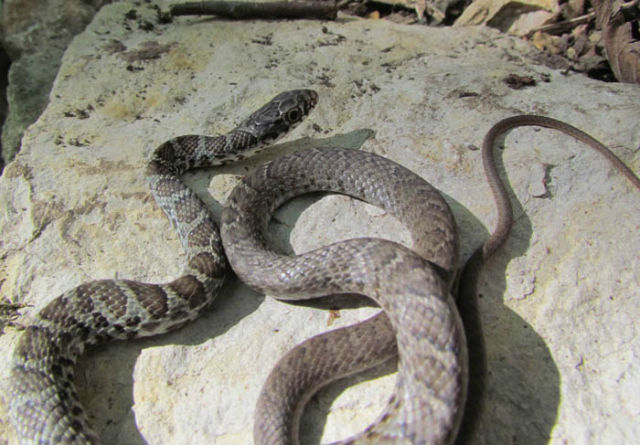
Young racers do not resemble adults and are generally tan or grayish with a series of brown or reddish blotches running down the center of the back.

Black Racer_6972

A large part of the reason for this widespread reptile’s success is it eats a wide variety of food items and are habitat generalists, occupying rocky ledges, pastures, overgrown fields, woodlands and the edges of wetlands.

Black Racer 20229

Southern Black Racers are active during the daytime and are most often seen in warm weather. These snakes hunt by sight and actively forage during the day. They eat a wide range of prey including insects, lizards, snakes, birds, rodents and amphibians. These snakes are not constrictors and simply overpower their prey.

Black Racer_3789

Racers are faster than most other snakes, very agile, and generally flee when approached, often climbing into small trees or shrubs.

Black Racer3388

These reptiles mate in the spring, and females lay up to 36 eggs in early summer. Their eggs hatch in late summer or early fall. Over time the blotched babies gradually turn solid in color.

Black Racer_7051

It’s always cool to come across one of these sleek, speedy snakes when out hiking!

Third Eye Herp
E-mail

Fan-shaped Jelly Fungus

fungus_6853

It has been rather rainy as of late and the ground is soggy, the air is heavy with humidity – these days are good days to look for fungi.

Fan-shaped Jelly Fungus_7122

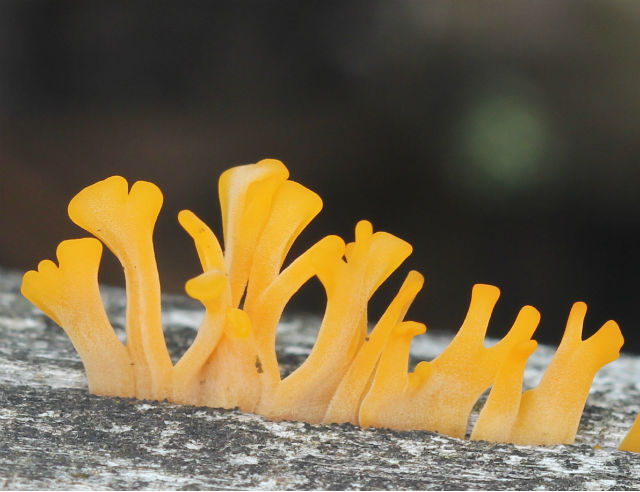
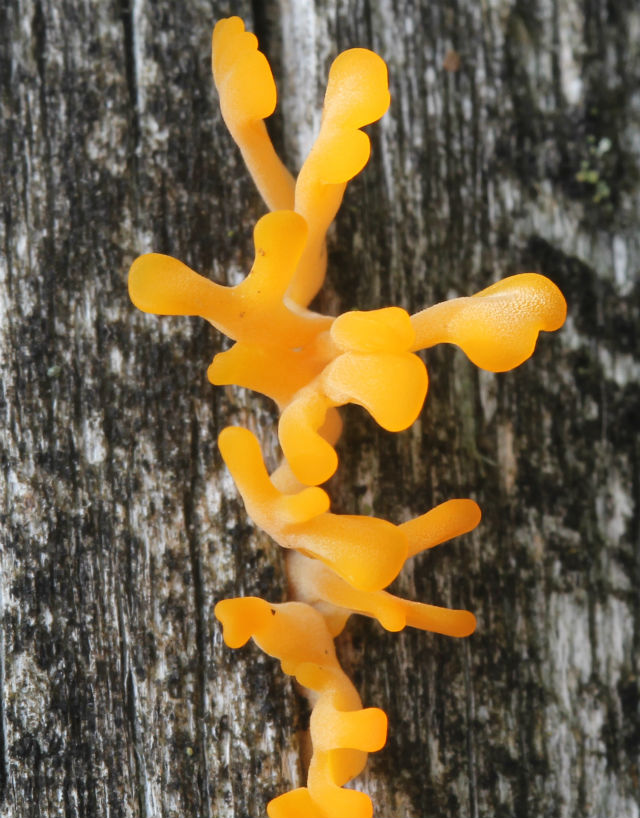
This decaying tree branch had fallen to the forest floor in Cuyahoga Valley National Park. The bright yellow-orange coloration on it caught my eye. Fan-shaped Jelly Fungus enjoys a practically worldwide distribution.

Fan-shaped Jelly Fungus_7132

It has a rubbery texture and lack of gills and is a specialist for growing out of cracks in dead wood, which it feeds on and breaks down into components that can be recycled back into the earth – without this process, wood and other plant matter would not decompose.

Fan-shaped Jelly Fungus_7125

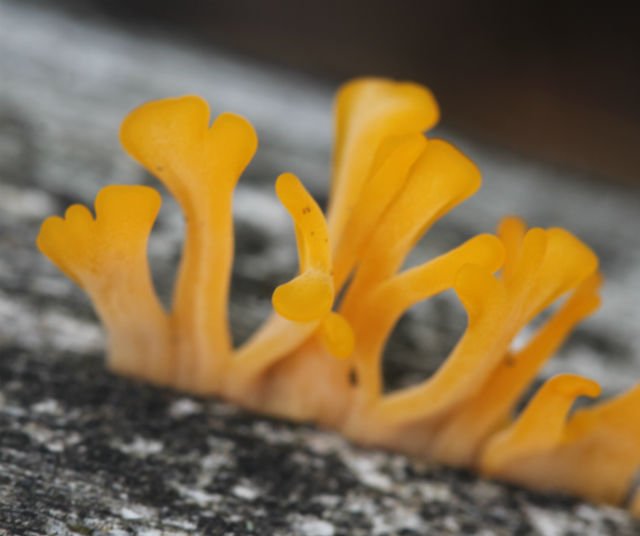
The fruiting bodies are less than 7/8 of an inch tall and grow in clusters or rows along cracks in decaying wood; often the wood has lost its bark. Each fruiting body has a curved fan-like shape, thin in cross-section and widening toward the top. They are translucent and bright in color, and are gelatinous to the touch.

Fan-shaped Jelly Fungus_7122

In our modern-day, decomposition and decay are often viewed quite negatively, yet they are the yin to the yang of growth, and together they form two halves of the whole that is the closed-loop cycle of natural ecosystems. In Chinese culture, it is called literally “sweet osmanthus ear,” referring to its similarity in appearance to that flower.

Third Eye Herp
E-mail

Virgin’s Bower

Virgins Bower_6647

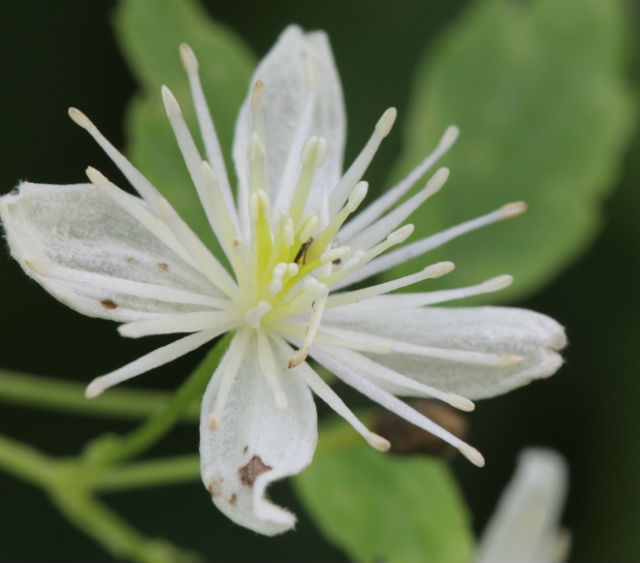
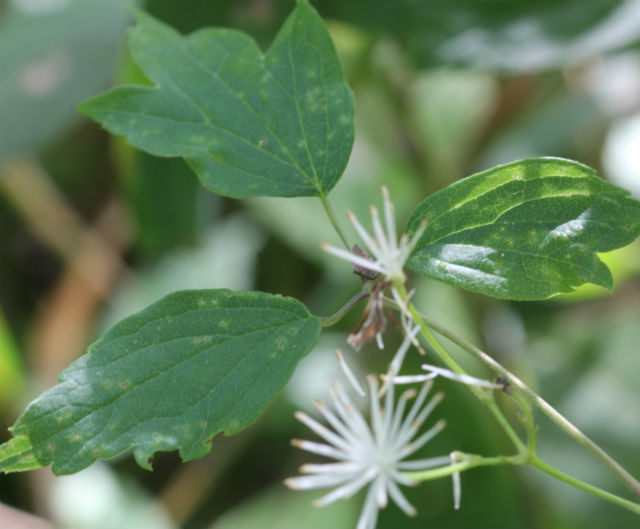
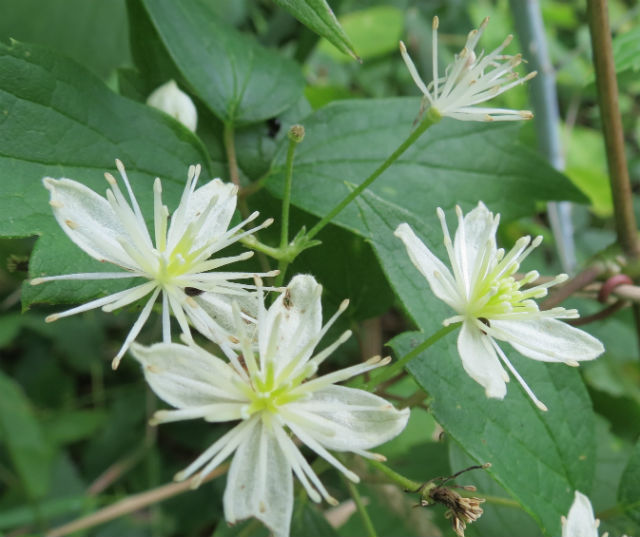
Walking along the Cuyahoga River, I frequently see this flowering vine, which belongs to the same genus of a popular garden plant, Climatis, though this wildflower’s petals are much smaller.

Virgins Bower_7394

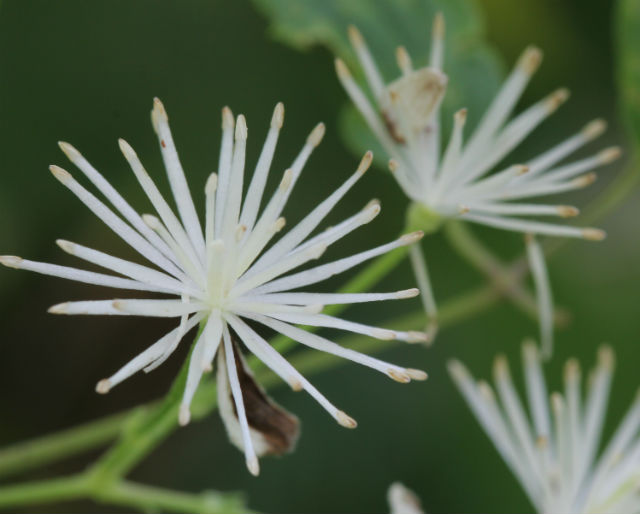
Its flowers are in delicate round clusters and quite intricate. It is one of over a dozen species residing in the eastern United States.

Virgins Bower_7402

The leaves of Virgin’s Bower are 3-part and sharply toothed. Its square-stemmed vine is often seen growing over fences or shrubs along riverbanks. This native plant is most often found in damp settings, such as along stream banks or in floodplains.

Virgins Bower_6622

Virgin’s Bower is an aggressively growing vine which can climb to heights of 10–20 feet by twisting its leafstalks. After the flowers are polliniated, their feathery plumes look like a work of art.

Virgins Bower_7395

Some other common names for this plant are Devil’s Darning Needles, Devil’s Hair, Love Vine, Traveler’s Joy, Wild Hops, and Woodbine. Whatever you call it, it’s a fine wildflower to come across in late Summer and early Fall.

Third Eye Herp
E-mail