Yellow-throated Warbler

01 Yellow-throated Warbler_5783

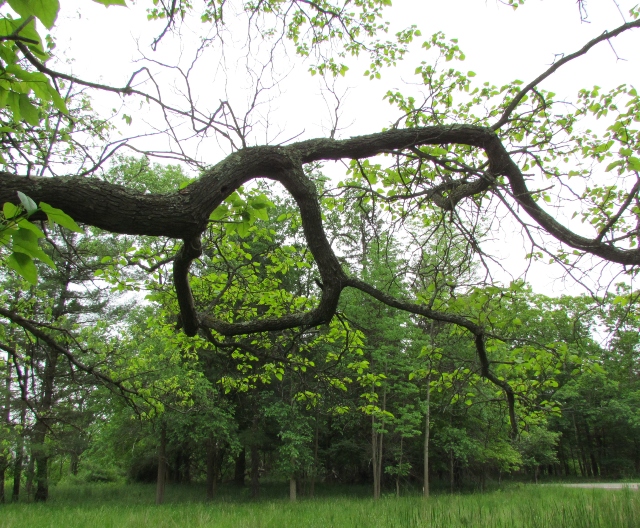
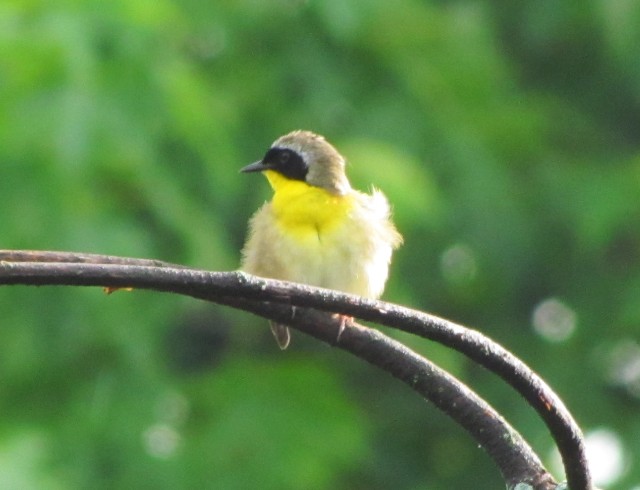
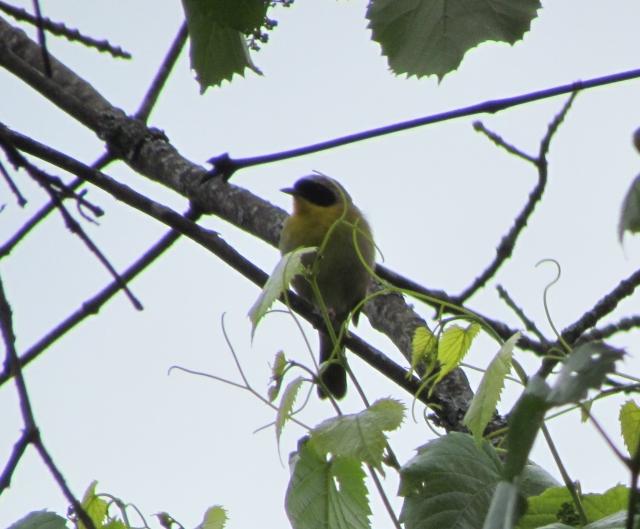
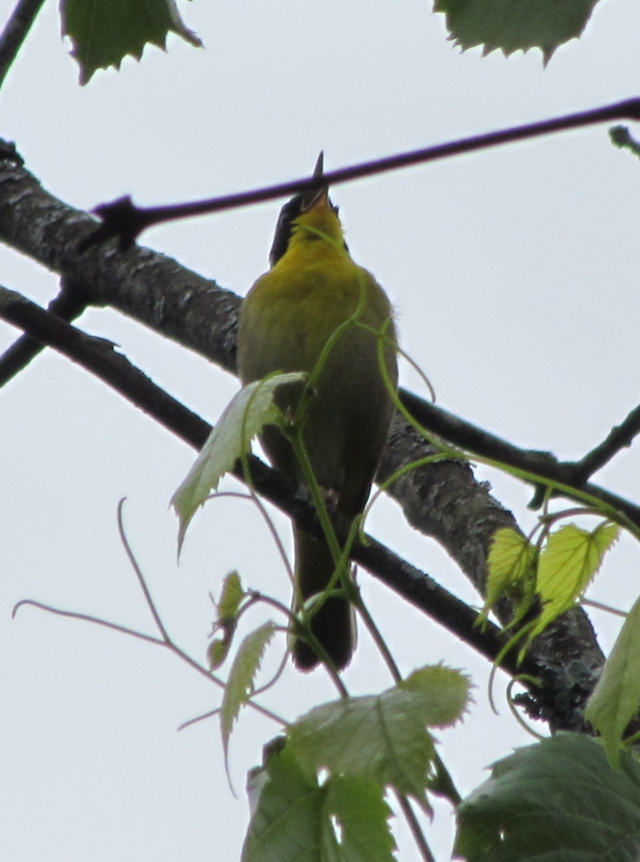
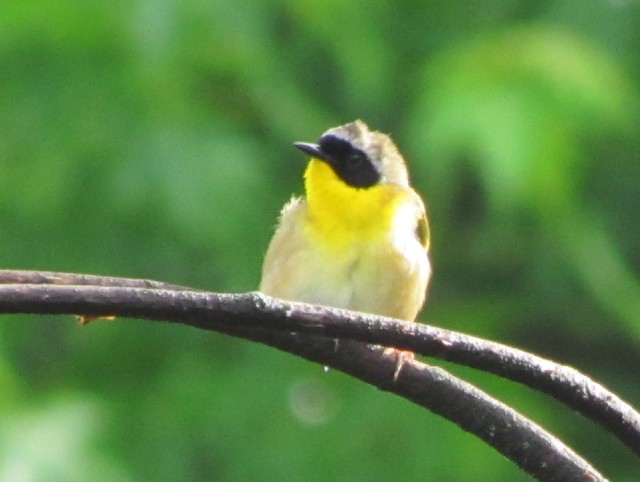
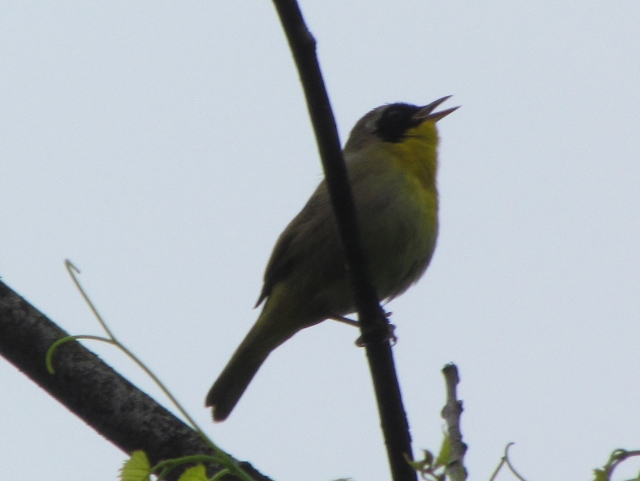
While hiking in Cuyahoga Valley National Park, I noticed this distinctive bird. The Yellow-throated Warbler is a small, migratory songbird of the south, that can occasionally be found in my home state.

02 Yellow-throated Warbler_6394

The Yellow-throated Warbler breeds in a relatively narrow range across the southeastern United States. Its breeding range extends from as far north as southeastern Virginia, southern Ohio, and Missouri.

03 Yellow-throated Warbler_5807

With its bright yellow throat and chest, olive-green back, white belly, and black mask, this bird has a striking appearance that makes it stand out among other warblers.

04 Yellow-throated Warbler_5808

In the Midwest, they are typically found in riverside groves of Sycamores. The song of the Yellow-throated Warbler sings a lively series of clear, whistled notes that are often described as cheerful or bubbly.

05 Yellow-throated Warbler_6396

This bird is are insectivorous, but also includes a considerable amount of berries and nectar in its diet outside the breeding season. Insects are typically picked off tree branches directly, but flying insects may be caught in the air.

06 Yellow-throated Warbler_5812

John James Audubon painted the Yellow-throated Warbler for his famous “Birds of America” series. He gave it the name “Children’s Warbler” because its bright colors reminded him of the clothes children wear.

Third Eye Herp
E-mail

Common Brown Cup

01 Cup Fungus_0903

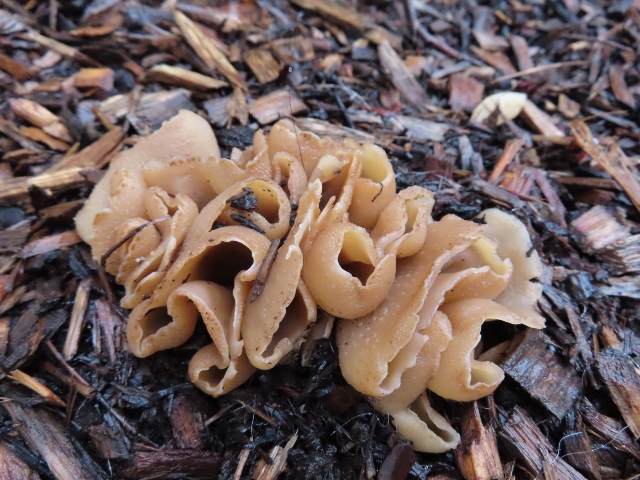
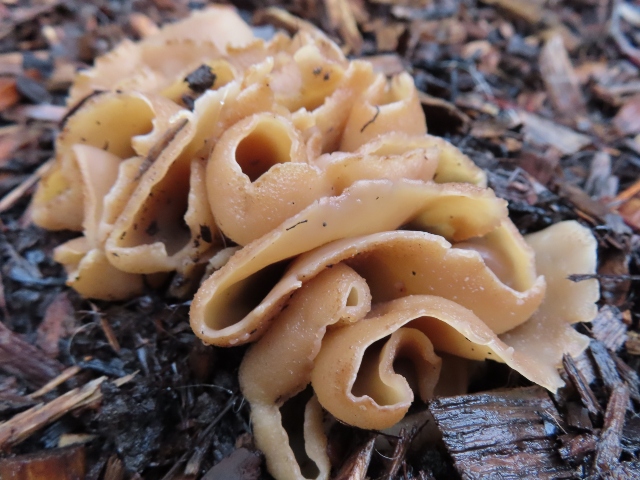
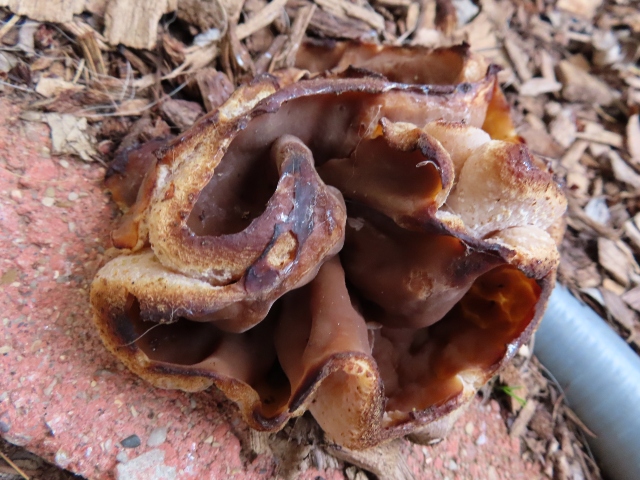
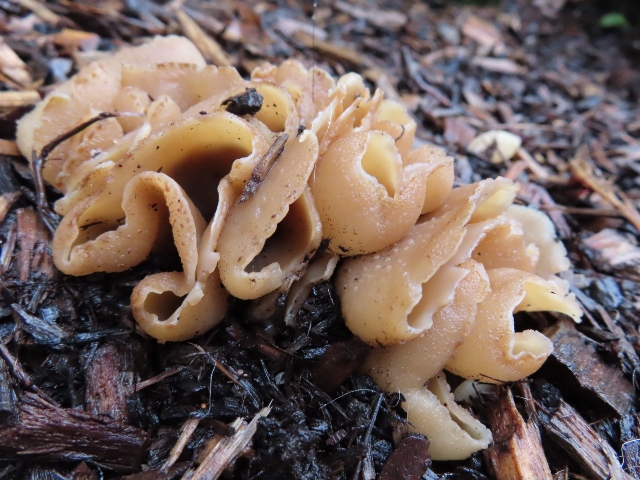
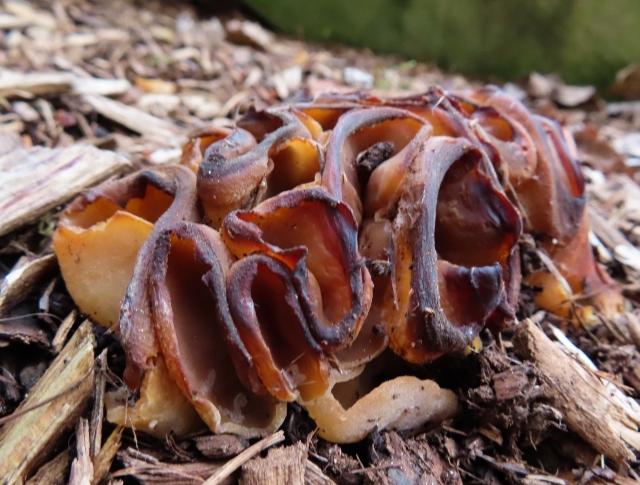
Sometimes you don’t have to look far to find cool things in nature. While leaving the house, I saw this unusual-looking organism sprouting up in several spots in the mulch near our house. Mushrooms and fungi play vitally important roles in nature and to humans.

02 Cup Fungus_1068

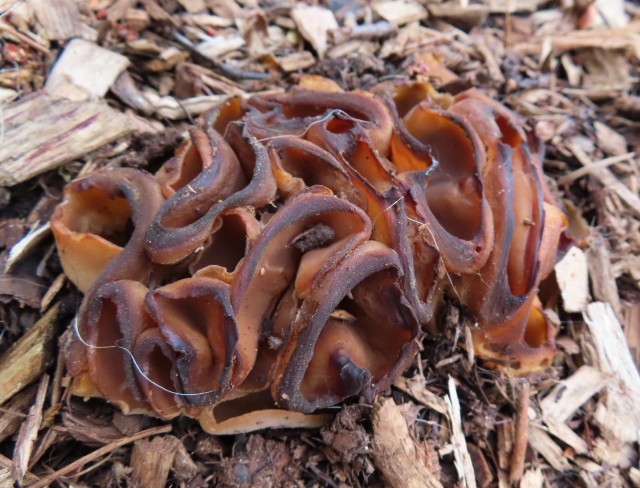
Brown Cups look just like their name, as they are brown inside and out and their cup-like structure is usually just a few inches across and high. The sides of this mushroom are quite fragile and are often seen in a caved-in type state. This mushroom is also known as Pig’s Ears.

03 Cup Fungus_0909

Most often seen in Spring, the cup shape is designed to propel raindrops into splashing its spores out of the cup. Additionally, the curvature enables wind currents to blow the spores out in as a way to distribute them a distance from the fruiting body. It is quite an experience to tap a cup; if the spores are sufficiently mature, it is possible to see millions of them eject into the air from the inside surface like a puff of fine cigar smoke.

04 Cup Fungus_1070

Few of us see the entire life cycle of mushrooms, since most of it takes place underground or beneath the bark of dead or living trees. Before developing the mushroom structure, the fungus lives as a mycelium, a mat-like or netlike network of filaments infusing a patch of soil or wood. When conditions are right, the mycelium develops a fruiting structure, a mushroom, which emerges from the ground or the tree.

05 Cup Fungus_0904

There are over 200 hundred species of Cup Mushrooms and they tend to be interesting in color and shape. They frequently resemble cups or saucers. The Orange Peel Fungus resembles a discarded orange rind. They may also be vividly colored, like the Scarlet Cup, which is often one of the first signs of spring in the temperate regions where it grows.

06 Cup Fungus_1069

Mushrooms are a lot like plants, but they lack chlorophyll and have to take nutrients from other materials. Mushrooms are neither plants nor animals. They constitute their own kingdom: the Fungi. Common Brown Cup grows solitarily or in dense clusters on soil or on well-decayed logs. It is found in Europe, North America, and Iceland.

Third Eye Herp
E-mail

Striped Skunk

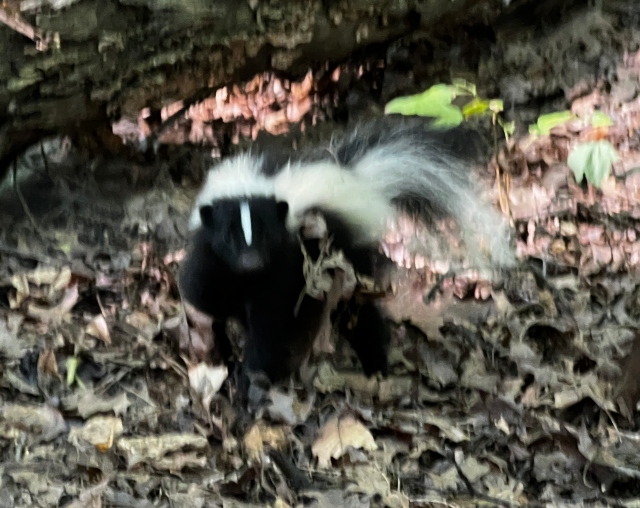
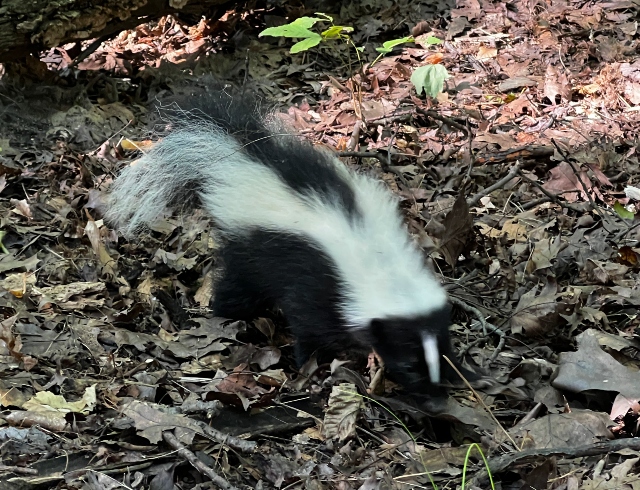
01 Striped Skunk_7793

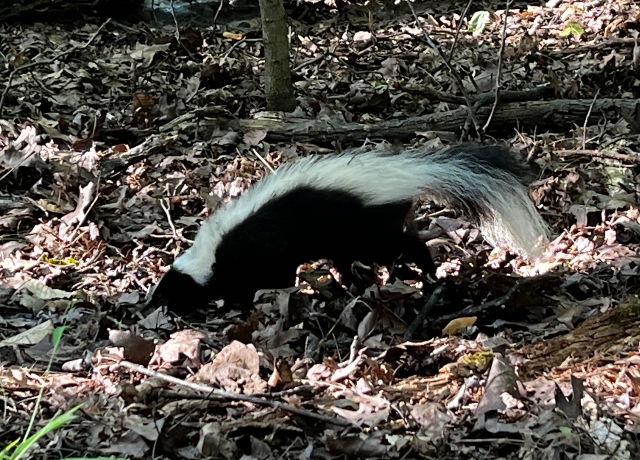
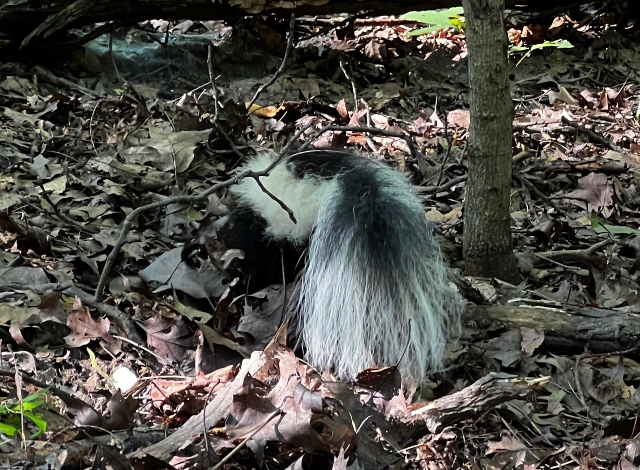
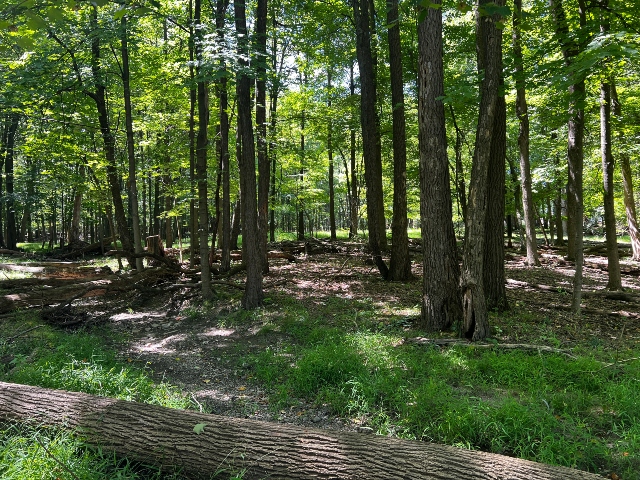
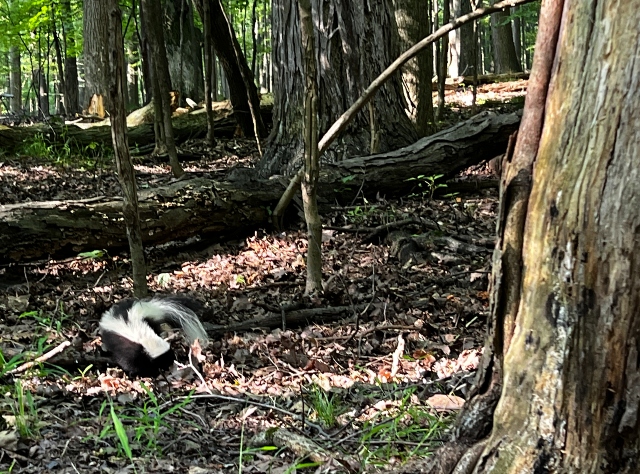
While on a walk in the woods, I heard the shuffling around of leaves. Closer examination revealed a creature rooting through the forest floor looking for something to eat. The Striped Skunk is one of the most recognizable of North America’s animals and is a popular figure in cartoons and children’s books.

02 Striped Skunk_7795

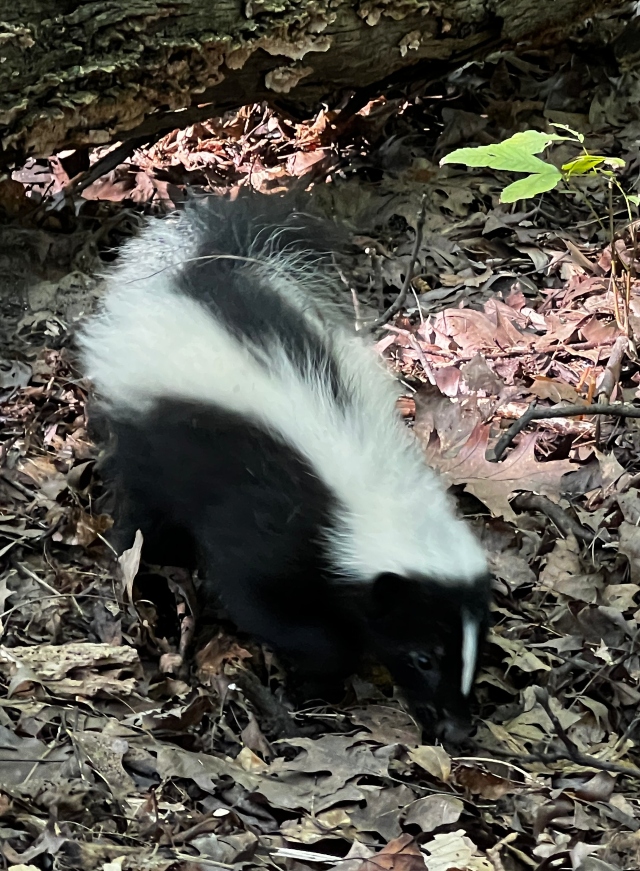
This mammal is stoutly-built and short-limbed, with a small, conical head and a long, heavily furred tail. The color patterns of the fur vary greatly, but generally consist of a black base with a white stripe extending from the head which divides along the shoulders.

03 Striped Skunk_7799

Like all skunks, it possesses two highly developed scent glands, which provide a chemical defense against predation. Because of its formidable defensive capability, it has few natural enemies, with their most notable predator being the Great Horned Owl.

04 Striped Skunk_7797

The Striped Skunk inhabits a wide variety of habitats, particularly mixed woodlands, brushy corners and open fields interspersed with wooded ravines and rocky outcrops. Some populations, particularly in northwestern Illinois, prefer cultivated areas over uncultivated ones.

05 Striped Skunk_7798

While primarily an insectivore, they are adaptable enough to incorporate other animals and even vegetable matter into their diet. They use their sharp claws to tear apart rotting logs to find grubs, dig in the soil for insects, and pin down prey. Their practice of digging creates small-but-noticeable pits in the ground, which can provide evidence of their presence in an area.

06 Striped Skunk_7800

This animal has firmly embedded itself in American culture, with songs “Dead Skunk” by Loudon Wainwright III and cartoon characters – the Warner Bros. character “Pepé Le Pew” and the Disney character “Flower” from “Bambi.”

Third Eye Herp
E-mail

Cicada Parasite Beetle

01 Cicada Parasite Beetle_7871

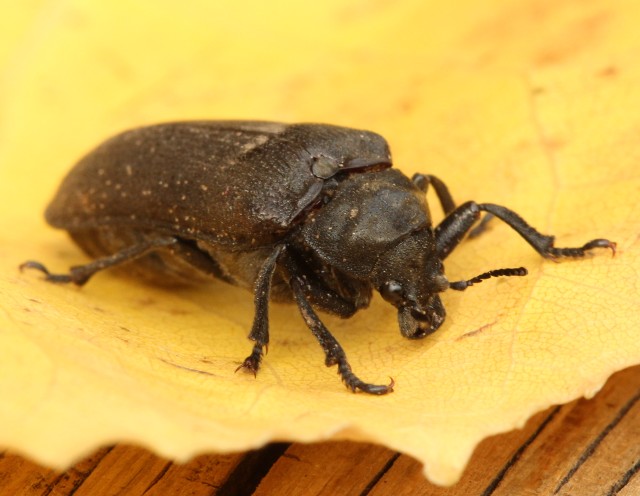
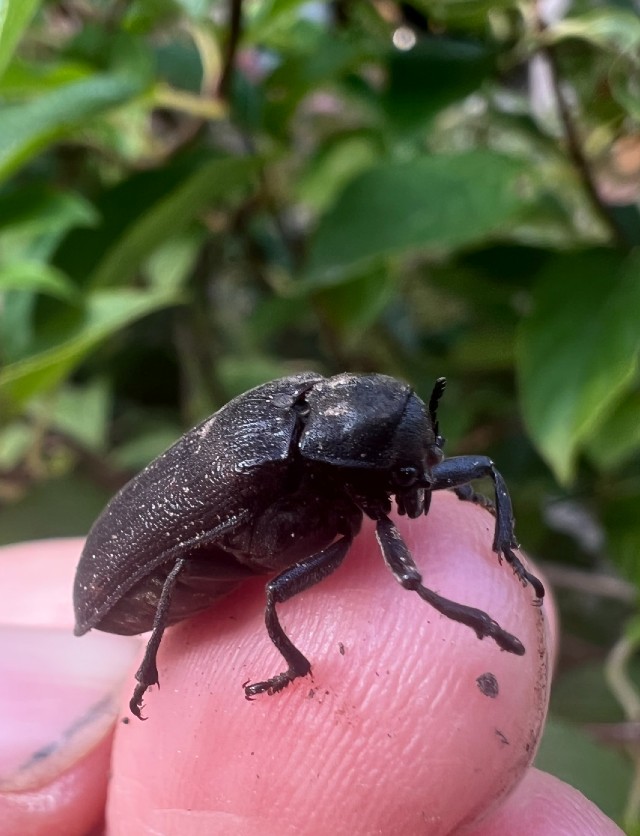
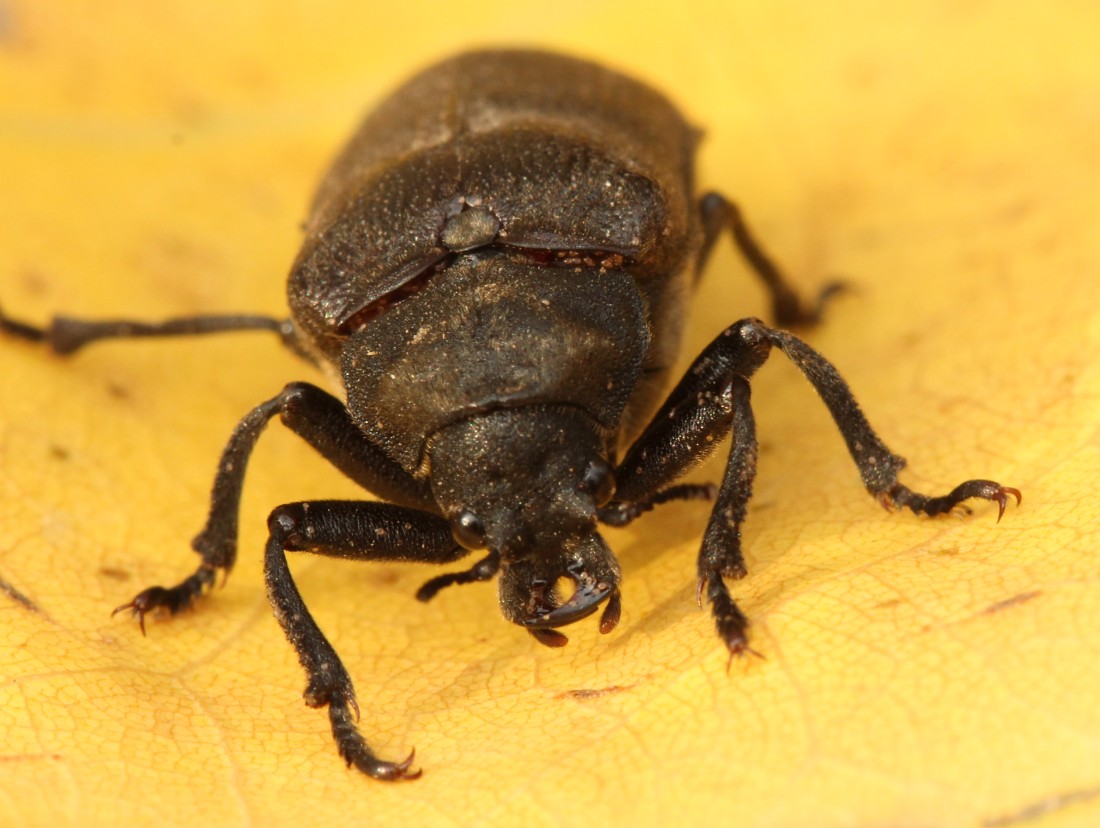
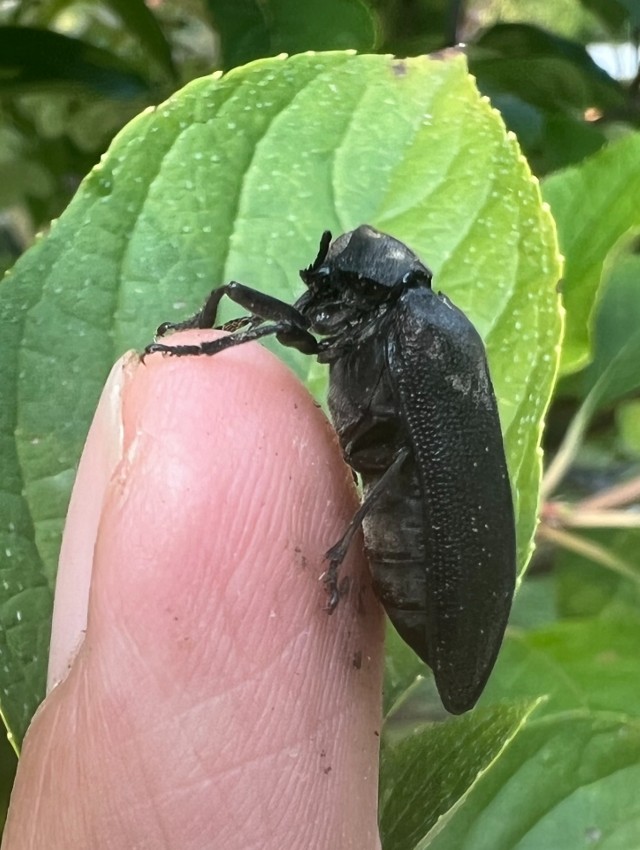
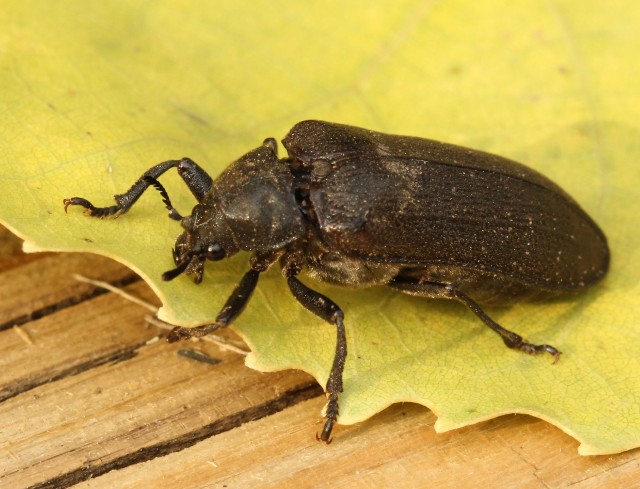
While walking in the wooded lot across the street from my house, I came across this very interesting insect that I’ve never seen (or heard of) before.

02 Cicada Parasite Beetle_9105

Cicada Parasite Beetle adults are large, stocky, dark brown insects that are about one inch long. They are flattened dorsally with a downward pointed head.

03 Cicada Parasite Beetle_7923

This species is known from southern Ontario to Florida, west to Colorado and Texas. These beetles are interesting due to their habits and lifestyle.

04 Cicada Parasite Beetle_9103

The adult beetles lay their eggs bark cracks; the eggs hatch into slender, active larvae called triungulins. These larvae burrow through the soil seeking out cicada nymphs.

05 Cicada Parasite Beetle_7926

Once a cicada nymph is found, the triungulin larva molts into a slow-moving, grub-like larva that grabs onto the cicada nymph and feeds on its hemolymph (blood).

06 Cicada Parasite Beetle_9094

Mature larvae pupate and emerge as adults in the same years when periodical cicadas emerge. Although both females and males fly, the females are usually found motionless on the side of the elm trees.

Third Eye Herp
E-mail

Black Chokeberry

Black Chokeberry_8787

While hiking in the Indianapolis Area of Indiana, I came across this neat plant. This is a species of shrub in the Rose Family native to eastern North America, ranging from Canada to the central United States. Its natural habitat can vary from bogs and swamps to dunes and rocky outcroppings.

Black Chokeberry_8796

It is multi-stemmed and deciduous, growing 4 to 8 feet in height. Black Chokeberry’s clusters of white to pink-tinged flowers bloom in April through May. The blooms are followed by fruit that turns from red to blackish-purple. These tart fruits are edible and are the subject of University of Maryland research for their potential use as an alternative fruit crop. The fruits are unpleasant when raw (hence the common name), but when processed they have culinary and nutraceutical value.

Black Chokeberry_8793

In recent history, Black Chokeberry has been extensively produced in Russia as a small fruit used in juice products (mixed with apple juice), wine, compote and pickles. It has been commercially grown in Europe where its fruit is used in juice, alcoholic beverages, energizing beverages, and as a food colorant. Its fruit has higher levels of antioxidants than any other temperate fruit.

Black Chokeberry_8791

In Autumn, its foliage of turns to brilliant shades of red and burgundy. Over time, it tends to sucker profusely (form new shoots from the base) and may produce a thicket of growth when free from competition of other plants.
Black Chokeberry_8792

In wildlife habitat and in wildlife gardens, Black Chokeberry provides browse for White-tailed Deer and Rabbits, and fruit for Ruffed Grouse, Sharp-tailed Grouse and Prairie Chickens.

Third Eye Herp
E-mail

Fingernail Clam

01 Fingernail Clam_6795

While catching tadpoles in the pond across the street from me, I’d occasionally net what looked to be a small tan pebble. Closer examination revealed something different though. Fingernail Clams, also called Pill Clams or Pea Clams, are members of a family of small to tiny freshwater clams that are common, but rarely noticed.

02 Thumbnail Clam_5104

Like other clams, Fingernail Clams have two mirror-image shells that are hinged together that are generally rounded to triangular in shape. Their shells are thin and fragile, often translucent, the outsides typically shiny, fairly smooth, and gray, tan, yellowish, or whitish. Fine growth lines are often visible, but they are not strongly raised, ridged, or rough.

03 Thumbnail Clam_5134

Fingernail Clams are found in a variety of aquatic habitats, usually in places with mucky or sandy substrates, and usually at or just under the bottom substrate. Some species of fingernail clams are adapted to live in vernal pools — temporary ponds, usually in woodlands, that fill with water in Springtime, then dry up during Summer. As the pool dries, the Fingernail Clam burrows down several inches into the soil, where it is moist enough for it to survive until the next Spring.

04 Thumbnail Clam_5112

Like other clams, scallops, mussels, oysters, and most other bivalve mollusks, they are filter feeders that remove suspended organic materials from water, such as algae, tiny planktonic animals, and plant and animal detritus.

05 Thumbnail Clam_5142

They have tubelike siphons that draw in water and tiny, drifting food particles into their shell cavity. A pair of flaplike, mucous-covered gills collects the food and channels it into the animal’s mouth.

06 Thumbnail Clam_5108

Like its relatives, the Fingernail Clam has a foot, which is used to dig down into the pond bottom where it can burrow. Fingernail Clams (like most other mollusks) are hermaphrodites: each individual can produce both eggs and sperm. Fingernail clams are able to fertilize their own eggs.

07 Thumbnail Clam_5135

Apparently Fingernail Clams can move from one isolated vernal pool to another by clamping on to a finger or toe of a salamander, frog, or other animal. Since they can fertilize their own eggs, only one individual can start a population.

Third Eye Herp
E-mail

Sow Thistle

Goat's Brard_7656

I recently saw this plant growing on the corner of my street. Sow Thistle is native to Eurasia, but has spread to other countries. In the United States, grows in areas such as pastures, roadsides, bushlands and the shorelines of lakes, rivers, and sea coast.

02 Goat's Beard_8243

Many people tend to confuse Sow Thistle with Dandelions. Sow Thistle usually has many flowers sprouting out on each stalk, while Dandelion only has one flower per stalk. Sow Thistle leaves grow all the way up the stalk, as well as at the base of the plant. Dandelion leaves are only at the base.

03 Goat's Beard_8235

Sow Thistle’s flowers are grouped in loose clusters at the end of stalks. A plant may have up to 20 flower heads, with only a few blooming at once. The flowers open two to three hours after sunrise and close around noon.

05 goats beard 059

The flowerheads mature to form fluffy spheres that are three to four inches diameter and comprised of seeds with long, slender beaks on white, umbrella-like structures that aid in their dispersal by wind. The fluffy sphere of seeds looks similar to that of a Dandelion, only much larger.

04 Goat's Beard_8234

This plant’s leaves are alternate, simple, and are the broadest near or above the middle – they can be up to a foot long. They are deeply lobed along the margin and the spiny toothed, lobed leaf bases clasp Sow Thistle’s stem.  Its stems are filled with milky white sap.

06 Goat's Beard_8230

This plant is also known as Field Milk Thistle, Field Sow Thistle, Perennial Sow-thistle, Corn Sow Thistle, Dindle, Gutweed, Swine Thistle, or Tree Sow Thistle.

Third Eye Herp
E-mail

Black Vine Weevil

01 Black Vine Weevil_2961

I’ve come across this curious creature on several occasions. Weevils are beetles that known for their elongated snouts. Approximately 97,000 species are known.
02 Black Vine Weevil_2965

Black Vine Weevils are oval in shape, about ½ inch long and have a short, broad snout with elbowed antennae. These insects earned their name “vine” weevil because they were first documented on grapes in Germany.

03 Black Vine Weevil_2962

These insects are parthenogenic (can reproduce without a male). As a result, their population can grow very quickly. Only females are produced.

04 Black Vine Weevil_2961

The Black Vine Weevil is a serious pest in nurseries and established landscape plantings. It and its larvae stunt or kill plants by feeding on the roots – it has been recorded on more than 100 species of cultivated and wild plants.
06 Black Vine Weevil_2964

They are active night feeders and when disturbed, adults drop quickly to the ground. During daylight hours adults hide in dark places on stems of plants with dense foliage or in leaf litter and mulch.

05 Black Vine Weevil_2967

A native of Europe, this species was first reported in Connecticut in 1910.

Third Eye Herp
E-mail

Sandhill Crane

01 Sandhill Crane_5138

Although it’s not very often, I occasionally see these big birds while out and about in my home state of Ohio. This is among the oldest living species of birds, dating back 2-1/2 million years. Sandhill Cranes are currently listed as a threatened species in Ohio, though they have made a comeback after being extirpated in the mid-20th century. They returned to Ohio in 1987 to breed in Wayne County and have expanded their range since.

02 Sandhill Crane_0157

Sandhill Cranes are wading birds characterized by long legs, necks, and bills. An adult sandhill crane stands about 4 feet tall, sports a 6 foot wingspan and weighs up to 12 pounds. Perhaps the most unique characteristic of the sandhill crane is its tendency to dance. Although an integral part of their courtship, they can be seen dancing any time of the year. The dance of the sandhill crane includes many quick steps around each other, wings half spread with an occasional leap into the air up to eight feet off the ground.

03 Sandhill Crane_0156

These birds are primarily a wetland-dependent species. Sandhill Cranes live on a diet of small rodents, reptiles, amphibians, grains, insects, and berries. On their wintering grounds, they will utilize agricultural fields; however, they roost in shallow, standing water or moist bottomlands. On breeding grounds they require a rather large tract of wet meadow, shallow marsh, or bog for nesting.

04 Sandhill Crane_0167

Sandhill Cranes, the most abundant of the world’s cranes, are found throughout most of North America. They spend most of the year in Canada and the northern United States, migrating to the southern United States and Mexico for the winter. In Ohio, Sandhill Cranes are listed as an threatened species due to habitat loss.

05 Sandhill Cranes_0159

The beauty of Sandhill Cranes has permeated cultures all over the world, and the species has captured the attention of many groups throughout history. There are at least ten annual Sandhill Crane festivals around the United States, from Tennessee to Washington. Colorado has two.

Third Eye Herp
E-mail

Stonecat

01 Stonecat_7019

While looking for cool creatures in a creek in Lisbon, Ohio this month, I caught a fish that I have never encountered before. Stonecats are small, slender, flat-headed catfish. Stonecats typically reach four to eight inches in length, but can reach 12 inches.

02 Stonecat_7025

While the dorsal and pectoral spines of most members of this family cause wounds that irritate, the Stonecat has venom glands, particularly on the bases of the pectoral spines, that cause extreme pain similar to that of a wasp sting.

05 Stonecat_7024

These fish reside in freshwater environments, and are found from large creeks to small rivers. They occasionally are found in tiny creeks, or rivers as large as the Lower Mississippi. Stonecats occupy gently to fast-moving riffle areas with rocky substrates.

03 Stonecat_7026

The Stonecat is an opportunistic feeder, using its sensitive barbels during the night to search for food. They eat a variety of food items, such as aquatic insect larvae, mollusks, minnows, fish eggs, isopods, amphipods, crayfish, plant material, and worms.

04 Stonecat_7023

Because Stonecats cannot tolerate heavy siltation or pollution, their presence or absence in a stream is an indicator of water quality. It was neat to come across this fascinating fish while herping.

Third Eye Herp
E-mail