Snowy Tree Cricket

Snowy Tree Cricket_7931

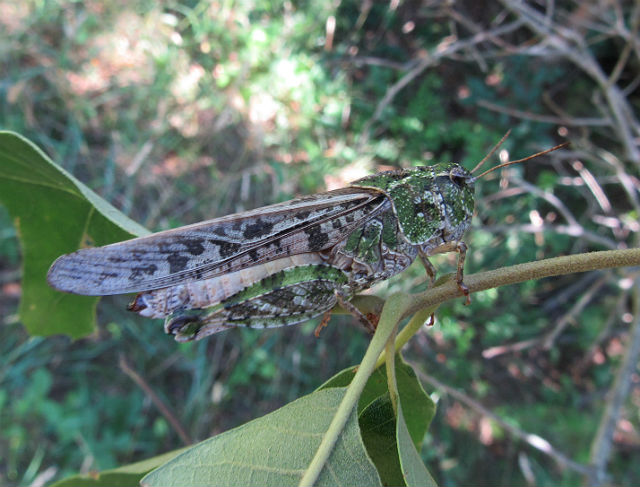
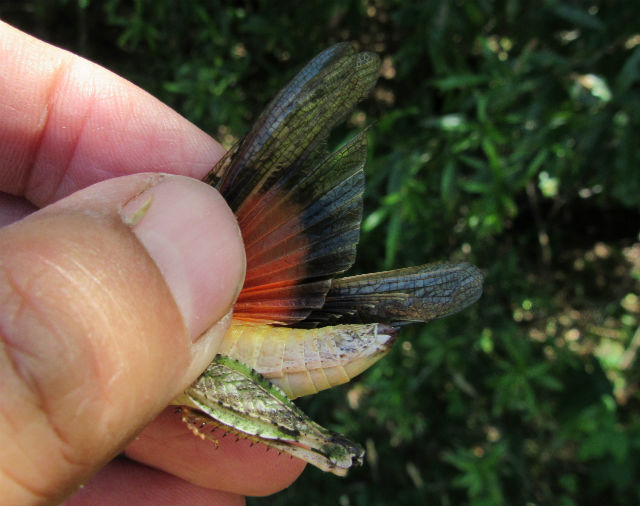
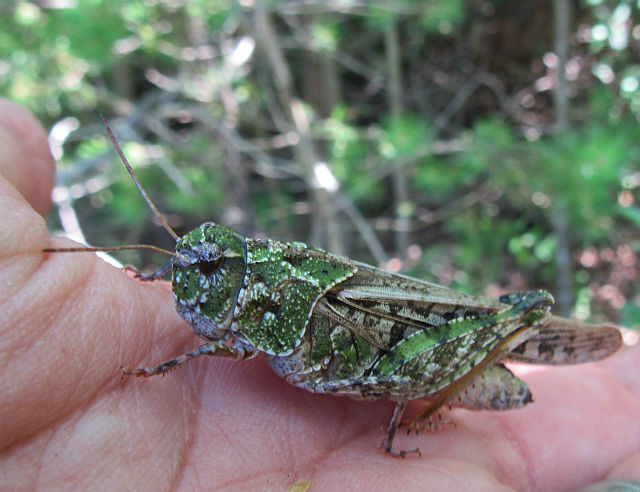
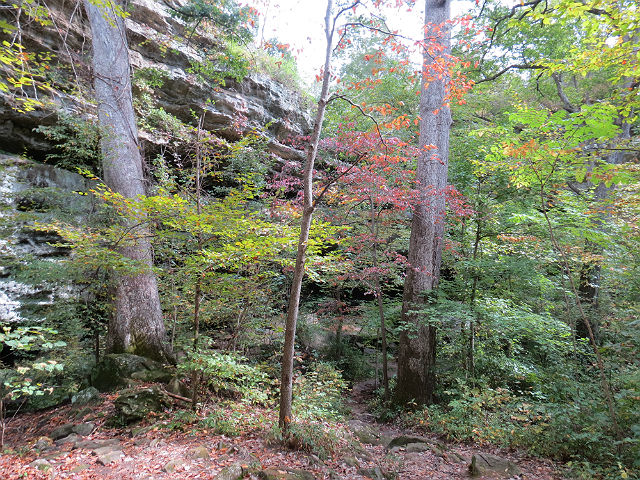
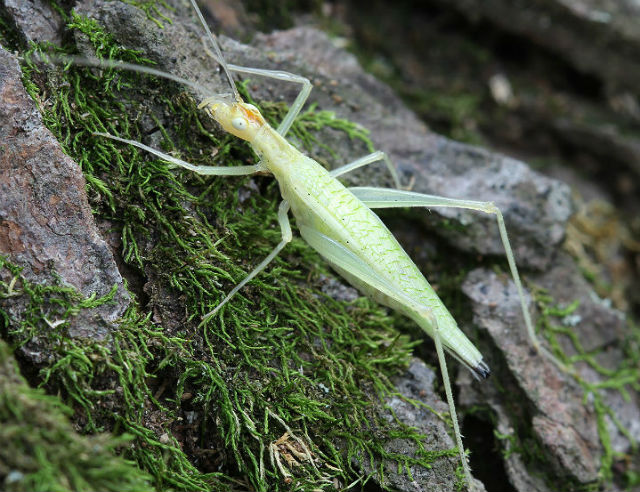
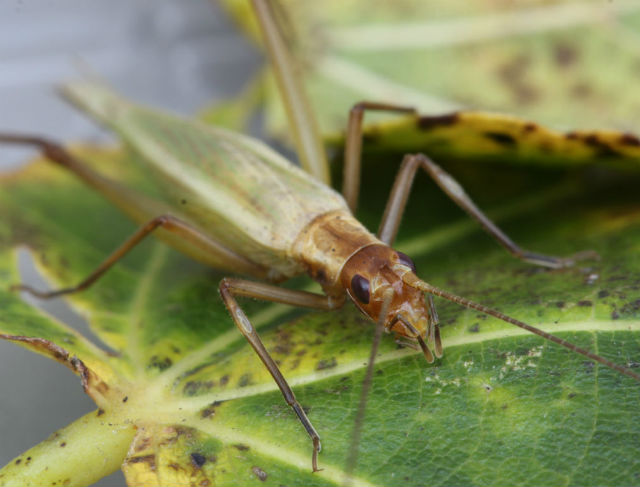
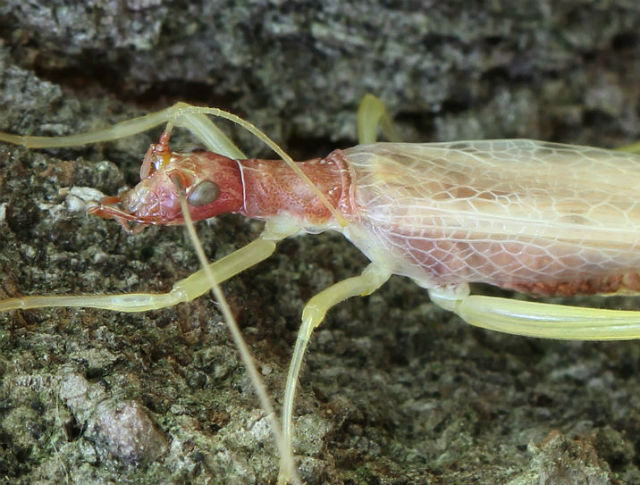
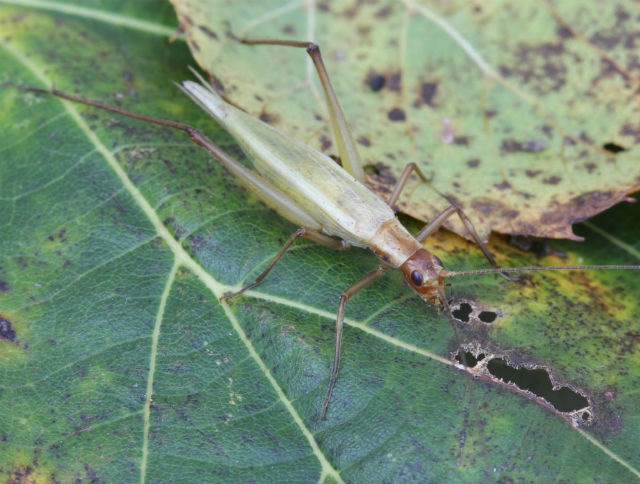
I often find this insect in the Autumn, not only when visiting southern Illinois, but also in my home state of Ohio.

snowy tree cricket_3110

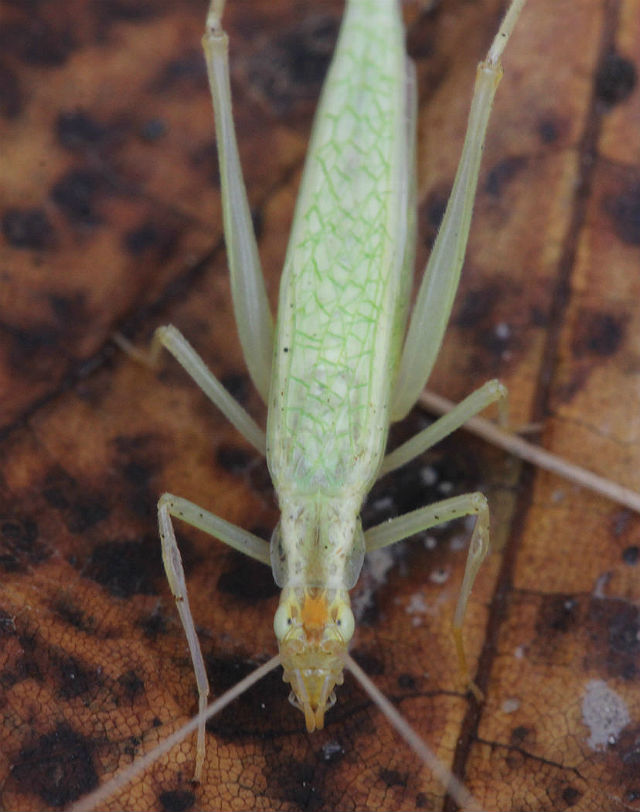
This pale green species occurs over a wide distribution in the northern United States and parts of southern Canada.

Snowy Tree Cricket_1956

The Snowy Tree Cricket is known for having a chirping rate highly correlated with ambient temperature. This relationship is known as Dolbear’s Law and was published in 1897 in an article called “The Cricket as a Thermometer.”

Snowy Tree Cricket_7664

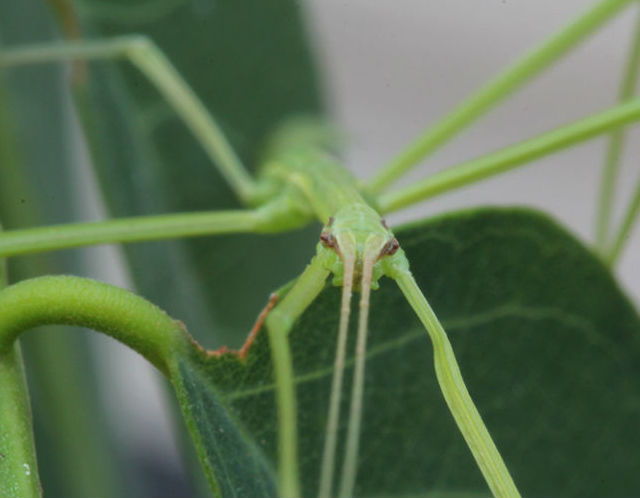
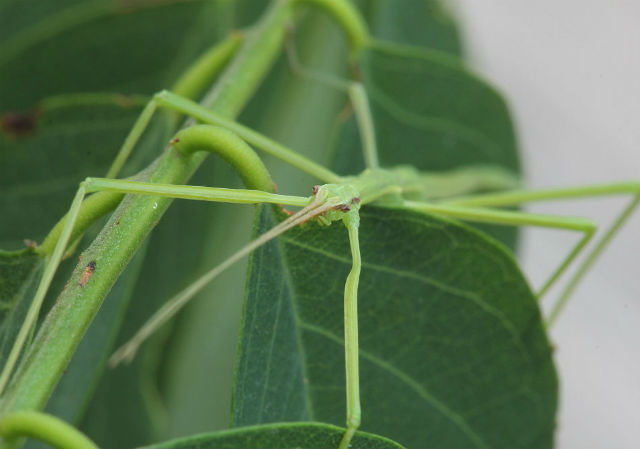
As their name implies, these creatures live in trees and shrubs, for which they are well camouflaged. The bodies of tree crickets are long and skinny compared to the bodies of other types of familiar crickets.
Snowy Tree Cricket 016

Like other species of in their family, they feed on a wide range of items like plant parts, other insects and even fungi.

Snowy Tree Cricket_1949

The call of the Snowy Tree Cricket is commonly used as a background sound in movies and on television in order to depict a warm Summer evening.

Snowy Tree Cricket_1952

This is a neat, delicate-appearing invertebrate that I enjoy coming across, whether while doing yardwork or out herping.

Third Eye Herp
E-mail

European Hornet

Snake Road_9975

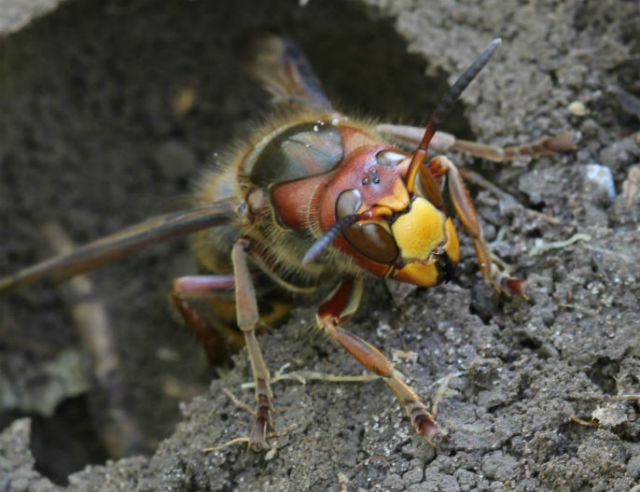
While searching for snakes in southern Illinois this month, I flipped a rock and under it was this large (over an inch long) insect. This the only true hornet found in North America, having been introduced by European settlers in the 1800′s.
European Hornet_3938

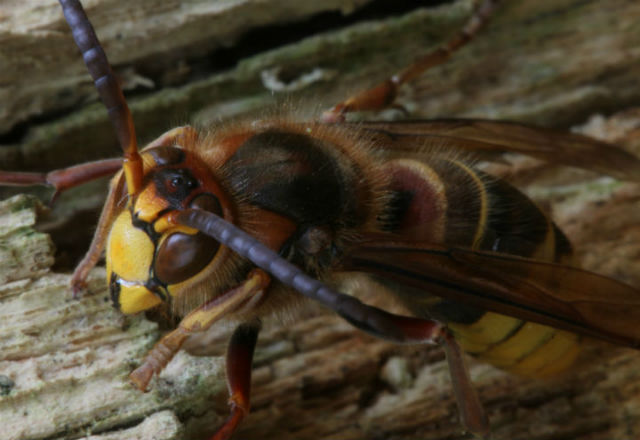
Most examples I’ve seen have been in the Autumn and are probably females (mated queens) looking for a place to overwinter before starting a new colony the following Spring. Only overwintering queens survive in protected sites such as under loose bark, in tree cavities, under rocks and in buildings. All other colony members produced in the current year perish.
European Hornet 026

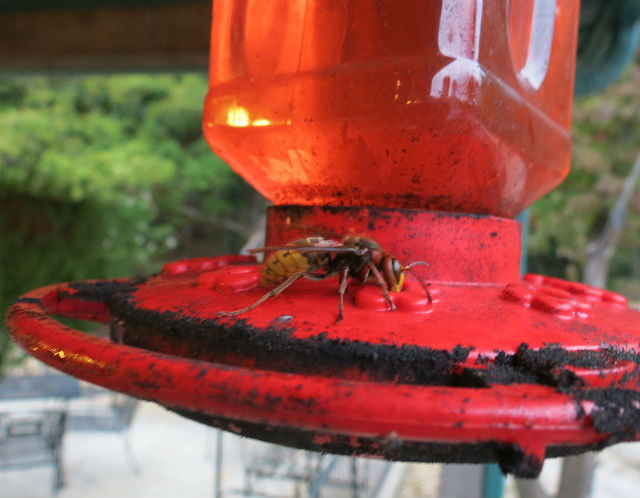
I have seen European Hornets in my home state of Ohio as well. They are mainly carnivorous and hunt insects such as beetles, caterpillars, moths, dragonflies and crickets. They also feed on fallen fruit and other sources of sugary food. I saw this one at a hummingbird feeder. These insects have been observed stealing prey from spiders, which can be classified as an example of kleptoparasitism.

European Hornet_5489

Though they probably have a painful sting, they usually aren’t particularly defensive when not protecting their nest. This woodland species constructs its large paper hive in natural cavities, especially in hollow trees. The nests typically have 200-400 workers.

European hornet_8460

It’s always a neat experience to observe one of these impressive invertebrates while out on a hike.

Third Eye Herp
E-mail

Northern Walkingstick

Northern Walkingstick_6524

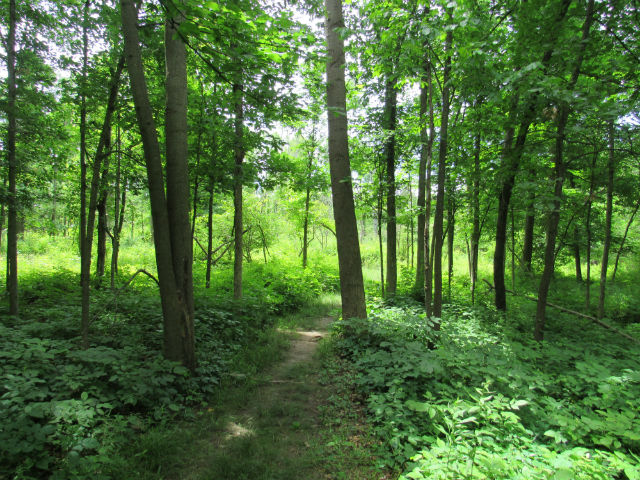
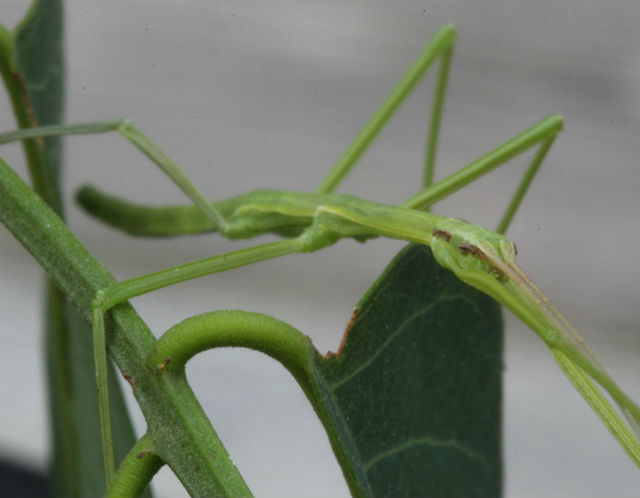
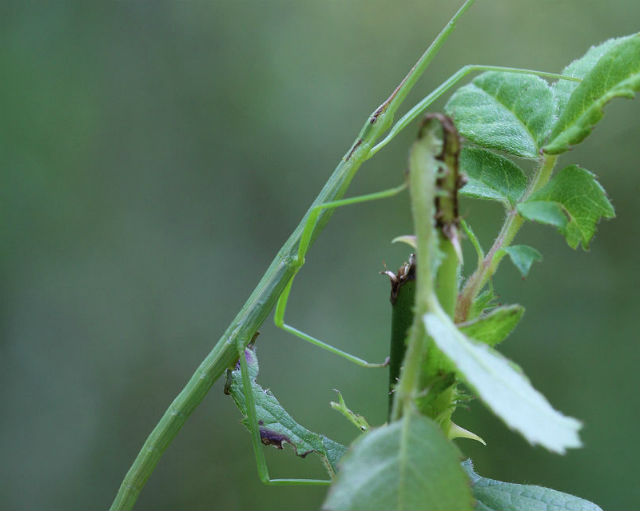
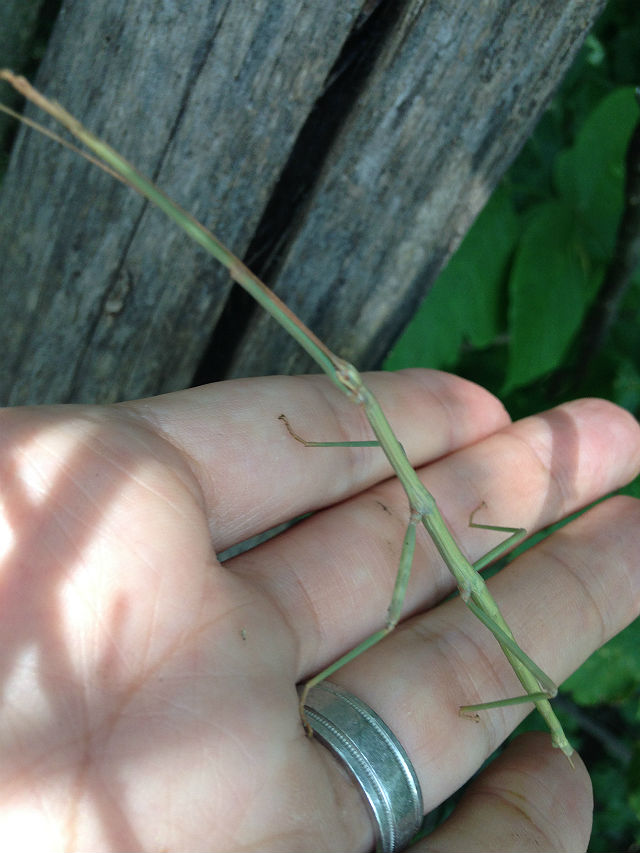
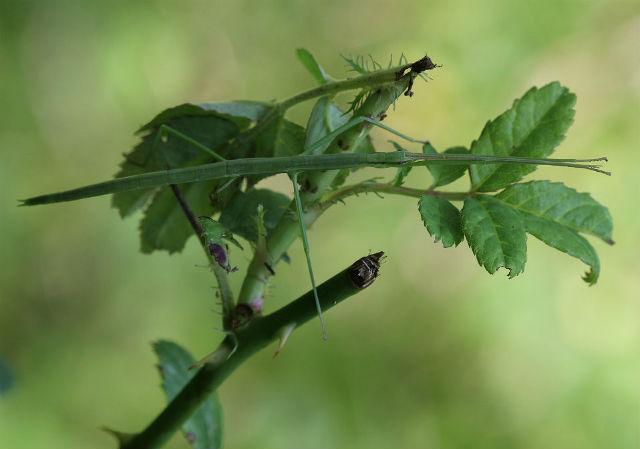
While walking on the Buckeye Trail, I came across this very cool insect. Adults are 3 to 3-1/2 inches long and remarkably well camouflaged. They are slender, elongated and resemble a twig.

walkingstick 078

Northern Walkingsticks have a wide range, extending down the Atlantic Coast from Alberta, Canada to Northern Florida.

Northern Walkingstick 064a

These creatures feed mainly on the leaves of trees. They are leaf skeletonizers, eating the tissues between the leaf veins before moving on to new leaves.

Northern Walkingstick 072

There favored habitat is deciduous woodland edges and forests where their preferred food sources (Oak and Hazelnut) are in good supply.

Northern Walkingstick_2512

Northern Walkingsticks have the extraordinary ability to regenerate legs that are lost by attacks from predators. When predators are present, they remain motionless with their legs close to their bodies, thus resembling a stick.

Northern Walkingstick 056

They tend to lay their eggs in September; they do so, usually from great heights, dropping them down to the leaf litter where they are left to overwinter. The eggs falling from the trees sound like of droplets of rain.

Northern Walkingstick 060

We often think of strange, exotic-looking insects as creatures inhabiting tropical rainforests, but the Northern Walkingstick graces us with its presence right here in Ohio.

Third Eye Herp
E-mail

Moth Fly

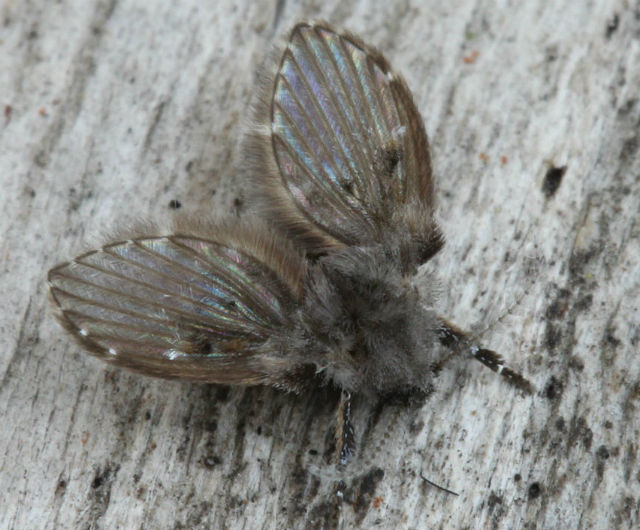
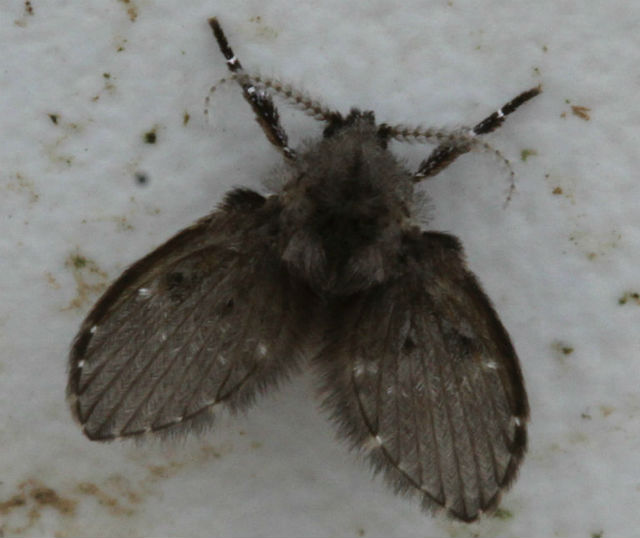
Recently I found this strange creature in my basement. It is also commonly known as the Drain Fly, Filter Fly or Sewage Fly. Moth flies are frequently found indoors on windows, sinks and walls. The source of the fly infestation is generally from sinks and floor drains.

mothfly_9051

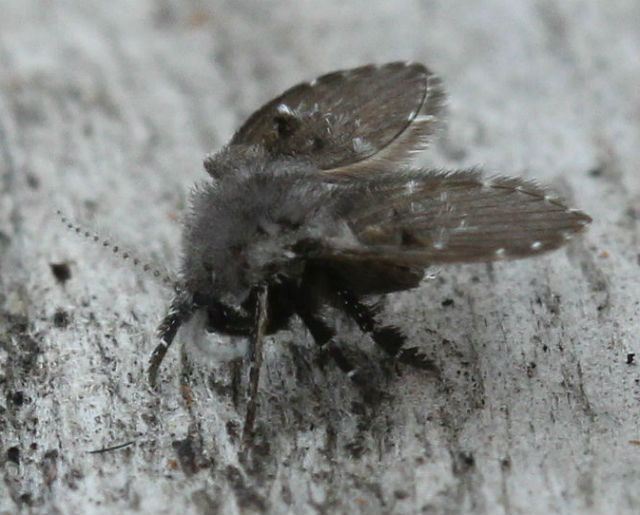
The adult insect is about one-fifth of an inch long. It has a dark gray body and lighter colored wings. It is densely covered with long hair, which gives the body a fuzzy appearance, hence the name “Moth Fly.”

mothfly_9041

Their eggs are deposited in moist, decomposing organic materials. These materials, which accumulate in drains, provide an ideal site for metamorphosis. Adults live about two weeks and feed on flower nectar and polluted water.

mothfly_9047

During the day adults rest in shaded areas or on walls near plumbing fixtures and on the sides of showers and tubs. Most of their activity occurs during the evening. It was neat to make an acquaintance with this unusual insect.

Third Eye Herp
E-mail

Brown Lacewing

brown lacewing_8468

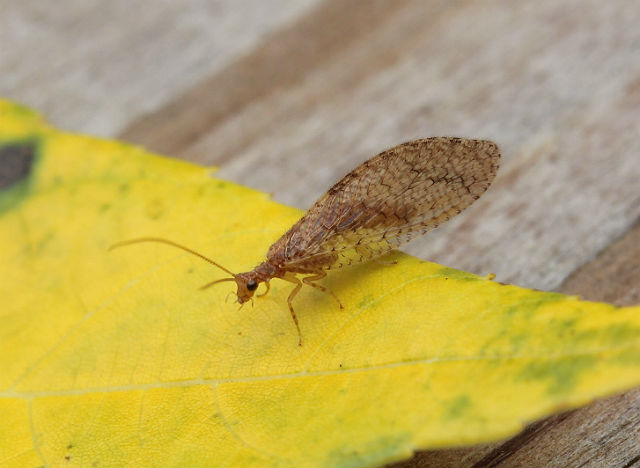
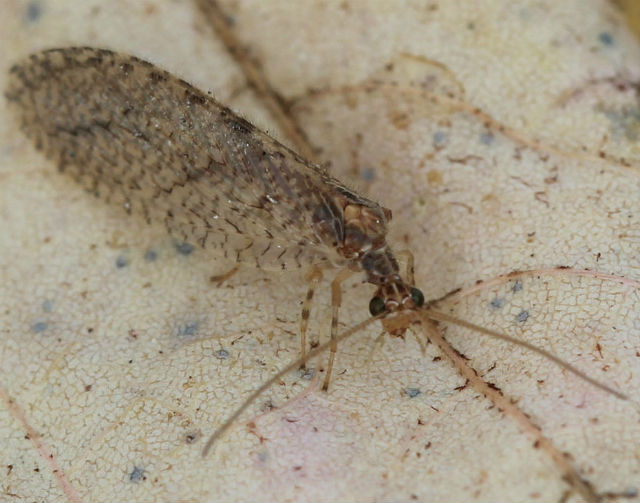
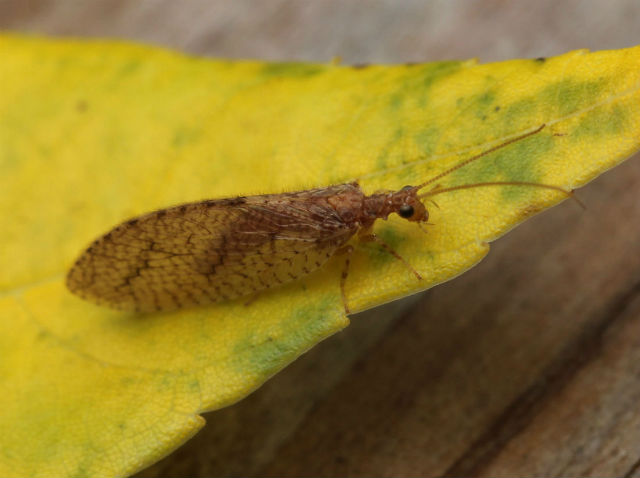
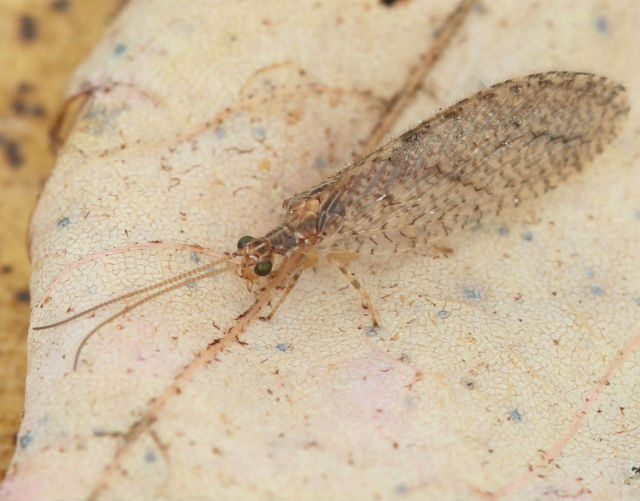
It’s wintertime, yet if you look around, there are still insects to be found, like the Brown Lacewings that occasionally turn up in my house.

brown lacewing_8605

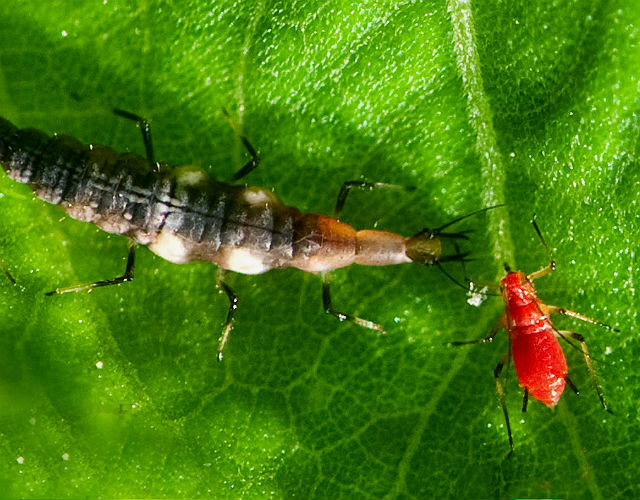
They are predators both as adults and larvae. These creatures prefer soft-bodied insects such as aphids and mealybugs, as well as insect eggs.

brown lacewing_8472

I suspect the reason I’m finding them indoors is that the were inadvertently brought in when outdoor plants came in for the Winter.

brown lacewing_8604

Brown Lacewings are native throughout North America, though are not as abundant as Green Lacewings (these were the first examples I’ve ever seen).

lacewinglarva

Adults are small, only about half an inch long, and as their name implies, they have heavily veined wings. The larvae look like tiny alligators with sickle-shaped jaws.

brown lacewing_8473

Although they are fragile-looking, lacewings are one of the most effective beneficial insects to the gardener and I surely don’t mind having them around.

Third Eye Herp
E-mail

Sweat Bee

sweat bee_2656

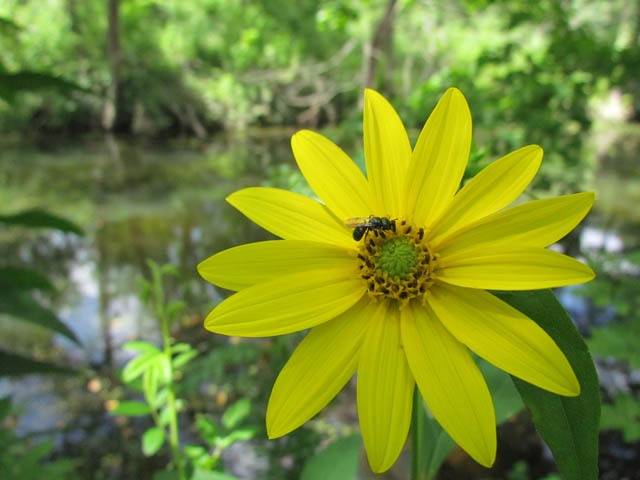
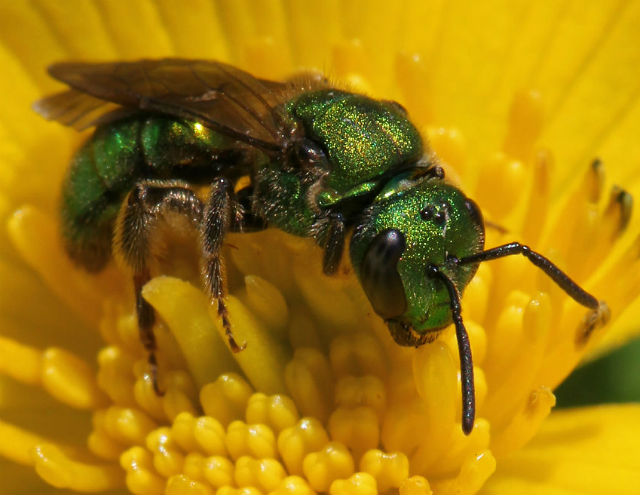
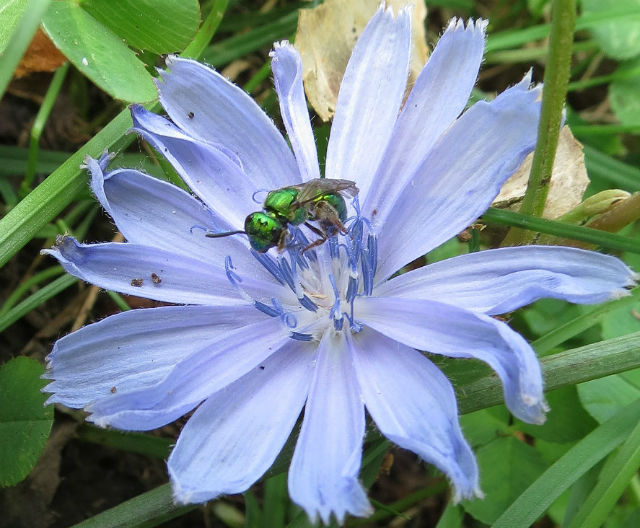
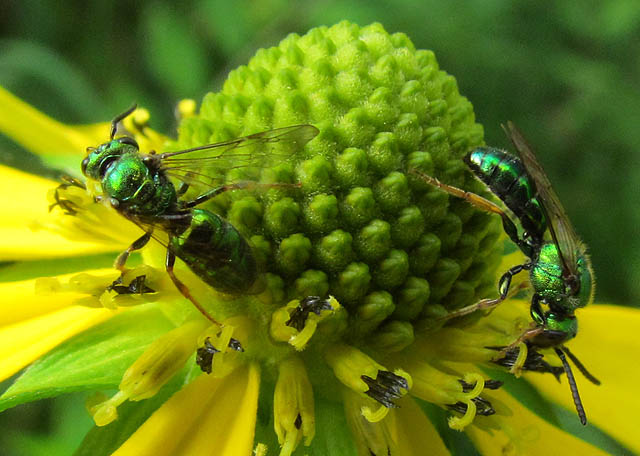
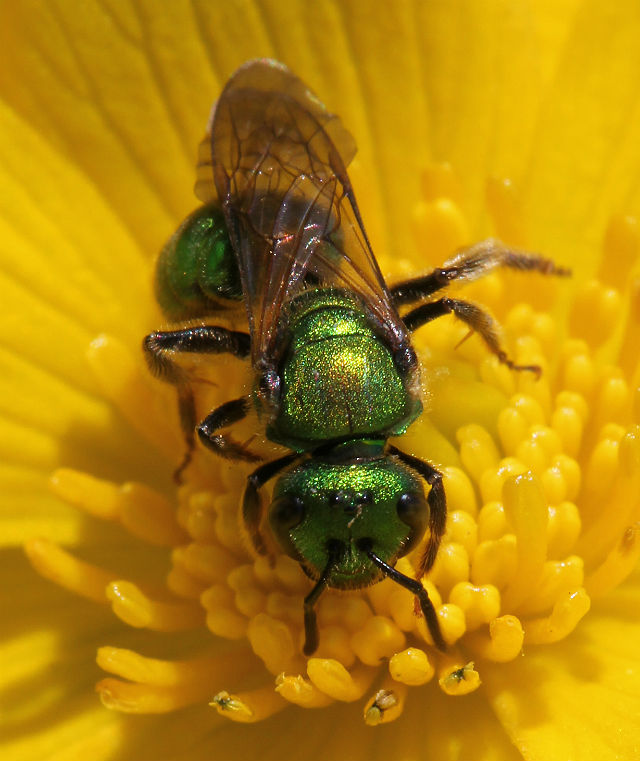
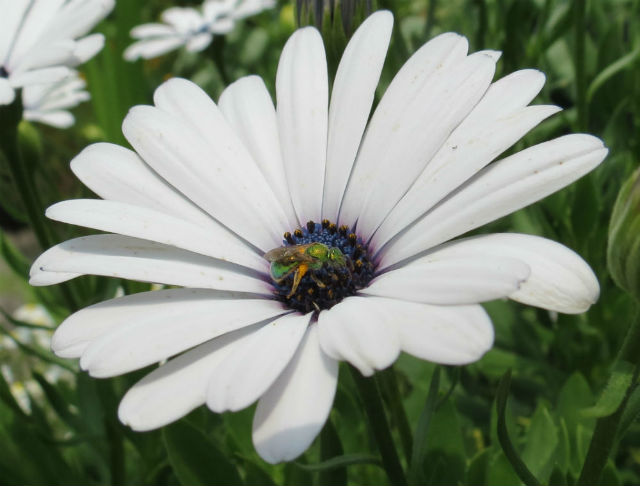
Sweat bees are the most brightly colored native bees in our area. The shiny, metallic green insects are quite eye-catching.

sweat bee 084

Augochlora Sweat Bees nest in the ground, building long vertical nest cavities. Most are solitary nesting, but some species share the same nest entrance, but build their own cavities.

sweat bee_6698

They are short tongued, so they visit shallow or easily accessible flowers for nectar. They also steal nector collected by plant parasites, like aphids.

sweat bees_4054

These insects are tiny (less than 1/2 an inch) and are named because of their habit of landing on people and licking the perspiration from the skin in order to obtain salt.

sweat bee 085

This brilliant “living jewel” performs the same function as other species bees – they are very important pollinators for many wildflowers and crops.

sweat bee_5878

Lately fair numbers of them have been visiting my deck garden and I enjoy seeing them every day.

Third Eye Herp
E-mail

Bald-faced Hornet

Bald-faced Hornet_6996

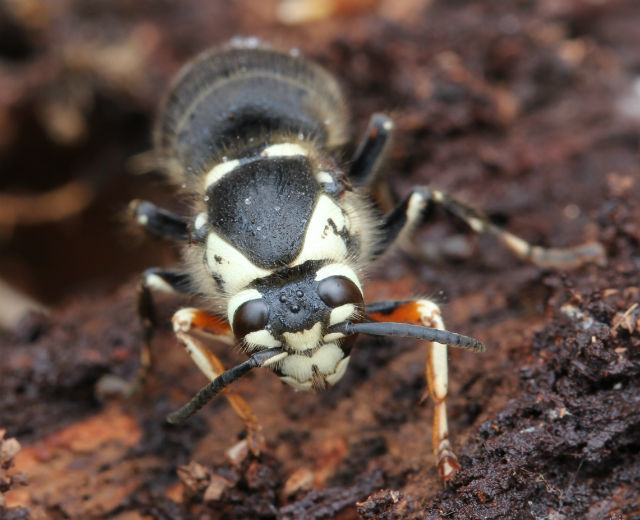
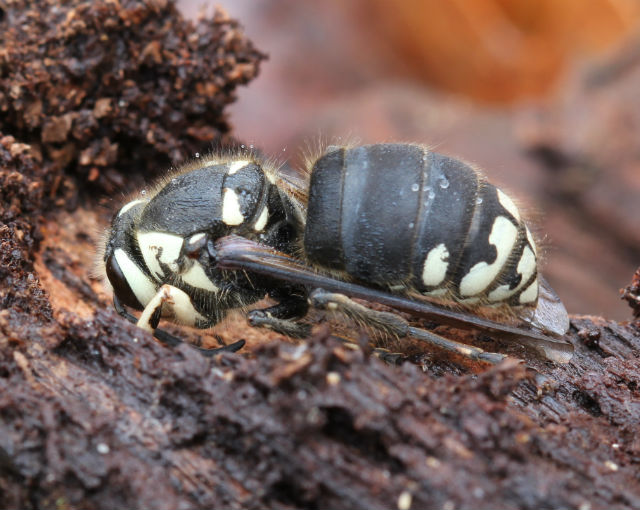
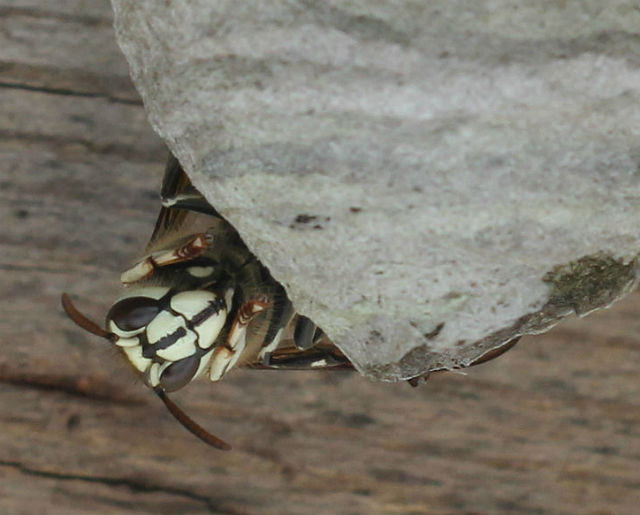
It may be December, but a walk through the woods can still yield insect life, if you are willing to turn a few logs. Earlier in the week I found this hardy creature.

Bald-faced Hornet_4070

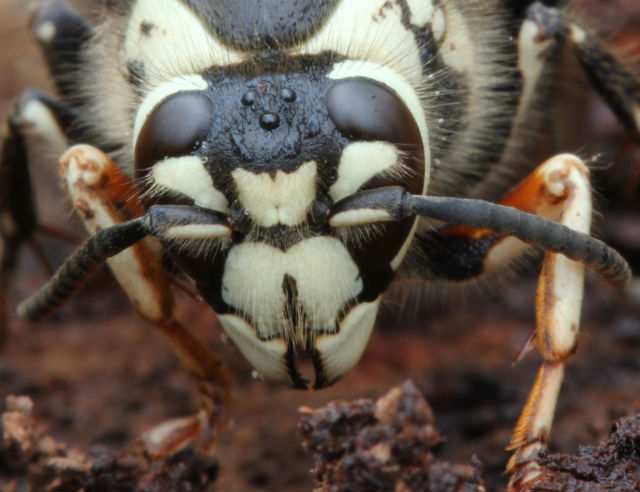
This insect gets the first part of its name from the ivory-white markings on the face. Despite the second part of its name, the Bald-faced Hornet is not a “true” hornet, rather it is a a type of yellowjacket.

Bald-faced Hornet_4077

Fertilized queens like this one overwinter in protected places such as in hollow trees, rock piles, under bark and in the walls and attics of buildings.

Bald-faced Hornet_4069

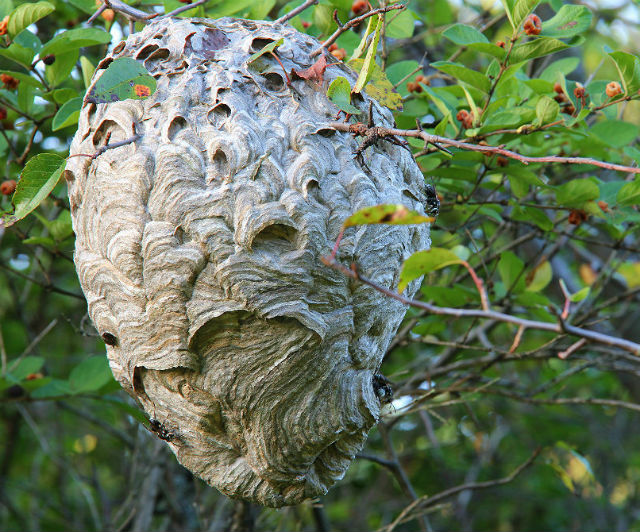
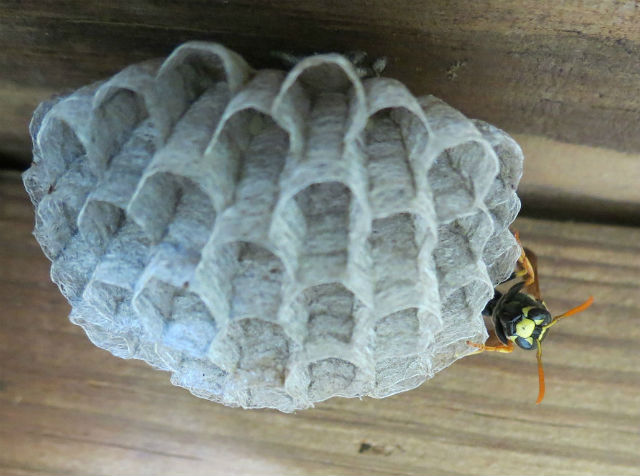
In springtime, she collects cellulose from rotting wood by chewing it. She then adds her saliva and creates a paste to make a papery material with which to construct a football shaped, grey paper-like nest.

Bald-faced Hornet 057

The queen creates a few brood cells within the nest and deposits eggs in them and feeds the larvae when they hatch. This Bald-faced Hornet built her nest on my deck in the summer.

Bald-faced Hornet 119

Though they don’t have much of a “fan base,” Bald-faced Hornets are considered a beneficial insect because they reduce populations of unwanted insects (including other yellowjackets) and pollinate flowers when they are searching for nectar…and I think they are a cool creature to come across on a December hike.

Third Eye Herp
E-mail

Autumn Meadowhawk

autumn meadowhawk_6372

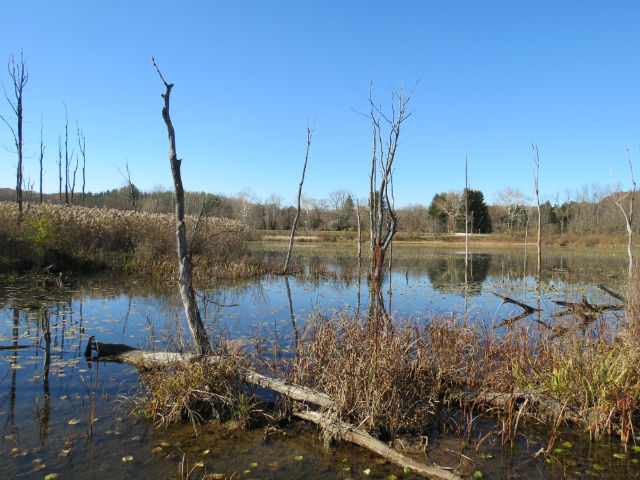
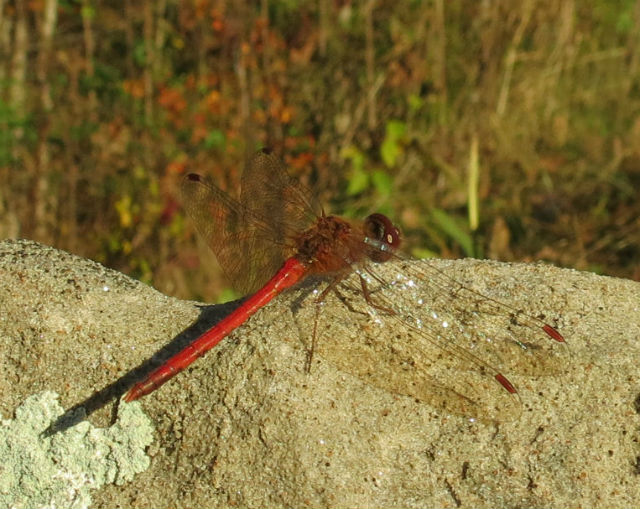
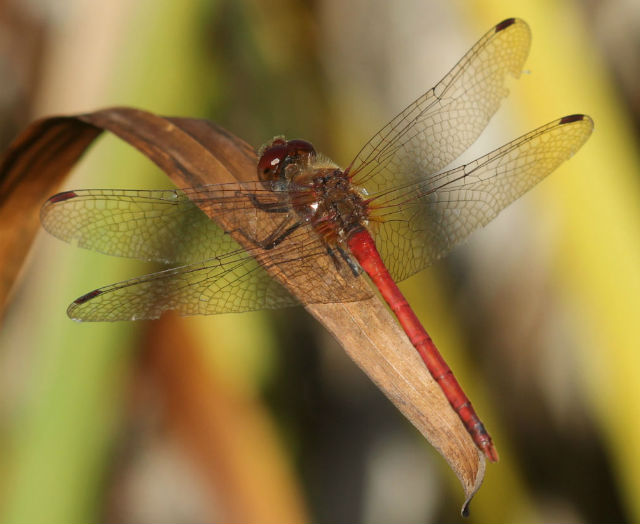
Even though it’s November, I’m still seeing a fair number of dragonflies when I go hiking. Most are Autumn Meadowhawks. Their common name refers to the late flight season of this species. This insect lives in a variety of habitats, including marshes, bogs, ponds, lakes and slow-moving streams.

autumn meadowhawk_6179

These are small to medium-sized skimmer dragonflies, known as darters in the UK and as meadowhawks in the North America. Dragonflies are expert fliers. They can fly straight up and down, hover like a helicopter and even mate in mid-air. Dragonflies catch their insect prey by grabbing it with their feet.

autumn meadowhawk_3783

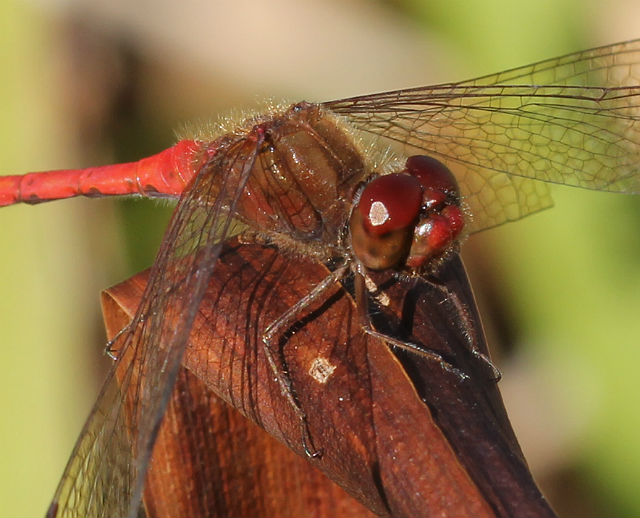
Nearly all of the dragonfly’s head is made up of its eyes, so they have incredible vision that encompasses almost every angle, except right behind them. Each compound eye contains as many as 30,000 lenses. A dragonfly uses about 80% of its brain to process all this visual information.

autumn meadowhawk_3782

At this time of year when insect life if nowhere near as plentiful as it was a few months ago, seeing one of these brightly colored creatures is a welcome encounter.

Third Eye Herp
E-mail

Winter Snowfly

Winter Snowfly_2343

Because insects need warmth in order to function, they are not the sort of thing you’d expect to see on a Winter day. But nature has many “rule breakers” and the Winter Snowfly is one of them.

Winter Snowfly 120

Similar to dragonflies, damselflies, mayflies, and caddisflies – snowflies spend most of their life as aquatic larva. While most aquatic insects develop fastest in warm weather, Winter Snowflies do the opposite.

Winter Snowfly 106

Why don’t these insects freeze to death? The secret lies in the production of “antifreeze” that disrupts the formation of ice crystals in the insect’s haemolymph (blood), allowing the body fluids to remain liquid at temperatures several degrees below freezing.

Winter Snowfly 102

Once out of the water, snowflies rummage about in search of mates. Males attract females by drumming their rear end against the snow and ice. Females feel, rather than hear, the vibrations made by calling male.

Winter Snowfly 104

Winter Snowflies have very particular water quality requirements, and are among the first animals to disappear from polluted or degraded streams and lakes. As such, they are frequently used for biomonitoring.

Third Eye Herp
E-mail

Stonefly

stonefly010

Even in the winter you can find cool stuff by overturning rocks found in creeks. As the name “Stonefly” implies, they typically crawl around under rocks in streams. These are ancient insects of a very old and stable lineage. They have changed very little in the last million years. They are the aquatic, immature stage of a fairly short-lived winged adult insect.

stonefly_7914

To make their final transformation, the nymph crawls up overhanging roots, vegetation or rocks protruding from the water, sheds its skin, and flies away as an adult. Adults engage in an interesting behavior known as “drumming.” When drumming, stoneflies strike themselves against an object, producing a signal of pulses and pauses.

stonefly_7915

Stoneflies are usually associated with well oxygenated streams or sections of lakes with plenty of waves. They are predatory on a variety of other aquatic insects and invertebrates.

stone_7919

They are not just cool to look at, they are also an important part of stream and river fauna, providing food for fish and birds. Their absence is often a good indicator that a stream is polluted. These insects are so important that conservation agencies and game fishermen keep charts of when they hatch.

Third Eye Herp
E-mail