Bald Eagle

IMG_5560

Ohio’s largest breeding raptor feeds largely on fish. A pair has been nesting near the Cuyahoga River in Cuyahoga Valley National Park for a few years now.

bald eagle 09016_n

The Bald Eagle was negatively affected by the use of the pesticide DDT and the numbers of our national symbol dropped severely in the 1950s and 1960s.

bald eagle_4221

By 1979 Ohio Bald Eagles declined to just four breeding pairs.The elimination of harmful pesticides has caused a dramatic comeback.

bald eagle_8530

At one time, the word “bald” meant “white,” not hairless. The Bald Eagle is the only eagle unique to North America. Its distinctive brown body and white head and tail make it easy to identify even from a distance.

bald eagle_1512

During breeding season, the male and female work together to build a nest of sticks, usually located at the top of a tree. The nests can weigh up to a ton and measure up to 8 feet across.

eagle022

Once paired, bald eagles remain with each other until one mate dies, then the surviving bird will find another mate.

immature bald eagle_0878

Immature birds have mostly dark heads and tails; their brown wings and bodies are mottled with white in varying amounts. Young birds attain adult plumage in about five years.

bald eagle_0748

The Bald Eagle has been the national emblem of the United States since 1782 and a spiritual symbol for native people for far longer than that. For me it’s always a thrill to see one of these majestic birds when hiking the Ohio & Erie Canal Towpath.
Third Eye Herp
E-mail

House Sparrow

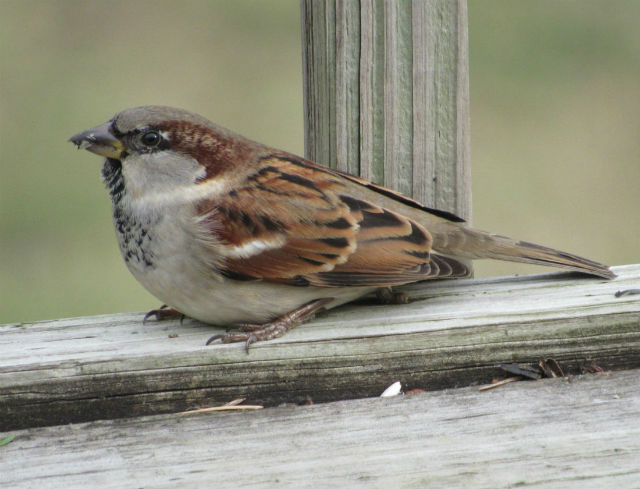
I have seen these birds throughout my life, whether at my home growing up in Cleveland, downtown, or in my current residence in the suburbs.
house sparrow_9964

The House Sparrow is native to most of Europe, the Mediterranean Basin and much of Asia. Its intentional or accidental introductions to many regions, including parts of Australia, Africa, and the Americas, make it the most widely distributed wild bird.

house sparrow

This bird is strongly associated with human habitations and can live in urban or rural settings. Though found in widely varied habitats and climates, it is rarely found away from human development. It is often seen in city centers, suburbs, farms and around isolated houses or businesses surrounded by terrain unsuited to House Sparrows, such as desert or forest.

house sparrow_0064

Their diet consist mainly of small seeds. They are attracted to corn, oats, wheat and other types of grain or weed seeds. These birds primarily forage on the ground.

house sparrow_1469

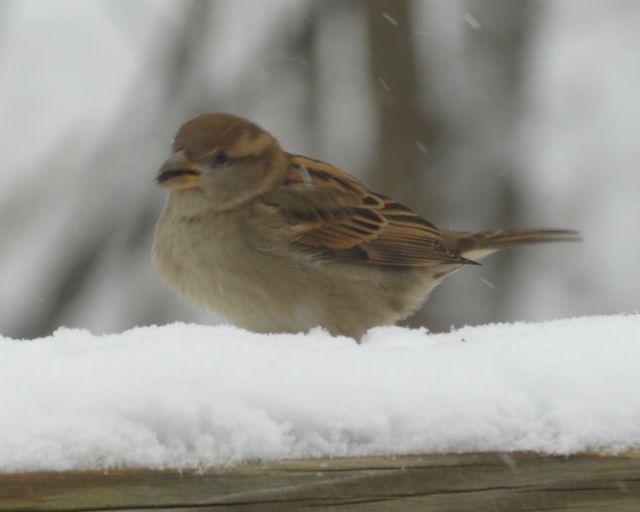
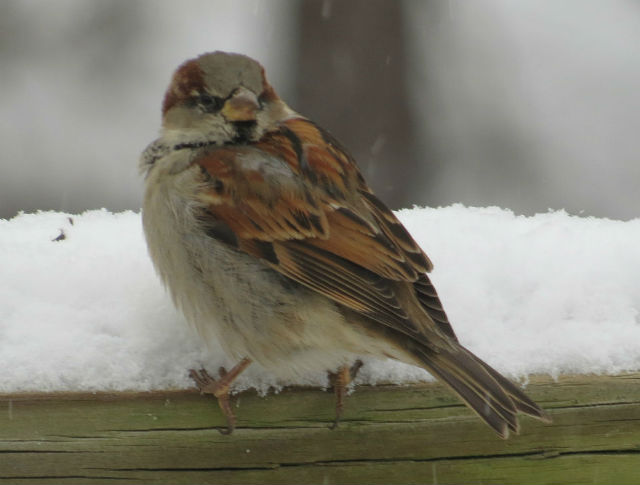
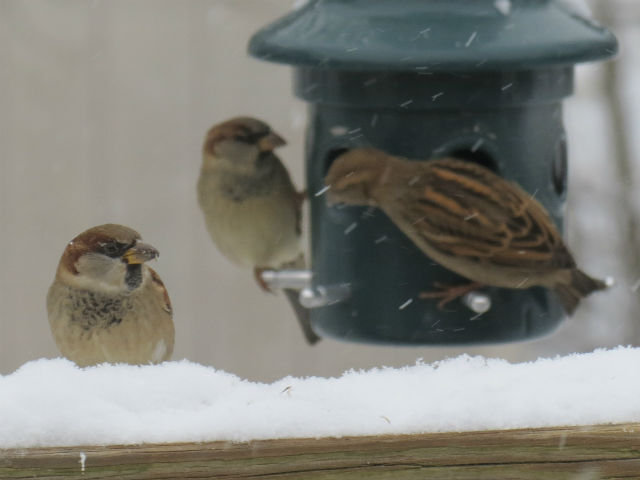
Males have black chin and bib with white cheeks and rust colored cap and nape of neck, while females are plainer, with a broad buff eyebrow, brown and buff-streaked wings and back.

house sparrow_9959

Because of its simple success formula of associating with humans, the House Sparrow is one of the most ubiquitous and abundant songbirds in the world today.

Third Eye Herp
E-mail

Turkey Vulture

Turkey Vulture_3899

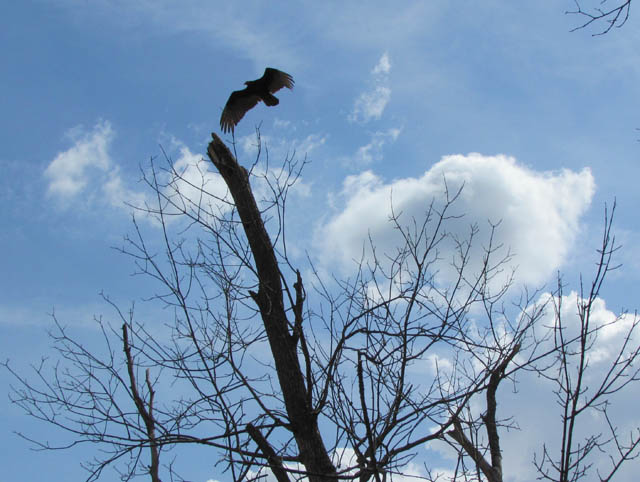
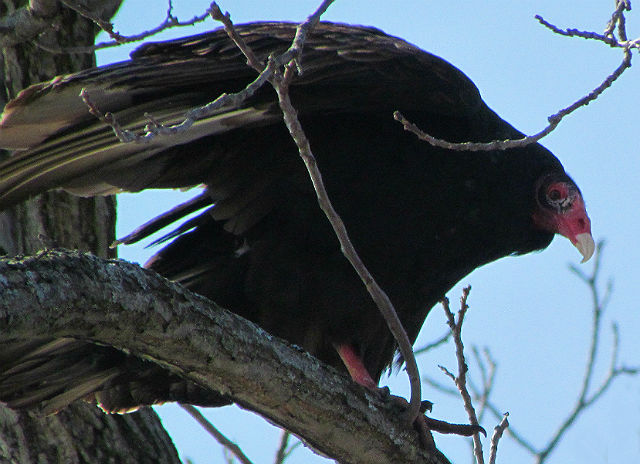
Turkey Vultures are majestic but unsteady soarers. Their teetering flight with very few wingbeats is an identification characteristic. Their ability to ride thermals enables them to move from one destination to another.

Turkey Vulture_3926

These birds occupy a diverse range of habitats like roadsides, suburbs and farmlands. They are found in forested as well as open environments; they can be found just about anywhere they can effectively find a carrion food supply.

Turkey Vulture_2334

Turkey Vultures usually roost in large community groups, but search for food independently during daylight hours. They are talented scavangers with an acute sense of smell.

Turkey Vulture_0865

They have a well-developed sense of smell and are one of the only species of birds worldwide that uses smell extensively. Their sense of smell is so remarkable that they can even locate a dead mouse under a pile of leaves.

Turkey Vulture_2334a

Several Turkey Vultures may gather at a carcass, but usually only one feeds at a time.This large bird species has a six foot wingspan and has been around since prehistoric times.

Turkey Vulture_2326

Turkey Vultures act as nature’s ultimate garbage collector and recycler.

Third Eye Herp
E-mail

Cooper’s Hawk

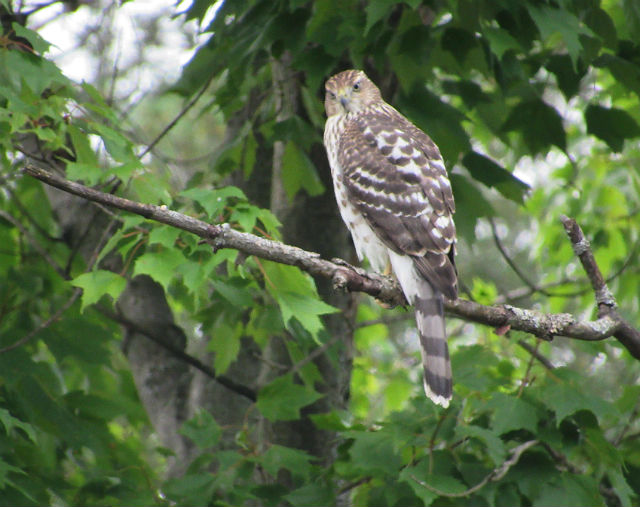
coopers hawk_7364

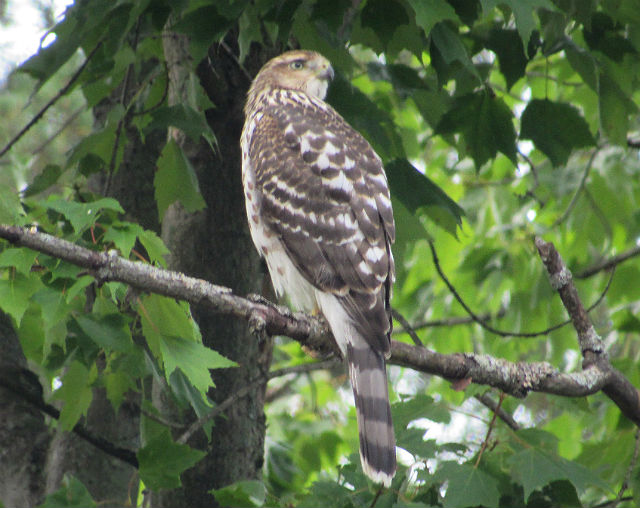
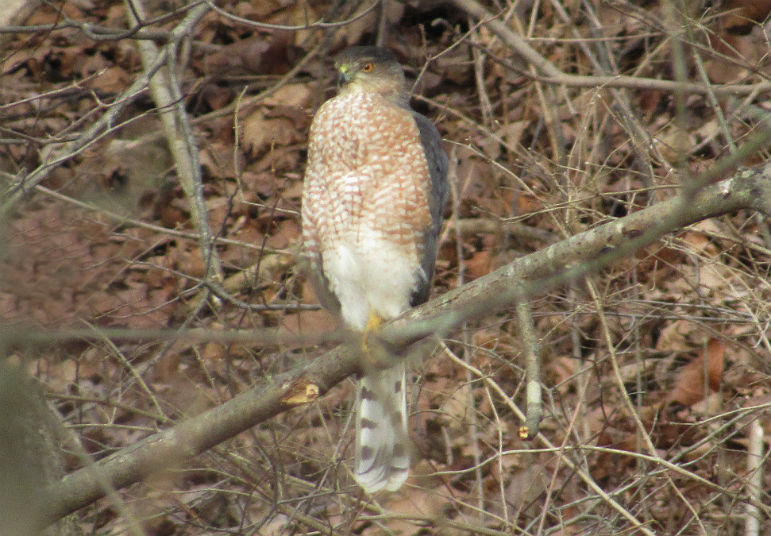
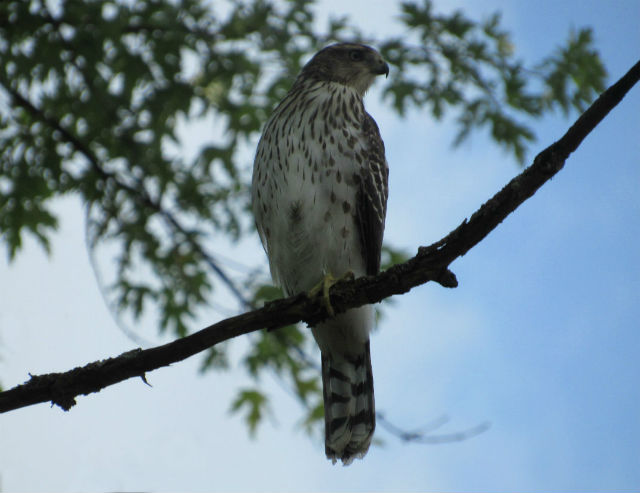
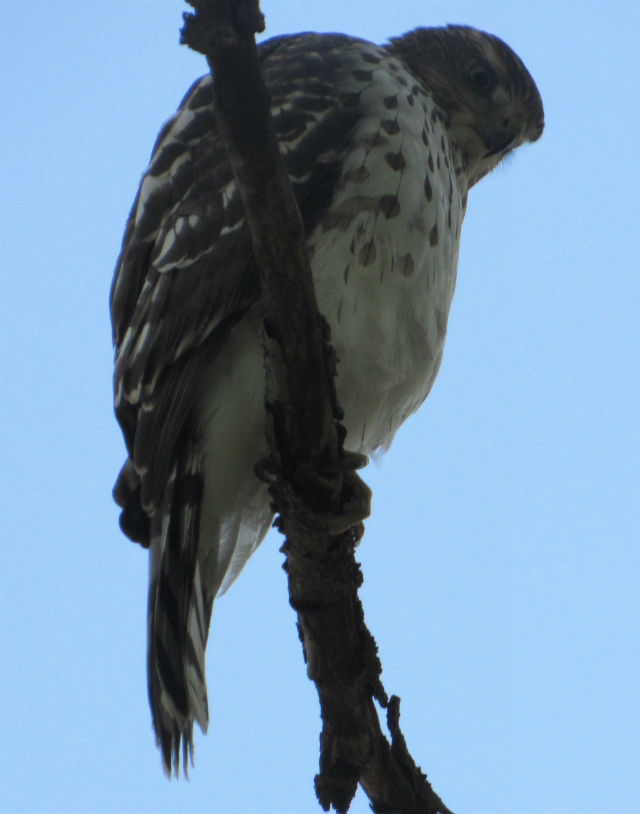
While doing yard work this week, I noticed this creature perched on a tree in my front yard. Copper’s Hawks often visit suburban homes to pick off songbirds from feeders.

coopers hawk_1343

I have also seen them in Brecksville Reservation – they among the bird world’s most skillful fliers – their short wings allow them to navigate through cluttered trees at high speeds in pursuit of other birds.

coopers hawk hawk_7383a

Cooper’s Hawks are forest and woodland residents, but suburbs with enough trees are a favorite habitat as well.

coopers hawk_7335

These crow-sized raptors mainly eat birds. Small birds tend to be safer around Cooper’s Hawks than medium-sized birds. They sometimes rob rodent nests and mammals are more common in diets of Cooper’s Hawks in the West.

coopers hawk_7444

While they can soar in classic hawk fashion, when in pursuit of prey, their flight changes. It becomes becomes powerful, quick, and very agile, allowing the bird to thread its way through tree branches at top speed.

coopers hawk_7426

Other common names for the Cooper’s Hawk include: big blue darter, chicken hawk, flying cross, hen hawk, quail hawk, striker, and swift hawk.

Third Eye Herp
E-mail

Mourning Dove

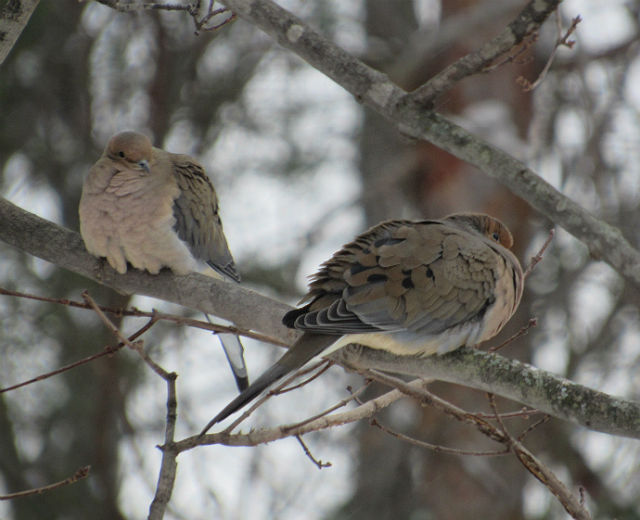
mourning dove_2186

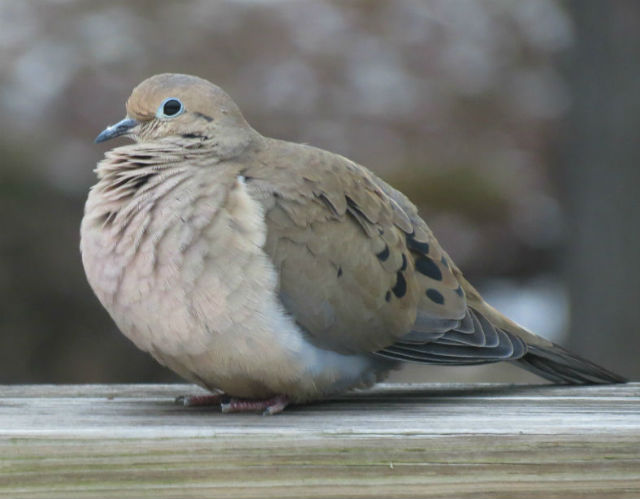
This graceful, slender-tailed, small-headed dove is common across the continent. The Mourning Dove is the most widespread and abundant game bird in North America. They like to hang out on the deck rail, ground and backyard maple tree at my house.

Mourning Dove_9405

Part of the reason for its significant increase in population is that many forests have been converted to farmlands, pastures and towns – which provide ideal habitat, as this is an open-country bird.

Mourning Dove_0357

Their soft, drawn-out calls sound like laments (mourning). When taking off, their wings make a sharp whistling or whinnying sound. Mourning Doves have coloration that matches their surroundings. They are brown to tan overall, with black spots on the wings and black-bordered white tips.

Mourning Dove_8098

Seeds make up 99 percent of a Mourning Dove’s diet. It tends to feed busily on the ground, swallowing seeds and storing them in an enlargement of the esophagus called the crop. Once they’ve filled their crop, they fly to a safe perch to digest their meal.

Mourning Dove_0355

Although this is primarily a bird of open areas with scattered trees, and woodland edges, large numbers roost in woodlots during Winter.

Third Eye Herp
E-mail

White-breasted Nuthatch

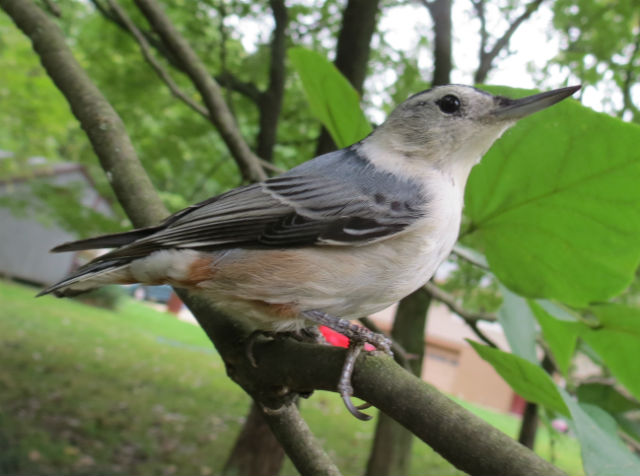
nuthatch_2112

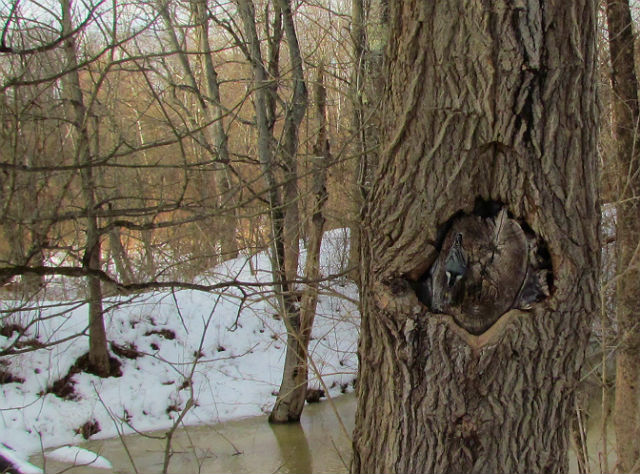
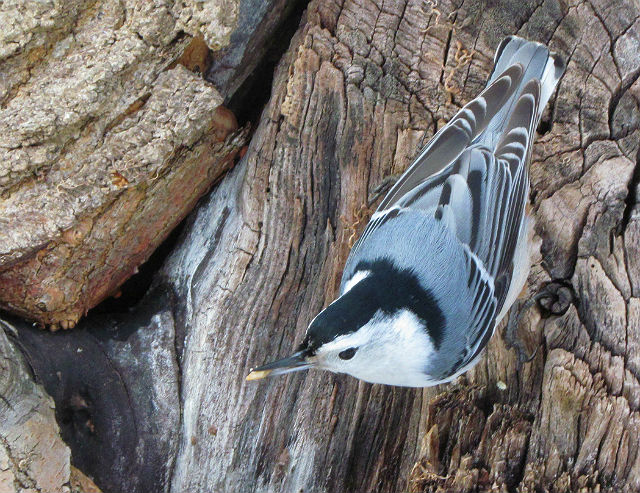
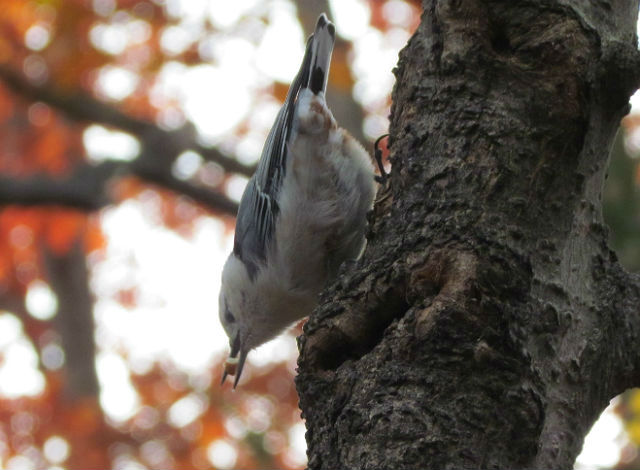
This bird is easy to identify by watching its behavior; it has the odd habit of creeping down tree trunks headfirst. All other species of bark-foraging birds search for food by climbing trees upwards. This gives the White-breasted Nuthatch a distinct advantage, allowing it the visual perspective of finding prey that other birds may miss.

nuthatch_2116

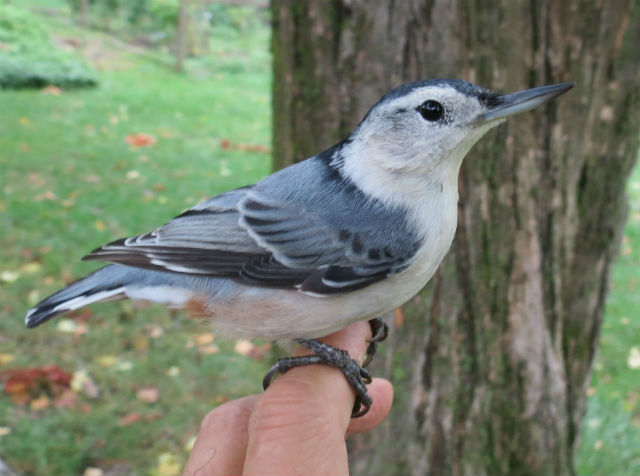
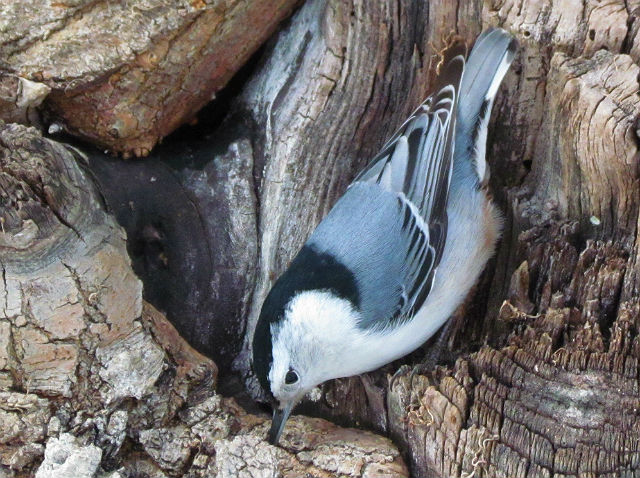
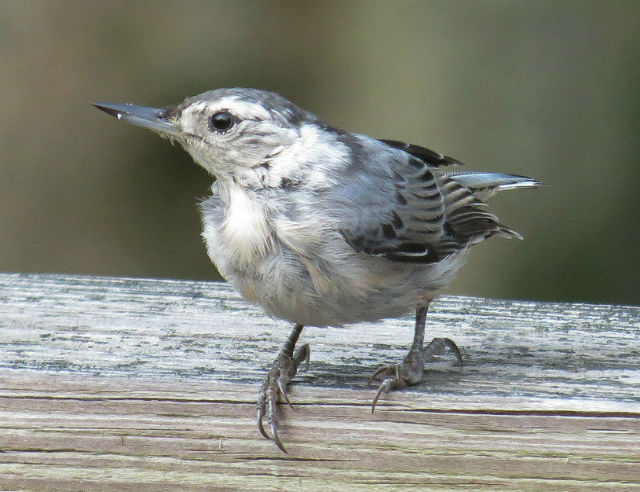
This is a stocky bird, with a large head, virtually no neck, a short tail, powerful bill and strong feet. The upperparts are pale blue-gray, and the face and underparts are white. The species has a black crown and nape that contrast with a white face and breast.

nuthatch_7269

It’s common name stems from its habit of cramming nuts and acorns into tree bark and then hammering away at them with their sharp bill, until the nut splits to “hatch” out the seed inside.

nuthatch_9060

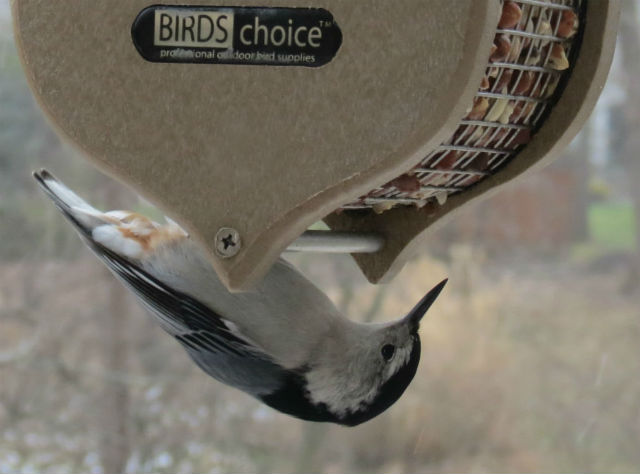
They store a variety of seeds and nuts in bark crevices, returning later to eat their stockpile of food. These birds are also  frequent visitors to backyard feeders.

nuthatch_8135

White-breasted Nuthatches reside in mature woods and woodland edges. They’re particularly associated with deciduous forests, consisting of Maple, Hickory, Basswood and Oak.

nuthatch_2120

It’s call of Yenk-yenk-yenk-yenk sounds like a small nasal voice – or like a bath toy rapidly squeezed.

nuthatch_6998

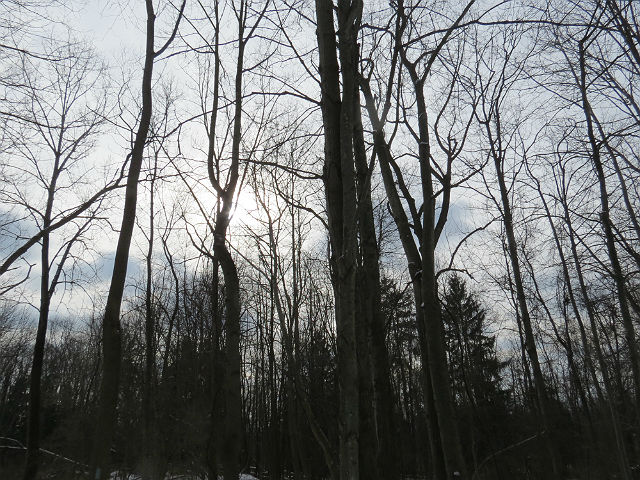
At this time of year I often see them in Brecksville Reservation in small flocks of Black-capped Chickadees and Tufted Titmice. One explanation for these flocks is that the birds gain protection from predators by the vigilance of the other birds.

nuthatch_7272

A group of nuthatches are collectively known as a “jar” of nuthatches.

Third Eye Herp
E-mail

Blue Jay

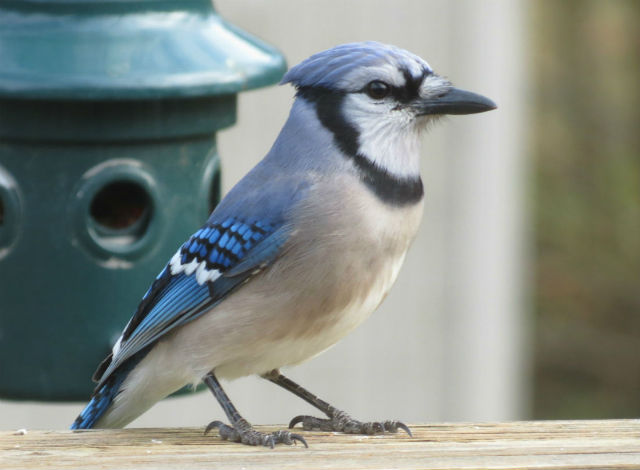
blue jay_8209

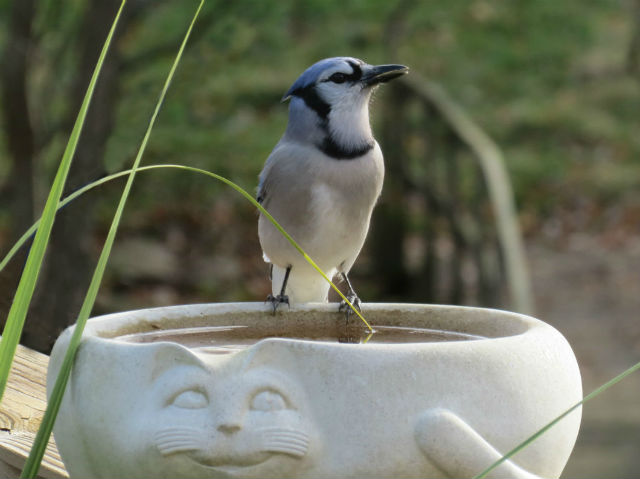
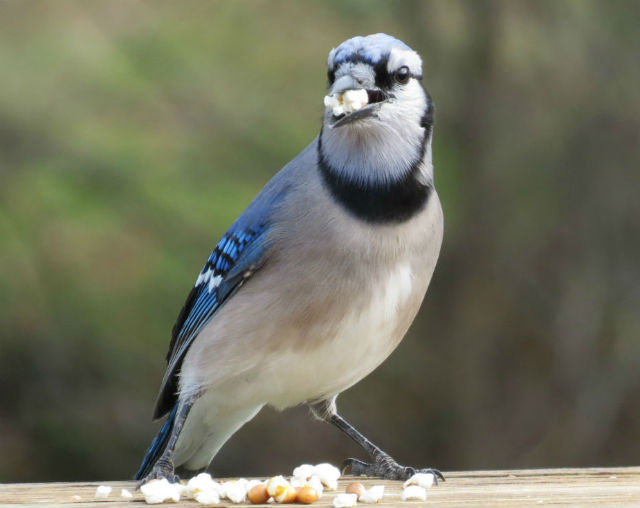
As one of the loudest and most colorful birds of eastern backyards and wooded areas, the Blue Jay is one of our easiest birds to identify. Intelligent and adaptable, it often visits bird feeders.

blue jay_9366

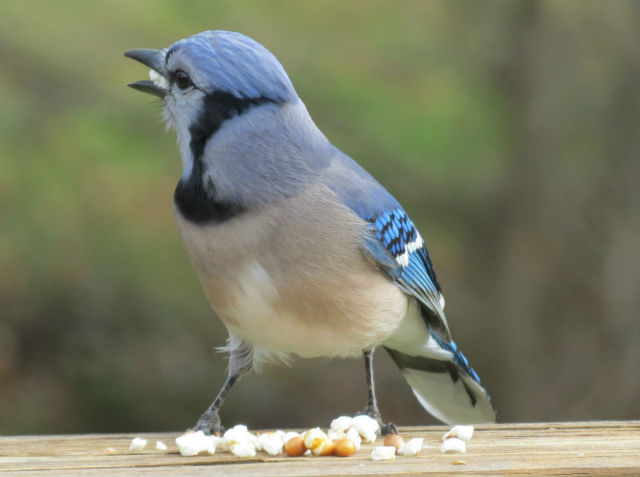
The Blue Jay mainly feeds on nuts and seeds such as acorns. At feeders it seems to favor peanuts (the individuals that visit our house also like popcorn). Like squirrels, this bird is known to hide nuts for consumption later.

blue jay_9383

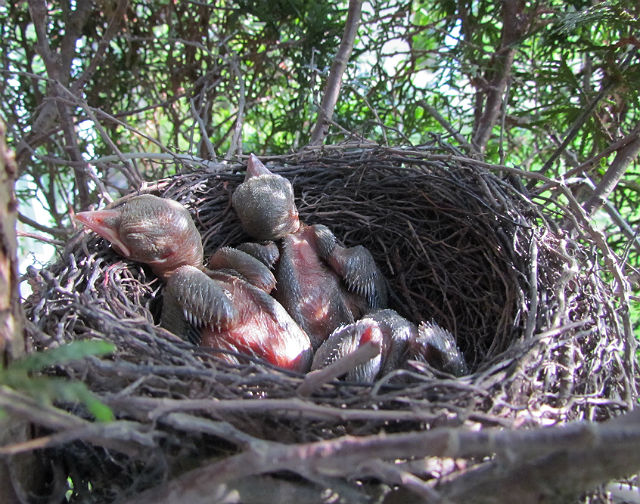
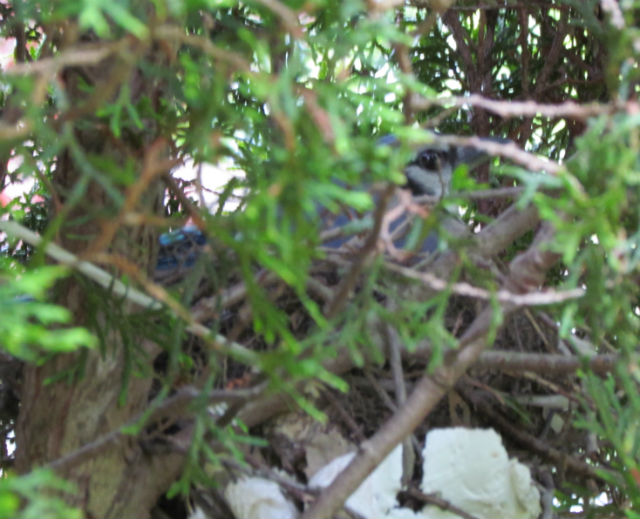
It breeds in both deciduous and coniferous forests, and is common near and in residential areas. One Summer I even had this Blue Jay nest with three babies in my front yard.

blue jay 001

The nest tends to be cup-shaped and composed of twigs, small roots, bark strips, moss, other plant material, as well as cloth and paper. There are usually between 3 to 6 eggs laid, which are incubated for about 17 days. The young fledge 3 weeks after hatching.

blue jay 007

The Blue Jay frequently mimics the calls of hawks, especially the Red-shouldered Hawk. These calls may provide information to other jays that a hawk is around, or may be used to deceive other species into believing a hawk is present.

bluejay_9264

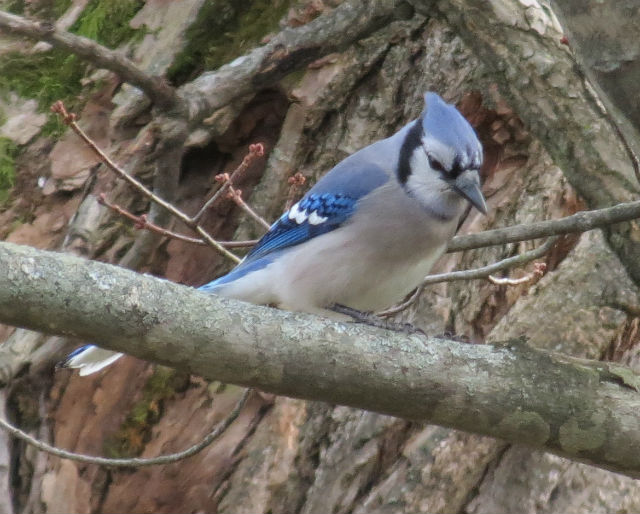
Like a Cardinal, the Blue Jay features a feathered crest on the head, which may be raised or lowered according to its mood. When excited or aggressive, the crest is raised. When the bird is feeding among other jays or resting, the crest is flattened on the head.

blue jay_9377

The Blue Jay occupies a variety of habitats within its large range, from the pine woods of Florida to the spruce-fir forests of northern Ontario. It is less abundant in dense forests, preferring mixed woodlands with oaks and beeches; I often see them when visiting Metroparks here in Ohio.

blue jay_9378

This bird is well adjusted to human activity, occurring in parks and residential areas, and can adapt to a lack of trees with relative ease if human activity creates means food and shelter for the Blue Jays to use as resources. Its perky crest; blue, white, and black plumage; and noisy calls make the Blue Jay a unique and welcome visitor.

Third Eye Herp
E-mail

Eastern Screech-Owl

screech owl_6251

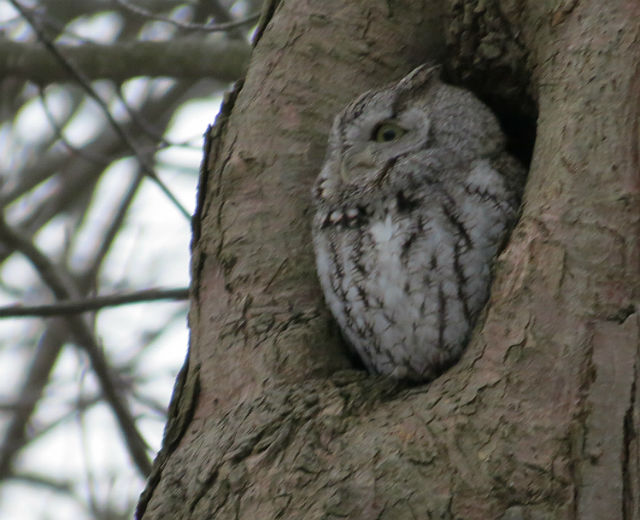
These are common, yet hardly ever seen birds. Their nocturnal habits and great camouflage make them elusive to observe. They often conceal themselves in tree cavities during the daytime.

screech owl_8493

These birds occur in a wide range of habitats and can often live in urban areas. There are two distinct color morphs – red and gray. They are only about the size of a Robin.

screech owl 040

The Eastern Screech-Owl hunts at dusk and at night. It does so mostly by watching from a perch and then swooping down to take prey from the ground. It eats a fair amout of large insects and crayfish during the warmer months and mainly eats rodents during colder months.

screech_8994

Its whinnying and trilling songs are familiar, but its vocalizations also include rasps, barks, hoots, chuckles, and screeches.

screech owl_1721

The Eastern Screech-Owl was first described by Carolus Linnaeus, in 1758. They have also been called the Common Screech Owl, Ghost Owl, Dusk Owl, Little-eared Owl, Spirit Owl, Whickering Owl, Little Gray Owl, Mottled Owl, Mouse Owl, Cat Owl, Shivering Owl and Little Horned Owl.

screech owl_8496

A group of owls has many collective nouns, including a “bazaar,” “glaring,” “parliament,” “stooping” and “wisdom” of owls.

Third Eye Herp
E-mail

White-crowned Sparrow

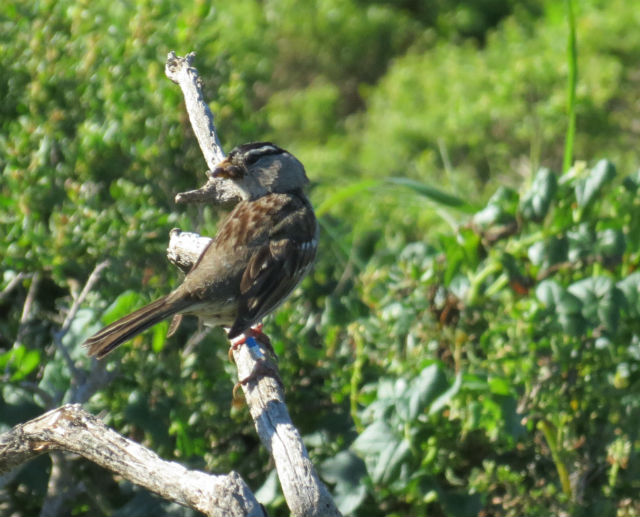
White-crowned Sparrow_1233

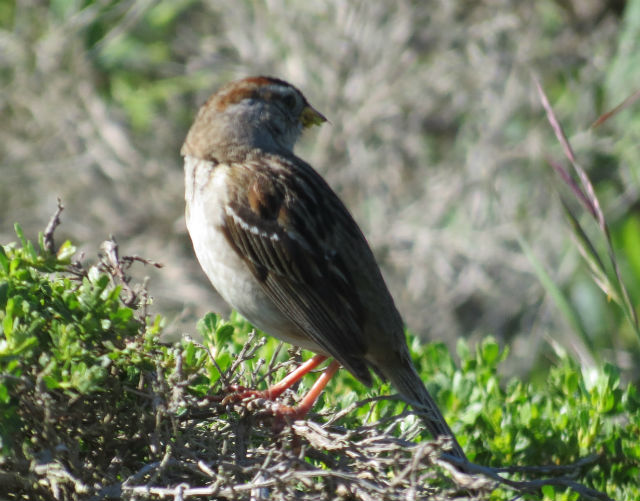
While visiting Point Reyes National Seashore in California, I saw many of these distinctive birds with bold black and white stripes on their heads.

White-crowned Sparrow_1264

Juveniles are not as brightly colored as the adults. Immature White-crowned Sparrows are tan with brownish head stripes.

White-crowned Sparrow_1272

They require a patchy mosaic of bare ground and shrubby areas for breeding. These birds fan out into open ground away from sheltering bushes as they feed.

White-crowned Sparrow_1266

They use a two-footed scratching maneuver to locate food in the leaf litter which consists of seeds, grass, buds, fruits. insects and spiders.

White-crowned Sparrow_1274

I saw several males calling from shrubs. The White-crowned Sparrow is one of the best-studied songbirds in North America. Much of our knowledge of bird song and development is based on studies of this species.

White-crowned Sparrow_1292

It was enoyable not only to see these birds, but to hear them pour out their songs over and over again, adding to the sights and sounds of the Bay Area.

Third Eye Herp
E-mail

Red-shouldered Hawk

red shouldered  hawk_7391

Although the Red-tailed Hawk is the most commonly seen raptor in my part of Ohio, I occasionally come across this smaller hawk.

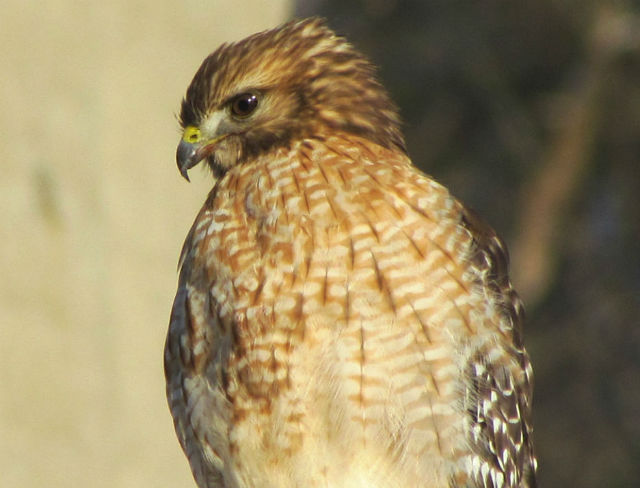
red shouldered  hawk_1602

It is rather beautiful, sporting high contrast checkering on its wings, rufous barring on its chest and a boldly banded tail.

red shouldered  hawk_0131

Rather than inhabiting open fields, like the Red-tailed Hawk, the Red-shouldered Hawk inhabits bottomland woods, wooded streamsides, swamps. At one time, it was more common than the Red-tailed Hawk, but as forests were cleared, the open areas that resulted were better suited for Red-tails.

red shouldered  hawk_5435

This bird usually hunts by watching from a perch, either within forest or in the open, swooping down when it locates prey. Its diet includes includes small mammals, amphibians, reptiles and birds.

red shouldered  hawk_1559

The Red-shouldered Hawk is a dietary generalist, changing its diet to reflect the local or seasonal abundance of different prey species.

red shouldered  hawk_1598

This bird builds its nest 20 to 60 feet above the ground in the branches of deciduous trees in wet woodland areas. The nest usually is in a fork about halfway up the trunk and often close to water, such as along a river or stream.

red shouldered  hawk_1507

Red-shouldered Hawks are about the size of crows. They show reverse sexual size dimorphism, meaning that females are larger than males.

red shouldered  hawk_1595

Its intricate patterns make seeing this bird an enjoyable experience whenever I come across one on a nature hike.

Third Eye Herp
E-mail