Tree Swallow

swallow_3152

The Tree Swallow is the first of the swallows to arrive in Spring. Although they are mainly insect eaters, they can survive on berries and seeds when there is snow on the ground.
swallow_5122

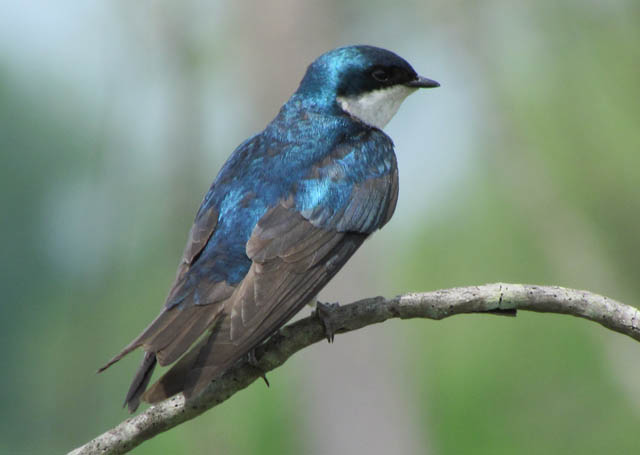
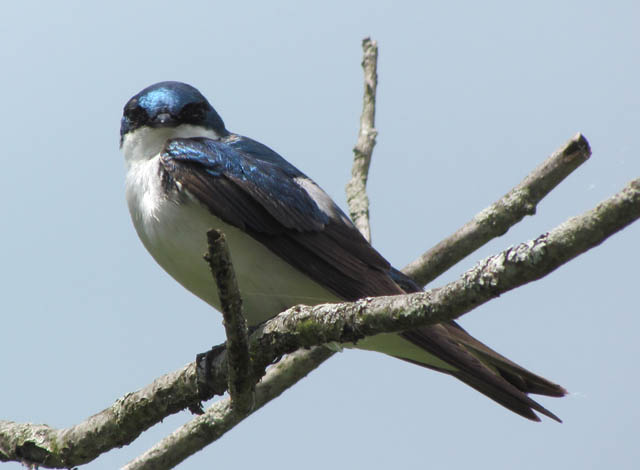
These birds are handsome aerialists with deep-blue iridescent backs and clean white fronts. They tend to reside near water and lately I’ve been seeing quite a few of them at Beaver Marsh on the Ohio & Erie Canal Towpath.
swallow_5120

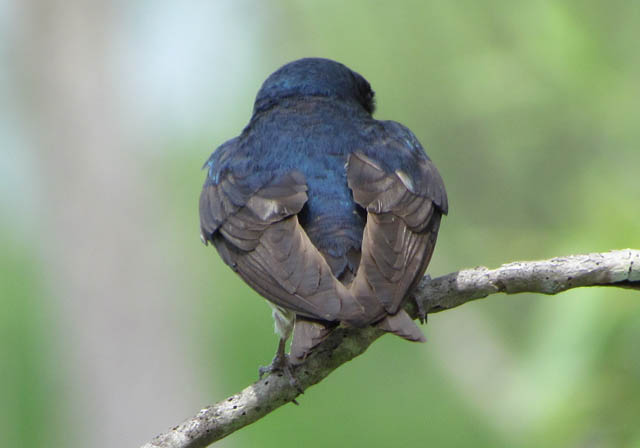
Tree Swallows are streamlined songbirds with long, pointed wings and a short, slightly notched tail. Their bills are very short and flat. They chase after flying insects with acrobatic twists and turns, their steely blue-green feathers flashing in the sunlight.
swallow_4095

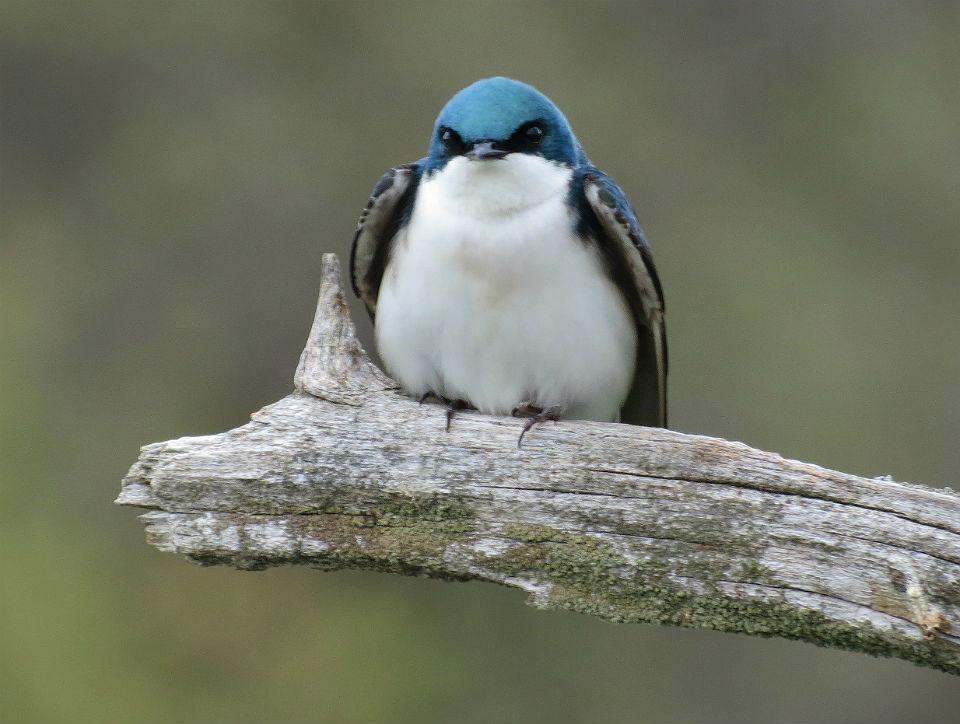
Tree Swallows nest at this time of the year and you can see them entering and leaving their nests as they tend to their young. They nest near water in tree cavities and old woodpecker holes. The female builds a nest lined with grasses and feathers.
swallow_5172

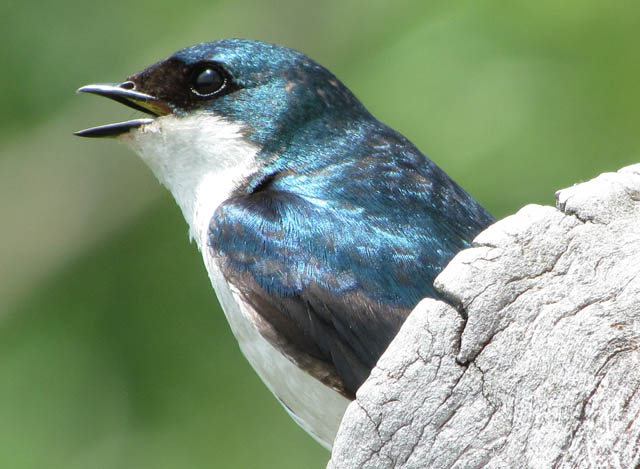
These birds are highly social and may form flocks of several thousand birds at nighttime roosts outside of the breeding season.
swallow_5374

As their name suggests, Tree Swallows spend little time on the ground, preferring instead to perch. They spend much of their time in flight and tend to glide more than any other species of swallow. This is a great time of year to observe their airborne acrobatics.
Third Eye Herp
E-mail

Dark-eyed Junco

junco_9668

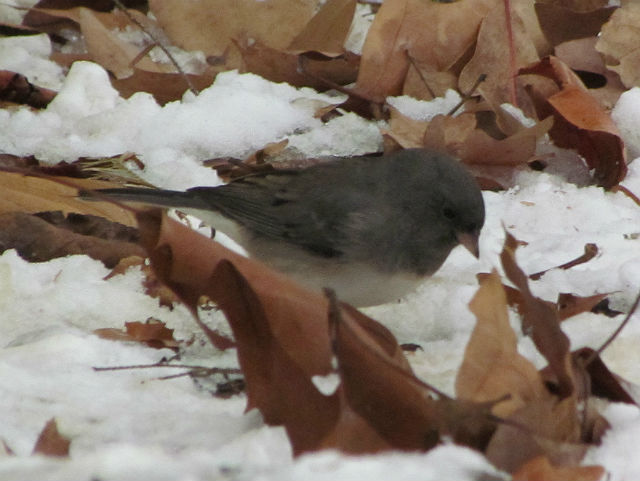
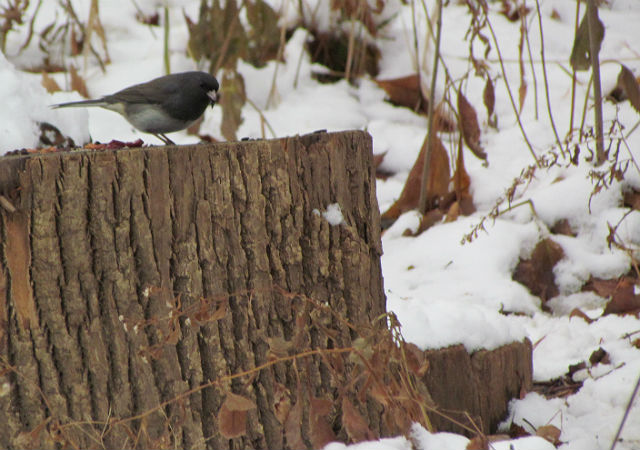
This bird is nick-named the “snowbird” as it is most often seen in the Winter. It prefers cold climates and retreats north as Spring arrives. Juncos migrate to Canada to mate and raise offspring. They return to the U.S. to spend the Winter months.
junco_9670

These are birds of the ground. They can be seen foraging on the forest floor or gathering seeds in fields. Even when they visit birdfeeders (which they often do), they tend to stay on the ground and eat fallen seeds.

junco_9652

This species avoids deep forest interiors in favor of woodland edges and openings. Dark-eyed Juncos usually hop or walk as they move along the ground. They live in flocks and are very sociable outside of breeding season.

junco_1279

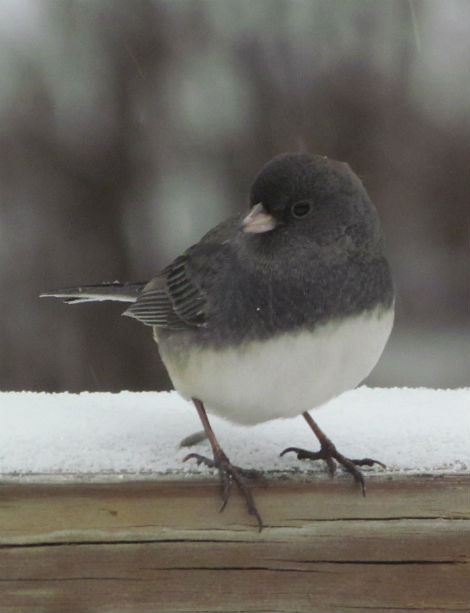
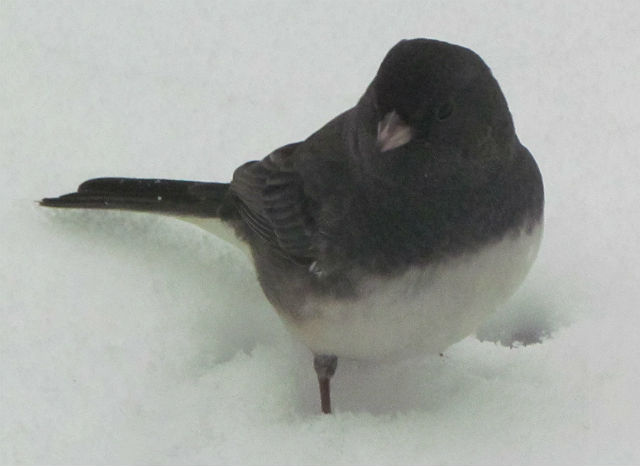
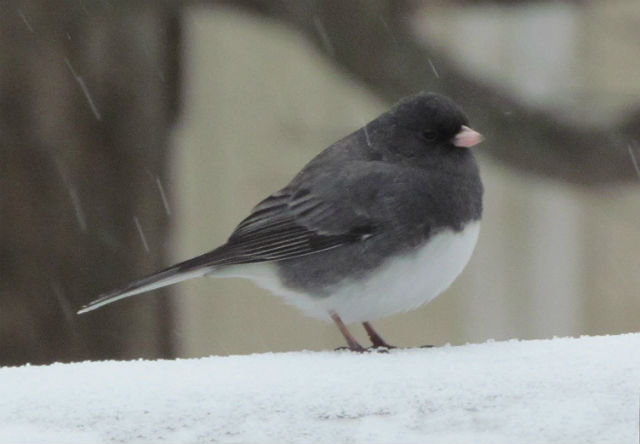
This wide-ranging, sparrow-sized bird shows considerable geographic variation in color. In Ohio it is slate-gray on its head, breast and back. This contrasts sharply with its white belly and outer tail feathers.

junco_1281

At this time of the year they can form mixed flocks with other small, seed-eating birds such as chickadees, sparrows and nuthatches. This “safety in numbers” behavior is an effective survival strategy.

junco_1280

Dark-eyed juncos, like many other bird species, are an important part of forest ecosystems. Members of this species aid in the dispersal of seeds and help to control insect populations.

Third Eye Herp
E-mail

Downy Woodpecker

downy woodpecker_9668

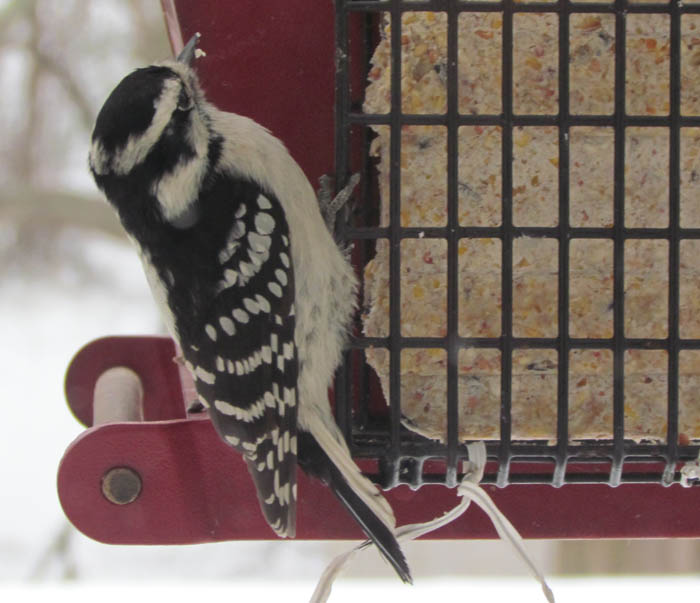
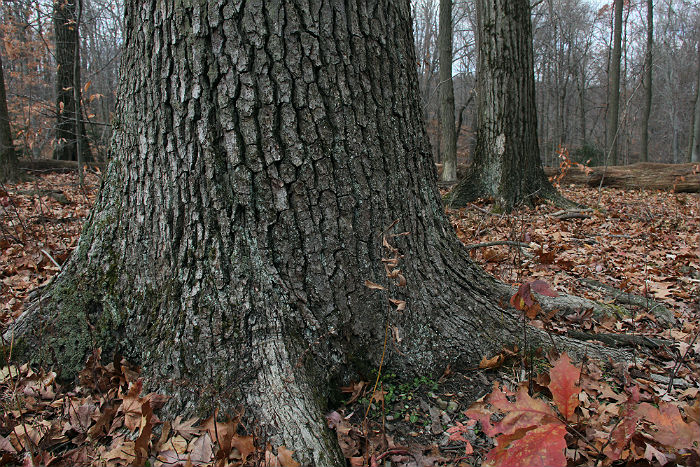
Not only is this bird one of our most common and widespread woodpeckers, it also has adapted to a variety of habitats. It can be found in mature hardwood forests as well as in fencerows along fields. It also regularly visits bird feeders.

downy woodpecker_8930

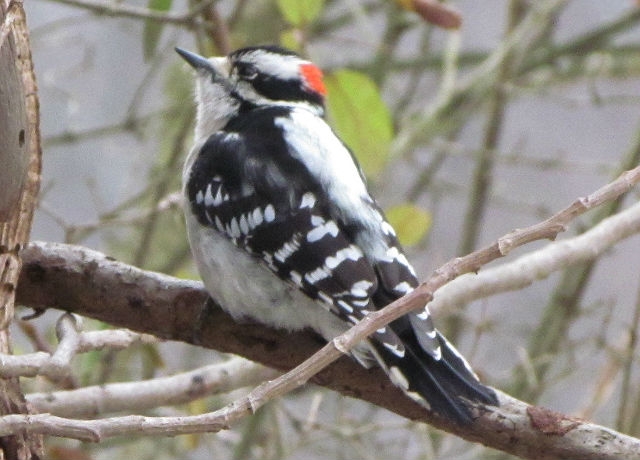
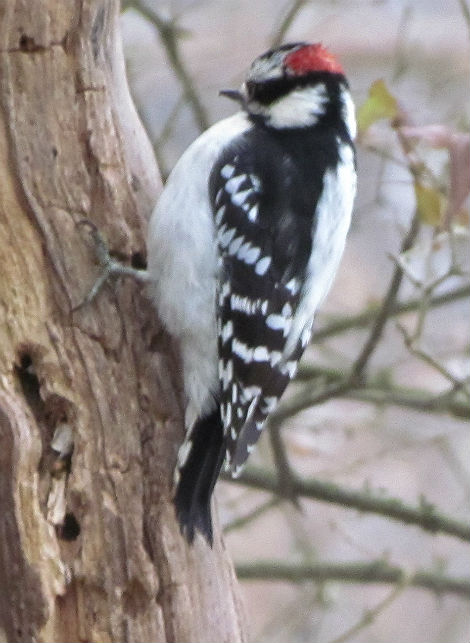
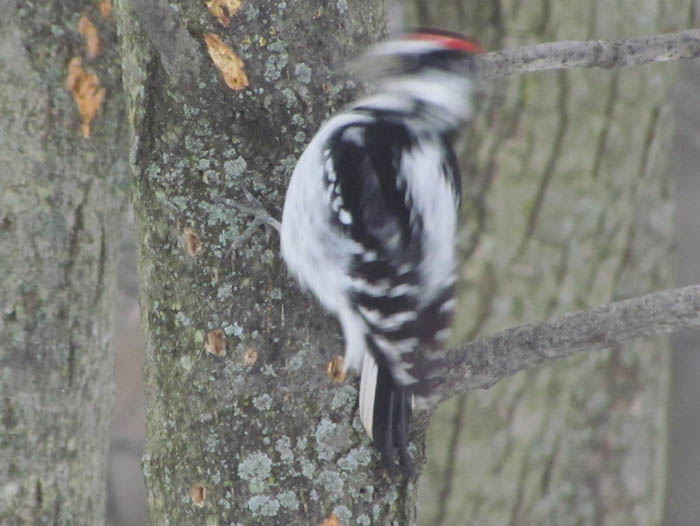
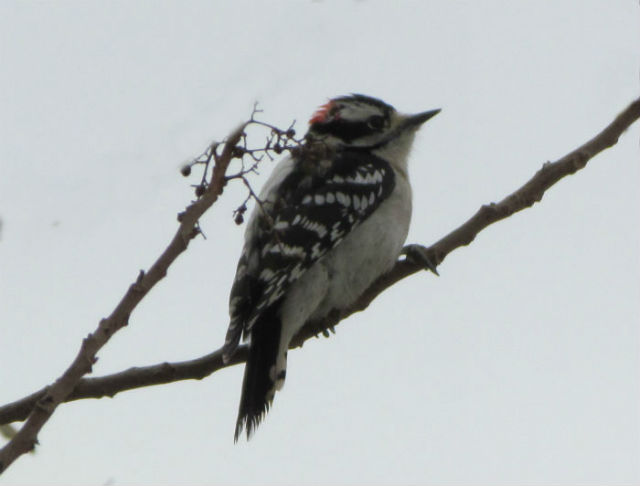
The Downy Woodpecker, our smallest woodpecker, is six inches long and has a small black bill. It has a white chest and back, black wings with white spots, a black tail and a black head with a white “mustache” and white “eyebrows.”

downy woodpecker_9949

This bird always seems to be hard at work, constantly foraging for food or excavating holes in trees to be used as nests. Like other woodpeckers, it has several adaptations that allow it to hammer away relentlessly on trees. This includes a sturdy bill and strong neck muscles. Its brain is encased in a protective cavity in its reinforced skull.

downy woodpecker_9946

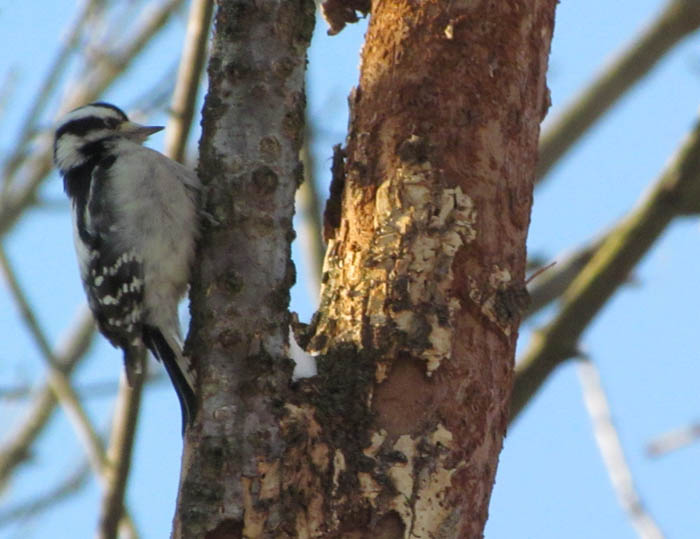
Another characteristic this bird shares with other woodpeckers is nostrils surrounded by feathers. This helps to filter out the sawdust created by pecking away at wood. The male has a small red patch on the back of his head; the female lacks this marking.

downy woodpecker_8687

Downy Woodpeckers use their bills to drill into trees and dig out insects like beetles, wasps, moths and their larvae. In the Winter they sometimes “join forces” and mix with other flocks of different species of birds while looking for food.

downy woodpecker_9950

While hiking its pretty commonplace to observe this bird busily searching trees and shrubs in search of insect eggs, cocoons and hibernating insects and spiders. It also consumes nuts and seeds, like this one was doing on the Ohio Erie Canal Towpath. They can be quite acrobatic in their pursuit of a meal.

downy woodpecker_8838

I usually don’t have to go far to see this lively creature which stays here year-round – sometimes all I have to do is look out the kitchen window.

Third Eye Herp
E-mail

Eastern Wild Turkey

turkey 0045

Eastern Wild Turkey typically forage on forest floor in flocks, but they can also be found in grasslands and swamps. They are the most abundant and widespread of the four subspecies commonly occurring in the United States.

turkey_05_19 119

This bird actively searches for nuts, berries, seeds, fruit and insects. Acorns, beechnuts, cherries and ash seeds are primary food sources. They are chicken-like in appearance, and have short, rounded wings, heavy bills and heavy bodies. They stand three to four feet tall and can weigh up to 24 pounds.

turkey_10_08 071

The Eastern Wild Turkey was not present in Ohio for many years. This bird once inhabited forested areas of the entire state, providing food for Native Americans and early Ohio settlers. As the forests were converted into farms, this bird’s population dwindled and no birds remained in the state by 1904.

turkey_05_19 130

The body feathers appear drab brown at a distance, but are actually iridescent when the bird appears in good light; this iridescence shows the bird’s true coloration – bronze with hints of red, green, copper and gold. Only male turkey display the ruffled feathers, fanlike tail, red head and “beard” commonly associated with these birds. They also gobble with a distinctive sound.

turkey_05_19 1206

Eastern Wild Turkey nests are made in the ground. A shallow depression is lined with leaves and covered up with vines and other plants. Ten to fifteen eggs are laid. Here is a hen that I saw on the Fourth of July out with her offspring.

turkey_0212

Many kids in the United States learn Wild Turkey identification early, by tracing outlines of their hands to make Thanksgiving cards. These big, spectacular birds are quite adaptable. They have become an increasingly common sight, as flocks stride around woods and clearings like miniature dinosaurs.

turkey_05_19 1184

Happy Thanksgiving!

Third Eye Herp
E-mail

Song Sparrow

song sparrow_10_30 001

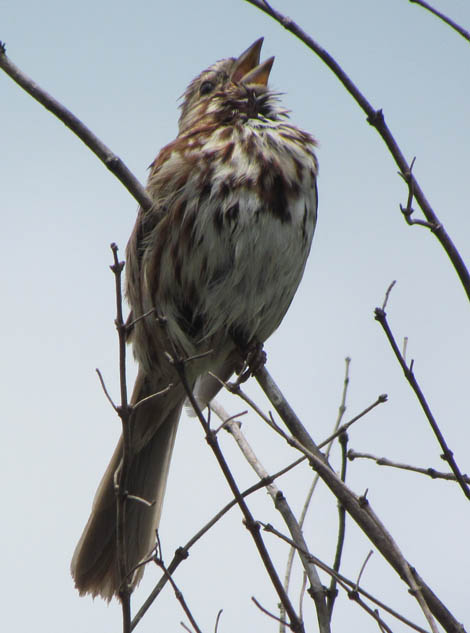
The Song Sparrow is one of the most successful and widely distributed sparrows. This well-named bird is among our greatest songsters for the complexity, rhythm and emotion of its rhapsodies.

song sparrow_6493

This bird truly lives up to its name, being one of the most persistent singers throughout the Spring and Summer. Other birds such as Mockingbirds are not able to effectively imitate their song.

song sparrow_1731

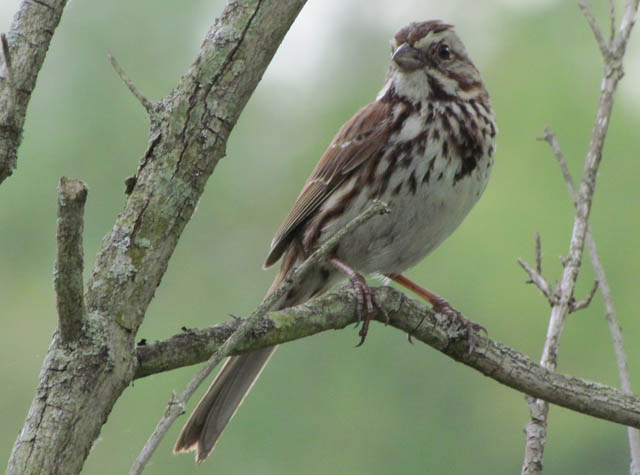
This is a rich, russet-and-gray bird with bold streaks down its white chest. It can be found all across the United States, including Alaska, though species size and color varies depending on the region where it is found.

song sparrow_1733

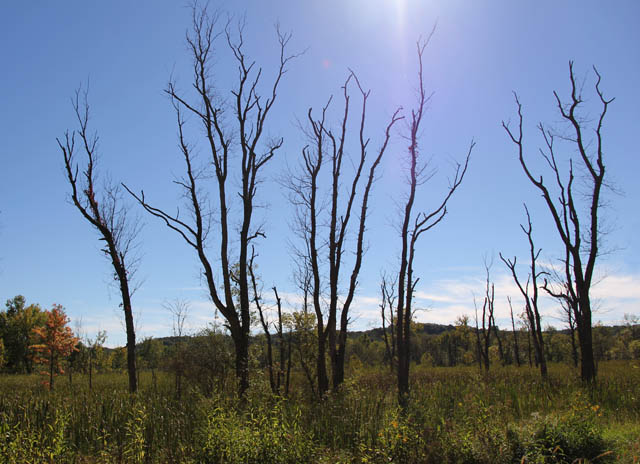
Look for Song Sparrows in open habitats, such as marsh edges, overgrown fields and backyards (they often visit bird feeders and build nests in residential areas).

song_5928

This bird is rather shy and hard to see unless it is singing, so sometimes in order to find one, you must look closely. The species name, melodia, is testament to this bird’s beautiful and tranquil song.

song_5389

Third Eye Herp
E-mail

American Goldfinch

goldfinch_0538

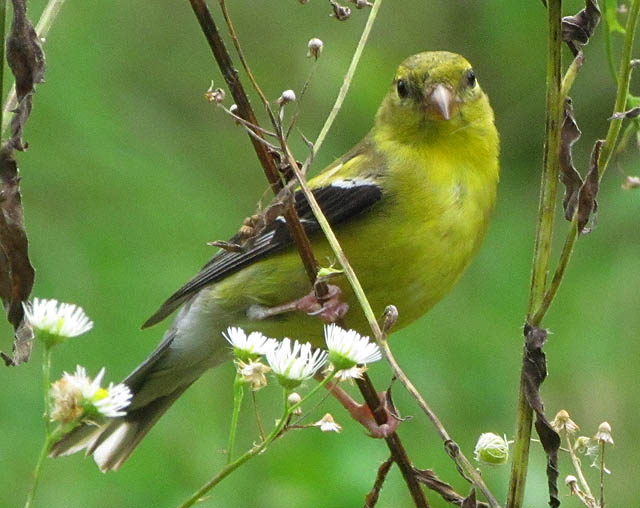
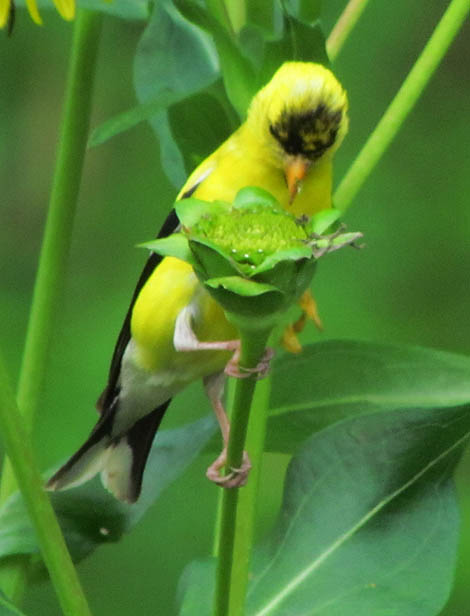
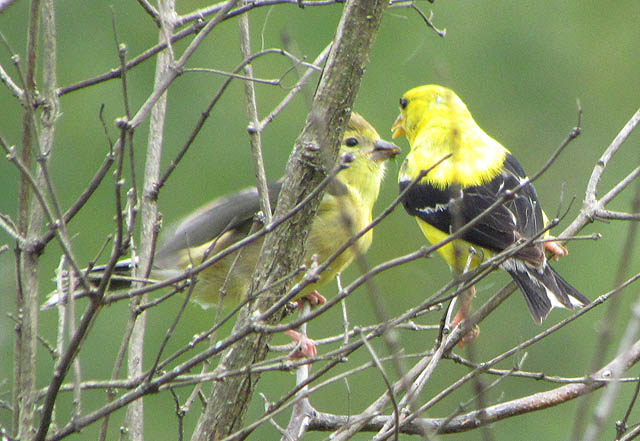
The brightly colored male American goldfinch is especially recognizable. In breeding season they are bright yellow with black and white markings. In the Winter, the males lose their bright yellow feathers and become dull brown.

goldfinch_6602

Females are of dull coloration year-round.

goldfinch_4105

American Goldfinches live in brushy thickets, weedy fields, gardens and roadsides. Since they eat mostly seeds from grasses and wildflowers, they tend to stay where there are a lot of these food sources available.

goldfinch_2930

They are interesting to observe while they eat, because they have great balance and can perch on any stem while twisting their bodies to get to seeds or fruit.

goldfinch_4103

American Goldfinches are very sociable, and you will often see several pairs together at the same time. You can hear them communicating with each other as they forage for food in flocks along roadsides and in brushy fields in on their quest for thistle and sunflower seeds.

goldfinch_6535

Some of their other foods include ragweed, dandelions, mullein, American Elm, Eastern Redcedar, grasses and Evening Primrose. They also eat some types of insects, including caterpillars.

goldfinch_6599

People tend to like these colorful birds and specific feeders are available for thistle seeds, to attract them; though at my house they seen to enjoy taking apart the Zinnias.

goldfinch_1055

Third Eye Herp
E-mail

Red-headed Woodpecker

red-headed woodpecker_4974

Can a bird be inspirational? Adult Red-headed Woodpeckers are so striking that the sight of one motivated Alexander Wilson, the author and illustrator of the early 1800s, nine-volume work American Ornithology, to become an ornithologist.

redheaded_1810

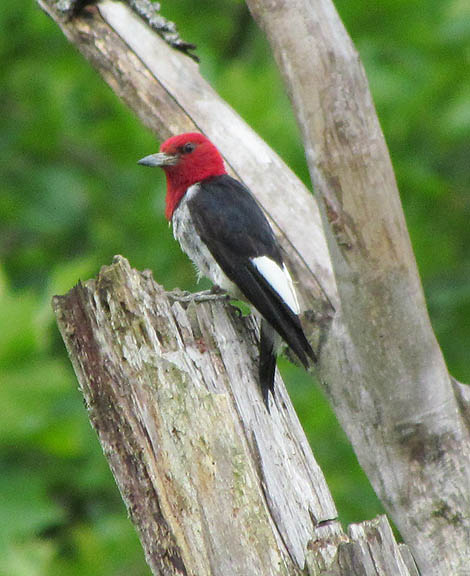
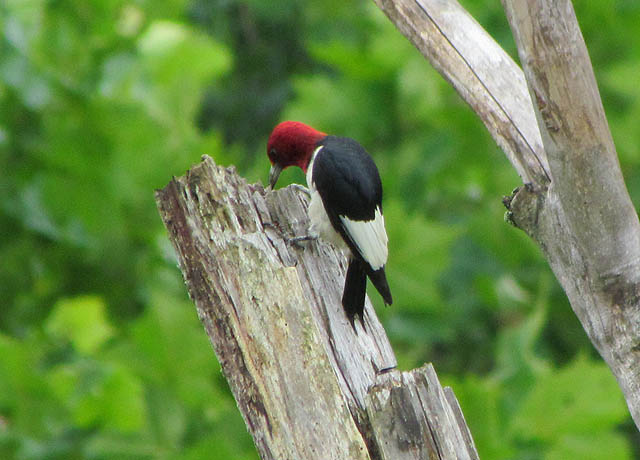
The gorgeous Red-headed Woodpecker is so boldly patterned it’s been called a “flying checkerboard,” with its entirely crimson head, a snow-white body, and half white, half inky black wings.

red-headed woodpecker_5021

Adult males and females are impossible to tell apart in the field. Immature birds have a buff-brown or “dusky” head and back.

redheaded_1761

These birds don’t act quite like most other woodpeckers. Red-headed Woodpeckers are less likely to drill for food than other species. Instead, they fly down to the ground to capture insects or they catch prey from the air.

redheaded_1774

They also eat lots of acorns and beech nuts, often hiding away extra food in tree crevices for later. They have been known to wedge live beetles or grasshoppers into cracks in wood to store them for future use.

redheaded_1749

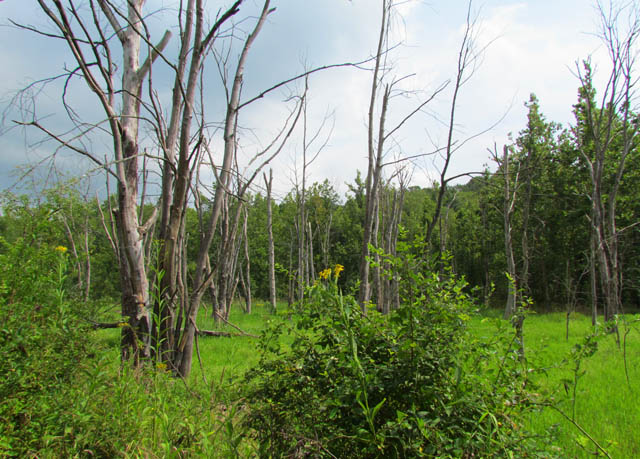
The Red-headed Woodpecker has declined severely in the past half-century because of habitat loss and changes to its food supply. It can be found open woodlands and forest edges and clearings, river bottoms and wooded swamps. It especially likes areas with dead or dying trees.

redheaded_1806

This year was my first year to have seen these magnificant birds and I’ve been lucky enough to find them several different times throughout the year in different locations.

redheaded_1772

Third Eye Herp
E-mail

Baltimore Oriole

oriole_8980

The Baltimore Oriole is Maryland’s official state bird. It has also been the namesake of the state’s professional baseball team, the Baltimore Orioles, since the late 19th century. Baltimore Orioles inhabit Maryland and the rest of the eastern United States only in the Summer months. In Winter, some of these migrating birds live in the southeastern United States, but most fly further south in search of warmer climates.

oriole 092

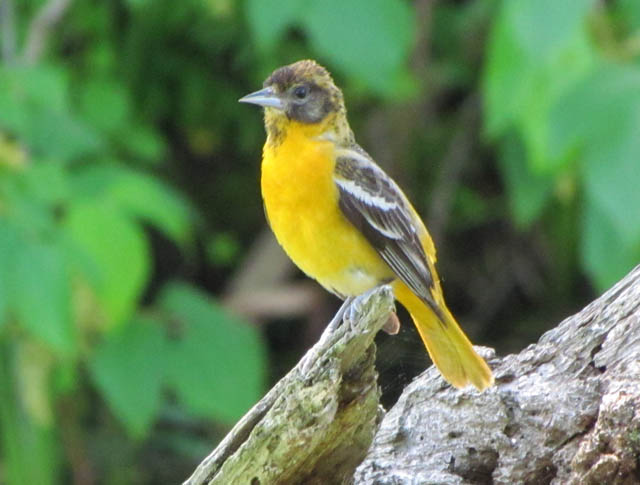
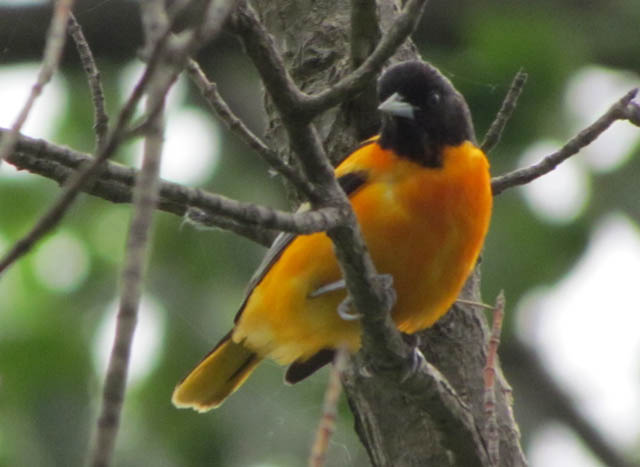
Male orioles are a bold orange hue with black wings and a black head. Females are not as brightly colored.

oriole_8885

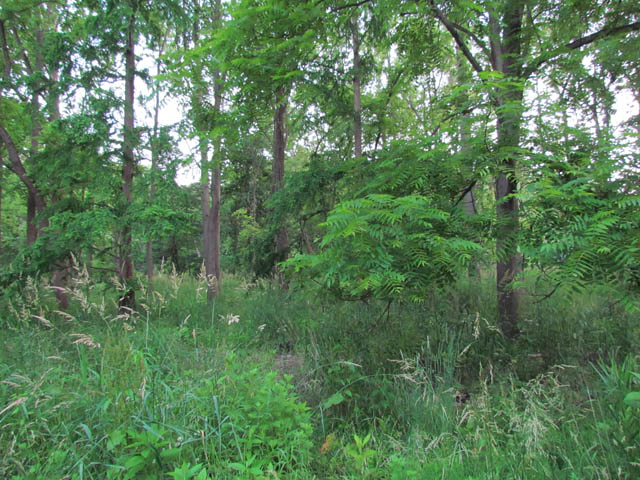
These attractive birds frequent woodlands and mainly eat caterpillars and insects. They supplement their diet with fruits and berries. The Baltimore Oriole’s appetite for caterpillars may help protect forests from some destructive pests.

oriole_6454

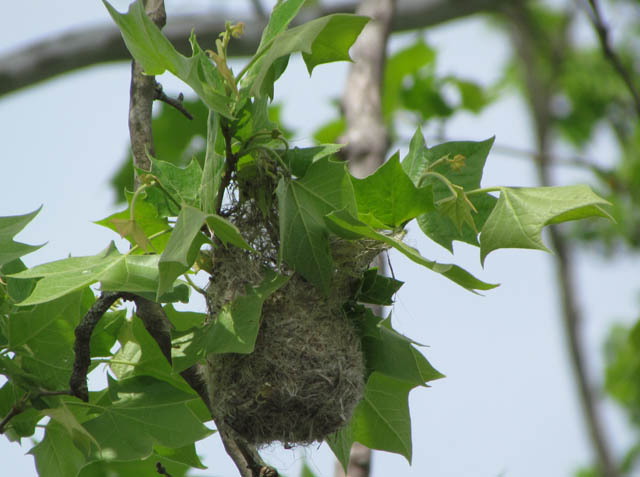
The nest of the Baltimore Oriole is one of the most distinctive bird nests. Females weave remarkable, sock-like hanging structures from slender fibers. The nest are suspended from small tree limbs. Along with natural materials, string or yarn is usually incoporated into the nest.

oriole_5112

The Baltimore Oriole is named for Lord Baltimore, an early leader of the British colony of Maryland. His coat-of-arms was orange and black, like the male oriole. You can sometimes hear the male’s loud, flutelike whistle from the tree tops. It may take some time, but catching sight of one of these brilliant black-and-orange birds is worth the effort.

Third Eye Herp
E-mail

Phainopepla

Phainopepla_8422

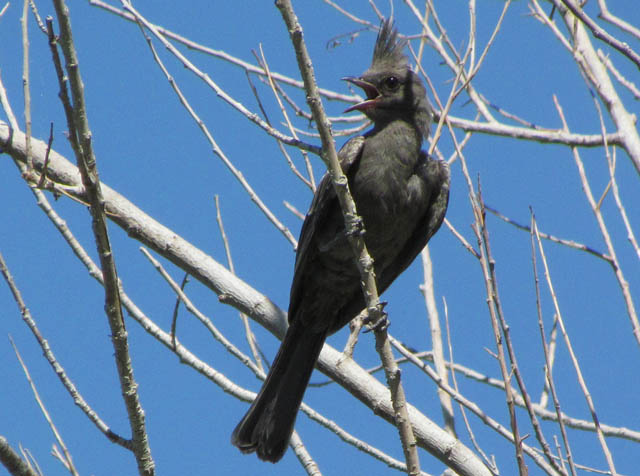
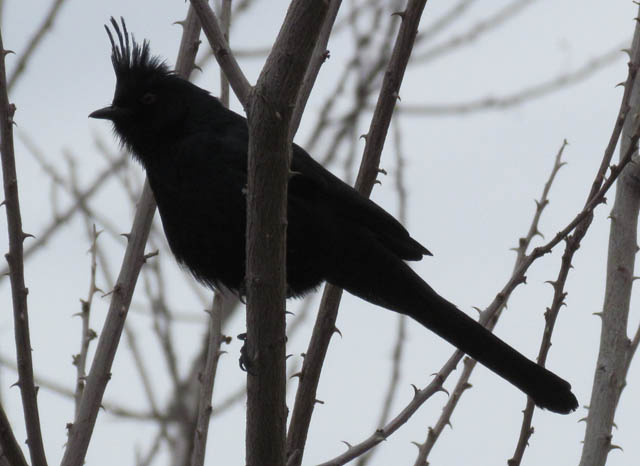
The Phainopepla is a striking bird, with a noticeable crest and a long tail; it is slender and has an upright posture when it perches. It is particularly notable for its mysterious pattern of breeding twice each year, in two different habitats. It is primarily found in washes, riparian areas and other habitats that support arid scrublands.

Phainopepla_7322

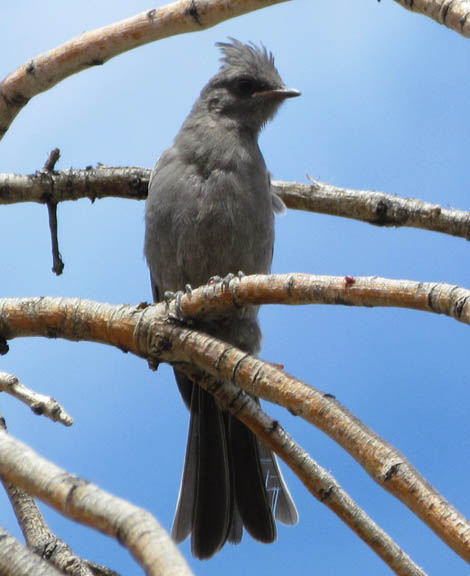
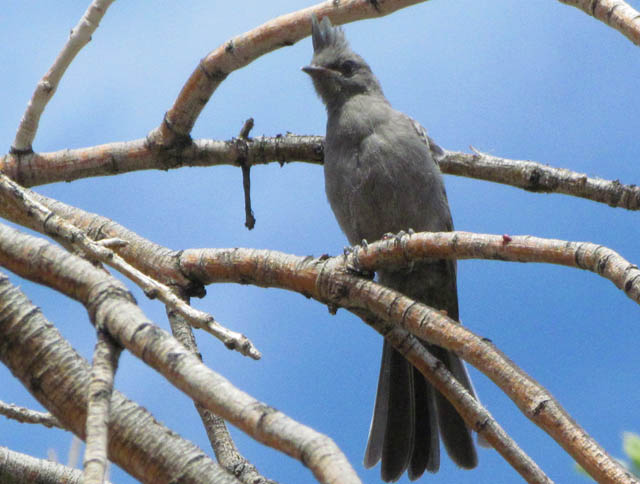
This bird belongs to a small group of birds known as the silky flycatchers, but they are not related to true flycatchers. The male is shiny and black with a crest and bright red eyes, while the female is gray.

Phainopepla_8467

The Phainopepla has a unique relationship with its main food source, mistletoe berries. Mistletoe berries are dependent on the bird to plant them on the branch of a tree. It does this by eating the berry and digesting the seeds, yet not harming them. The bird’s droppings, which contain the seeds, will hit a branch and then the seed will start to germinate. When there is an abundance of mistletoe berries, Phainopeplas will congregate in the hundreds; otherwise, they are hard to find.

Phainopepla_1094

An individual Phainopepla eats at least 1,100 mistletoe berries per day, when they are available. The Phainopepla rarely drinks water, even though research indicates that it loses about 95 percent of its body mass in water per day. Instead, it gets the water it needs from its diet of mistletoe.

Phainopepla_8468

The name “Phainopepla” (pronounced fay-no-PEP-la) comes from the Greek for “shining robe,” a fitting characterization of the shiny, jet-black plumage of the adult male. This one one of several really interesting birds that I observed on my Vegas trip.

Third Eye Herp
E-mail

Rose-breasted Grosbeak

rose 002

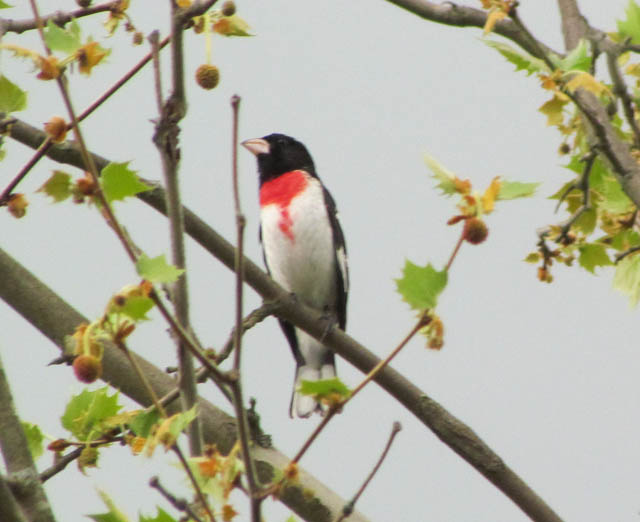
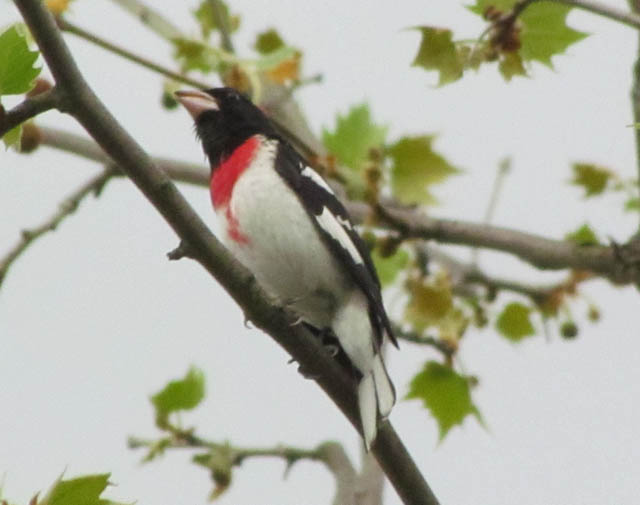
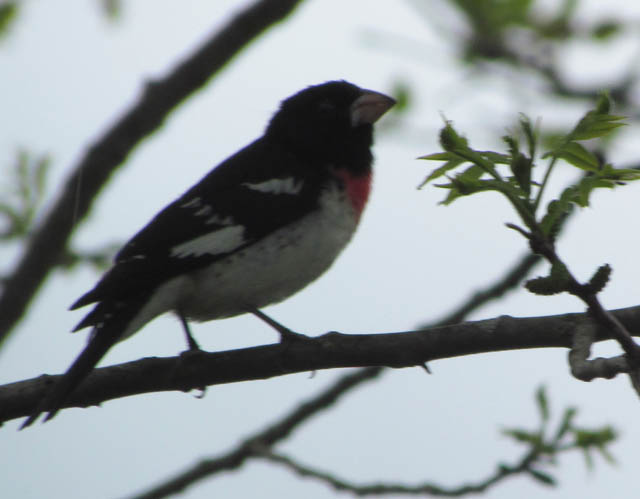
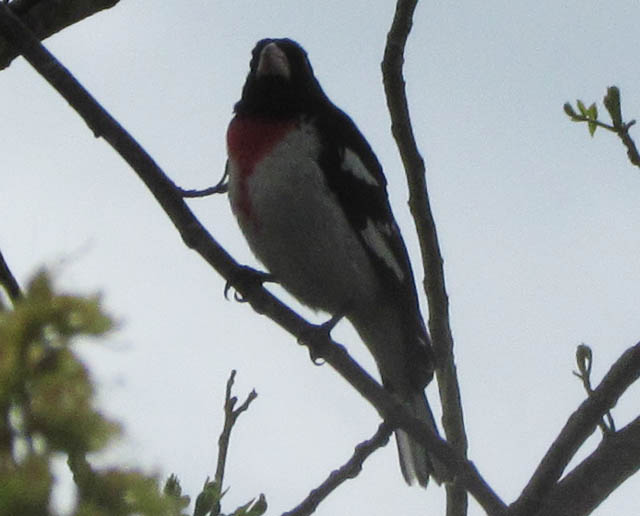
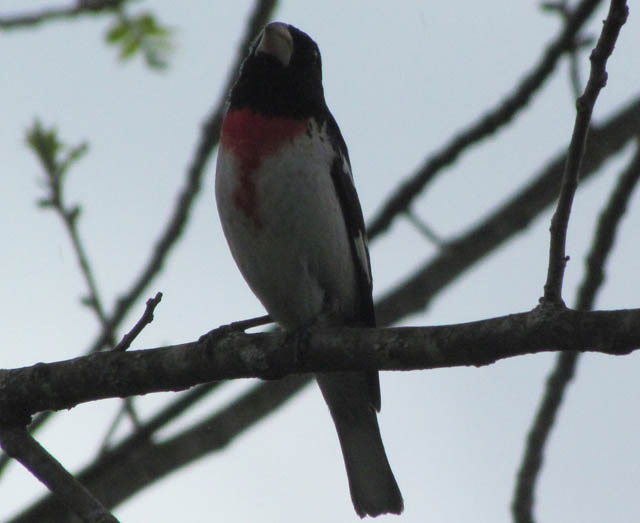
The Rose-breasted Grosbeak is a medium-sized, stocky songbird with beautiful, bold plumage. It can be a tricky bird to find, as it often calls from treetops, but lately I’ve been spotting them.

rose_4040

Its beak is large, thick and cone-shaped. It serves the bird by enabling it to eat wide varity of food items. The diet of the Rose-breasted Grosbeak varies between seasons, with a higher percentage of insects being taken warm weather. In the Winter, more seeds, fruits and buds are consumed.

rose_4048

At the beginning of the breeding season the female grosbeak approaches a singing male, who in turn performs a courtship display involving flight and song. The pair is monogamous and builds a nest between May and June, with egg laying generally occurring between mid-May and July.

rose_4058

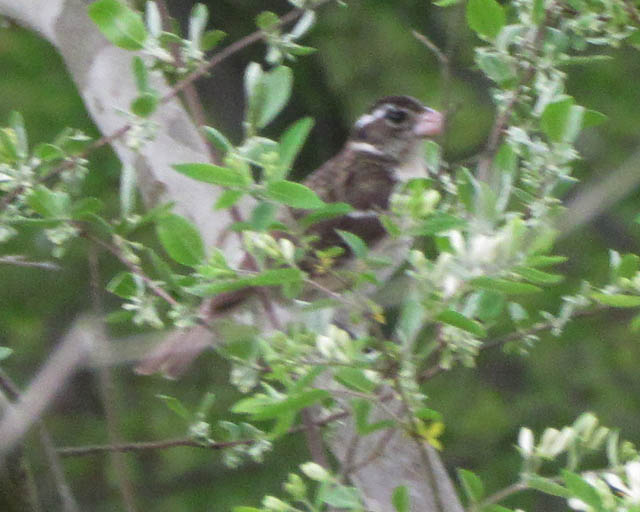
Like many birds, the females aren’t as brightly colored as the males. They are not the best nest builders; Rose-breasted Grosbeaks build such flimsy nests that the eggs are often visible from below through the nest bottom.

rose_4069

The Rose-breasted Grosbeak is relatively common throughout much of eastern and central North America and lives in forests and thickets, as well as alongside humans in parks and gardens.

rose_4064

They are long-distance migrants. Rose-breasted Grosbeaks fly from North American breeding grounds to Central and northern South America in the Winter.

rose_4071

Although often difficult to locate visually, its vocal abilities can often be heard. This bird’s sweet, robin-like song has inspired many a bird watcher to pay tribute to it. A couple of early twentieth-century naturalists said its call is “so entrancingly beautiful that words cannot describe it.”

Third Eye Herp
E-mail